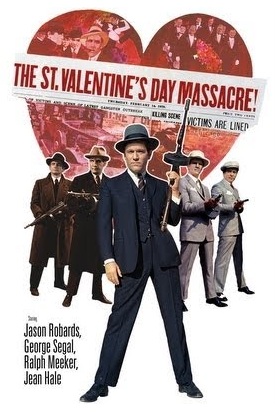
The St. Valentine’s Day Massacre (1967)

Directed by:
Roger Corman

Written by:
Howard Browne

Cast:
Jason Robards (Al Capone), George Segal (Peter Gusenberg), Ralph Meeker (George Clarence ‘Bugs’ Moran), Jean Hale (Myrtle), Clint Ritchie (Jack McGurn), Frank Silvera (Nick Sorello), Joseph Campanella (Albert Wienshank), Richard Bakalyan (John Scalise), David Canary (Frank Gusenberg), Bruce Dern (Johnny May)
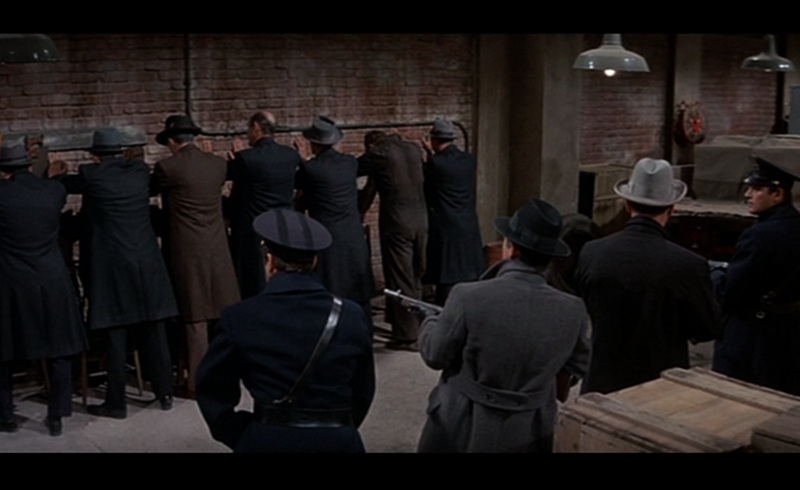
Roger Corman’s gangster movies are generally enjoyable. The St. Valentine’s Day Massacre that follows the famous violent event on February 14, 1929 has got to be his most boring one.

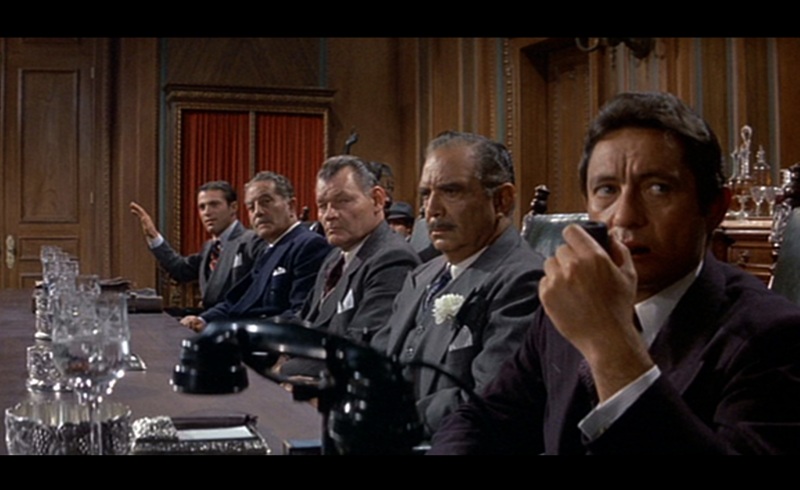
On this specific St. Valentine’s Day, Al Capone set a legendary trap for seven men that were working for his opponent Bugs Moran. In the gang war preceding it, Moran tried to kill Capone to take over the bootlegging and gambling profits in Chicago. The movie uses a sort of journalistic approach. A narrator introduces every character involved and covers the events in a newspaper sort of way.

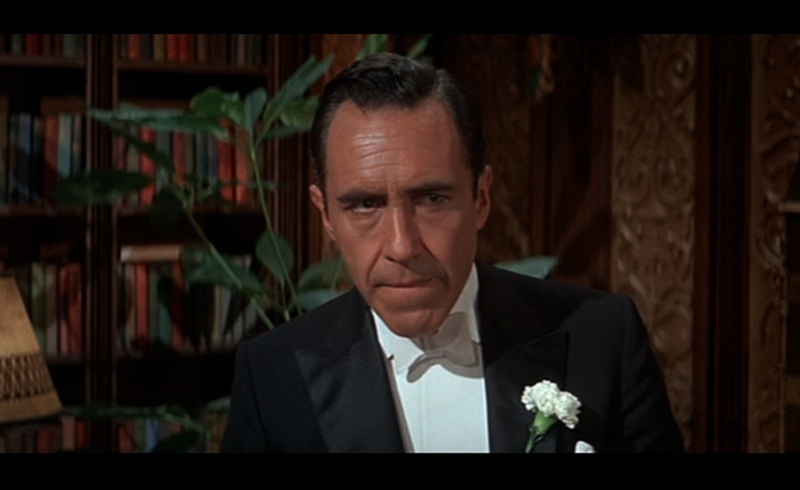
Al Capone, played by Jason Robards, is the unchallenged leader of Chicago’s most powerful underworld organisation. Robards portrays ‘Alphonse’ as an uncontrolled and ruthless hothead. He yells too often, but still turns in a decent performance. All the supporting characters get a detailed background story provided by the narrator. Unfortunately, there are way too many to remember.

If you enjoy technically proficient Tommy Gun action, you may find something to like about this film. Otherwise, the too factual approach and lack of drama will probably leave you as cold as one of the stiffs from the massacre.

Rating:

Quote:
NARRATOR: “In the years following the passage of the National Prohibition Act of 1920, the nation’s underworld rises to power and battles amongst itself just as modern nations and corporations do.”

Trivia:
The St. Valentine’s Day Massacre’ is also an important event in Capone (1975), a gangster film produced by Roger Corman and starring Ben Gazzara as Al Capone.
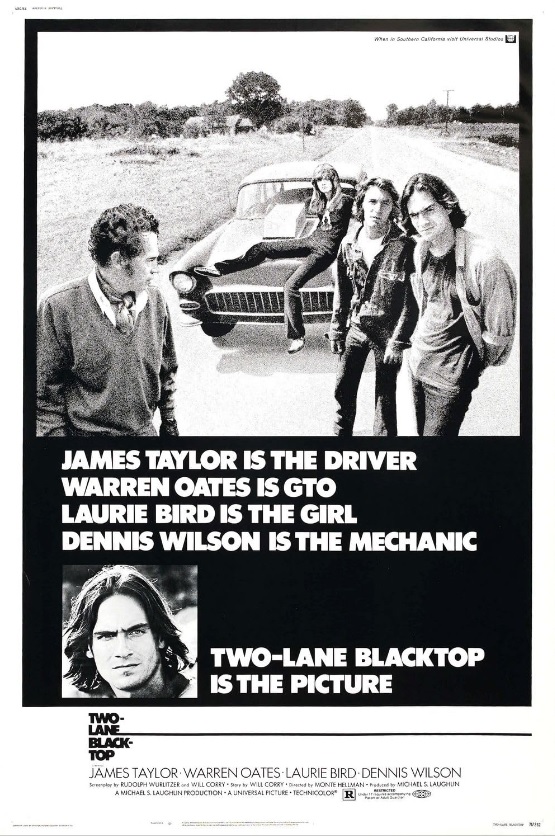
Two-Lane Blacktop

Director: Monte Hellman
Written by: Rudolph Wurlitzer, Will Corry
Cast: James Taylor, Dennis Wilson, Laurie Bird, Warren Oates

Year / Country: 1971, USA
Running Time: 98 mins.

After winning a late-night drag race, the driver (James Taylor) and his friend, the mechanic (Dennis Wilson), leave Los Angeles in their gray ’55 Chevrolet. They embark on an aimless road trip, stopping only for food, gas, and the occasional driving challenge. Along the way, they pick up a free-spirited hitchhiker (Laurie Bird) and continue their journey eastward. Their path repeatedly crosses with a 1970 Pontiac GTO, driven by a boastful older man (Warren Oates), leading to a high-stakes cross-country race to Washington, D.C. for ownership of their cars.

This is not a summary of the story, but it’s the whole story. The film unfolds as a meditation on existentialism, where racing becomes a metaphor for life itself. The characters drive not toward any clear destination but toward an uncertain fate, embodying the restless, aimless energy of drifters. Tellingly, none of the main characters even have names, emphasizing their roles as archetypes of the disillusioned wanderer.

Watching this film feels like stepping into a time capsule. Much like American Graffiti, it captures the spirit of a bygone era – an America of the early 1970s, defined by hippies, muscle cars, and rock ‘n’ roll. The minimalist storytelling is complemented by striking cinematography, making the open road a central character in its own right.

Two-Lane Blacktop is more than a movie; it’s a raw, unvarnished piece of Americana. A snapshot of a world long past, it stands as a beautiful, haunting testament to a fleeting time and place in American culture.

Rating:

Biography: Monte Hellman (1932, New York) studied drama at Stanford University and film at UCLA. He joined legendary producer Roger Corman and made his film debut with Beast From Haunted Cave, an enjoyable 50’s creature flick. Hellman teamed up with Jack Nicholson and together they made two low-budget flicks in the Philippines, one written by Nicholson. They continued the co-op and made two more films together, this time Westerns. Once again Nicholson wrote the screenplay for one of them (Ride in the Whirlwind). Hellman then made Two-Lane Blacktop, which did well with critics, but bad at the box-office. After making a couple more cult movies, Hellman mostly worked as second-unit director, editor and executive producer for acclaimed directors such as Samuel Fuller, Paul Verhoeven and Quentin Tarantino. His latest directing effort was a segment of the horror anthology Trapped Ashes.

Filmography: Beast from Haunted Cave (1959), Flight to Fury (1964), Back Door to Hell (1964), Ride in the Whirlwind (1965), The Shooting (1967), Two-Lane Blacktop (1971), Cockfighter (1974), Baretta (1975, TV), The Greatest (1977), China 9, Liberty 37 (1978), Inside the Coppola Personality (1981), Iguana (1988), Silent Night, Deadly Night III: Better Watch Out! (1989), Stanley’s Girlfriend (2006, short), Trapped Ashes (2006, segment ‘Stanley’s Girlfriend’)

Eating Raoul

Director: Paul Bartel
Written by: Paul Bartel, Richard Blackburn
Cast: Paul Bartel, Mary Woronov, Robert Beltran

Year / Country: 1982, USA
Running Time: 83 mins.

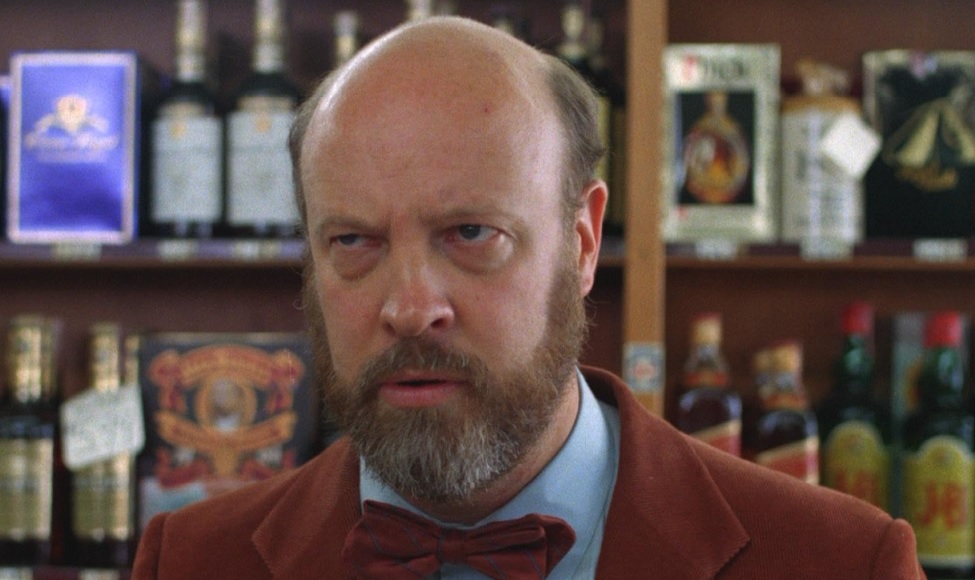
After directing racing flicks Death Race 2000 and Cannonball!, Paul Bartel decided to make a more personal movie. Roger Corman, who had kick-started Bartel’s career with Death Race 2000, would not finance it, so Bartel raised the 500.000 dollar himself by putting up his parents house for sale. The result was Eating Raoul, a demented comedy of sorts about Hollywood, cannibalism and weird sex. It became a sleeper hit and got good critical reviews, especially in Europe.

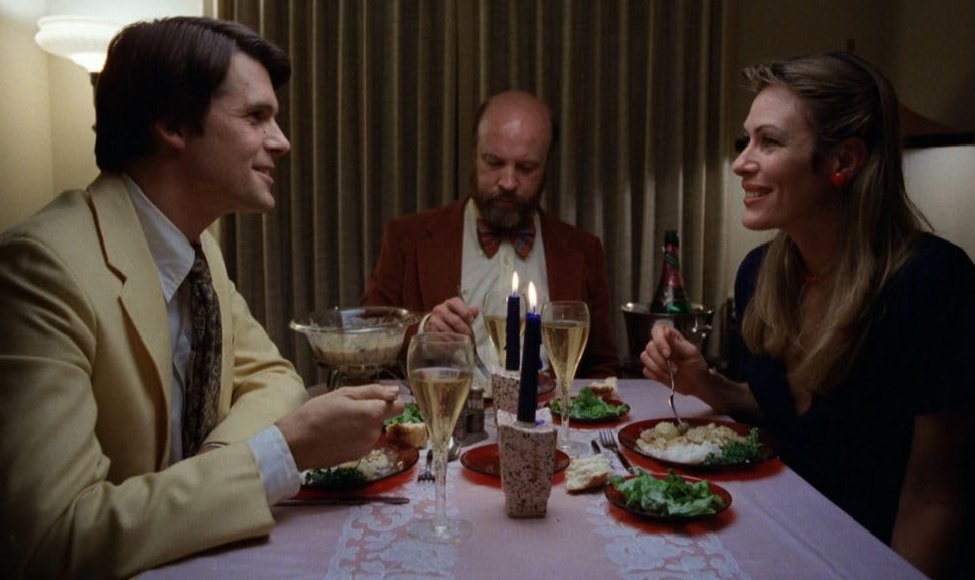
The story revolves around Paul and Mary Bland, a square couple living in Hollywood. The couple is played by Bartel himself and Mary Woronov, another Corman veteran. The Blands want to open up a countryside restaurant, but lack financial means. A solution presents itself in the form of a swinger (their apartment building is full of them), a lifestyle the Blands – with their refined taste – disapprove of. When this swinger accidentally dies in their apartment, they come up with a very distinctive business model: lure swingers into their apartment and murder them for their money. It becomes a great financial success.

Then Raoul from the title gets involved (played by Robert Beltran, later Star Trek Voyager actor). He is a blacksmith, who discovers their secret and wants a partnership. After not too long, Raoul becomes a big problem the Blands have to deal with. Witty lines such as: ‘We’re having a friend for dinner’ (sounds familiar?) and a couple of hilarious gags make this an enjoyable little film. If you have a taste for the bizarre (it even got dwarves and stuff), Eating Raoul is an oddity that won’t disappoint.

Rating:

Biography: Paul Bartel (1938, New York – 2000, New York) majored in theater arts at UCLA and studied film directing in Rome. After getting his first work experience with Roger Corman he directed a number of low budget cult films. He also worked as a writer and an actor. He died in 2000 from a heart attack.

Filmography: The Secret Cinema (1968, short), Naughty Nurse (1969, short), Private Parts (1972), Death Race 2000 (1975), Cannonball! (1976), Eating Raoul (1982), Not for Publication (1984), Lust in the Dust (1985), The Longshot (1986), Amazing Stories (1986/87, TV episodes), Shelf Life (1993), The Comic Strip Presents…(1993, TV episode), Clueless (1996, TV episode)

Deathsport

Director: Allan Arkush, Nicholas Niciphor
Written by: Frances Doel, Nicholas Niciphor, Donald Stewart
Cast: David Carradine, Claudia Jennings, Richard Lynch, William Smithers

Year / Country: 1978, USA
Running Time: 83 mins.

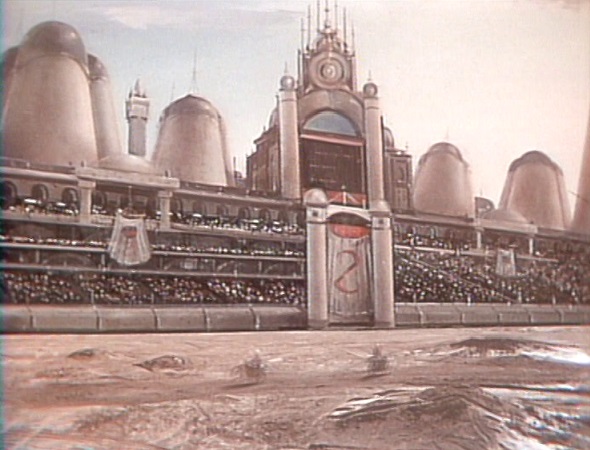
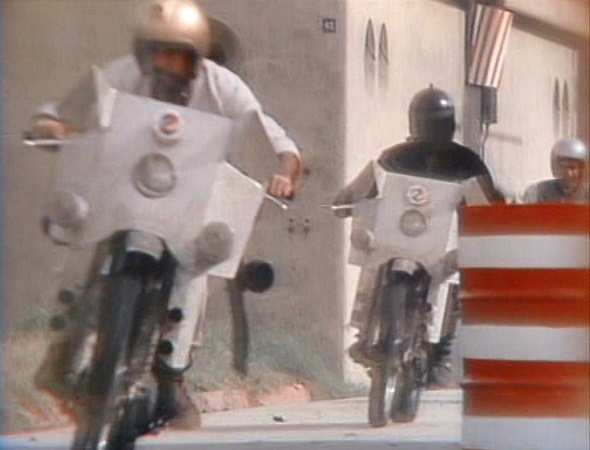
A Roger Corman produced B-movie about a post-apocalyptic world in which evil statesmen organize lethal sporting events. David Carradine, who starred three years earlier in the similar Corman B-film Death Race 2000, plays Kaz Oshay, a so called Range Guide. He and his fellow warriors have to survive in the barren wastelands between mutant cannibals and laser equipped Dirt bikes called ‘Death Machines’.

Kaz Oshay and the female Range Guide Deneer get abducted by statesmen, who take them to the city of Helix. This city is ruled by Lord Zirpola, whose brain is decaying from long term exposure to radiation, caused by the Neutron Wars. He and his evil henchman Ankar Moor submit Oshay and Deneer to torture and eventually Death Sport. They manage to escape and set out to rescue Deneer’s daughter who has been kidnapped by mutants. They are pursued by Moor and his legion of Death Machines. Deneer and Oshay, son of the greatest Range Guide, offer them plenty of resistance.

This movie’s low budget is exposed by the low production value and often hilarious sound effects. Still, it is not completely awful. There is plenty of campy, B-movie fun and the presence of former Playboy Playmate Claudia Jennings helps the visual enjoyment. The synthesized musical score and sometimes very bad special effects get annoying occasionally, but the overall reasonable performances and screenplay save this from being a complete stinker.

Rating:

Biography: Allan Arkush (1948, New Jersey) started his film career by working in the trailer department of Roger Corman’s New World Pictures. He debuted with Hollywood Boulevard as editor and co-director (with Joe Dante). His first solo effort as director was Rock ‘N’ Roll High School featuring the Ramones. After several other (TV)films he turned more to television series, such as the successful NBC show Heroes.

Biography: Nicholas Niciphor is mostly known as writer of several TV shows and movies. He has worked in both Germany and the USA. Deathsport is his only credit as (co-)director.

Filmography Allan Arkush (a selection): Hollywood Boulevard (1976, co-dir), Deathsport (1978, co-dir), Rock ‘n’ Roll High School (1979), Heartbeeps (1981), Get Crazy (1983), Fame (1984-86, TV episodes), Caddyshack II (1988), I’ll Fly Away (1992/93, TV episodes), Shake, Rattle and Rock! (1994, TV), Desert Breeze (1996, TV), Elvis Meets Nixon (1997, TV), Ally McBeal (1998/99, TV episodes), Prince Charming (2001, TV), Crossing Jordan (2001-07, TV episodes), Heroes (2006-2010, TV episodes), Minority Report (2015, TV episodes)

Filmography Nicholas Niciphor: Deathsport (1978, co-dir)