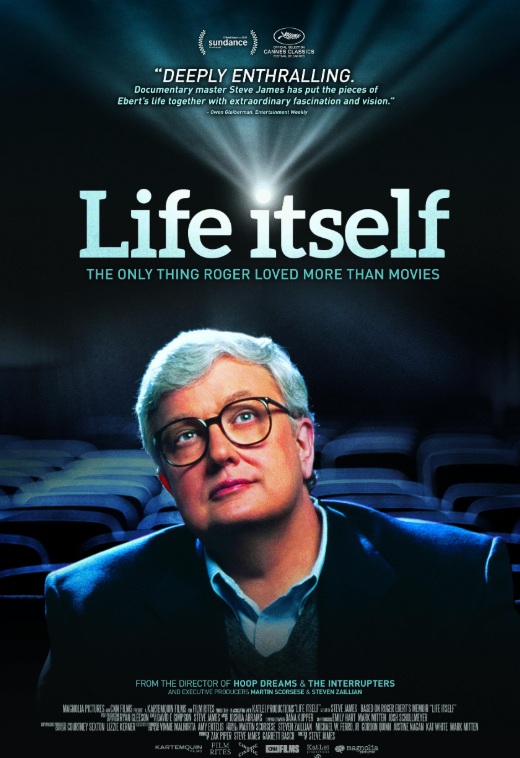
Life Itself: The Life and Times of Roger Ebert


“I was born inside the movie of my life… I don’t know how I got into the movie, but it continues to entertain me.”
― Roger Ebert

The career of Roger Ebert (1942 – 2013), probably the most famous mainstream film critic of all time, started as a sport writer at a newspaper. “I can write. I just always could”, he said about his early career. He wasn’t exaggerating. His talent was noted and on 21 he already had a column in the local newspaper in Illinois.

He moved to Chicago, got hired directly by The Chicago Sun Times and when their film critic retired, they gave him the job. He would stay in this job until his death in 2013. When he started his job in 1967, he was the youngest film critic in America. One of his early reviews was for Bonnie and Clyde, which was released in that year. He called it “a milestone in the history of American movies, a work of truth and brilliance” and awarded it four out of four stars.

Colleagues describe Ebert as ‘fast and furious’. He could produce a thought-out review in 30 minutes. He is the only film critic to win a Pulitzer price. His formula: producing 6 film reviews a week. During his career, he viewed 10.000 movies and reviewed 6.000 of them. From my personal experience, I can say this is a lot.

In his later life, Ebert got cancer of the thyroid and salivary glands and in 2006 his lower jaw was removed. In the documentary Life Itself, the renowned film critic looks back on his life.

Ebert saw films as ‘empathy machines’. They have the power to transport us to different times and places, and place us in the shoes of all sorts of characters. Early in his career, he would drink a lot and develop a major alcohol problem. He checked in AA in August 1997 and stayed sober till his death.

Another notable fact about his early career was he co-wrote the screenplay for Russ Meyer’s Beyond the Valley of the Dolls. What attracted him to Russ Meyer movies? the documentary maker Steve James asks an interviewee. “Boobs”, is the simple answer.

Ebert had a lot to say about films. He would also do live performances in which he would analyse classics like Vertigo and In Cold Blood frame by frame. “He had something interesting to say about every frame”, a friend observes.

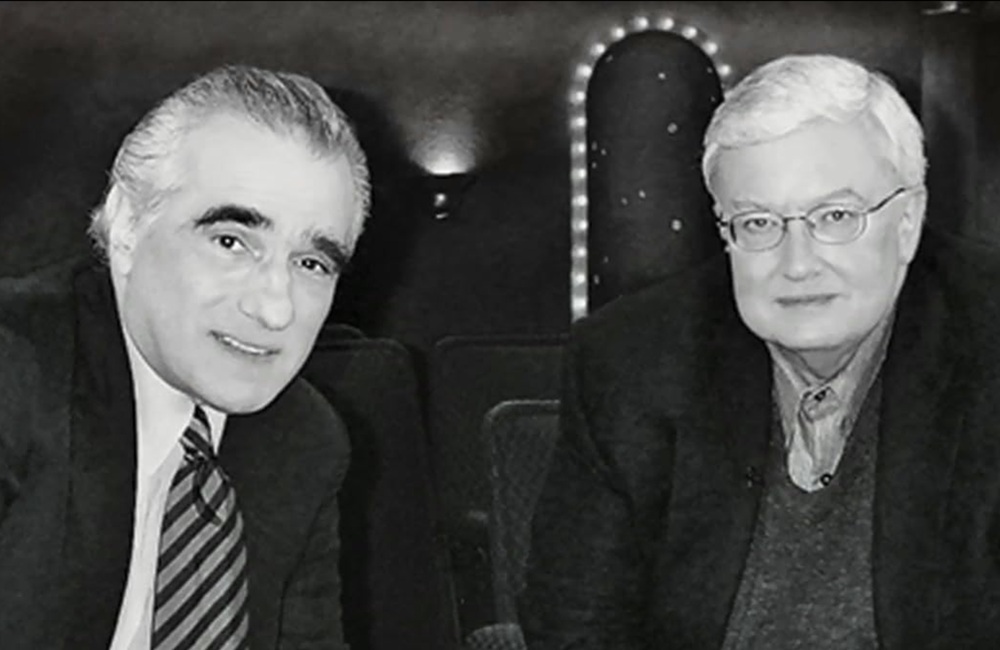
He could certainly be critical, but in a kind way, says Martin Scorsese. Ebert reviewed his first film Who’s That Knocking On My Door and promised he would become the American Fellini. He turned out to be right. Many unknown filmmakers loved Ebert; he could lift them – and their films – out of obscurity.

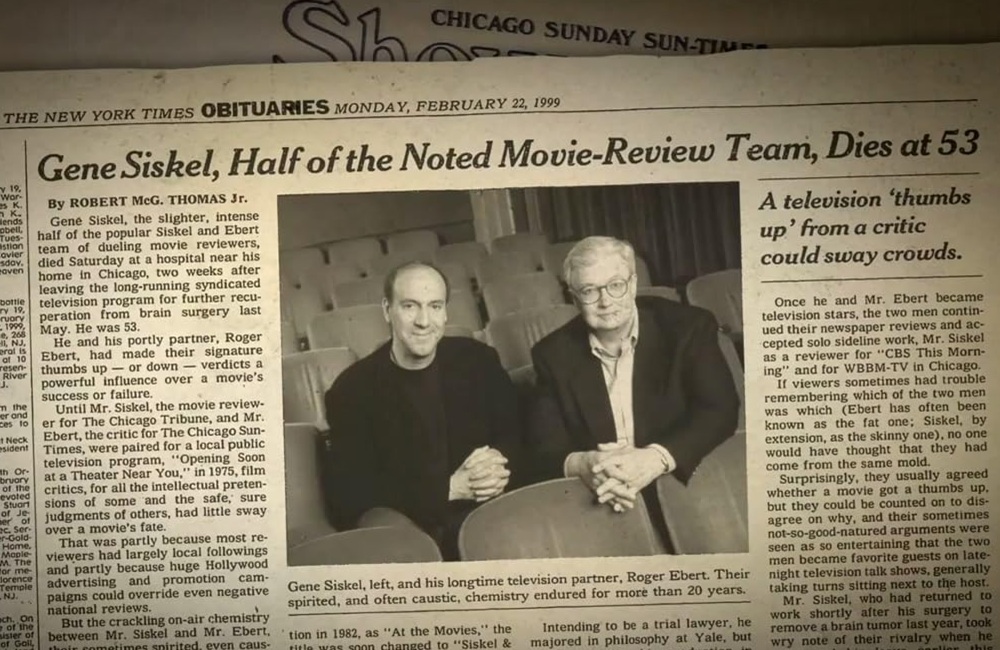
Ebert became really famous when he was coupled to other Chicago critic Gene Siskel for a TV show. The two were enemies at first, but they developed a great dynamic with furious discussions about the movies they loved/hated. For example, Ebert loved Scarface and Siskel hated it and they had a great discussion. The other way around: Ebert said Full Metal Jacket was “not original, and not a masterpiece” and Siskel thought it “was very original and close to a masterpiece.”

The cities New York and L.A. refused to air the program for a long time, because the reviewers were from Chicago. But eventually gave in and their programme At The Movies became a nationwide success; the two thumbs up or down they pioneered could make or break a movie…

A large segment of the documentary focuses on the Cannes Film Festival, which Ebert frequently attended and later wrote a book about. During the festival, he also pioneered early internet use by phoning in daily reviews for his newspaper. Before his passing, he built a cutting-edge website where his entire body of work is archived. It remains a vital resource for film information.

So why is the documentary, which was based on his autobiography, named ‘Life Itself’? A former colleague from the newspaper explains that Ebert was the lead star and director of the movie that was his life. And quite the movie it turned out to be.
12 Roger Ebert Reviews with Surprising Ratings
On IMDb, each classic film from Ebert’s era features a dedicated reviews page where critics contribute. Roger Ebert consistently ranks as the top reviewer for these movies, with each of his reviews including a rating from one to four stars. But which of his ratings stand out as the most unexpected?

1.) Blue Velvet –– 1 out of 4
2.) The Usual Suspects –– 1,5 out of 4
3.) A Clockwork Orange –– 2 out of 4
4.) Die Hard –– 2 out of 4
5.) Fight Club –– 2 out of 4
6.) Full Metal Jacket –– 2,5 out of 4
7.) Once Upon a Time in the West –– 2,5 out of 4
8.) Reservoir Dogs –– 2,5 out of 4
9.) Star Wars Episode 1: The Phantom Menace –– 3,5 out of 4
10.) Gates of Heaven –– 4 out of 4
11.) Knowing –– 4 out of 4
12.) Man Push Cart –– 4 out of 4

Beneath the Valley of the Ultra-Vixens

Six Chicks in search of a Cluck! …and so hilariously funny!

Director: Russ Meyer
Written by: Russ Meyer, Roger Ebert
Cast: Kitten Natividad, Ken Kerr, Uschi Digard, Ann Marie

Year / Country: 1979, USA
Running Time: 93 mins.

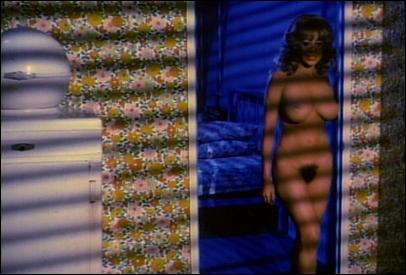
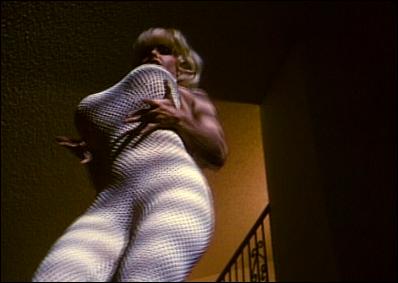
Although Russ Meyer’s final feature film is not a masterpiece, it is one hell of a funny movie. The paper thin story involves simple mind Lamar Shedd and his steamy Vixen wife Lola Langusta (Lavonia – hotter than a Mexican’s lunch).

Stuart Lancaster gives us the lowdown on Small Town USA, a redneck township where simple guys and girls have simple needs. In the daytime they work as mechanics and door-to-door salesmen and at night… well, guess you know what they do at night. Of course this is a Meyer movie in which the girls have all the power.

Beneath the Valley of the Ultra-Vixens takes on sexual conventions and the sexy main chick kicks the anal loving redneck in the groin. But this is part of the central love story between Lamar and Lavonia. He can only get satisfaction through the backdoor and she is just a little too enthusiastic. Typical content for Meyer who wrote the script with no one less than film critic Roger Ebert!

If you want to have a really great time, watch Beneath the Valley of the Ultra-Vixens. It got more bush than Texas politics and roundings greater than the Himalayas. And as a story of women’s liberation is supposed to be like, the women are always on top of things.

Rating:

Biography: Russ Meyer (1922, California – 2004, California) is known primarily for making a large number of sexploitation flicks, such as Faster, Pussycat! Kill! Kill! and Vixen! He did almost everything – directing, writing, editing – himself. He even did the distribution of his own movies. In the cult / exploitation circuit his films did very well and made him more than enough money to continue his film career. In the late seventies, Meyer retired as a wealthy man. Many of his films are nowadays considered as cult classics.

Filmography: The French Peep Show (1950, short doc), The Immortal Mr. Teas (1959), The Naked Cinema (1961, short), Eve and the Handyman (1961), Erotica (1961), Wild Gals of the Naked West (1962), Skyscrapers and Brassieres (1963, short), Europe in the Raw (1963, doc), Heavenly Bodies (1963), Lorna (1964), Fanny Hill (1964), Mudhoney (1965), Faster, Pussycat! Kill! Kill! (1965), Motor Psycho (1965), Mondo Topless (1966), Common Law Cabin (1967), Good Morning… and Goodbye! (1967), Finders Keepers, Lovers Weepers! (1968), Vixen! (1968), Cherry, Harry & Raquel! (1970), Beyond the Valley of the Dolls (1970), The Seven Minutes (1971), Black Snake (1973), Supervixens (1975), Up! (1976), Beneath the Valley of the Ultra-Vixens (1979), Pandora Peaks (2001, short)

Faster, Pussycat! Kill! Kill!


SUPERWOMEN! Belted, buckled and BOOTED!

Director: Russ Meyer
Written by: Russ Meyer, Jack Moran
Cast: Tura Satana, Haji, Lori Williams, Sue Bernard

Year / Country: 1965, USA
Running Time: 83 mins.

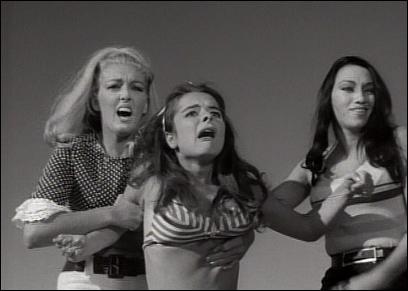
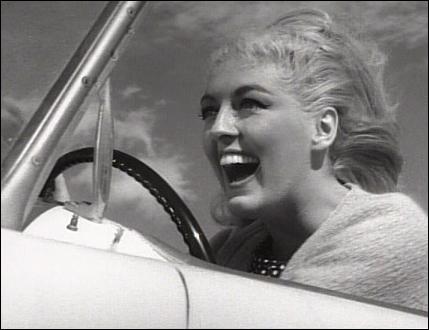
Three thrill-seeking superwomen, working as dancers in a go-go bar, set out on a violent odyssey through the desert, killing men along their way. They have a car each that they use to race against – or drive over their victims.

The women drug and kidnap a young girl after they have wasted her boyfriend. After that, they hatch the plan to rob a crippled father and his sons. These patronizing men deserve a lesson, but it soon becomes clear that this is a journey from which there is no return. Varla, the leader, deliberately goes down the path of her own self-destruction, dragging her two buxotic cohorts along with her.

In a time when men were still considered superior, these three women level the score. It is therefore a feminist film, despite the fact that these women are portrayed as sex objects. This female empowerment is typical for its director, Russ Meyer, the undisputed master of large breasted women, campy humour and sly satire.

Faster, Pussycat! Kill! Kill! stands as Meyer’s masterpiece, a cult movie pur sang. Funny, sexy, exploitative and provocative: a FilmDungeon favourite! They don’t make them like this anymore. Well Tarantino surely tries. But the originality and cult appeal of Faster, Pussycat! Kill! Kill! is rarely matched and never bettered. Watch these pussycats roar and love it!

Rating:

Biography: Russ Meyer (1922, California – 2004, California) is known primarily for making a large number of sexploitation flicks, such as Faster, Pussycat! Kill! Kill! and Vixen! He did almost everything – directing, writing, editing – himself. He even did the distribution of his own movies. In the cult / exploitation circuit his films did very well and made him more than enough money to continue his film career. In the late seventies, Meyer retired as a wealthy man. Many of his films are nowadays considered as cult classics.

Filmography: The French Peep Show (1950, short doc), The Immortal Mr. Teas (1959), The Naked Cinema (1961, short), Eve and the Handyman (1961), Erotica (1961), Wild Gals of the Naked West (1962), Skyscrapers and Brassieres (1963, short), Europe in the Raw (1963, doc), Heavenly Bodies (1963), Lorna (1964), Fanny Hill (1964), Mudhoney (1965), Faster, Pussycat! Kill! Kill! (1965), Motor Psycho (1965), Mondo Topless (1966), Common Law Cabin (1967), Good Morning… and Goodbye! (1967), Finders Keepers, Lovers Weepers! (1968), Vixen! (1968), Cherry, Harry & Raquel! (1970), Beyond the Valley of the Dolls (1970), The Seven Minutes (1971), Black Snake (1973), Supervixens (1975), Up! (1976), Beneath the Valley of the Ultra-Vixens (1979), Pandora Peaks (2001, short)