Face to Face

Director: Sergio Sollima
Written by: Sergio Donati, Sergio Sollima
Cast: Tomas Milian, Gian Maria Volonté, William Berger

Year / Country: 1967, Italy / Spain
Running Time: 107 mins.

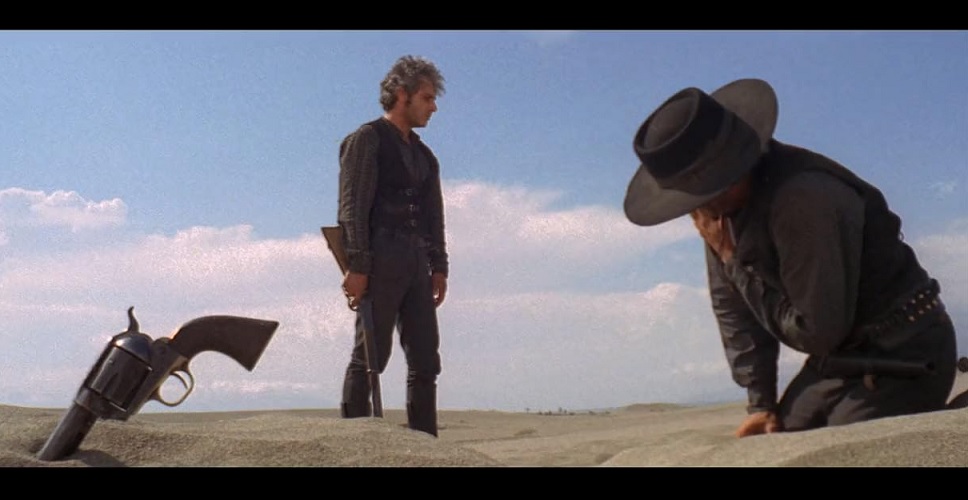
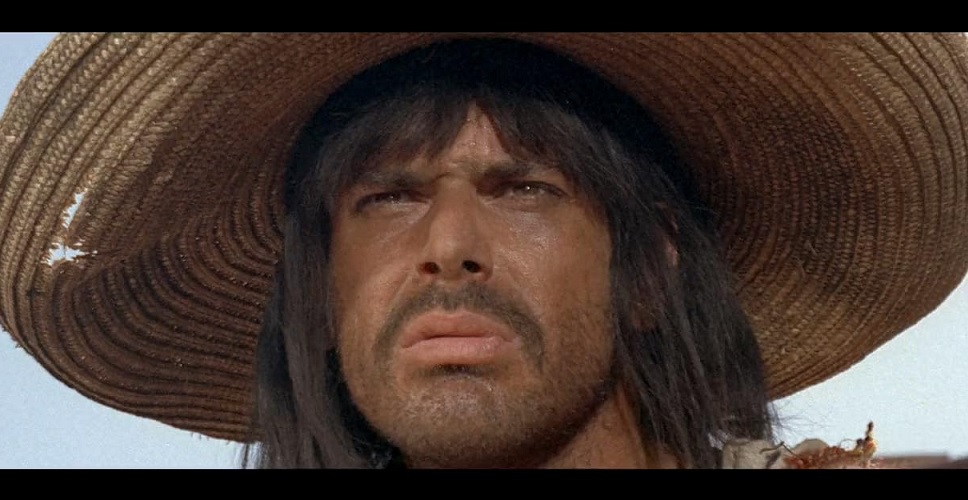
In Face to Face, director Sergio Sollima delivers a more intellectual take on the spaghetti western while still packing in thrilling action. The film stars Gian Maria Volonté – best known for his villainous roles in A Fistful of Dollars and For a Few Dollars More – as Boston professor Brad Fletcher. Suffering from a severe lung ailment, Fletcher moves to Texas for the warmer climate, only to be taken hostage by the ruthless bandit Solomon Bennet (Tomas Milian) during a daring escape from custody.

Bennet aims to reunite his old gang, including his former ally Siringo (William Berger). However, he’s being hunted by the Pinkertons – a private detective agency – of which Siringo is secretly a member. As Fletcher spends more time with Bennet, his passive nature erodes, and he gradually embraces a life of crime. Once the beast within him is unleashed, he proves to be even more ruthless than his captor.

Sollima weaves a deeper thematic layer into the film, using the western setting to explore the rise of fascism. When Bennet seizes control of a village, he governs it as though it were a single organism, using manipulation and torture to force everyone into submission. His authoritarian rule mirrors historical regimes, adding an unsettling resonance to the story.

However, Fletcher’s transformation isn’t entirely convincing, likely due to the film’s extensive edits – the original cut ran 2.5 hours. His shift from an educated, seemingly moral man to a cruel bandit happens too abruptly, making it feel somewhat unearned. That said, Sollima’s direction shines, especially in his handling of the actors. Volonté delivers a controlled and nuanced performance, while Milian exudes charisma in every scene.

Ennio Morricone’s score, while solid, doesn’t quite reach the brilliance of his work with Sergio Leone. However, the film’s opening credit sequence does capture the grandeur of Leone’s westerns, setting the stage for an absorbing experience. Despite some flaws, Face to Face remains an excellent film – thought-provoking, visually compelling, and anchored by strong performances.

Rating:

Biography: Sergio Sollima (1921, Rome) is an Italian filmmaker. Due to his trio of westerns starring Tomas Milian in the mid 60’s (The Big Gundown, Face to Face and Big Gundown 2: Run, Man, Run) he became known as ‘the other Sergio’ – the third most important director of spaghetti westerns, after Sergio Leone and Sergio Corbucci. Sollima began in cinema as a scriptwriter on Italian sword and sandal epics such as Ursus (1961) and The Ten Gladiators (1963). He directed two spy movies to capitalize on the popularity of the James Bond films. Then he started making spaghetti westerns and action / crime films such as The Family starring Charles Bronson and Telly Savalas. Later in his career he moved more towards television work.

Filmography (a selection): L’amore difficile (1962, segment ‘L’avventura di un soldato’), Agente 3S3, passaporto per l’inferno (1965), Agente 3S3, massacre al sole (1966), Requiem per un agente segreto (1966), The Big Gundown (1966), Face to Face (1967), Big Gundown 2: Run, Man, Run, The Family (1970), Devil in the Brain (1972), Revolver (1973), Sandokan (1976, TV-episodes), The Black Corsair (1976), Steps of Love (1989), Berlin ’39 (1993)

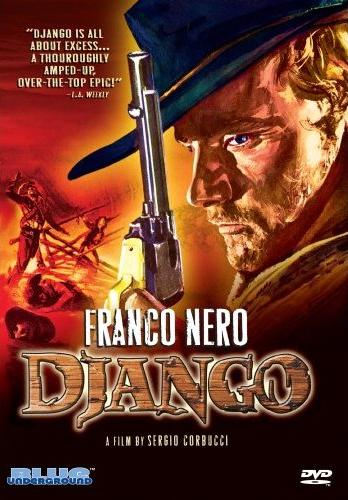
Django

Director: Sergio Corbucci
Written by: Sergio Corbucci, Bruno Corbucci, Franco Rossetti
Cast: Franco Nero, José Bódalo, Loredana Nusciak, Ángel Álvarez

Year / Country: 1966, Italy / Spain
Running Time: 88 mins.

In 1964, Sergio Leone, an Italian director, redefined the western genre with A Fistful of Dollars, a groundbreaking remake of Akira Kurosawa’s Yojimbo. Starring a then-unknown Clint Eastwood, the film introduced audiences to the now-iconic figure of the nameless gunslinger, a drifter who arrives in a town torn apart by a bitter private war. Playing both sides against each other, he emerges victorious, setting the template for the spaghetti western genre.

The overwhelming success of Leone’s film inspired a wave of imitations, varying in quality. Among these, Django (1966) by Sergio Corbucci stands out as one of the best and certainly the most famous. The film borrows heavily from A Fistful of Dollars but adds its own distinctive twist. Instead of a nameless drifter, we meet Django, a mysterious stranger trudging through a desolate landscape while dragging a coffin behind him. His identity is memorably introduced through Louis Bacalov’s haunting theme song, which passionately proclaims his name: Django!

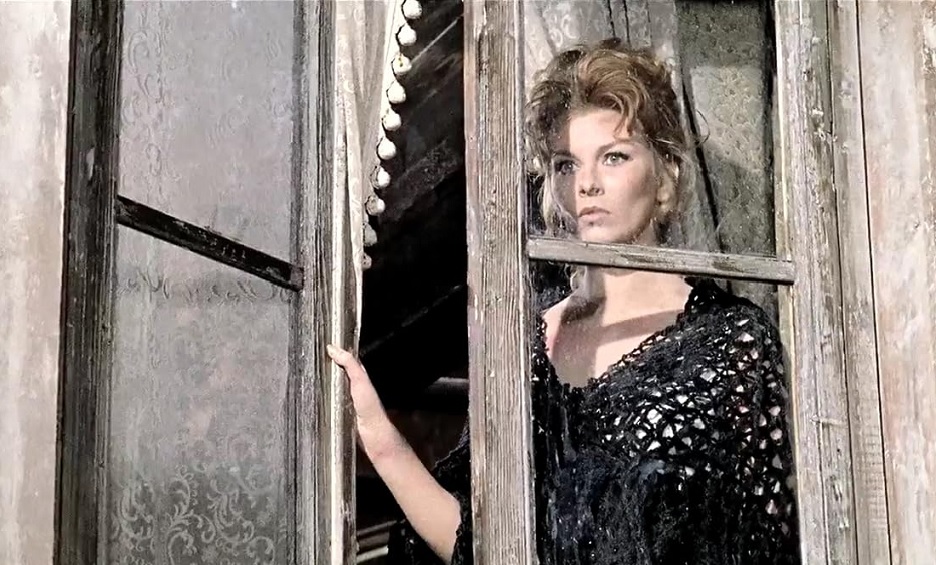
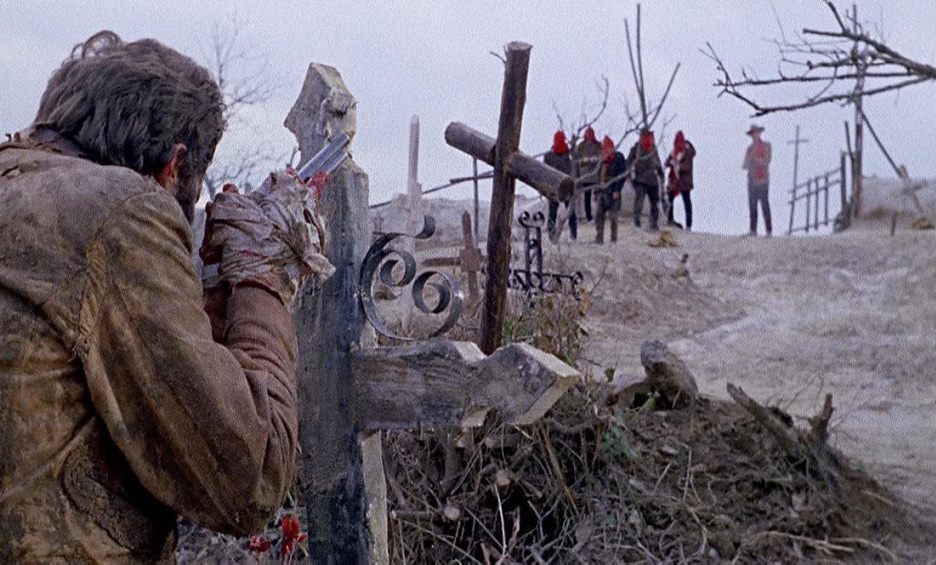
The story follows Django as he rescues a prostitute named Maria from a gang of ruthless outlaws. He escorts her to a ghostly, near-abandoned town where he intends to settle an old score. There, he finds himself caught in a deadly conflict between Mexican revolutionaries and a band of racist Southern renegades led by his arch-nemesis, Major Jackson. Initially siding with the Mexicans to deal a crippling blow to Jackson, Django’s motivations soon come to light, setting the stage for an explosive and tragic finale. By the film’s end, only Django and Maria are left standing amidst the carnage, with the rest buried – literally and figuratively.

What elevates Django almost to the level of Leone’s masterpiece is Corbucci’s skillful execution of the genre’s defining elements. Franco Nero delivers a magnetic performance as the titular anti-hero, rivaling Eastwood’s cool and detached gunslinger. Bacalov’s score, while perhaps not as iconic as Ennio Morricone’s, is equally evocative, setting the perfect tone for the film. The supporting cast adds depth to the world, and the stylish, gritty action sequences ensure the audience remains captivated throughout.

Of course, Django is also notorious for its graphic violence, which was shocking for its time. Though modern audiences might find it less visceral compared to contemporary standards, the film doesn’t shy away from bloodshed. That said, the lack of squibs – a result of budgetary constraints – dampens some of the impact, as the gunplay often lacks the visual punch of more modern films.

The film’s pacing does falter slightly in the middle act, where the tension and momentum dip after the gripping opening sequences. However, Corbucci makes up for this with a thrilling and memorable climax that reaffirms the film’s status as a cult classic.

In conclusion, Django is a quintessential spaghetti western and a must-watch for fans of the genre. With its unforgettable protagonist, striking visuals, and bleak tone, it stands as a testament to the creativity and enduring appeal of Italian westerns.

Rating:

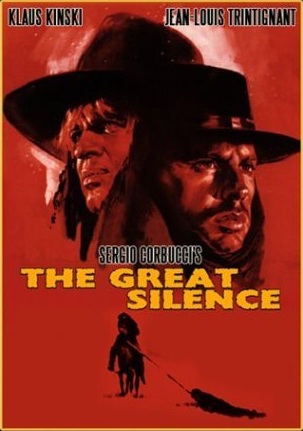
Biography: Sergio Corbucci (1926, Rome – 1990, Rome) was, alongside Sergio Leone, one of the most prominent directors of spaghetti westerns. Born and raised in Rome, Corbucci played a crucial role in popularizing the genre, particularly through his iconic films Django (1966) and The Great Silence (Il Grande Silenzio, 1968). He frequently collaborated with actor Franco Nero, crafting memorable characters and stories that helped define the genre’s unique style. His B-movies are characterized by brutal violence, surrealist and apocalyptic production design, black humour and politically left symbolism. Corbucci was a fanatical Marxist and many of his films show the hopelessness of the revolution. He kept working in Italy throughout his career and most of his films were barely released abroad. He died in Rome in 1990.

Filmography (a selection): Foreign Earth (1954), Water’s Love (1954), Supreme Confession (1957), Angel’s Sky (1957), Duel of the Titans (1961), Toto, Peppino and La Dolce Vita (1961), The Son of Spartacus (1963), Grand Canyon Massacre (1963), Django (1966), Navajo Joe (1966), The Mercenary (1968), The Great Silence (1968), Bandera Bandits (1972), The White, the Yellow, and the Black (1975), The Payoff (1978), Super Fuzz (1980), My Darling, My Dearest (1982), Days of Inspector Ambrosio (1988)