Nice Dreams


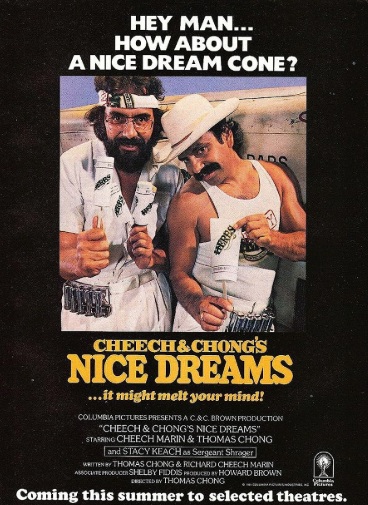
Director: Tommy Chong
Written by: Tommy Chong, Cheech Marin
Cast: Cheech Marin, Tommy Chong, Stacy Keach The Sarge Stedanko

Year / Country: 1981, USA
Running Time: 88 mins.

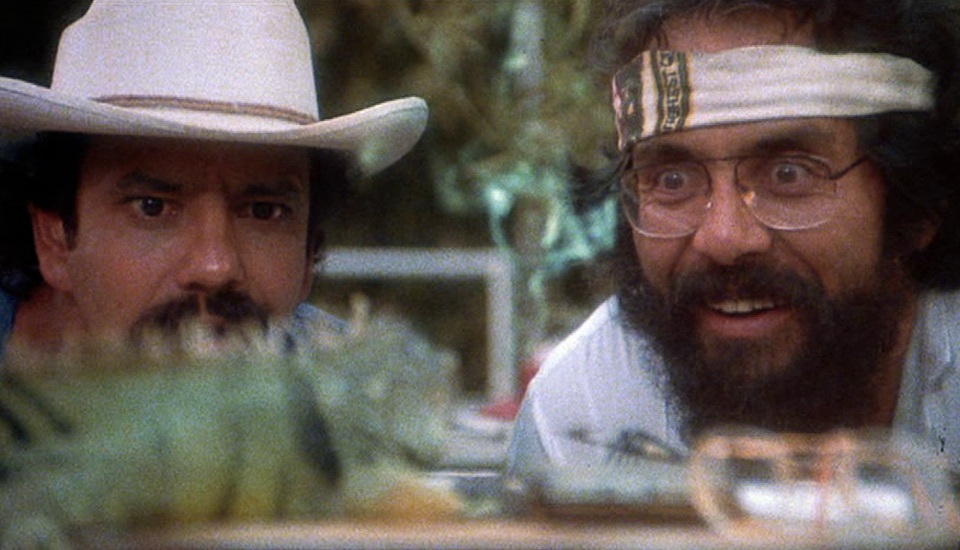
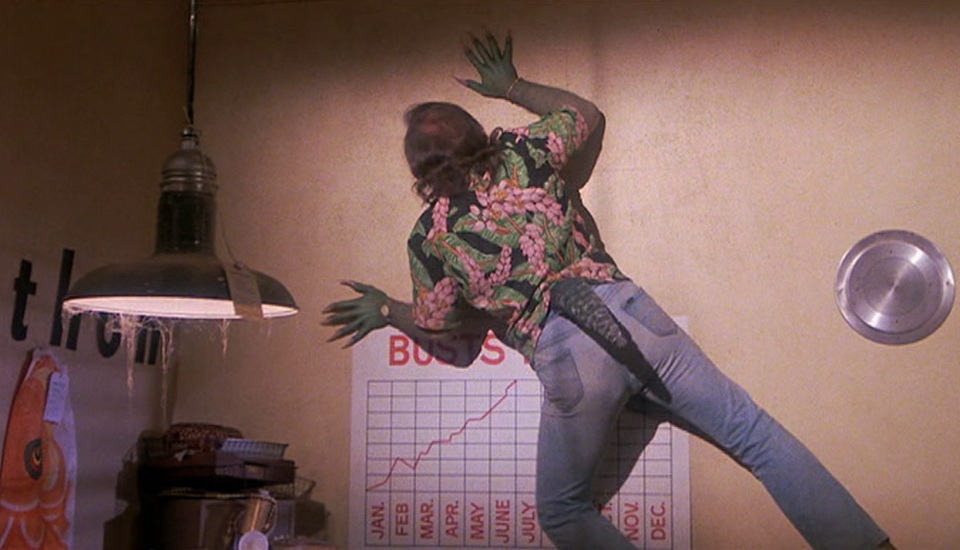
In their third feature, once again directed by Tommy Chong himself, the duo is dealing marijuana cones from an ice-cream truck. Police Sgt. Stedanko (Stacy Keach), whom we first met in Up in Smoke, the original Cheech and Chong movie, is addicted to dope and convinced that getting high is the best way to nail his suspected drug peddlers. Meanwhile, lizards are crawling all over the plants of the duo’s suppliers, and Stedanko begins to develop distinctly lizard-like features of his own.

As comedians, Cheech and Chong are known for heavy improvisation. Some of it works better than the rest, and not every joke or line of dialogue lands. Still, the movie is worth the price of admission for the sequence in which they attempt to have a threesome with a Latina woman, only for her animal-hating Mexican husband to come home unexpectedly. It’s a terrific stretch of pure slapstick chaos.

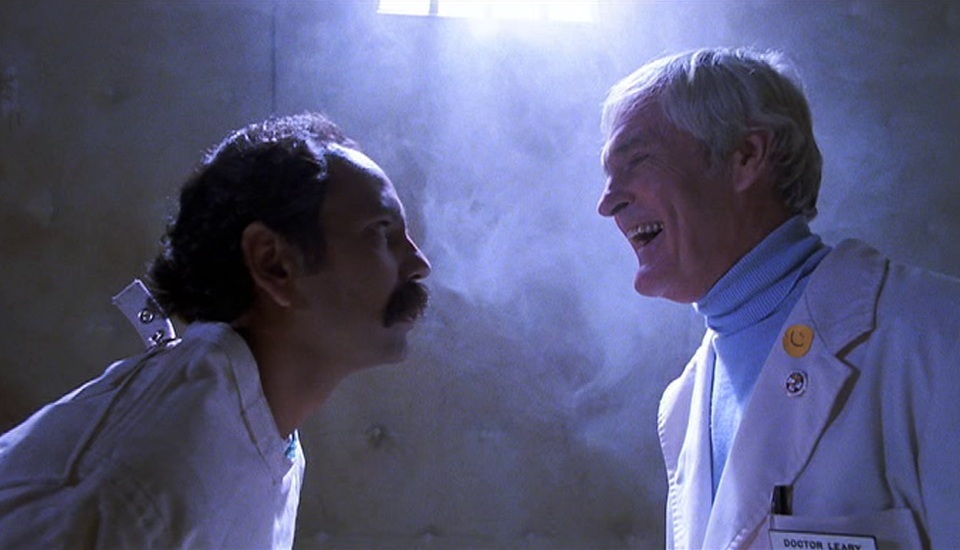
The film is also packed with wonderfully oddball characters, including Paul Reubens as the uniquely weird Howie Hamburger Dude and Dr. Timothy Leary playing himself, sending the guys on one hell of an acid trip inside an insane asylum. Nice Dreams is a cultural time capsule, a groovy museum piece of curious eighties pop culture. These dudes really knew how to conjure comedy magic.

Rating:

Biography: Tommy Chong (1938, Edmonton, Canada) is a comedian, actor, writer, and activist best known as one half of the legendary stoner duo Cheech & Chong. Raised partly in Canada and later the United States, Chong first made his mark in music and improvisational comedy before teaming up with Cheech Marin in the late 1960s. Together, they became countercultural icons with hit comedy albums and films like Up in Smoke, shaping weed humor for generations to come. Beyond comedy, Chong has appeared in films and TV shows, including a memorable role on That ’70s Show, and has been a vocal advocate for cannabis legalization, even serving a brief prison sentence in the early 2000s that further cemented his status as a counterculture symbol.

Filmography: Cheech and Chong’s Next Movie (1980), Nice Dreams (1981), Still Smokin (1983), Cheech & Chong’s The Corsican Brothers (1984), Toto: Without Your Love (1986, Music Video), Far Out Man (1990)

The Doorway (1): LSD

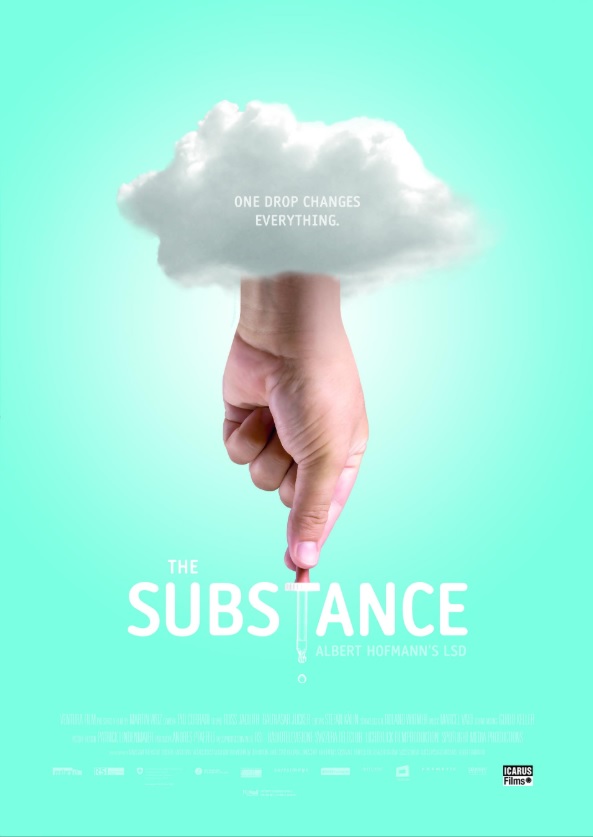
“A fraction of a milligram and everything changes. A molecule that alters your consciousness. An unforgettable experience.”

On April 16, 1943, Swiss chemist Albert Hofmann, working at the Sandoz laboratory in Basel, accidentally ingested a small dose of LSD. Suddenly, he felt as if he were in another world. Fear gripped him: he worried he might never return to his wife and child, and panic set in. But later, the fear gave way to a positive wave. Afterwards, Hofmann felt he had crossed to the other side and returned.

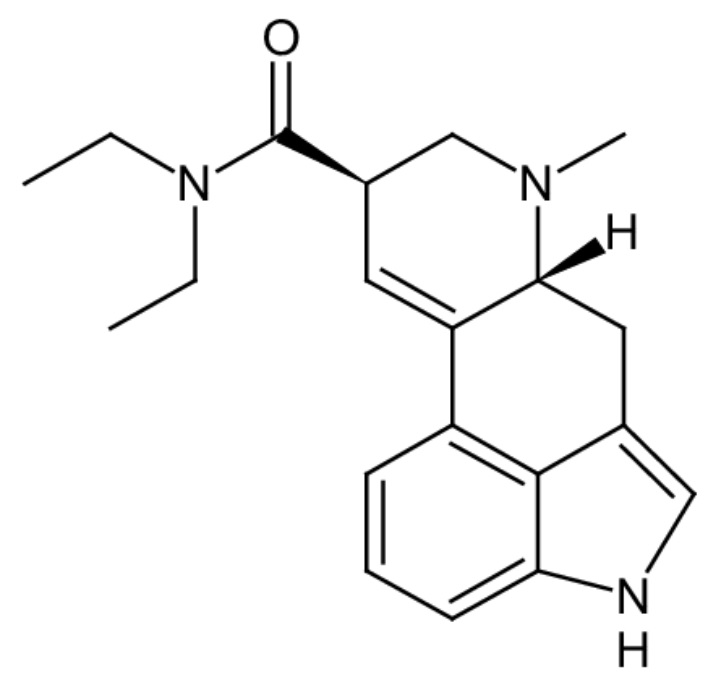
Hofmann had been searching for a medicine to improve circulation. His work led him to ergot, a fungus that grows on rye and related plants. From this he synthesized LSD (lysergic acid diethylamide), a substance chemically related to psilocybin, the psychedelic compound found in magic mushrooms. At first, Hofmann did not know what had caused his extraordinary experience, but he soon realized it must have been the compound he had created.

At Sandoz, researchers recognized LSD’s potential value for psychiatric research. Samples were sent to Stanislav Grof, a Czech-born American psychiatrist and consciousness researcher. This marked the beginning of Grof’s decades-long exploration of non-ordinary states of consciousness.

Grof saw LSD as a catalyst. It does not create these experiences, he argued, but makes them accessible. “In that sense”, he said, “LSD is comparable to what a microscope is for biology or a telescope for astronomy. We don’t think the microscope creates worlds that are not there, but we cannot study these worlds without the tool.”

During the Cold War, the CIA became interested in LSD as a possible truth serum. The problem was that they were seeking predictable outcomes and LSD does not work that way. It was also considered as a potential weapon to incapacitate the enemy.

So how does LSD work? Our consciousness is the sum total of everything our senses perceive. LSD amplifies these senses dramatically. Psychedelic sessions can take people further than years of psychoanalysis.

In a positive experience, users may feel the ego dissolve, boundaries melt away, and control loosen. This can be deeply pleasant. Space and time lose their meaning; experience flows freely until one becomes pure experience itself.

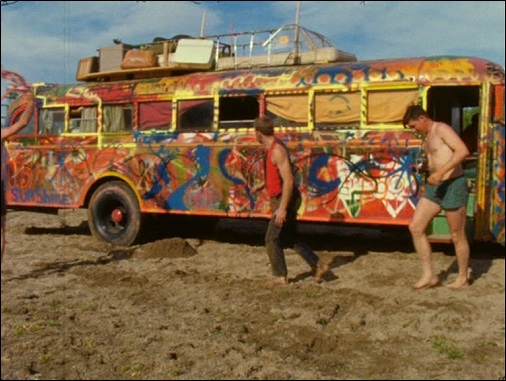
In the 1960s, the psychedelic revolution erupted. The Merry Pranksters, led by Ken Kesey – author of ‘One Flew Over the Cuckoo’s Nest’ – embraced LSD and drove a brightly painted bus across America, inviting people to experience it for themselves.

In Millbrook, an abandoned estate in New York, psychiatrist Timothy Leary and Ralph Metzner established a psychedelic research center where anyone could participate. LSD was seen as a great equalizer. No matter one’s social background, the experience could dissolve hierarchy and expand cosmic understanding.

“We teach people to turn on, go out of their minds, and tune in”, Leary said. “The country is an insane asylum, focused on material possession, war, and racism.” His ambition was nothing less than a spiritual revolution, achieved by millions of people using LSD regularly.

Hofmann strongly objected to this approach. LSD, he warned, was a powerful instrument that required a mature mind. Promoting it indiscriminately to young people was irresponsible.

LSD often triggered strong anti-war sentiments, rooted in transpersonal experiences of unity with nature and all living beings. This directly challenged conservative values. In the United States, amid the escalating Vietnam War, tensions between the counterculture and the establishment grew. LSD became a convenient scapegoat for social unrest, and the government launched an aggressive – and often absurd – propaganda campaign.

In 1966, LSD was outlawed in California. In 1967, President Nixon declared Timothy Leary “the most dangerous man in America.” Grof later remarked, “In the irresponsible hands of Leary, it came to be seen as dangerous and that killed nearly all possibilities for research.”

Some clinical work continued for a while. Grof conducted LSD sessions with terminal cancer patients, profoundly altering their relationship with death. Many became reconciled with the fact that they were dying. “In our culture”, Grof said, “we are programmed to think we are only our bodies. LSD can show you that you are part of something much larger.”

Soon, however, LSD was internationally demonized. Research disappeared underground and remained there for decades.

Albert Hofmann died on April 29, 2008, at the age of 102. He never denied LSD’s risks, but he also believed its greatest danger lay in misunderstanding it. For Hofmann, LSD was not an escape from reality but a doorway… A doorway that, if approached with care, could reveal how vast and mysterious consciousness truly is.
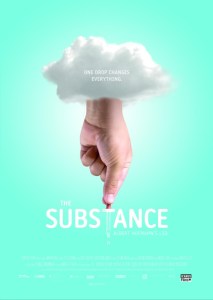
The documentary ‘The Substance: Albert Hofmann’s LSD’ is available for rent on the Apple TV app.

Een magische jaren 60’ trip

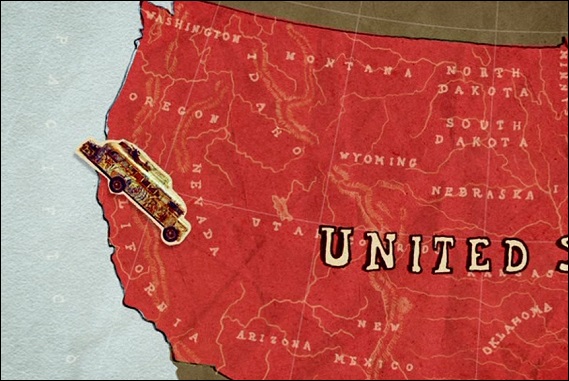
LSD-promoter Ken Kesey, auteur van o.a. One Flew Over the Cuckoo’s Nest, ondernam in 1964 een trip door de Verenigde Staten met een groep mede-trippers genaamd ‘The Merry Pranksters’. Een van hen is speedfreak Neal Cassady, die model stond voor het personage Dean Moriarty in Jack Kerouac’s befaamde boek On the Road.

Het vertrekpunt was Kesey’s boerderij in La Honda (in Californië tussen San Francisco, San Jose en Santa Cruz), waar de groep reeds in een commune leefde. Het einddoel was ‘the World Fair’ in New York. Het vervoersmiddel was de in alle psychedelische kleuren van de regenboog beschilderde schoolbus ‘Further’.

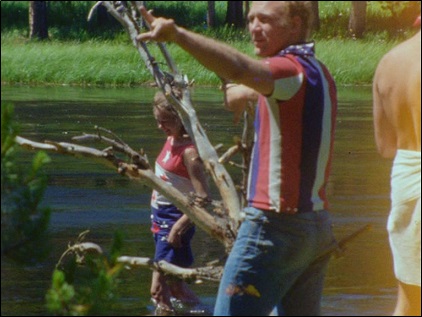
De groep maakte onderweg ruim 30 uur filmopnames, maar aangezien het amateurs waren en de geluidsband niet synchroon liep met de film, werd het werk nooit voltooid. Totdat documentairemaker Alex Gibney (Gonzo: The Life and Work of Dr. Hunter S. Thompson en Enron: The Smartest Guys in the Room) het materiaal in 2011 op een heldere en stijlvolle manier aan elkaar monteerde.

Wat de regisseur voor ogen had met zijn film, was de kijker meenemen in de bus en de trip zelf laten ervaren. Geen ‘talking heads’ dus die alles uitleggen. De beelden en dialogen moeten een beetje voor zichzelf spreken. Als tijdcapsule werkt de film inderdaad zeer effectief. Dit wordt ook ondersteund door de sfeervolle soundtrack met klassiekers uit de jaren 60’.

De psychedelische subcultuur steekt mooi af tegen de echte jaren 60’, dat in essentie een brave voortgang was van de jaren 50’ en die we nu vooral kennen van de serie Mad Men. Maar de hippies en de drugs zijn wat we ons altijd het eerste voor de geest halen, wanneer we aan de jaren 60’ denken, en dat is voor een belangrijk deel aan figuren als Kesey te danken.

Magic Trip 1

Magic Trip 2

Magic Trip 3

Ken Kesey - de regisseur van de trip

Ken Kesey – de regisseur van de trip

Magic Trip 5

Wat was Kesey’s bedoeling met zijn psychedelische roadtrip? Het had erg te maken met de zwarte depressie waar de VS in terecht was gekomen na de moord op Kennedy in 64’. Zoals vele LSD-evangelisten geloofde Kesey dat hij het collectieve bewustzijn kon veranderen. Hij zag zichzelf als bevrijder van zijn generatie. Maar als kijker realiseer je je al snel dat dit nooit kan werken, al is het alleen al vanwege de spanningen die in een dergelijke groep ontstaan en de kater die altijd volgt op zulke escapades.

Tijdens de trip bezoeken ze andere bekende figuren uit dit tijdperk. Zo passeren ze Millbrook Farm buiten New York, waar LSD-goeroe Timothy Leary spirituele LSD-trips begeleidde. In New York ontmoetten ze de bekende schrijvers van de ‘Beat Generation’, Jack Kerouac en Allen Ginsberg. Maar na het bezoeken van reisdoel The World Fair wordt de trip belangrijker dan de bestemming…

Ze reizen vervolgens terug naar La Honda waar ze nog een tijdje doorgaan met LSD-feesten. In deze periode maakt The Grateful Dead zijn opwachting als huisband. Kesey en zijn gevolg lieten tijdens deze feesten ook het ruwe materiaal van de bustrip zien, maar de enige die wakker wist te blijven was amfetamine liefhebber Cassady. Kesey ging toen ook diploma’s uitreiken voor verlichtend LSD-gebruik. Maar uiteindelijk had hij er genoeg van en stuurde hij de commune weg.

Wie aan Kesey vraagt wat zijn beste werk is geweest antwoordde hij aan het einde van zijn carrière ‘the bus’. Tja, het is inderdaad een mooi monument in de stal van Kesey zo’n 30 jaar later. Maar over LSD als wereldveranderaar moeten we concluderen dat dit glansrijk gefaald heeft. Tuurlijk kunnen psychedelische drugs deuren openen, maar mensen blijven individuen. Niemand wil echt zijn liefde delen met zijn beste vrienden. Opwinding is verleidelijk, maar uiteindelijk willen mensen toch liever stabiliteit. Ook Kesey erkent dit. Hoe mooi het ook kan zijn, samenzijn is uiteindelijk altijd tijdelijk en alleen individualisme is permanent.

Icon 2 - Rose