Face to Face

Director: Sergio Sollima
Written by: Sergio Donati, Sergio Sollima
Cast: Tomas Milian, Gian Maria Volonté, William Berger

Year / Country: 1967, Italy / Spain
Running Time: 107 mins.

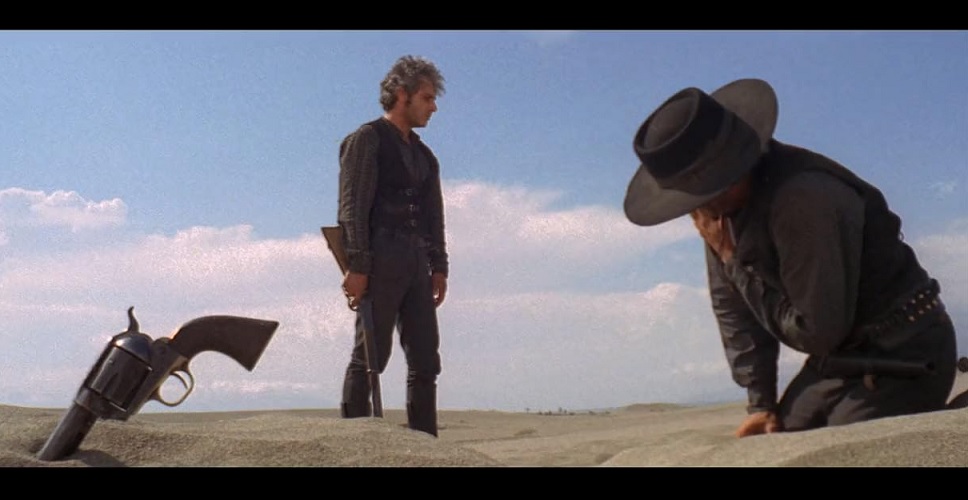
In Face to Face, director Sergio Sollima delivers a more intellectual take on the spaghetti western while still packing in thrilling action. The film stars Gian Maria Volonté – best known for his villainous roles in A Fistful of Dollars and For a Few Dollars More – as Boston professor Brad Fletcher. Suffering from a severe lung ailment, Fletcher moves to Texas for the warmer climate, only to be taken hostage by the ruthless bandit Solomon Bennet (Tomas Milian) during a daring escape from custody.

Bennet aims to reunite his old gang, including his former ally Siringo (William Berger). However, he’s being hunted by the Pinkertons – a private detective agency – of which Siringo is secretly a member. As Fletcher spends more time with Bennet, his passive nature erodes, and he gradually embraces a life of crime. Once the beast within him is unleashed, he proves to be even more ruthless than his captor.

Sollima weaves a deeper thematic layer into the film, using the western setting to explore the rise of fascism. When Bennet seizes control of a village, he governs it as though it were a single organism, using manipulation and torture to force everyone into submission. His authoritarian rule mirrors historical regimes, adding an unsettling resonance to the story.

However, Fletcher’s transformation isn’t entirely convincing, likely due to the film’s extensive edits – the original cut ran 2.5 hours. His shift from an educated, seemingly moral man to a cruel bandit happens too abruptly, making it feel somewhat unearned. That said, Sollima’s direction shines, especially in his handling of the actors. Volonté delivers a controlled and nuanced performance, while Milian exudes charisma in every scene.

Ennio Morricone’s score, while solid, doesn’t quite reach the brilliance of his work with Sergio Leone. However, the film’s opening credit sequence does capture the grandeur of Leone’s westerns, setting the stage for an absorbing experience. Despite some flaws, Face to Face remains an excellent film – thought-provoking, visually compelling, and anchored by strong performances.

Rating:

Biography: Sergio Sollima (1921, Rome) is an Italian filmmaker. Due to his trio of westerns starring Tomas Milian in the mid 60’s (The Big Gundown, Face to Face and Big Gundown 2: Run, Man, Run) he became known as ‘the other Sergio’ – the third most important director of spaghetti westerns, after Sergio Leone and Sergio Corbucci. Sollima began in cinema as a scriptwriter on Italian sword and sandal epics such as Ursus (1961) and The Ten Gladiators (1963). He directed two spy movies to capitalize on the popularity of the James Bond films. Then he started making spaghetti westerns and action / crime films such as The Family starring Charles Bronson and Telly Savalas. Later in his career he moved more towards television work.

Filmography (a selection): L’amore difficile (1962, segment ‘L’avventura di un soldato’), Agente 3S3, passaporto per l’inferno (1965), Agente 3S3, massacre al sole (1966), Requiem per un agente segreto (1966), The Big Gundown (1966), Face to Face (1967), Big Gundown 2: Run, Man, Run, The Family (1970), Devil in the Brain (1972), Revolver (1973), Sandokan (1976, TV-episodes), The Black Corsair (1976), Steps of Love (1989), Berlin ’39 (1993)

Compañeros

Director: Sergio Corbucci
Written by: Sergio Corbucci, Massimo De Rita, Fritz Ebert, José Frade, Dino Maiuri
Cast: Franco Nero, Tomas Milian, Jack Palance, Fernando Rey

Year / Country: 1970, Italy / West Germany / Spain
Running Time: 120 mins.

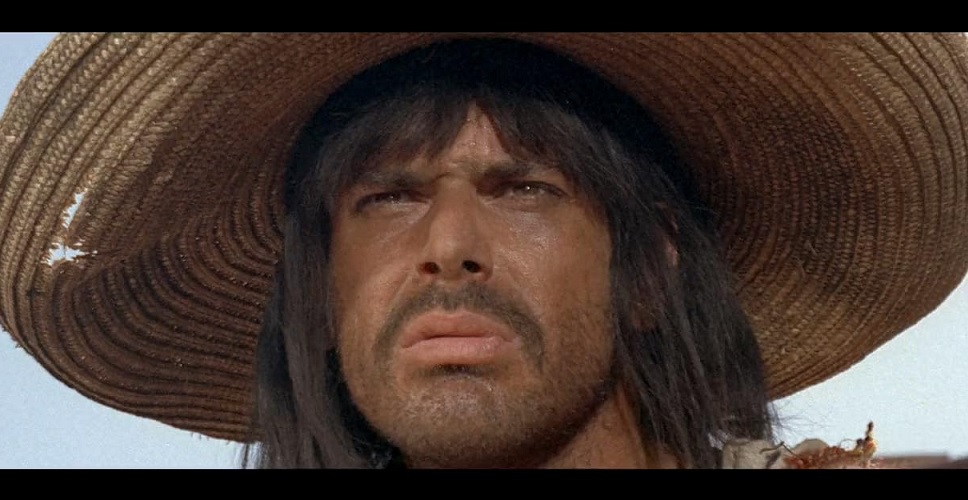
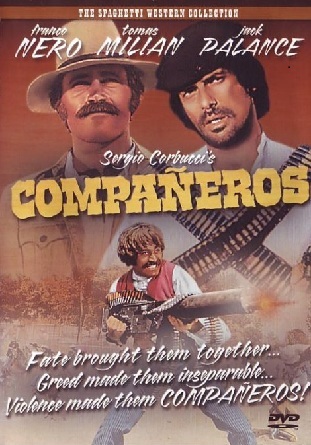
In a country torn apart by revolution, an unlikely duo teams up. The not too bright Mexican bandit Vasco (Tomas Milian) and the very polite arms dealer ‘The Swede’ (Franco Nero) go on a mission for the money hungry General Mongo. Their goal is to free Mongo’s pacifistic opponent Professor Xantos from a Texan jail because he knows the combination of a loaded safe. The two hate each other, so there is plenty of double-crossing along the way.

This spaghetti western, directed by the other Sergio, is an early buddy movie featuring two of the most established spaghetti western actors. The music is – of course – composed by Ennio Morricone and Jack Palance plays a very interesting supporting role as marijuana addicted gunslinger.

The movie misses the sharp humour and emotional depth that made genre films such as Django and the Dollar-trilogy so enjoyable, but it is certainly not the worst spaghetti western. The two strong leads fight, joke and shoot their way through a series of engaging adventures. The many last minute rescue scenes become kind of repetitive, so Corbucci could have been doing some heavier cutting. But, like the Mexican revolution, the movie ends in a massive shoot-out which is certainly worth the wait. Viva la Revolution!

Rating:

Biography: Sergio Corbucci (1926, Rome – 1990, Rome) is, alongside Sergio Leone, one of the most renowned directors of Spaghetti Westerns. He played a pivotal role in popularizing the genre, particularly through landmark films such as Django (1966) and Il grande silenzio (1968). Corbucci often collaborated with actor Franco Nero, creating some of the most iconic works of the genre. His films, often categorized as B-movies, are distinguished by their unflinching brutality, surreal and apocalyptic production design, dark humor, and politically left-leaning themes. A committed Marxist, Corbucci infused many of his works with a sense of revolutionary despair, reflecting the futility of social upheaval. Despite his significant contributions to cinema, Corbucci remained rooted in Italy throughout his career, with most of his films receiving limited international distribution. He passed away in Rome in 1990.

Filmography (a selection): Foreign Earth (1954), Water’s Love (1954), Supreme Confession (1957), Angel’s Sky (1957), Duel of the Titans (1961), Toto, Peppino and La Dolce Vita (1961), The Son of Spartacus (1963), Grand Canyon Massacre (1963), Django (1966), Navajo Joe (1966), The Mercenary (1968), The Great Silence (1968), Compañeros (1970), Bandera Bandits (1972), The White, the Yellow, and the Black (1975), The Payoff (1978), Super Fuzz (1980), My Darling, My Dearest (1982), Days of Inspector Ambrosio (1988)

Death Rides a Horse

Director: Giulio Petroni
Written by: Luciano Vincenzoni
Cast: John Phillip Law, Lee Van Cleef, Mario Brega, Luigi Pistilli

Year / Country: 1967, Italy
Running Time: 110 mins.

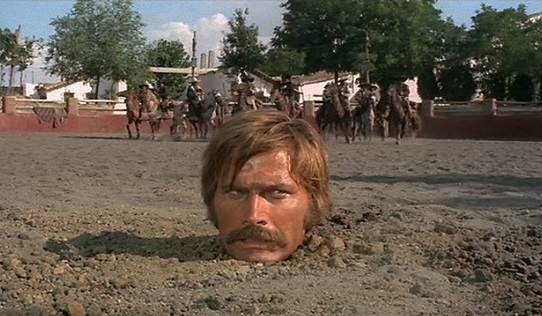
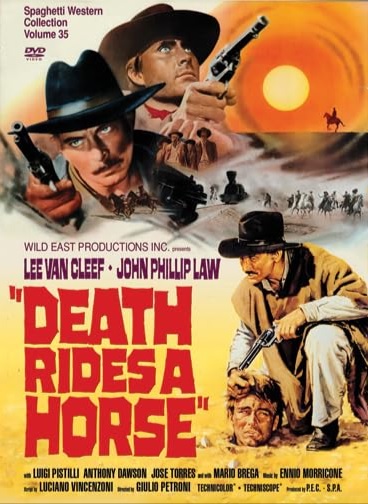
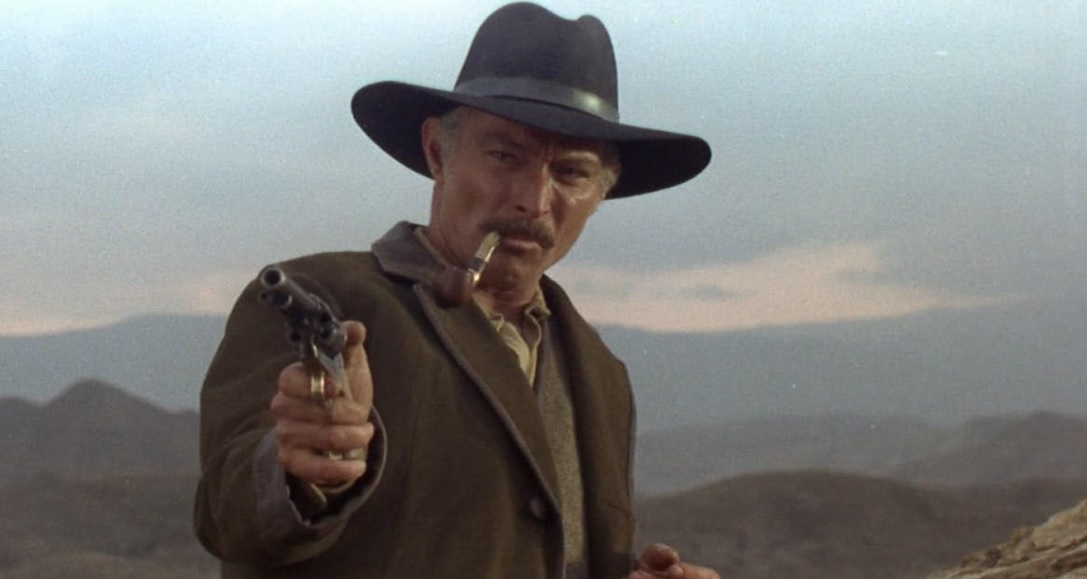
In this gritty spaghetti western, a violent band of outlaws robs and murders a family, leaving their young son Bill (John Phillip Law) scarred and thirsting for vengeance. Fifteen years later, Bill has honed his skills as a sharpshooter, ready to hunt down the men responsible. But he’s not the only one seeking retribution. Ryan (Lee Van Cleef), a former outlaw betrayed by the same gang and imprisoned for fifteen years, is after payback – not in blood, but in compensation for his lost time.

When Bill eliminates gang leader Burt Cavanaugh (Anthony Dawson), Ryan shifts his focus to the remaining members for his payout. However, they’re unwilling to part with the cash, forcing an uneasy alliance between the two avengers. Together, Bill and Ryan set out to settle the score, but Bill is still in the dark about a critical piece of the puzzle.

The film follows the classic spaghetti western recipe: sweeping desert vistas with looming cliffs, a great score by Ennio Morricone, and a steady stream of duels and shootouts. While it’s less violent than many of its contemporaries and lacks the visual flair of Sergio Leone’s masterpieces, the story holds its own with a solid plot, strong performances – Lee Van Cleef is always excellent – and well-executed action sequences.

The windswept town of El Viento serves as the backdrop for an intense, extended finale reminiscent of The Seven Samurai – though not as grandiose. It’s a satisfying conclusion that caps the film’s blend of gritty revenge and campy Italian charm.

Rating:

Biography: Giulio Petroni (1920, Rome) is an Italian director who made name with a number of spaghetti westerns of which Tepepa (starring Tomas Milian and Orson Welles!) and Death Rides a Horse are the most liked and well-known. He also made drama, comedy and horror films, sometimes working under the pseudonym Jeremy Scott.

Filmography: La centro chilometri (1959), I piaceri dello scapoli (1960), I soliti rapinatori a Milano (1961), Always On Sunday (1962), Death Rides a Horse (1967), Tepepa (1968), And for a Roof a Sky Full of Stars (1968), Night of the Serpent (1970), Non commettere atti impuri (1971), Crescete e moltiplicatevi (1972), Life is Tough, Eh Providence? (1972), Labbra di lurido blu (1975), La profezia (1978)

Four of the Apocalypse

Director: Lucio Fulci
Written by: Ennio De Concini, Bret Harte (Story)
Cast: Fabio Testi, Lynne Frederick, Michael J. Pollard, Harry Baird

Year / Country: 1975, Italy
Running Time: 104 mins.

Lucio Fulci delivers a stylish and accomplished entry into the spaghetti western genre with this gripping tale of survival and vengeance. The story begins in a Utah jail cell, where four unlikely companions find themselves thrown together: card shark Stubby Preston, a pregnant prostitute named Bunny, a perpetually drunk Clem, and the enigmatic Bud, who claims to see spirits.

Their uneasy camaraderie is soon tested when masked men unleash a massacre in the local saloon, forcing the quartet to flee into the desolate frontier. Along the way, they encounter the sadistic bandit Chaco (played with chilling intensity by Tomas Milian), who subjects them to harrowing acts of brutality. As they navigate this land of the damned, their journey transforms into a desperate search for salvation – and ultimately, revenge.

Once banned in the U.K. for its purportedly extreme violence, the film’s shock value seems relatively restrained by today’s standards, particularly within Fulci’s notoriously graphic oeuvre. However, it still stands out as one of the maestro’s finest works, largely due to its compelling narrative and strong performances from the ensemble cast. Fulci expertly balances moments of stark brutality with a hauntingly subdued atmosphere, enhanced by the light yet unsettling musical score.

Rather than approaching this film for its controversial reputation, viewers should appreciate it as a showcase of Fulci’s skill when paired with the right material. For anyone doubting his craftsmanship, this is a vivid reminder of his ability to tell a gripping, multilayered story with style and conviction.

Rating:

Biography: Lucio Fulci (1927, Rome – 1996, Rome) originally studied medicine but quickly turned to filmmaking instead. He started his film career with directing comedies, musicals and spaghetti westerns. Later he turned to Italian shock horror films and made a name for himself as the goriest director ever. His international career came off the ground in 1979 when he directed Zombi 2, an unofficial sequel to George A. Romero’s Dawn of the Dead, which had been released in Italy under the title Zombies. Fulci died from diabetes in 1996.

Filmography (a selection): The Thieves (1959), The Jukebox Kids (1959), Getting Away with It the Italian Way (1962), The Strange Type (1963), The Maniacs (1964), 002 Operation Moon (1965), How We Stole the Atomic Bomb (1967), The Conspiracy of Torture (1969), A Lizard in a Woman’s Skin (1971), Don’t Torture Donald Duck (1972), White Fang (1973), Challenge to White Fang (1974), Four of the Apocalypse (1975), Silver Saddle (1978), Zombi 2 (1979), City of the Living Dead (1980), The Beyond (1981), The New York Ripper (1982), Evil Eye (1982), The New Gladiators (1984), Dangerous Obsession (1986), Zombi 3 (1988), Demonia (1990), Door to Silence (1991)