A Personal Journey with Martin Scorsese Through American Movies


(1995, USA)

Director: Martin Scorsese, Michael Henry Wilson
Written by: Martin Scorsese, Michael Henry Wilson
Features: Martin Scorsese (host), Frank Capra, Francis Ford Coppola, Brian De Palma, ao.

Running Time: 225 mins.

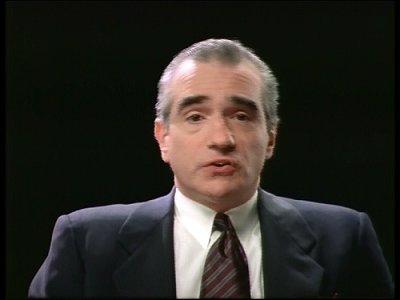
When Scorsese starts to talk there is no ending. For nearly four hours, he talks about American films. From the silent era to the sixties when he started making movies himself. Luckily for the viewer, Scorsese is a very interesting storyteller and film lovers will be glued to the screen.

His ode to American cinema is a mix of personal anecdotes, film fragments, interviews and razor-sharp observations. Scorsese starts with Hollywood pioneers like King Vidor, D.W. Griffith and Cecil B. DeMille. He then takes a closer look at the genres that made Hollywood great; the westerns, the musicals and the gangster films.

Many cinema hallmarks pass by. From the transition from silent to sound films and how technical effects evolved over the years. Scorsese also explains how his own cinematic mind was formed by observing characters like the infamous Ethan Edwards in The Searchers. He explains how the change in genres reflect on the times in which they were made. Like how post WW2 big businesses advanced in gangster films and the musicals got gloomier.

Scorsese provides great insight in the Hollywood system. How producers like David O. Selznick called the shots in the early days and how iconoclasts like Erich von Stroheim and Orson Welles attacked the system and sometimes paid the ultimate price for it. He calls Hollywood films censored art and shows many of the old masters at work. The rarely seen interviews with legendary directors such as Billy Wilder and John Ford alone are worth the four hour investment of watching this documentary.

No less than 60 films are discussed. From most of them a fragment is shown while Scorsese discusses their significance in a voice-over. For the complete list of films discussed click here. Scorsese and his team have created an incredibly rich and insightful documentary. Even the most hardened film buff will find some unseen cinema treasures here.


The Ten Commandments

Bullets Over Hollywood

Bullets Over Hollywood (2005, USA)

Director: Elaina Archer
Written by: John McCarty (book), Elaina Archer, Tom Marksbury
Features: Paul Sorvino (narrator), Leonard Maltin, Michael Madsen, Edward McDonald, ao.

Running Time: 70 mins.

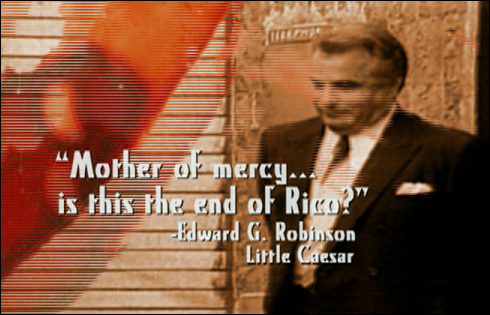
This Hugh Hefner produced documentary shows the fascination of moviegoers with the mob. ‘Once in the racket, always in the racket’, Al Capone said who became the archetype of the gangster and role-model for some legendary movie characters like Caesar ‘Rico’ Bandello (Little Caesar) and Tony Camonte/Montana (Scarface) This also applies to Hollywood when it comes to making gangster films. Every time you think the realms of the genre have been fully explored, some new masterpiece comes along. After the time that Cagney, Robinson and Bogart dominated the screen, a new generation of filmmakers emerged in the seventies with Coppola, Scorsese and De Palma. Then at the brink of the new millennium, the Hollywood gangster legend continued on the small screen with The Sopranos.

Bullets Over Hollywood opens with the very first gangster film: The Musketeers Of Pig Alley, made in 1912. It then goes on to chronologically move through gangster film history right up until The Sopranos. The documentary combines film fragments, interviews and real gangster footage while Paul Sorvino (GoodFellas) provides the narrative. It is an interesting viewing for enthusiasts of the genre, but misses real insight in the works that it covers. Some interesting facts are revealed such as the story that Howard Hawks was forced by Hollywood to add ‘the shame of the nation’ to his gangsterfilm Scarface, because they didn’t want to glorify gangsters. Also interesting is some behind-the-scene footage of gangster classics, but these fragments are unfortunately a little brief. Altogether this is worth a look. If only to hear Leonard Maltin rave about The Godfather and to re-experience some of the finest sequences in the history of this fascinating American phenomenon.

Rating:


The Musketeers Of Pig Alley (1912, D.W. Griffith)

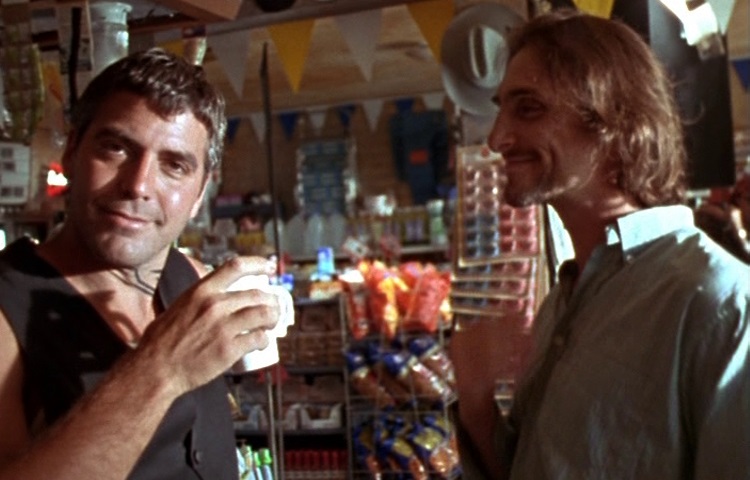
Full Tilt Boogie: The Making of ‘From Dusk Till Dawn’

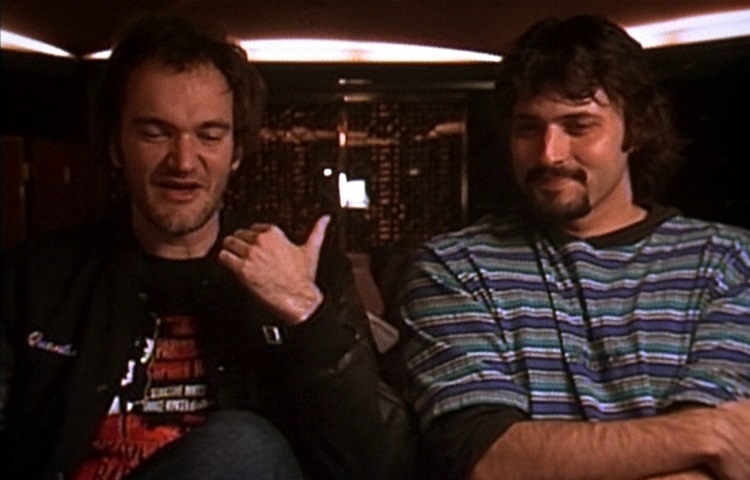
After Quentin Tarantino and Robert Rodriguez both had personal success with Pulp Fiction and Desperado, in 1996 they announced their collaboration on a horror movie, called From Dusk Till Dawn.

Tarantino wrote the script and would play one of the lead roles and Rodriguez would direct. The horror-part was saved for the second half of the film, a strategy inspired by Stephen King, explains Tarantino. “First you let the audience get to know the characters, like them, and then you put them through hell.”

“Many horrors deliver too soon”, says Rodriguez in Full Tilt Boogie, a documentary about the movie’s production released a year after the film in 1997. “There are no clues that the vampires will show up, so the audience members – like the characters – are totally surprised. All of a sudden they’re just there.”

Full Tilt Boogie spends a lot of time interviewing the people that normally don’t get attention; the assistant directors, the personal assistants, the drivers, the best boys, the gaffers, the special effects people, the stunt guys, the caterers… Even the extras get their few minutes of fame. Like Bob Ruth who was also in Pulp Fiction (“I was the coffeeshop manager; ‘I am not a hero’”).

What’s interesting is that while for the creative team (writer, director, cinematographer) it is all about the creative process, for most of the others it is just a job. Sure, they all like movies, but they could easily switch to another industry if it would pay better. They are all mostly concerned with getting overtime paid and complaining about the food, the accommodation and millions of other things.

Still, if you are gonna work on a film then From Dusk Till Dawn is a good choice. It has hot new directors and a hot new star (George Clooney in his first big movie film role after many successful years in television) and lots of groovy special effects and stunts. There were also a lot of parties obviously.

But there were problems as well like sand storms, permits, extreme heat and the union going after the 18 million dollar independent film. Not because there were complaints from workers, but – according to the makers – because of the success of Tarantino and producer Lawrence Bender. And because Rodriguez did almost everything himself. The unions weren’t used to that.

Full Tilt Boogie is ultimately a disappointing documentary, because you learn surprisingly little about the filmmakers. I would rather listen to Tarantino and Rodriguez talking for 90 minutes than watch a lot of film people that don’t have a lot to say about the beauty of the medium.

De enige acteur die drie Oscars won

Daniel Day Lewis (1957) groeide op in het Londen van de jaren 60’. Zijn vader was een bekend dichter. Hij kreeg een voorname opvoeding met veel aandacht voor welbespraaktheid, maar nauwelijks of geen affectie. Zijn opa was de oprichter van de bekende Britse Ealing Studios, een ouderwetse, intimiderende man die het maar niks vond dat zijn dochter actrice werd. Met een opa als studiobaas, vader als literaire hoogvlieger en moeder als actrice, werd de filmkunst al jong ingeprent bij Daniel.

Maar hij begon zoals vele Britse acteurs in het theater. Hij studeerde aan de toneelschool in Bristol waar ook zijn moeder had gestudeerd. Daarna trad hij toe tot de elite van de Britse toneelwereld; de Royal Shakespeare Company. Hij beschrijft deze elite als een ‘bespottelijke cultuur’ en ging er gebukt onder dat hij er deel van uitmaakte.

Hij kreeg zijn eerste filmrol in Sunday Bloody Sunday en speelde vervolgens in veel BBC kostuumdrama’s. Op de planken speelde hij Hamlet, de vuurproef die alle beroemde Britse acteurs moesten doorstaan. Dit riep veel bij hem op vanwege het vader-element (zijn eigen vader overleed voordat hij bekend werd als acteur). Zeven maanden lang speelde Daniel avond aan avond de Deense prins en dat drukte zwaar op hem. Op een avond bezweek hij tijdens de voorstelling en dat was de laatste keer dat hij Hamlet speelde.

Zijn volgende fase was een serieuze carrière als filmacteur. In My Left Foot gaf hij alles om een verlamde schilder gestalte te geven in een waargebeurd verhaal. Hij viel als een blok voor dit personage en leefde maanden als invalide om het optreden zo realistisch mogelijk te maken. Hij at uitsluitend nog met een theelepeltje. Het leverde hem zijn eerste beeldje op.

De aanpak van Day Lewis om in de huid van een personage te kruipen zette hij voort in zijn volgende rollen. Bijvoorbeeld in Gangs of New York als bendeleider Bill the Butcher. Hij leerde alles over messen en het bewerken van vlees en zijn medespelers vonden hem griezelig in het contact. Of in zijn rol in The Boxer waarvoor hij zoveel trainde dat hij het volgens professionals wel tot de top 10 in de klasse middengewicht had kunnen schoppen. Daniel Day Lewis dompelt zich als acteur helemaal onder in een personage en in een wereld. Zo ontstaat leven dat via hem tot uitdrukking komt.

De voorbereiding van een rol en het optreden putten hem wel steeds helemaal uit, dus nam hij vaak lange pauzes tussen de films die hij koos. In die tijd verdween hij van de radar en ging hij werken als timmerman of schoenmaker in Italië. Hierdoor ontstond een legendarische status rond de acteur. In There Will Be Blood – de tweede rol waarvoor hij een Oscar ontving – kon hij zijn woede, die nog in hem zat door zijn jeugd, een uitlaatklep geven. Dat is een voordeel van het beroep; hij kan zijn verborgen kanten ontdekken, zei de acteur. Maar er is ook een keerzijde; zijn optreden in My Left Foot leverde hem bijvoorbeeld een chronisch pijnprobleem op.

De legendarische regisseur Steven Spielberg wilde niemand anders dan Daniel Day Lewis voor de rol van president Lincoln en hij moest negen jaar op hem wachten. Toen was Daniel klaar voor de rol van zijn leven die wederom goed was voor een Oscar voor Beste Mannelijke Hoofdrol. Daarmee liet hij zijn leermeesters, inclusief zijn favoriete acteur Marlon Brando, achter zich.

Zijn laatste film was Phantom Thread uit 2017 van Paul Thomas Anderson waarin hij de complexe kleermaker Reynolds Woodcock portretteerde. Daarna heeft hij zich met zijn vrouw teruggetrokken in het rustige Ierland. Hij heeft nooit van drukte gehouden of om beroemdheid gegeven. Zijn acteren gebruikte hij als therapie om momenten uit zijn jeugd terug te halen. Maar het lijkt erop dat hij genoeg therapie heeft gehad. Daniel is met pensioen en het is maar zeer de vraag of we de acteur ooit nog terug gaan zien op het witte doek. Zijn nalatenschap geeft in ieder geval genoeg stof om nog lang van te genieten en voor andere acteurs om te benijden.

Acteur Daniel Day-Lewis – De erfgenaam
Avro Tros | Close Up | 26 jan 2022
Zie: https://www.avrotros.nl/close-up/gemist/detail/acteur-daniel-day-lewis-de-erfgenaam/

Academy Award voor beste vrouwelijke hoofdrol
Het record voor het vaakst winnen van de Oscar voor beste vrouwelijke hoofdrol staat op vier. Katharine Hepburn mocht maar liefst vier keer met het beeldje naar huis gaan. Frances McDormand won net als Daniel Day Lewis drie Oscars voor beste vrouwelijke hoofdrol. Er zijn in totaal dertien actrices die er twee wonnen. Meryl Streep is de recordhoudster voor de meeste nominaties (zeventien).

1932/1933: Katharine Hepburn (Morning Glory)
1967: Katharine Hepburn (Guess Who’s Coming to Dinner)
1968: Katharine Hepburn (The Lion in Winter)
1981: Katharine Hepburn (On Golden Pond)

1996: Frances McDormand (Fargo)
2017: Frances McDormand (Three Billboards Outside Ebbing, Missouri)
2020: Frances McDormand (Nomadland)