The Doorway (2): DMT

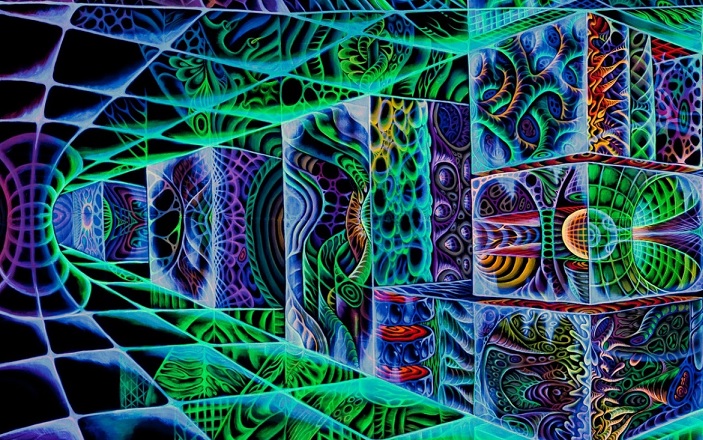
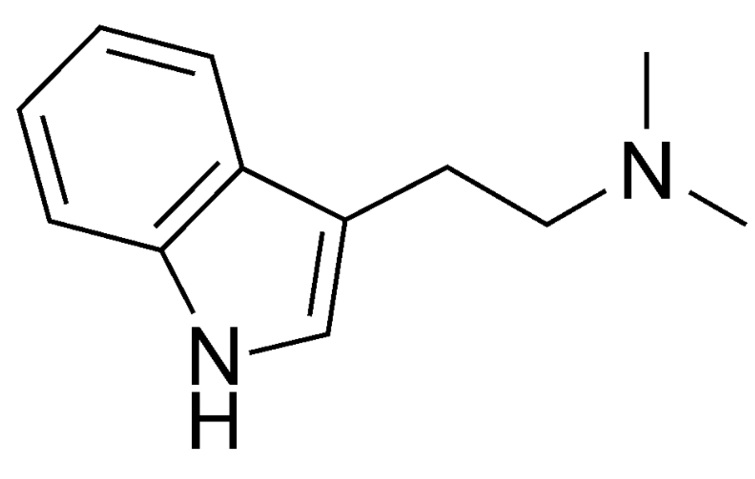
DMT (Dimethyltryptamine) is an extremely powerful hallucinogenic found throughout nature that has a profound impact on human consciousness.

The structure of DMT is very simple: there are only four positions where chemical groups can attach. It’s everywhere in nature. All organisms have the two key enzymes that lead to the synthesis of DMT. It is also the visionary ingredient in ayahuasca, a very popular psychedelic in the West nowadays.

Ayahuasca is created by combining two Amazon plants, one containing DMT and one containing an enzyme inhibitor, needed for the DMT to have effect. How did these Amazonian Indians know how to combine these plants? A trip created by orally consuming DMT can last three to four hours. That is much more time than the bullet train trip you get when smoking or injecting DMT.

So DMT is everywhere in nature, but what is it for? Many leading experts say they are messenger molecules. It is a powerful tool to explore the whole mysterious question: what is consciousness?

DMT is often referred to as the spirit molecule, which is a conundrum. The spirit is the inner world and the molecule is the external world. So the psychedelic is an entheogen; they take us from the science to the spirit.

DMT can also be produced by the human brain in extremely small amounts. The enzymes necessary for its production are expressed in the cerebral cortex, the choroid plexus, and the pineal gland.

Rick Strassman – a professor in psychiatry – has done extensive research in DMT and non-ordinary states of consciousness. It is his belief that the pineal gland, a tiny, pinecone-shaped endocrine gland in the center of the brain, at times releases DMT to facilitate the entering and exciting of the soul in the body.

Through various practices, like fasting, chanting and praying, a release might be triggered that is correlated with mystical experiences. A DMT trip is described as a ‘psychedelic bungee jump’. Just like that, you find yourself in a completely different reality, and – bang! – just like that, you’re out of it again.

Why are these plants made illegal in our ‘enlightened’ Western societies? “It is very revealing about these societies”, says writer and journalist Graham Hancock. “Our society devalues non-ordinary states of consciousness. Any other consciousness that is not related to the production or consumption of material goods is stigmatized in our society today.”

There is fear in the powers that be that ended the psychedelic revolution in the sixties. Fear that if enough people take these substances, the very fabric of our societies would be picked apart.

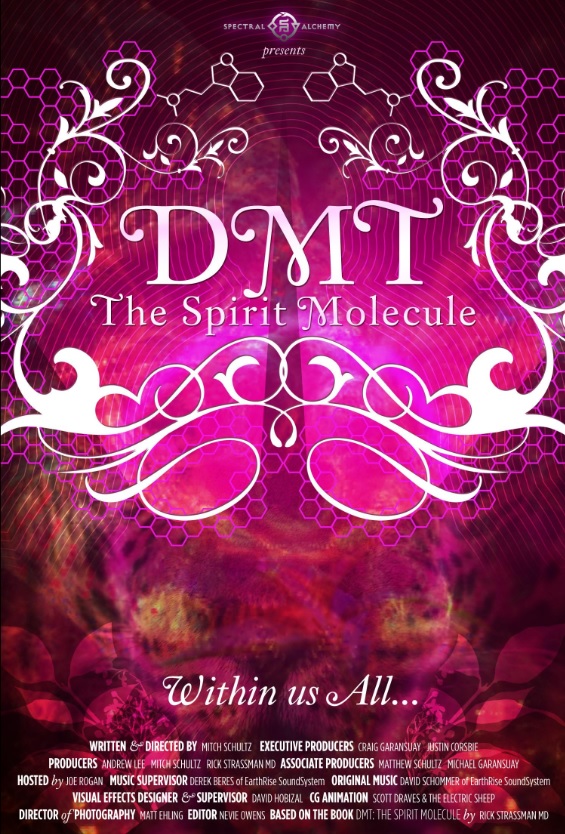
After a near ban of psychedelic research, Rick Strassman got approval in 1989 to do a DMT study. It was the first psychedelic research in a generation. He did not approach the work as psychotherapy, but as pure scientific research, focusing on what happened in the body and brain. He recorded the experiences of participants and later published them in his book ‘DMT: The Spirit Molecule’, a fascinating byproduct of the study.

So what is the experience like? Time crumbles. The linearity of time is totally meaningless in a DMT experience. You are at the God Head, the point where all time folds in on itself. You are no longer a human being. In fact, you are no longer anything you can identify with. It is a terrifying experience. You are blasted out of your body at warp speed, backwards through your own DNA out the other end into the universe.

DMT users often report encountering pure consciousness, sometimes perceived as a vastly advanced civilization; far beyond anything known on Earth. “My sense was that at some point there was an implicit realization: this is the divine realm”, one user said.

“It’s a place I’ve been many times before. A place where souls await rebirth. An incredible, transcendent peace came over me. I have never felt such peace in my life. Every fear, hope, and attachment to the material world was stripped away. I was free to simply be the essence of a soul.”

Strassman’s explanation: The brain, the organ of consciousness, was transformed in such a way that it could receive information that it couldn’t normally receive. “It rips that filtering mechanism away for just a few minutes and for this time you are immersed in raw data: sensory input, memories, associations. It seems your brain builds reality out of these things. You associate and synthesize these things together and tell yourself a story basically.”

During DMT experiences, encounters with aliens, angels, and other entities are common, as are visions of other civilizations. An intelligence is often perceived, one that does not seem to exist within three-dimensional space.

DMT is a messenger that offers a glimpse into possible future stages of human evolution. It may be the ultimate psychedelic compound: a doorway to another reality.

The documentary ‘DMT: The Spirit Molecule’ is available on YouTube.

The Doorway (1): LSD

“A fraction of a milligram and everything changes. A molecule that alters your consciousness. An unforgettable experience.”

On April 16, 1943, Swiss chemist Albert Hofmann, working at the Sandoz laboratory in Basel, accidentally ingested a small dose of LSD. Suddenly, he felt as if he were in another world. Fear gripped him: he worried he might never return to his wife and child, and panic set in. But later, the fear gave way to a positive wave. Afterwards, Hofmann felt he had crossed to the other side and returned.

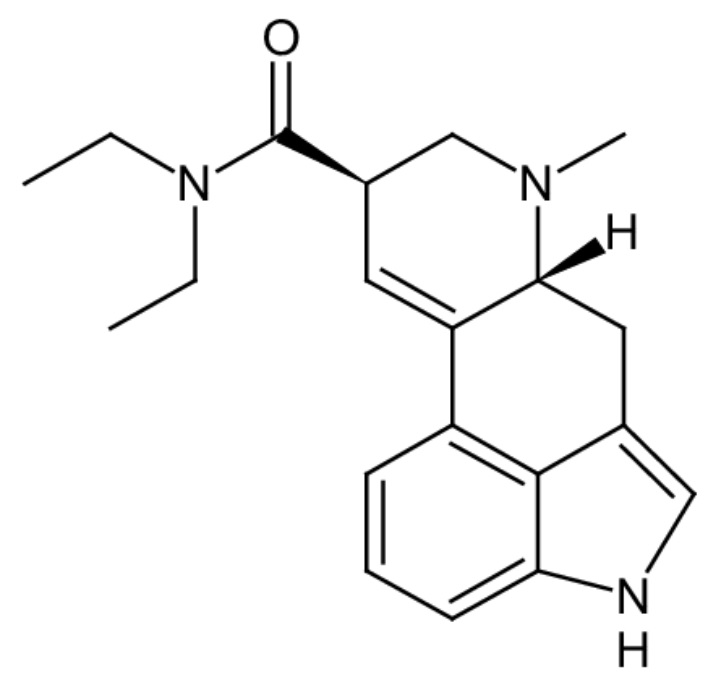
Hofmann had been searching for a medicine to improve circulation. His work led him to ergot, a fungus that grows on rye and related plants. From this he synthesized LSD (lysergic acid diethylamide), a substance chemically related to psilocybin, the psychedelic compound found in magic mushrooms. At first, Hofmann did not know what had caused his extraordinary experience, but he soon realized it must have been the compound he had created.

At Sandoz, researchers recognized LSD’s potential value for psychiatric research. Samples were sent to Stanislav Grof, a Czech-born American psychiatrist and consciousness researcher. This marked the beginning of Grof’s decades-long exploration of non-ordinary states of consciousness.

Grof saw LSD as a catalyst. It does not create these experiences, he argued, but makes them accessible. “In that sense”, he said, “LSD is comparable to what a microscope is for biology or a telescope for astronomy. We don’t think the microscope creates worlds that are not there, but we cannot study these worlds without the tool.”

During the Cold War, the CIA became interested in LSD as a possible truth serum. The problem was that they were seeking predictable outcomes and LSD does not work that way. It was also considered as a potential weapon to incapacitate the enemy.

So how does LSD work? Our consciousness is the sum total of everything our senses perceive. LSD amplifies these senses dramatically. Psychedelic sessions can take people further than years of psychoanalysis.

In a positive experience, users may feel the ego dissolve, boundaries melt away, and control loosen. This can be deeply pleasant. Space and time lose their meaning; experience flows freely until one becomes pure experience itself.

In the 1960s, the psychedelic revolution erupted. The Merry Pranksters, led by Ken Kesey – author of ‘One Flew Over the Cuckoo’s Nest’ – embraced LSD and drove a brightly painted bus across America, inviting people to experience it for themselves.

In Millbrook, an abandoned estate in New York, psychiatrist Timothy Leary and Ralph Metzner established a psychedelic research center where anyone could participate. LSD was seen as a great equalizer. No matter one’s social background, the experience could dissolve hierarchy and expand cosmic understanding.

“We teach people to turn on, go out of their minds, and tune in”, Leary said. “The country is an insane asylum, focused on material possession, war, and racism.” His ambition was nothing less than a spiritual revolution, achieved by millions of people using LSD regularly.

Hofmann strongly objected to this approach. LSD, he warned, was a powerful instrument that required a mature mind. Promoting it indiscriminately to young people was irresponsible.

LSD often triggered strong anti-war sentiments, rooted in transpersonal experiences of unity with nature and all living beings. This directly challenged conservative values. In the United States, amid the escalating Vietnam War, tensions between the counterculture and the establishment grew. LSD became a convenient scapegoat for social unrest, and the government launched an aggressive – and often absurd – propaganda campaign.

In 1966, LSD was outlawed in California. In 1967, President Nixon declared Timothy Leary “the most dangerous man in America.” Grof later remarked, “In the irresponsible hands of Leary, it came to be seen as dangerous and that killed nearly all possibilities for research.”

Some clinical work continued for a while. Grof conducted LSD sessions with terminal cancer patients, profoundly altering their relationship with death. Many became reconciled with the fact that they were dying. “In our culture”, Grof said, “we are programmed to think we are only our bodies. LSD can show you that you are part of something much larger.”

Soon, however, LSD was internationally demonized. Research disappeared underground and remained there for decades.

Albert Hofmann died on April 29, 2008, at the age of 102. He never denied LSD’s risks, but he also believed its greatest danger lay in misunderstanding it. For Hofmann, LSD was not an escape from reality but a doorway… A doorway that, if approached with care, could reveal how vast and mysterious consciousness truly is.

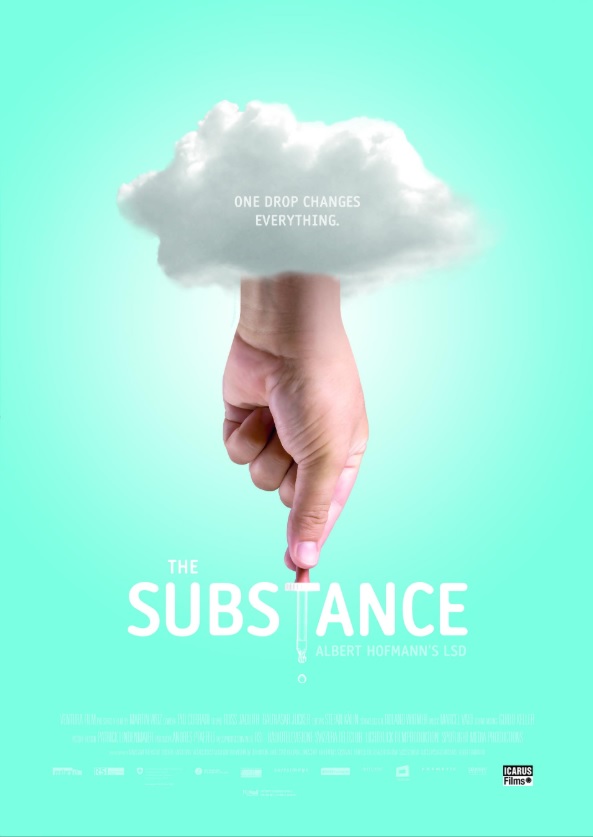
The documentary ‘The Substance: Albert Hofmann’s LSD’ is available for rent on the Apple TV app.

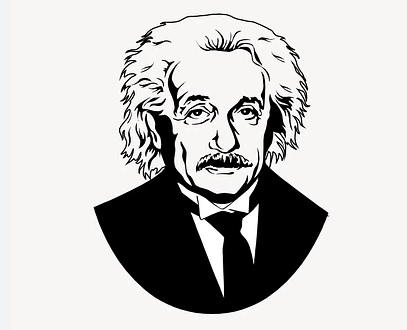
Albert Einstein’s blijvende goede voornemen

Een nieuw jaar, plannen, goede voornemens. Waar ga ik mijn tanden inzetten? Hoe ga ik een echte impact maken dit jaar?

Deze persoonlijke keuzes kunnen heel belangrijk lijken, maar zijn ze dat ook? Dat hangt af van je perspectief. Einstein toonde met zijn speciale relativiteitstheorie aan dat de staat van ruimtetijd afhangt van de unieke positie van de waarnemer. Wanneer je in een rijdende auto zit, verloopt de tijd een microscopisch beetje langzamer dan wanneer je op een bureaustoel zit.

Deze theorie kun je ook toepassen op je persoonlijke keuzes en activiteiten. Voor jou kan het van levensbelang maken wat je gaat doen in 2025, maar verreweg de meeste mensen zijn zeer ego-geconcentreerd en boeit het dus niets. Dat is niet zozeer een negatief mensbeeld, maar gewoon een weergave van hoe een ego werkt. Het ego wil dat alles over zichzelf gaat en trekt alle aandacht van het geïndividualiseerde bewustzijn naar zich toe. Het gevolg is dat dingen die je niet direct raken, je meestal ook niet zoveel interesseren.

Dus maakt iemand het wat uit wat ik dit nieuwe jaar ga doen? Vanuit mijn perspectief wel. Een ander zal het een worst zijn of ik meer ga sporten, een bijzondere reis ga maken of eindelijk dat boek ga schrijven waar ik het al jaren over heb.

Echter, voor diegenen die willen groeien en de kwaliteit van hun bewustzijn willen verhogen is er een goede reden voor om je te interesseren in de levens van andere wezens. In een relatief universum binnen bewustzijn is alles namelijk verbonden met elkaar, zowel fysiek als mentaal. Binnen een dergelijk universum hebben de keuzes die je maakt wel degelijk impact. Dit doe je door boven de behoeften van je ego uit te stijgen en te kijken naar hoe je anderen kunt helpen.

Einstein zei het als volgt: ‘Een mens is een deel van het geheel dat door ons universum wordt genoemd, een deel dat beperkt is in tijd en ruimte. Hij ervaart zichzelf, zijn gedachten en gevoelens als iets dat gescheiden is van de rest, een soort optische illusie van zijn bewustzijn. Deze waanvoorstelling is een soort gevangenis voor ons, die ons beperkt tot onze persoonlijke verlangens en tot genegenheid voor een paar personen die het dichtst bij ons staan. Het moet onze taak zijn om onszelf uit deze gevangenis te bevrijden door onze cirkel van mededogen te verbreden en alle levende wezens en de hele natuur in haar schoonheid te omarmen.’

De grootste impact die je kunt maken zit hem dus niet in wat je gaat doen dit jaar, maar veel meer in je houding en empathie richting anderen. Je mededogen en hoe je je tot anderen verhoudt: daar zitten de echte groeimogelijkheden.

Verleg dus je focus en verbeter de wereld en je eigen leven. Dat is een intentie die je je elk jaar en zelfs iedere minuut van iedere dag opnieuw kunt voornemen. Je ego trekt je aandacht steeds naar binnen. Jezelf hiervan losmaken is een uitdaging, maar wel eentje die een grote beloning oplevert als je hierin bij tijd en wijle slaagt. De beloning voor je openstellen naar anderen is namelijk persoonlijke, professionele en spirituele groei.

Zie hier het ideale goede voornemen voor 2025 en voor ieder moment van je leven opnieuw.

De beste wensen allemaal.

Carl Gustav Jung #4: Lijden van de ziel

Lees ook: Carl Gustav Jung #3: Alchemie

Het werk van Carl Jung had in tegenstelling tot andere psychologen een sterke religieuze inslag. Het Christendom was in zijn ogen niet volmaakt omdat het geen plaats kon geven aan het kwaad. In Jungs boek ‘Antwoord op Job’ kwam de dubbele natuur van God aan de orde.

Net zoals dat Jung bij de alchemisten een synthese vond tussen materie en geest, vond hij bij de gnostici een synthese tussen goed en kwaad in God en in onszelf. Het gnosticisme werd verketterd door de kerk doordat zij zagen dat de Goddelijke vonk in mensen aanwezig is en dat, door zichzelf te kennen, zij God kunnen leren kennen.

Een tegenstrijdigheid in het Christendom is dat er verschrikkelijke dingen gebeuren, zoals dood, ziekte, marteling en oorlog. Hoe is dat te verenigen met een liefdevolle God? Vanuit dat dilemma is het verhaal van Job geschreven. Het gaat over de rechtvaardige Job die met allemaal tegenslagen te maken krijgt. Ondanks zijn lijden blijft hij trouw aan God.

Deze proef kan iedereen treffen. De vraag waar al dat lijden en het onrecht goed voor is houdt de mens tot op de dag van vandaag bezig. Met de oorlogen in o.a. Syrië en Oekraïne wordt de mens opnieuw geconfronteerd met openlijke onrechtvaardigheid, tirannie, leugens en onmenselijke folteringen. Hoe moet de mens zich hiertoe verhouden?

Het antwoord van de gnostici – en van Carl Jung – is dat God zowel de bron van het goede als het kwade is. Van al het goede in de wereld is er dus ook een tegenhanger. Het omgekeerde van kosmisch bewustzijn is totale verlatenheid en duisternis; de afwezigheid van vreugde of hoop. Het antwoord van de gnostici is dat lijden zit ingebouwd in de structuur van de kosmos. Er is geen ‘waarom’. Het is gewoon zo.

Het Christelijke symbool van het kruis laat die tegenstellingen zien. Jung heeft gezegd dat het kruis ons bewust maakt van de pijnlijke botsing van tegenpolen waar we in ons eigen leven mee moeten worstelen. Het goede nieuws is dat er ook een middenstuk is waar de lijnen elkaar kruisen; daar zit de harmonie. Omgaan met lijden kan de mens bereiken door niet onwetend te zijn (gnosis is het Oudgriekse woord voor ‘kennis’). We moeten niet uit het oog verliezen dat we de Goddelijke vonk in ons hebben. Ook is er meer dan we kunnen waarnemen. Er ontvouwt zich een groot mysterie, er is iets gaande op transcendentaal niveau.

In therapie kun je de innerlijke, tegengestelde krachten met elkaar verzoenen. Er vindt altijd een conflict plaats tussen je diepste, innerlijke zelf en wat de maatschappij, je familie, van je vraagt. Met dat pijnlijke spanningsveld moet je als mens vrede zien te sluiten. We zullen moeten accepteren dat de uitersten, waaronder goed en kwaad, in ons allemaal besloten zitten en dat we niet verstrikt moeten raken in een van beide uitersten, want dit leidt onherroepelijk tot destructie. Ook wanneer je helemaal goed bent, ben je gefragmenteerd, versplinterd, en de hoop is juist om in compleetheid te leven.

Omgaan met het kwaad doen we door ons toe te wijden aan bewustzijn en ons te bevrijden van de illusies van tegenstellingen die we zelf creëren. Volgens Jung is er geen kwaad dat geen goed voortbrengt en geen goed dat niet ergens kwaad aanricht. We hebben het allemaal in ons. Omhels dus je schaduwzijde, zoals Jung het noemde, in je individuatieproces (proces van bewustwording als afzonderlijk wezen). Het als onbewust proces te laten plaatsvinden is het grote gevaar. De gnostici zeiden het ook; accepteer het duister om de Goddelijke heelheid te vinden.

Lees ook: Man’s Search For Meaning