TRUMP WARS
Episode III
REVENGE OF THE MAGA
War! The republic is crumbling under ruthless attacks by Maga Lord Elon Musk.
There are assholes on both sides. Evil is everywhere.
In a stunning move, the fiendish president Donald J. Trump, has wiped out trillions in stock market value with an insanely stupid and useless trade war.
As the separatist MAGA-republicans attempt to siege the Capitol with their law enforcement hostages, Bernie Sanders is on his way to kick some Republican ass…
The Dark Side Calling
Exactly twenty years ago, Star Wars Episode III – Revenge of the Sith hit Dutch theaters as the dark turning point in the Star Wars saga. I remember the Darth Vader posters hanging all around the city where I worked. It was a monumental cinema experience, but it was also a dark movie that depicted the fall of a Republic, the rise of an Empire, and the death of democracy at the hands of a terrible authoritarian. Not to mention the tragic fate of all the characters we had grown to love.
Today, it feels less like science fiction and more like prophecy, as the United States of America – once the leading democracy in the world – is now rapidly becoming an authoritarian dictatorship.
The opening shot of Revenge of the Sith is a real triumph. Anakin and Obi-Wan fly through the besieged airspace above Coruscant, and it’s all filmed in one terrific and dizzying shot. Technically, this might be the best of the Star Wars movies.
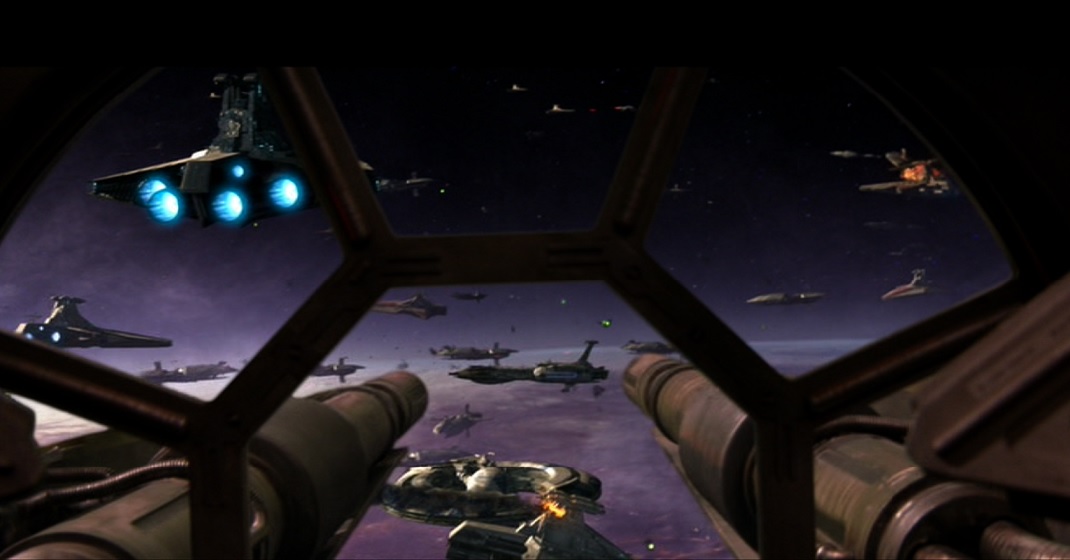
When Anakin and Obi-Wan board the ship where Palpatine is held hostage by Count Dooku and General Grievous, we notice that Anakin is wearing black clothes. This is already a symbol of where he is heading. But he is still a good guy here, unwilling to leave his friend behind in a time of trouble.

Obi-Wan looks a bit like J.D. Vance, the vice president in Trump’s regime. But make no mistake – he is nothing like him in character. He is a great Jedi Knight, just as Qui-Gon Jinn predicted he would become. Vance also looks like Count Dooku (the great Christopher Lee), and he is closer to this Dark Lord in character, though nowhere near as smart.

Then – in the showdown with Count Dooku – we get the first warning sign of Anakin’s approaching downfall. “My powers have doubled since we last met, Count.” Overconfidence, pride, anger… these are all hallmarks of a character vulnerable to Dark Side manipulation. Add fear to that, and Palpatine will have an easy mark.
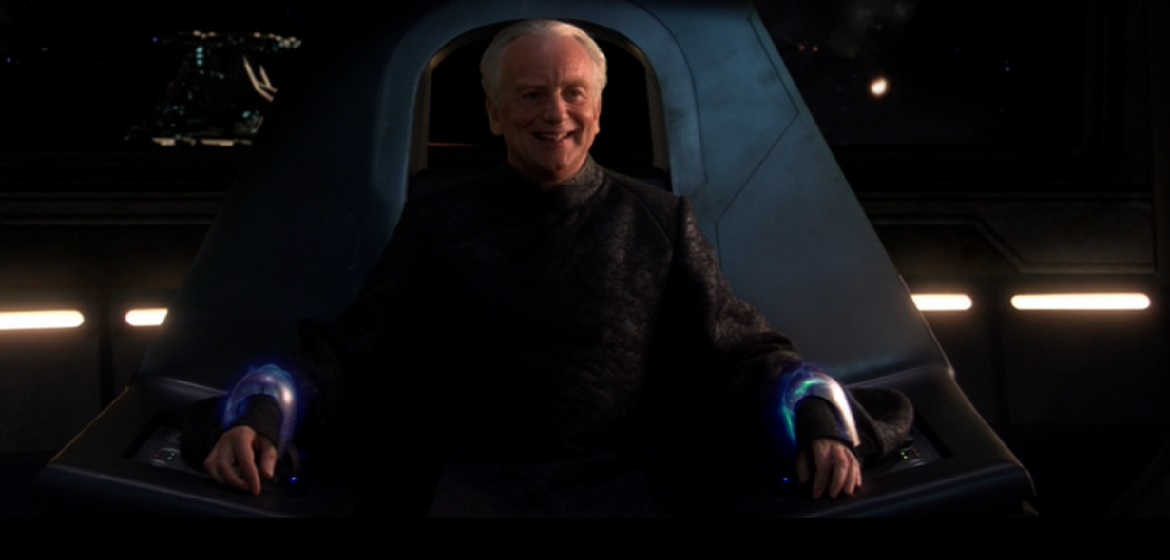
Count Dooku provokes Anakin, leading him to tap into the Dark Side. He uses his anger and aggression to defeat Dooku by cutting off both his hands. Then Palpatine urges him to kill Dooku, and he does. It turns out Anakin had told Palpatine about his mother and the slaughter of the Sand People. Palpatine is using that information to turn Anakin.
So he already has his hooks in the young Jedi. But Anakin is still a good person at this point. He refuses to abandon a wounded Obi-Wan and ensures the entire team escapes from the cruel cyborg General Grievous.
Then Anakin pulls off an amazing emergency landing with a spacecraft. Visually, this parallels the Trump era, where burning planes and helicopters seem to fall from the sky regularly due to Elon Musk’s firing of air traffic controllers.
Fear is the Mind Killer
The Senate gives the Chancellor permission to continue the war against the Separatists. Dictators always use emergency powers to dismantle democracy – and Palpatine and Trump are no exceptions. Trump’s emergency powers are invoked for bogus reasons. The USA is supposedly at war with Venezuelan gang members. That is ridiculous, but in Trump-land, that doesn’t matter.
The reason for these powers in Revenge of the Sith is that General Grievous is still alive. But we see that Grievous secretly works for Palpatine. The General is worried about Count Dooku’s death, but Palpatine assures him, “Soon, I will have a new apprentice. One far younger and more powerful.” He is clearly preparing for his masterstroke.
Revenge of the Sith has a terrific cast. Ian McDiarmid is especially powerful, delivering his lines as though in a Shakespearean play.
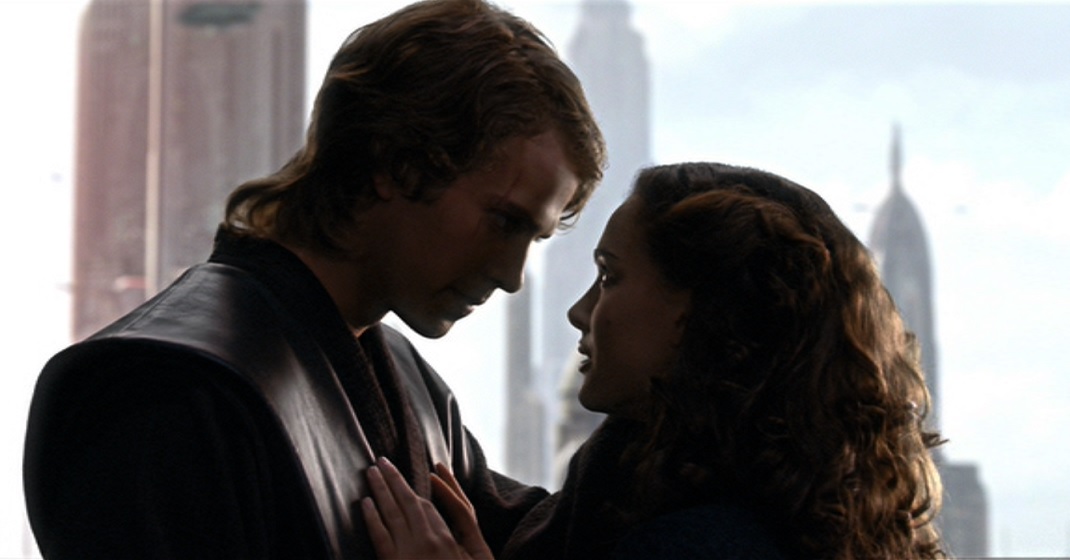
Meanwhile, Anakin learns from Padmé that she is pregnant. This is the happiest moment of his life, he tells her. Of course, their love is extremely dangerous in a time of Dark Side seduction. And then it happens: the nightmare. Anakin sees Padmé, his great love, dying, and it terrifies him.
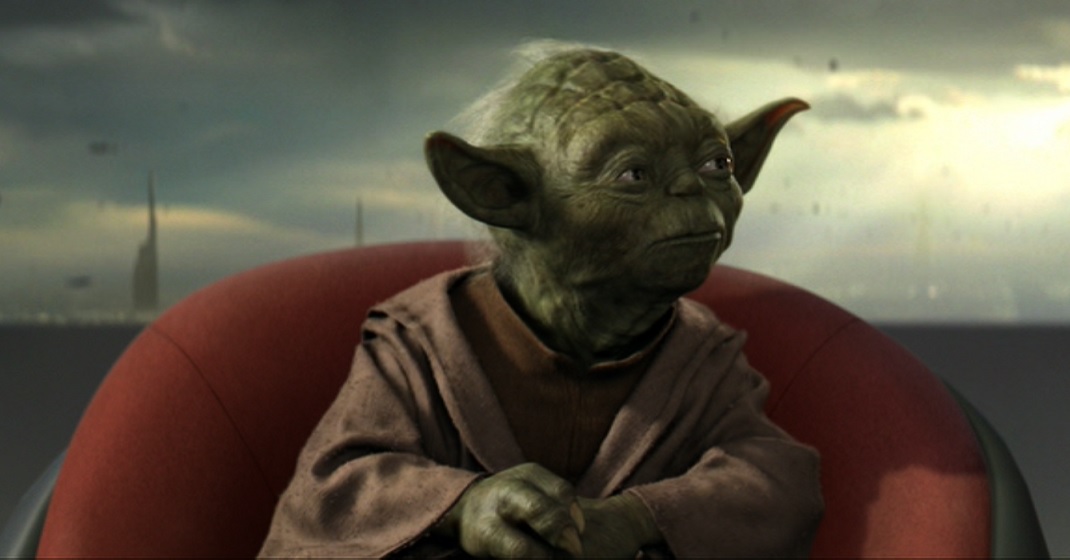
A coaching session with Yoda seems to bring some enlightenment: “Be mindful. Fear of loss is a path to the Dark Side.” If only Anakin had truly understood what those words meant.
Missed Warning Signs
Anakin and Obi-Wan meet, and Obi-Wan is worried about Palpatine, who is about to receive even more executive powers from the Senate. This parallels America today, where Trump has already made Congress powerless and is actively ignoring the courts.
Anakin meets with Palpatine, who flatters him by proposing he become the Chancellor’s representative on the Jedi Council. There are beautiful shots here of Anakin and Palpatine – clearly staged to resemble Darth Vader and the Emperor walking together. “I need you to be the eyes, ears, and voice of the Republic.”
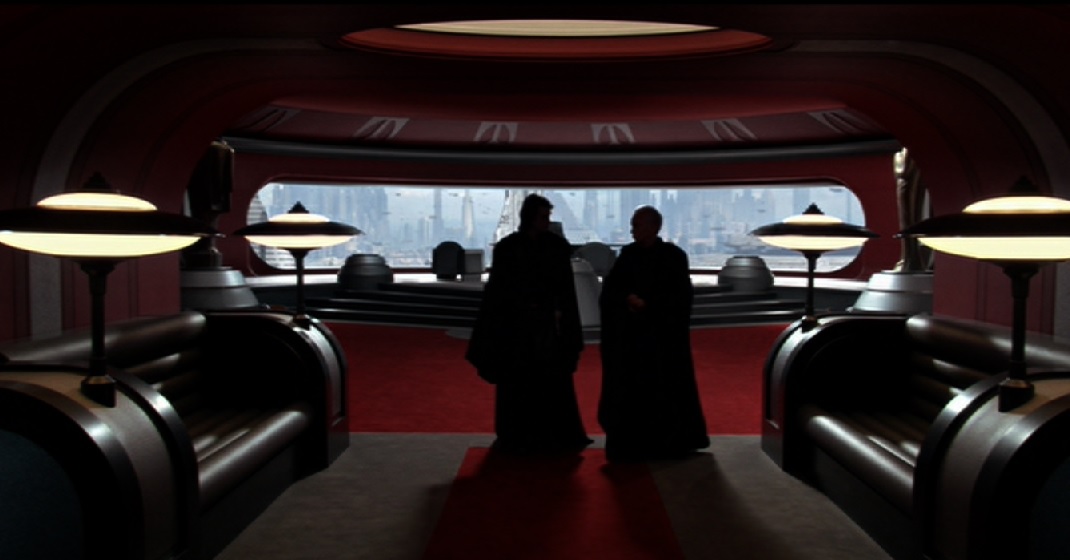
He gives Anakin a special task – just as Trump did with Musk, sending him into government agencies to extract data and build a massive surveillance system, yet another weapon for his dictatorship ambitions.
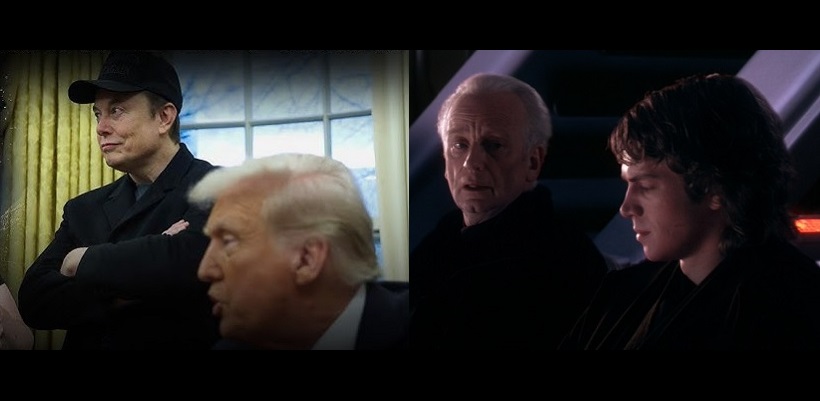
Anakin is brought before the Jedi Council. They accept him, but do not grant him the rank of Master. His angry response should have been a clear warning sign. There were plenty of warning signs during Trump’s campaign too – like mimicking Hitler and other fascist leaders in his speeches.
“It’s unfair”, says Anakin. That’s practically a direct copy of Trump. Narcissists like Trump are always playing the victim. “No country has ever been treated as unfairly as the United States”, Trump often complains. And he constantly claims to be the victim of a political witch hunt.
Standing With the Underdog
In that fateful Council meeting, Yoda utters one of the greatest lines of the film when learning that the Wookiees are under attack from the Separatists: “Go I will. Good relations with the Wookiees I have.”
The battle on the Wookiee planet Kashyyyk recalls Ukraine – a country with limited arms being attacked by a massive mechanized army (Russia). Yet they are stronger, because they are defending their freedom.

In the Ukraine war, Trump has sided with Russia, because he doesn’t care about Ukraine. It is just a pawn in a much greater battle for global control. Russia could be seen as standing in for the Separatists, though they see themselves as an empire.
The Ultimate Gaslighter
Things in Revenge of the Sith turn ugly very quickly. This is another hallmark of establishing a dictatorship. Events accelerate so fast that the good guys – in this case, the Jedi – can’t keep up.
They ask Anakin to spy on Palpatine, because “our allegiance is to the Senate, not its leader.” Most Republicans in the USA seem to have forgotten this pledge. They are 100% loyal to Trump, which is the heart of Project 2025.

Anakin argues with Padmé, who suggests that maybe the democracy they were trying to protect no longer exists. The parallel to the USA is stark: the political system is heavily influenced by money, and democracy is no longer functioning.
Palpatine’s final move is to portray the Jedi as attempting to illegally seize control of the Republic. Trump similarly convinced Americans that “evil” Biden was doing the same through the so-called deep state. By encouraging conspiracy theories, anti-science views, and mistrust in institutions, Trump sowed the seeds for victory.
“All who gain power are afraid to lose it. Even the Jedi”, Palpatine tells Anakin at a beautifully staged space opera. Also: “Good is a point of view, Anakin.” Indeed, we now have two competing truths: the Trump-Fox News truth and the Biden-CNN truth. On social media, we live in separate bubbles.
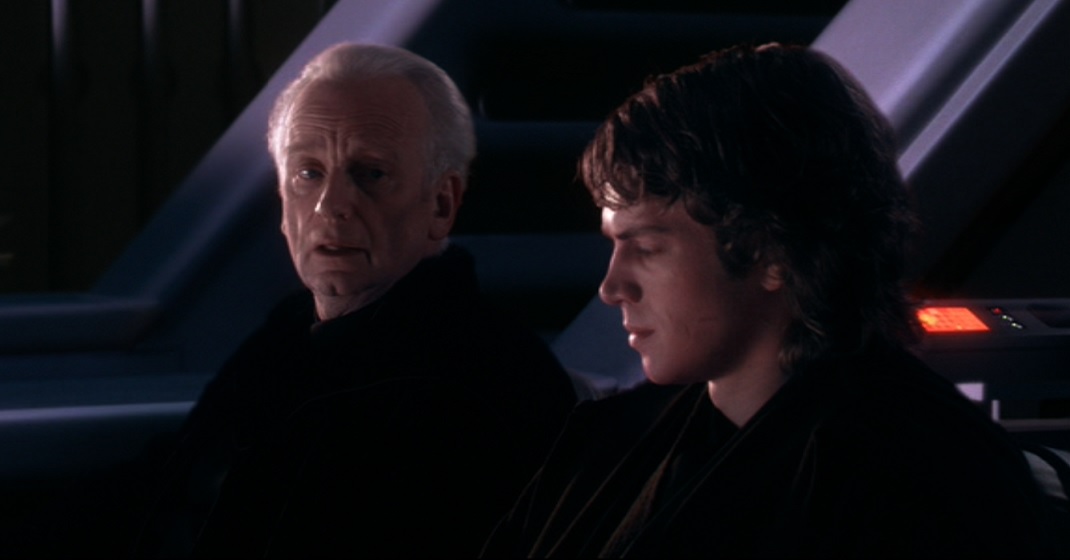
“The MAGA rely on their passion for their strength. They think inward – only about themselves.” “And the Jedi don’t?” This is classic MAGA: twisting narratives to vilify their opponents.
Palpatine tells Anakin the Sith legend of Darth Plagueis and the secret to immortality. This is the film’s Faustian moment. Many in the Trump administration made a similar bargain: loyalty in exchange for power.
ORDER 66 – PROJECT 2025
Before Palpatine’s rise in the Star Wars prequels, the Sith had been extinct for a millennium. Trump was also in a deep hole after losing the 2020 election. But he made a comeback – first by taking over the Republican Party, then by preparing for a return to power through Project 2025.
Trump is like Palpatine in many ways, particularly in his hunger for absolute power. Even physically, his grotesque expression mirrors Palpatine’s post-transformation face. And make no mistake – Trump is a manipulator, exploiting anyone in his way. While he lacks subtlety or strategy, he remains extremely dangerous. His bulldozer tactics may hinder him, but America’s fate remains undecided.

When the Jedi try to arrest Palpatine, the fate of the Republic is sealed. “I am the Senate!”, he screams. That’s typical Trump, who also believes his executive power should be limitless.
He kills three Jedi and convinces Anakin to kill Mace Windu. “He is a traitor”, Palpatine gaslights Anakin. Windu makes one last attempt to persuade him: “He has control of the Senate and the courts. He’s too dangerous to be left alive.” If there is one line in the film that best reflects the current Trump predicament, it is that one.

But Anakin – afraid of losing Padmé if Palpatine dies – makes a fateful choice and cuts off Windu’s hands. Windu is then killed by the now monstrous-looking Palpatine. “UNLIMITED POWER!!!” Anakin’s descent to the Dark Side is complete. Then he carries out Order 66. “Once more, the Sith will rule the galaxy, and we shall have peace.”
Trump seeks to rule the galaxy like Palpatine. He wants control over universities, the media, and the courts. He wants to own Canada, Mexico, Greenland, Panama, and Gaza. And he wants world leaders to bow before him in the Oval Office.
A pressing question remains: will Trump have his own Order 66? Will he use the military to suppress his own people and further his autocratic goals? The first steps already seem underway.
Final Transformation
Palpatine quickly consolidates his power. He sends Darth Vader to kill the Jedi younglings and Separatist leaders, then holds an emergency Senate session to declare the Republic reorganized into the first Galactic Empire.
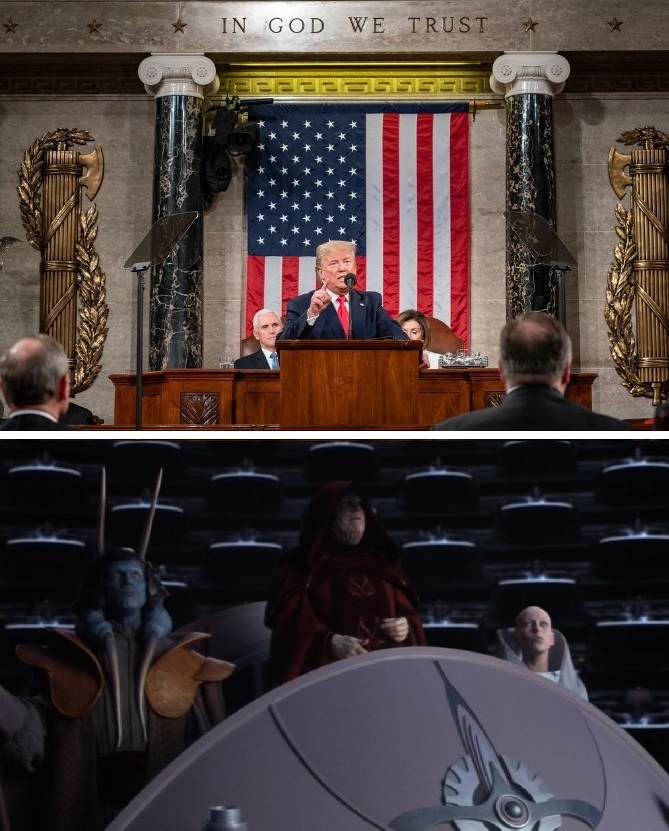
Padmé utters the now-famous line: “This is how liberty dies – with thunderous applause.”
Exactly. This recalls Trump’s victory, cheered by many – including business elites. His sycophants continue to praise him no matter what terrible things he says or does.
The finale of Revenge of the Sith is painful and heartbreaking – as it should be. Yoda and Obi-Wan discover the murdered younglings. Obi-Wan tells Padmé what Anakin has done. Then, after their brutal duel on Mustafar, Anakin is burned alive. It’s dark, powerful stuff.
In their final confrontation, Anakin tells Obi-Wan he now sees the Jedi as evil. Just like Trump and Musk view Democrats and the values they once stood for – like climate protection, freedom, and diversity – as evil.
“I sense Elon is in danger. His Tesla stock is burning.”
Elon Musk has similarities to Anakin. A smart, energetic kid with a passion for technology, he once did good – like supporting Ukraine with Starlink satellites. But he crossed a line. He’s transformed into a Dark MAGA figure and caused massive harm.

Like Anakin kills the Jedi younglings, Elon Musk is responsible for the deaths of thousands of children by slashing USAID funds. He has sunk to a level of evil that few would ever imagine to be possible. The only solution to the Trump-Musk regime is now complete destruction.
That shot where the Vader mask closes over Anakin’s burned face is powerful. His transformation is complete.

Final Thoughts
After the death of Padmé and the birth of Luke and Leia, Yoda and Obi-Wan go into exile – like Harris, Biden, and Waltz, after failing to stop the Trumpian menace.

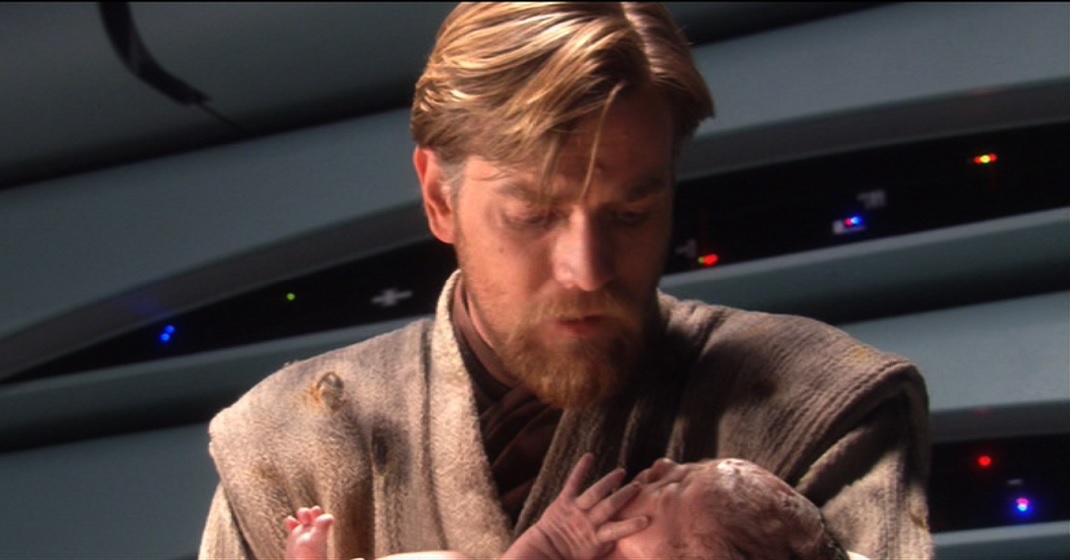
After all that darkness, the film ends on a hopeful note. Leia is delivered to her adoptive parents. Obi-Wan brings Luke to his aunt and uncle on Tatooine as they look out at the twin sunset.

The message: there is always hope.






 FRAGMENTEN UIT HET SCHEMERLAND