Hoe is het om… ?

De Amerikaanse filosoof Thomas Nagel (1937) werd bekend met zijn artikel What is it like to be a bat? (1974). Het is een kritiek op het reductionisme, de opvatting dat alles – inclusief onze geest – terug te voeren is tot fundamentele elementen. We kunnen een vleermuis volledig binnenstebuiten keren en alles over zijn fysisch-biologische eigenschappen leren, maar we zullen dan nog steeds niet weten hoe het voelt om een vleermuis te zijn; hoe het is om ondersteboven te hangen in een grot of blind in de nacht op insecten te jagen via echolocatie.

Nagel heeft gelijk. We kunnen onmogelijk weten hoe het is om een vleermuis te zijn of een ander levend organisme. Bewustzijn voelt uniek voor iedereen. Wij zijn allemaal het middelpunt van ons eigen universum. In een biocentrisch universum voelt dat niet alleen zo, maar is dat ook letterlijk wat er aan de hand is. We dragen het universum immers met ons mee waar we ook heengaan. Een vleermuis is, net zoals jij dat bent, een tijdelijke lokalisering van het superbewustzijn in onze spatiotemporale wereld. Zolang jouw lokalisering plaatsvindt, krijg je exclusief toegang tot unieke mentale content. Deze gedachtestromen en persoonlijke ervaringen zijn van ‘jou’ alleen en voor niemand anders beschikbaar. Dit geldt voor alle levende wezens. Zolang de lokalisering duurt, kun je niet weten hoe het is om je in een andere lokalisering te begeven. Een golf in een oceaan kan ook niet gelijktijdig in een andere golf zitten. Pas na de dood komt die mogelijkheid weer beschikbaar via mentale reïncarnatie.

Tot die tijd moeten we genoegen nemen met ervaringen in virtuele realiteit. Of we kunnen in een lucide droom transfiguratie toepassen en een mentale voorstelling maken van hoe het is om een tijger of een slang te zijn. Dit zijn beide echter slechts simulaties en dus geen volledig betrouwbare weergave van de werkelijke ervaring die de ego-geest overstijgt. Maar het is wel het dichtste bij dat we ooit kunnen komen bij de ervaring hoe het voelt om een ander levend wezen te zijn.

PS: Voor nu althans. In het boek ‘Ready Player Two’ is een technologie uitgevonden die het mogelijk maakt ervaringen op te nemen en deze via een machine-brein interface af te spelen.
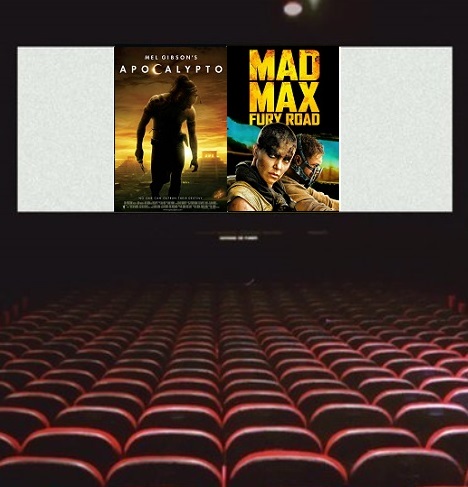
Double Bill #09: Apocalypto & Mad Max: Fury Road

Apocalypto (2006) opens with a little quiet before the storm; a tribe of Indians hunting a tapir, capturing it and having a pleasant night around the campfire. Then an evil tribe attacks and their harmonious lives soon descend into violent madness. Mad Max: Fury Road (2015) immediately throws you into the action and doesn’t give you a breather for at least 45 minutes. Both movies explore culture gone bad. The Indian tribes are working on destroying their culture from within, but their environment is still beautiful and rich with life. In Fury Road, civilization has already collapsed and all that is left is a desolate wasteland (it was filmed in the Namibian desert). They are both great settings for some of the most spectacular chase scenes ever committed to celluloid. In Apocalypto, it is a grueling foot chase through the deadly jungle (filmed in Mexico’s Catemaco rain forest) and a fight to the death. Mad Max throws in spectacular war machines and a stunningly visualized ride to mayhem. Both feature outrageous custom design, kinetic editing and ‘die hard’ violence along the way. Thematically, the films are very similar. In both stories, the men are the insane ones, and the (pregnant) women carry the greatest hope for humanity in these desperate times. But in both stories, at least one man is sane enough to take on the crazies and help the women, and their offspring, towards a better future. A connection between the two classics you may have missed at this point, is that Apocalypto is directed by none other than Mel Gibson, the original road warrior, who was too old to play Max in 2015. I must admit I enjoyed Apocalypto more than Mad Max: Fury Road. The latter features shots that are just mind boggling, but I didn’t feel much for the characters. In Apocalypto, I did. As a Double Bill, this works fantastically.

Mad Max Beyond Thunderdome

Director: George Miller, George Ogilvie
Written by: Terry Hayes, George Miller
Cast: Mel Gibson, Tina Turner, Bruce Spence, Adam Cockburn

Year / Country: 1985, Australia
Running Time: 107 mins.

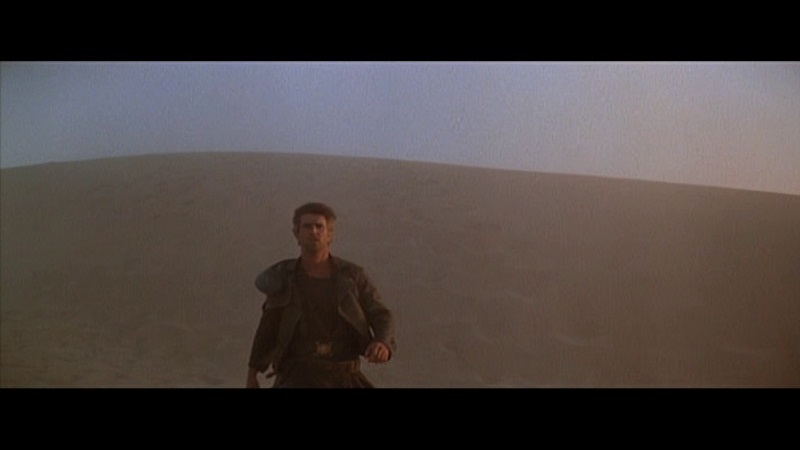
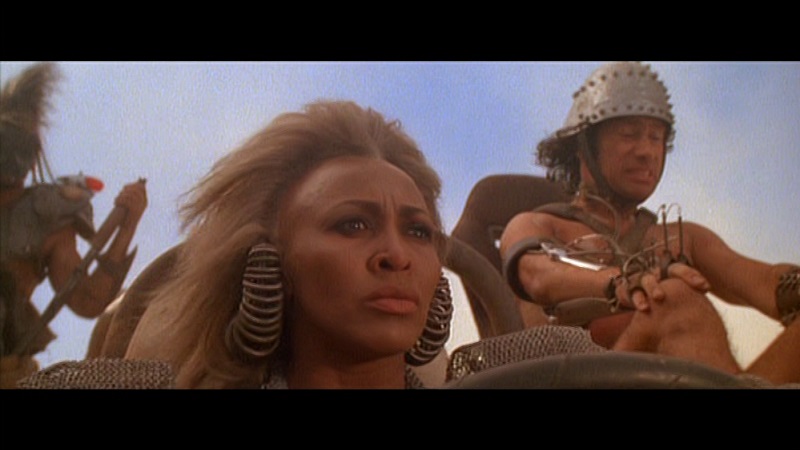
Mel Gibson returns for one last turn as Max Rockatansky, although he doesn’t need his last name anymore. Bruce Spence returns as well as pilot Jedediah. New in the cast is Tina Turner who also sings the opening song. In Mad Max, society was collapsing. In Mad Max 2, we were looking at a full blown apocalypse. In Mad Max Beyond Thunderdome, civilization is trying to re-establish itself. Aunty Entity (Turner) has founded Barter Town, a desert town that runs on a new energy source: methane producing pigs.

Max finds himself vehicle-less, so he walks to Barter Town where he is forced to participate in a bloody cage fight. After surviving, he is marooned in the desert where he is found by a tribe of children who believe he is a sort of Messias. They go looking for salvation in the wrong direction (Barter Town), and eventually we get the massive desert pursuit we’ve been waiting for. This time it involves a train and an airplane and it’s quite a spectacular finale.

Unfortunately, the preceding three quarters of the movie are disappointing. Visually, it is well done, but somehow I didn’t really connect with the characters. In the first two films, the character building was not that strong either, but there it was compensated with a fantastic atmosphere and amazingly shot action scenes. In Beyond Thunderdome, there is only the final chase scene, but there is not enough ‘good stuff’ in the hour and a half leading up to it.

One image I want to praise though, which is the shot of the children climbing on a deserted airplane in the desert. This feels like a very accurate vision of where the world is currently heading. Yet, what Mad Max Beyond Thunderdome also makes clear at the end is that there is always hope to be found.

Rating:

Biography: George Miller (1945) is an Australian filmmaker, best known for his Mad Max franchise. In 1971, George attended a film workshop at Melbourne University where he met Byron Kennedy, with whom he formed a friendship and production partnership, until Kennedy’s death in 1983 (Mad Max Beyond Thunderdome is dedicated to him). Together they made the first Mad Max movie in 1979 for a budget of 400.000 Australian dollars. It earned 100 million dollars at the box office worldwide and became the most profitable film of all time (the record was not broken until The Blair Witch Project 20 years later). Miller’s Mad Max: Fury Road (2015) earned Oscar nominations for best film and director. The latest entry in the series – Furiosa: A Mad Max Saga – will be released in May 2024.

Filmography (a selection): Furiosa: A Mad Max Saga (2024), Three Thousand Years of Longing (2022), Mad Max: Fury Road (12015), Happy Feet 2 (2011), Happy Feet (2006), Babe: Pig in the City (1998), Lorenzo’s Oil (1992), The Witches of Eastwick (1987), Mad Max Beyond Thunderdome (1985), Twilight Zone: The Movie (1983, segment), The Dismissal (1993, TV episode), Mad Max 2 (1983), Mad Max (1979), The Devil in Evening Dress (1975, short)

Biography: George Ogilvie (1931 – 2020) was born on 5 March 1931 in Goulburn, New South Wales, Australia. He was a director and actor, known mostly for Mad Max Beyond Thunderdome (1985), He died on 5 April 2020 in New South Wales, Australia.

Filmography: The Dismissal (1983, TV), Bodyline (1984, TV), Mad Max Beyond Thunderdome (1985, co-dir), Short Changed (1986), The Place at the Coast (1987), The Shiralee (1987, TV-episodes), Touch the Sun: Princess Kate (1988, TV-movie), The Australians (1988, TV-episode), The Crossing (1990), The Battlers (1994, TV), The Feds: Deception (1995, TV-movie), The Feds: Seduction (1995, TV-movie), The Last of the Ryans (1997, TV-movie), The Blue Healers (2002-2006, TV-episodes)