The Japanese classic and its American Western remake. Akira Kurasawa’s Seven Samurai (1954) – about a farming village in 16th century Japan which is about to be robbed by bandits and the honorable men who choose to protect it – can be considered as the birth of action cinema. It is very nearly a perfect film: a fantastic cast, brilliantly executed shots, kinetic editing, and a real sense of adventure. These samurai, farmers and even bandits are living on the edge. Every day could very well be their last. This tense clash of opposing forces is never done better and inspired countless other movies. Seven Samurai established many action cinema traditions, such as the assembly of a team of heroes, including a character for comic relief (Toshiro Mifune). And although Mifune steals many scenes, he doesn’t outshine the other characters who equally come to their right. The Magnificent Seven (1960) is not as great a Western remake as A Fistful of Dollars (1964) is of Kurosawa’s Yojimbo (1961), but it is still a pretty solid Western by director John Sturges (The Great Escape). The plot is exactly the same. Seven gunslingers vow to protect a farming village against a pack of thirty or so bandits, led by Eli Wallach (‘Ugly’ from The Good, The Bad and the Ugly). Yul Brunner and Steve McQueen, two major movie stars at the time, lead the posse, which also includes a young Charles Bronson and James Coburn. The script has less dramatic beats than its Japanse predecessor, but the moments are still there: that feeling that everything is at stake for these characters. An unexpected plot twist that is not in the original, raises the odds even higher. A great move surely. The finale, though, cannot hold a candle to the virtuoso finale of Seven Samurai. Much of the action looks extremely unconvincing with one death scene in particular being an embarrassment. Of course, you might ask yourself: why a remake at all? But that is just Hollywood. And seeing these great American actors doing their hero thing is not so bad at all.
A sorry excuse
The gung ho fires roar and roar.
Another squad is pulverized, the ones that came here before.
A half a shot of redemption, hanging afloat half a mile.
200 red candles burning, no one here.
No one can hear.
Paranoid thoughts, ugly trembling, self-loathing…
All this is a sorry excuse.
A war that shouldn’t have been.
My courage that should have been.
Those children…
We need to sleep now and forget it.
Never again.
![]()
Did You Notice This ‘GoodFellas’ Reference in ‘Killers of the Flower Moon’?
The latest Scorsese is out! Let’s not hope it is his final film, but if it is, it’s a great one and it contains all the elements of a typical Scorsese movie: criminal conspiracies, the founding myths of America, sin and morally corrupt men… they are all there.
If you know Scorsese’s oeuvre, you might have thought about his other movies during the viewing of ‘Flower Moon’. I certainly did. There was one reference in particular that caught my eye. Logically, since I have seen GoodFellas probably more than 30 times, so I couldn’t miss this reference.
At the end of GoodFellas, protagonist Henry Hill (Ray Liotta) decides to join the witness protection programme and testify against his former superiors James Conway (Robert De Niro) and Paul Cicero (Paul Sorvino). In the scene before the final scene, Hill is in court and he is asked by the prosecutor to point out Conway and Cicero for the jury. Hill does and the prosecutor says:
“Your honor, please let the record reflect that Mr. Hill has identified the defendant James Conway.”
In Killers of the Flower Moon, De Niro’s role is similar to James Conway, since his character – William Hale – is like Conway, leader of a major criminal conspiracy.
Towards the ending of ‘Flower Moon’, Leonardo DiCaprio’s character Ernest Burkhart is testifying against Hale in the Osage murder trial. And when I saw De Niro sitting there in the courtroom, I knew it was coming. And yes, Burkhart is asked to point out Hale and surely the prosecutor says:
“Your honor, please let the record reflect that Mr. Burkhart has identified the defendant William Hale.”
Nice one, Marty!
Vacation Reading: Three Philip K. Dicks
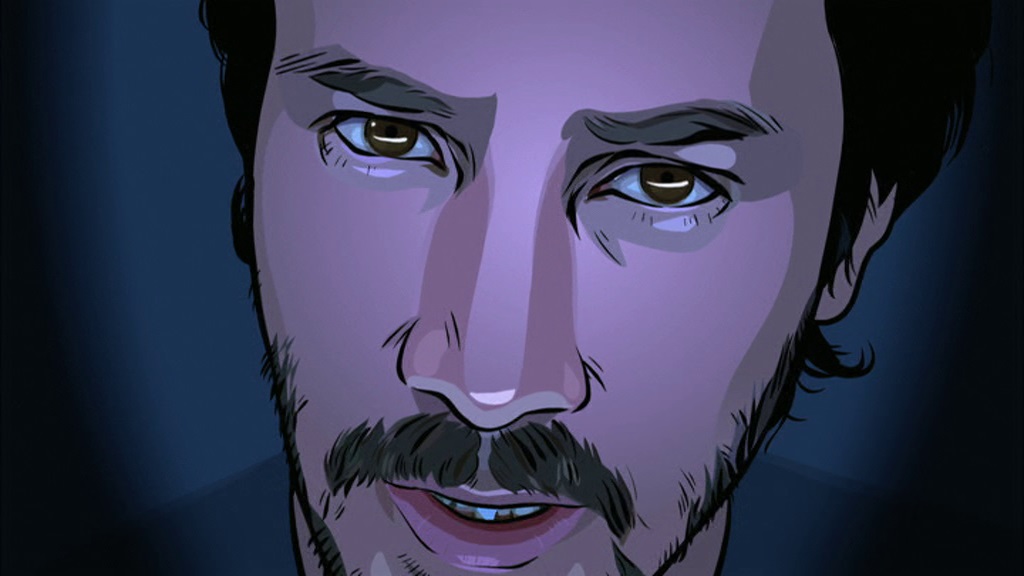
A Scanner Darkly (1977)
Semi-autobiographical novel about Dick’s experiences of living with a group of dope users. The main character is Bob Archtor, an undercover agent who gets addicted to a futuristic drug (the novel is set in 1994 in Orange County) called ‘Substance D’, a drug that soon leads to serious brain malfunction, and Archtor starts to lose his identity. Dick wrote it after a period in which he wasn’t able to produce any fiction due to drug consumption, so this novel functioned as a turbocharger of sorts. It contains flashes of brilliance, especially when it commentates on the lifestyle of heavy drug users, but as a whole it is quite a dull read, especially for a terrific writer as Dick. Turned into a 2006 movie by Richard Linklater, starring Keanu Reeves, Woody Harrelson, Winona Rider and Robert Downey Jr. The book ends with a list of all the dopers Dick hung out with who had died since then. It is quite a long list.
The Man in the High Castle (1962)
Who is the Man in the High Castle? It is the author Hawthorne Abendsen who wrote a subversive novel in which the allies won the Second World War. You see, this classic novel by science fiction legend Philip K. Dick is set in an alternative America which is governed by the Nazi’s and Japanese who have won WWII. In this world, American culture is quickly vanishing from existence, and an artificial America is rising. The novel follows various American, Japanese and European characters who try to make their way in this reality, thereby using the Taoist book ‘I Ching or Book of Changes’ as their guidance. The fascinating thing about ‘The Man in the High Castle’ is how believable Dick has crafted this alternate world. It makes the reader realize that we live in such a world ourselves, the result of countless choices and actions. We take it for granted, but everything could easily be very different. Turned into a television series by Amazon in 2015.
VALIS (1981)
‘VALIS’ follows the adventures of Horselover Fat (great name for a character!), an alter ego of the writer. This later, partly autobiographical book, is about Dick’s religious experiences. VALIS stands for Vast Active Living Intelligence System and represents the writer’s vision of God, which is that God is actually one huge macro-mind that connects everything. Unfortunately, the book – that was published one year before his death – contains not much more than endless philosophizing about the divine, madness and alien intelligence. Yes, Dick certainly had some fascinating thoughts and ideas, but they lack clarity here. And a plot is also sorely missing in ‘VALIS’. I’m afraid I am more a fan of Dick’s earlier works, like the phenomenal ‘Ubik’. ‘VALIS’ is part of a trilogy that also included ‘The Divine Invasion’ and ‘The Transmigration of Timothy Archer’, his final novel.
![]()