Ah, wonderful Christmas time… I always love Christmas because I’m off, and I enjoy the whole atmosphere. I love Christmas trees, Christmas food, and those miniature Christmas villages. But also – of course – Christmas movies. Or simply movies set during Christmas, because they make me feel all warm and fuzzy inside.
When I was a child, there were always great Christmas films on television. But an action movie set around Christmas time can really hit my sweet spot as well. A few Christmases ago, I discussed Die Hard and Die Hard 2, perhaps the ultimate Christmas films.
But let us not forget Lethal Weapon – written by Shane Black, produced by Joel Silver and directed by Richard Donner. Like Die Hard, it’s one of the best action movies of the late eighties and early nineties, and it can definitely be considered a Christmas movie too. So let’s take a look at all the Christmas elements the film contains.

It opens with ‘Jingle Bell Rock’ by Bobby Helms, one of the greatest Christmas tracks, and a girl in an apartment building snorting ‘snow’ (X-mas) before she jumps to her death. It’s the investigation into this death that brings detectives Roger Murtaugh (Danny Glover) and Martin Riggs (Mel Gibson) together as a police duo, and later, as besties.
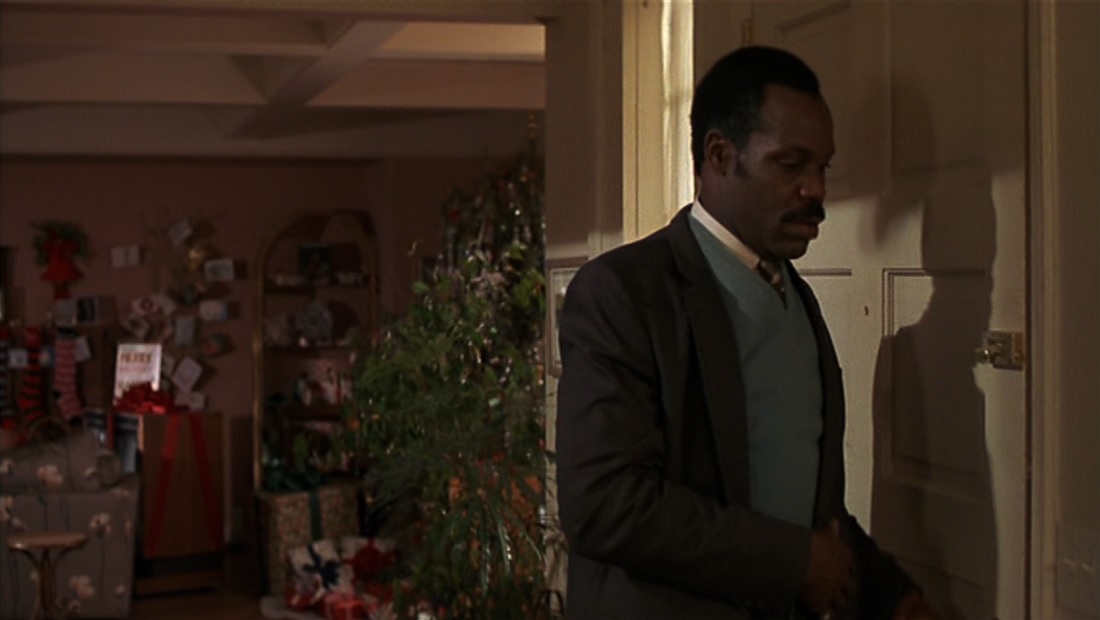
We meet Murtaugh, who’s feeling old on his 50th birthday. His house is warm and cozy, and he can’t believe how pretty his daughter looks in her New Year’s dress. His wife tells him his old Vietnam buddy Michael Hunsaker called about his daughter, who, as we soon discover, is the jumper from the opening scene.
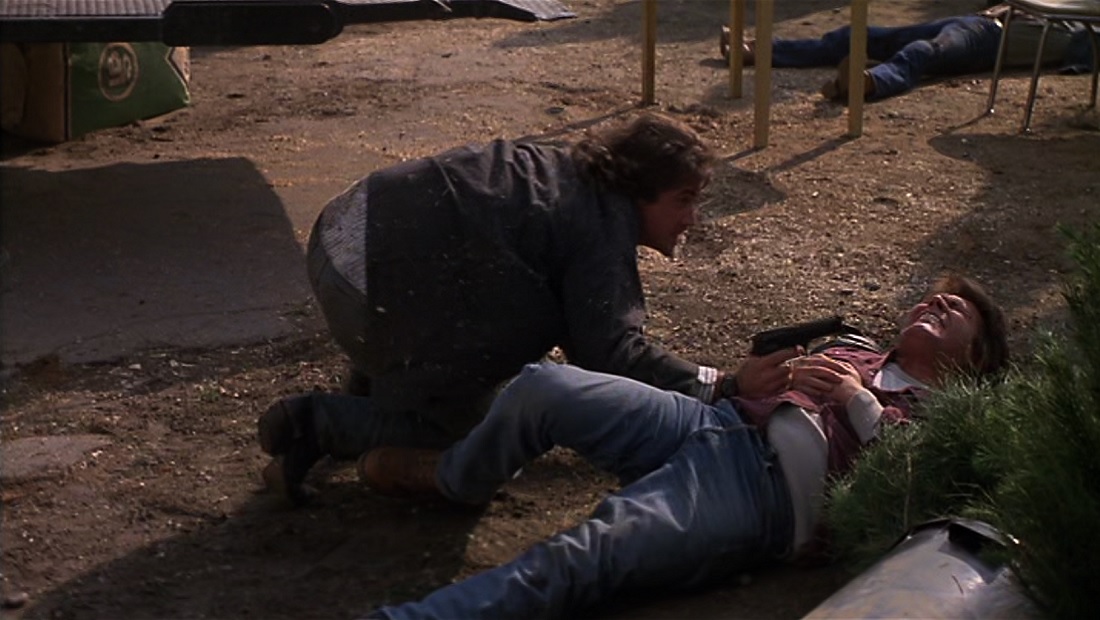
Riggs goes undercover to bust a drug ring at a Christmas tree lot. It quickly turns into a bullet festival, and Riggs reveals just how unhinged he is, and that he apparently has a death wish. This is Riggs’ proper introduction in the theatrical version of Lethal Weapon. In the director’s cut on DVD, there’s an earlier introduction in which Riggs risks his life to take down a sniper at a school.
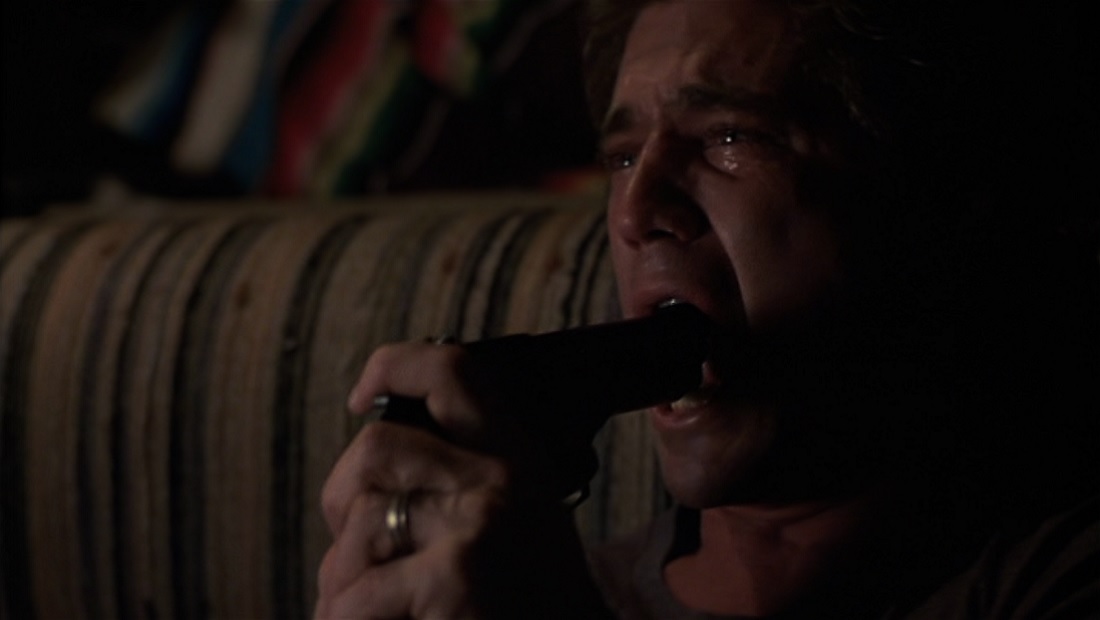
The suicide attempt scene… Very intense. Great acting by Gibson. He almost does it, but Bugs Bunny on TV saves the day by wishing Yosemite Sam a Merry Christmas.
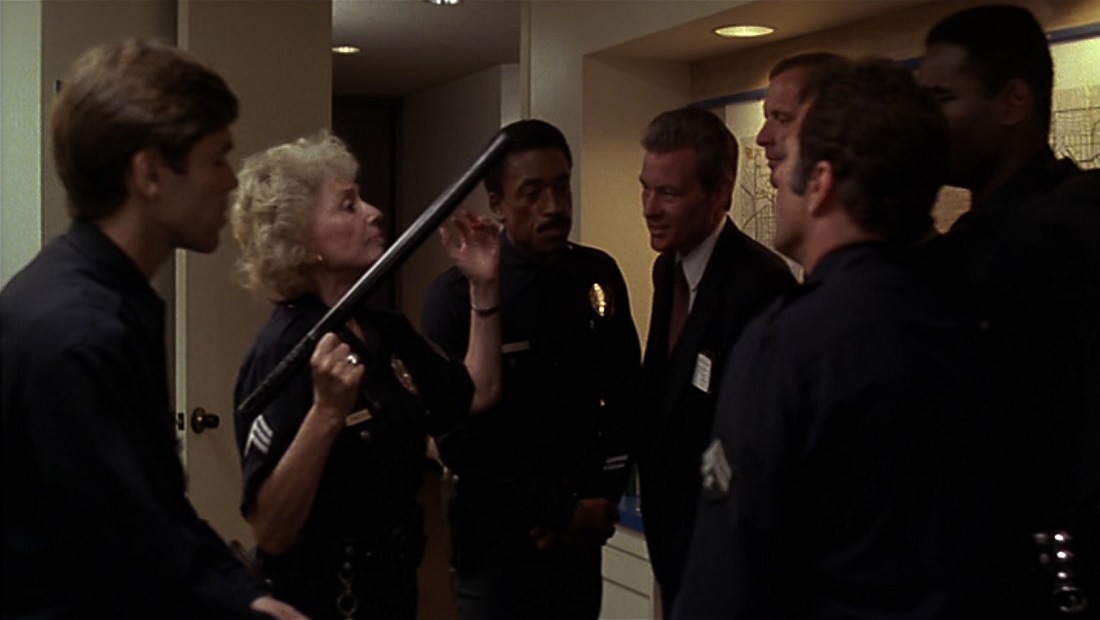
Cops singing Silent Night. We meet Captain Murphy (Steve Kahan) and the police psychologist (Mary Ellen Trainor) who is evaluating Riggs.
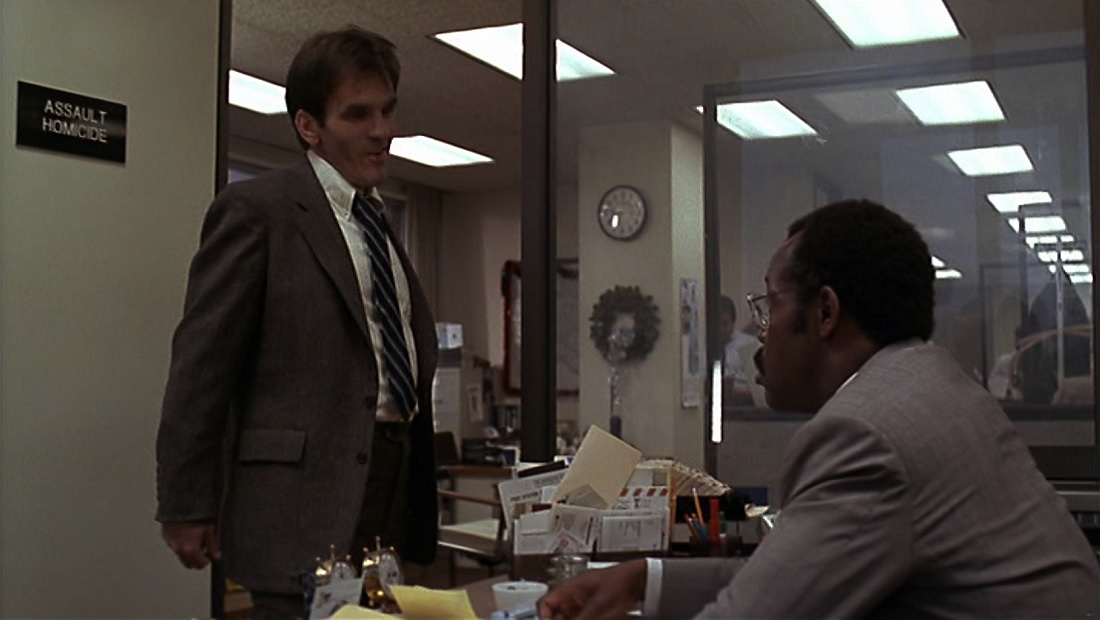
A colleague of Murtaugh admits to crying in bed because he was lonely, and he wishes Murtaugh a Merry Christmas. Afterwards, Murtaugh jumps on Riggs because he’s carrying a gun and he doesn’t realize he’s a cop. Riggs floors him in seconds. Nice to meet you.
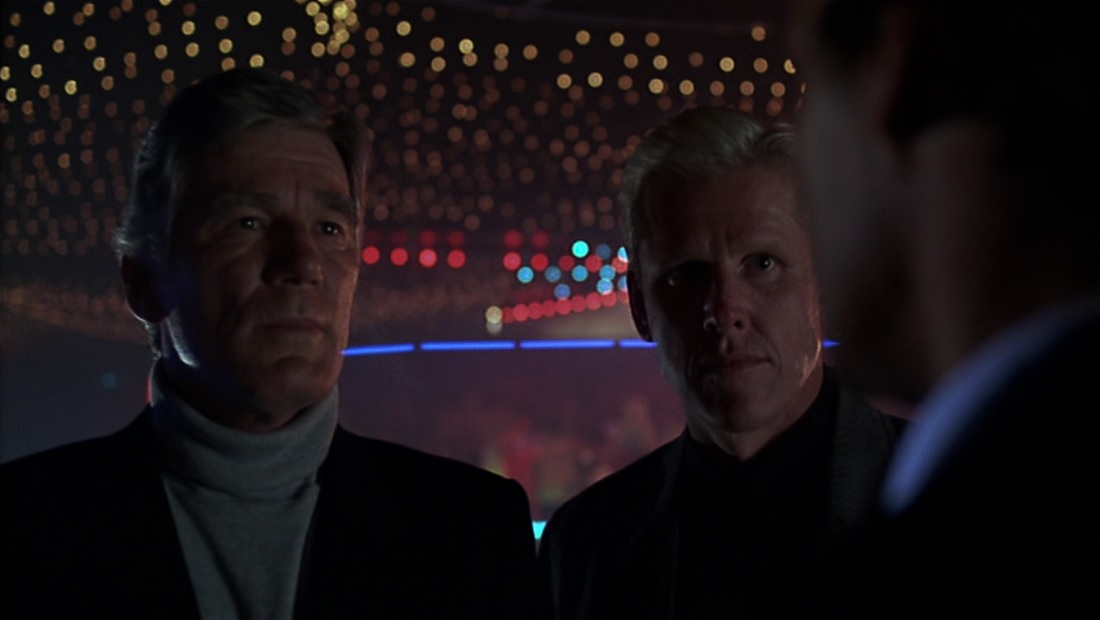
Meet the bad guys. In a club, main baddie General McAlister (Mitchell Ryan) proves to a customer just how loyal his men are by holding a Zippo under his henchman Mr. Joshua’s (Gary Busey) hand for eleven seconds. He then wishes the impressed drug wholesaler a Merry Christmas.
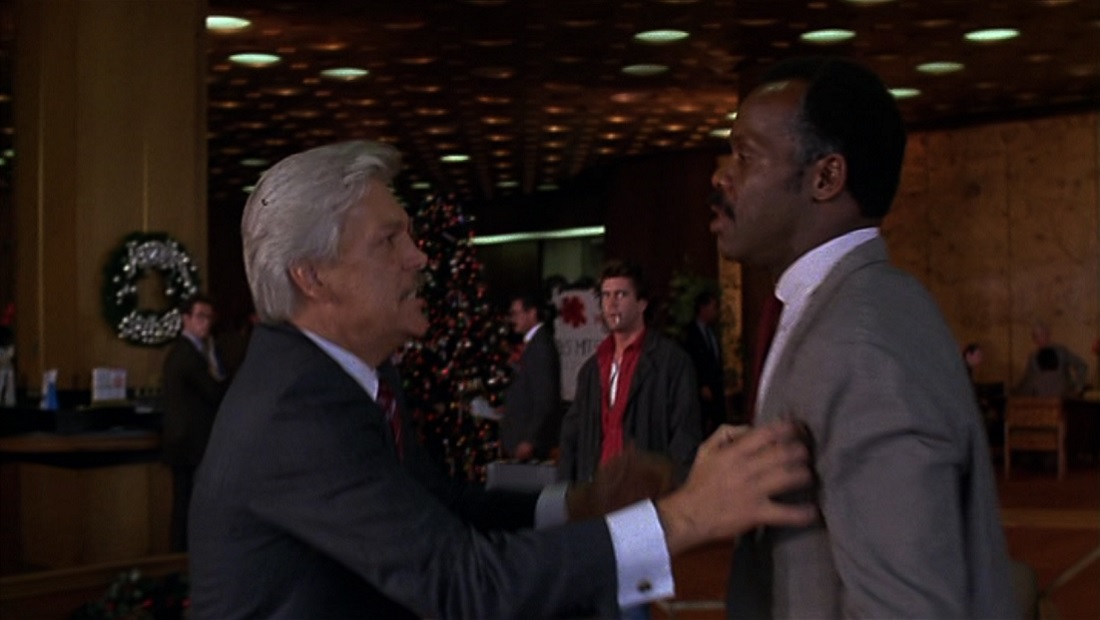
Roger talks to Hunsaker. His old friend says Roger owes him, and he wants him to find the bad guys who killed his daughter (it turns out she was poisoned, so she would have died even if she hadn’t jumped) and kill them.
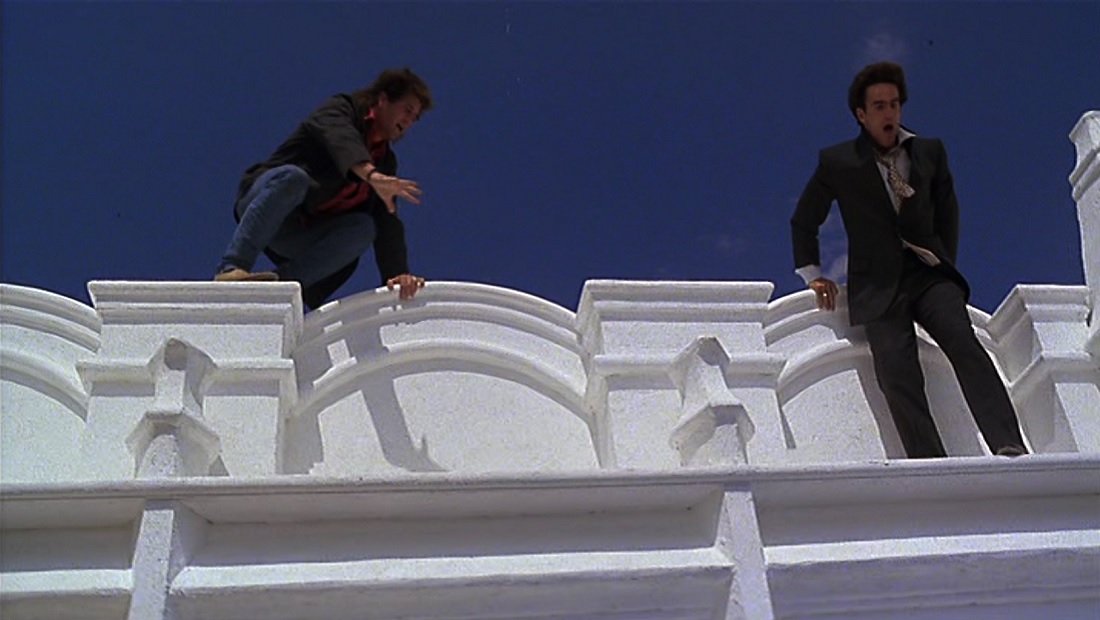
The jumper scene. A santa clause is among the onlookers. And Riggs opens the conversation with the jumper with “Merry Christmas.”
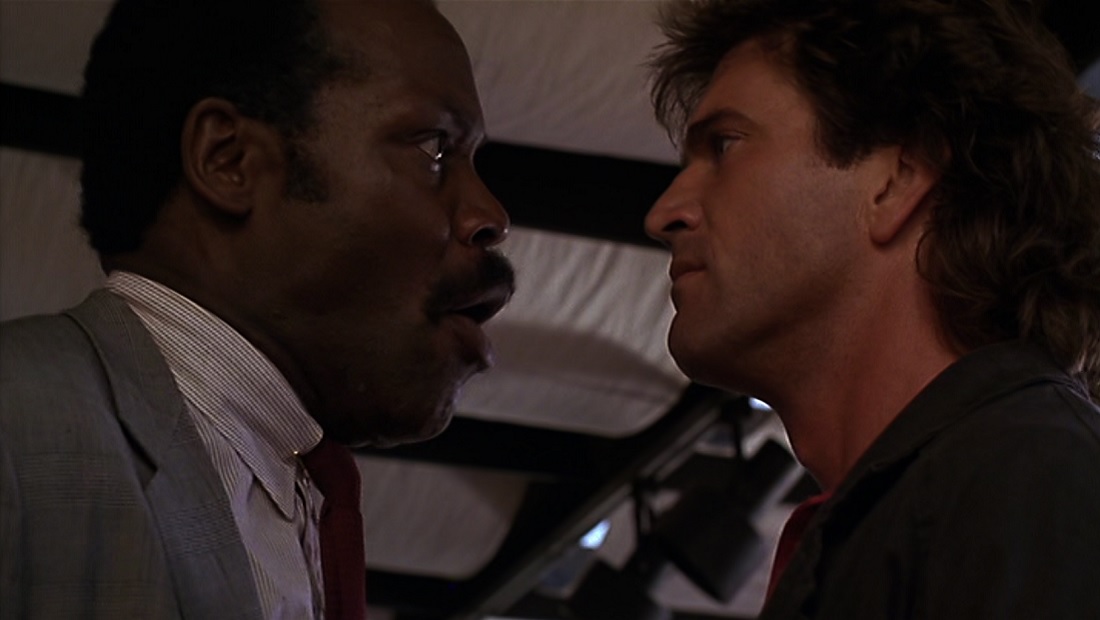
Murtouch tries to get the truth out of Riggs against a Christmas background: “You wanna die?”
Riggs tells him that he’s considering eating a bullet and even has a special one for the occasion.
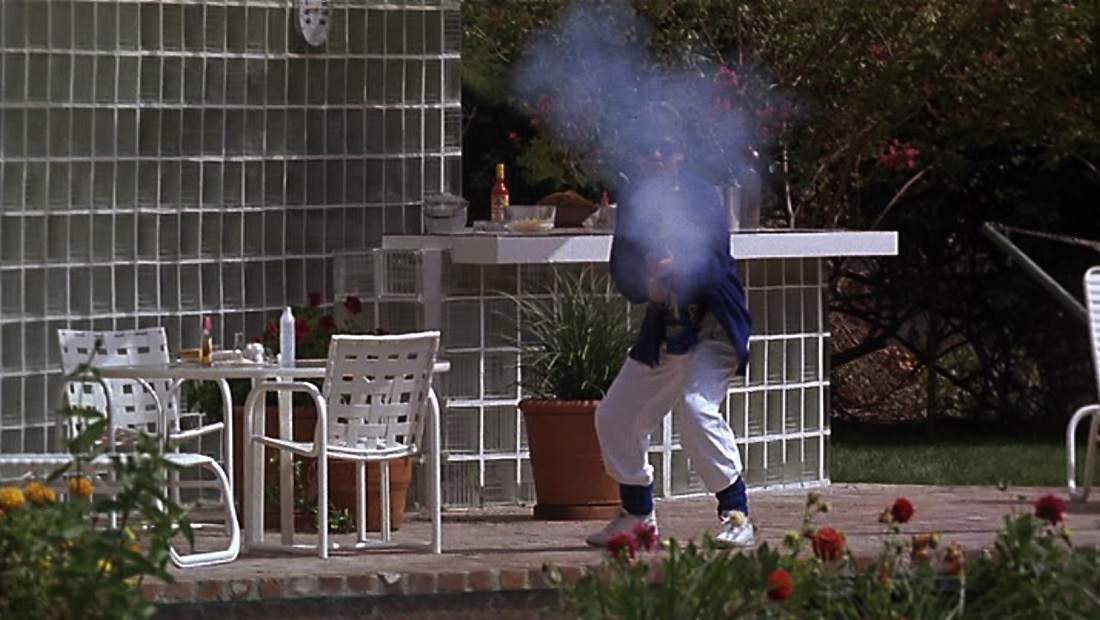
They follow up on a lead and a young woman invites them inside. They just warmed up to each other a little bit. “Merry Christmas”, she says as she drives off. Friendly people in L.A. The reception is less friendly (shotgun) and Riggs makes another kill.
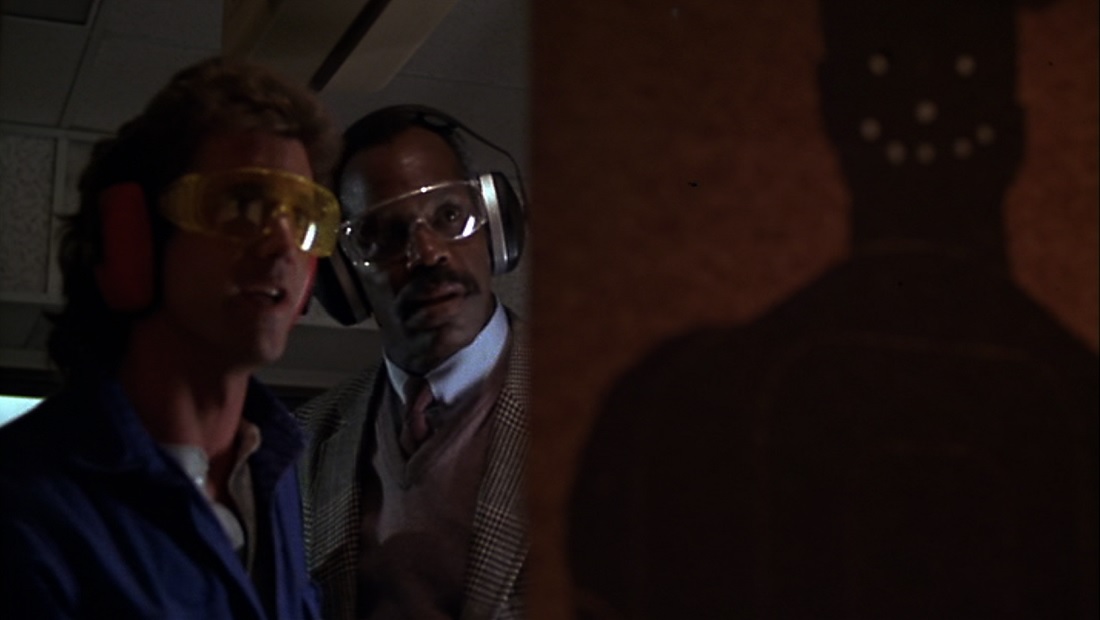
At the shooting range, Riggs and Murtaugh are clearly closer after their dinner at Murtaugh’s place. Murtaugh jokes that if Riggs doesn’t behave, he won’t be invited for Christmas dinner. “My luck is changing by the day”, Riggs says, taking a playful dig at Murtaugh’s wife’s cooking.
“Fuck easy!”
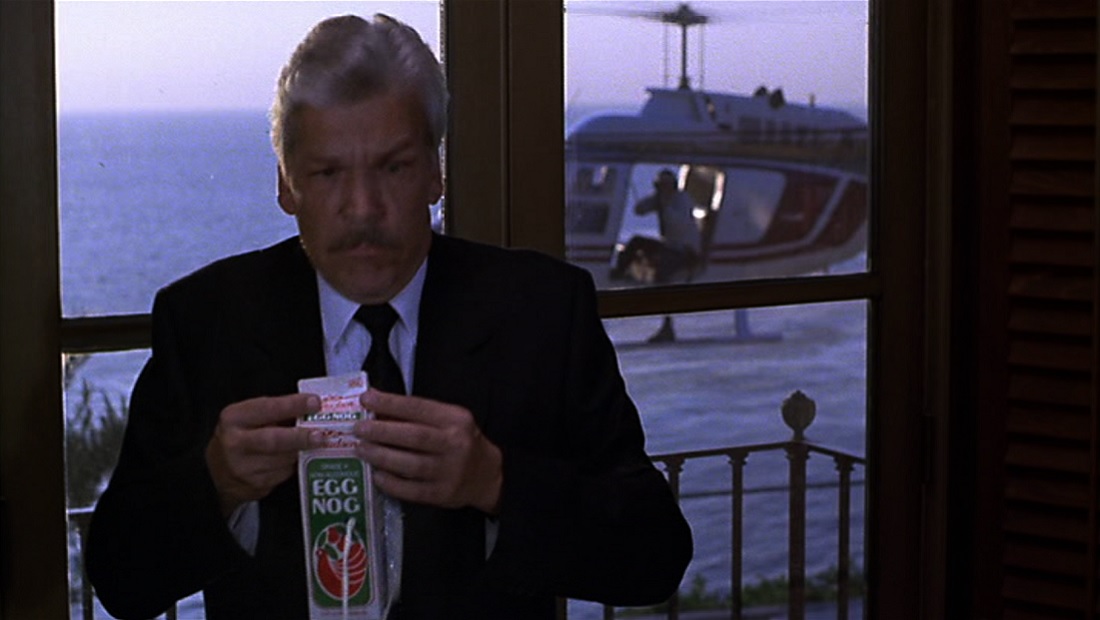
Roger puts the screws on Hunsaker. They know it’s his illegal activities that got his daughter killed. Then Hunsaker starts spilling his guts about a heroin smuggling operation, but before he can give details he is snipered to death from a helicopter while drinking eggnog from a carton. 🙂
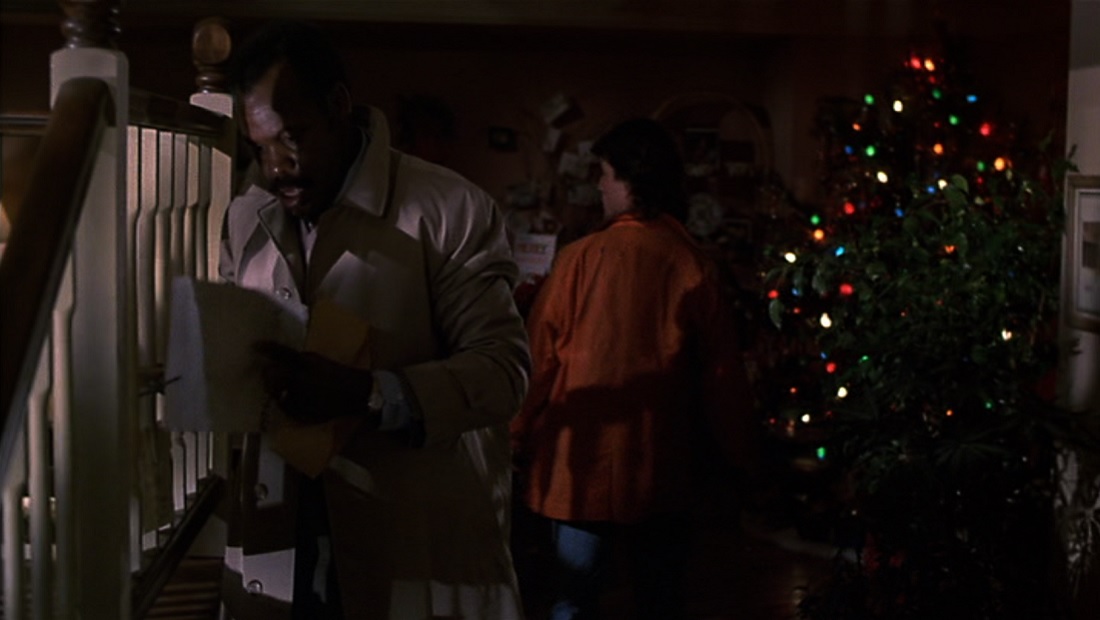
“The bastards got my daughter…”
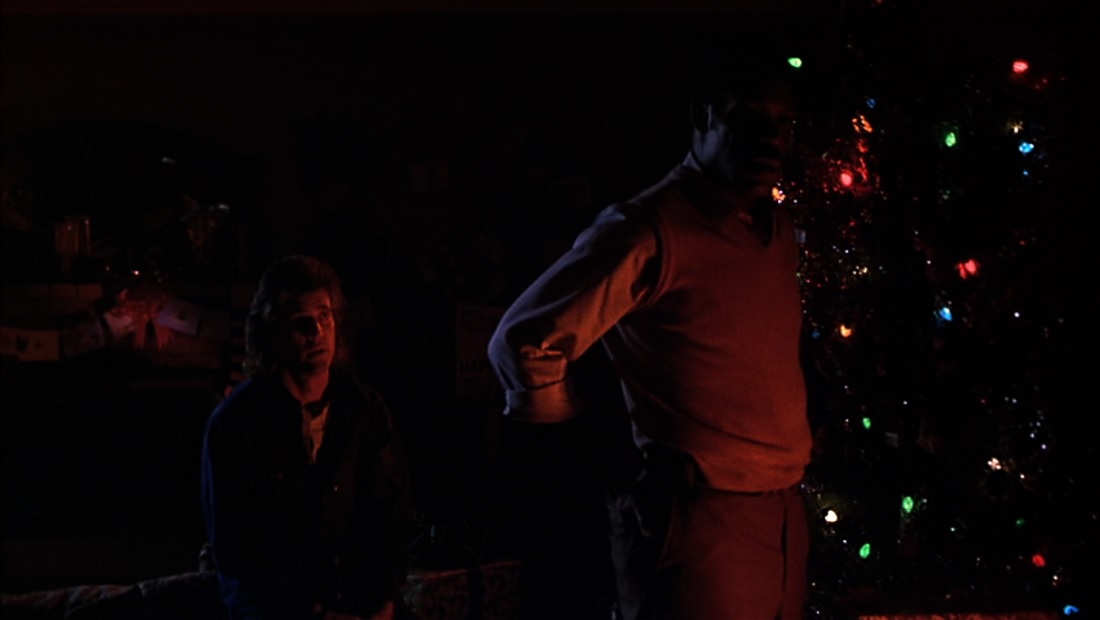
“You know they’re gonna kill her, don’t you? We’re gonna get bloody on this one, Roger.”
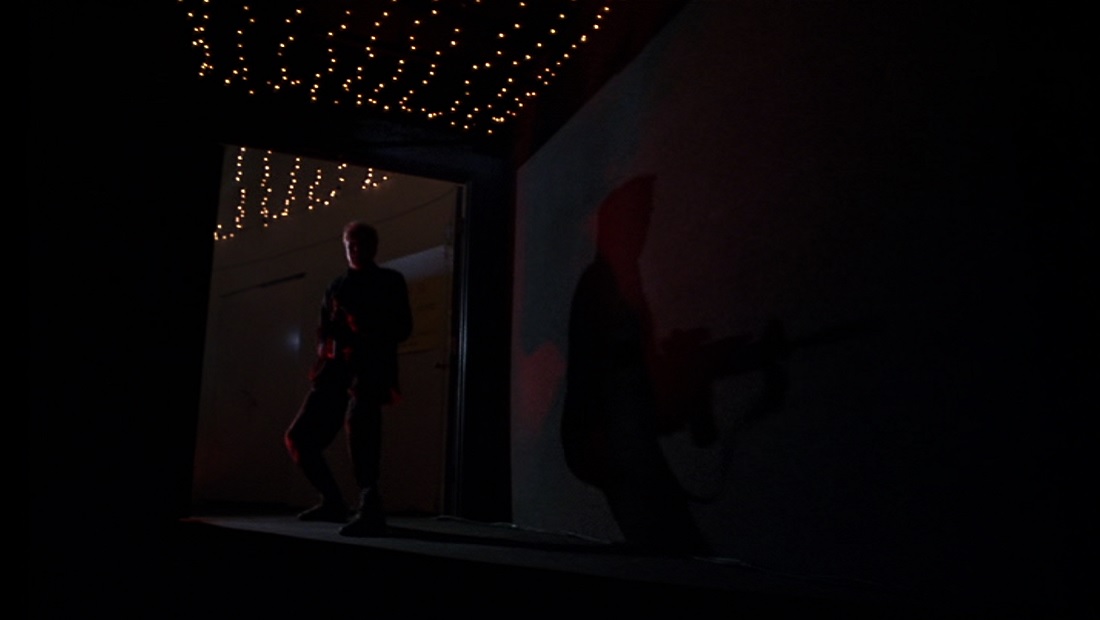
After an intense torture session, the Lethal Weapon team breaks out and enter the club where we first met the baddies. The Christmas decorations are all there. It is time for payback.
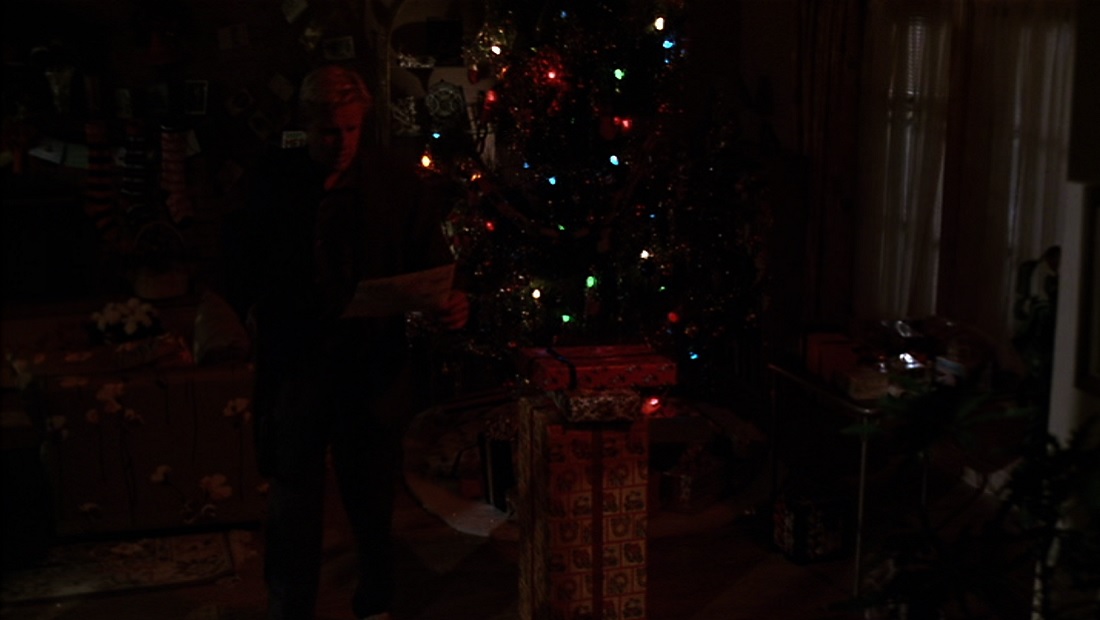
Surprise! A note for the bad guys.
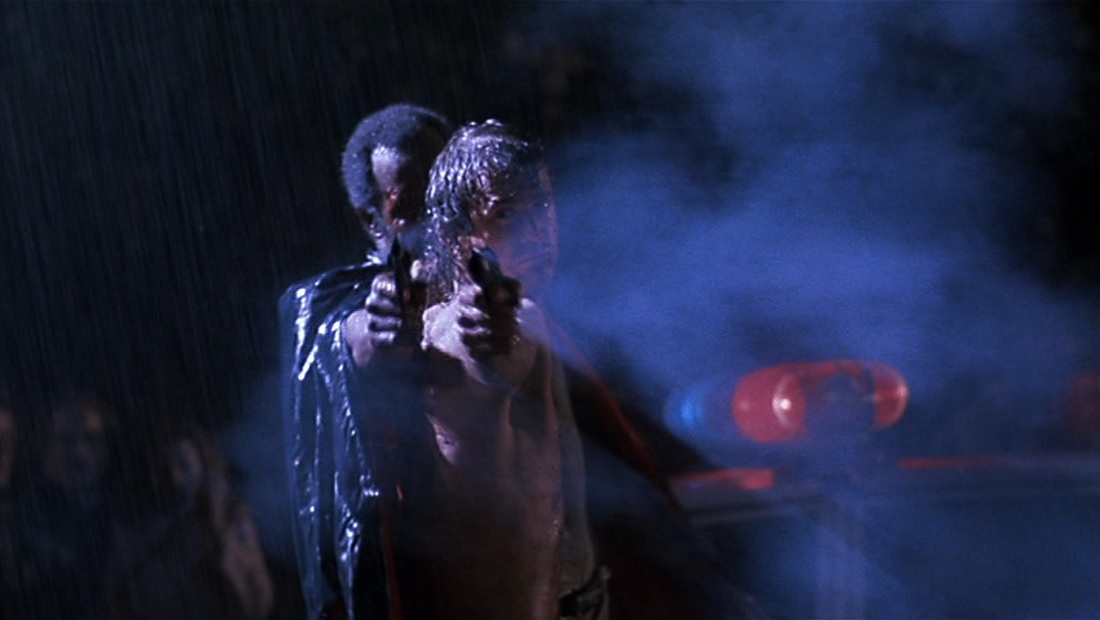
Riggs Vs. Mr. Blonde. Riggs wins of course. Then Joshua takes a gun from an officer, and they shoot him dead in response. They are one, the ultimate cop duo.
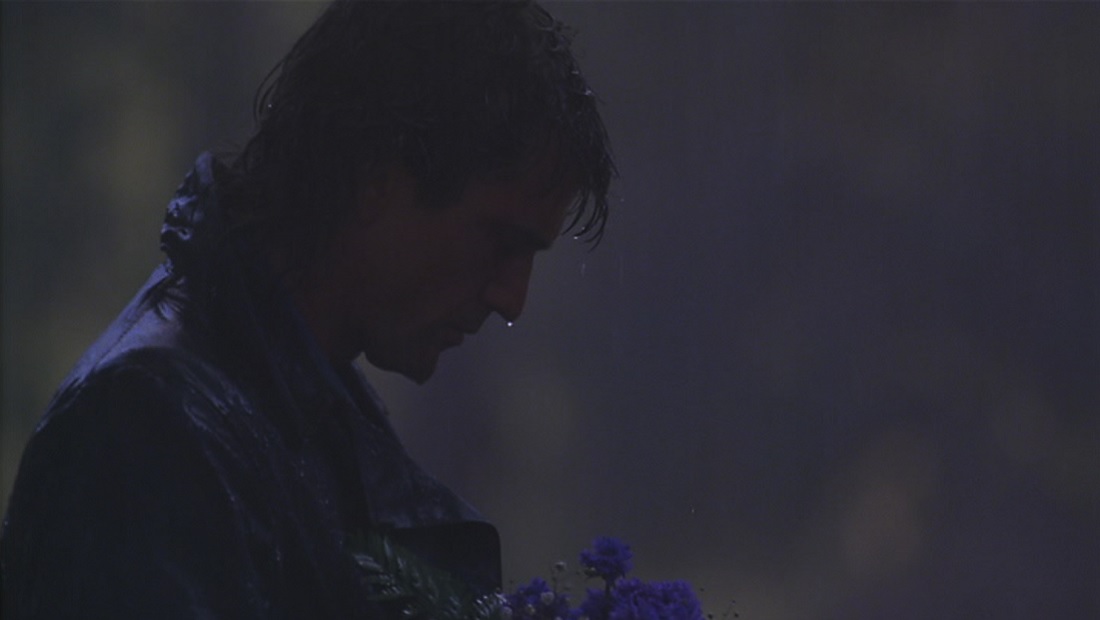
“Merry Christmas Victoria Lynn.”
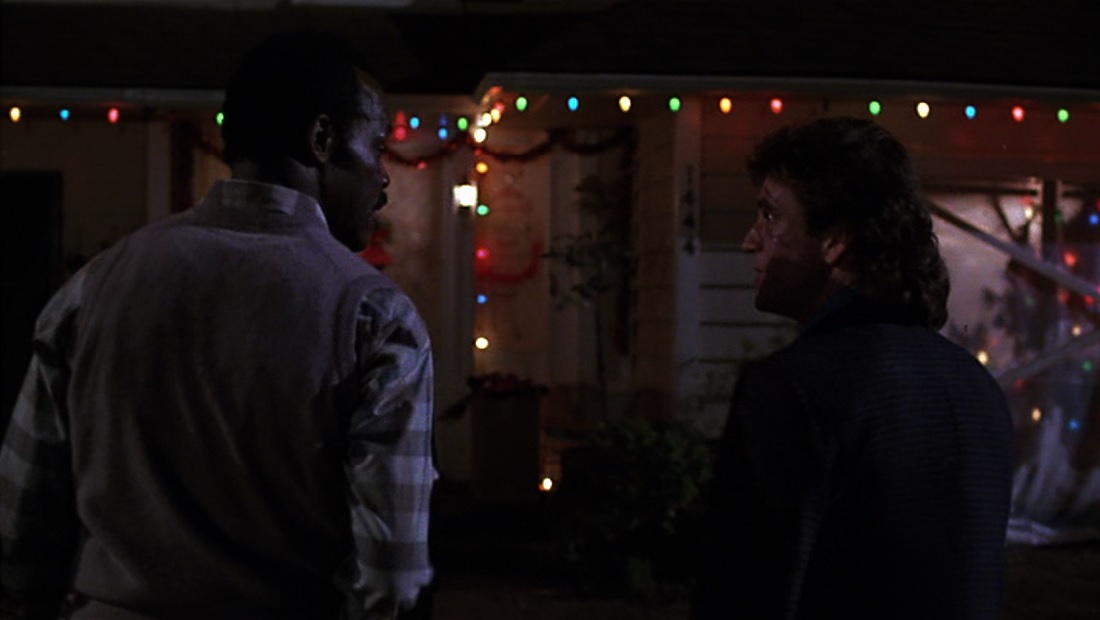
A bullet as a Christmas gift…
Riggs no longer has a death wish. Murtaugh invites him in because he refuses to eat “the world’s lousiest turkey by himself.”
‘I’ll Be Home for Christmas’ plays over the end credits while Sam the Dog and Burbank the Cat fight it out inside.



 FRAGMENTEN UIT HET SCHEMERLAND