The 15 Greatest George Harrison Songs

During his formative years as lead guitarist of The Beatles, George Harrison, often called the quiet and spiritual Beatle, developed himself as a successful songwriter in his own right, who worked in the shadow of songwriting canon Lennon-McCartney. He ended up writing some of the group’s most iconic songs, and then – post-Beatles – continued to add a number of classics to his repertoire as a productive solo artist. These are my 15 favorites.

15. Blow Away
Day turned black, sky ripped apart. Rained for a year ‘til it dampened my heart. Cracks and the leaks, the floorboards caught rot. About to go down, I had almost forgotten… Great opening lyrics, this title song and single from of his 1979 album ‘George Harrison’. This easy listening song became one of Harrison’s most popular recordings from his solo career, and it’s easy to understand why.

14. I Want To Tell You

This was the third track George added to ‘Revolver’, and thereby the first time he contributed more than two tracks to a Beatles album. The song is about the difficulty of conveying the emotions you experience during an acid trip. It’s the opening song of ‘Live in Japan’, the fantastic album made of the concert tour George did in Japan with Eric Clapton as his guitarist and band leader.

13. Piggies

‘Piggies’ is a social satire inspired by George Orwell’s ‘Animal Farm’. Great combo of classical music, baroque pop and absurd lyrics (pigs eating bacon). Unfortunately it was, along with ‘Helter Skelter, used by Charles Manson and his cult as a foundation for his race-related counter cultural revolution. Still, it remains a terrific song, and Harrison’s second best song on the magnificent ‘White Album’ in my humble opinion.

12. Living in the Material World

This song’s title was chosen by Martin Scorsese for his documentary about Harrison. It’s another one of his spiritual songs and the title of his follow-up album to ‘All Things Must Pass’. It’s a very memorable tune in which George describes the limits of knowledge we have in this state as living beings and the clearer picture that will emerge after death. John and Paul are also mentioned in the lyrics.

11. If I Needed Someone
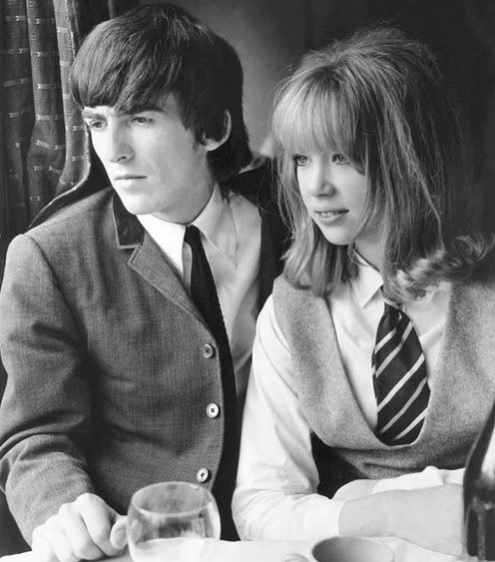
Along with ‘Think For Yourself’, this was George’s contribution to ‘Rubber Soul’. He apparently wrote it for Pattie Boyd, with whom he wasn’t yet married in 1965. It was inspired by the sound of the American band the Byrds who George and John liked and who were clearly inspired by the Beatles. The ambivalent lyrics are quite beautiful, and ‘If I Needed Someone’ was at the time considered to be George’s best song at that point.

10. Within You, Without You

One of the three Indian songs George composed for the Beatles (the others are ‘Love You To’ and ‘The Inner Light’) and his only song on ‘Sgt. Pepper’s Lonely Hearts Club Band’. “I think that is one of George’s best songs”, John Lennon later said. “I like the arrangement, the sound and the words. He is clear on that song. You can hear his mind is clear and his music is clear.” It was recorded in Abbey Road Studios in London without the other Beatles, and features Indian instruments such as the sitar, a tambura and a tabla.

09. I Me Mine

In Peter Jackson’s ‘Get Back’ about the ‘Get Back’ sessions in Twickenham Studio’s, George arrives one morning, and he starts playing a new song he’s been working on for Ringo and some crew members. It is called ‘I Me Mine’. They like it and so do I. The lyrics point to self-centredness as part of the human condition. It was the last song The Beatles, somewhat ironically, recorded before they split up and went to do their own thing.

08. Cheer Down

‘Cheer Down’ was the closing song of the tremendous action film Lethal Weapon 2 in 1989. It was picked by George’s friend Eric Clapton, who was in charge of the music. The title of the song is attributed to Harrison’s wife Olivia, who told her husband to ‘cheer down’ when he would get too enthusiastic. He wrote it together with Tom Petty, and released it as a single with ‘Poor Little Girl’ as the B-side. It was the last such release by Harrison as a solo artist during his lifetime.

07. Tax Man

On The Beatles’ legendary album ‘Revolver’, George got the opening track with ‘Tax Man’. It was the first political song by the group, written as a protest against the progressive super tax of 95 percent the band had to pay at that time. It was introduced by Harold Wilson, prime minister and Labour Party leader, who is mentioned in the lyrics along with conservative leader Ted Heath. The fantastic guitar solo is played by none other than Paul McCartney.

06. What Is Life

‘What Is Life’ is one of the hit singles of ‘All Things Must Pass’, Harrison’s triple album which was released in november 1970 after the breakup of the group. Background musicians on the song include Eric Clapton and the Delaney & Bonnie and Friends Band. It became one of Harrison’s most popular compositions and showed the depth of his talents that had been hiding in plain sight behind Lennon and McCartney. The songs was used in the final segment of GoodFellas, the part in which Henry Hill’s life as a gangster goes off the rails.

05. Here Comes The Sun

And what is currently the most streamed Beatles-song? It’s not a Lennon-McCartney composition, but by far Harrison’s ‘Here Comes The Sun’. It is currently on 1.1 billions streams on Spotify. George wrote this pearl at Eric Claptons’ country house on an acoustic guitar while skipping a business meeting at Apple Corps headquarter about The Beatles’ business affairs. It became one of his signature songs and together with ‘Something’ formed his genius contribution to ‘Abbey Road’, the final album they recorded. The beautiful composition shows his maturity as a songwriter.

04. Something

This classic love song from ‘Abbey Road’ became Harrison’s first A-side single (it was released as a double A-side single together with Lennon’s ‘Come Together’). It is considered as a definite highlight of Harrison’s career. Lennon called it “the best track on ‘Abbey Road’” and it was later covered by a.o. Frank Sinatra, Elvis Prestley, Ray Charles and Shirley Bassey. After ‘Yesterday’ it is the most covered song by The Beatles.

03. While My Guitar Gently Weeps

Rolling Stone Magazine ranked this song seventh in their list ‘The 100 Greatest Guitar Songs of All Time’. And justly so! The guitar work (played partly by Eric Clapton uncredited) is sweeping. The words that started this composition – gently and weeps – were randomly chosen from a book George found lying around. This reflects the meaning of the lyrics that appear to be about randomness and – typical for George – universal love. Inspired by the Taoist concept that everything is relative to everything else as opposed to the Western view that things are merely coincidental.

02. Give Me Love (Give Me Peace On Earth)

I am a sucker for George’s spiritual songs and this is reflected in my choice for his greatest two songs. ‘Give Me Love’ (1973) became George’s second number one single in the US knocking McCartney’s ‘My Love’ to the second spot. It contains beautiful slide-guitar solos, and I love his passionate pleading to the Lord, asking to be freed from birth (released from the karmic cycle of birth, death, and rebirth). Don’t miss the beautiful live version from the ‘Live in Japan’ album.

01. My Sweet Lord
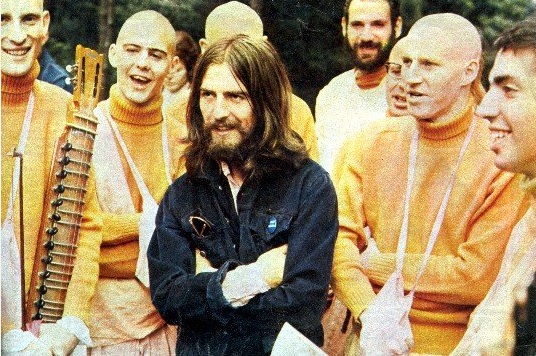
Why ‘My Sweet Lord’ is my favorite George Harrison song? Because the songs heralded the arrival of Harrison’s slide guitar technique, and I absolutely love the sound of the guitars on this song. The solo especially is marvelous. Also, George’s passionate singing is terrific, and those background vocals: LOVE THEM! Lennon didn’t like it much, commenting: “Every time I put the radio on it’s ‘oh, my Lord.’ I’m beginning to think there must be a God.” But maybe he was a little jealous that George became the first ex-Beatle to score a number-one single. Later in the 1970s, Harrison was found guilty to have subconsciously plagiarized the song ‘He’s So Fine’ by The Chiffons.

The original ‘Let It Be’ documentary now on Disney Plus

‘I think the Beatles are crackin’, I said. You can’t beat ‘em, I said, they’re all out on their own. They’ve got a style of their own. And they… Well, it’s my opinion, I think they look — they’re a lovely crowd. They’ve got good, good quality, they sing well, and, well what else shall I say but they’re real good people.’
– Man on the street during the rooftop concert.

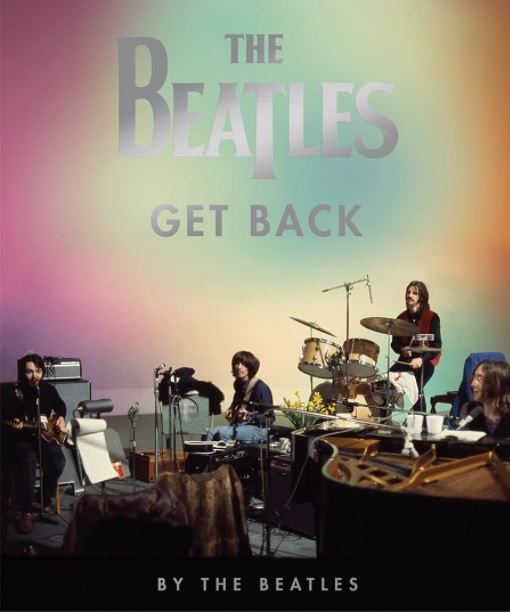
In 2022, Peter Jackson told the full story of the ‘Get Back’ sessions by the Beatles in 1969 and the eight hour film was met with positive critical appraisal. The original documentary ‘Let It Be’ by Michael Lindsay-Hogg was released at an unfortunate time in May 1970 when the Beatles had just broken up. Therefore the reception was pretty negative at the time.

It is time for a re-appraisal. For the first time in 50 years, the documentary can be seen again at Disney Plus. It is preceded by a conversation between Peter Jackson and Michael Lindsay-Hogg about this amazing project. Jackson notes that although the ‘Get Back’ sessions came to be known as the end of the Beatles, it was probably their most productive period. Not only did they write and compose all these terrific ‘Let It Be’ tracks, but also many of the songs that would end up on ‘Abbey Road’ later that year.

This was originally supposed to be a concert film with some of the studio stuff being more like a sort of introduction. But when the idea of a concert was dropped, Lindsay-Hogg didn’t quite know what to do with the footage. What he eventually did with it, is actually great. ‘Let It Be’ consists for the most part of the Beatles just jamming and trying to find the right approach for all these new songs they’re cooking up.

In the first part in the Twickenham Studio’s, there is some palpable tension within the group with Paul taking charge and correcting the others at times. There is also that famous exchange between Paul in George in which George tells him he’ll play whatever he wants him to play. The bit where George leaves the band is left out. When they move to the studio of Apple Corps and old friend Billy Preston joins the sessions, the atmosphere noticeably improves.

So while the ingredients of the eventual split are there, there is quite a bit of laughing and fooling around. That was how their creative process worked. Jackson’s ‘Get Back’ gives us more context and dialogue while ‘Let It Be’ is all about the music. And watching these guys playing passionately together is a real joy. It is great to see the songs we know so well emerging here.

When this was filmed, the boys hadn’t performed live in years, and they were noticeably unsure about how to pick it up again. They’re adrift as a band. But then the famous rooftop concert happens and they clearly find some footing again. They start out with the fantastic song Get Back, and then you realize that their original plan actually worked. At that point, the Beatles really were back!

THE OTHER FOUR BEATLES MOVIES

A Hard Day’s Night (1964)

The first Beatles movie is a documentary of sorts, shot in razor sharp black and white images, that follows the band in slightly fictionalized form as they travel by train to a studio to do a television performance. Sixty years after its release, it is still a delight to see. There is hardly any story, but it doesn’t matter because we get to spend time with the boys who are funny, charming and extremely musically gifted. The Lennon dominated soundtrack is absolutely fantastic. The film’s extensive use of handheld cameras and sped-up footage gives it a very energetic feel. It’s as if the camera crew had trouble keeping up with the boys, which is in fact the way it was. Director Richard Lester later admitted to using amphetamine during the shoot to get him through it. The mostly improvised shoot really captures the madness of the Beatlemania days and cemented the band members status as rock and roll legends.

Help! (1965)

The higher budgeted follow-up to A Hard Day’s Night revolves around an Eastern cult group who are looking for a sacrificial ring that is worn by none other than Ringo! (he got his stage name originally because of his love for rings). After several attempts to steal it back in London fail, Ringo becomes a target to be sacrificed to their god Kaili, so the boys flee to the Austrian Alps and later The Bahama’s. The comedy act by the Beatles was inspired by Duck Soup by The Marx brothers and the BBC Radio Comedy Programme ‘The Goon Show’ that they listened to in their teen years. The boys appear to be more distanced than in the preceding feature though. According to John that is because they were constantly stoned at the time of filming. Help! didn’t receive the same favorable reviews as their first film, but it is now credited with pioneering the music video.

Magical Mystery Tour (1967)

It has the reputation of being their worst film. Magical Mystery Tour is not really a film though, but a 55 minute television special. And it’s not that different from their preceding two screen efforts: It features the Beatles doing comedy (some jokes corny and some pretty funny) and performing songs from a terrific original soundtrack. Storywise, there isn’t much there. It’s about a busload of weird characters taking a journey through the English countryside. What’s most enjoyable about it are the psychedelic clips for great songs, including Magical Mystery Tour (obviously), The Fool on the Hill (a beauty), Flying (their only instrumental track), I Am the Walrus ( a highlight), Blue Jay Way (George’s misty thing) and Your Mother Should Know (Paul’s lovely granny music). It’s a bit of an unscripted mess with lots of silliness, but the same can be said of the Richard Lester films. And it does feature John serving a woman spaghetti with a shovel, so that is worth the price of admission.

Yellow Submarine (1968)

80.000 leagues beneath the sea is a happy place called Pepperland. Then the music-hating Blue Meanies arrive and freeze everybody and hide all instruments. Only Fred escapes in a yellow submarine which he takes straight to Liverpool to retrieve the four heroes known as the Beatles. This is the start of a series of psychedelic adventures as the crew pass through the Sea of Time, the Sea of Monsters, the Sea of Holes, Nowhere Land and eventually Pepperland. The Beatles did this film to complete the three picture deal they signed with United Artists. The voices are provided by actors and the Beatles only appear in a cameo appearance at the end. Like everything they touched, it became a pioneering work of pop art. Before Yellow Submarine, animation was considered a children’s medium, and this feature led to the art form being taken more seriously. Visually, it’s a stunning piece of work, and as opposed to their preceding films, it is well written with a truckload of references to Beatles lyrics. John Lennon said he thought this was the best Beatles film. I think he was right.

10 New Beatles Insights Through Peter Jackson’s ‘Get Back’

‘It would be fair to say that today ‘Let It Be’ symbolizes the breaking-up of the Beatles. That’s the mythology, the truth is somewhat different. The real story of ‘Let It Be’ has been locked in the vaults of Apple Corps for the last 50 years.’

So says director Peter Jackson in the ‘Get Back’ book that accompanied his eight hour lasting documentary on Disney Plus.

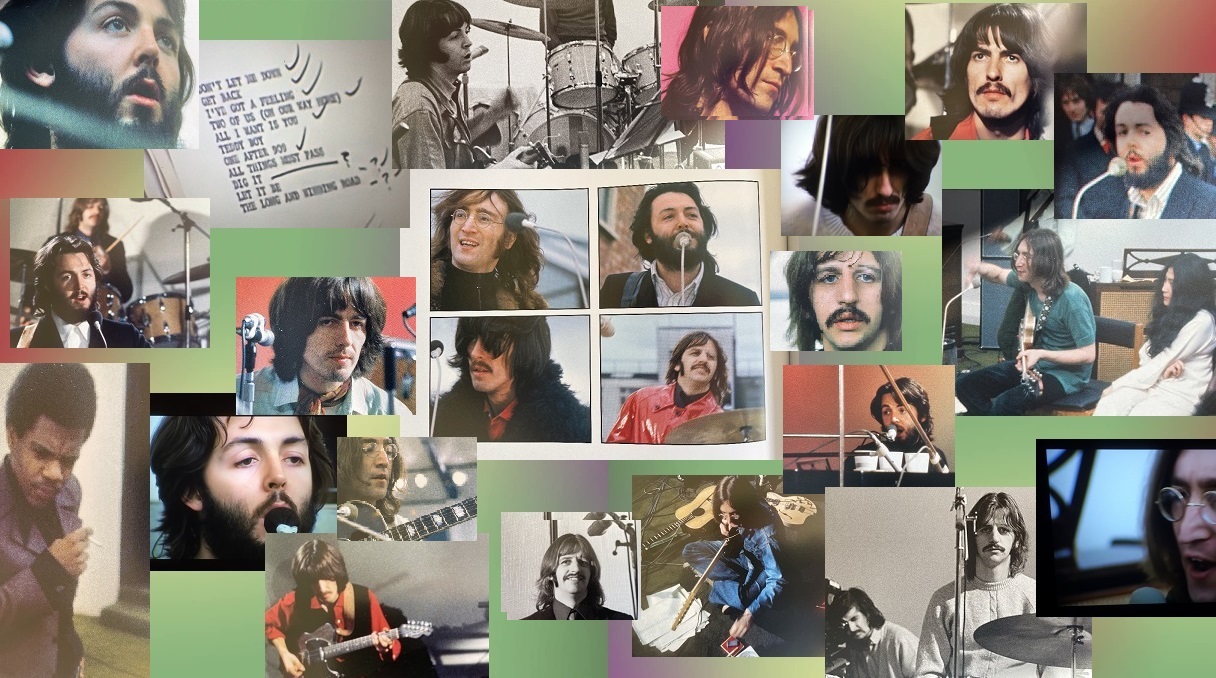
Jackson’s film fills in a lot of missing puzzle pieces in the story of the world’s most discussed band. Not for nothing are basically all Beatles Wikipedia-pages re-edited with new information from the previously unseen footage. For me personally, the documentary was a real eye opener. It gave me the following new insights into the legendary group and my favorite musicians of all time. The order of the insights is completely arbitrary.

1. George spontaneously quit the band
After George leaves, which for me seemed to happen completely out of the blue, John considers replacing him with Eric Clapton who had just left Cream. Was he serious? Maybe. Of course they really wanted George back…

2. There was little conflict
Despite George leaving, there was little conflict. At least nothing dramatic. Of course they had frequent discussions and they were obviously uncertain about how they should proceed and evolve from that stage on, but major fights and arguments? There weren’t any.

3. Yoko is just a wallflower
A persistent rumor about this period of The Beatles was that John constantly bringing Yoko to the studio was a major source of tension within the group. This doesn’t appear to be the case. She is always there, but she hardly speaks. Just once in a while she plays some experimental music. Besides, the other guys bring their girlfriends along as well constantly, especially Paul, but it doesn’t distract from the creative process at all.

4. Many of the later songs were already being written here
During the ‘Get Back’ sessions, they played many early versions of songs that would later appear on ‘Abbey Road’ (their final album) and solo albums. These songs include: I want you (she’s so heavy), Polythene Pam, Teddy Boy, Her Majesty, Hot As Son, Isn’t It a Pity, Something, Octopus’ Garden, Jealous Guy, Sitting in the Backseat of my Car, Gimme Some Truth, She Came in Through My Bedroom Window, Another Day, All Things Must Pass, Oh Darling, Maxwell’s Silver Hammer, Every Day, Carry That Weight and Sun King.

5. Much of the creative process is just goofing around
By this time, their full time job was just coming to the studio and composing amazing music. They did so by fooling around much of the time. They know literally hundreds of songs and played them constantly. The documentary also shows the almost telepathic connection between Lennon and McCartney. And an observation by Jackson is that Lennon found a new partner in Yoko Ono and this is visibly painful for McCartney. But he accepts it and deals with it.

6. Jealous Guy had a different title and different lyrics first
Jealous Guy – one of Lennon’s great solo songs (B-side of Imagine) – was first called On the Road to Marrakesh. Apparently, John wrote this in India, then it was rejected for ‘The White Album’ and here he plays it during the sessions at Twickenham Studios.

7. Paul is a great manager as John takes a back seat
In the early days of The Beatles, John was sort of the bandleader. During the ‘Get Back’ sessions, it is Paul. He does so in an inspiring way. He wants to go for the best possible results and doesn’t get pushy or annoying. He is just trying to keep the band going and eventually, they get really going.

8. The album ‘Let It Be Naked’ is much better than the original
‘Let It Be’ was up until now my least favorite album by The Beatles. This changed when I heard the Naked-version which was released in 2003. This made me realize what a messed up job Phil Spector did with the material on the 1970 original version. And why did he exclude Don’t Let Me Down? A fucked up decision. The Naked-version is true to the original vision of the group to strip their music down. All of the twelve songs sound amazing. This is an album truly worthy of this brilliant band.

9. One After 909 is one of their early songs
I never appreciated this song much, but thanks to the documentary I started loving it and I now play it constantly. It is an early song which John wrote while he was just 15. Paul is very pleased with it as well. The lyrics are about nothing, but what does it matter? It just sounds really really good.

10. There were ideas for a different ‘The End’
During the film and in the many transcribed conversations in the books, the boys and original documentary maker, Michael Lindsay-Hogg, were constantly trying to come up with an idea for a live performance to conclude the ‘Get Back’ project. Of course this ends up being the famous rooftop concert – The Beatles last live gig ever – but there were many ideas before that. The best one was Paul’s. He proposed a live show with news men in between songs bringing the latest news. And at the end of the show, the final bulletin is… ‘The Beatles have broken up!’

The White Album Compressed

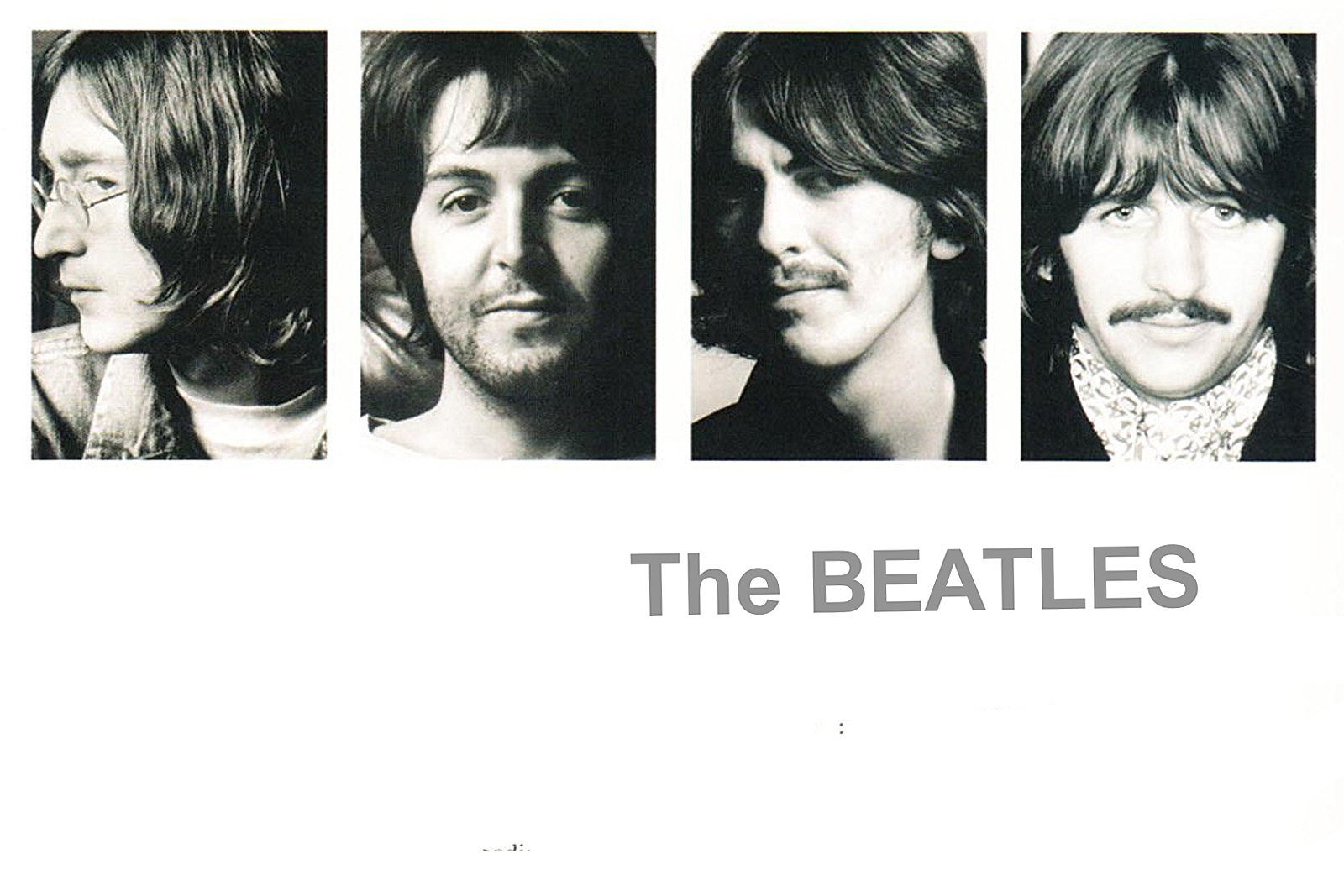
In the documentary The Beatles Anthology (1995), the three then still living band members discuss their recording history at Abbey Road. The non-Beatle with the greatest influence over these legendary recordings is without a doubt George Martin, sometimes referred to as ‘the fifth Beatle’. The extremely talented producer and musician offers some interesting comments on the production. Especially about the The White Album – the only double album made by the band (not counting Past Masters) – he has an interesting thing to say. He thinks they shouldn’t have made it a double album, but pick the best songs and turn it into a very good, single album.

The band disagreed. McCartney said that the record was fine as it was, remarking: “It was great. It sold. It’s the bloody Beatles’ White Album. Shut up!” Harrison thought a double album was a good idea to clear the backlog of songs the group had at that time, though he also admitted not all songs were that strong.

Reducing the backlog to a single album would have been quite a challenge though. The group had spent a couple of months in Rishikesh, India, for a course in Transcendental Meditation and written no less than 40 songs. George really developed himself as a songwriter during this period. But Lennon also said he wrote some of his greatest songs in India. The White Album contains many fantastic songs, and the fragmented whole is a terrific mix of genres, like folk, country, blues, ska, music hall and avant-garde. Why would one mess with that?

However, as a thought experiment, let’s consider what a single White Album would be like. Some tough decisions would have to be made. It contains 30 songs, and would have to be cut down to 17 (taking Abbey Road as a measure). Which 13 songs would perish?

At the risk of pissing off some fellow Beatles fanatics, I would get rid of these 13 tracks.

Wild Honey Pie (McCartney)
This is just a curious short McCartney thing. No problem dumping this one.
Why Don’t We Do It in the Road? (McCartney)
It’s alright, but it’s not great is it?
Yer Blues (Lennon)
A dark and moody song by Lennon, but he did better later in his solo career.
Mother Nature’s Son (McCartney)
Off course it’s an okay song, but if you have to choose between this and the remainders, it is really no choice at all.
Glass Onion (Lennon)
This one I like. I like the guitar play and the references in the lyrics. Still, it’s not brilliant.
Everybody’s Got Something to Hide Except Me and My Monkey (Lennon)
The longest title of a Beatle track. Do I love this song? No. So it can go.
Helter Skelter (McCartney)
Now this one is a classic and the toughest decision yet. Sorry Paul. We can release it as B-side to a Happiness Is a Warm Gun single maybe.
Long, Long, Long (Harrison)
Never had much use for this track.
Revolution 1 (Lennon)
What?!? How can you get rid of Revolution! One of Lennon’s best songs. Pay attention please. This is Revolution 1, not Revolution that was released as B-side of Hey Jude. And that is a way better version with one of my favorite beginnings of a Beatles-song.
Savoy Truffle (Harrison)
Sorry Harrison, but I don’t care much for a candy addicted Eric Clapton.
Revolution 9 (Lennon)
Nobody is gonna give me a hard time over this one. It was a weird decision to put it on the album in the first place. Nobody listens to it more than once.
Rocky Racoon (McCartney)
George Martin thought this was filler. I disagree. I think it is a great track. But in exercises like this you have to kill your darlings.
Good Night (Lennon, sung by Ringo)
This one I love as well. Painful to let it go, but I must.

And now, we’re left with the Compressed White Album. I’m satisfied. You can find it on Spotify under jkleyngeld. Check it out.

Side one
01. Happiness Is a Warm Gun
02. Piggies
03. Ob-La-Di, Ob-La-Da
04. I’m So Tired
05. I Will
06. Cry Baby Cry
07. Julia
08. While My Guitar Gently Weeps
09. Honey Pie

Side two
10. The Continuing Story of Bungalow Bill
11. Birthday
12. Sexy Sadie
13. Back in the U.S.S.R.
14. Don’t Pass Me By
15. Dear Prudence
16. Martha My Dear
17. Blackbird