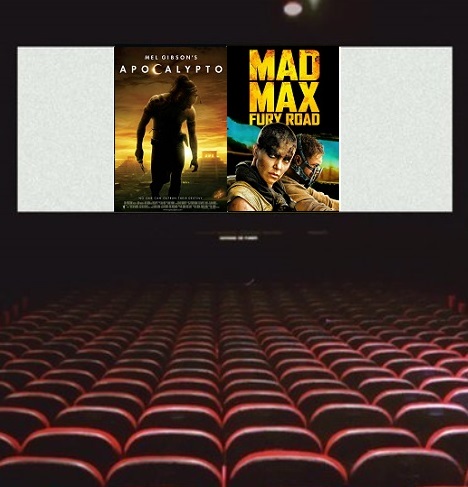
Apocalypto (2006) opens with a little quiet before the storm; a tribe of Indians hunting a tapir, capturing it and having a pleasant night around the campfire. Then an evil tribe attacks and their harmonious lives soon descend into violent madness. Mad Max: Fury Road (2015) immediately throws you into the action and doesn’t give you a breather for at least 45 minutes. Both movies explore culture gone bad. The Indian tribes are working on destroying their culture from within, but their environment is still beautiful and rich with life. In Fury Road, civilization has already collapsed and all that is left is a desolate wasteland (it was filmed in the Namibian desert). They are both great settings for some of the most spectacular chase scenes ever committed to celluloid. In Apocalypto, it is a grueling foot chase through the deadly jungle (filmed in Mexico’s Catemaco rain forest) and a fight to the death. Mad Max throws in spectacular war machines and a stunningly visualized ride to mayhem. Both feature outrageous custom design, kinetic editing and ‘die hard’ violence along the way. Thematically, the films are very similar. In both stories, the men are the insane ones, and the (pregnant) women carry the greatest hope for humanity in these desperate times. But in both stories, at least one man is sane enough to take on the crazies and help the women, and their offspring, towards a better future. A connection between the two classics you may have missed at this point, is that Apocalypto is directed by none other than Mel Gibson, the original road warrior, who was too old to play Max in 2015. I must admit I enjoyed Apocalypto more than Mad Max: Fury Road. The latter features shots that are just mind boggling, but I didn’t feel much for the characters. In Apocalypto, I did. As a Double Bill, this works fantastically.
Tagarchief: Apocalypse
Mad Max 2
Director: George Miller
Written by: Terry Hayes, George Miller, Brian Hannant
Cast: Mel Gibson, Bruce Spence, Michael Preston, Vernon Wells
Year / Country: 1981, Australia
Running Time: 96 mins.
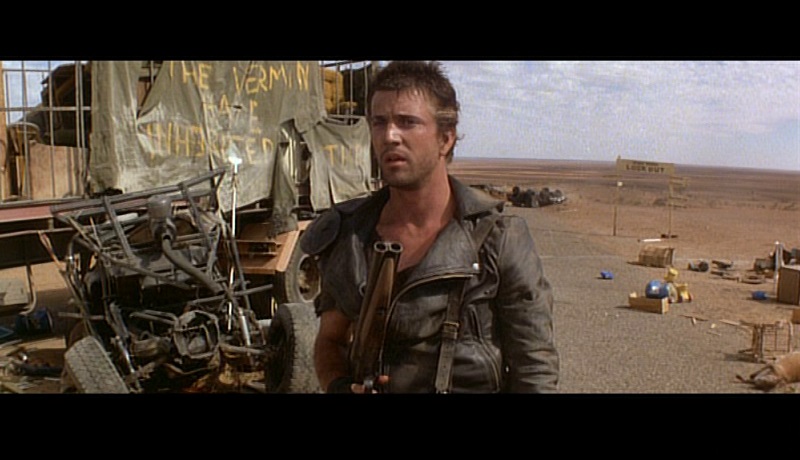
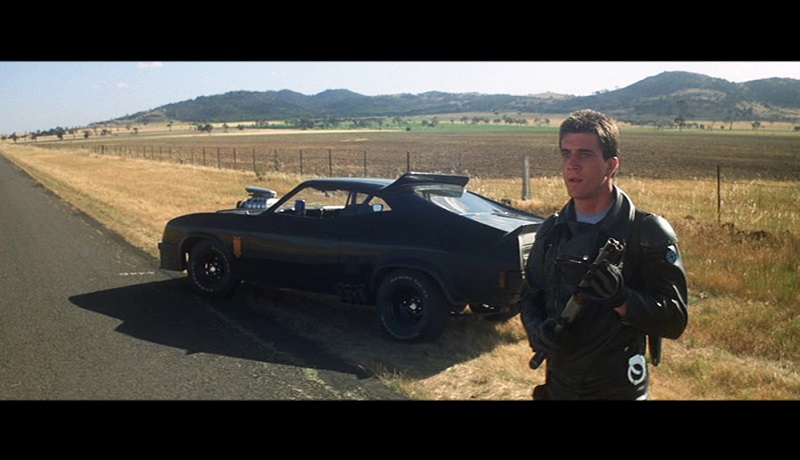
Mad Max 2 also known as The Road Warrior is the high-powered sequel to the 1979 Australian cult classic Mad Max. The apocalypse that was still taking shape in the first movie is now complete. The country has turned into a desolate wasteland in which the few survivors scavenge for food and fuel.
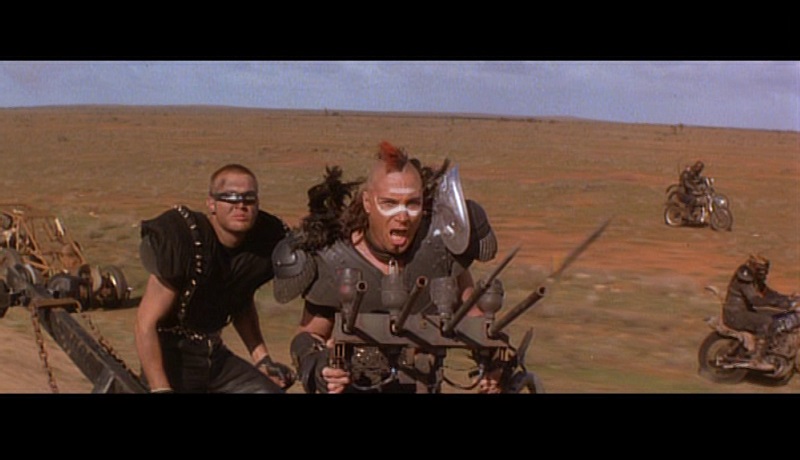
Lone warrior Max and his Australian cattle dog (one of the great cinema pets!) are two of these wanderers, but unlike others he’s not part of a punk gang or local community. A gyrocopter pilot (Bruce Spence) leads him to a group that has a huge amount of fuel, but they are under constant attack by a gang of outlaws led by the savage Humungus. Max, who has lost his wife and child in the first movie, is out of touch with humanity. By aiding the desert people, he eventually finds some of his human feelings again.
The second movie in the series is the most critically acclaimed of the original trilogy and justly so. The budget was clearly higher after the box office success of the first one and the filmmakers have spent this money well on kick-ass costumes and apocalyptic vehicles. It takes some time before the action gets going, but when it does – oh man – it is really great stuff. Better even than the first one in terms of insane car wreckage, stunts and brutal deaths.
The final chase in which Max attempts to drive a rig to a safe haven – what would essentially be the entire plot of Mad Max: Fury Road is a delicious, irresistible piece of action cinema.
Rating:
![]()
Biography: George Miller (1945) is an Australian filmmaker, best known for his Mad Max franchise. In 1971, George attended a film workshop at Melbourne University where he met Byron Kennedy, with whom he formed a friendship and production partnership, until Kennedy’s death in 1983 (Mad Max Beyond Thunderdome is dedicated to him). Together they made the first Mad Max movie in 1979 for a budget of 400.000 Australian dollars. It earned 100 million dollars at the box office worldwide and became the most profitable film of all time (the record was not broken until The Blair Witch Project 20 years later). Miller’s Mad Max: Fury Road (2015) earned Oscar nominations for best film and director. The latest entry in the series – Furiosa: A Mad Max Saga – will be released in May 2024.
Filmography (a selection): Furiosa: A Mad Max Saga (2024), Three Thousand Years of Longing (2022), Mad Max: Fury Road (12015), Happy Feet 2 (2011), Happy Feet (2006), Babe: Pig in the City (1998), Lorenzo’s Oil (1992), The Witches of Eastwick (1987), Mad Max Beyond Thunderdome (1985), Twilight Zone: The Movie (1983, segment), The Dismissal (1993, TV episode), Mad Max 2 (1983), Mad Max (1979), The Devil in Evening Dress (1975, short)
Mad Max
Director: George Miller
Written by: James McCausland, George Miller, Byron Kennedy
Cast: Mel Gibson, Joanne Samuel, Hugh Keays-Byrne
Year / Country: 1979, Australia
Running Time: 88 mins.
With the newest entry Furiosa: A Mad Max Saga approaching fast in 2024, it was time to revisit the old trilogy.
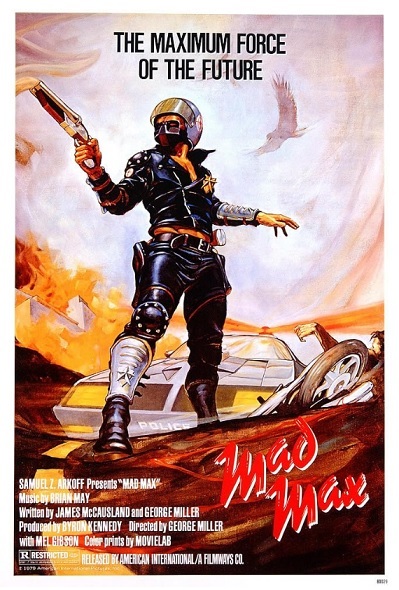
In the first Mad Max from 1979, we find ourselves in the early stage of an apocalypse. Australia (never mentioned as such) is suffering from ecocide, lawlessness and scarcity of fuel. The poorly funded Main Force Patrol is still active and tries to bring down the bikers that terrorize the highways.
The movie starts with a bunch of patrolmen who are chasing down a couple of psychotics and we immediately get a good sense of what we’re in for: very fast cars, dangerous stunts and major car crashes. We get introduced to the cool, leather outfit and shades wearing cop Max Rockatansky (Mel Gibson). Where others fail, he gets the job done. But after he dispatches the psychotic cop killer Nightrider, a gang of biker outlaws come after him and kill his wife and child. Now Max goes out for revenge and turns into a lone warrior who scavenges the barren waste land.
Prior to his film career, director George Miller served as a medical doctor in Sydney, stationed in a hospital emergency room where he encountered numerous horror-like injuries and fatalities similar to those portrayed in the film. Additionally, his upbringing in rural Queensland exposed him to numerous car accidents, and he tragically lost at least three friends to such incidents during his teenage years. So that’s clearly where his inspiration came from.
Miller is still developing his trademark style in this movie. The high speed chases, crashes and stunts are looking great considering the low budget. He employs innovative camera techniques to achieve the distinctive Mad Max look that he would refine in the sequels. It’s a highly original movie and within the carsploitation genre an absolute classic.
Rating:

Biography: George Miller (1945) is an Australian filmmaker, best known for his Mad Max franchise. In 1971, George attended a film workshop at Melbourne University where he met Byron Kennedy, with whom he formed a friendship and production partnership, until Kennedy’s death in 1983 (Mad Max Beyond Thunderdome is dedicated to him). Together they made the first Mad Max movie in 1979 for a budget of 400.000 Australian dollars. It earned 100 million dollars at the box office worldwide and became the most profitable film of all time (the record was not broken until The Blair Witch Project 20 years later). Miller’s Mad Max: Fury Road (2015) earned Oscar nominations for best film and director. The latest entry in the series – Furiosa: A Mad Max Saga – will be released in May 2024.
Filmography (a selection): Furiosa: A Mad Max Saga (2024), Three Thousand Years of Longing (2022), Mad Max: Fury Road (12015), Happy Feet 2 (2011), Happy Feet (2006), Babe: Pig in the City (1998), Lorenzo’s Oil (1992), The Witches of Eastwick (1987), Mad Max Beyond Thunderdome (1985), Twilight Zone: The Movie (1983, segment), The Dismissal (1993, TV episode), Mad Max 2 (1983), Mad Max (1979), The Devil in Evening Dress (1975, short)
King of the Zombies is Dead (Permanently)
George A. Romero, one of my favorite filmmakers, has died after a short battle with lung cancer, Indiewire reports. Almost singlehandedly responsible for the zombie genre in its current form, Romero directed ‘Night of the Living Dead’ and its many sequels, most notably the consumerism allegory ‘Dawn of the Dead’ – my favorite horror film of all time.
Romero (born 1940, New York), who resided in Pittsburgh, made his feature debut with ‘Night of the Living Dead’. It was a low budget zombie movie that was both groundbreaking and shocking in its time. Quickly, it became a major horror classic. He then directed some smaller, personal films in which he often combined horror and social commentary. In 1978 he topped the success of ‘Night’ with his brilliant follow-up ‘Dawn of the Dead’.
In the eighties his career stagnated a bit when he created the third part in his zombie series ‘Day of the Dead’. It was a failure both commercially and critically. In 2005 Romero made a small comeback with ‘Land of the Dead’. Other noticeable films he made are ‘Martin’ (a vampire flick) and ‘the Crazies’ (an outbreak film).
To honor the master, I hereby re-publish my review of ‘Day of the Dead’ which he considered his favorite film.
Dear George, may you – as opposed to your favorite characters – rest in peace.
#####################
Day of the Dead (1985, USA)

08-05-2008 – by Jeppe Kleyngeld
Director: George A. Romero
Written by: George A. Romero
Cast: Lori Cardille, Terry Alexander, Joe Pilato, Jarlath Conroy
Running Time: 102 mins.
In George Andrew Romero’s NIGHT OF THE LIVING DEAD (1968) the dead had been resurrected and started a crisis. In DAWN OF THE DEAD (1978), the zombies were taking the upper hand. In 1985’s DAY OF THE DEAD, there are barely any humans left. A small group of survivors consisting of soldiers, scientists and civilians, are holed up in a military complex with hundreds of flesh-eaters roaming around on the outside.
There has been a time leap since DAWN, so the zombies are slowly decomposing and are looking greyer and greener than in the previous ‘Dead’ movies. The different groups living in the claustrophobic complex are each dealing with the situation in their own way. The scientists are searching for a way to ‘control’ the zombies, while the soldiers want to wipe them all out. The few civilians on the other hand, just want to enjoy the time they have left. Lack of any prospects starts to create tension in the group. Especially with the psychopathic Captain Rhodes (Joe Polito) who commands the small military force. Not before long, their infighting leads to a final clash with the zombies. Romero shows us once again that humans are a greater danger to themselves than any outside threat.
Romero called DAY his favourite entry in the series, even though it was derided by critics upon release. Today the film has got more of a cult status. And justly so. As a film basically showing total apocalypse, it succeeds brilliantly. Only problem is that it’s pretty depressing. From Dr. ‘Frankenstein’ Logan conducting gruesome experiments on zombies in his underground lab to the unpleasant characters: it all contributes in making this film pretty hard to sit through. In DAWN, the shopping mall location lend itself well for some inventive humor. The funniest thing about DAY is the ‘intelligent’ zombie Bub who even utters some dialogue in the film (A..llli….ciaaaa…).
In short, Romero’s golden touch, the fantastic special make-up effects by Tom Savini and the dark atmosphere make this a must-see for horror fans. The successful military satire is another good reason to see this. However, dejected types might be better off not watching this. Like the other ‘Dead’ films its concept may well be brilliant, but it is still a nasty and depressive movie. Twenty years later Romero would continue his series with LAND OF THE DEAD.