In Brussels (2)

“The mind is not only an internal phenomena, but an external landscape thing as well. When you walk around a city, it is located in your mind and you’re creating every external object you observe in this cityscape. Those objects wouldn’t be present without you. They don’t exist in the world, they exist strictly in observers.”
― Nicky Mento, ObserverWorld

[22-05-25] The road was becoming familiar by now. As I approached Belgium, five towers loomed on the outskirts of Antwerp, overlooking the highway. What a terrible, unnatural way to live, I thought. But I suppose, in this day and age, that qualifies as prime real estate.

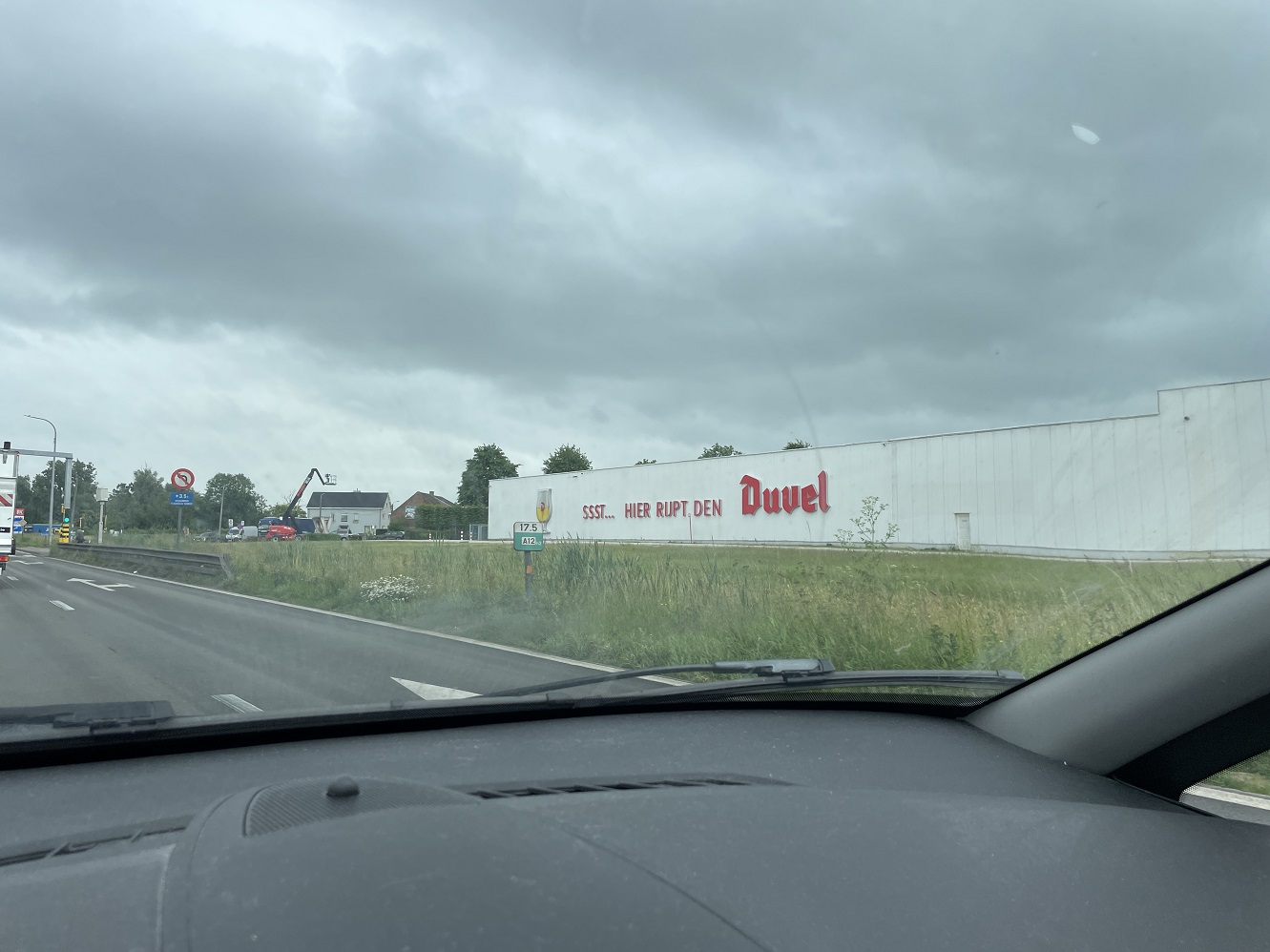
Other landmarks slipped past on the A12: the Duvel brewery, the gleaming geometry of the Atomium, and of course, the beautiful cathedral that greets you as you enter Brussels. I was in the city for the second time that week – this time for an interview with the head of the Belgian antitrust authorities, which, in the world of M&A, is no small thing.

It was a week before my 45th birthday, and I felt good. Energized, even. Ready to explore this engaging city once more. The interview went well, and afterward, I ducked into a café to get some work done. Later, I made my way to De Brouckère Square again. But instead of stopping at the Metropole like last time, I went to the UGC cinema to watch Mission Impossible: Dead Reckoning.

I’d noticed Tom Cruise’s face of posters scattered across the city when I drove in. In this eighth – and possibly final – installment, he was truly up against the impossible: defeating a rogue artificial intelligence that had seized control of the internet.

The film wasn’t perfect, it dragged on in parts, but the finale was spectacular. The airplane sequence was a genuine triumph. It also tapped into one of the most pressing threats facing the modern world: the drift from information war to potential nuclear conflict. So kudos to Cruise and director Christopher McQuarrie for pulling it off.

Luther had the last word, and it was a hopeful one: there are countless possibilities ahead, and we can choose well: not just for ourselves, but for others. “Nothing is written.” A message that harmonizes beautifully with quantum physics – and fittingly so, given this city’s history. In 1927, the world’s leading physicists gathered at the Metropole on De Brouckère Square to grapple with the implications of their discoveries.

They didn’t phrase it in those exact terms, but the idea was present: the universe arises from unmanifested potential, and it is consciousness – expressed through living beings – that brings it into form, shaping reality within the space-time field they themselves create.

In the film, the AI, known simply as The Entity, can calculate the probabilities of human choices, predicting the future with uncanny accuracy. To defeat it, the characters must make wildly improbable decisions, thereby evading its forecasts. That concept stuck with me: What improbable choice should I make? Should I invest everything into Free-Consciousness and try to get the platform off the ground?

I wandered into a sushi restaurant to think it over. The waiter greeted me with a nod and showed me to my table. I felt a bit like Robert De Niro’s character, Noodles, in Once Upon a Time in America, being led to a bed in the Chinese opium den – where he proceeds to dream the second half of the film into existence. Or so it seems. Only my opium was sushi and cola from an unfamiliar brand.

But I was there to dream. To dream about life, about work, about writing and movies. The week before, I’d come to a realization: I have too many passions. And by trying to do them all, none of them is really going anywhere. I started Free-Consciousness to bring a small spark of awareness to a world in decline. But if I want it to succeed, do I need to go all in?

To help answer that question, I brought along a trusted companion: the I Ching, or Book of Changes – one of humanity’s oldest living oracles. For more than three thousand years, this ancient Chinese system of divination and wisdom has helped emperors, sages, and ordinary people navigate life’s complexities. While traditionally understood through classical philosophy, new interpretations suggest the I Ching might be an early interface for the consciousness field; a symbolic system for engaging with probability patterns and glimpsing potential futures.

My question to the book was simple: Is it okay to dabble in all my hobbies, or should I focus on just one and fully commit?

The system revolves around 64 hexagrams – six-line figures made up of either solid (yang) or broken (yin) lines. Each hexagram represents a universal situation or process. I took three coins from my wallet and cast them six times to determine which lines to draw.

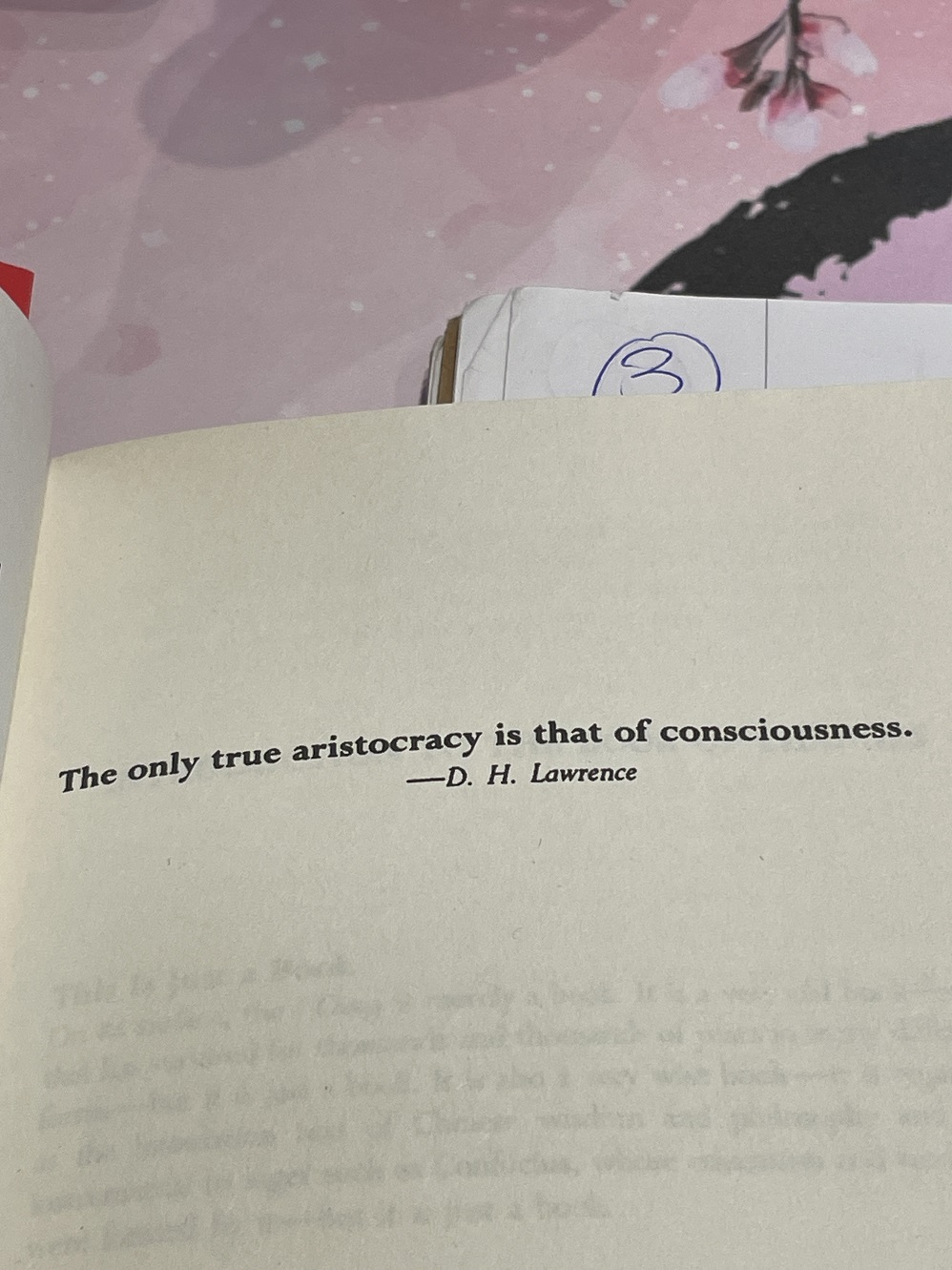
The result was Hexagram 53: Chien / Development. And it was exactly what I needed to hear.

The text read:

‘The image of this hexagram is that of a tree growing high on a mountaintop. If this tree grows too quickly, without properly rooting itself, it becomes vulnerable to the wind and may be torn apart. But if it takes time to establish strong roots and is content to grow gradually, it will enjoy a long life and a lofty view. Human beings are no different. While we often crave rapid progress – immediate achievement of all our goals – we must eventually come to understand that the only lasting progress is gradual. Chien urges you to accept this truth and shape your thoughts, attitudes, and actions accordingly.’

Word. Free-Consciousness is like that tree. It needs time to root before it can rise.

This is the Significant Moment When Everything Went to Hell for America

America is turning into an autocracy very fast. Every week there are new lows – like last week the arrest of a judge and the week before that Trump (He/him) regime’s refusal to return Kilmar Abrego Garcia from an El Salvador prison camp – despite the supreme court ordering them to do so.

Of the 71 million Americans who voted him in office, some might be wondering; how did we get here? I’ll argue that one significant moment played a key role in creating this disaster.

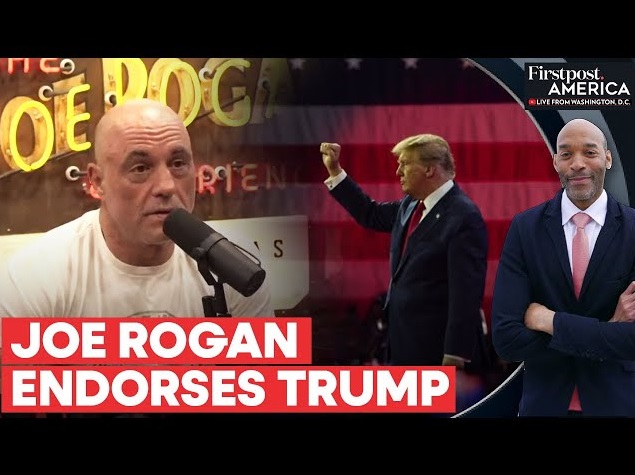
On the eve of the election day, on October 26, 2024, the extremely popular podcaster Joe Rogan interviewed Trump. I couldn’t bear to listen to his horse crap, but I recently watched one minute of the three hour interview on YouTube. In the fragment, Trump asked Rogan: “Come on, you’re not a Harris guy”.

And you see Rogan thinking: ‘shit, this guy is right. I am not a Harris guy’. Joe Rogan is manipulated at the spot. He lets himself be fooled by this con man. After that, he lets Trump get away with blatant lies about the 2020 election, which looks very bad for his interview ethos. I stopped viewing right after that.

What I took away from this short moment is that Trump – terrible person that he is – has at least one ‘quality’ that enabled him to become the 47th president of the USA: he knows just what to say to people to make them vote for him.

Of course this won’t work with everybody, but then again, he didn’t need everybody. He needed 71 million voters. He already had his loyal fan base secured, so he had to convince millions of others to vote for him. He and his campaign team put in all their efforts to convince right leaning people like Rogan to go for the Orange Turd. They were successful.

After the show, Rogan did something he had previously said he wouldn’t do: he endorsed Trump. With his immense reach amongst people for whom Rogan is their single source of news – tragic as this may be – he may have decided the fate of the United States.

How will he feel now, three months after Trump took office, and the country is sliding fastly into an authoritarian regime?

What we are watching right now might be the End of the American Empire.

The country is ruled by a mad king. Trump’s cabinet meetings are excruciatingly horrifying to watch. Every cabinet member that speaks, including Musk, first praises Trump for the absolutely brilliant leader that he is. And what an incredible honor it is to serve in his cabinet.

Then they proceed to tell absurd bullshit to cover up for their criminal actions. In the last cabinet meeting, Musk – in full Dr. Evil mode – bullshits about how he found 150 billion dollars in waste, fraud and abuse in the federal government. He says that ‘people are receiving social security that aren’t even born yet.’

This is just too much bullshit to handle.

Everybody knows how he is going to get this 150 billion. He will do it by slashing social security, medicaid, and other programmes for the poor – and recklessly fire tens of thousands of essential government employees. And Trump is gonna let him do it. The money saved will be given to billionaires like them as a tax cut.

Some still consider Trump a brilliant businessman, but he’s terrible in business – and that’s a fact. I mean, he bankrupted a casino once. Now, he’s going to bankrupt the country. He’s a fuck-up and a major fraudster.

The financial markets – who foolishly believed Trump would be good for business before – have now realised the terrible truth. Trump is so totally unstable and deranged that the risk for the world economy (countries, companies, currencies, and debt) is great. They finally realised, just like some voters did, that having a psychopathic gangster in charge of the largest economy in the world, might be bad for business.

It would have been exactly the same if they would have handed the reigns of the American government to Vladimir Putin or Kim Jung Un. That’s what the American’s did who voted this nut job into the White House.

Thank you, Joe Rogan.

Now maybe I am thinking too much of his endorsement. On the other hand, Trump thanked Rogan especially at his inauguration. Imagine that; that you would be responsible by having a cruel psycho elected who would then go on to create terrible suffering for millions of people. Who would send innocent people to an El Salvadorian prison camp to be tortured.

I have no idea how he feels about it, but this is a wound that he will have to live with. The same goes for all Americans, whether they voted for Trump or not. This is a national trauma and it will take decades to recover from it.

But first, they will have to remove Trump from office. Can it be done?

It will be very hard, that’s for sure. And even if they succeed, they will have a massive challenge waiting for them.

Let’s say they’ll have a revolution and remove Trump from office, will the two sides – the MAGA and the WOKE – reconcile and together restore the damage the Trump regime has caused? Will they think: ‘let’s go look at the root causes of this whole thing? Where did we go wrong? What laws are we going to introduce together to make sure something like this never happens again?’

The probability that this will happen is very small. Trump is a very severe symptom of a lethal disease: a mind virus that once it spreads through society – enhanced by anti-social media and AI – makes the country divided and ungovernable.

To stop this mind virus, we – the world – must regulate social media and AI. With AI becoming more powerful every day, we need to move fast to prevent every other democracy from sliding off the rails in the coming years and decades.

This will not be an easy feat – and America is in terrible shape. Still, the possibility also exists that the right leaders arise out of this sink hole and put the country on the right course again. A crisis can do that sometimes.

Right now, the crisis is not yet big enough. There are still many people, inside and outside of the USA, deluded by Trump and think it might not be so bad. But if enough people conclude: ‘this is not what we want’ and start fighting back in every way they can, it might bring about a new era of hopeful change.

Is this the end for the USA of merely the passage into a new prosperous era? Only time will tell.

Graphic Novel Classics: The Thirteenth Floor

Graphic novel which ran from 1984 till 1987 in the weekly comic magazines Scream! and Eagle. The story is about a tower building and the A.I. Max that governs it. Max his primary directive is ensuring the welfare of his tenants, a job he takes extremely seriously. Whenever their wellbeing is being threatened by outsiders, he takes these perps to the thirteenth floor, a nightmarish virtual world Max invented, where he can treat them to a frightening punishment for their wrongdoings. We, as readers, quickly become accomplices of the friendly Max, who has the most creative mind for coming up with the most fiendish lessons for horrible people who deserve a lesson. But after more and more people start dying or disappearing, a nosy detective figures something strange might be happening at Maxwell Tower… The beautiful black and white art work is drawn by José Ortiz and the stories are written by John Wagner and Alan Grant. Rebellion Developments, who also re-published classic ‘The Rise and Fall of the Trigan Empire’ by Don Lawrence, recently published ‘The Thirteenth Floor’ in a number of beautiful books. Highly recommended. Not to be confused with the science fiction movie The Thirteenth Floor (1999) which is also about virtual worlds.

Does advanced AI mean the end of our democracy?

For Business Insider, I recently wrote an article about the dangers for AI for democracy.
Read the article (in Dutch) here:

>>> Betekent geavanceerde AI het einde van onze democratie? Dit zijn de grootste bedreigingen volgens de auteur van Sapiens

A summary:

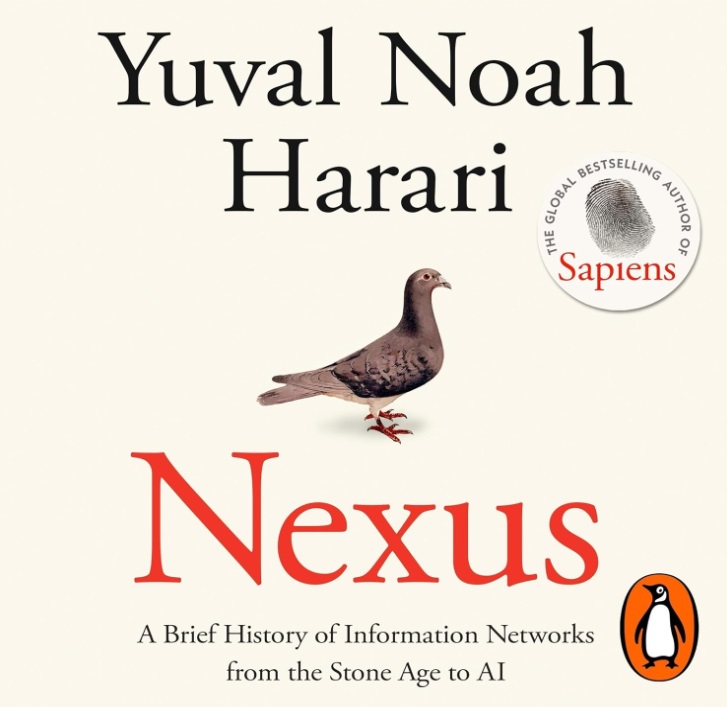
In Sapiens: A Brief History of Humankind, the Israeli historian Yuval Noah Harari traces the history of humanity from the earliest days of Homo sapiens to modern times. Harari’s central thesis is that human progress stems from our unique ability to collaborate and form complex societies, with stories and mythology playing a crucial role.

His latest book, Nexus, focuses on the information systems that people use to spread these stories and myths. For example, he describes the Bible as a particularly powerful technology that has profoundly influenced billions of people. This raises the question of what the rise of artificial intelligence – the most powerful technology we’ve ever encountered – will bring.

The new threat of AI
According to Harari, the current computer age is based on the openness of information. In other words, the freer information flows, the better society functions. However, the author believes this is a naïve view. Despite having vast amounts of information at our disposal, we’ve produced more weapons of mass destruction than ever, destroyed more habitats, and pumped billions of tons of CO2 into the atmosphere, even though that information showed us we were inching closer to our own destruction. Will more information improve the situation? Tech optimists think so, like venture capitalist Marc Andreessen, who wrote a widely read essay in 2023 explaining why AI will save the world and why the panic surrounding AI is, in his view, misplaced.

Other AI experts are less optimistic. In 2023, a group of top AI specialists – including the heads of OpenAI and Google DeepMind – warned that artificial intelligence could lead to human extinction. Dozens signed a statement published on the Center for AI Safety’s website. ‘Mitigating the risk of AI-induced extinction should be a global priority, alongside other societal-scale risks such as pandemics and nuclear war’, it reads.

Harari believes we need to be aware of the dangers and the more sinister side of artificial intelligence. By understanding the history of information networks, we can avoid mistakes. However, he also notes crucial differences between AI and past technologies. AI is not just a tool; it is an agent. It is the first technology capable of generating its own ideas and making decisions. This brings two major risks: it can amplify existing conflicts and further polarize the world, or worse, AI could become a totalitarian force that completely controls our lives and politics.

Manipulation and mass destruction through toxic information
Historically, information networks have always been vulnerable to manipulation. Harari gives examples of how toxic information has had disastrous consequences, such as the witch hunts in the Middle Ages and the persecution of the Rohingya in Myanmar, caused by Facebook algorithms that prioritized maximum ‘engagement’. Social media and AI can take this manipulation to new heights by creating mass illusions that weaken democracies.

Democracy is already under pressure from populist leaders who claim to be the only ones who understand the people’s needs and who sow doubt about democratic institutions such as the media, the courts, and politics. Research shows that social media further contributes to this political polarization. AI could accelerate this even more through advanced algorithms that spread disinformation and amplify extreme opinions. AI’s ability to control human language, simulate empathy, and manipulate people makes it even more dangerous in the political arena.

As billions of intelligent agents enter our information networks, the likelihood of new mass illusions arising, similar to Nazism, Stalinism, or the current ideologies of Putin’s Russia, increases significantly. After all, information and truth are not the same. Without measures to tip the balance in favor of truth, society risks being overwhelmed by a swamp of ‘alternative truths’, which could seriously endanger society and democracy.

Controlling AI and the struggle for truth
Harari emphasizes that taking responsibility for AI is essential. Tech companies like Facebook must be held accountable for the consequences of their algorithms, which often fuel hatred and polarization. Networks must develop self-correcting mechanisms that reward truth and counter disinformation.

Another important issue is the ‘alignment problem’: AI can come up with solutions that humans hadn’t anticipated, leading to unpredictable and undesirable outcomes. Harari advocates for developing AI systems that seek feedback before making decisions to prevent dangerous outcomes.

To protect democracy from AI, Harari calls for the decentralization of information networks and strict regulation of AI applications. AI mimicking humans, such as in chatbots, should be banned to prevent manipulation of the political process. Furthermore, companies like Amazon must become more transparent about their internal processes so that information doesn’t flow in just one direction.

Hope and future outlook
Harari is not entirely negative about technology and AI. As a gay man, he found no one to connect with in his small Israeli village, but through a Facebook group, he met his current husband. Nevertheless, his view of humanity is less optimistic than someone like Andreessen’s, and history seems to be on his side. The stakes have never been higher than they are now, in the AI era. With the unprecedented power of this technology, humanity cannot afford to repeat the mistakes of the past.

The impact of AI on the global economy and the labor market will be enormous. The hope is that, amid the various superpowers, we can find common ground and stories that inspire us to make the right decisions so that AI contributes positively to the story of humanity and the evolution of life on Earth.