Mad Max 2

Director: George Miller
Written by: Terry Hayes, George Miller, Brian Hannant
Cast: Mel Gibson, Bruce Spence, Michael Preston, Vernon Wells

Year / Country: 1981, Australia
Running Time: 96 mins.

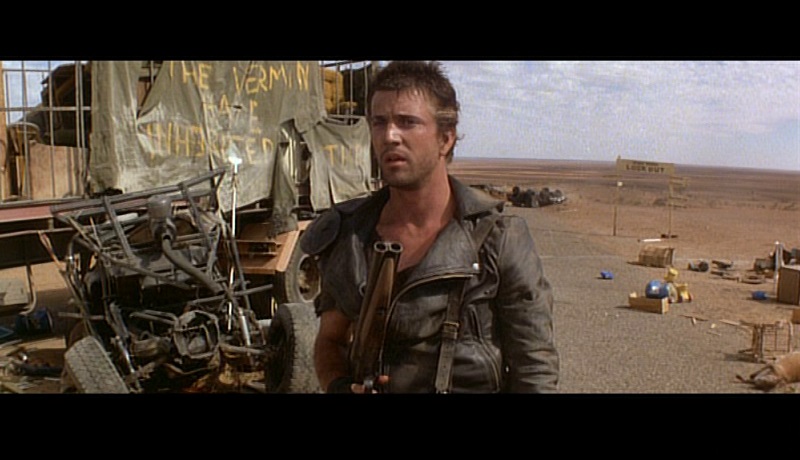
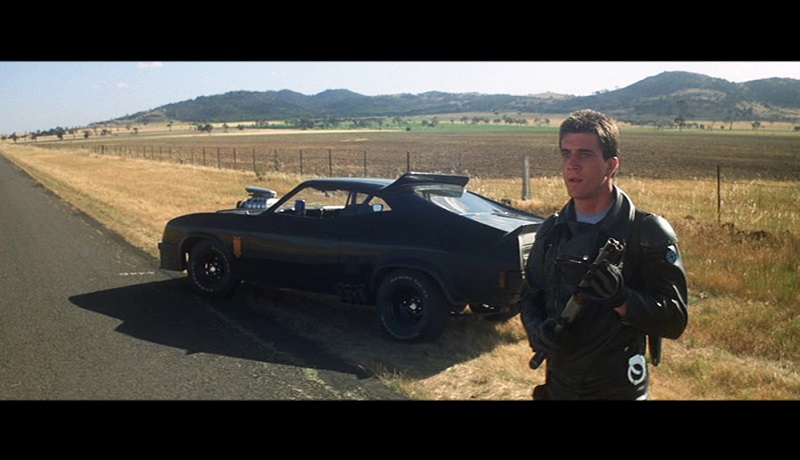
Mad Max 2 also known as The Road Warrior is the high-powered sequel to the 1979 Australian cult classic Mad Max. The apocalypse that was still taking shape in the first movie is now complete. The country has turned into a desolate wasteland in which the few survivors scavenge for food and fuel.

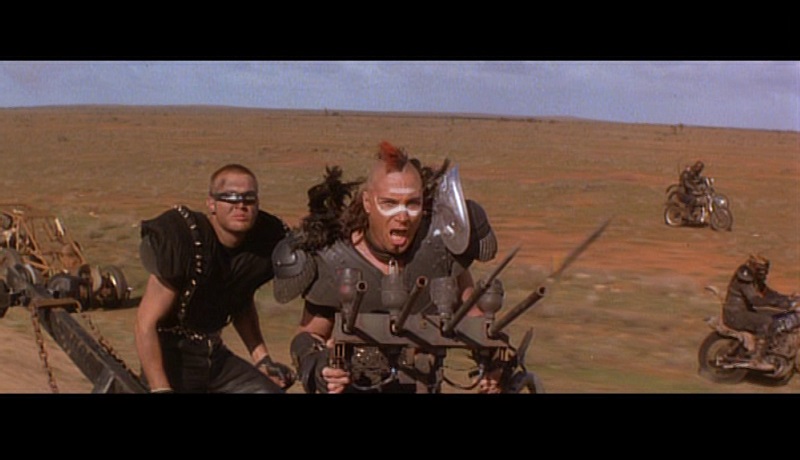
Lone warrior Max and his Australian cattle dog (one of the great cinema pets!) are two of these wanderers, but unlike others he’s not part of a punk gang or local community. A gyrocopter pilot (Bruce Spence) leads him to a group that has a huge amount of fuel, but they are under constant attack by a gang of outlaws led by the savage Humungus. Max, who has lost his wife and child in the first movie, is out of touch with humanity. By aiding the desert people, he eventually finds some of his human feelings again.

The second movie in the series is the most critically acclaimed of the original trilogy and justly so. The budget was clearly higher after the box office success of the first one and the filmmakers have spent this money well on kick-ass costumes and apocalyptic vehicles. It takes some time before the action gets going, but when it does – oh man – it is really great stuff. Better even than the first one in terms of insane car wreckage, stunts and brutal deaths.

The final chase in which Max attempts to drive a rig to a safe haven – what would essentially be the entire plot of Mad Max: Fury Road is a delicious, irresistible piece of action cinema.

Rating:

Biography: George Miller (1945) is an Australian filmmaker, best known for his Mad Max franchise. In 1971, George attended a film workshop at Melbourne University where he met Byron Kennedy, with whom he formed a friendship and production partnership, until Kennedy’s death in 1983 (Mad Max Beyond Thunderdome is dedicated to him). Together they made the first Mad Max movie in 1979 for a budget of 400.000 Australian dollars. It earned 100 million dollars at the box office worldwide and became the most profitable film of all time (the record was not broken until The Blair Witch Project 20 years later). Miller’s Mad Max: Fury Road (2015) earned Oscar nominations for best film and director. The latest entry in the series – Furiosa: A Mad Max Saga – will be released in May 2024.

Filmography (a selection): Furiosa: A Mad Max Saga (2024), Three Thousand Years of Longing (2022), Mad Max: Fury Road (12015), Happy Feet 2 (2011), Happy Feet (2006), Babe: Pig in the City (1998), Lorenzo’s Oil (1992), The Witches of Eastwick (1987), Mad Max Beyond Thunderdome (1985), Twilight Zone: The Movie (1983, segment), The Dismissal (1993, TV episode), Mad Max 2 (1983), Mad Max (1979), The Devil in Evening Dress (1975, short)
Mad Max

Director: George Miller
Written by: James McCausland, George Miller, Byron Kennedy
Cast: Mel Gibson, Joanne Samuel, Hugh Keays-Byrne

Year / Country: 1979, Australia
Running Time: 88 mins.

With the newest entry Furiosa: A Mad Max Saga approaching fast in 2024, it was time to revisit the old trilogy.

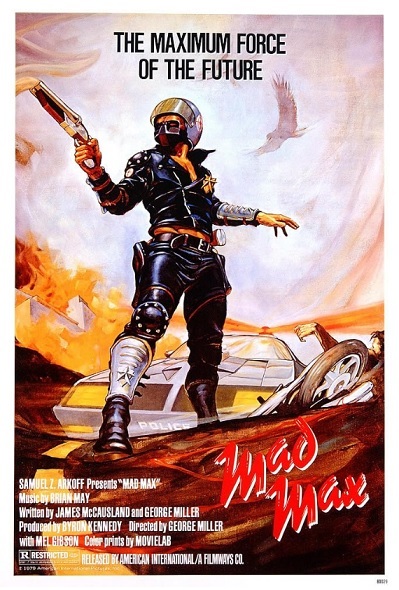
In the first Mad Max from 1979, we find ourselves in the early stage of an apocalypse. Australia (never mentioned as such) is suffering from ecocide, lawlessness and scarcity of fuel. The poorly funded Main Force Patrol is still active and tries to bring down the bikers that terrorize the highways.

The movie starts with a bunch of patrolmen who are chasing down a couple of psychotics and we immediately get a good sense of what we’re in for: very fast cars, dangerous stunts and major car crashes. We get introduced to the cool, leather outfit and shades wearing cop Max Rockatansky (Mel Gibson). Where others fail, he gets the job done. But after he dispatches the psychotic cop killer Nightrider, a gang of biker outlaws come after him and kill his wife and child. Now Max goes out for revenge and turns into a lone warrior who scavenges the barren waste land.

Prior to his film career, director George Miller served as a medical doctor in Sydney, stationed in a hospital emergency room where he encountered numerous horror-like injuries and fatalities similar to those portrayed in the film. Additionally, his upbringing in rural Queensland exposed him to numerous car accidents, and he tragically lost at least three friends to such incidents during his teenage years. So that’s clearly where his inspiration came from.

Miller is still developing his trademark style in this movie. The high speed chases, crashes and stunts are looking great considering the low budget. He employs innovative camera techniques to achieve the distinctive Mad Max look that he would refine in the sequels. It’s a highly original movie and within the carsploitation genre an absolute classic.

Rating:

Biography: George Miller (1945) is an Australian filmmaker, best known for his Mad Max franchise. In 1971, George attended a film workshop at Melbourne University where he met Byron Kennedy, with whom he formed a friendship and production partnership, until Kennedy’s death in 1983 (Mad Max Beyond Thunderdome is dedicated to him). Together they made the first Mad Max movie in 1979 for a budget of 400.000 Australian dollars. It earned 100 million dollars at the box office worldwide and became the most profitable film of all time (the record was not broken until The Blair Witch Project 20 years later). Miller’s Mad Max: Fury Road (2015) earned Oscar nominations for best film and director. The latest entry in the series – Furiosa: A Mad Max Saga – will be released in May 2024.

Filmography (a selection): Furiosa: A Mad Max Saga (2024), Three Thousand Years of Longing (2022), Mad Max: Fury Road (12015), Happy Feet 2 (2011), Happy Feet (2006), Babe: Pig in the City (1998), Lorenzo’s Oil (1992), The Witches of Eastwick (1987), Mad Max Beyond Thunderdome (1985), Twilight Zone: The Movie (1983, segment), The Dismissal (1993, TV episode), Mad Max 2 (1983), Mad Max (1979), The Devil in Evening Dress (1975, short)
Double Bill #02: Grindhouse (Planet Terror & Death Proof)

This was the first time I saw the Rodriguez / Tarantino double feature as it was originally intended: back to back and with fake trailers in between. Originally, I saw the films separately when they came out in 2007 in an open air cinema on Crete. This was a special experience in itself and I really liked the movies. So what is the real authentic Grindhouse experience like? Well, what do you think? It kicks complete ass! It starts with the Machete trailer, which is so good they decided to actually make the movie. Then the first feature Planet Terror opens with that pole dancing sequence, the sexiest ever committed to celluloid. Rose McGowan is amazing as Cherry Darling, a go-go dancer who’ll soon have a machine gun for a leg. Rodriguez’ his contribution is a bat shit crazy gory virus zombie splatterpiece, while the Tarantino film that follows is… well a masterful genre film (in this case a carsploitation-horror), like only the maestro knows how to make them. What’s beautiful is that the films actually go together like burgers and fries. Tarantino-Rodriguez is a unique partnership in the history of filmmaking and this is a once-in-a-lifetime project. The two films have a lot in common. Apart from the shared cast members, they feature lots of lethal ladies; girls who kick ass, though they also suffer a lot. The guys in the movies are mostly psychos. And one of them is unforgettable: Kurt Russell as Stuntman Mike McKay. Another Tarantino-character made for the cinema wax museum. The Grindhouse versions of the films are cut a little shorter than the films released separately. Death Proof now also has a missing reel. Not coincidentally, it is the lap dance scene that is missing (Tarantino and Rodriquez are suggesting that a horny projectionist stole the reels, in Planet Terror a sex scene between Cherry and Wray is missing). Also, included in all gory glory are the fake movie trailers: Rob Zombie’s Werewolf Women of the SS, Edgar Wright’s Thanksgiving and Eli Roth’s Thanksgiving. O man, cult cinema just doesn’t come any better than this.

Convoy

Director: Sam Peckinpah
Written by: B.W.L. Norton
Cast: Kris Kristofferson, Ali MacGraw, Burt Young, Ernest Borgnine

Year / Country: 1978, USA
Running Time: 104 mins.

Convoy is not really a fast carsploitation film, but more like a road adventure. It is a bit of an odd movie in director Sam Peckinpah’s oeuvre, although it does contain a slow motion shot or two and it stars Ali MacGraw and Ernest Borgnine.

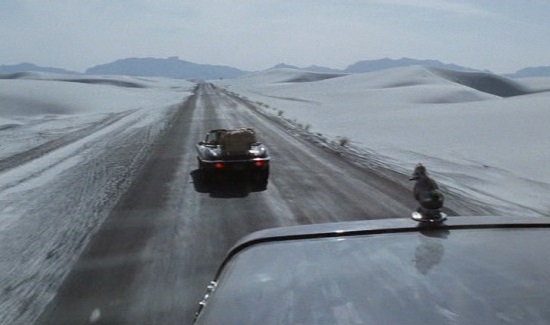
The story revolves around a trucker nicknamed Rubber Duck. His Mack truck has a wild duck statue on the hood; later parodied by Tarantino in Death Proof in which Kurt Russell’s character Stuntman Mike has the same. Rubber Duck has that something that makes people leaders. You can not really put your fingers on what it is, a sort of X-factor, but Rubber Duck, charismatically portrayed by Kris Kristofferson, definitely has it.

After a bar fight with a bunch of dishonest cops, led by the crooked sheriff Cottonmouth (Borgnine), Duck and his buddies head to New Mexico where they will be safe from prosecution. Through a radio channel, other truckers pick up on what is going on and join the convoy. It grows and grows until it reaches a powerful mass. Although triggered by corruptness, the convoy is not really a political event. It just happens.

The greatest strength of Convoy lies in its screenplay. There may not be much of a story; it does sketch strong characterizations and delivers very sharp dialogues. Also impressive is the beautiful landscape cinematography. Certainly not near Peckinpah’s best, but good compared to many other standards.

Rating:

Biography: Sam Peckinpah (1925, Fresno – 1984, Inglewood) got famous for reinventing the western with movies such as The Wild Bunch and Pat Garrett & Billy the Kid. His nickname would become ‘Bloody Sam’ because these movies often contained extreme violence and bloody action sequences. His career started when he got to do jobs for director Don Siegel. Then he got to direct (western) TV series. In 1961 he directed his first feature film, a western titled The Deadly Companions. However, it was with his second feature, Ride the High Country (1962), that Peckinpah really began to establish his reputation. He died of a stroke in 1984, 59 years of age.

Filmography (a selection): Broken Arrow (1958, TV episode), The Rifleman (1958-59, TV episodes), Klondike (1960, TV series), The Deadly Companions (1961), Ride the High Country (1962), Major Dundee (1965), Moon Wine (1966, TV), The Wild Bunch (1969), The Ballad of Cable Hogue (1970), Straw Dogs (1971), Junior Bonner (1972), The Getaway (1972), Pat Garrett & Billy the Kid (1973), Bring Me the Head of Alfredo Garcia (1974), The Killer Elite (1975), Cross of Iron (1977), Convoy (1978), The Osterman Weekend (1983)