Up in Smoke


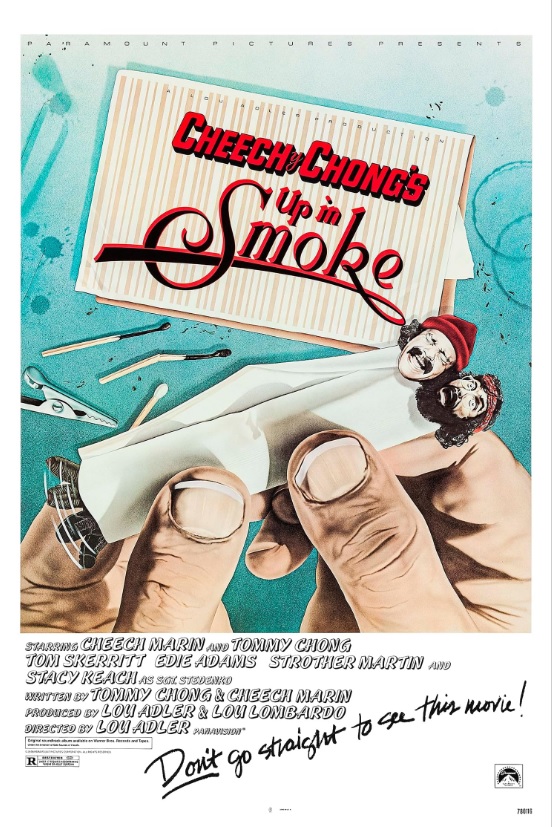
Director: Lou Adler
Written by: Tommy Chong, Cheech Marin
Cast: Cheech Marin, Tommy Chong, Stacy Keach

Year / Country: 1978, USA
Running Time: 86 mins.

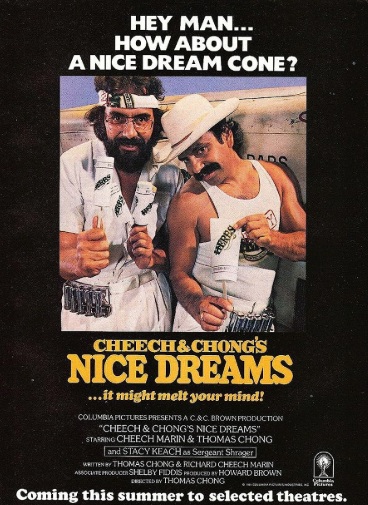
Cheech & Chong are a comedy duo founded in Vancouver, consisting of American Cheech Marin and Canadian Tommy Chong. They rose to commercial and cultural prominence in the 1970s and 1980s through their stand-up routines, comedy albums, and feature films. Their work drew heavily from the hippie and free-love era, the drug-fueled counterculture movement, and, most famously, their unabashed love for cannabis.

Up in Smoke marks the big-screen debut of the stoner duo who would go on to become synonymous with the genre itself. This first film launched a series of follow-ups: Cheech and Chong’s Next Movie (1980), Nice Dreams (1981), Things Are Tough All Over (1982), Still Smokin (1983), Cheech & Chong’s The Corsican Brothers (1984), and, much later, Cheech & Chong’s Animated Movie (2013).

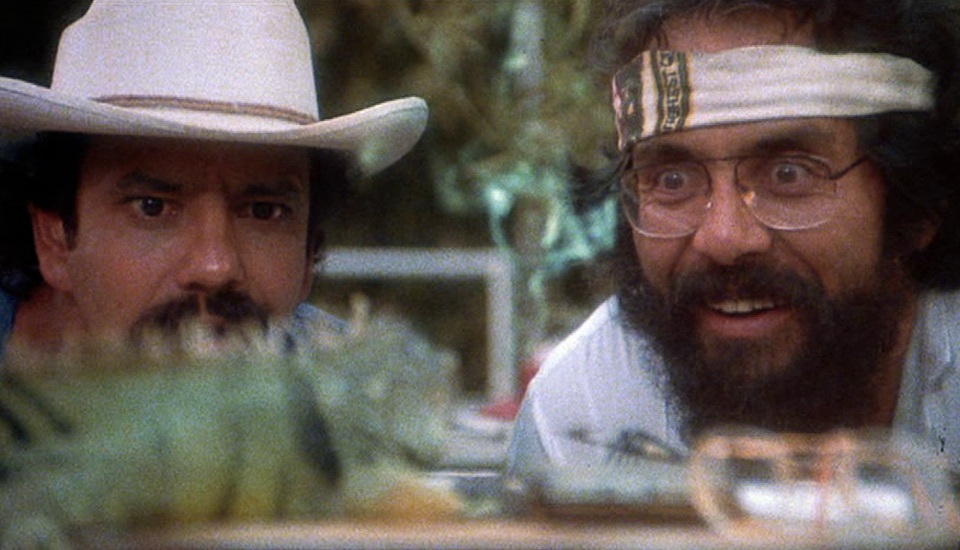
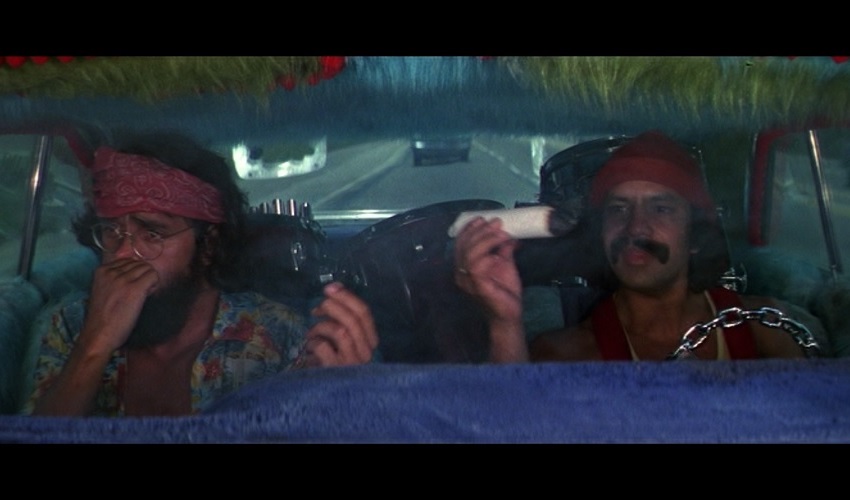
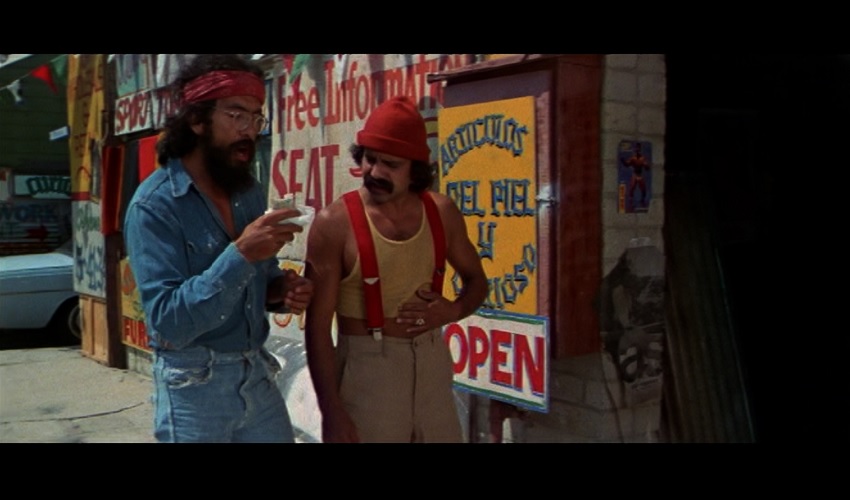
In their debut, they are not yet known as Cheech and Chong, but as Pedro and ‘Man’ (Chong’s character is officially named Anthony, though this is mentioned only once). Man is under pressure from his father to find a job or face being sent to military school. He leaves home, disguises himself as a large-breasted woman to hitch a ride, and ends up meeting Pedro. The two quickly bond, smoke copious amounts of weed, start a band, and spend most of their time trying to avoid getting busted by the LAPD. In many ways, they practically invent the stoner comedy genre right here.

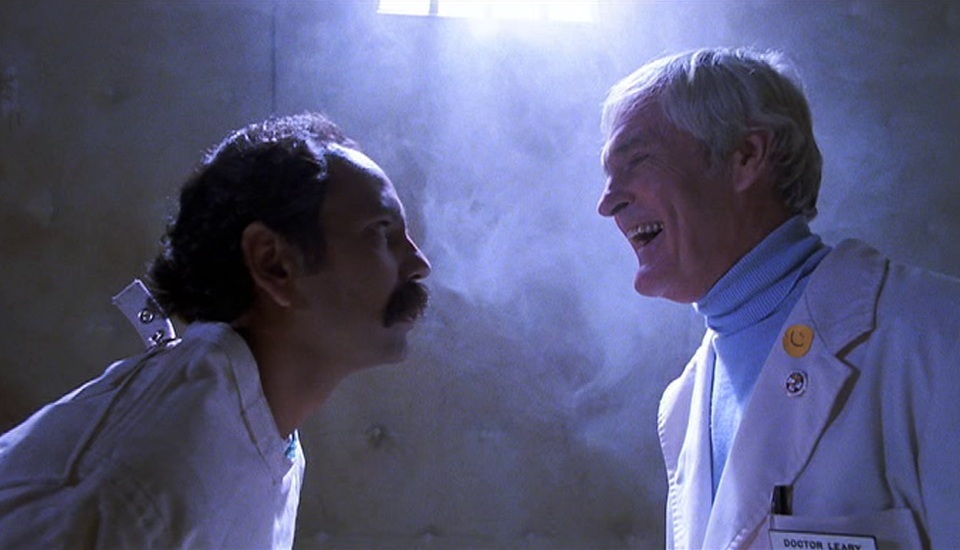
The plot eventually centers on the duo unknowingly smuggling a van made entirely out of marijuana across the border from Mexico, all while being chased by an especially dim-witted police unit led by Sgt. Stedenko (Stacy Keach). The character would return in Cheech & Chong’s second follow-up, Nice Dreams.

“Hey, do you wanna get high, man?”
“Does Howdy Doody got wooden balls?”

Lines like these are delivered nonstop, and while the humor is simple, it works remarkably well. There are plenty of genuine laugh-out-loud moments. Director and producer Lou Adler famously screened the film privately for his friend Jack Nicholson, who had recently been in a car accident and suffered a dislocated shoulder. The screening turned out to be a painful experience for Nicholson – his shoulder hurt every time he laughed, which was often.

The film also boasts a great soundtrack, featuring classics like ‘Low Rider’ alongside Cheech & Chong originals such as ‘Framed’. Shot largely in Los Angeles, the movie has a relaxed, sun-soaked atmosphere, enhanced by memorable visual touches like the opening credits being spray-painted over Pedro’s lowrider.

Up in Smoke was a massive success, grossing over 100 million dollars worldwide despite its modest budget. In 2024, it was selected for preservation in the United States National Film Registry by the Library of Congress, recognized as ‘culturally, historically, or aesthetically significant.’

Rating:

Biography: Lou Adler (1933, Chicago, Illinois, USA) is a producer, known for The Rocky Horror Picture Show (1975), Up in Smoke (1978) and Witness (1985). He has been married to Page Hannah since March 28, 1992. They have four children.

Filmography: Up in Smoke (1978), Ladies and Gentlemen, the Fabulous Stains (1982)

Easy Rider

Director: Dennis Hopper
Written by: Peter Fonda, Dennis Hopper, Terry Southern
Cast: Peter Fonda, Dennis Hopper, Jack Nicholson

Year / Country: 1969, USA
Running Time: 95 mins.

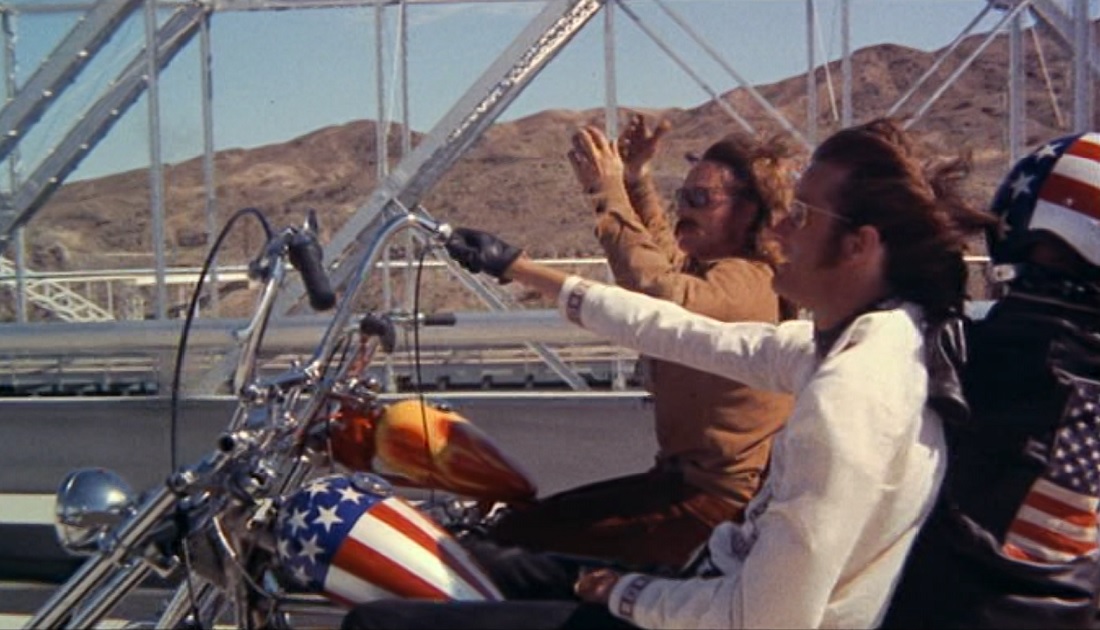
Two American bikers, Billy (Dennis Hopper) and Captain America (Peter Fonda), make a drug deal in Los Angeles, selling a stash of cocaine. They stash the money in plastic tubes hidden inside Captain America’s gas tank, which is decorated in stars and stripes like the American flag. Then they hit the road, heading for the Mardi Gras festival in New Orleans.

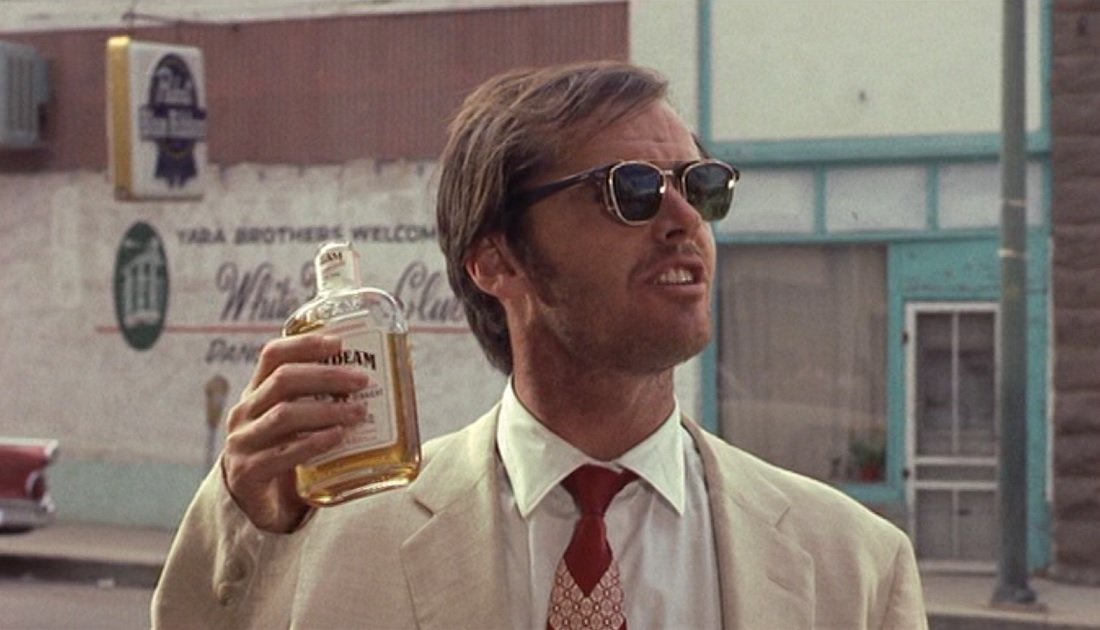
These two are counterculture figures; bikers, yes, but more hippie than outlaw. They ride through the American South and Southwest, camping under the stars, smoking grass by the fire, and drifting freely. Along the way, they encounter fellow wanderers, free-spirited hippie women, and the memorable, alcoholic lawyer George Hanson (Jack Nicholson).

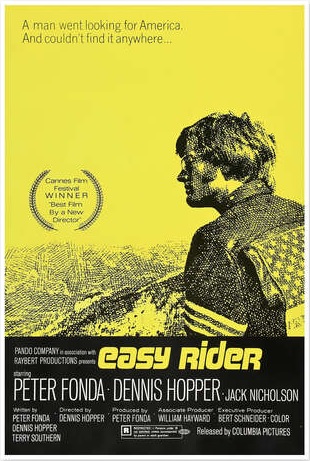
Easy Rider has a unique atmosphere all its own. The film’s striking images of wide-open, desolate landscapes, paired with its incredible rock soundtrack, create a dreamlike sense of freedom. It’s a road movie, yes, but also a time capsule. The tagline sums it up perfectly: ‘A man went looking for America. And couldn’t find it anywhere…’ Throughout the journey, they meet farmers, hippies, rednecks – a cross-section of America. But beneath it all is a deeper tension: a clash between the angry and the peaceful.

The film’s marijuana-smoking scenes feel genuine, and the acid trip near the end is raw and unsettling – likely because the cast actually used real drugs during filming. That honesty helps make Easy Rider the ultimate hippie movie, capturing the spirit and disillusionment of its era.

The film was a surprise box office success, shaking up the Hollywood system and briefly shifting creative power to the directors. For a moment, they – not the studios – understood what audiences really wanted to see. The film became a landmark of New Hollywood, capturing the spirit of the 1960s and earning Hopper an Academy Award nomination for Best Original Screenplay.

Rating:

Biography: Dennis Hopper (1936, Kansas – 2010, Los Angeles) was an American actor, director, writer, and artist known for his intense screen presence and deep ties to countercultural cinema. Hopper began his career in the 1950s with small roles in films like Rebel Without a Cause (1955), alongside James Dean. His early work in Hollywood was promising, but his rebellious nature and substance abuse problems often put him at odds with studios. He achieved cult status with Easy Rider (1969), which he co-wrote, directed, and starred in alongside Peter Fonda. He continued his directing career with a mix of critical and commercial disappointments, as well as a few moderately successful films. As an actor, however, he delivered memorable performances in several major hits, including Blue Velvet and Speed. Beyond his film work, Hopper was also a prolific photographer and painter, with his artwork exhibited in galleries around the world.

Filmography: Mary Jennifer at the Beach (1964, short), Easy Rider (1969), The Last Movie (1971), Out of the Blue (1980), Colors (1988), Catchfire (1990), The Hot Spot (1990), Chasers (1994), Homeless (2000, short), Pashmy Dream (2008, short)

Withnail & I

Director: Bruce Robinson
Written by: Bruce Robinson
Cast: Paul McGann, Richard E. Grant, Richard Griffiths

Year / Country: 1987, UK
Running Time: 107 mins.

Withnail & I is a masterpiece of British cinema, produced by HandMade Films, the iconic production company founded by George Harrison. Known for crafting timeless classics like The Long Good Friday and Monty Python’s Life of Brian, HandMade Films once again struck gold with this darkly comedic gem, written and directed by Bruce Robinson.

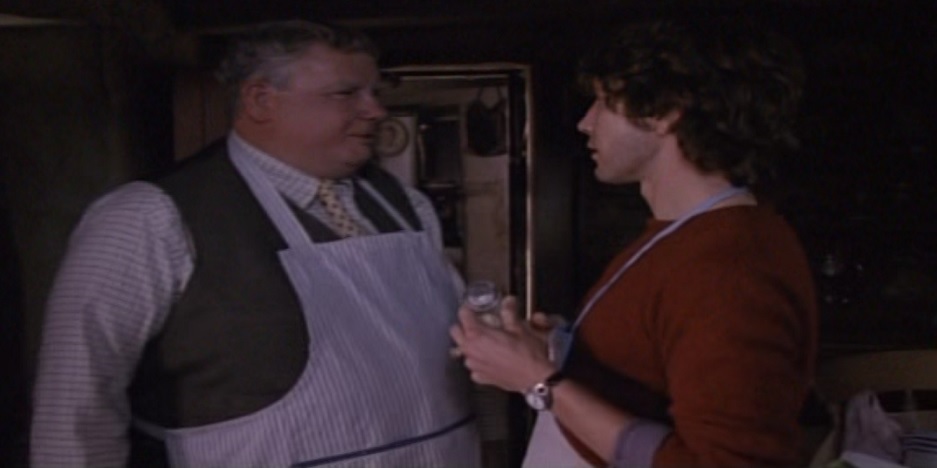
The story revolves around two unemployed, substance abusing actors, called Withnail (Richard E. Grant) and I (Paul McGann). It is based on the experiences of writer-director Bruce Robinson. When the two actors get increasingly depressed by the lack of auditions and the drudgery of regular life in Camden, they go to the countryside for a vacation in a cottage owned by Withnail’s homosexual uncle Monty (Richard Griffiths).

However, their idyllic getaway quickly spirals into chaos, as the harsh realities of rural life – featuring a bull, unplucked chickens, unfriendly locals, and the unwanted advances of a very horny Monty – compound their misery and desperation. Their only solace seems to lie in copious amounts of alcohol, leading to some of the film’s most memorable moments.

Robinson’s autobiographical script works wonderfully well, and the acting by the three leads is top notch. The soundtrack, featuring classics from Jimi Hendrix and The Beatles, add to the great atmosphere. Withnail & I is a truly original film with dialogues that are truthful, witty and genuine. A one of a kind movie.

Rating:

Biography: Bruce Robinson (1946, Broadstairs, Kent) started his career as an actor, but did not find it fulfilling nor lucrative. He started writing screenplays and in 1984, his Cambodia script The Killing Fields was turned into a memorable war movie by Roland Joffé. With his second script, he chose to direct himself. Withnail & I, which is largely autobiographical, became a cult classic. Robinson’s subsequent films, the advertising satire How To Get Ahead in Advertising and the serial-killer thriller Jennifer 8, while less memorable than his debut, still showed Robinson’s talents. In 2011 he brought The Rum Diary, a novel by legendary writer and Gonzo journalist Hunter S. Thompson, to the screen which received mixed reviews.

Filmography: Withnail & I (1987) / How to Get Ahead in Advertising (1989) / Jennifer Eight (1992) / The Rum Diary (2011)

Altered States

Director: Ken Russell
Written by: Paddy Chayefsky (novel & screenplay)
Cast: William Hurt, Blair Brown, Bob Balaban

Year / Country: 1980, USA
Running Time: 102 mins.

Altered States is a wild and thought-provoking journey into the mind of Dr. Eddie Jessup, a psycho-physiologist in the 1960s who becomes obsessed with exploring the boundaries of human consciousness. Plagued by unresolved childhood trauma, Jessup is driven by an insatiable curiosity about the meaning of existence. His experiments with a mind-altering isolation tank trigger intense religious hallucinations featuring visions of God, Jesus, and crucifixion scenes, blending spirituality with the surreal.

The story takes a darker turn after Jessup encounters a remote Mexican tribe and brings home a powerful psychedelic compound. Incorporating this substance into his experiments, he discovers that the altered states of consciousness he experiences are not merely internal, but can manifest physically. This revelation pushes the film into unsettling body-horror territory, shifting its tone to something more visceral and disturbing. The escalating tension and grotesque transformations make the latter half of the film both unnerving and memorable.

While Altered States begins with fascinating philosophical and scientific ideas, it struggles to maintain its initial momentum. Despite this, there is much to admire. William Hurt delivers an outstanding performance in his film debut, capturing Jessup’s intense obsession and vulnerability. The hallucinatory sequences are stunningly crafted, offering surreal imagery that lingers in the mind.

The film’s controversial themes and bold exploration of consciousness, faith, and identity make it a product of its time, yet it remains daring even by today’s standards. Though it doesn’t fully sustain its excitement throughout, Altered States is an ambitious and visually arresting experience that’s worth exploring for fans of psychological horror.

Rating:

Biography: Ken Russell (1927, Southampton, Hampshire – 2011, Lymington, Hampshire) was a visionary British filmmaker celebrated for his flamboyant and provocative style. He initially pursued a career in dance and photography before turning to filmmaking in the 1950s. His early work in documentaries demonstrated a flair for blending artistic innovation with compelling storytelling. His breakthrough came with Women in Love (1969), an adaptation of D.H. Lawrence’s novel, which earned critical acclaim and an Academy Award for actress Glenda Jackson. He followed this with audacious films like The Music Lovers (1971), The Devils (1971), and Tommy (1975), each characterized by their bold visuals, experimental narratives, and controversial themes. Known for his unflinching exploration of sexuality, religion, and human eccentricity, Russell’s work was often polarizing but undeniably influential. He continued to push boundaries with films like Altered States (1980) and Gothic (1986), cementing his reputation as a maverick artist.

Filmography (a selection): Peepshow (1956, short), A House in Bayswater (1960, short), French Dressing (1964), Billion Dollar Brain (1967), Women in Love (1969), The Devils (1971), Savage Messiah (1972), Mahler (1974), Tommy (1975), Lisztomania (1975), Valentino (1977), Altered States (1980), Crimes of Passion (1984), Faust (1985, TV-Movie), Gothic (1986), Salome’s Last Dance (1988), The Rainbow (1989), Whore (1991)