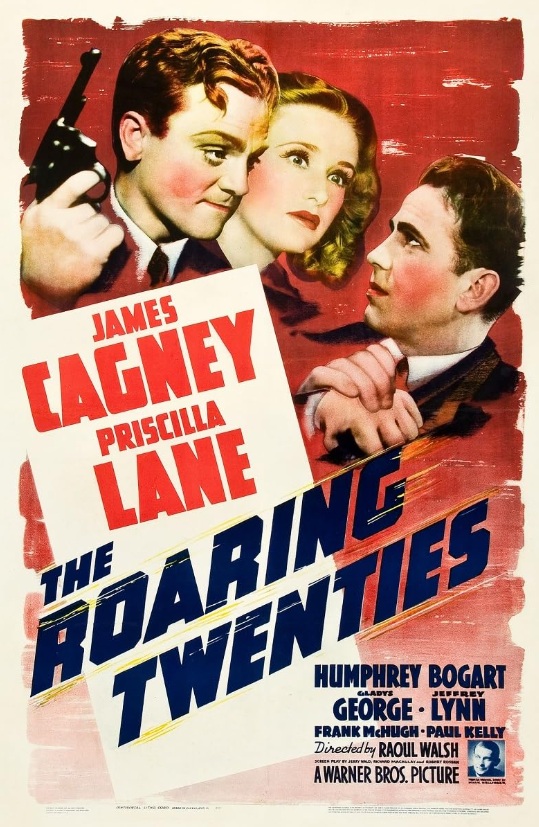
‘America’s Most Colorful Era!’
Directed by:
Raoul Walsh
Written by:
Jerry Wald (screenplay)
Richard Macaulay (screenplay)
Robert Rossen (screenplay)
Mark Hellinger (story)
Cast:
James Cagney (Eddie Bartlett), Priscilla Lane (Jean Sherman), Humphrey Bogart (George Hally), Gladys George (Panama Smith), Jeffrey Lynn (Lloyd Hart), Frank McHugh (Danny Green), Paul Kelly (Nick Brown), Elizabeth Risdon (Mrs. Sherman), Ed Keane (Henderson), Joe Sawyer (The Sergeant)
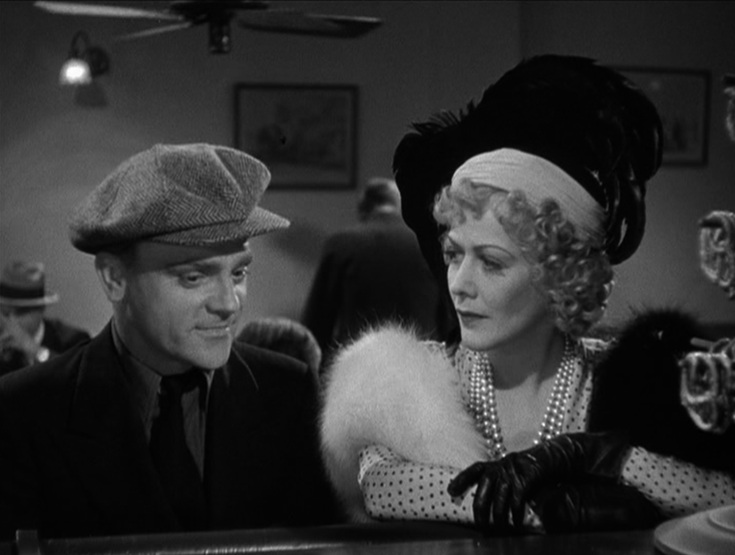
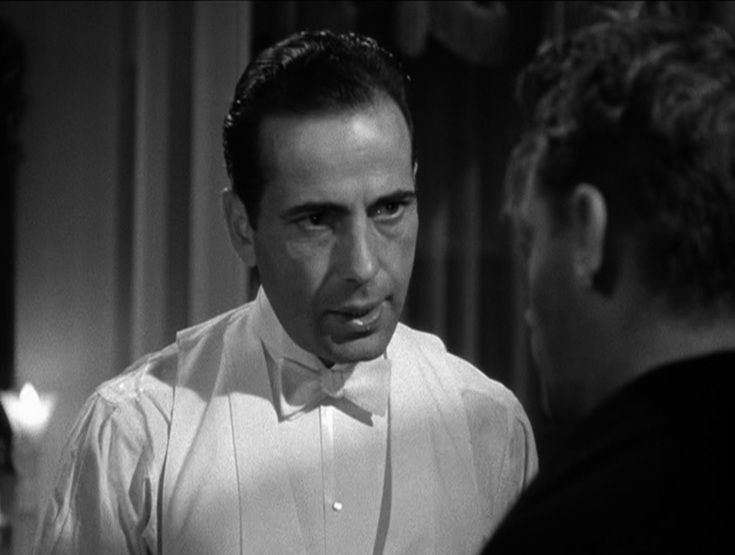
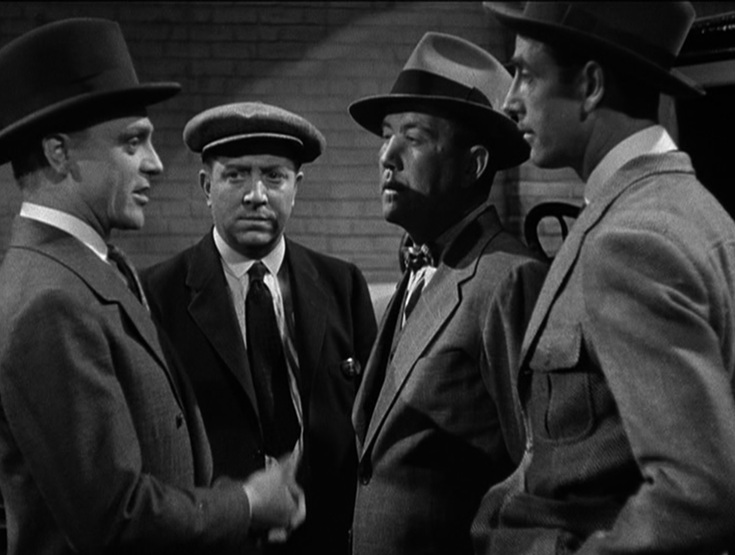
The Roaring Twenties opens in the immediate aftermath of World War I, as soldiers James Cagney and Humphrey Bogart return home in 1919. They find a nation grappling with economic hardship and rising living costs just as Prohibition is ratified, turning alcohol into both a forbidden fruit and a lucrative business opportunity.
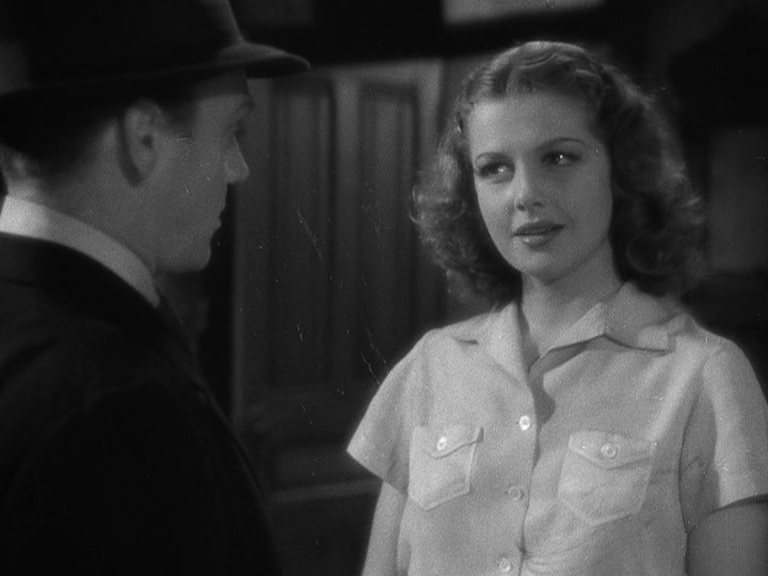
The film follows Eddie Bartlett (Cagney), a former doughboy who seizes the moment and rises to power in the bootlegging underworld. Along the way, he reconnects with Jean Sherman, a woman he corresponded with during the war, securing her a singing job at a nightclub. His path eventually crosses again with his old comrade George Hally (Bogart), now a rival booze importer. Their partnership sours, and tensions escalate when they double-cross fellow bootlegger Nick Brown.
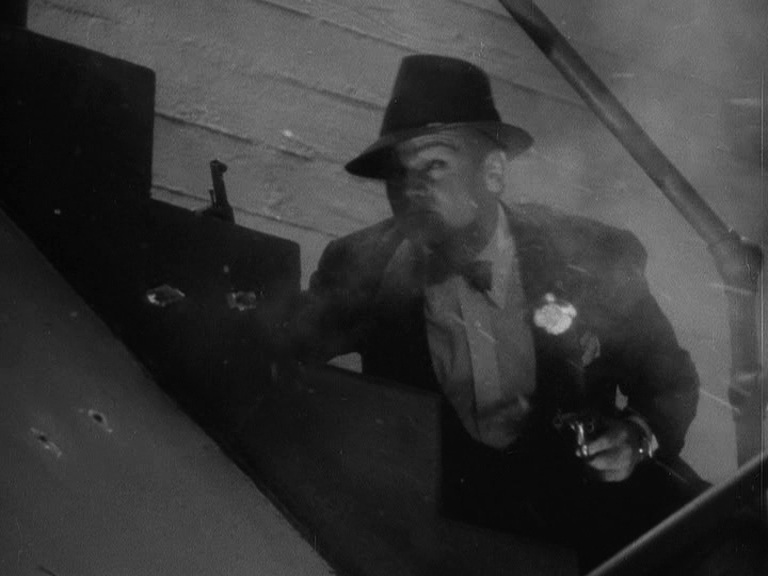
The movie by Raould Walch, who would ten years later make the best gangster film yet at that point – White Heat – is a trendsetter in more than one way. Walsh crafts The Roaring Twenties with a dynamic, almost documentary-like style. Crisp black-and-white cinematography is punctuated by newsreel-style interludes, lending the film an energetic, GoodFellas-esque rhythm. The story of the ‘working gangster’ feels like a clear influence on Scorsese, blending ambition, a jetset lifestyle, and eventually an ugly downfall.
Cagney delivers another magnetic performance as Eddie Bartlett, a character who begins as a mild-mannered entrepreneur, but grows increasingly volatile as his world unravels. What sets The Roaring Twenties apart is its focus on redemption: Eddie’s final act is a selfless one, driven by love rather than greed. It is a rare moral twist for the genre.
Like most gangster tales, it ends with a memorable line, this time spoken by a dame: “He used to be a big shot.”
Rating:

Quote:
EDDIE BARTLETT: “I just ran into a streak of bad luck, that’s all. I’ll be there on top again. I just got to figure out a new angle.”
Trivia:
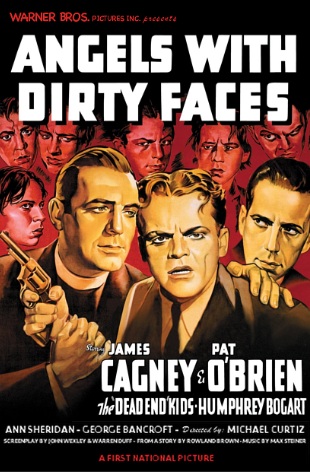
Gladys George replaced Ann Sheridan (the female star of Cagney’s previous gangster film Angels with Dirty Faces) who had replaced Lee Patrick who had replaced Glenda Farrell for the character of Panama Smith.


 FRAGMENTEN UIT HET SCHEMERLAND