The Godfather: Part II (1974)

Directed by:
Francis Ford Coppola

Written by:
Mario Puzo (novel / screenplay)
Francis Ford Coppola (screenplay)

Cast:
Al Pacino (Don Michael Corleone), Robert Duvall (Tom Hagen), Diane Keaton (Kay Adams), Robert DeNiro (Vito Corleone), John Cazale (Fredo Corleone), Talia Shire (Connie Corleone), Lee Strasberg (Hyman Roth), Michael V. Gazzo (Frankie Pentangeli), G.D. Spradlin (Senator Pat Geary), Richard Bright (Al Neri)
Francis Ford Coppola’s The Godfather: Part II is a rare sequel that not only lives up to the legacy of its predecessor but in many ways deepens and expands it. Rich with atmosphere, emotional depth, and moral complexity, this beautifully dark chapter in the Corleone saga is, indeed, an offer you can’t refuse.

Following the immense success of the 1972 classic, a sequel was greenlit almost immediately. However, with only a small portion of unused material from Mario Puzo’s original novel – the early life of Vito Corleone – Coppola and Puzo crafted an original narrative chronicling Michael Corleone’s reign as head of the family, interwoven with the rise of his father, Vito. These parallel timelines form the heart of Part II, highlighting both the legacy and the transformation of the Corleone family.

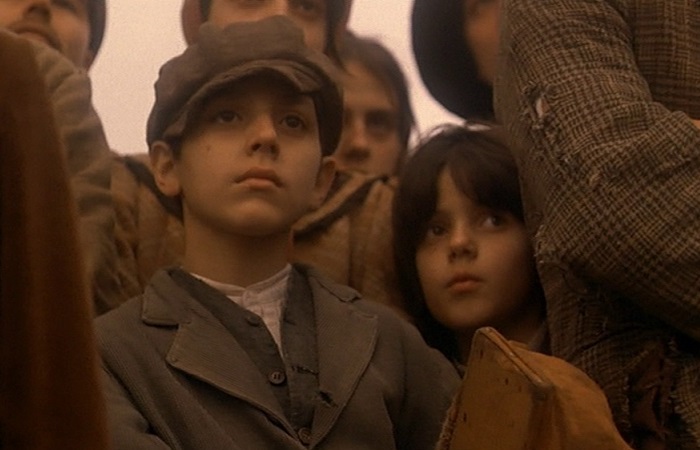
In Vito’s storyline, we witness his arrival in New York as a young immigrant, escaping the trauma of his family’s murder in Sicily. As he grows up, he confronts the oppressive rule of a local crime boss and takes the first steps toward becoming a benevolent – but ruthless – leader within the community. Robert De Niro is mesmerizing as the young Vito, embodying the character with subtlety and strength, and earning a well-deserved Academy Award for Best Supporting Actor.

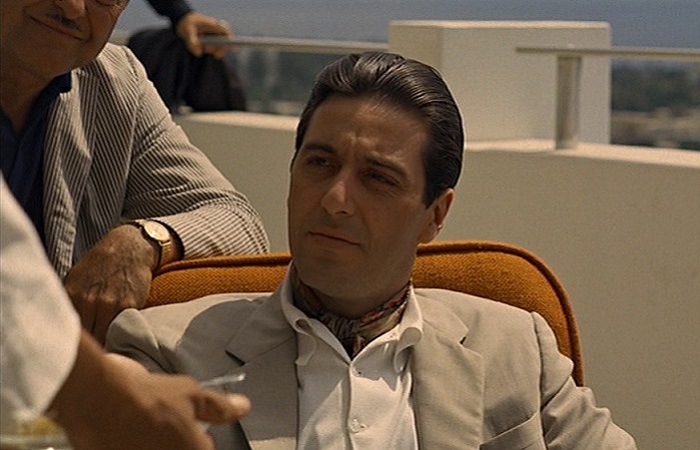
Meanwhile, Michael’s narrative unfolds in stark contrast. Now at the height of his power, Michael strives to legitimize the family business and expand into Cuba, partnering with the aging Hyman Roth. But betrayal and deception close in from all sides. Al Pacino delivers a haunting performance as a man consumed by control, paranoia, and an increasingly cold detachment from those closest to him. Despite the role being arguably the pinnacle of his career, Pacino was controversially overlooked by the Academy.

The film’s production design by Dean Tavoularis and the moody, shadow-drenched cinematography by Gordon Willis once again elevate the storytelling to operatic heights. But it’s the ensemble cast that truly shines – John Cazale as the fragile Fredo, Robert Duvall’s solid Tom Hagen, Diane Keaton’s heart-wrenching portrayal of Kay, and powerful additions like Lee Strasberg as Roth and Michael V. Gazzo as Pentangeli.

Coppola’s structural innovation – juxtaposing father and son at similar ages – profoundly enriches the film. While both Vito and Michael are motivated by a desire to protect and provide for their families, their approaches – and ultimate fates – are starkly different. Vito, though a criminal, retains warmth and humanity; Michael becomes increasingly isolated, sacrificing everything in his quest for power.

This is essentially the story of Michael Corleone’s downfall. He may get to keep his power, but he is completely lost, not understanding anymore how his actions have a destructive effect on his environment. He is now estranged from his wife and then from all others around him.

In the first movie, when Michael has the heads of the Five Families murdered, it is very satisfying, but when he deals with his enemies – including his own brother – at the end of The Godfather: Part II, it has completely the opposite effect. Michael’s transformation, which started in the first movie, is now complete. He is alone with all his power and it is with that frightening image that Coppola ends this remarkable film.

Rating:

Quote:
MICHAEL CORLEONE: Connie, if you don’t listen to me and marry this man… you’ll disappoint me.

Trivia:
Marlon Brando and Robert DeNiro are the only two actors to ever win separate Oscars for playing the same character. Brando won Best Actor for playing Vito Corleone in The Godfather (1972) and DeNiro won Best Supporting Actor for playing Vito Corleone in its sequel and prequel The Godfather: Part II (1974)
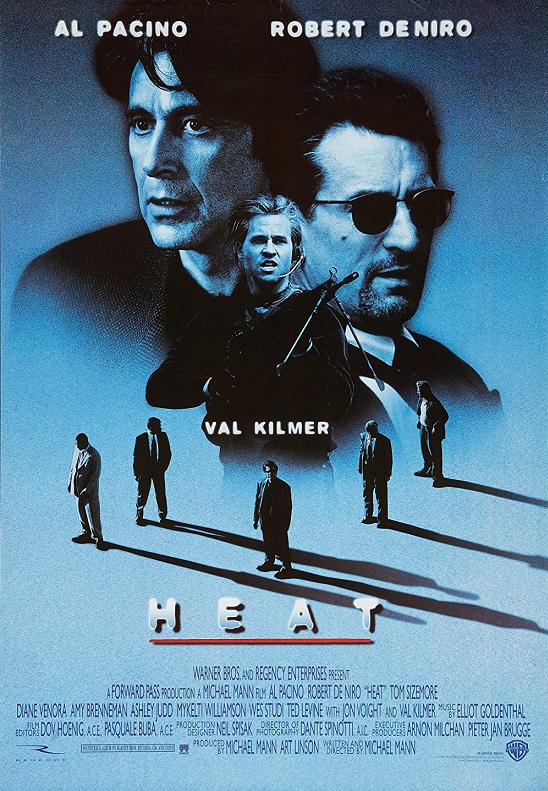
 

Heat (1995)

Directed by:
Michael Mann

Written by:
Michael Mann

Cast:
Al Pacino (Lt. Vincent Hanna), Robert De Niro (Neil McCauley), Val Kilmer (Chris Shiherlis), Jon Voight (Nate), Tom Sizemore (Michael Cheritto), Diane Venora (Justine Hanna), Amy Brenneman (Eady), Ashley Judd (Charlene Shiherlis), Mykelti Williamson (Sergeant Drucker), Wes Studi (Detective Casals)

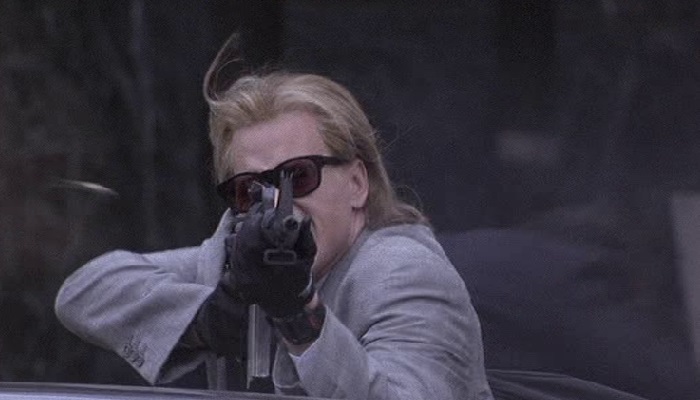
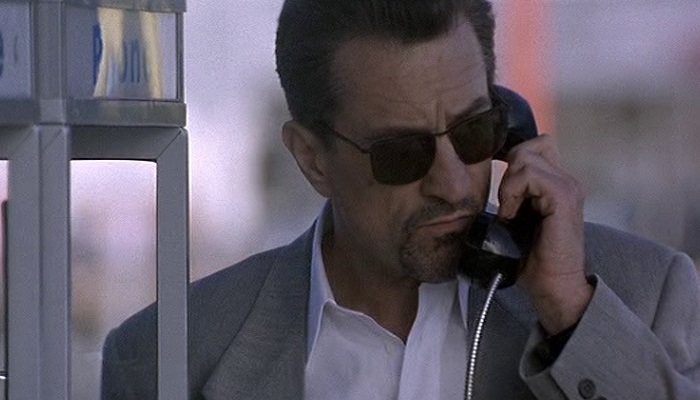
Watching Heat recently really made me nostalgic for the nineties. Acting legends Al Pacino and Robert De Niro in the same movie? Those were the days. The supporting cast of Heat is also one to marvel at. But it’s not just the cast that makes it such a great cinematic experience. Heat is like a genius puzzle where every piece fits perfectly.

The starting point seems simple: there’s a good guy, detective Vincent Hanna (Pacino), who tries to catch the bad guy, robber Neil McCauley (De Niro). Both are dedicated professionals—so dedicated, in fact, that they struggle to maintain steady relationships. Hanna’s second marriage is crumbling, while McCauley hesitantly starts dating a woman, keeping her in the dark about his criminal life.

Writer/director Michael Mann based Heat on true crime stories. Neil McCauley, for instance, was inspired by a real person. He leads a crew of professional robbers, but as soon as they deviate from their usual approach, their perfect machine begins to unravel. Hanna is on their trail like a bloodhound. They decide to pull off one final, major heist—with Hanna and his equally professional team hot on their heels.

Yet the story goes much deeper, featuring an impressive array of side characters, each given just the right amount of screen time. In the end, the equation is perfectly balanced, and when the final piece falls into place, it’s a moment of true greatness.

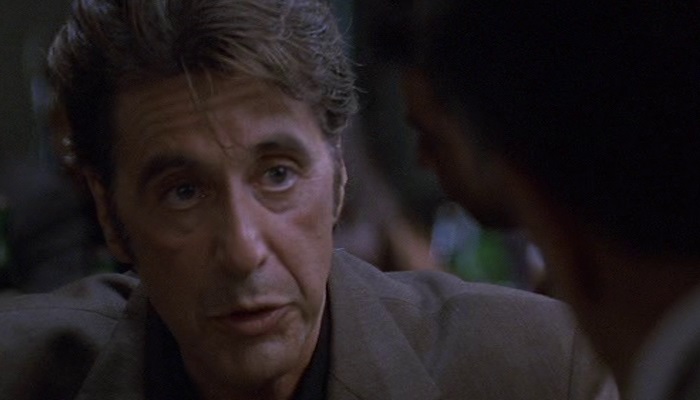
The heart of the story is the relationship between Hanna and McCauley. Though they only meet twice in key scenes – once in the legendary diner scene and again in the tragic airport finale – their bond is palpable throughout.

Scenes from their private lives mirror each other, and whenever they learn something new about one another, they’re notably impressed. These two men respect each other. They’re equals in many ways, yet they’re on opposite sides of the law. Even though McCauley is far more cold-hearted than Hanna, it’s hard to favor one over the other. McCauley is such a professional that you can’t help but root for him.

Beyond the story and acting – both of which deserve a 10/10 – Mann and his crew also made the film look astonishing. The blue-lit Los Angeles feels cold and detached, a perfect backdrop for these characters, all of whom are disconnected from the world in their own way.

The direction is a triumph in itself. Every shot is like a painting, and every scene is meticulously crafted down to the smallest detail. There are a few fantastic set pieces: the two heists in the film are unforgettable, but many other scenes linger in the mind. Heat is touching, smart, cool, and extremely exciting. It’s Mann’s best film, hands down, and one of the greatest L.A. crime epics ever made.

Rating:

Quote:
VINCENT HANNA: “You know, we are sitting here, you and I, like a couple of regular fellas. You do what you do, and I do what I gotta do. And now that we’ve been face to face, if I’m there and I gotta put you away, I won’t like it. But I tell you, if it’s between you and some poor bastard whose wife you’re gonna turn into a widow, brother, you are going down.”

Trivia:
In an interview with Al Pacino on the DVD Special Edition, Pacino reveals that for the scene in the restaurant between Hanna and McCauley, Robert De Niro felt that the scene should not be rehearsed so that the unfamiliarity between the two characters would seem more genuine. Michael Mann agreed, and shot the scene with no practice rehearsals.

Blow

Director: Ted Demme
Written by: Bruce Porter (book), David McKenna (screenplay), Nick Cassavetes (screenplay)
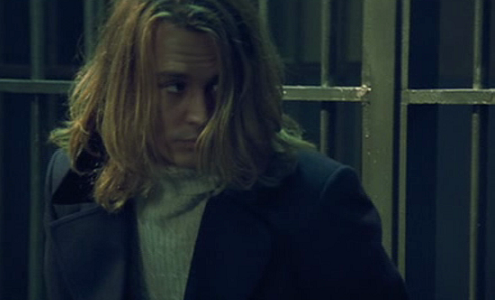
Cast: Johnny Depp, Penélope Cruz, Franka Potente, Rachel Griffiths

Year / Country: 2001, USA
Running Time: 118 mins.

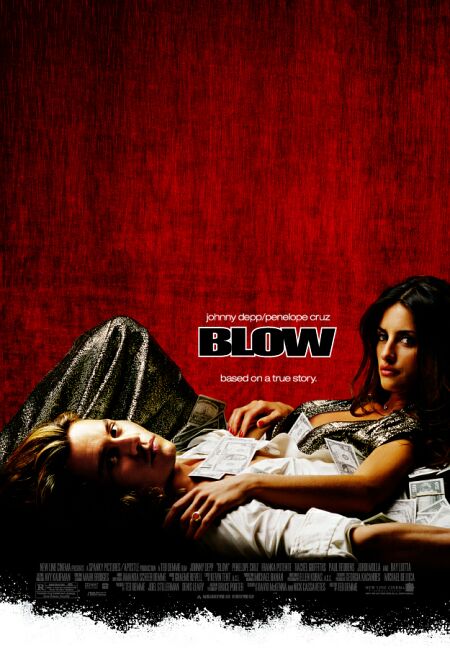
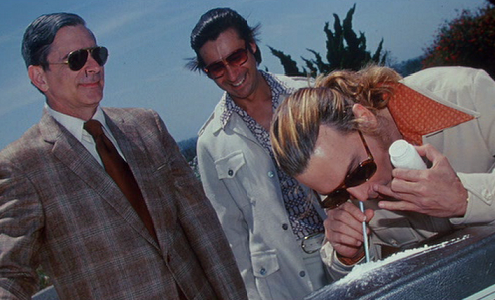
Biopic about George Jung, perhaps the biggest American cocaine smuggler of all time. The movie begins with George’s youth in Massachusetts, where he sees his dad working his ass off and ending up poor anyway. He decides he wants to become rich. George moves to California in the late sixties where he becomes a huge marijuana dealer and importer.

After the death of his girlfriend and a prison sentence he picks up a new trade; importing cocaine. After not too long, he is dealing directly with Pablo Escobar and his Medellín Cartel. 85 percent of all cocaine used in the United States in that time – the disco eighties – now comes from Jung. Then he meets a new love interest: the Colombian Mirtha (Cruz). This means trouble mildly put. In addition to that, a conflict ensues with his business partner and Jung is headed for the end. His empire was built too swiftly; the foundations were not strong enough.

Within the rise and fall crime biopic genre, Blow is a successful addition. It leans a bit heavy on GoodFellas with the voice-over, the soundtrack, the editing and casting (Ray Liotta plays Jung’s dad), but after a while you notice that Blow is not just another rip-off gangster movie. It is about a man and the choices he makes. In displaying that, the movie succeeds because ultimately it touches you where it matters; in the heart.

Rating:

Biography: Ted Demme (1963, New York – 2002, Santa Monica) was an American film director and producer. His career had modest beginnings – starting as a production assistant at MTV, he later created the cable network’s seminal hip-hop show Yo! MTV Raps. Later, he directed several movies, TV episodes and documentaries. He frequently worked with Denis Leary and was the nephew of movie director Jonathan Demme. In 2002, one year after directing the successful Blow, he died from an accidental cocaine induced thrombotic heart attack. He was only 38 years old.

Filmography: Yo! MTV Raps (1988, TV series) / No Cure for Cancer (1992, TV doc) / The Bet (1992, short) / Who’s the Man? (1993) / The Ref (1994) / Beautiful Girls (1996) / Homicide: Life on the Street (1994-96, TV episodes) / Gun (1997, TV episode) / SUBWAYStories: Tales from the Underground (1997, TV segment) / Denis Leary: Lock ‘N Load (1997, TV) / Snitch (1998) / Life (1999) / Action (1999, TV episode) / Blow (2001) /
A Decade Under the Influence (2003, doc)

Cult Radar: Part 8

FilmDungeon is glad to explore the video trenches to find that oddball treasure between the piles of crap out there. Of Course, a treasure in this context can also be a film that’s so shockingly bad it’s worth a look, or something so bizarre that cult fans just have to see it. Join us on our quest and learn what we learn. Hopefully we’ll uncover some well-hidden cult gems.

Researched by: Jeppe Kleijngeld

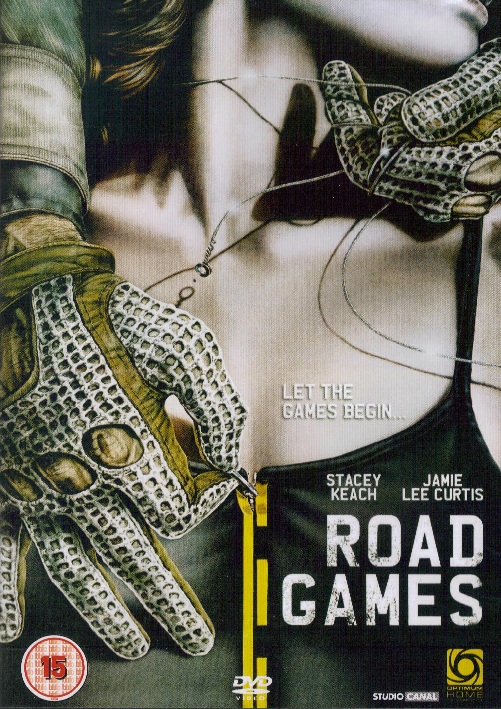
Roadgames (Australia, 1981)

Directed by: Richard Franklin
Written by: Richard Franklin, Everett De Roche
Cast: Stacy Keach, Jamie Lee Curtis, Marion Edward, Grant Page

Pat Quid (Stacy Keach) is an American ‘truckie’ in Australia, assigned to drive a load of pork from Melbourne to Perth. Along the road in the outback, he gets suspicious of a fellow driver. He suspects the man might be a wanted serial killer and shares his suspicions with hitchhiker Pamela (Jamie Lee Curtis). Then she vanishes and the deadly cat and mouse game with the killer really takes off. Roadgames is an Ozploitation flick released in 2008 by Optimum Home Entertainment, who released many other Ozploitation classics around that time following the success of Not Quite Hollywood: The Wild, Untold Story of Ozploitation (2008). It is clearly inspired by Hitchcock of whom director Richard Franklin (Patrick, Psycho II) is a major fan. Although the screenplay certainly has elements of engaging mystery, an adequate dosage of tension is missing in its direction. The musical score is composed by Mad Max’s Brian May (not to be confused by Queen’s Brian May). The killer is portrayed by famous Australian stunt performer Grant Page.

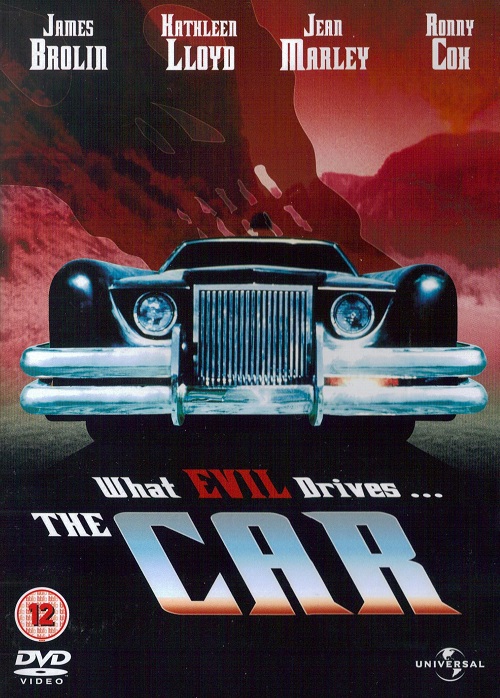
The Car (USA, 1977)

Directed by: Elliot Silverstein
Written by: Michael Butler Dennis Shryack, Lane Slate
Cast: James Brolin, Kathleen Lloyd, John Marley

A large, black two-door sedan is killing people randomly in a small desert town, blaring its horn rhythmically whenever it makes a kill. There doesn’t appear to be a driver in the car, as if Evil itself is behind the steering wheel. Sheriff Wade Parent (James Brolin) must find a way to stop the sedan, while also protecting his beloved ones. The Car is an unusual and entertaining thriller from the director of Cat Ballou. Although the dialogues and some of the acting sucks, the pretty awesome car action, the surroundings (Utah) and some eerie moments make it a decent movie in its kind.

Patrick (Australia, 1978)

Directed by: Richard Franklin
Written by: Everett De Roche
Cast: Susan Penhaligon, Robert Thompson, Robert Helpmann

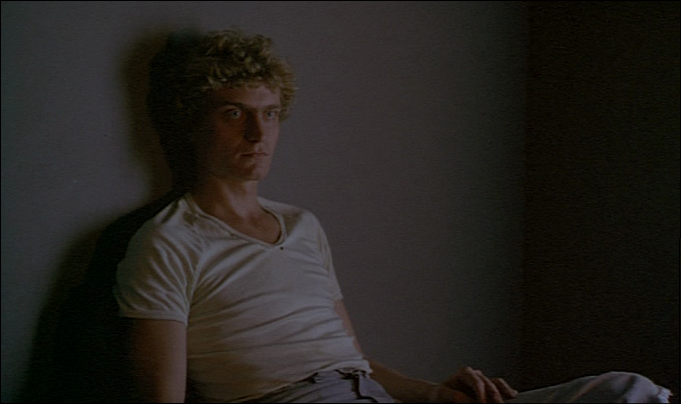
A comatose killer named Patrick uses psychokinesis to infiltrate the life of his new nurse, the attractive Kathy (Penhaligon). Low budget ozzy flick does little to shock the viewer. It is, however, stylishly directed by director Franklin, who knows some tricks to create suspense. The cinematography and editing are also pretty well done. Thompson is at times effectively scary as Patrick, but because the film is overlong and outdated, he won’t get much shock out of the contemporary viewer.

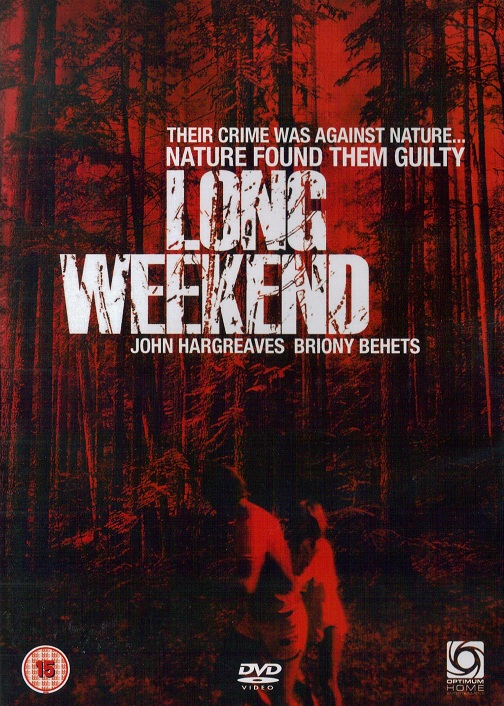
Long Weekend (Australia, 1978)

Directed by: Colin Eggleston
Written by: Everett De Roche
Cast: John Hargreaves, Briony Behets, Mike McEwan

‘Their crime was against nature… Nature found them guilty.’ When this is your tagline, you know you got a potential cult classic on your hands. Long Weekend is about a loathsome couple who head into nature for a camping trip. They arrive at a beautiful, abandoned beach area and start treating nature like shit. Their irreverent behavior causes repugnance from the viewer. Luckily nature feels the same way and gives them what they got coming. Hilarious when you think about it and very satisfying as well. From the writer of Patrick and Roadgames and the director of Fantasm Comes Again comes a very awesome Australian cult flick. Besides funny, Long Weekend is also effectively chilling when it needs to be. Excellent work.

Election (Hong Kong, 2005)
OT: Hak se wui

Directed by: Johnnie To
Written by: Nai-Hoi Yau, Tin-Shing Yip
Cast: Simon Yam, Tony Leung Ka Fai, Louis Koo

Stylish crime film by Johnnie To about the election of a new Triad boss. Two rivals, Big D and Lok, both want the position which leads to a bloody internal battle. What is always good about Johnnie To’s gangster flicks is that there is a slight absurd touch about them. Election also has this in spades. The result is a violent, comical Hong Kong movie that offers some insight into the workings of a Triad family. Followed one year later by Election 2.


Patrick