Miller’s Crossing (1990)


‘Up is down, black is white, and nothing is what it seems’

Directed by:
Joel Coen

Written by:
Joel Coen
Ethan Coen

Cast:
Gabriel Byrne (Tom Reagan), Marcia Gay Harden (Verna), John Turturro (Bernie Bernbaum), Jon Polito (Johnny Caspar), J.E. Freeman (Eddie Dane), Albert Finney (Leo), Mike Starr (Frankie), Al Mancini (Tic-Tac), Steve Buscemi (Mink), Richard Woods (Mayor Dale Levander)

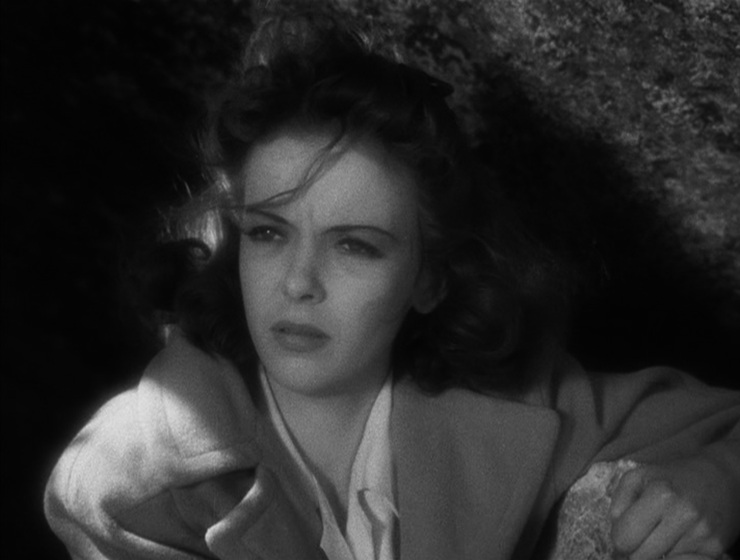
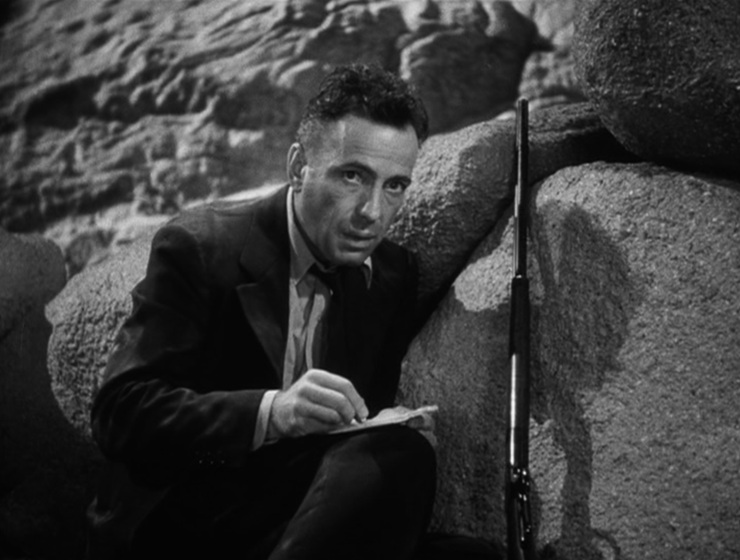
‘I’m talkin’ about friendship. I’m talkin’ about character. I’m talkin’ about—hell, Leo, I ain’t embarrassed to use the word—I’m talkin’ about ethics.’ That’s how Italian crime boss Johnny Caspar (Jon Polito) begins his speech to Irish kingpin Leo O’Bannion (Albert Finney) in the opening of Miller’s Crossing. It immediately recalls the first scene of The Godfather, where undertaker Bonasera appeals in much the same way to Don Vito Corleone.

The favor Caspar asks of O’Bannion is permission to whack two-timing bookie Bernie Bernbaum (John Turturro). Leo refuses, since Bernie is the brother of Verna (Marcia Gay Harden), the woman he’s fallen in love with. Of course, Caspar wasn’t really asking permission—he was informing Leo as a courtesy, as he angrily makes clear after being turned down. Gangsters with ethics toward one another: that’s the foundation of Miller’s Crossing. When Leo breaks this unspoken code among the city’s corrupt rulers, the result is all-out war.

The theme of crooks with ethics is embodied in Leo’s right-hand man Tom Reagan (Gabriel Byrne), the film’s central character. He follows a personal code that only he fully understands. Though secretly having an affair with Verna, Tom – unlike Leo – believes Bernie should be handed over to the Italians. He knows that breaking the underworld code is bad for business. But Leo is stubborn, and their disagreement grows until Tom finally confesses the affair. Leo cuts ties, and Tom immediately shifts allegiance to Caspar. His motive, however, is not self-interest. Though finished with Leo, Tom’s loyalty to his old friend remains.

The web of deceit that quickly unfolds in Miller’s Crossing is complex enough to merit a second viewing. Adding to the intricacy are numerous characters referenced but rarely seen. Still, the story – drawn from Dashiell Hammett novels like ‘The Glass Key’ and ‘Red Harvest’, and infused with classic gangster and neo-noir elements – is masterfully told. The Coens integrate these influences into a killer script, ironically born from a period of writer’s block. Their trademark humor and eccentric characters are on full display, while the dialogue carries a poetic cadence that might even make Shakespeare jealous.

The plotlines themselves may not be original, but the Coens conjure a dreamlike world where, as the tagline promises, nothing is what it seems. The mood is unmistakably Irish – you can almost smell the whiskey. Carter Burwell’s haunting score, the gorgeous cinematography, and evocative settings all heighten the effect. The tone shifts effortlessly from cartoonish to brutally violent, without warning or transition.

The cast is uniformly excellent. Gabriel Byrne makes Tom a sympathetic bastard it’s hard not to root for; if I had to trade places with a Prohibition-era gangster, I’d pick him without hesitation. The supporting roles are just as strong, with John Turturro delivering a powerhouse turn as Bernie, a spineless schemer whose lack of ethics drives the story. Miller’s Crossing also reinvents the use of hats and overcoats. Not that there’s any hidden meaning – there’s nothing’s more foolish than looking for meaning in a hat.

Features a terrific cameo from the Coen’s friend Sam Raimi as a trigger happy cop.

Rating:

Quote:
Tom Reagan: Nobody knows anybody. Not that well.

Trivia:
The Coen Brothers suffered writer’s block while working on the script for Miller’s Crossing. They took a three-week break and wrote the script for their next movie Barton Fink during that time, about a writer with writer’s block. There are two references to Barton Fink in this film. The first one is the name of Tom Reagan’s residence called ‘The Barton Arms’. The second is a newspaper article that reads ‘Seven Dead in Hotel Fire’.

This Thing of Ours (2002)


‘21st Century Criminals, 21st Century Payoff…’

Directed by:
Danny Provenzano

Written by:
Ted A. Bohus
Danny Provenzano

Cast:
Frank Vincent (Danny Santini), Vincent Pastore (Skippy), Danny Provenzano (Nicholas Santini), Edward Lynch (Johnny Irish), Louis Vanaria (Austin Palermo), Christian Maelen (Robert Biaggio), Chuck Zito (Chuck), Michael DelGaizo (Patsy deGrazio), Pat Cooper (John Bruno), James Caan (Jimmy ‘the Con’)

During the height of the phenomenon that was The Sopranos, this low budget independent mob movie was released starring many familiar mob actors, some of whom that were featured in the show, like Vincent Pastore (Big Pussy Ponpensiero), but also Frank Vincent – who would be introduced in The Sopranos two years later, and also James Caan (!), although he is just in one scene, yet featured on the cover in a clever marketing move.

But the film’s most intriguing element isn’t on-screen, it’s the backstory. Writer, director, and star Danny Provenzano was reportedly connected. His script was obviously strong enough to attract these mob-film veterans, yet he barely got to enjoy the release. Weeks before its nationwide theatrical debut, Provenzano pleaded guilty to racketeering and began serving a 10-year prison sentence.

Can wiseguys thrive in the 21st century? That’s the central question of the movie. Provenzano plays Nicky, a mobster with an ambitious plan: using a special microchip to transfer over a billion dollars to a secret Cuban bank account. His uncle Danny (Frank Vincent) must approve and finance the scheme. Success would bring not just massive profits but also a rise through the rigid ranks of their crime family. The problem is that both the FBI and rivals within their own family are making plans as well, leaving the multi-million-dollar heist balanced on a knife’s edge.

The concept is solid, but the execution stumbles. Only one scene truly delivers on the promise of 21st-century mobsters. This happens when Nicky and his crew pitch their digital heist to their greasy old bosses. The rest of the film offers the usual wiseguy dialogue and violence, none of it fresh. It adds nothing new to the overexploited genre, and Provenzano’s intended statement about the Cosa Nostra – whether they can adapt or if the life itself is a curse – never comes into focus.

Rating:

Quote:
ROBERT BIAGGIO: “It’s about time we brought that thing of ours into the 21st century, huh?”

Trivia:
Apart from mob veterans Frank Vincent, James Caan and Vincent Pastore, it also stars other mob regulars Joseph Rigano (Casino, Analyze This), Vinny Vella (Casino, The Sopranos), and Daniel P. Conte (GoodFellas, The Sopranos).

Carlito’s Way: Rise to Power (2005)

Directed by:
Michael Bregman

Written by:
Michael Bregman (screenplay)
Edwin Torres (novel)

Cast:
Jay Hernandez (Carlito Brigante), Mario Van Peebles (Earl), Luis Guzmán (Nacho Reyes), Sean ‘Puff Daddy’ Combs (Hollywood Nicky), Michael Kelly (Rocco), Giancarlo Esposito (Little Jeff), Jaclyn DeSantis (Leticia), Burt Young (Artie Bottolota Sr.), Mtume Gant (Reggie), Domenick Lombardozzi (Artie Bottolota, Jr.)

For some unexplained reason, Michael Bregman – the producer behind Carlito’s Way (1993) – thought it somehow necessary to bring a prequel to this great gangster film to television. Then again, maybe it’s not so strange: I haven’t read Edwin Torres’ novels, but I can imagine the source material is compelling.

The movie draws from Torres’ book series on the criminal life of Carlito Brigante, specifically the first book, also titled ‘Carlito’s Way’. Brian De Palma’s 1993 film took that title because, at the time, they chose not to use the second book’s title, ‘After Hours’, to avoid confusion with Martin Scorsese’s 1985 movie of the same name.

The story revolves around a young Puerto Rican, Carlito Brigante, who starts a heroin-dealing ring with his Black partner Earl and Italian partner Rocco. In this sense, the title Rise to Power isn’t really suitable – they’re already fairly established from the start.

True, they’re small compared to New York’s real power players: the Bottolota family also known as the the Pleasant Avenue Gang, and Hollywood Nicky, who run the city’s drug trade. Still, the trio is accepted, albeit under certain conditions.

Things go well at first, but then Earl’s brother shows up and he’s a loose cannon. The peace the boys have built isn’t going to last.

Jay Hernandez, who also appeared in Hostel around this time, doesn’t have the charisma or acting chops to come anywhere close to portraying a young Al Pacino. This is distracting. Add to that a terrible love plot, and the beginning is pretty bad. The second half is more engaging, as the problems that erupt are entertaining, but then it ends in a way that almost completely undoes the ending of the original.

In the end, this is only worth a look for gangster film completists like me. Otherwise, there’s little to enjoy here.

Rating:

Quote:
CARLITO BRIGANTE: “Buy the ticket. Catch that plane, and never come back. Otherwise your parents gonna be using that money for your funeral.”

Trivia:
Luis Guzmán played a big part in Carlito’s Way. He also appears in this movie, but in a different role.

Dinner Rush (2000)


‘Revenge is a dish best served cold’

Directed by:
Bob Giraldi

Written by:
Rick Shaughnessy
Brian S. Kalata

Cast:
Danny Aiello (Louis Cropa), John Rothman (Gary Lieberman), Edoardo Ballerini (Chef Udo Cropa), Vivian Wu (Nicole Chan), Kirk Acevedo (Duncan), Mark Margolis (Fitzgerald), Sandra Bernhard (Jennifer Freely), Frank Bongiorno (Enrico Coventie), Jamie Harris (Sean the Bartender), John Corbett (Ken Roloff)

Louis Cropa (Danny Aiello) is the owner of Italian eatery Tribeca, a joint with a major buzz. He also runs a bookmaking operation with his partner Enrico. When Louis is considering turning over the bookie business to two wiseguys Black and Blue, his partner ends up dead after turning the wiseguys down.

On a busy night in the chaotic restaurant, many different things are going down. The son of Louis, the perfectionist chef cook Udo, wants to run the restaurant without interference from his meddlesome father. Sous chef Duncan has a gambling debt and is messing around with Udo’s girl Nicole. And Black and Blue show up to shake down Louis for a piece of the restaurant.

Director Giraldi turns this ‘Foodfellas’ into an engaging little film where we get to have a good look at the hectic catering industry. Aiello is good as always as a business man who only wants to make some money. But as his free entrepreneurship is threatened, he has to start thinking like a wiseguy to get himself and the ones he cares about out of the frying pan.

All the Italian food in the movie looks great and the eatery is filled with interesting patrons, including Sandra Bernhard as a restaurant critic and Mark Margolis as an art gallery owner. All the plots are worked out cleverly and easily digestible.

Buon appetito!

Rating:

Quote:
LOUIS: “Everything you touch turns to shit. Except for these sausages.”

Trivia:
The filming was done in 21 days.