Blow

Director: Ted Demme
Written by: Bruce Porter (book), David McKenna (screenplay), Nick Cassavetes (screenplay)
Cast: Johnny Depp, Penélope Cruz, Franka Potente, Rachel Griffiths

Year / Country: 2001, USA
Running Time: 118 mins.

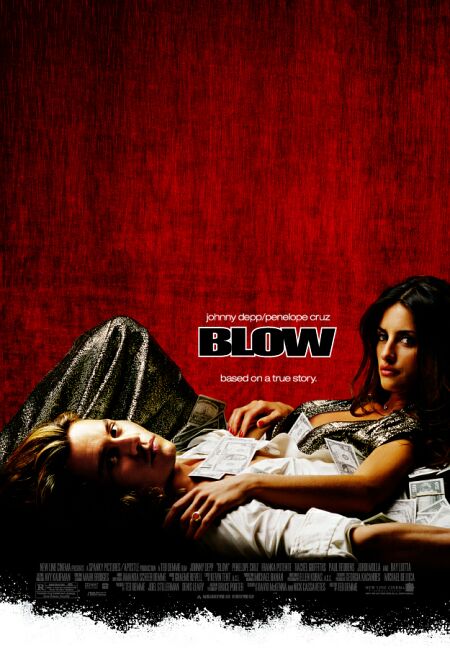
Biopic about George Jung, perhaps the biggest American cocaine smuggler of all time. The movie begins with George’s youth in Massachusetts, where he sees his dad working his ass off and ending up poor anyway. He decides he wants to become rich. George moves to California in the late sixties where he becomes a huge marijuana dealer and importer.

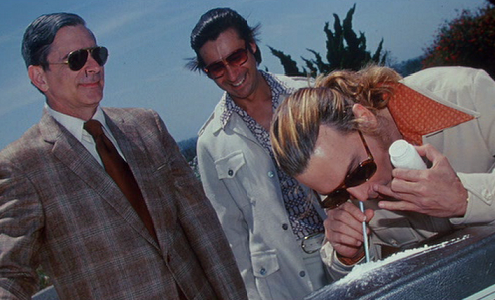
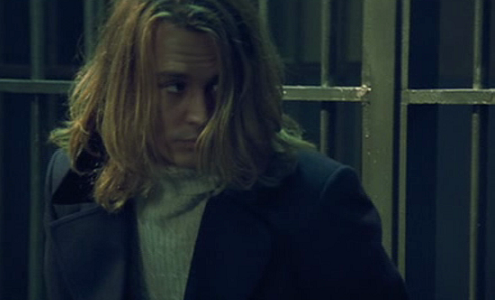
After the death of his girlfriend and a prison sentence he picks up a new trade; importing cocaine. After not too long, he is dealing directly with Pablo Escobar and his Medellín Cartel. 85 percent of all cocaine used in the United States in that time – the disco eighties – now comes from Jung. Then he meets a new love interest: the Colombian Mirtha (Cruz). This means trouble mildly put. In addition to that, a conflict ensues with his business partner and Jung is headed for the end. His empire was built too swiftly; the foundations were not strong enough.

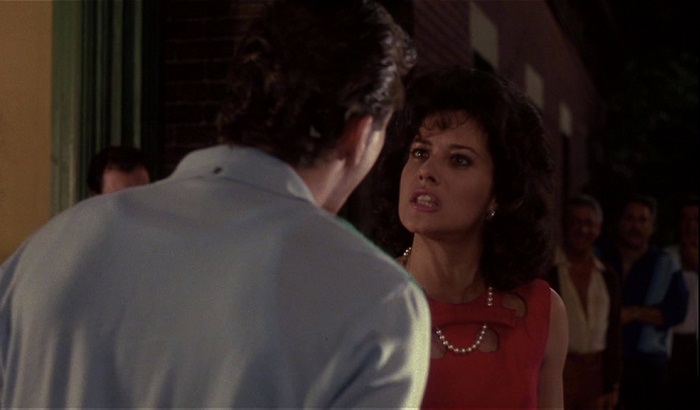
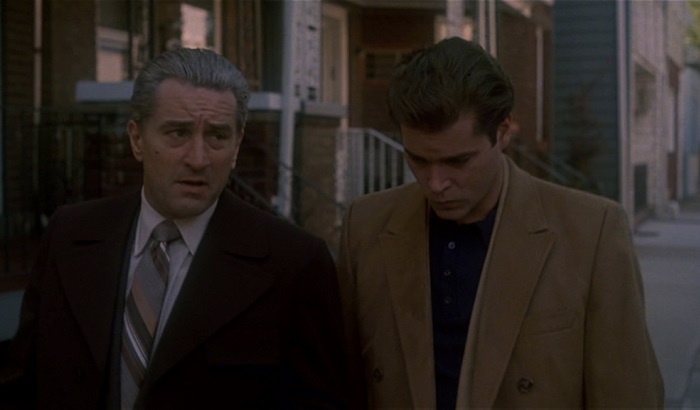
Within the rise and fall crime biopic genre, Blow is a successful addition. It leans a bit heavy on GoodFellas with the voice-over, the soundtrack, the editing and casting (Ray Liotta plays Jung’s dad), but after a while you notice that Blow is not just another rip-off gangster movie. It is about a man and the choices he makes. In displaying that, the movie succeeds because ultimately it touches you where it matters; in the heart.

Rating:

Biography: Ted Demme (1963, New York – 2002, Santa Monica) was an American film director and producer. His career had modest beginnings – starting as a production assistant at MTV, he later created the cable network’s seminal hip-hop show Yo! MTV Raps. Later, he directed several movies, TV episodes and documentaries. He frequently worked with Denis Leary and was the nephew of movie director Jonathan Demme. In 2002, one year after directing the successful Blow, he died from an accidental cocaine induced thrombotic heart attack. He was only 38 years old.

Filmography: Yo! MTV Raps (1988, TV series) / No Cure for Cancer (1992, TV doc) / The Bet (1992, short) / Who’s the Man? (1993) / The Ref (1994) / Beautiful Girls (1996) / Homicide: Life on the Street (1994-96, TV episodes) / Gun (1997, TV episode) / SUBWAYStories: Tales from the Underground (1997, TV segment) / Denis Leary: Lock ‘N Load (1997, TV) / Snitch (1998) / Life (1999) / Action (1999, TV episode) / Blow (2001) /
A Decade Under the Influence (2003, doc)

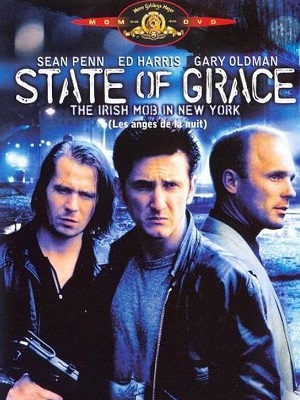
State of Grace (1990)


‘The Irish Mob in New York’

Directed by:
Phil Joanou

Written by:
Dennis McIntyre

Cast:
Sean Penn (Terry Noonan), Ed Harris (Frankie Flannery), Gary Oldman (Jackie Flannery), Robin Wright (Kathleen Flannery), John Turturro (Nick), Burgess Meredith (Finn), R.D. Call (Pat Nicholson), Joe Viterelli (Borelli), John C. Reilly (Stevie McGuire), Deirdre O’Connell (Irene)

If you are going to make a movie about Irish hoodlums, this is the way to do it. State of Grace is the Irish GoodFellas and that is a major compliment. Its realism stretches far beyond a pint of Guinness and a few songs by The Pogues. The viewer gets treated to a real sense of what Hell’s Kitchen and its inhabitants are like.

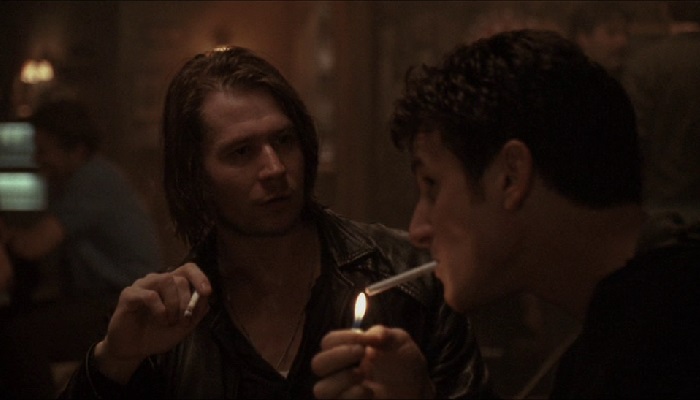
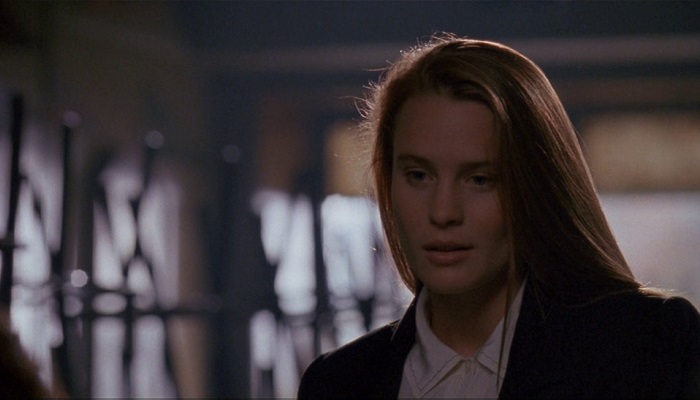
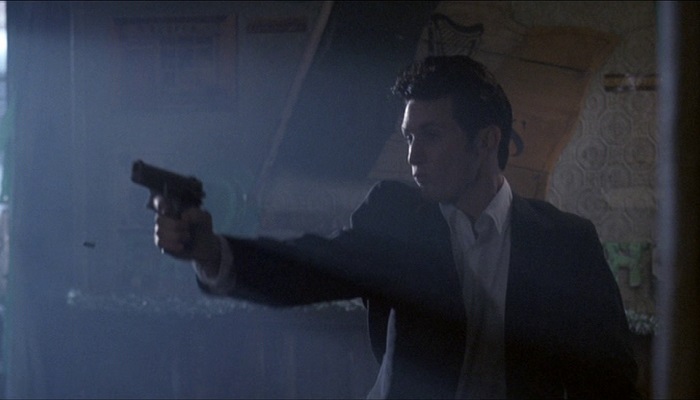
The movie begins with Irish cop Terry Noonan (Sean Penn) returning to his old neighbourhood – Hell’s Kitchen, now named Clinton (!) – to perform an undercover job. His mission is to infiltrate the Irish gang run by Frankie Flannery (Ed Harris) and terminate it before a dangerous alliance is formed with the Italian Mafia. His former best friend, Frankie’s brother Jackie (Gary Oldman), is also a member of the gang. Noonan also rekindles an old flame with Kathleen, sister of the Flannery’s. He is quickly torn between his loyalty to his friends and his official mission.

The story may sound a little cliché, which it is, but State of Grace does have a couple of surprises to offer. What makes the film really work is the striking environment it shows and the flesh and blood characters that live in it. Poverty, crime, drugs and alcohol tore this neighbourhood apart. The misery caused by this is in these characters’ DNA and determines everything they do.

A proper gangster movie usually has a crazy, hot headed, loose cannon character (think Joe Pesci’s Tommy in GoodFellas). In this film, Gary Oldman plays that role. His Jackie is one seriously disturbed – and often funny – wacko. His performance is the best thing about State of Grace, but the other cast members are excellent as well. Robin Wright adds to the heart of the film as a caring young woman who wants to improve things, but can’t – not with these people in her life. Penn is also solid in the lead as the conflicted Noonan and so is Harris as the ice-cold gang boss Frankie Flannery.

The movie ends with a The Wild Bunch-like shoot-out. This might be a bit of an odd choice for ending this particular movie with, but it still works nicely. Director Joanou uses beautiful, slow motion bullet hits mixed with St. Patrick Day parade images to create a terrific and blood boiling sequence. If you are looking for a gangster film that almost matches Scorsese’s finest work, look no further.

Rating:

Quote:
FRANKIE FLANNERY: “If I don’t call you by two o’clock or Pat don’t call you, you come in and tear ‘em apart, the spaghetti still on their spoons.”

Trivia:
The word ‘fuck’ and variation are used 210 times in the film.

GoodFellas (1990)

‘Three Decades of Life in the Mafia’

Directed by:
Martin Scorsese

Written by:
Martin Scorsese (screenplay)
Nicolas Pileggi (book ‘Wiseguy’ / screenplay)

Cast:
Ray Liotta (Henry Hill), Lorraine Bracco (Karen Hill), Robert De Niro (James ‘Jimmy’ Conway), Joe Pesci (Tommy DeVito), Paul Sorvino (Paul Cicero), Frank Sivero (Frankie Carbone), Tony Darrow (Sonny Bunz), Mike Starr (Frenchy), Frank Vincent (Billy Batts), Chuck Low (Morris ‘Morrie’ Kessler)

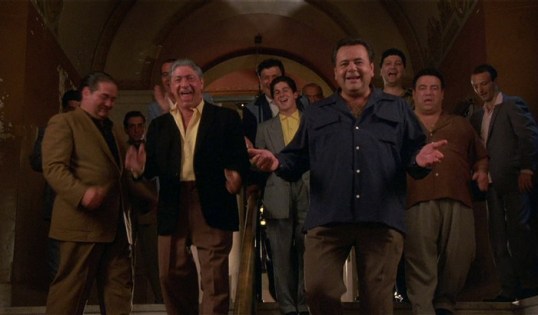
GoodFellas tells the story of the 30 year lasting involvement of the Irish/Italian Henry Hill (Liotta) in the New York Mafia. It is based on the real life story of Henry Hill who went into the witness protection programme and described his experiences in the bestseller ‘Wiseguy’ by Nicolas Pileggi. Scorsese starts his movie with a most memorable scene playing in the seventies. The brutal murder of Gambino mobster Billy Batts at the hands of Hill’s feared associates Jimmy Conway (De Niro) and Tommy De Vito (Pesci). ‘As far as back as I could remember I always wanted to be a gangster’ is Hill’s classic voice-over response. Later in the film when we return to this scene, we will learn that this is the point where things are taking a downturn for Henry and his pals. Batts was a made guy and killing him could get them all whacked when discovered.

After this extremely violent scene of great impact we are glued to our seats and the film takes off at an enormous pace. We flash back to the fifties, a glorious time for the wiseguys in Brooklyn. In a sort of documentary style Hill describes his fascination with the Mafia and how he worked his way up into that world of glory, power and violence. It isn’t until long before Hill becomes an accepted and even very popular associate of the most violent crew in the neighborhood. The crew is headed by Paul Cicero (Paul Sorvino). His mentor becomes Jimmy Conway, an Irishman who like Henry can never become a ‘made guy’ because of his Irish blood. They are respected because they know how to earn, the greatest virtue a wiseguy can have. With the respect they get, they gain in power. They never have to wait in line anywhere and when they enter a club they get treated like movie stars with muscle.

After Henry’s youth is covered, there are basically three distinctive parts that follow: the glory days, in which Henry and his enterprising friends make giant scores, live the luxury life and still appear to have somewhat of innocence left. In these days Henry also meets his future wife Karen who gets a voice-over of her own, commenting on the Mafia life from the wives perspective. In the part that follows things start to slip. Sloppy and often unnecessary murders take place, largely due to psychopath Tommy. Henry and Jimmy have to face a long prison sentence and drugs make their entry. The final part consists of Henry’s paranoid cocaine trip leading to his arrest and downfall as a mobster.

The beauty of GoodFellas lies partly in its innovative use of cinematic techniques that not only help to tell the story as effectively as possible, but add to the immensely entertaining experience that watching this film is. Scorsese uses as many tricks as the running time allows him: freeze-frames, tracking shots, jump-cuts, pov-shots and extensive use of voice-over. It all fits perfectly in the narrative. Not one image feels even slightly misplaced, not one note of music mismatched, not one delivery of dialogue that doesn’t look and sounds flawless and effortless. Scorsese makes us feel what the characters feel by cleverly using cinematic language and succeeding brilliantly in making us part of Henry’s world.

Then there is the authenticity of the film that is just plain brilliance. Scorsese had the opportunity to observe the wiseguys well in his childhood and is aided by the perfect cast and production designers to bring his vision to the screen. It looks and feels so real that you can almost smell the garlic on De Niro’s breath as he is whispering something in Henry’s ear. The dark Mafia hangouts contrast beautifully with the colorful New York scene as the brutal acts of violence contrast with the family birthdays, christenings and weddings. It is like watching real Mafia footage. The inner workings of the mob are explained in great detail. A fine contribution by author and journalist Nicolas Pileggi who co-wrote the script with Martin Scorsese.

Scorsese and his team have managed to include in this movie what must be the largest number of famous cinematic finds in at least a decade; the mind-blowing steadicam shot of Henry and Karen taking the backdoor of the Copacabana, the shot of Jimmy visibly contemplating the murder of wig-man Morrie, the improvised ‘do you think I’m funny’ scene and the Layla montage of bodies of Lufthansa heist accomplices being found all over the city. Just to mention a few.

In basis, GoodFellas follows the classic rise-and-fall narrative of the gangster film, but in the process recreates an entire narrative technique breaking every rule in the book as it goes along. Storywise it differentiates itself from films such as The Godfather by strictly focusing on the street-level guys. It employs techniques to make you root for the bad guys. Just like the character Jimmy does in the movie. Where drug trade is firmly ruled against by Don Vito Corleone in The Godfather, it does indeed cause the demise of the protagonists in GoodFellas. The last half hour is one bad-ass cocaine trip experienced by Hill. Edited with enormous pace and dynamics.

It is hard to say that Pesci steals the show as hot-headed Mafioso because all the performances are so great. But Pesci certainly portrays the most relentless mobster in film history and he justly won an Oscar for the role. De Niro shines in a role more in the background. His behaviorism in the film is so detailed that only that demands multiple viewings. Liotta is the perfect leading man, charismatic and absolutely believable as the likable wiseguy Henry. Lorraine Bracco, as Henry’s counterpart Karen, gives an equally enjoyable and fitting performance.

Altogether GoodFellas really is a masterpiece. Everything about it is stylish and fascinating. It is a richly detailed look into the Italian underworld making us alternately feel fascination and repugnance for the gangsters. The atmosphere is so great that you can watch this film over and over just for the sheer joy and level of experience it lends to. It is the ultimate piece of pop cinema out there. Brilliant at so many levels and some of the finest hours of cinema in my life.

Rating:

Quote:
BILLY BATTS: “Now go home and get your fucking shine box!”

Trivia:
Voted #1 in the 100 Greatest Movies Of All Time List from Total Film in November 2005. You know why? It was out of respect!

Read also: Wiseguy Guide for Rookies

Wise Guys (1986)


‘What kind of guys gamble with the boss’s money, swipe a killer’s Cadillac, and party on the mob’s credit card?’

Directed by:
Brian De Palma

Written by:
George Gallo
Norman Steinberg

Cast:
Danny DeVito (Harry Valentini), Joe Piscopo (Moe Dickstein), Harvey Keitel (Bobby DiLea), Ray Sharkey (Marco), Dan Hedaya (Anthony Castello), Lou Allano (Frank ‘The Fixer’ Acavano), Julie Bovasso (Lil Dickstein), Patti LuPone (Wanda Valentini), Antonia Rey (Aunt Sadie), Mimi Cecchini (Grandma Valentini)

The reason GoodFellas isn’t titled Wise Guy – after the book it’s based on – is that this film, a mob comedy by none other than Brian De Palma, got there first. It starts with Harry Valentini (Danny DeVito) doing a Travis Bickle impression in front of the mirror. This tells us everything we need to know about his character: he tries to act tough but is really just an errand boy for the local New Jersey mafia, alongside his friend and next-door neighbor, the Jewish Moe Dickstein (Joe Piscopo).

These two are the laughingstock of the crew led by Anthony Castello (Dan Hedaya). They’re stuck with humiliating tasks: doing groceries, testing a new bulletproof vest, and starting the car rigged with explosives.

When they’re forced to place a bet for the boss, compulsive gambler Harry bets on the wrong horse, assuming Castello’s pick would lose. Turns out the race was fixed, and now they owe him 250,000 dollars. As punishment, the boss orders them to kill each other. The wise guys catch wind of this and flee to Atlantic City, desperate to escape their predicament.

De Palma – known for suspense and gangster classics – had made comedies before, like Greetings and Hi, Mom!. While certainly no masterpieces, he developed his own style, and some jokes land: like the sped-up shot of the entire street fleeing when Harry starts the rigged car, or when Harry and Moe deliberately wreck the Cadillac they stole from a hated crew member.

It’s curious, though, that between making two of the decade’s greatest gangster films – Scarface (1983) and The Untouchables (1987) – De Palma made this pretty mediocre mob comedy.

Critics largely panned it, but Roger Ebert and Gene Siskel loved it. Ebert gave it three-and-a-half stars out of four, writing, “Wise Guys is an abundant movie, filled with ideas and gags and great characters. It never runs dry.” Siskel awarded it a perfect four stars, raving, “Big laughs, foul language to the point of absurdity, and one hilarious, screaming performance atop another combine to make Wise Guys one of the funniest times you will have at the movies this year.”

You’ll have to see for yourself if you’re one of the few people to agree.

Rating:

Quote:
HARRY: “Let’s put this $10.000 on my Baby to win. Or do you wanna die in Newark?”

Trivia:
Martin Scorsese’s parents – Catherine and Charles Scorsese, who are also in other gangster films like GoodFellas and The Godfather Part 3 (only Catherine) are featured as birthday guests.