Double Bill #11: The Truman Show & The Matrix

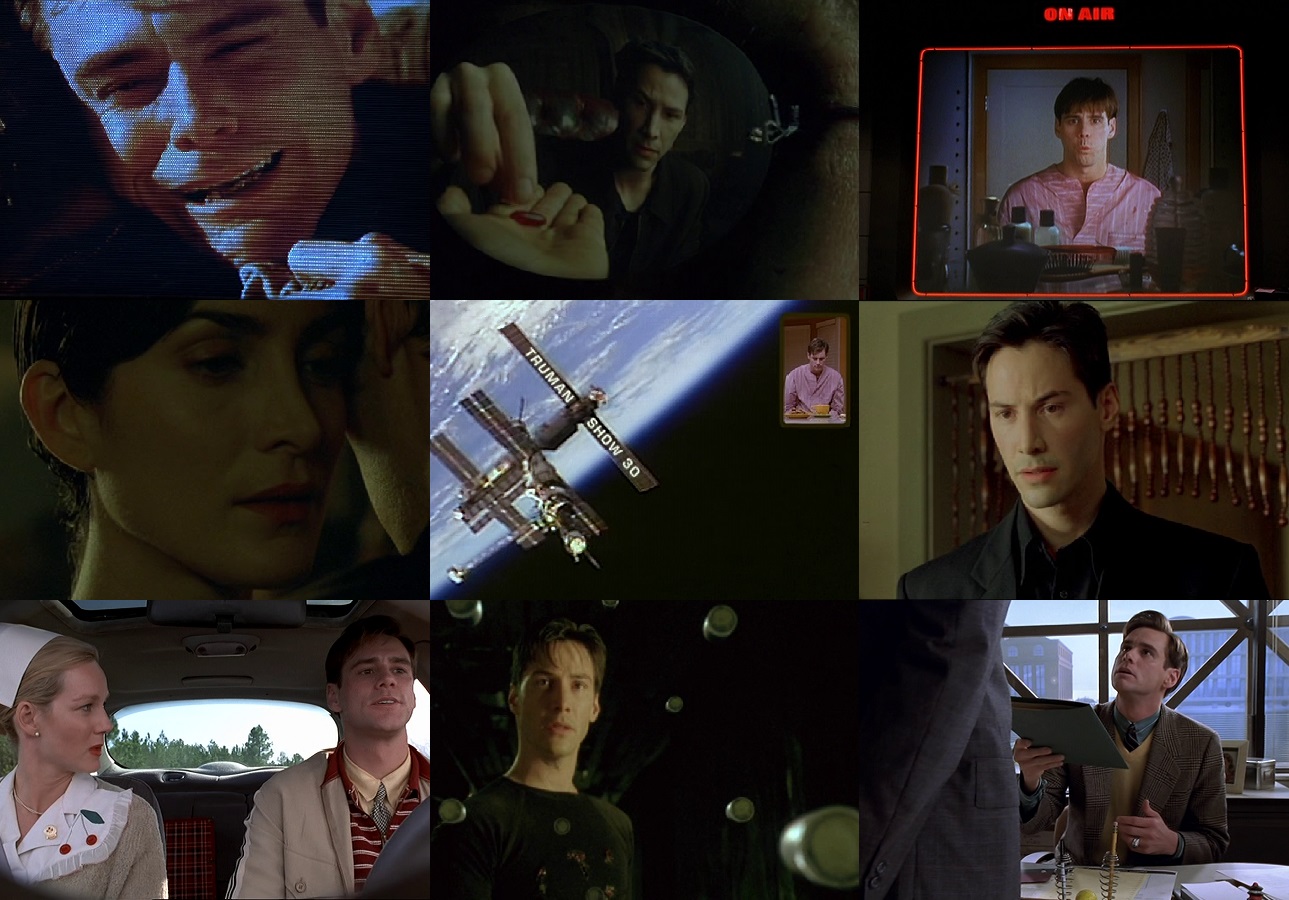
Two masterpieces from the late ’90s, The Truman Show (1998) and The Matrix (1999), both revolve around protagonists who discover they’ve been living in an artificial reality. In The Truman Show, Truman Burbank (Jim Carrey) realizes that his entire life has been a carefully orchestrated television show, where everyone around him – his wife, parents, and best friend – is merely an actor. Similarly, in The Matrix, Neo (Keanu Reeves) learns that humanity is trapped in a simulated reality controlled by artificial intelligence, with people’s minds imprisoned while their bodies serve as mere power sources. In Truman’s case, the man behind his imprisonment is Christof (brilliantly portrayed by Ed Harris), a visionary television producer who will stop at nothing to maintain control over Truman’s life, ensuring the continued success of his wildly successful show. Neo, on the other hand, faces a more intangible and insidious enemy, namely rogue artificial intelligence. In the first film, this AI is represented through sinister agents, with Hugo Weaving delivering an unforgettable performance as Agent Smith. Both films captivate as they depict the journey of discovery – watching Truman and Neo slowly unravel the truth about their worlds is nothing short of enthralling. The moment of revelation in each film remains awe-inspiring, evoking goosebumps even after repeated viewings. Truman’s world, we learn, is enclosed in an enormous dome, a massive set visible from space, while Neo’s reality reveals him as a human battery in a sprawling field of organic towers, where infants are cultivated as power sources for the AI’s machinery. Interestingly, both films imbue the protagonists’ names with deeper significance. Truman is the only ‘true man’ in his artificial world, while Neo is an anagram of ‘ONE’, symbolizing his status as the singular anomaly within the Matrix, with the potential to bend its rules. Neo’s discovery of his unique abilities leads to some of the most iconic moments in cinematic history. In the end, both The Truman Show and The Matrix conclude with their heroes breaking free from their respective confinements, delivering an exhilarating sense of liberation. It’s a triumphant and cathartic experience for the audience, as well – leaving us with the best feeling in the world.
Read also: The Matrix And The Awakening To True Reality

A Scanner Darkly

Director: Richard Linklater
Written by: Philip K. Dick (novel), Richard Linklater (screenplay)
Cast: Keanu Reeves, Winona Ryder, Robert Downey Jr., Woody Harrelson

Year / Country: 2006, USA
Running Time: 100 mins.

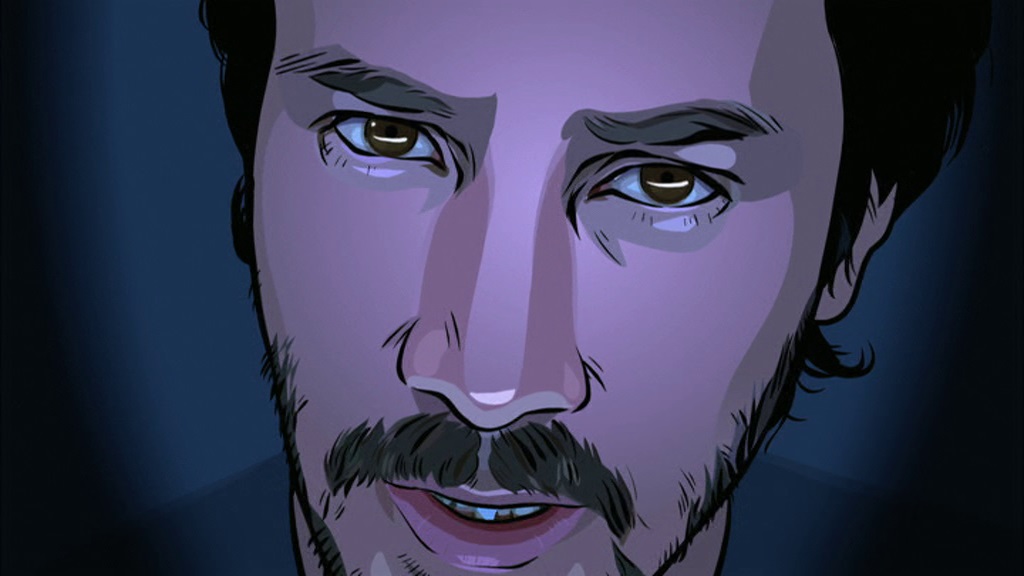
A Scanner Darkly, Richard Linklater’s adaptation of Philip K. Dick’s semi-autobiographical novel about a futuristic undercover agent who gets addicted to the drug ‘Substance D’ during a drug epidemic in Orange County in 1994, opens with Rory Cockrane’s junkie character being tormented by bugs that keep respawning on his body and face. It sets the tone of the film right away. This movie, set in a near-future dystopia and police state, seems to be mostly about the frightening downsides of a drug habit.

Typical for Dick, it is also about losing one’s identity as heavy users of Substance D, like main character Bob Arctor (Keanu Reeves), typically develop a serious brain impairment. The movie was shot digitally and then animated using rotoscoping technique. This visual style, also used in Linklater’s Waking Life, fits this movie perfectly. Apart from the police characters’ use of ‘scramble suits’, which are suits that change their appearance and voice every microsecond to hide their identity, this is not really a science fiction film. The story – of which there is not much really – is kind of hard to follow, but thanks to the terrific visuals and strong performances by the main cast it is still captivating. Robert Downey Jr. is especially on a roll here.

After The Matrix, Keanu Reeves is on another mind trip here (he literally takes a red pill at one point), but while The Matrix delivers a crystal clear concept, what A Scanner Darkly tries to do, plotwise or thematically, remains pretty much… well… in the dark. What the movie does very well though is portray the depressing hopelessness of being stuck in a community of junkies, with all the panic, pain, fear and paranoia that comes with it. It is admirable that Linklater stayed faithful to Dick’s source material, and did not try to turn it into a Hollywood movie. But maybe this is the one book of the famous sci-fi author that could have used some clarification. Now it remains quite a confusing affair, albeit a mesmerizing one.

Rating:

Biography: Richard Linklater (1960, Houston) is an American film director, screenwriter and producer. He was among the first and most successful talents to emerge during the American independent film renaissance of the 1990s. Suburban culture and the passage of time are big themes in many of his movies, some of which are set during one 24-hours period, including his successful ‘Before’-trilogy with Ethan Hawke and Julie Delpy. He is married to Christina Harrison and they have three children, including Lorelei who played a large part in Linklater’s much praised movie Boyhood.

Filmography (a selection): It’s Impossible to Learn to Plow by Reading Books (1988, short), Slacker (1990), Dazed and Confused (1993), Before Sunrise (1995), The Newton Boys (1998), Waking Life (2001), Tape (2001), School of Rock (2003), Before Sunset (2004), Fast Food Nation (2006), A Scanner Darkly (2006), Me and Orson Welles (2008), Before Midnight (2013), Boyhood (2014), Everybody Wants Some (2016), Apollo 10 1/2: A Space Age Childhood (2022)

The Verdict: John Wick: Chapter IV

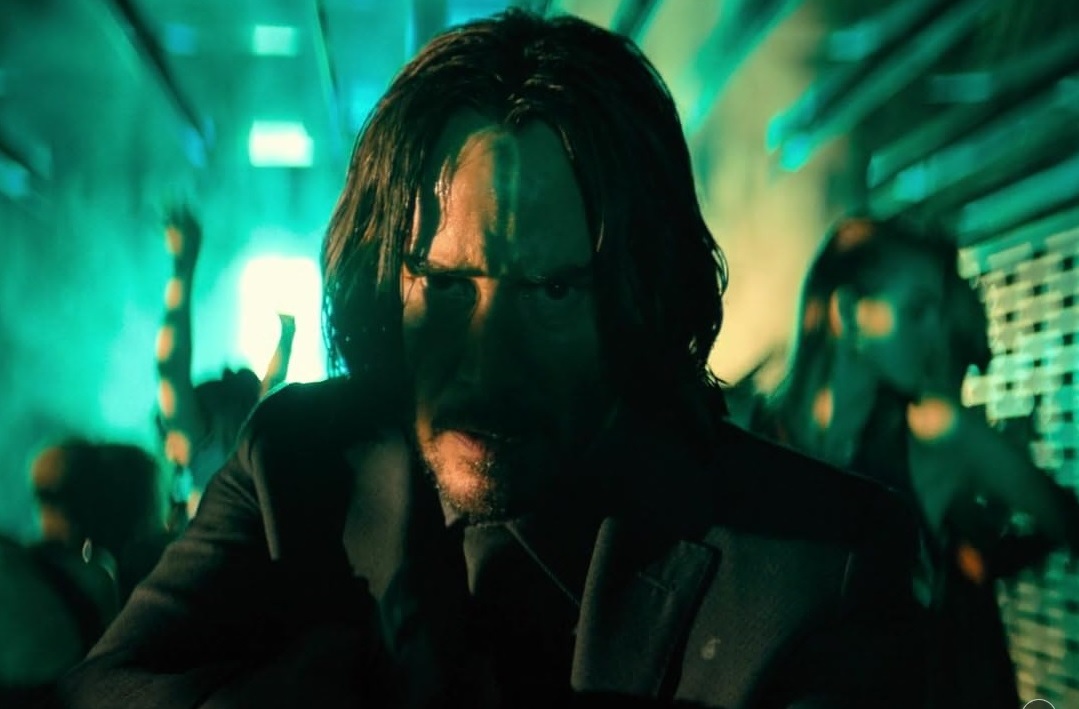
I had a friend in the early zeroes who, when we would send him over to the video store to rent a movie, he would surely come back with the dumbest, most stupefying action movie sequel ever produced. I don’t see this friend any longer, but I am pretty sure John Wick: Chapter IV will now be his favorite movie of all time. The first John Wick movie was no masterpiece, but it was a decent action flick that had some of the elements needed to enjoy a movie of this kind. Elements that are completely lacking in part IV: a story, humor, tension (John Wick can fall off any building and survive) or emotion (if he would get killed, so what?). All it does have is endlessly boring video game action with the same type of kill being repeated over and over, and this for an almost insulting 2 hours and 49 minutes. Is there nothing positive to say? Some of the actors are in good shape and many of the visuals are pretty impressive. There is some talk of the death of cinema these days, and John Wick: Chapter IV certainly supports the case of the pessimists perfectly. Hollywood screenwriters that lack original ideas and producers pumping a depraved amount of money in a completely mindless sequel is definitely what John Wick: Chapter IV brings to the High Table. And with a fifth movie in the works and a television show already out, this trend is not likely to be reversed any time soon.

John Wick: Chapter IV is now available on Amazon Prime

The verdict: to stream or not to stream? Not to stream

Vacation Reading: Three Philip K. Dicks

A Scanner Darkly (1977)

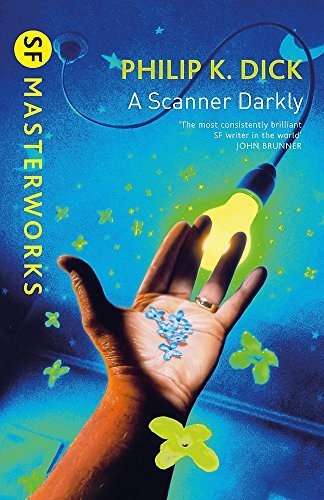
Semi-autobiographical novel about Dick’s experiences of living with a group of dope users. The main character is Bob Archtor, an undercover agent who gets addicted to a futuristic drug (the novel is set in 1994 in Orange County) called ‘Substance D’, a drug that soon leads to serious brain malfunction, and Archtor starts to lose his identity. Dick wrote it after a period in which he wasn’t able to produce any fiction due to drug consumption, so this novel functioned as a turbocharger of sorts. It contains flashes of brilliance, especially when it commentates on the lifestyle of heavy drug users, but as a whole it is quite a dull read, especially for a terrific writer as Dick. Turned into a 2006 movie by Richard Linklater, starring Keanu Reeves, Woody Harrelson, Winona Rider and Robert Downey Jr. The book ends with a list of all the dopers Dick hung out with who had died since then. It is quite a long list.

The Man in the High Castle (1962)

Who is the Man in the High Castle? It is the author Hawthorne Abendsen who wrote a subversive novel in which the allies won the Second World War. You see, this classic novel by science fiction legend Philip K. Dick is set in an alternative America which is governed by the Nazi’s and Japanese who have won WWII. In this world, American culture is quickly vanishing from existence, and an artificial America is rising. The novel follows various American, Japanese and European characters who try to make their way in this reality, thereby using the Taoist book ‘I Ching or Book of Changes’ as their guidance. The fascinating thing about ‘The Man in the High Castle’ is how believable Dick has crafted this alternate world. It makes the reader realize that we live in such a world ourselves, the result of countless choices and actions. We take it for granted, but everything could easily be very different. Turned into a television series by Amazon in 2015.

VALIS (1981)

‘VALIS’ follows the adventures of Horselover Fat (great name for a character!), an alter ego of the writer. This later, partly autobiographical book, is about Dick’s religious experiences. VALIS stands for Vast Active Living Intelligence System and represents the writer’s vision of God, which is that God is actually one huge macro-mind that connects everything. Unfortunately, the book – that was published one year before his death – contains not much more than endless philosophizing about the divine, madness and alien intelligence. Yes, Dick certainly had some fascinating thoughts and ideas, but they lack clarity here. And a plot is also sorely missing in ‘VALIS’. I’m afraid I am more a fan of Dick’s earlier works, like the phenomenal ‘Ubik’. ‘VALIS’ is part of a trilogy that also included ‘The Divine Invasion’ and ‘The Transmigration of Timothy Archer’, his final novel.