In Brussels (1)

“You know what the funniest thing about Europe is? It’s the little differences. I mean, they got the same shit over there that we got here, but it’s just there, it’s a little different.”
― Vincent Vega, Pulp Fiction

[14-05-25] Jesus, Brussels again. I’ve been making this godforsaken pilgrimage for over a year and a half now — a regular descent into the bureaucratic underworld — ever since I signed on as a freelance journalistic gun-for-hire for some lean and hungry M&A startup out of Belgium. Side hustle to my main gig as Chief Editor for the more ‘respectable’ Dutch M&A outfit.

I checked into a hotel that looked like it hadn’t seen a fresh sheet since the Euro was introduced. A tight-budget startup means no minibar, no frills, no apologies. I scouted the bathroom for survival tools — wound up dumping the garbage can and using it as a makeshift ice bucket. Cold water from the shower, the poor man’s fridge. Cracked open a beer. Sat by the window and watched the Vlerick Business School across the street where I would attend an event later on – like a man waiting for the electric chair.

This city… it pretends to be something, doesn’t it? Capital of the European Union, epicenter of bureaucratic posturing. The flags are everywhere, waving like they know something we don’t. And the police — too many of them. Not the fun kind either. The serious, jaw-clenching, armored kind. I had the creeping suspicion war was sneaking in through the back door. Putin’s slithering shadow stretching over Europe, and these people — god bless them — are busy sipping wine and debating organic cheese subsidies.

We’re about one autocratic handshake away from the world catching fire, and no one’s really ready. Not here. Not back home. The Americans? Jesus, we’ve got that orange carcass still stinking up the joint. The man’s a threat to civilization, and I don’t say that lightly. But dictators don’t die quietly. They collaborate. And when they do, history tells us what comes next: fire, blood, and desperation.

Still, I get by here. Brussels is manageable for a Dutchman with a functioning liver and low expectations. The French is thick in the air, but there’s an international wash over it all. In M&A circles, at least, the Belgians tolerate us — maybe even prefer us to their own Walloon kin. Some speaker at the conference said Flemish dealmakers would rather do a deal in Amsterdam than in Liège. Culture clash, he said. Closer to the Dutch. I nodded. We’re all weirdos in tailored suits.

But under the gloss? This city’s bleeding. Homeless people tapping on your windshield at red lights, begging for spare change while banks loom overhead like glass castles. The façades look slick, but peer behind the curtain and you’ll see peeling paint and ignored rot. Still, Brussels feeds you. Every kind of restaurant. Every shade of hunger. Less charm than Antwerp, maybe, but more bite.

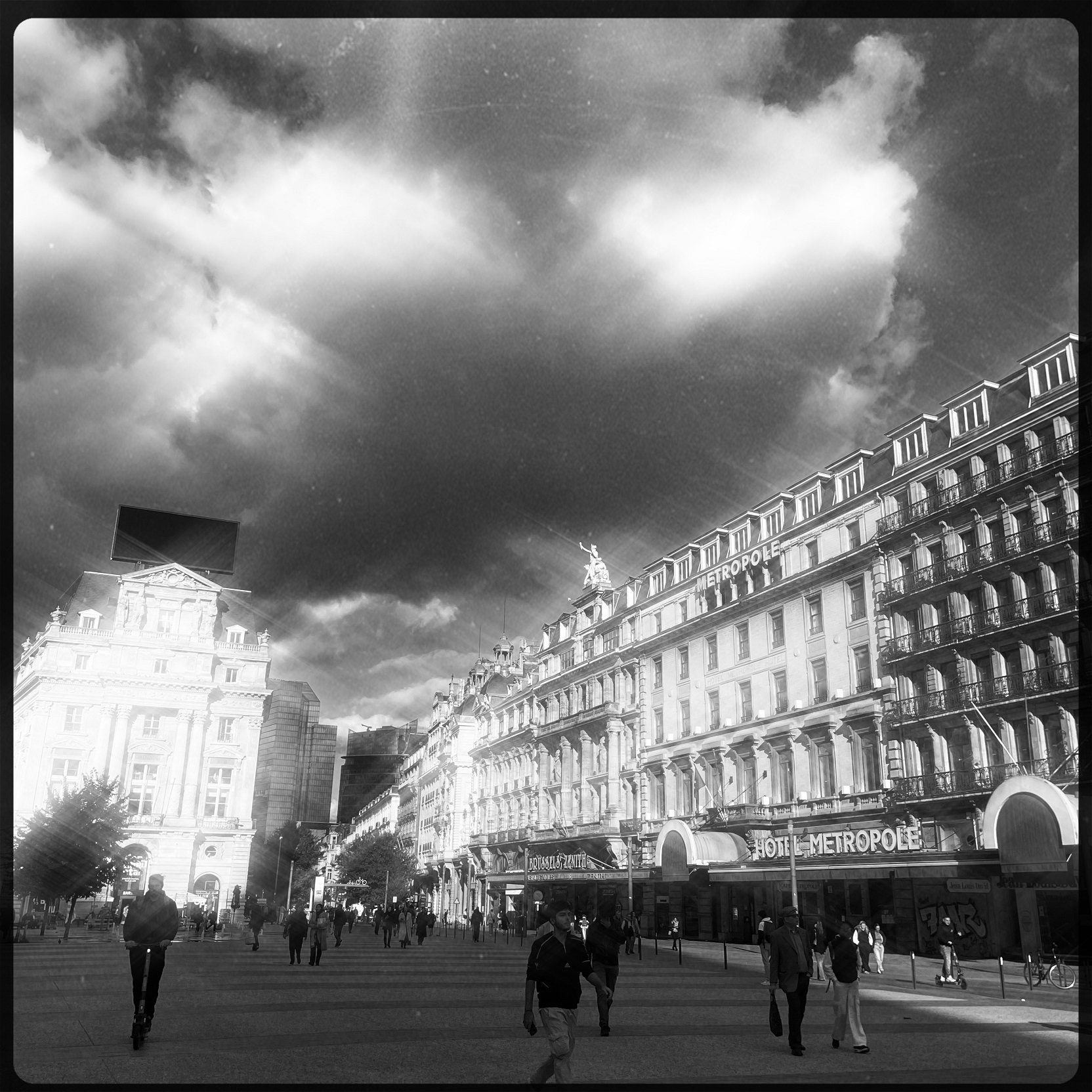
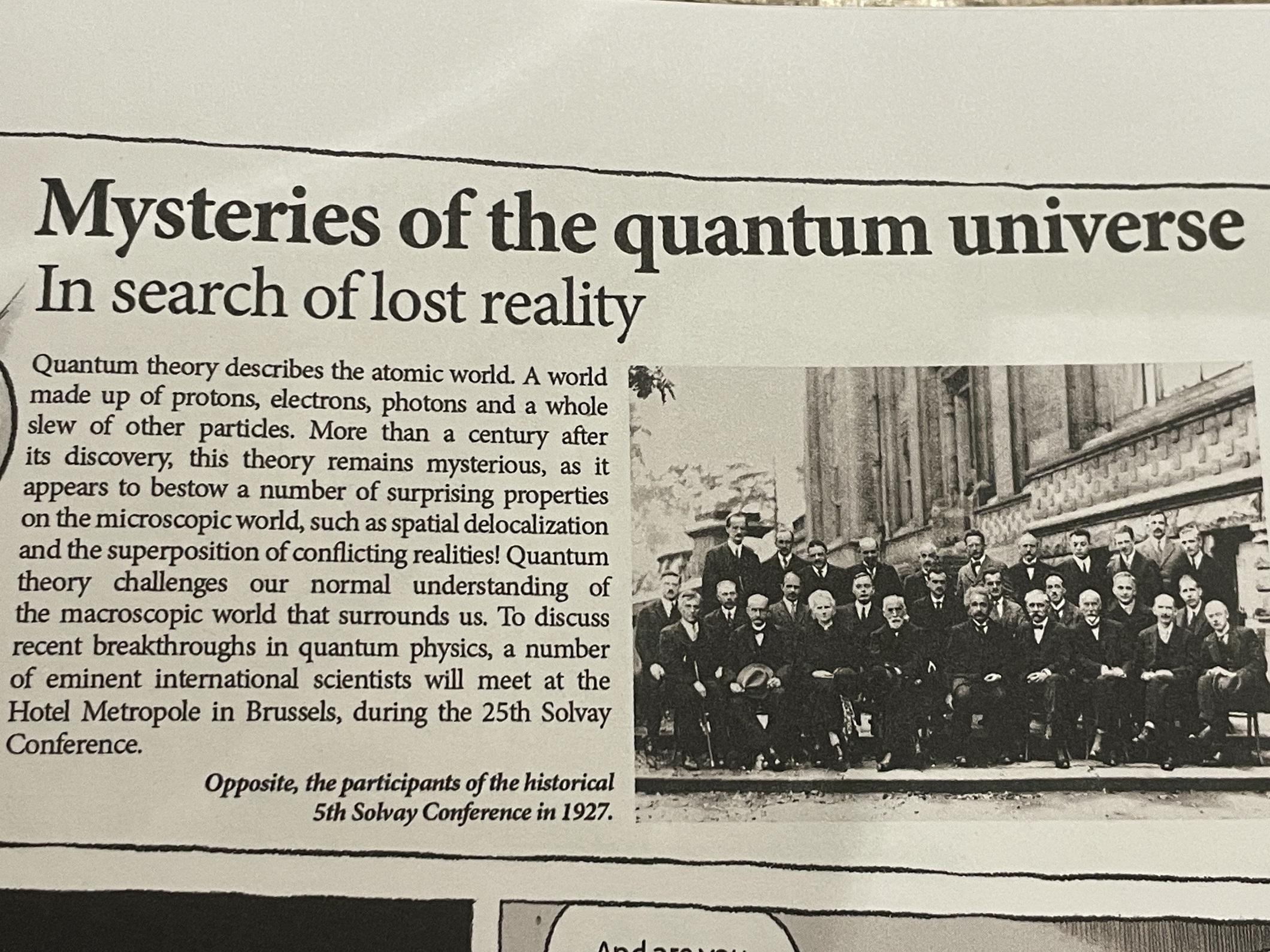
After the conference, I drifted toward the ghost of the Metropole Hotel at Brouckère Square. Closed for renovations. They say it’ll open again later this year. Last time I was here, I snapped some photos — a kind of spiritual homage. You see, in 1927 this place hosted the Solvay Conference — Einstein, Bohr, quantum mechanics, the whole mad circus of theoretical physics. And I plan to return in 2027, one hundred years later, to write where the debate has gone since. An essay. A novella. Something unhinged but honest. Because guess what? The issue is still far from settled.
That thought spiraled into another: Free-Consciousness, my pet project. My Frankenstein. I launched the site last year after seven long years of mental spelunking. Wrote the big one — my theory on consciousness and reality. Put it out there. Hit ‘publish’. Thought the gods would not take notice. They didn’t. And that’s the rub. The writing is the easy part. It’s the screaming into the void that eats you.

Nobody tells you how much blood promotion takes. Daily work. Daily hustle. I’m not doing that. I admit it. I’ve got too many hobbies, too many dreams, and too little interest in turning my brainchild into a full-time marketing campaign. So it sits there. Like a loaded gun on the nightstand. Waiting.

But I keep moving. Blogging keeps the rust off. And video — that’s the new itch. I’m starting to get a taste for it. No production machine yet, but what’s coming down the pipeline is damn good. Trust me. There’s energy there. More momentum than Free-Consciousness, for now. But I haven’t given up on either. Not yet.

Even if no one reads, clicks, or shares — it’s worth doing. Soul in the Game, as Taleb says. Not skin. Soul. You do it because the act is holy. You put your guts on the page and make it sing. I bring that same madness to everything — journalism, blogging, my family, my cats, my dreams, even my juggling. Yes, juggling. Try it while lucid dreaming. It’ll change your whole view on reality.

Later that night, the pull of divine intoxication brought me to Beer Central. Oh man. The Belgians. Say what you want about the country, but these motherfuckers can brew. 333 bottles on offer. I tried four: Floreffe, Dirty Talk, Gouden Carolus, and something I can’t even name anymore. After that I stumbled back to my crusty hotel, half-watched an episode of Andor, and blacked out somewhere between galactic rebellion and existential fatigue.

Brussels. Beautiful, broken, bloated Brussels. I would be back soon. The madness continues.
An Atheist Goes To Heaven

Dan Dennett opened his eyes, and he found that he was in a dazzling green landscape. He looked at himself, his body was completely intact. Even his long white beard was still there. Only his glasses were missing. Still, there was something different about him. His body was more radiant, like he was in some sort of lucid dream. He looked at his hands, as he had done often in lucid dreams, and bright light shone through them. He really was dreaming! Except then why wasn’t he waking up right about now? Lucid dreams were usually very brief experiences.

The last thing he remembered was being in the medical center with his wife. His lovely Susie whom he loved so so much. His interstitial lung disease had drained him of his last powers and he felt like he was slipping away into a deep sleep. Eternal sleep. He looked at his wife one last time. “I love you…” And that was it….

And now he was here, or so it seemed. But what was here? It was not in Maine, that’s for sure. He looked around him and saw the most beautiful trees. They were cedar trees, he thought. But way bigger than he had ever seen them before. There were also huge bushes of flowers in yellow, blue, pink, orange and purple. Dan tried if he could float through the air and found that he actually could. He followed a narrow path alongside a small creek with round white shining stones illuminating the way. There were small clouds also, really close to the ground, and when he passed through them they felt like silk to his skin. The creek made the most peaceful sound he had ever heard and he could also hear birds chirping.

But how can my consciousness still be intact?, Dan thought. During all of his career as one of the most widely read and debated American philosophers, he had proposed that consciousness was constructed by tiny little machines inside the human brain. But he was pretty sure his physical brain would by now be no longer functioning. Had the dualists been right after all? That consciousness existed in a different realm as the brain? But no, he still had his body. He was looking right at it and it felt more real than it had ever felt. What about these idealists, these woo woo cosmic consciousness peddlers? Was mind indeed the primal substance of the universe? There was still some doubt in Daniel’s mind.

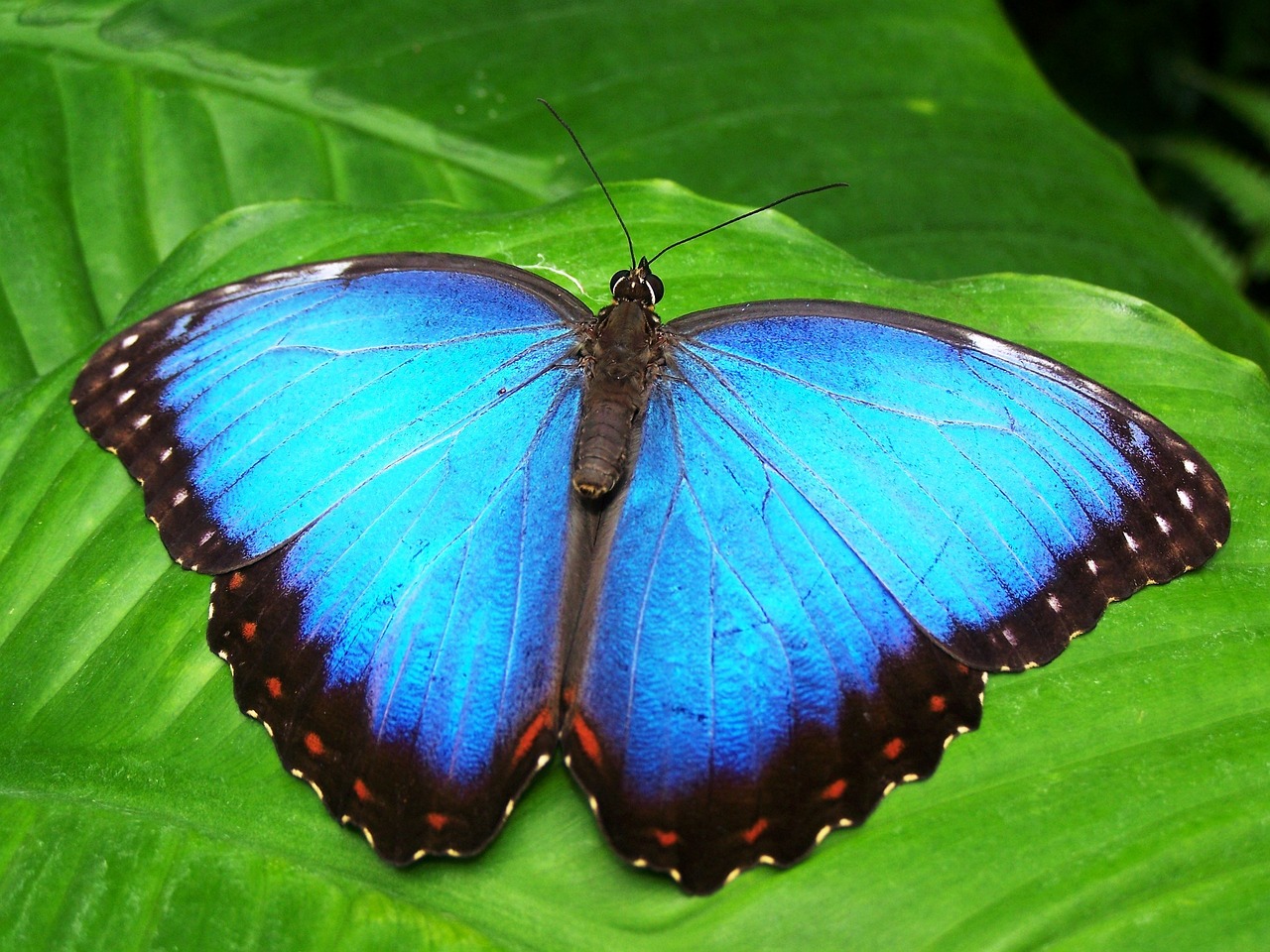
He reached a valley surrounded by beautiful mountains covered in flowers. Dan was completely in awe of the astonishing scenery. It was more awesome than anything he had ever seen in his life. Then he gasped as he was approached by a magnificent blue butterfly the size of a man. It came up to him and said in a clear voice: “I am so happy to see you, Dan. So very happy.” The bearded philosopher was shocked; he was now 100% certain he was not in Kansas anymore, or any other place on earth for that matter. “And who might you be?’”, Dan asked. “I am Christopher”, the butterfly replied. “Christopher Hitchens”. Dan’s jaw dropped a mile deep. Then he quickly recovered and he smiled the widest smile he had ever smiled. “Now jump on my back, my old friend”, the butterfly said. “We’ve got a lot to talk about.”

More about life after death: From Here To Eternity And Back Again. About Death In Mental Space

Hoe is het om… ?

De Amerikaanse filosoof Thomas Nagel (1937) werd bekend met zijn artikel What is it like to be a bat? (1974). Het is een kritiek op het reductionisme, de opvatting dat alles – inclusief onze geest – terug te voeren is tot fundamentele elementen. We kunnen een vleermuis volledig binnenstebuiten keren en alles over zijn fysisch-biologische eigenschappen leren, maar we zullen dan nog steeds niet weten hoe het voelt om een vleermuis te zijn; hoe het is om ondersteboven te hangen in een grot of blind in de nacht op insecten te jagen via echolocatie.

Nagel heeft gelijk. We kunnen onmogelijk weten hoe het is om een vleermuis te zijn of een ander levend organisme. Bewustzijn voelt uniek voor iedereen. Wij zijn allemaal het middelpunt van ons eigen universum. In een biocentrisch universum voelt dat niet alleen zo, maar is dat ook letterlijk wat er aan de hand is. We dragen het universum immers met ons mee waar we ook heengaan. Een vleermuis is, net zoals jij dat bent, een tijdelijke lokalisering van het superbewustzijn in onze spatiotemporale wereld. Zolang jouw lokalisering plaatsvindt, krijg je exclusief toegang tot unieke mentale content. Deze gedachtestromen en persoonlijke ervaringen zijn van ‘jou’ alleen en voor niemand anders beschikbaar. Dit geldt voor alle levende wezens. Zolang de lokalisering duurt, kun je niet weten hoe het is om je in een andere lokalisering te begeven. Een golf in een oceaan kan ook niet gelijktijdig in een andere golf zitten. Pas na de dood komt die mogelijkheid weer beschikbaar via mentale reïncarnatie.

Tot die tijd moeten we genoegen nemen met ervaringen in virtuele realiteit. Of we kunnen in een lucide droom transfiguratie toepassen en een mentale voorstelling maken van hoe het is om een tijger of een slang te zijn. Dit zijn beide echter slechts simulaties en dus geen volledig betrouwbare weergave van de werkelijke ervaring die de ego-geest overstijgt. Maar het is wel het dichtste bij dat we ooit kunnen komen bij de ervaring hoe het voelt om een ander levend wezen te zijn.

PS: Voor nu althans. In het boek ‘Ready Player Two’ is een technologie uitgevonden die het mogelijk maakt ervaringen op te nemen en deze via een machine-brein interface af te spelen.

Reality As an Act of Dreaming

Our reality is like a waking dream. It has rules, those we can study objectively (science). But they are not as steady as we may think. Quantum mechanics has revealed that beyond a steady appearance, there is only probability. It takes the act of observing to construct reality out of potentiality.

We used to think that God was the creator of our world and God resided outside of nature. Then Western science removed God, and we were left with nature without cause. Everything was explained as resulting from an extremely large series of random accidents. This worked partly, but many problems remained. Life and consciousness cannot be explained away by random accidents. Nor can randomness be a proper explanation for the immense ordered complexity we observe around us.

The solution was already present all along. Turns out that Eastern philosophy was closest to the edges of truth we can ever hope to get. God is not outside of nature. God IS nature. And since we are part of nature, we are also part of God. We are the mental hubs in a participatory universe.

According to the famous physicist John Wheeler, the universe is a self-referential ‘strange loop’ in which physics gives rise to observers, who then give rise to meaning – establishing observers – participants who grant a meaningful existence to the universe. The world and consciousness are intermingled in such a way that they mutually co-arise in a deeper unified sphere of being. It is impossible to say which initially caused the other, as their relationship has no beginning in time. Their relationship is reciprocal – now one side and then the other acts as a cause. Through the conscious observer in the dreamlike reality, the universe becomes a lucid dreamer.*


From: The Goldilocks Enigma by Paul Davies

Uncountable small acts of observer-participancy have over eons built up the tangible appearance of the material world. As observers, there is no getting around the fact that each of us are participants in bringing reality into being. Wheeler: “I can’t make something out of nothing, and you can’t, but together we can”. The universe is a collective shared dream that is too seemingly dense and solidified for any one person’s change in perspective to transform, but when a critical mass of people get into alignment and consciously put together what I call our “sacred power of dreaming” we can, literally change the waking dream we are having.”*

As agents of cosmic evolution, we are being invited to contribute to the growing edge of the universe’s creative unfoldment into uncharted territory. This is truly evolution in action, as we discover that we can actively participate in our own evolution, and in fact are being called to do so. We become (or maybe we always have been, but just didn’t know it) a channel for the universe to automatically re-create itself in a novel and evolutionary way. Or maybe I am just dreaming.*

*Segments taken from: The Quantum Revelation by Paul Levy

Read also: How The Goldilocks Enigma Is Another Major Indication For A Consciousness-Based Universe