Sugar Hill (1993)


‘He wanted power. He wanted revenge. Now he just wants out.’

Directed by:
Leon Ichaso

Written by:
Barry Michael Cooper

Cast:
Wesley Snipes (Roemello Skuggs), Michael Wright (Raynathan Skuggs), Theresa Randle (Melissa), Abe Vigoda (Gus Molino), Ernie Hudson (Lolly Jonas), Leslie Uggams (Doris Holly), Larry Joshua (Harry Molino), Sam Bottoms (Oliver Thompson), Joe Dallesandro (Tony Adamo), Steve J. Harris (Ricky Goggles)

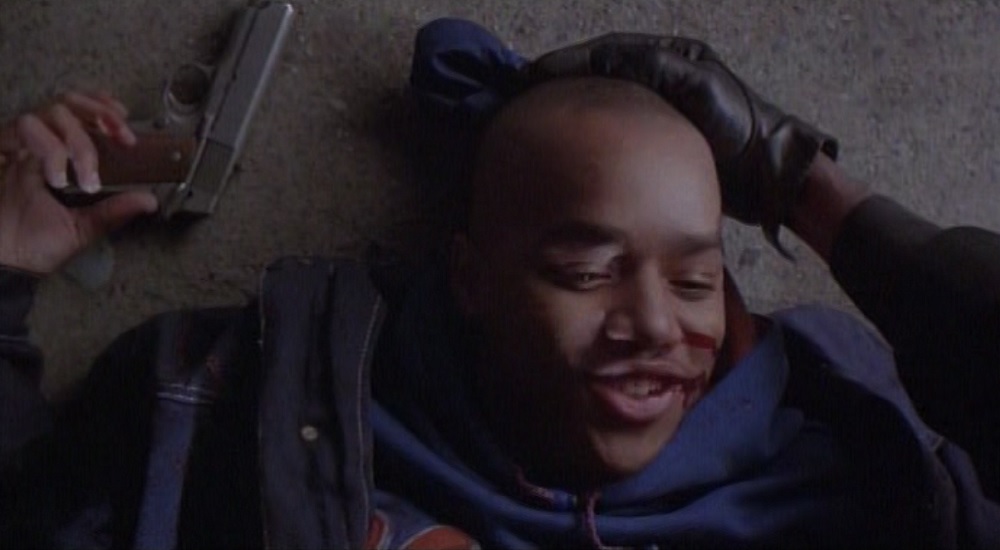
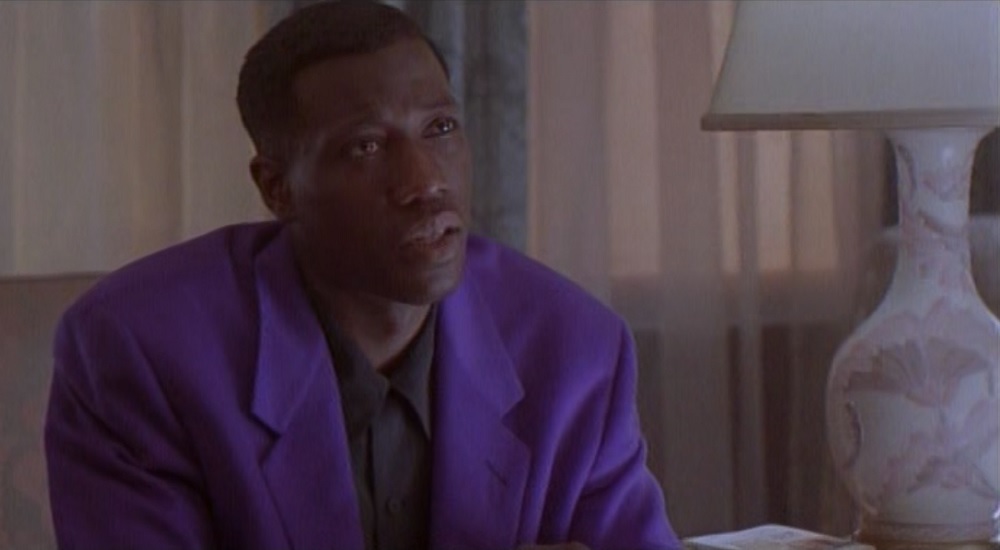
Sugar Hill feels like Wesley Snipes revisiting his New Jack City character, but through a more somber, tragic lens. The story follows two brothers, Roemello and Raynathan, whose childhoods were shattered by heroin addiction. Now adults, they control the Harlem heroin trade; a seeming success that’s revealed from the outset to be a slow-motion catastrophe.

The film’s message is unmistakable: drugs destroy everything they touch. The narrative begins and ends on a bleak note, anchored by the trauma that set the brothers’ trajectory. Raynathan (Michael Wright), who accidentally killed their mother with a ‘hot shot’, is emotionally broken, unstable, and haunted. Roemello (Snipes), meanwhile, built a drug empire in uneasy partnership with the Italian mob, led by Gus Molino (Abe Vigoda – yes, Tessio from The Godfather).

Although Roemello was once a hardened kingpin in the mold of Nicky Barnes or Frank Lucas, by the time the film begins he’s already looking for an exit. He’s grown weary of the life, and the movie focuses more on his yearning for redemption than on gangster swagger. This shift in emphasis makes Sugar Hill more of a tragedy than a straight crime thriller.

Roemello’s relationship with Melissa (Theresa Randle) gives him hope for a way out, but Raynathan’s instability threatens to pull him back in. On top of that, a new rival – backed by the Italians – escalates tensions and violence.

Visually, the film is impressive, and the cast is stacked with talent. However, Michael Wright’s perpetually tormented performance becomes overwhelming; his intensity, effective in Oz, feels exhausting here. On the other hand, Ernie Hudson (also from Oz) shines as Lolly, the ambitious newcomer.

In the end, Sugar Hill is a flawed but intriguing companion piece to New Jack City. Strong performances and striking cinematography work in its favor, but its relentlessly grim tone and absence of humor make the viewing experience heavy and, at times, draining.

Rating:

Quote:
ROEMELLO: “C’mon Lolly. Look at Harlem, seems like someone is always dying before their time.”

Trivia:
Also known as Harlem.
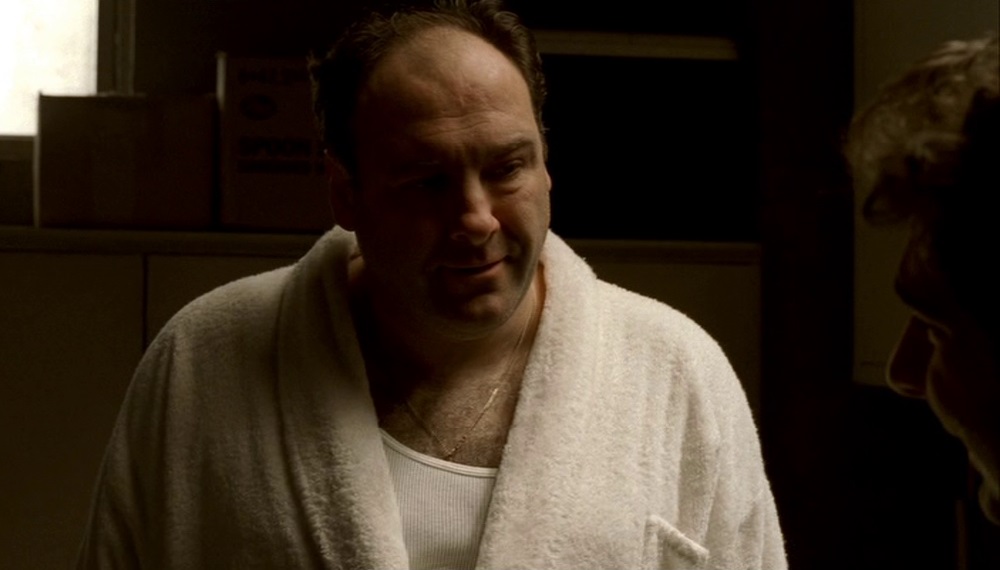
25 Years Ago On This Day, Pop Culture History Was Written

“It’s good to be in something from the ground floor. I came too late for that, I know. But lately, I’m getting the feeling that I came in at the end. The best is over.”
– Tony Soprano

On January 10, 1999, pay channel HBO launched the pilot episode of The Sopranos, the show that would change television forever. Before this ground breaking phenomenon, movies were far superior to television in terms of intelligent writing, production design and the actors involved. The Sopranos changed all of that.

The Sopranos wasn’t the first show to break all the rules’, write Matt Zoller Seitz and Alan Sepinwall in their book ‘The Sopranos Sessions’ (see also Oz and Twin Peaks for example), ‘but it was the first show to do that and still become a massive, enduring hit.’

But what is so good about The Sopranos? Maurice Yacowar in ‘The Sopranos On The Couch’, writes: ‘For openers: it’s brilliantly written, performed, and filmed. Each episode has the polish of an excellent feature film – with a tighter yet more complex, resonant script than most. The show is also relentlessly entertaining. The characters are engrossing, the plot twists astonishing but coherent, and the dialogue mined with ironies and poetic resonance quite beyond what we are used to hearing on the boob tube or even on the commercial cinema these days. Unique for a television series, details connect not just across the hour but across a season and beyond. The viewer has to dig for links and meanings beyond what’s spelled out on the surface and is often left with mysteries. That makes the show more like European cinema – and a complete departure for American television. At the same time, The Sopranos provocatively raises major questions about how and why we live.’

In 2021, I published the ultimate The Sopranos tribute. You can read the highlights from this tribute below:

And if you still haven’t seen the show, it is not too late! It is still available on HBO. Seriously, you’d be a douchebag to miss it.

TV Dungeon: Oz

(1997 – 2003, USA)

Creator: Tom Fontana
Cast: Ernie Hudson, Harold Perrineau, Lee Tergesen, J.K. Simmons, Dean Winters, Terry Kinney, Eamonn Walker, Kirk Acevedo

6 Seasons (56 Episodes)

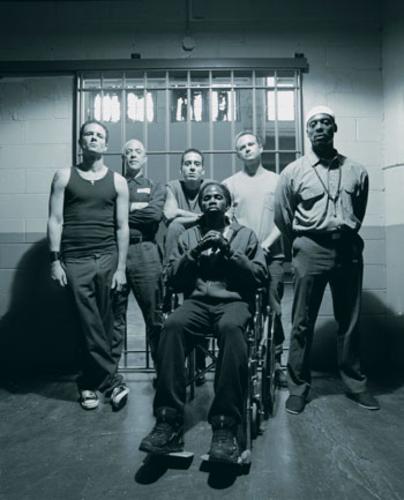
Welcome to Oz! A high security federal prison, called Oswald State Correctional Facility (‘Oz’ in slang). This series is set entirely in a section of this nightmarish prison called Emerald City, run by its creator Tim McManus. Em City is an experiment, whereby various criminal gangs of different ethnicity (blacks, Latino’s, Italian wiseguys, white supremacists, etc) are put together to live in a simulated society. To say that this experiment doesn’t run too smoothly would be somewhat of an understatement.

Because like outside of the prison, the aim of every criminal group or individual is to gain in power. When stripped of almost everything, other means must be used to achieve this, such as rape or violence. This quest for power runs through Oz like a red line. But there are other matters that the inmates pursue, like love, success or even redemption.

The problem is jealousy. Humans of whom everything is taken away, tend to get disagreeable about other people’s achievements. So whenever they sense a shred of happiness around another inmate, they will take the cause away indefinitely. This doesn’t only apply to prisoners, but to the guards as well. Like the one guard who gets a pro-basketball contract. His ankles are slices, putting him out of the game for good.

Plainly put, once you get into Oz, you’re a dead man. Sometimes literally. If Oz teaches us one thing, it is that inside Emerald City, anybody can die at any given time. Even main characters! The ones that manage to survive have to deal with the harrowing psychological effects of prison life. If they ever get out, they are likely to return. Sometimes by their own doing, or by the doing of a fellow inmate who likes to keep them around.

Absolutely hopeless.

Oz, that was there even before TV-gamechanger The Sopranos, is the show that put pay channel Home Box Office (HBO) firmly on the map. It differentiates itself from typical network shows by allowing things to unfold naturally. That means shocking content at times: rapes, gruesome violence, male frontal nudity and homosexual relations are not filtered out for the audience. That gives the series a very raw feel to it. It may be unpleasant at times, it is also very addicting.

What starts out as a realistic show, becomes more fantastical in later seasons. It is stunning either way. While the main goal of Oz, seems to be making a political statement, it also manages to provide superbly entertaining drama. This is mainly due to the brilliantly realized characters, both inmates and staff, that know how to surprise the audience every time.

Some of those characters are present from the start like Beecher, Schillinger, O’Reilly, Alvarez, Adabisi and Kareem Said. Logically their personal stories and relationships are the most fascinating, but what Oz also does very well is keeping the in- and outflow of inmates up to a pleasant level. It is not really possible to explain some of the characters’ stories as it would do injustice to the writing, but believe the reviewer: it is fascinating.

Watching Oz is basically like observing a monkey cage. There is a brawl every few minutes and the smartest inmates (best schemers) live the longest. If you’re up for great drama with a message, Oz is your fix. Just don’t get too attached to any of the characters.

De toekomst van het universum…

…ziet er nogal donker uit schijnt het…

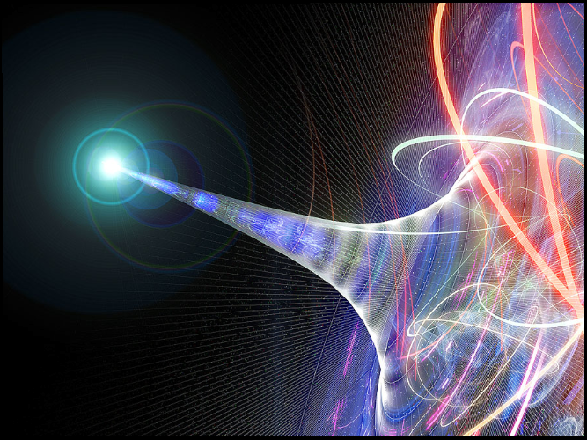
Dat zit zo: Voor de oerknal 13,7 miljard jaar geleden was er niks. Nou ja ‘niks’. Kan dat wel: niks? Het is in ieder geval niet voor te stellen. Ook een donker leeg universum is namelijk iets, en dat is dus schijnbaar de toekomst van het universum: Leegte. We hebben nu licht in het universum dankzij de vele sterren, waaronder onze eigen zon, maar dat licht kan helaas niet eeuwig blijven schijnen. Waarom niet?

Even terug naar die oerknal. Daarvoor was er wel iets, namelijk een ‘singulariteit’. Alle materie van het universum (een onvoorstelbaar grote hoeveelheid materie) samengeperst tot een oneindige compactheid. Toen kwam de oerknal die eigenlijk geen knal was, maar een snelle en continuerende expansie van het universum. De materie werd verspreid en vormde rond plekken waar veel zwaartekracht was sterren (wetenschappers zouden deze formulering waarschijnlijk afkeuren, maar laten we het simpel houden).

Toekomst Universum 2

Deze sterren waren in deze beginfase van het universum nog gigantisch groot. En grote sterren hebben een kortere bestaansduur dan kleinere sterren (circa 5 miljard jaar versus 10 miljard jaar). Niet dat kleinere sterren, zoals de zon, overigens zo klein zijn. De aarde past zo’n miljoen keer in de zon, dus dat is een aardige gasbol.

In ieder geval – bij de écht grote sterren (die dus nog een maatje groter zijn dan de zon) is het zo dat wanneer ze aan het einde van hun levensfase komen, ze exploderen. De materie van die ster wordt dan verder het universum ingeblazen, enzovoorts, enzovoorts. De beschikbare materie van het universum raakt zo steeds verder verspreid totdat sterren niet meer de massa kunnen krijgen die nodig is voor kernfusie. Er bestaan dan dus nog wel sterren, maar die zenden geen zichtbaar licht meer uit. Een donker universum dus…

Toen ik dit voor het eerst hoorde vond ik het zeer deprimerend. En ik ben niet de enige. Het was zelfs de motivatie voor de moord op één van mijn favoriete personages in de televisieserie ‘Oz’. Maar ik ben er anders over gaan denken. Want, alles in het universum verloopt circulair. Er zal dus weer een nieuwe singulariteit ontstaan, een nieuw universum geboren worden, en nieuwe vreemde wezens ontstaan zoals mensen. Misschien wordt ik ook weer opnieuw geboren in een nieuw 1980 bij mijn zelfde ouders in Heiloo. Het is allemaal mogelijk. De wetenschap kan alleen nog niet uitleggen hoe dit dan gaat gebeuren, maar dat is niet noodzakelijk. Het is gewoon zoals de natuur werkt. Dus:

Here comes the sun, do do do do.
Here comes the sun, and I say.
It’s all right.