
‘It’s all in the mind, you know?’
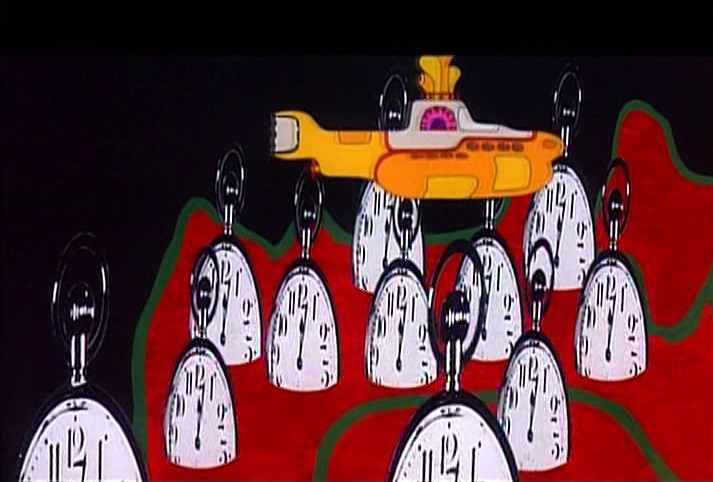
― George Harrison, ‘Yellow Submarine’
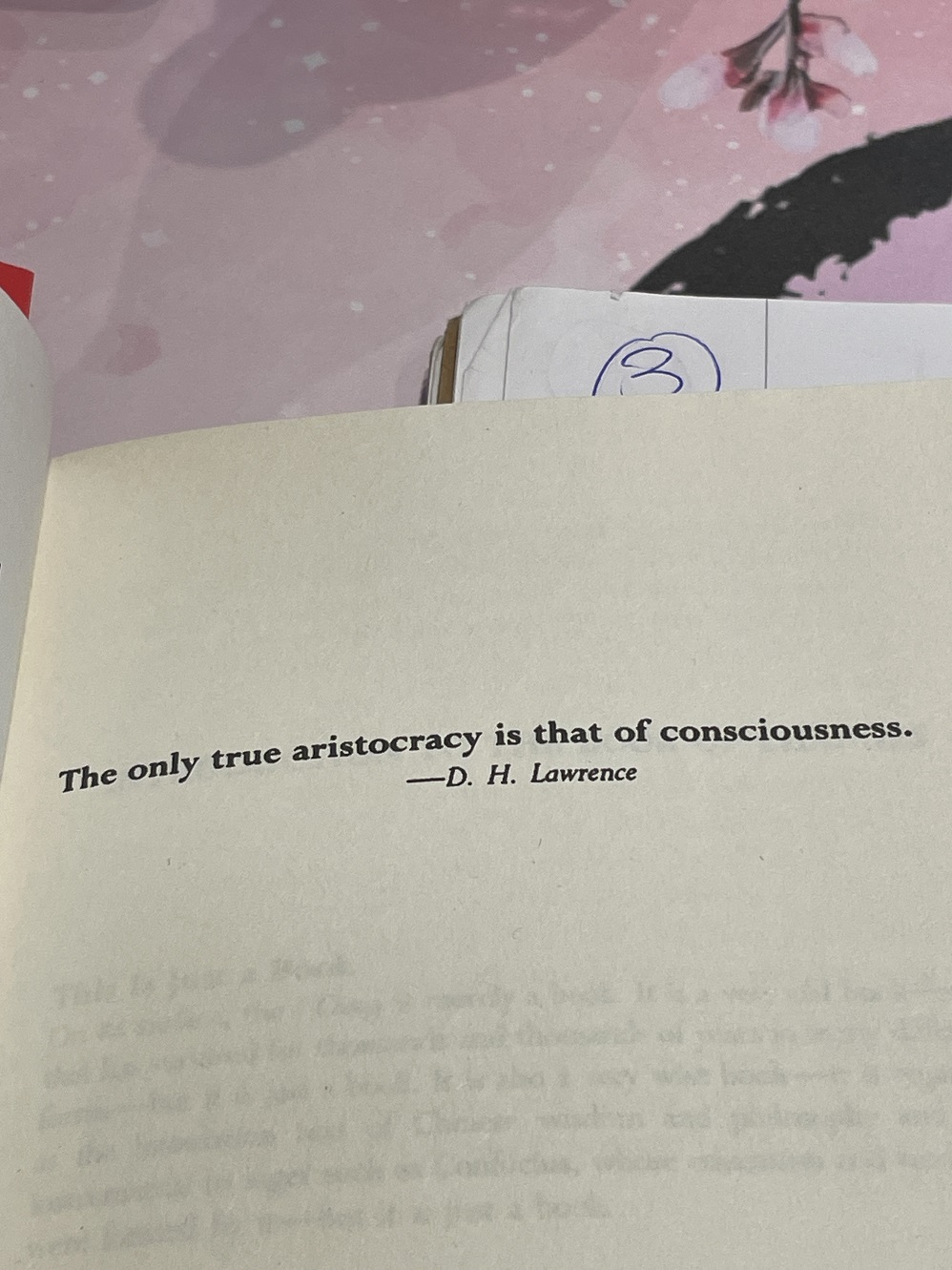
● Robert Lanza’s theory of biocentrism posits that consciousness is fundamental to the existence of the universe. He argues that the universe cannot exist independently of observers and that time and space are constructs of the mind. This perspective reverses the traditional view that the universe predates life, suggesting instead that life and consciousness are central to the creation of reality.
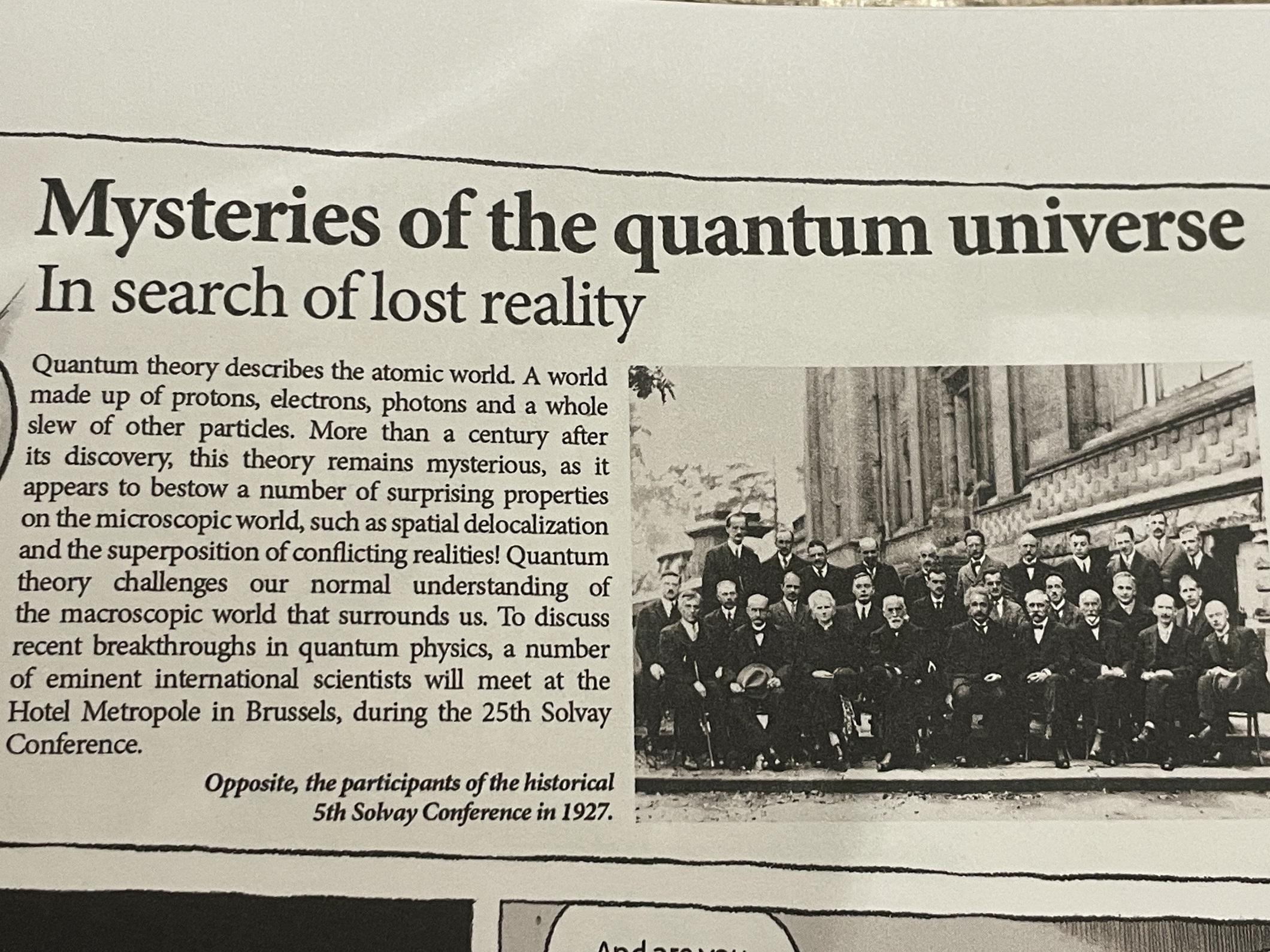
● Lanza’s theory is supported by quantum mechanics, which demonstrates that particles exist in a state of superposition until observed. He contends that the observer’s consciousness is crucial in determining physical properties, challenging the notion of an objective reality. This idea is illustrated through quantum experiments showing that observation directly influences particle behavior.
● Biocentrism challenges the materialistic worldview, suggesting that reality is a mental construct. It proposes that time and space are not independent entities and the theory implies that consciousness continues beyond physical death and addresses profound questions about the nature of the universe. Despite its controversy and mixed reactions, biocentrism offers a radical new perspective on the interplay between consciousness and reality.
The Story Of An Exceptional Scientist
The life story of the American stem cell pioneer and visionary scientist Robert Lanza (1956) is exceptional. He grew up in a disadvantaged neighborhood in Stoughton near Boston. His father was a professional poker player with not very gentle parenting methods. He and his sisters had a really hard time at home. From a young age, Robert liked to flee into the vast nature around his city where he thought about the universe. A big question that was already on his mind then was: suppose I wasn’t here, or the other living beings, what would be the point for this place to exist?
He eventually escaped from the hopeless social underclass by throwing himself into science. When he was thirteen, he managed to blacken an albino chicken by modifying the animal’s genes. He won a science competition with it and the experiment was published in the leading scientific journal Nature. It wouldn’t be Lanza’s last stunning performance. In 2001, he became the first scientist to clone a specimen of a nearly extinct species, an Indian type of bison called a Gaur. He did this by injecting 25-year-old animal DNA into an egg and then using this egg to make a regular cow pregnant.
Since the late 1990s, he has devoted himself to regenerative medicine, including stem cell therapy, to cure various diseases. He is currently head of Astellas Global Institute for Regenerative Medicine. Lanza’s pioneering work will contribute significantly to the future cure of conditions such as Alzheimer’s, diabetes. blindness, various lung and vascular diseases, Crohn’s disease and other immunological disorders. In 2014, Time Magazine named Lanza one of the most influential people in the world for his stem cell research.
A New Scientific Perspective: Biocentrism
In addition to his work as a medical doctor and researcher, Lanza thinks about the workings of the universe as a whole. He does this mainly in his secluded home on a ten-acre private island in Clinton, Massachusetts, where he has lived alone for twenty years.
In addition to a tropical pool house, he also owns a collection of museum pieces, including a nest of fossilized dinosaur eggs, prehistoric fish and a 4.6 billion-year-old meteorite discovered in Venezuela.
But according to his Theory of Everything, ‘biocentrism’, it’s not necessarily the case that this stone has been lying unseen in Venezuela’s clay for billions of years, waiting to be found by archaeologists. According to Lanza’s theory, time – like space – is just an algorithm of our mind, which organizes our observations into logical experiences. So the meteorite is ‘there’ in potential, but it takes an observer to manifest its properties and even its entire history.

The central point of biocentrism is that animal observers are 100 percent necessary to bring the universe into existence. The traditional view that the universe started with the physical materials and that life came onto the scene much later is completely reversed by the stem cell doctor. The source of the universe is consciousness, which produces cells capable of perceiving. Hence the name: biocentrism.
Lanza argues that to make physics work, consciousness cannot be excluded. Reality is a process that takes place within perception, and never outside of it. This is especially obvious in quantum mechanics. Without a living observer there is no ‘external’ reality with time, space and matter. All these elements only exist relative to observers who are essentially creating them. Nothing is external to consciousness. A mindfuck, I know. Perhaps the most remarkable thing is that he has apparently devised his theory completely without drugs.
Now let’s take a few steps back and explain how the doctor came to these remarkable conclusions.
Quantum Mechanics & Why Only Observed Phenomena Are Real Phenomena
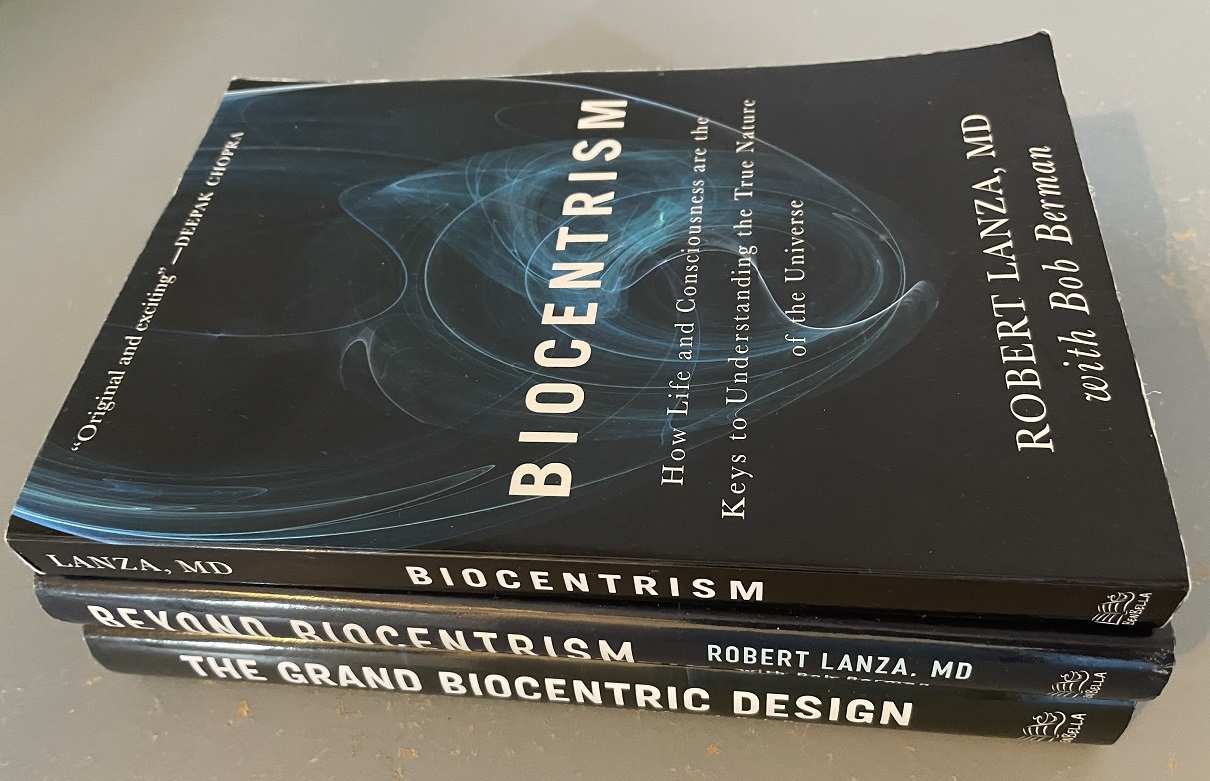
In the first volume of his ‘Biocentrism’ trilogy from 2010, Lanza first uses basic science to explain why our senses are 100 percent necessary to create physical reality. He peels off the layers of objective reality like you would peel an onion. Sounds are not really sounds until rapid air pressure variations hit the eardrum. No ear-brain system present on the scene? No sound. The same goes for color. Unless electromagnetic waves hit the retina within the eye, there is nothing to see.

But surely we are able to touch all these invisible structures in the external world, right? Not so, explains the doctor. Touch is purely the sensation of energy fields attracting and repelling each other. No solids ever really touch each other as they consist almost completely of empty space.
In other words, the ‘external world’ is completely correlative to our conscious experience of it. And that is without even taking quantum mechanics into account. In order to get ‘matter’ to exhibit physical properties, observation is a requirement. Quantum theory is clear on this: particles are, prior to observation, in a state of superposition. This means that the particles don’t exist in any ‘real’ sense, just as statistical probabilities. We know exactly the odds of when and where a particle will appear after measurement, but before that moment they exist purely as ghost-like entities.
Most scientists still maintain that that doesn’t mean that a ‘conscious’ observer is needed, and that any macroscopic object will do. In his first two biocentrism books however, Lanza clearly describes several quantum experiments that show that consciousness determining reality is the only explanation that really makes sense.
The bottomline of these experiments is that knowledge is always key. Particles can behave as seemingly solid bits of matter or ghost-like waves, and only the observer determines which one of these outcomes it will be. If the researcher knows nothing about which way particles will travel, ‘they’ will always behave as probability waves. But if the researcher acquires which-way information, the outcome will be solid particles.
Lanza (together with co-author Bob Berman) explains that the experiment can be set up in such a way that the only change occurs in the experimenter’s mind. He or she has learned something about the potential photon or electron without in any way disturbing the experiment. The only difference is thus a bit of knowledge and the result of the experiment is completely altered. All knowledge is mental. Therefore, the only conclusion that makes sense, Lanza proposes, is that the universe itself is a construction of consciousness and not a physical one. Animal observers that make the observations are ingrained in the universe, so everything is really ONE and all separation is illusory. Many founding fathers of quantum mechanics and other well known physicists already believed this to be the case:
‘Consciousness cannot be accounted for in physical terms. For consciousness is absolutely fundamental. It cannot be accounted for in terms of anything else.’
― Erwin Schrödinger
‘The very study of the external world leads to the conclusion that the content of consciousness is an ultimate reality.’
— Eugene Wigner
‘We do not assume any longer the reality of a detached observer, but one who by his indeterminable effects creates a new situation, a new state of the observed system.’
— Wolfgang Pauli
‘The universe could only come into existence if someone observed it – it does not matter that the observer turned up several billion years later. The universe exists because we are aware of it.’
— Martin Rees
‘Copernicus dethroned humanity from the cosmic center. Does quantum theory suggest that, in some mysterious sense, we are the cosmic center?’
— Bruce Rosenblum and Fred Kuttner
Heisenberg’s uncertainty principle further confirms Lanza’s theory. If a particle existed outside the observer you should be able to measure all its properties, but you can’t. Not because of some limitation in the available testing instruments, but because the laws of the cosmos don’t allow it. You cannot possibly know the speed and location of a subatomic particle at the same time. Why not? Why would a particle care about what we know or don’t know?
Lanza’s conclusion: the particle is not outside of us. With our observations, we determine where a particle is, what its properties are and what it does. Lanza writes about this: ‘The entities we observe are floating in a field – a field of mind, biocentrism maintains – that is not limited by the external spacetime Einstein theorized a century ago.’[1]
Time And Space Are Not Fundamental
But if that is really the case, it presents us with a problem. It is after all scientifically determined that the universe existed way before any observer arrived on the scene. Therefore, observers cannot be a requirement for reality to exist. Lanza deals with this ‘problem’ – which is not really a problem but an alteration in thinking – by demonstrating that time and space have no objective existence. Like matter, they are manifested by the observer.
According to Lanza we are mental representations, so space and time must be looked at as mental tools and not as actual things. They are both senses, very much like tasting or hearing or feeling. Space gives us the sense that we are inside an environment we can physically interact with, much like a computer game.
Time is the sensation of witnessing movement and change within the virtual environment we call the universe. Together, the senses of space and time make it seem to us that we are inside the universe, while in reality everything appears in our minds and is thus virtual. A coffeecup is not sitting in your cupboard waiting for you to arrive and take it out. It appears in your mind. The mind is a reality weaver tying everything together: past to present, forms to comprehension, and still frames to motion.
Science has the tendency to divorce the living being from its surroundings and study it as a separate entity. According to Lanza – and this is the central point of biocentrism – this is not possible at a fundamental level: the sensory equipment of the creature is inseparably linked to the existence of the physical universe.
The paragraph in the first biocentrism books that really hit it home for me was this one: ‘Look now at anything. Custom has told us that what we see is ‘out there’, outside ourselves, and such a viewpoint is fine and necessary in terms of language and utility, as in ‘please pass the butter that’s over there’. But make no mistake: the visual image of that butter, that is, the butter itself, actually exists only inside your brain. That is its location. It is the only place visual images are perceived and cognized.’[2]
So there you have it: no external butter, but only the butter that is your own creation. In this context, it is also useful to describe the difference between mind and brain, which is – like the past in which no observers yet existed – a source of confusion when it comes to understanding biocentrism.
According to Lanza, the difference between mind and brain is as follows: ‘The brain is an actual physical object that occupies a specific location. It exists as a spatiotemporal construction. Other objects, like tables and chairs, are also constructions and are located outside the brain. However, brains, tables, and chairs alike all exist in the mind.’
‘The mind is what generates the spatiotemporal construction in the first place’, Lanza continues. ‘Thus, the mind refers to pre-spatiotemporal, and the brain to post-spatiotemporal. You experience your mind’s image of your body, including your brain, just as you experience trees and galaxies. The mind is everywhere. It is everything you see, hear, and sense. The brain is where the brain is, and the tree is where the tree is. But the mind has no location. It is everywhere you observe, smell or hear anything. The mind consists of everything you experience.’[3]

An additional benefit of the theory is that death cannot exist in a biocentric universe. Since our consciousness is part of a field of mind, and since time and space emerge out of this field, it is not possible for consciousness to ever end. When you are born, consciousness is strapped to a spacetime body and a flow of experience is then tied to this body. When it (the body) dies, this continuous flow comes to an end, like a ripple in a pond, but the consciousness that caused it continues.
Reactions To The Theory
Cloning and stem cell research are areas of controversy. Biocentrism is controversial as well because the perspective goes against the current prevailing, materialistic worldview. In response to his book, Lanza received thousands of emails. Some were positive, ‘it has changed my life’ and some were negative.
However, certain arguments against biocentrism indicate that the person in question has not understood the theory. For example, the reaction: ‘If everything is in your mind, why don’t you jump off a building?’ Lanza never claims that the known laws of nature are wrong, just that they belong to the living observer and not to some unproven external domain that keeps on existing even when inexperienced.
Finding Answers To Science’s Biggest Questions
The purpose of biocentrism is to answer deeper questions. Science has a very good grip on scientific laws. Lanza wants to know why they are like that. ‘Science has explained some aspects of reality and religion has explained others. I want a picture in which there are no contradictions.’[4]
Even as a young student, Lanza could never accept the inconsistencies in science that are taken for granted. Where did all the matter to build the universe from, come from? Why are the laws of nature exactly fine tuned for life? How could life arise out of mere chance? Biocentrism places consciousness as the central creator of the universe. Then he goes out to prove his theory through experiments.
Quantum experiments, as described above, support the theory. So do observations of the goldilocks principle or why the universe is exquisitely fine tuned to support life. If observers create reality, they must create one that allows for their existence. If animals would create a universe with weak gravity, we would fall off the earth. If nature’s four forces wouldn’t have exactly the right values we would have never existed. Our universe has exactly the right constants that support life because we are creating them.
People find it hard to wrap their minds around the theory, because it is, A) hard to imagine that the world is not there when you’re not experiencing it, and B) hard to conceptualize something that has no beginning and no end. Like the chicken and the egg, which one came first? Since the question is impossible to answer, the only solution is that they must have emerged together. When they arrived as a construct of consciousness, this is an acceptable end point. There is no need to go beyond consciousness.
Lanza writes: ‘Once an observer exists, the aspects of the universe under observation become forced to resolve into one state, a state that includes a seemingly pre-life earth. This means that a pre-life universe can only exist retroactively after the fact of consciousness. Because time is an illusion of consciousness, this whole talk of before and after isn’t strictly correct, but provides a way of visualizing things.’[5]
Still, many people still don’t understand biocentrism. When I view this topic on platforms like Quora, I often read reactions, such as: ‘We know that certain rocks are older than life, so the theory is completely bogus.’ When that is your counter argument, you are still not thinking about it in the proper way. Time is 100 percent mental. It is relative to the observer. For the observer, the rock may appear to be billions of years old, but it is just an observation and not an absolute truth. All reality is relative and the past isn’t yet the past until observation happened.

Physicist John Wheeler has said that until events are observed at this moment, they didn’t really unfold, but lurked in a blurry, probabilistic state, all ready to become an actual ‘past’ occurrence only upon our current observation. This astonishing possibility is called retrocausality and experiments of the past two decades are confirming that this is how reality works. This breakaway from classical physics is still largely unknown by the general public.
Life is considered as inconsequential in the current scientific paradigm. Biocentrism, on the other hand, considers life and consciousness as indispensable cosmic attributes. But when will this view be accepted as the new standard model?
Lanza: ‘This is not some minor tweak in worldview. Our entire education system in all disciplines, the construction of our language, and our socially accepted ‘givens’ – those starting points in conversations – revolve around a bottomline mindset that assumes a separate universe ‘out there’ into which we have each individually arrived on a very temporary basis. It is further assumed that we accurately perceive this external pre-existing reality and play little or no role in its appearance.’[6]
Conclusion
According to Robert Lanza, the idea that the world exists outside of perception, is nothing but a very convincing illusion. Not one feature of the world, be it mass, color, smell, solidness or an object’s position in space, could be present in the absence of an observer. Biocentrism integrates the act of observation in the way the cosmos operates. This results in a radical new perspective that fits perfectly with all the scientific evidence physics and cosmology have gathered over the past centuries.
However, writes Lanza, biocentrism is not an end point. ‘Rather, it can be viewed as a jumping-off place, a portal to yet deeper explanation and explorations of nature and the universe.’[7] To which I can only say: Let’s go.
PS: To read more about biocentrism, and similar scientific and philosophical perspectives on consciousness and reality, visit: Free-Consciousness.com.
NOTES
1. Lanza, R., Berman, B. Biocentrism: How Life and Consciousness are the Keys to Understanding the True Nature of the Universe. Dallas: BenBella Books, 2010. P. 53
2. Lanza, R., Berman, B. Biocentrism: How Life and Consciousness are the Keys to Understanding the True Nature of the Universe. Dallas: BenBella Books, 2010. P. 36
3. Lanza, R., Berman, B. The Grand Biocentric Design: How Life Creates Reality. Dallas: BenBella Books, 2020. P. 208
4. Robert Lanza featured on the Canadian Broadcast Corporation (CBC’s) ‘Ideas’, one of the oldest and most respected radio programs in the world. Host Paul Kennedy has his understanding of reality turned-upside-down by Dr. Robert Lanza in this paradigm-shifting hour. Dr. Lanza provides a compelling argument for consciousness as the basis for the universe, rather than consciousness simply being its by-product. Listen to broadcast
http://www.cbc.ca/radio/ideas/biocentrism-rethinking-time-space-consciousness-and-the-illusion-of-death-1.3789414
5. Lanza, R., Berman, B. Biocentrism: How Life and Consciousness are the Keys to Understanding the True Nature of the Universe. Dallas: BenBella Books, 2010. P. 90
6. Lanza, R., Berman, B. Biocentrism: How Life and Consciousness are the Keys to Understanding the True Nature of the Universe. Dallas: BenBella Books, 2010. P. 15
7. Lanza, R., Berman, B. Biocentrism: How Life and Consciousness are the Keys to Understanding the True Nature of the Universe. Dallas: BenBella Books, 2010. P. 141












 FRAGMENTEN UIT HET SCHEMERLAND