Faster, Pussycat! Kill! Kill!


SUPERWOMEN! Belted, buckled and BOOTED!

Director: Russ Meyer
Written by: Russ Meyer, Jack Moran
Cast: Tura Satana, Haji, Lori Williams, Sue Bernard

Year / Country: 1965, USA
Running Time: 83 mins.
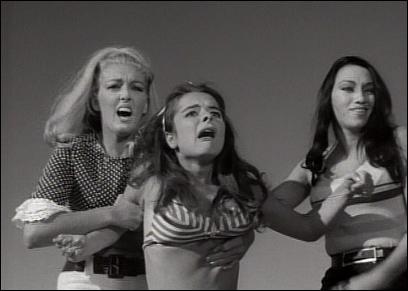
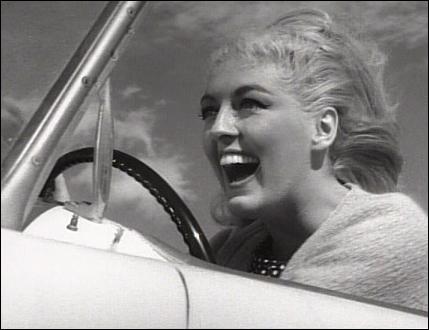
Three thrill-seeking superwomen, working as dancers in a go-go bar, set out on a violent odyssey through the desert, killing men along their way. They have a car each that they use to race against – or drive over their victims.

The women drug and kidnap a young girl after they have wasted her boyfriend. After that, they hatch the plan to rob a crippled father and his sons. These patronizing men deserve a lesson, but it soon becomes clear that this is a journey from which there is no return. Varla, the leader, deliberately goes down the path of her own self-destruction, dragging her two buxotic cohorts along with her.

In a time when men were still considered superior, these three women level the score. It is therefore a feminist film, despite the fact that these women are portrayed as sex objects. This female empowerment is typical for its director, Russ Meyer, the undisputed master of large breasted women, campy humour and sly satire.

Faster, Pussycat! Kill! Kill! stands as Meyer’s masterpiece, a cult movie pur sang. Funny, sexy, exploitative and provocative: a FilmDungeon favourite! They don’t make them like this anymore. Well Tarantino surely tries. But the originality and cult appeal of Faster, Pussycat! Kill! Kill! is rarely matched and never bettered. Watch these pussycats roar and love it!

Rating:

Biography: Russ Meyer (1922, California – 2004, California) is known primarily for making a large number of sexploitation flicks, such as Faster, Pussycat! Kill! Kill! and Vixen! He did almost everything – directing, writing, editing – himself. He even did the distribution of his own movies. In the cult / exploitation circuit his films did very well and made him more than enough money to continue his film career. In the late seventies, Meyer retired as a wealthy man. Many of his films are nowadays considered as cult classics.

Filmography: The French Peep Show (1950, short doc), The Immortal Mr. Teas (1959), The Naked Cinema (1961, short), Eve and the Handyman (1961), Erotica (1961), Wild Gals of the Naked West (1962), Skyscrapers and Brassieres (1963, short), Europe in the Raw (1963, doc), Heavenly Bodies (1963), Lorna (1964), Fanny Hill (1964), Mudhoney (1965), Faster, Pussycat! Kill! Kill! (1965), Motor Psycho (1965), Mondo Topless (1966), Common Law Cabin (1967), Good Morning… and Goodbye! (1967), Finders Keepers, Lovers Weepers! (1968), Vixen! (1968), Cherry, Harry & Raquel! (1970), Beyond the Valley of the Dolls (1970), The Seven Minutes (1971), Black Snake (1973), Supervixens (1975), Up! (1976), Beneath the Valley of the Ultra-Vixens (1979), Pandora Peaks (2001, short)
Planet Terror

Director: Robert Rodriguez
Written by: Robert Rodriguez
Cast: Rose McGowan, Freddy Rodriguez, Josh Brolin, Marley Shelton

Year / Country: 2007, USA
Running Time: 105 mins.

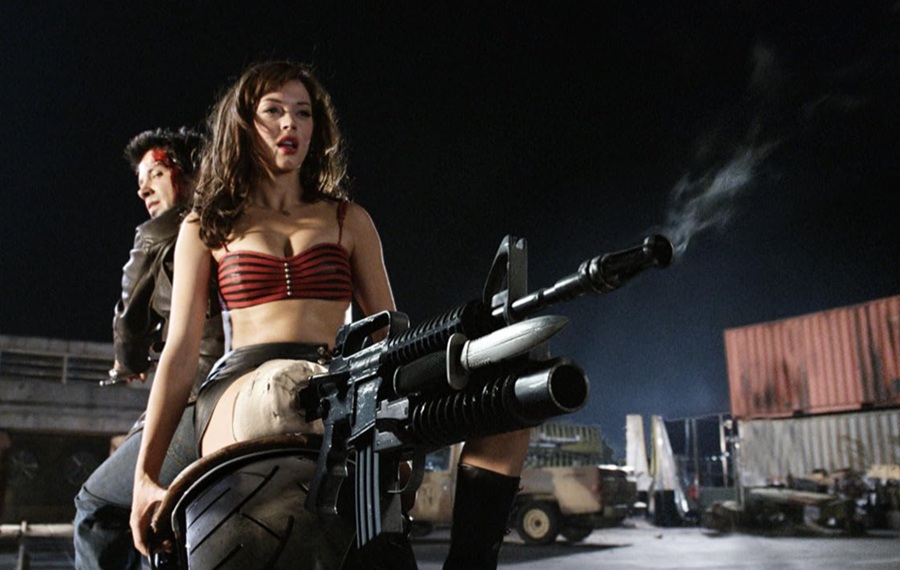
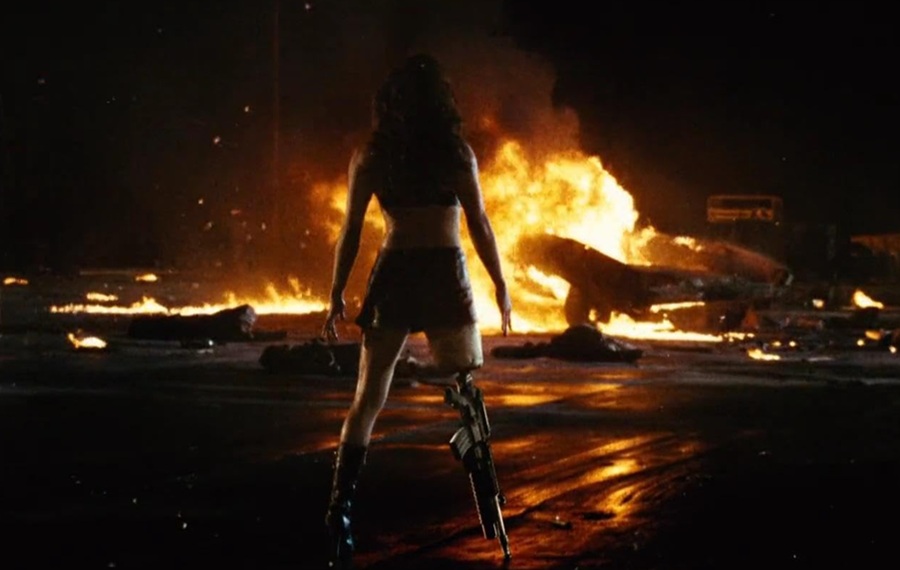
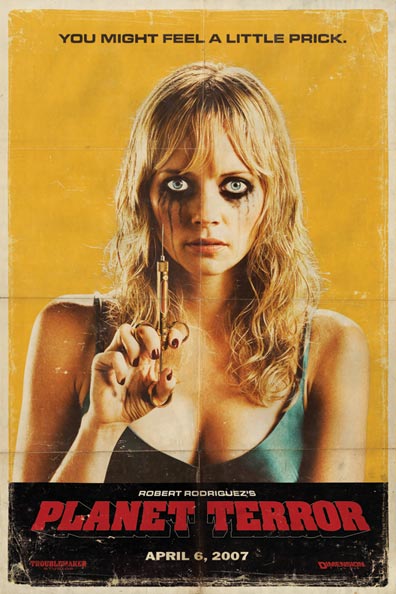
After an experimental bio-weapon is released, thousands of civilians are turned into zombie-like creatures. It is up to a small group of survivors to stop the infected and those behind its release. The group of survivors includes go-go dancer Cherry Darling and her ex-boyfriend, the mysterious El Wray. Cherry is searching for ways to put her ‘useless talents’ to good use. The zombie threat might give her a great opportunity for this.

Planet Terror is Rodriguez’ contribution to the double-bill Grindhouse. It is also a tribute to the zombie genre. Opinions differ on whether Planet Terror or Tarantino’s Death Proof is the best part of Grindhouse. I personally prefer Tarantino’s production. Since the idea behind Grindhouse was to replicate the experience of viewing exploitation films in a ‘grindhouse’ theatre, it is probably not the best idea to make a high budget too apparent. With Death Proof this is the case. Planet Terror on the other hand has so many explosions and spectacular action scenes a la Desperado that it is obviously a movie shot on a major budget. The casting of Hollywood icon Bruce Willis also doesn’t contribute to the exploitation feel. It is however successful in delivering entertainment without any pretensions. There is no film that has a cooler way of showing zombies getting blown to bits.

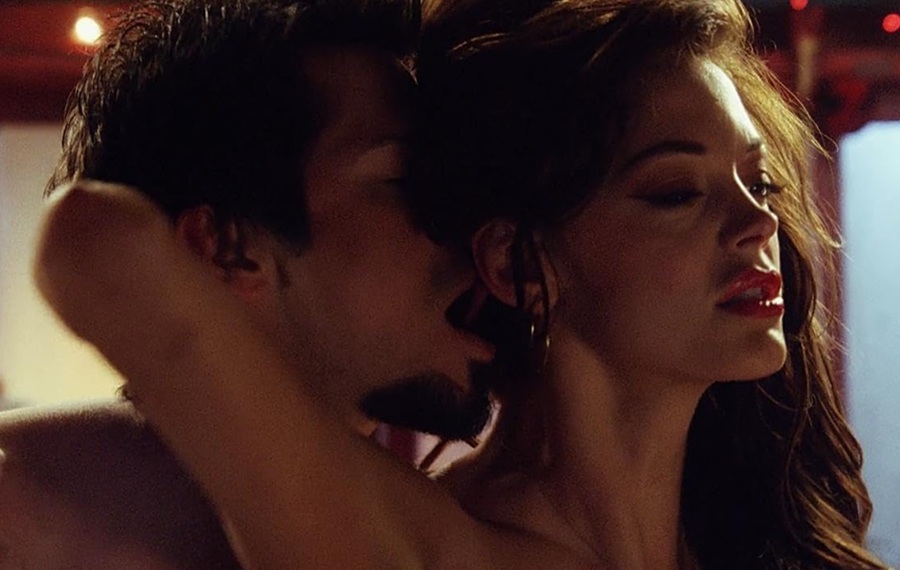
Some casting choices have also turned out well. Rose McGowan proves to be, especially in the go-go dance-opening scene, to be one of the sexiest actresses around. She gets good support from Rodriguez (no relation), who positions himself well as an action star. As a proper zombie tribute requires, Tom Savini is present for a bit part. Many of the other cast members have worked with Rodriguez before. All in all, Planet Terror is not exactly a masterpiece, not in general nor in its kind. But…there are definitely fun bits. Some extremely gory hospital scenes come to mind.

Rating:

Biography: Robert Rodriguez (1988, Texas) saw John Carpenter’s Escape From New York in 1981 and proclaimed “I am going to make movies”. Ten years later, Rodriguez made his feature debut with El Mariachi, an almost single handedly made action film that cost him only 7.000 dollars. It made Rodriguez a legend of independent, ultra-low budget filmmaking. His further career is a sign for young filmmakers that even the wildest dreams may come true if you are brave enough to follow your own path. He has directed many movies since, often collaborating with Quentin Tarantino. Besides directing, he frequently acts as cinematographer like he did on El Mariachi.

Filmography (a selection): Bedhead (1991, short), El Mariachi (1992), Roadracers (1994, TV), Desperado (1995), Four Rooms (1996, segment ‘The Misbehavors’), From Dusk Till Dawn (1996), The Faculty (1998), Spy Kids (2001), Spy Kids 2: Island of Lost Dreams (2002), Spy Kids 3-D: Game Over (2003), Once Upon a Time in Mexico (2003), Sin City (2005), The Adventures of Sharkboy and Lavagirl 3-D (2005), Grindhouse (2007, segment ‘Planet Terror’), Machete (2010), Machete Kills (2013), Sin City: A Dame to Kill For (2014), Alita: Battle Angel (2019), The Mandalorian (2020, TV episode)

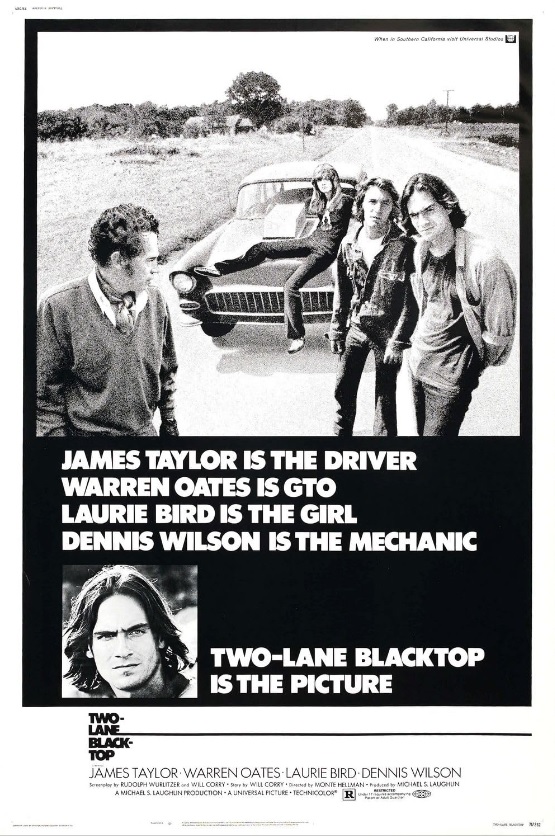
Two-Lane Blacktop

Director: Monte Hellman
Written by: Rudolph Wurlitzer, Will Corry
Cast: James Taylor, Dennis Wilson, Laurie Bird, Warren Oates

Year / Country: 1971, USA
Running Time: 98 mins.

After winning a late-night drag race, the driver (James Taylor) and his friend, the mechanic (Dennis Wilson), leave Los Angeles in their gray ’55 Chevrolet. They embark on an aimless road trip, stopping only for food, gas, and the occasional driving challenge. Along the way, they pick up a free-spirited hitchhiker (Laurie Bird) and continue their journey eastward. Their path repeatedly crosses with a 1970 Pontiac GTO, driven by a boastful older man (Warren Oates), leading to a high-stakes cross-country race to Washington, D.C. for ownership of their cars.

This is not a summary of the story, but it’s the whole story. The film unfolds as a meditation on existentialism, where racing becomes a metaphor for life itself. The characters drive not toward any clear destination but toward an uncertain fate, embodying the restless, aimless energy of drifters. Tellingly, none of the main characters even have names, emphasizing their roles as archetypes of the disillusioned wanderer.

Watching this film feels like stepping into a time capsule. Much like American Graffiti, it captures the spirit of a bygone era – an America of the early 1970s, defined by hippies, muscle cars, and rock ‘n’ roll. The minimalist storytelling is complemented by striking cinematography, making the open road a central character in its own right.

Two-Lane Blacktop is more than a movie; it’s a raw, unvarnished piece of Americana. A snapshot of a world long past, it stands as a beautiful, haunting testament to a fleeting time and place in American culture.

Rating:

Biography: Monte Hellman (1932, New York) studied drama at Stanford University and film at UCLA. He joined legendary producer Roger Corman and made his film debut with Beast From Haunted Cave, an enjoyable 50’s creature flick. Hellman teamed up with Jack Nicholson and together they made two low-budget flicks in the Philippines, one written by Nicholson. They continued the co-op and made two more films together, this time Westerns. Once again Nicholson wrote the screenplay for one of them (Ride in the Whirlwind). Hellman then made Two-Lane Blacktop, which did well with critics, but bad at the box-office. After making a couple more cult movies, Hellman mostly worked as second-unit director, editor and executive producer for acclaimed directors such as Samuel Fuller, Paul Verhoeven and Quentin Tarantino. His latest directing effort was a segment of the horror anthology Trapped Ashes.

Filmography: Beast from Haunted Cave (1959), Flight to Fury (1964), Back Door to Hell (1964), Ride in the Whirlwind (1965), The Shooting (1967), Two-Lane Blacktop (1971), Cockfighter (1974), Baretta (1975, TV), The Greatest (1977), China 9, Liberty 37 (1978), Inside the Coppola Personality (1981), Iguana (1988), Silent Night, Deadly Night III: Better Watch Out! (1989), Stanley’s Girlfriend (2006, short), Trapped Ashes (2006, segment ‘Stanley’s Girlfriend’)

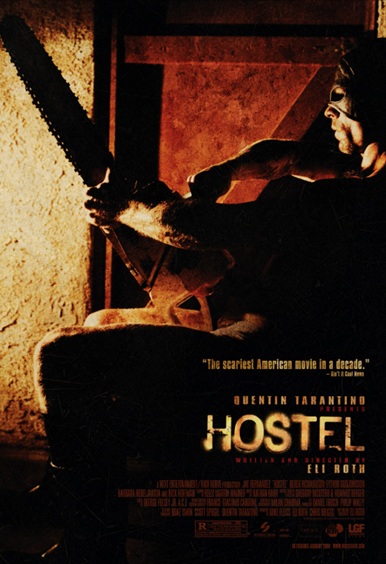
Hostel

Director: Eli Roth
Written by: Eli Roth
Cast: Jay Hernandez, Derek Richardson, Eythor Gudjonsson, Barbara Nedeljakova

Year / Country: 2005, USA
Running Time: 94 mins.

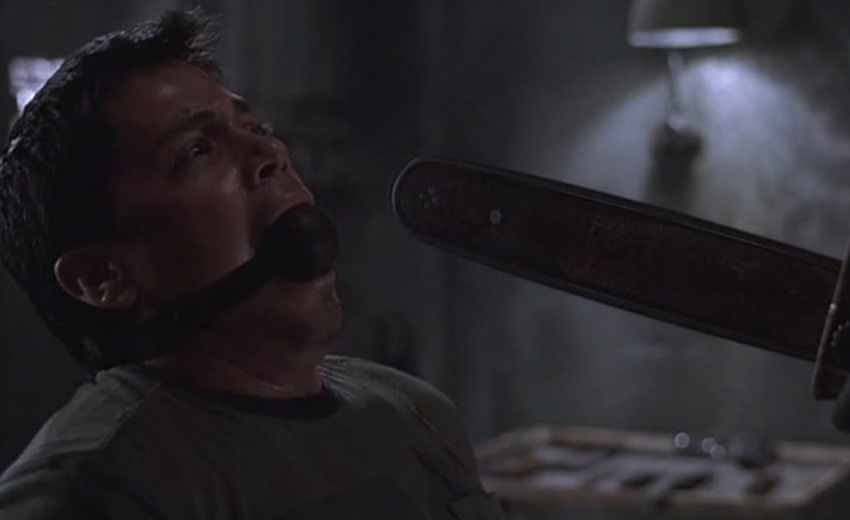
From executive producer Quentin Tarantino and director Eli Roth (Cabin Fever) comes Hostel, a relentless and visceral gore-fest that redefines the horror genre.

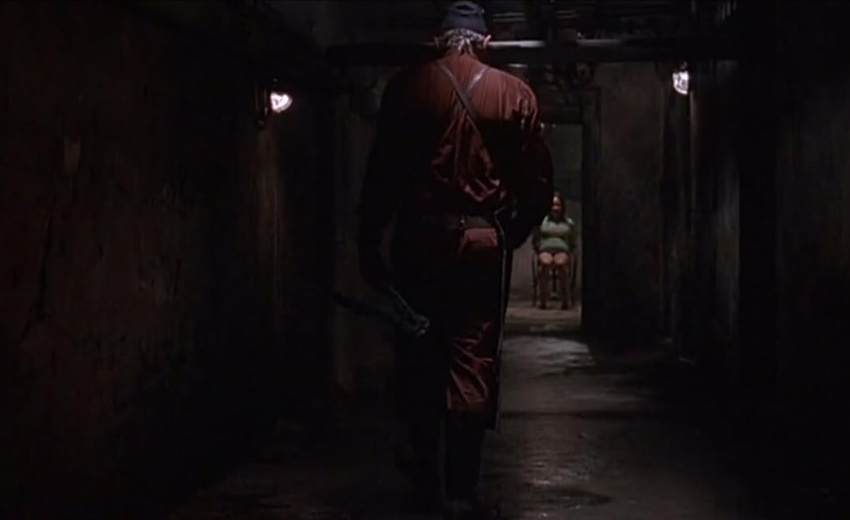
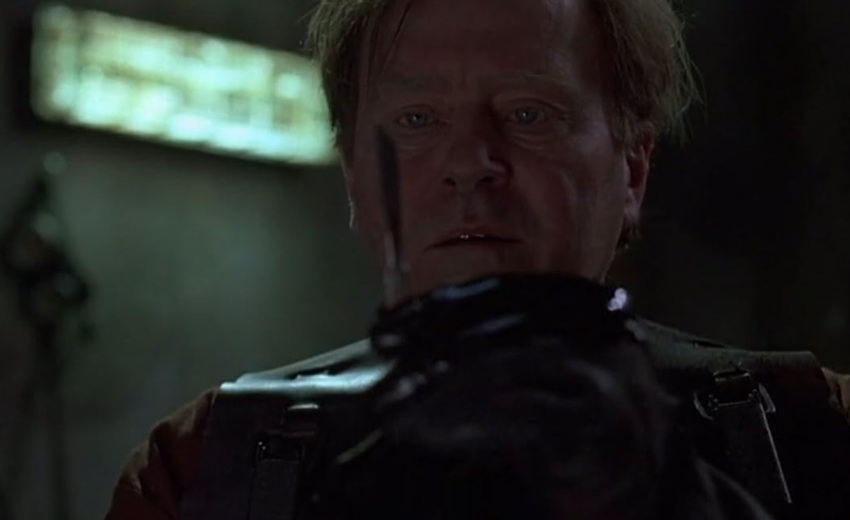
The film follows three reckless backpackers who, lured by the promise of a Slovakian hostel teeming with alluring women, stumble into a nightmare far darker than they could imagine. Instead of a paradise of hedonism, they find themselves trapped in a sadistic torture factory, where young travelers are systematically brutalized and slaughtered.

One by one, the trio is ensnared by their seductive yet treacherous holiday flings, drawn into a world of unimaginable horror. Hostel taps into the same vein of sadistic thrillers as James Wan’s Saw, but where Saw bogs itself down in a convoluted detective narrative, Hostel thrives by anchoring its terror in the protagonists’ harrowing first-person descent into madness. The slow, creeping revelation of their fate makes the experience all the more terrifying.

Roth masterfully manipulates his audience, balancing an entertaining – if occasionally implausible – setup (why would anyone impulsively jet off to Slovakia after a single photo of women?) with a descent into bleak, hopeless torment. The film escalates from a tense struggle for survival to a blood-soaked frenzy of revenge, delivering a rollercoaster of dread and catharsis.

Some people have complained about the lack of plot. But seriously: who cares? Horror movies haven’t been this fun in ages and it is the first film that actually scared the living hell out of me in quite a while. It’s a perfect storm of tension and grotesque brutality (and yes, it’s extremely gory). I’d even call it a brilliant piece of entertainment. Just a fair warning: this isn’t for the faint of heart.

Rating:

Biography: Eli Roth (1972, Boston) began shooting Super 8 movies at a young age. After studying at N.Y.U. he worked for many years in film and theatre doing every job available. His first feature Cabin Fever was made for only 1,5 million dollars and grossed a 100 million at the box office. Quentin Tarantino calls him ‘the future of horror movies’.

Filmography: Chowdaheads (1999, TV series), Cabin Fever (2002), The Rotten Fruit (2003, short), Hostel (2005), Hostel: Part II (2007)