Face to Face

Director: Sergio Sollima
Written by: Sergio Donati, Sergio Sollima
Cast: Tomas Milian, Gian Maria Volonté, William Berger

Year / Country: 1967, Italy / Spain
Running Time: 107 mins.

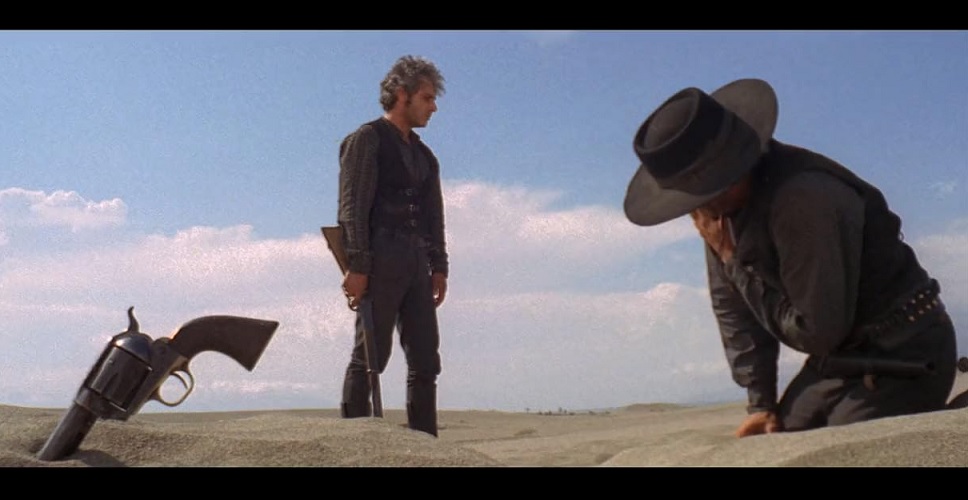
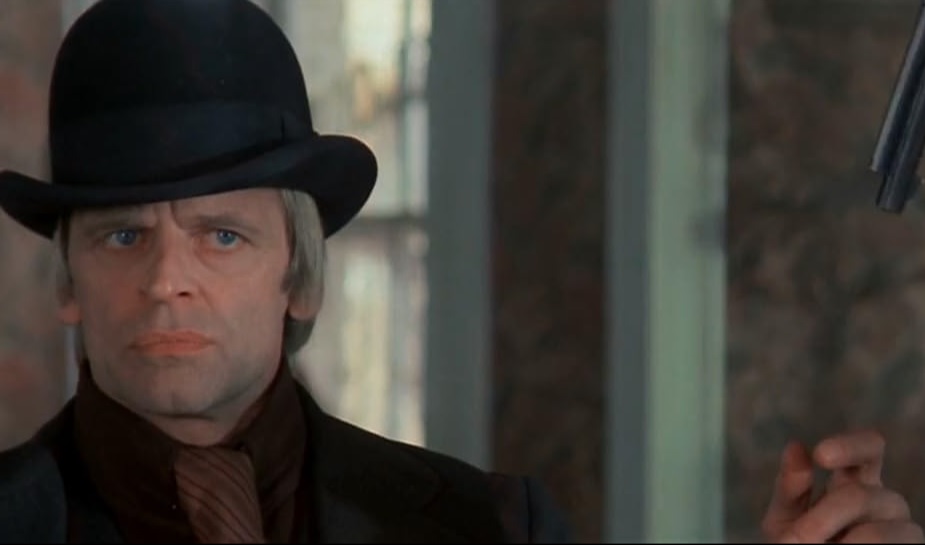
In Face to Face, director Sergio Sollima delivers a more intellectual take on the spaghetti western while still packing in thrilling action. The film stars Gian Maria Volonté – best known for his villainous roles in A Fistful of Dollars and For a Few Dollars More – as Boston professor Brad Fletcher. Suffering from a severe lung ailment, Fletcher moves to Texas for the warmer climate, only to be taken hostage by the ruthless bandit Solomon Bennet (Tomas Milian) during a daring escape from custody.

Bennet aims to reunite his old gang, including his former ally Siringo (William Berger). However, he’s being hunted by the Pinkertons – a private detective agency – of which Siringo is secretly a member. As Fletcher spends more time with Bennet, his passive nature erodes, and he gradually embraces a life of crime. Once the beast within him is unleashed, he proves to be even more ruthless than his captor.

Sollima weaves a deeper thematic layer into the film, using the western setting to explore the rise of fascism. When Bennet seizes control of a village, he governs it as though it were a single organism, using manipulation and torture to force everyone into submission. His authoritarian rule mirrors historical regimes, adding an unsettling resonance to the story.

However, Fletcher’s transformation isn’t entirely convincing, likely due to the film’s extensive edits – the original cut ran 2.5 hours. His shift from an educated, seemingly moral man to a cruel bandit happens too abruptly, making it feel somewhat unearned. That said, Sollima’s direction shines, especially in his handling of the actors. Volonté delivers a controlled and nuanced performance, while Milian exudes charisma in every scene.

Ennio Morricone’s score, while solid, doesn’t quite reach the brilliance of his work with Sergio Leone. However, the film’s opening credit sequence does capture the grandeur of Leone’s westerns, setting the stage for an absorbing experience. Despite some flaws, Face to Face remains an excellent film – thought-provoking, visually compelling, and anchored by strong performances.

Rating:

Biography: Sergio Sollima (1921, Rome) is an Italian filmmaker. Due to his trio of westerns starring Tomas Milian in the mid 60’s (The Big Gundown, Face to Face and Big Gundown 2: Run, Man, Run) he became known as ‘the other Sergio’ – the third most important director of spaghetti westerns, after Sergio Leone and Sergio Corbucci. Sollima began in cinema as a scriptwriter on Italian sword and sandal epics such as Ursus (1961) and The Ten Gladiators (1963). He directed two spy movies to capitalize on the popularity of the James Bond films. Then he started making spaghetti westerns and action / crime films such as The Family starring Charles Bronson and Telly Savalas. Later in his career he moved more towards television work.

Filmography (a selection): L’amore difficile (1962, segment ‘L’avventura di un soldato’), Agente 3S3, passaporto per l’inferno (1965), Agente 3S3, massacre al sole (1966), Requiem per un agente segreto (1966), The Big Gundown (1966), Face to Face (1967), Big Gundown 2: Run, Man, Run, The Family (1970), Devil in the Brain (1972), Revolver (1973), Sandokan (1976, TV-episodes), The Black Corsair (1976), Steps of Love (1989), Berlin ’39 (1993)

Compañeros

Director: Sergio Corbucci
Written by: Sergio Corbucci, Massimo De Rita, Fritz Ebert, José Frade, Dino Maiuri
Cast: Franco Nero, Tomas Milian, Jack Palance, Fernando Rey

Year / Country: 1970, Italy / West Germany / Spain
Running Time: 120 mins.

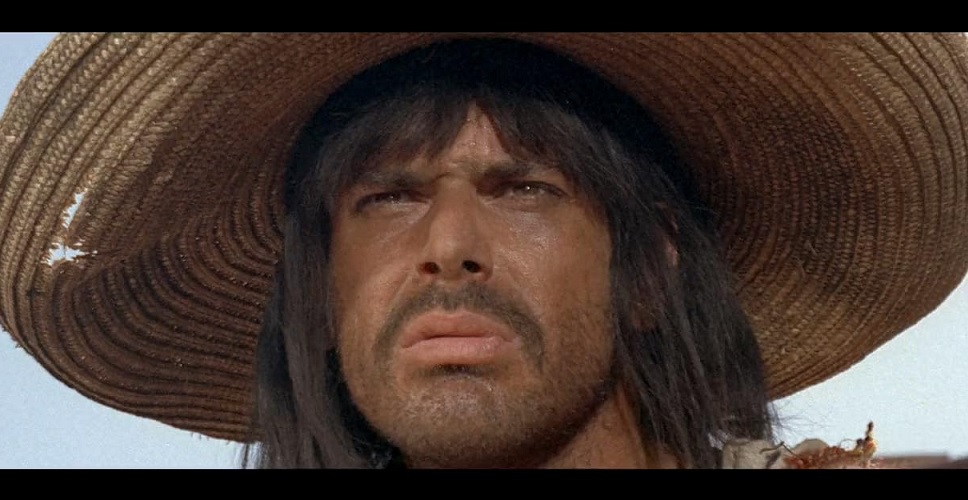
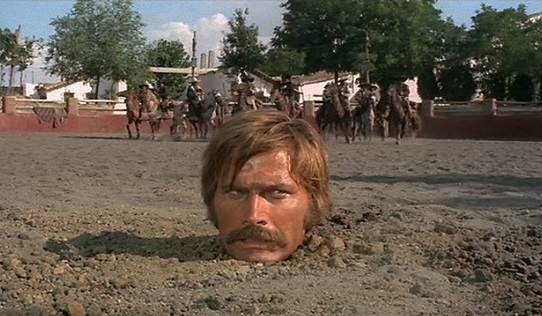
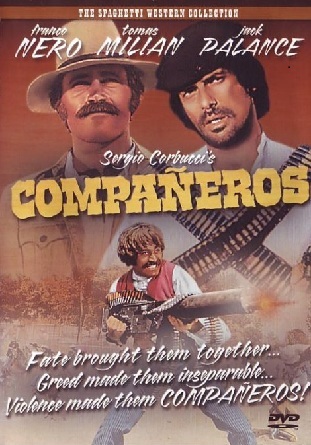
In a country torn apart by revolution, an unlikely duo teams up. The not too bright Mexican bandit Vasco (Tomas Milian) and the very polite arms dealer ‘The Swede’ (Franco Nero) go on a mission for the money hungry General Mongo. Their goal is to free Mongo’s pacifistic opponent Professor Xantos from a Texan jail because he knows the combination of a loaded safe. The two hate each other, so there is plenty of double-crossing along the way.

This spaghetti western, directed by the other Sergio, is an early buddy movie featuring two of the most established spaghetti western actors. The music is – of course – composed by Ennio Morricone and Jack Palance plays a very interesting supporting role as marijuana addicted gunslinger.

The movie misses the sharp humour and emotional depth that made genre films such as Django and the Dollar-trilogy so enjoyable, but it is certainly not the worst spaghetti western. The two strong leads fight, joke and shoot their way through a series of engaging adventures. The many last minute rescue scenes become kind of repetitive, so Corbucci could have been doing some heavier cutting. But, like the Mexican revolution, the movie ends in a massive shoot-out which is certainly worth the wait. Viva la Revolution!

Rating:

Biography: Sergio Corbucci (1926, Rome – 1990, Rome) is, alongside Sergio Leone, one of the most renowned directors of Spaghetti Westerns. He played a pivotal role in popularizing the genre, particularly through landmark films such as Django (1966) and Il grande silenzio (1968). Corbucci often collaborated with actor Franco Nero, creating some of the most iconic works of the genre. His films, often categorized as B-movies, are distinguished by their unflinching brutality, surreal and apocalyptic production design, dark humor, and politically left-leaning themes. A committed Marxist, Corbucci infused many of his works with a sense of revolutionary despair, reflecting the futility of social upheaval. Despite his significant contributions to cinema, Corbucci remained rooted in Italy throughout his career, with most of his films receiving limited international distribution. He passed away in Rome in 1990.

Filmography (a selection): Foreign Earth (1954), Water’s Love (1954), Supreme Confession (1957), Angel’s Sky (1957), Duel of the Titans (1961), Toto, Peppino and La Dolce Vita (1961), The Son of Spartacus (1963), Grand Canyon Massacre (1963), Django (1966), Navajo Joe (1966), The Mercenary (1968), The Great Silence (1968), Compañeros (1970), Bandera Bandits (1972), The White, the Yellow, and the Black (1975), The Payoff (1978), Super Fuzz (1980), My Darling, My Dearest (1982), Days of Inspector Ambrosio (1988)

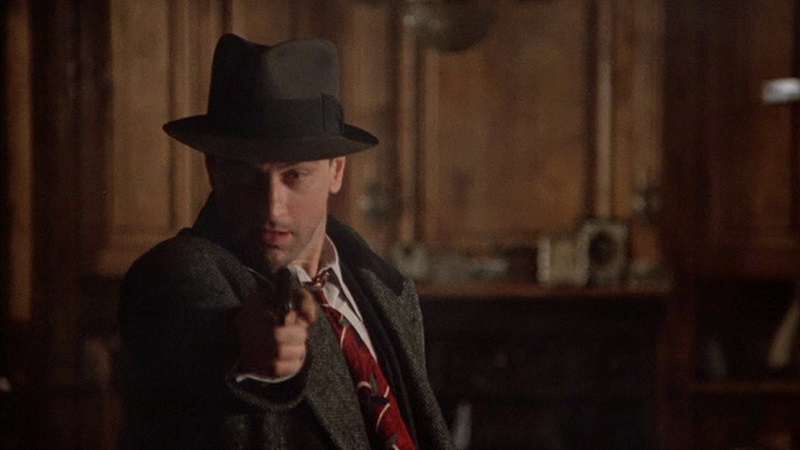
Once Upon a Time in America


As boys, they said they would die for each other. As men, they did.

Directed by:
Sergio Leone

Written by:
Harry Grey (book ‘The Hoods’)
Leonardo Benvenuti (screenplay)
Piero De Bernardi (screenplay)
Enrico Medioli (screenplay)
Franco Arcalli (screenplay)
Franco Ferrini (screenplay)
Sergio Leone (screenplay)

Cast:
Robert De Niro (David ‘Noodles’ Aaronson), James Woods (Maximilian ‘Max’ Bercovicz), Elizabeth McGovern (Deborah Gelly), James Hayden (Patrick ‘Patsy’ Goldberg), William Forsythe (Philip ‘Cockeye’ Stein), Tuesday Weld (Carol), Treat Williams (James Conway O’Donnell), Scott Tiler (Young Noodles), Rusty Jacobs (Young Max / David Bailey), Jennifer Connelly (Young Deborah)

In the late 1970s, master director Sergio Leone turned down the offer to direct The Godfather in order to make another gangster film, this one based on the novel ‘The Hoods’ by former mobster Harry Grey. When filming was completed, the total footage ran between eight and ten hours. Leone and editor Nino Baragli trimmed it down to around six hours, intending to release the film as two three-hour features. The producers, however, rejected this idea and cut the film down to just over two hours for the American market. In doing so, they also abandoned the film’s non-linear structure, rendering the story almost incomprehensible. Unsurprisingly, the film flopped in the U.S., and Leone was left devastated.

Fortunately, a 3-hour and 49-minute version was prepared for international release, with the original non-chronological storytelling restored. Audiences overseas responded more positively, and many critics recognized it as a cinematic masterpiece. With his spaghetti westerns, Leone revealed the gritty, opportunistic side of the Old West. Here, he does the same for the American city ruled by mobsters. He strikes exactly the right tone. His sprawling gangland epic shows a world that may sparkle with a thin coat of glamour, but beneath that lies grime and plenty of it.

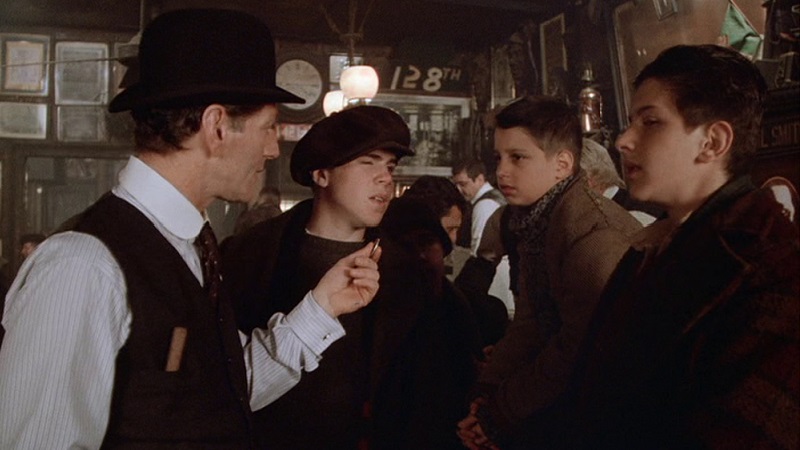
The narrative jumps across time, following Jewish gangster Noodles (Robert De Niro) through three phases of his life. First, his youth in the Lower East Side, where he meets his lifelong friend, the cunning but volatile Max (James Woods). In their prime during the Prohibition era, the two – along with childhood friends – rise to control a lucrative bootlegging operation. But tensions rise, and their friendship deteriorates with devastating consequences. In the third act, Noodles returns to New York as an old man after 35 years, confronting the ghosts of his past.

The fragmented screenplay may not feel intuitive, but it doesn’t need to be. The film works on a dreamlike, emotional logic. Many interpret the second half as nothing more than an opium-induced fantasy – a fugue state in which Noodles imagines a resolution, a reckoning, and perhaps a redemption that never truly came. It’s an ambiguous, melancholic meditation on memory, regret, and American myth. This is not a typical rise-and-fall gangster story; it’s about life itself. The psychological depth is extraordinary. Few films give you such an encompassing sense of a person’s entire existence: memories, pain, joy, death and, of course, love.

As with Leone’s finest work, the film is packed with haunting, unforgettable moments: Max and Noodles beaten in the alley, Noodles’ opium haze in the Chinese theater, Little Dominic dying in Noodles’ arms (“Noodles, I slipped”), and Noodles peeking through the wall at Deborah’s dance rehearsal. The art direction and cinematography render every frame like a painting, each one worthy of being hung on a wall. In that sense, this is Leone’s The Godfather.

Together with composer Ennio Morricone, Leone achieves true cinematic synergy. The film’s pacing often mirrors the rhythm of Morricone’s hauntingly beautiful score, enhancing the emotional impact to mesmerizing effect. The casting is another strength: De Niro brings nuance and reluctant sympathy to a deeply flawed anti-hero, while Woods is chillingly effective as Max. Strong supporting roles are delivered by Jennifer Connelly, Joe Pesci, Tuesday Weld, and Burt Young.

Though it may have its imperfections, Once Upon a Time in America remains a towering, influential achievement. Leone spent over a decade bringing this vision to life and it shows. It’s a shame it turned out to be his final film, but few directors could hope to end their career with something so ambitious, haunting, and unforgettable.

Rating:

Quote:
NOODLES: “You can always tell the winners at the starting gate. You can always tell the winners and you can tell the losers.”

Trivia:
Robert De Niro suggested that James Woods wear a set of perfect, bright white teeth to demonstrate Secretary Bailey’s wealth and vanity. The producers balked at the cost, so De Niro paid for them himself.

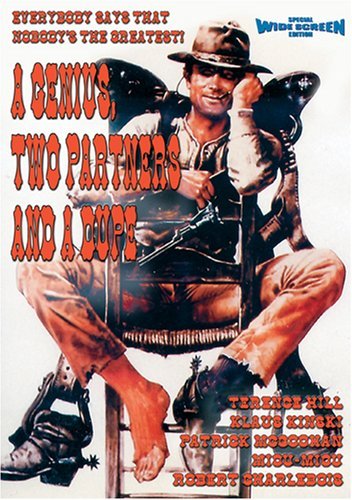
A Genius, Two Partners and a Dupe

Director: Damiano Damiani
Written by: Damiano Damiani, Ernesto Gastaldi, Fulvio Morsella
Cast: Terence Hill, Miou-Miou, Robert Charlebois, Patrick McGoohan

Year / Country: 1975, Italy, France, West Germany
Running Time: 118 mins.

By the 70’s, the spaghetti western had almost become a parody of itself. The serious violent westerns were barely released outside of Italy, while comedy-westerns such as the ‘Trinity’ movies were immensely popular internationally. Genre originator Sergio Leone decided to make the ultimate parody himself in 1973. This became My Name is Nobody, starring Terence Hill. It was a box office hit. In 1975 Leone produced the loose sequel called A Genius, Two Partners and a Dupe, also known as Nobody’s the Greatest. While it was once again popular at the box office due to Hill and Leone’s involvement, the critics didn’t like it. And understandably so.

Hill essentially reprises his Nobody role. His character Joe Thanks is a genius conman. Together with his friends Steam Engine Bill (Robert Charlebois) and Lucy (Miou-Miou) he cooks up an elaborate plan to steal 300.000 dollars from the Indian-hating Major Cabot (Patrick McGoohan). Whenever things are about to go wrong, Joe, the genius, knows exactly what to do.

Leone came up with the idea for the plot after seeing Las Valseuses, starring Miou-Miou, who he then cast as Lucy. Besides producing, Leone also directed the opening scene. The rest of the film is directed by Damiano Damiani, who made one of the greatest spaghetti’s in 1966: A Bullet For the General. This was the last western Leone worked on. He was disappointed with the result and chose to remain uncredited. I can’t blame him. This is pretty much a mess and most of the jokes miss their mark.

Like in all of Leone’s projects, the original score is composed by Ennio Morricone. The very electric score in this film is one of the few things it has going for it. His adaptation of Für Elise, combined with the wailing from The Good, the Bad and the Ugly is a beautifully constructed highlight. That is basically it though. One can only conclude that by this time, the spaghetti western was truly dead.

Rating:

Biography: Damiano Damiani (1922, Pasiano, Italy) is an Italian screenwriter, director and actor. He won awards for several of his films, such as the Mafia drama The Pizza Connection. In the eighties he also made the renowned mini-series La Piovra (The Octopus) about a prosecutor’s battle with the Mafia. This successful series ran for eight series on RAI Uno and turned out to be one of Italy’s bestselling series abroad.

Filmography (a selection): The Hit Man (1960), Lipstick (1960), The Empty Canvas (1963), Strange Obsession (1966), A Bullet for the General (1966), The Day of the Owl (1968), The Most Beautiful Wife (1970), How to Kill a Judge (1974), A Genius, Two Partners and a Dupe (1975), Goodbye and Amen (1977), A Man on His Knees (1978), The Warning (1980), The Octopus (1984, mini-series), The Pizza Connection (1985), The Inquiry (1986), Massacre Play (1989), Angel With a Gun (1992), Killers on Holiday (2002)