Once Upon a Time in… Hollywood (recensie)

——– let op: spoilers ——–

Een nieuwe Tarantino film is een event. Dat begint al met de aankondiging: ‘de negende film van… ‘ De man beheerst marketing al net zo goed als filmmaken.

Op het eerste gezicht is Once Upon a Time in… Hollywood een typische Tarantino-film. Een liefdesverklaring aan het Hollywood uit zijn jeugd in 1969. En met sterren die eerder in zijn films hebben gespeeld, zoals Leonardo DiCaprio (Django Unchained) en Brad Pitt (Inglourious Basterds). Toch zijn er een aantal verschillen met zijn eerdere werk. Zo is het kenmerkende ultrageweld gereserveerd voor de laatste vijftien minuten. En heeft de film in feite geen plot…

Dat laatste is te verklaren door het feit dat Tarantino het ‘verhaal’ eerst vijf jaar lang heeft geprobeerd als roman te ontwikkelen. Voordat het uiteindelijk “werd wat het wilde worden”, aldus de schrijver-regisseur in een interview met Esquire. Het is vooral een karakterstudie en tijdsbeeld geworden. Drie personages (twee fictieve en één echte) staan centraal die de drie sociale lagen van Hollywood vertegenwoordigen.

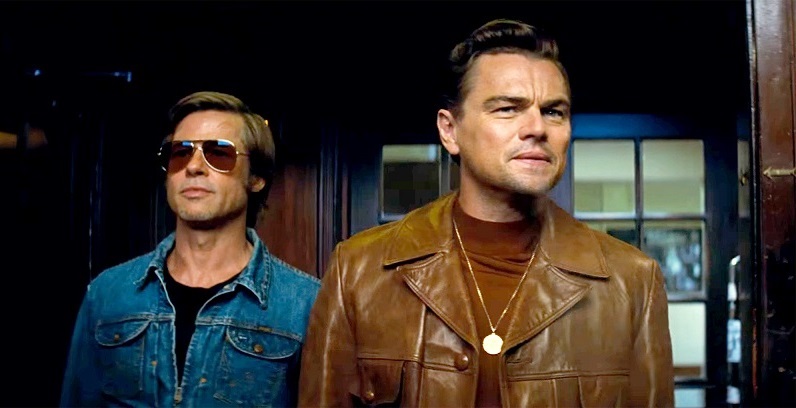
DiCaprio speelt Rick Dalton, een oude western televisiester die nooit succesvol de stap naar films heeft gezet. Brad Pitt is zijn stunt double Cliff Booth, iemand wel in Hollywood werkt, maar geen noemenswaardige carrière – en dus sociale status – heeft. En tot slot, Margot Robbie als up-and-coming actrice Sharon Tate die naast Dalton woont. Als verloofde van de hotste regisseur van dat moment, Roman Polanski, is zij op weg het helemaal te maken in Tinseltown.

Net als in Pulp Fiction volgt de film de gebeurtenissen die de personages gedurende een aantal dagen meemaken. Maar anders dan in Tarantino’s doorbraakfilm zijn deze dagen niet heel veelbewogen. Op de eerste dag heeft Dalton een meeting met Hollywood-agent Marvin Schwarz (fijne bijrol van Al Pacino) die hem probeert te verleiden naar Italië te gaan om in spaghettiwesterns te spelen. De onzekere acteur is ervan overtuigt dat zijn carrière voorbij is en zijn positief ingestelde vriend Cliff troost hem. Sharon Tate bezoekt ‘s avonds een feestje in de Playboy Mansion waar de echte sterren van dat moment aanwezig zijn.
Op dag 2 speelt Dalton een slechterik in een western en volgen we de ups en downs van een vrij gewone draaidag. Wie denkt dat Hollywood alleen maar glamour is, krijgt hier wel even een reality check van de regisseur. Ondertussen onderzoekt de werkloze Cliff een oude film ranch aan de rand van Hollywood waar de Manson familie zich schuilhoudt. Deze doorgeslagen hippies zullen zoals verwacht een bepalende rol in de climax van de film spelen (maar ook zoals verwacht, zal dat op een hele andere manier gaan dan in het echt).

Sharon Tate rijdt tijdens deze dag rond door de stad en bezoekt een film waar ze in speelt: The Wrecking Crew. Ze lijkt een soort droomkarakter te zijn die rondzweeft tussen de ‘echte’ personages Rick en Cliff. In Hollywood wordt fictie realiteit en omgekeerd. Dat wordt helemaal duidelijk in deel 3 (en dag 3) van de film: 8 augustus 1969, de dag dat Hollywood haar onschuld verloor. Enige kennis van de Manson-moorden is hier wel nodig, want Tarantino legt bijna niks uit over de sekteleider en zijn intenties. Manson is zelfs slechts een edelfigurant in de film. En het plan van zijn volgelingen wordt in twee zinnen uit de doeken gedaan: Het huis van Tate binnendringen en iedereen vermoorden. Het op het werk van de duivel laten lijken…

Van Inglourious Basterds weten we dat Tarantino in staat is de geschiedenis (ten goede) te veranderen in zijn scripts. In die film werden Hitler en de volledige SS vermorzeld. In OUATIH haalt hij dezelfde truc uit, want – de grote verrassing – de moordzuchtige hippies lopen het huis van Dalton binnen in plaats van dat van Tate. Dit loopt slecht voor ze af. Cliff beheerst de kunst van geweld heeft hij eerder tijdens een matpartij met Bruce Lee gedemonstreerd. En Dalton veracht hippies die ‘zijn’ Hollywood aan het transformeren zijn. Bovendien heeft hij nog een souvenir uit één van zijn vroegere B-films in zijn schuurtje hangen. En zo eindigt OUATIH niet met het horrorbeeld van een vermoorde zwangere Tate, maar met de eerste ontmoeting tussen haar en Dalton. De bloedmooie actrice leeft en de B-acteur krijgt misschien kans op een carrière-doorstart. ‘Het gebeurde in Hollywood’.

Tarantino heeft duidelijk enorm veel plezier gehad in het uitdenken van Rick’s fictieve filmcarrière. Evenals in het schitterend hercreëren van het Hollywood uit zijn jeugd. Er liggen vast en zeker Oscarnominaties in het verschiet voor productie-ontwerp, kostuums, geluid en camerawerk. Voor kijkers met minder affiniteit met filmgeschiedenis zal dit ongetwijfeld geen favoriete Tarantino-film zijn. Hier heeft de maestro lak aan: hij doet wat hij leuk vindt. Dat blijkt ook uit de bizarre keuze voor zijn tiende, en naar verluidt laatste, film: een Star Trek Motion Picture. Zo gaf hij onlangs te kennen in een interview met Algemeen Dagblad.

We zullen de man en zijn culturele bijdragen enorm missen. Net als in Once Upon a Time in… Hollywood, is de filmindustrie opnieuw drastisch aan het veranderen. Met de opkomst van streaming services worden de klassieke filmproducties, zoals Tarantino ze maakt, een bedreigde diersoort. Daarom een les, zoals die van Cliff zou kunnen komen: geniet van wat je hebt zolang het er nog is. Voordat je het weet is het voor altijd verloren.

Face to Face

Director: Sergio Sollima
Written by: Sergio Donati, Sergio Sollima
Cast: Tomas Milian, Gian Maria Volonté, William Berger

Year / Country: 1967, Italy / Spain
Running Time: 107 mins.

In Face to Face, director Sergio Sollima delivers a more intellectual take on the spaghetti western while still packing in thrilling action. The film stars Gian Maria Volonté – best known for his villainous roles in A Fistful of Dollars and For a Few Dollars More – as Boston professor Brad Fletcher. Suffering from a severe lung ailment, Fletcher moves to Texas for the warmer climate, only to be taken hostage by the ruthless bandit Solomon Bennet (Tomas Milian) during a daring escape from custody.

Bennet aims to reunite his old gang, including his former ally Siringo (William Berger). However, he’s being hunted by the Pinkertons – a private detective agency – of which Siringo is secretly a member. As Fletcher spends more time with Bennet, his passive nature erodes, and he gradually embraces a life of crime. Once the beast within him is unleashed, he proves to be even more ruthless than his captor.

Sollima weaves a deeper thematic layer into the film, using the western setting to explore the rise of fascism. When Bennet seizes control of a village, he governs it as though it were a single organism, using manipulation and torture to force everyone into submission. His authoritarian rule mirrors historical regimes, adding an unsettling resonance to the story.

However, Fletcher’s transformation isn’t entirely convincing, likely due to the film’s extensive edits – the original cut ran 2.5 hours. His shift from an educated, seemingly moral man to a cruel bandit happens too abruptly, making it feel somewhat unearned. That said, Sollima’s direction shines, especially in his handling of the actors. Volonté delivers a controlled and nuanced performance, while Milian exudes charisma in every scene.

Ennio Morricone’s score, while solid, doesn’t quite reach the brilliance of his work with Sergio Leone. However, the film’s opening credit sequence does capture the grandeur of Leone’s westerns, setting the stage for an absorbing experience. Despite some flaws, Face to Face remains an excellent film – thought-provoking, visually compelling, and anchored by strong performances.

Rating:

Biography: Sergio Sollima (1921, Rome) is an Italian filmmaker. Due to his trio of westerns starring Tomas Milian in the mid 60’s (The Big Gundown, Face to Face and Big Gundown 2: Run, Man, Run) he became known as ‘the other Sergio’ – the third most important director of spaghetti westerns, after Sergio Leone and Sergio Corbucci. Sollima began in cinema as a scriptwriter on Italian sword and sandal epics such as Ursus (1961) and The Ten Gladiators (1963). He directed two spy movies to capitalize on the popularity of the James Bond films. Then he started making spaghetti westerns and action / crime films such as The Family starring Charles Bronson and Telly Savalas. Later in his career he moved more towards television work.

Filmography (a selection): L’amore difficile (1962, segment ‘L’avventura di un soldato’), Agente 3S3, passaporto per l’inferno (1965), Agente 3S3, massacre al sole (1966), Requiem per un agente segreto (1966), The Big Gundown (1966), Face to Face (1967), Big Gundown 2: Run, Man, Run, The Family (1970), Devil in the Brain (1972), Revolver (1973), Sandokan (1976, TV-episodes), The Black Corsair (1976), Steps of Love (1989), Berlin ’39 (1993)

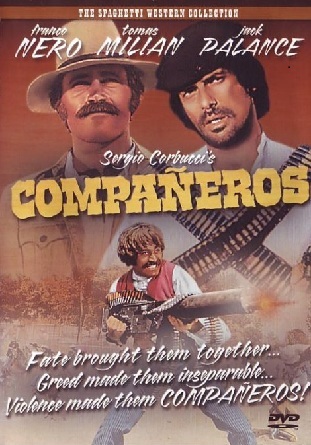
Compañeros

Director: Sergio Corbucci
Written by: Sergio Corbucci, Massimo De Rita, Fritz Ebert, José Frade, Dino Maiuri
Cast: Franco Nero, Tomas Milian, Jack Palance, Fernando Rey

Year / Country: 1970, Italy / West Germany / Spain
Running Time: 120 mins.

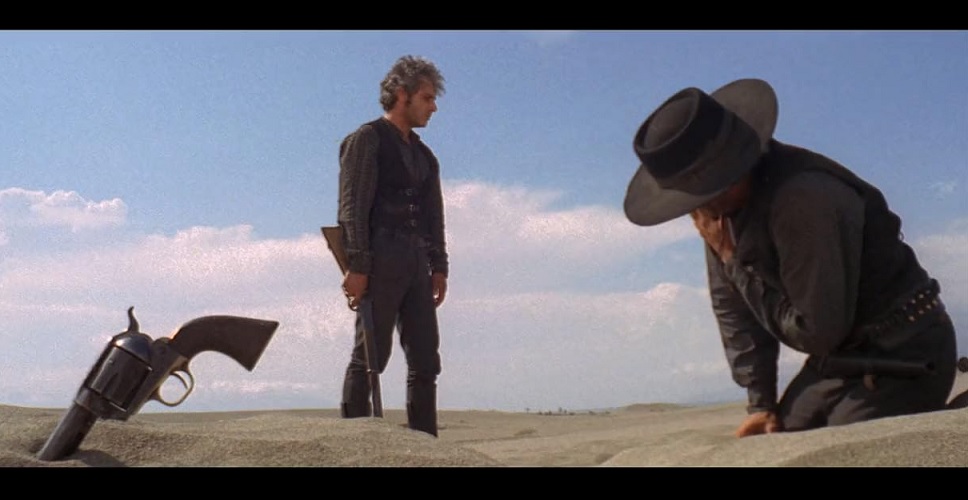
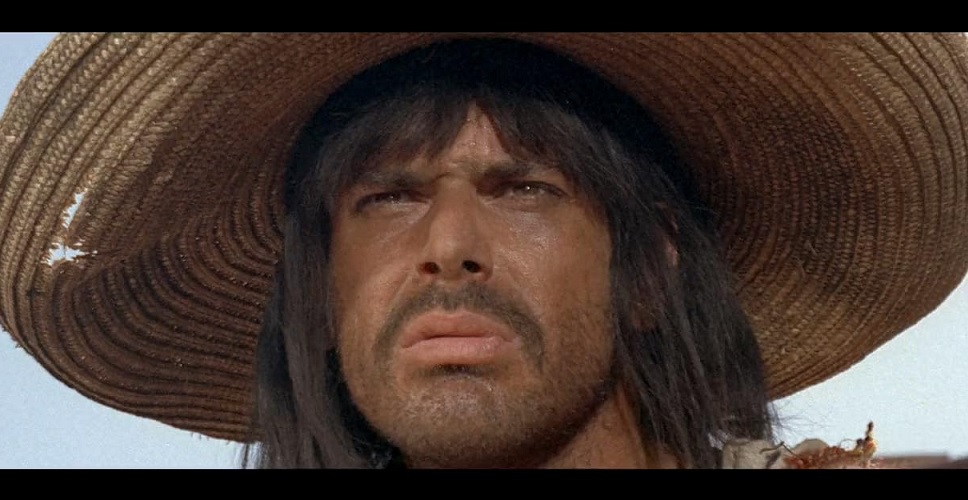
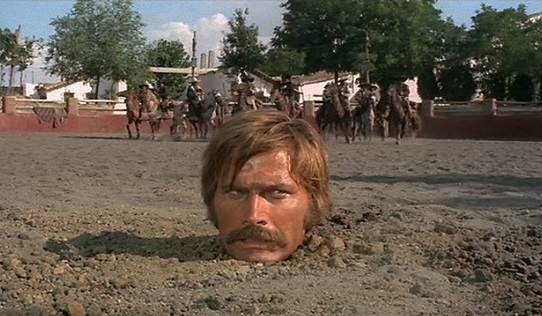
In a country torn apart by revolution, an unlikely duo teams up. The not too bright Mexican bandit Vasco (Tomas Milian) and the very polite arms dealer ‘The Swede’ (Franco Nero) go on a mission for the money hungry General Mongo. Their goal is to free Mongo’s pacifistic opponent Professor Xantos from a Texan jail because he knows the combination of a loaded safe. The two hate each other, so there is plenty of double-crossing along the way.

This spaghetti western, directed by the other Sergio, is an early buddy movie featuring two of the most established spaghetti western actors. The music is – of course – composed by Ennio Morricone and Jack Palance plays a very interesting supporting role as marijuana addicted gunslinger.

The movie misses the sharp humour and emotional depth that made genre films such as Django and the Dollar-trilogy so enjoyable, but it is certainly not the worst spaghetti western. The two strong leads fight, joke and shoot their way through a series of engaging adventures. The many last minute rescue scenes become kind of repetitive, so Corbucci could have been doing some heavier cutting. But, like the Mexican revolution, the movie ends in a massive shoot-out which is certainly worth the wait. Viva la Revolution!

Rating:

Biography: Sergio Corbucci (1926, Rome – 1990, Rome) is, alongside Sergio Leone, one of the most renowned directors of Spaghetti Westerns. He played a pivotal role in popularizing the genre, particularly through landmark films such as Django (1966) and Il grande silenzio (1968). Corbucci often collaborated with actor Franco Nero, creating some of the most iconic works of the genre. His films, often categorized as B-movies, are distinguished by their unflinching brutality, surreal and apocalyptic production design, dark humor, and politically left-leaning themes. A committed Marxist, Corbucci infused many of his works with a sense of revolutionary despair, reflecting the futility of social upheaval. Despite his significant contributions to cinema, Corbucci remained rooted in Italy throughout his career, with most of his films receiving limited international distribution. He passed away in Rome in 1990.

Filmography (a selection): Foreign Earth (1954), Water’s Love (1954), Supreme Confession (1957), Angel’s Sky (1957), Duel of the Titans (1961), Toto, Peppino and La Dolce Vita (1961), The Son of Spartacus (1963), Grand Canyon Massacre (1963), Django (1966), Navajo Joe (1966), The Mercenary (1968), The Great Silence (1968), Compañeros (1970), Bandera Bandits (1972), The White, the Yellow, and the Black (1975), The Payoff (1978), Super Fuzz (1980), My Darling, My Dearest (1982), Days of Inspector Ambrosio (1988)

A Fistful of Dynamite

Director: Sergio Leone
Written by: Sergio Donati, Sergio Leone, Luciano Vincenzoni
Cast: Rod Steiger, James Coburn, Romolo Valli, Maria Monti

Year / Country: 1971, Italy
Running Time: 147 mins.

A Fistful of Dynamite (also known as Duck, You Sucker!) is the second entry in Sergio Leone’s loose trilogy of epic films, sandwiched between Once Upon a Time in the West and Once Upon a Time in America. It is Leone’s final spaghetti western and his most overlooked film. But frankly, that is because it is his weakest. That’s not to say it’s without merit, but it lacks the tight storytelling and grandeur of his greatest works.

Set against the backdrop of the Mexican Revolution in 1913, the film follows an unlikely duo: the cigar chewing hick Juan Miranda and the dynamite juggling Irishman John Mallory. Their partnership begins with a planned bank robbery, only for them to discover that the bank is actually a political prison. Juan is unexpectedly thrust into the role of a revolutionary hero, and together, he and John take on the formidable Mexican army, led by a sadistic officer.

The film’s opening is striking. Juan shares a stagecoach ride with a group of wealthy elites who openly insult him and his people, branding them as animals while indulging in gluttonous excess. This immediately earns Juan some sympathy – until his six sons arrive to rob and humiliate the passengers, with Juan even committing an off-screen rape. Leone challenges the audience’s perceptions, presenting prejudice and social injustice while also revealing Juan’s own flaws. Enter John Mallory, an Irish dynamite expert who quite literally blasts onto the scene in a moment of cultural stereotyping played for dark humor.

Rod Steiger’s performance as Juan is divisive. While the character is intentionally unsympathetic, Steiger’s over-the-top acting makes him difficult to watch. Originally, Leone wanted Eli Wallach for the role, but the studio refused. While Wallach’s casting might have risked echoing his Tuco character from The Good, the Bad and the Ugly, it’s hard not to wonder if he would have been a better fit.

Leone claimed the film is ultimately about friendship rather than revolution. This isn’t immediately convincing, given Juan and John’s rocky introduction, but by the end, their relationship develops into something genuine and poignant. John’s journey, revealed through flashbacks, makes the bond between them all the more meaningful.

Despite its flaws – an overlong runtime, a less sweeping feel than Leone’s other Once Upon a Time films, and an Ennio Morricone score that, while good, doesn’t reach the heights of their other collaborations – the film still has standout moments. The ambush at the bridge is classic cinema, boasting one of the greatest explosions ever filmed. The panning shot along the execution ditches is haunting, and the climactic train collision is truly spectacular. Overall, the film is just not the revolution Leone’s earlier westerns were.

Rating:

Biography: Sergio Leone (1929, Rome – 1989, Rome) made his debut in the cinema working as a voluntary assistant and extra, among other things, in The Bicycle Thieves by Vittorio de Sica. Later, he became assistant director to Mario Bonnard. In 1959, when Bonnard was ill, he took over from him on the set of The Last Days of Pompeii. In 1961 he directed his first full-length film: The Colossus of Rhodes. But the film that was to bring him to the general attention came out in 1964: A Fistful of Dollars. His next films, For a Few Dollars More and The Good, The Bad and the Ugly complete what came to be known as the Dollars Trilogy and were a great box-office success. He would only make three more films before tragically passing away in 1989. He was taken from us by a heart attack in his house in Rome, while working on an ambitious project for a film on the Siege of Leningrad.

Filmography: The Colossus of Rhodes (1961), A Fistful of Dollars (1964), For a Few Dollars More (1965), The Good, The Bad and the Ugly (1966), Once Upon a Time in the West (1968), A Fistful of Dynamite (1971), Once Upon a Time in America (1984)