TV Dungeon: Kung Fu

(1972 – 1975, USA)

Creators: Ed Spielman, Herman Miller
Cast: David Carradine (Kwai Chang Caine), Radames Pera (Young Caine), Keye Luke (Master Po), Philip Ahn (Master Kan)

3 Seasons (63 Episodes)

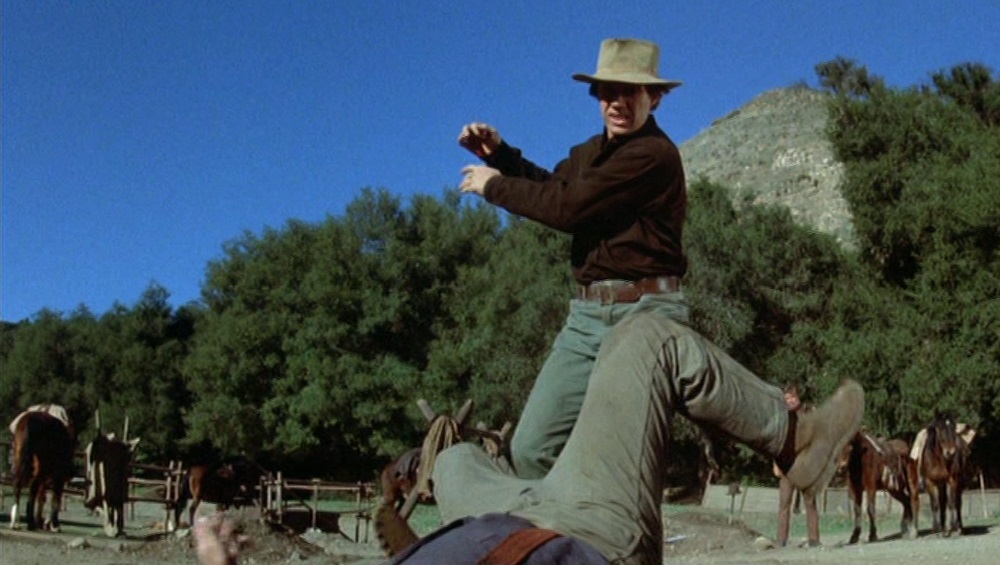
Kwai Chang Caine, a soft-spoken Shaolin priest exiled from China, wanders the savage American West of the mid-19th century. In each episode, he faces conflicts and hardships – whether injustice, violence, or intolerance – and relies on the teachings of his Shaolin monastery to navigate them. Through meditation, wisdom, and only when necessary, martial arts, Caine brings a sense of peace to a world ruled by chaos.

The show’s brilliance lies in its concept: placing a man trained in Taoist philosophy and Shaolin kung fu in the lawless, brutal Old West. The contrast is striking – while the West is filled with bandits, bigotry, and corruption, Caine embodies patience, serenity, and justice. His presence suggests that even a land steeped in violence can be redeemed through wisdom. The Taoist teachings interwoven throughout the show are its greatest strength, offering insights into paradoxes, balance, and a way of seeing the world differently. This depth of philosophy is what makes Kung Fu one of my all-time favorite series.

Yet, there is even more to appreciate. The sweeping American landscapes provide a breathtaking backdrop, immersing viewers in the setting. David Carradine, though regrettably not of Chinese descent (a disappointing yet unsurprising casting decision for the time), delivers a performance that is both mesmerizing and quietly powerful. His portrayal of Caine is nuanced, capturing both his gentleness and his underlying strength.

The series also boasts an impressive lineup of guest stars, many of whom later became household names, such as Jodie Foster, Harrison Ford, Barbara Hershey, Don Johnson, Carl Weathers, and many others. Their early appearances add to the show’s charm, making each episode a delight to revisit.

In today’s turbulent and uncertain world, Kung Fu remains a source of comfort and inspiration. While we may not be able to solve all of the world’s problems, Caine’s approach teaches us how to handle our own struggles with patience and wisdom. He fights only when absolutely necessary and never to kill, making this series a rare example of an action show that is fundamentally about non-violence.

Watching Kung Fu is an enlightening experience – it calms the mind, expands the spirit, and offers a guiding philosophy for life. It’s a show that doesn’t just entertain; it makes you wiser. I’m forever grateful for the lessons it has taught me, and I remain a lifelong student of Taoist philosophy because of it.

Read also: The Tao of Kwai Chang Caine

The 15 Greatest George Harrison Songs

During his formative years as lead guitarist of The Beatles, George Harrison, often called the quiet and spiritual Beatle, developed himself as a successful songwriter in his own right, who worked in the shadow of songwriting canon Lennon-McCartney. He ended up writing some of the group’s most iconic songs, and then – post-Beatles – continued to add a number of classics to his repertoire as a productive solo artist. These are my 15 favorites.

15. Blow Away
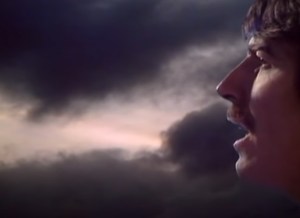
Day turned black, sky ripped apart. Rained for a year ‘til it dampened my heart. Cracks and the leaks, the floorboards caught rot. About to go down, I had almost forgotten… Great opening lyrics, this title song and single from of his 1979 album ‘George Harrison’. This easy listening song became one of Harrison’s most popular recordings from his solo career, and it’s easy to understand why.

14. I Want To Tell You

This was the third track George added to ‘Revolver’, and thereby the first time he contributed more than two tracks to a Beatles album. The song is about the difficulty of conveying the emotions you experience during an acid trip. It’s the opening song of ‘Live in Japan’, the fantastic album made of the concert tour George did in Japan with Eric Clapton as his guitarist and band leader.

13. Piggies

‘Piggies’ is a social satire inspired by George Orwell’s ‘Animal Farm’. Great combo of classical music, baroque pop and absurd lyrics (pigs eating bacon). Unfortunately it was, along with ‘Helter Skelter, used by Charles Manson and his cult as a foundation for his race-related counter cultural revolution. Still, it remains a terrific song, and Harrison’s second best song on the magnificent ‘White Album’ in my humble opinion.

12. Living in the Material World
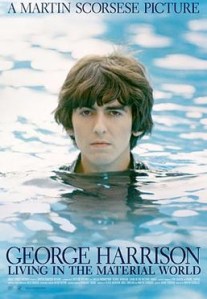
This song’s title was chosen by Martin Scorsese for his documentary about Harrison. It’s another one of his spiritual songs and the title of his follow-up album to ‘All Things Must Pass’. It’s a very memorable tune in which George describes the limits of knowledge we have in this state as living beings and the clearer picture that will emerge after death. John and Paul are also mentioned in the lyrics.

11. If I Needed Someone
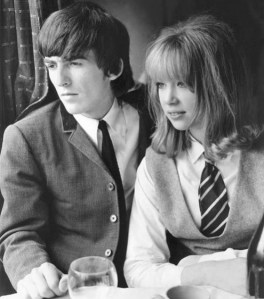
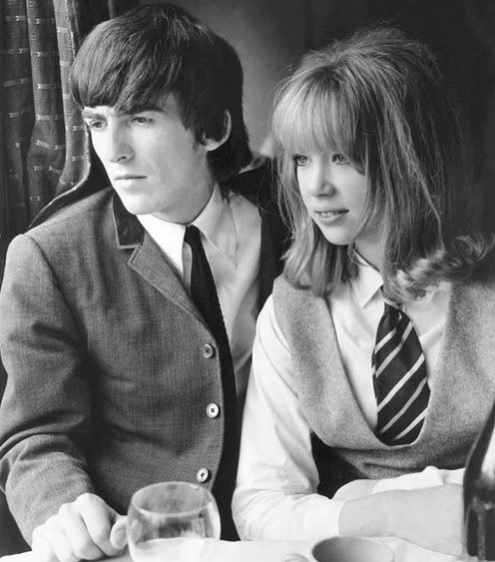
Along with ‘Think For Yourself’, this was George’s contribution to ‘Rubber Soul’. He apparently wrote it for Pattie Boyd, with whom he wasn’t yet married in 1965. It was inspired by the sound of the American band the Byrds who George and John liked and who were clearly inspired by the Beatles. The ambivalent lyrics are quite beautiful, and ‘If I Needed Someone’ was at the time considered to be George’s best song at that point.

10. Within You, Without You

One of the three Indian songs George composed for the Beatles (the others are ‘Love You To’ and ‘The Inner Light’) and his only song on ‘Sgt. Pepper’s Lonely Hearts Club Band’. “I think that is one of George’s best songs”, John Lennon later said. “I like the arrangement, the sound and the words. He is clear on that song. You can hear his mind is clear and his music is clear.” It was recorded in Abbey Road Studios in London without the other Beatles, and features Indian instruments such as the sitar, a tambura and a tabla.

09. I Me Mine

In Peter Jackson’s ‘Get Back’ about the ‘Get Back’ sessions in Twickenham Studio’s, George arrives one morning, and he starts playing a new song he’s been working on for Ringo and some crew members. It is called ‘I Me Mine’. They like it and so do I. The lyrics point to self-centredness as part of the human condition. It was the last song The Beatles, somewhat ironically, recorded before they split up and went to do their own thing.

08. Cheer Down
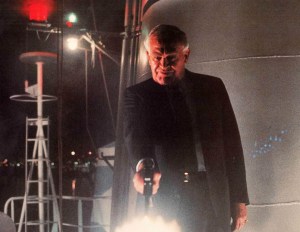
‘Cheer Down’ was the closing song of the tremendous action film Lethal Weapon 2 in 1989. It was picked by George’s friend Eric Clapton, who was in charge of the music. The title of the song is attributed to Harrison’s wife Olivia, who told her husband to ‘cheer down’ when he would get too enthusiastic. He wrote it together with Tom Petty, and released it as a single with ‘Poor Little Girl’ as the B-side. It was the last such release by Harrison as a solo artist during his lifetime.

07. Tax Man

On The Beatles’ legendary album ‘Revolver’, George got the opening track with ‘Tax Man’. It was the first political song by the group, written as a protest against the progressive super tax of 95 percent the band had to pay at that time. It was introduced by Harold Wilson, prime minister and Labour Party leader, who is mentioned in the lyrics along with conservative leader Ted Heath. The fantastic guitar solo is played by none other than Paul McCartney.

06. What Is Life
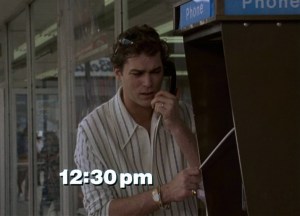
‘What Is Life’ is one of the hit singles of ‘All Things Must Pass’, Harrison’s triple album which was released in november 1970 after the breakup of the group. Background musicians on the song include Eric Clapton and the Delaney & Bonnie and Friends Band. It became one of Harrison’s most popular compositions and showed the depth of his talents that had been hiding in plain sight behind Lennon and McCartney. The songs was used in the final segment of GoodFellas, the part in which Henry Hill’s life as a gangster goes off the rails.

05. Here Comes The Sun

And what is currently the most streamed Beatles-song? It’s not a Lennon-McCartney composition, but by far Harrison’s ‘Here Comes The Sun’. It is currently on 1.1 billions streams on Spotify. George wrote this pearl at Eric Claptons’ country house on an acoustic guitar while skipping a business meeting at Apple Corps headquarter about The Beatles’ business affairs. It became one of his signature songs and together with ‘Something’ formed his genius contribution to ‘Abbey Road’, the final album they recorded. The beautiful composition shows his maturity as a songwriter.

04. Something
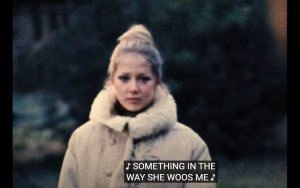
This classic love song from ‘Abbey Road’ became Harrison’s first A-side single (it was released as a double A-side single together with Lennon’s ‘Come Together’). It is considered as a definite highlight of Harrison’s career. Lennon called it “the best track on ‘Abbey Road’” and it was later covered by a.o. Frank Sinatra, Elvis Prestley, Ray Charles and Shirley Bassey. After ‘Yesterday’ it is the most covered song by The Beatles.

03. While My Guitar Gently Weeps

Rolling Stone Magazine ranked this song seventh in their list ‘The 100 Greatest Guitar Songs of All Time’. And justly so! The guitar work (played partly by Eric Clapton uncredited) is sweeping. The words that started this composition – gently and weeps – were randomly chosen from a book George found lying around. This reflects the meaning of the lyrics that appear to be about randomness and – typical for George – universal love. Inspired by the Taoist concept that everything is relative to everything else as opposed to the Western view that things are merely coincidental.

02. Give Me Love (Give Me Peace On Earth)
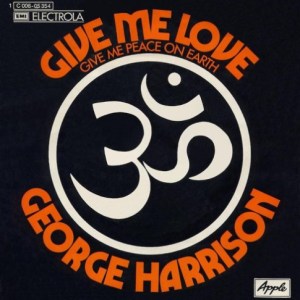
I am a sucker for George’s spiritual songs and this is reflected in my choice for his greatest two songs. ‘Give Me Love’ (1973) became George’s second number one single in the US knocking McCartney’s ‘My Love’ to the second spot. It contains beautiful slide-guitar solos, and I love his passionate pleading to the Lord, asking to be freed from birth (released from the karmic cycle of birth, death, and rebirth). Don’t miss the beautiful live version from the ‘Live in Japan’ album.

01. My Sweet Lord
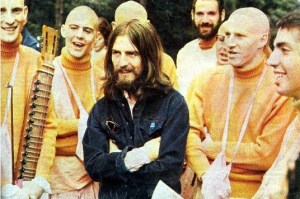
Why ‘My Sweet Lord’ is my favorite George Harrison song? Because the songs heralded the arrival of Harrison’s slide guitar technique, and I absolutely love the sound of the guitars on this song. The solo especially is marvelous. Also, George’s passionate singing is terrific, and those background vocals: LOVE THEM! Lennon didn’t like it much, commenting: “Every time I put the radio on it’s ‘oh, my Lord.’ I’m beginning to think there must be a God.” But maybe he was a little jealous that George became the first ex-Beatle to score a number-one single. Later in the 1970s, Harrison was found guilty to have subconsciously plagiarized the song ‘He’s So Fine’ by The Chiffons.

Vacation Reading: Three Philip K. Dicks

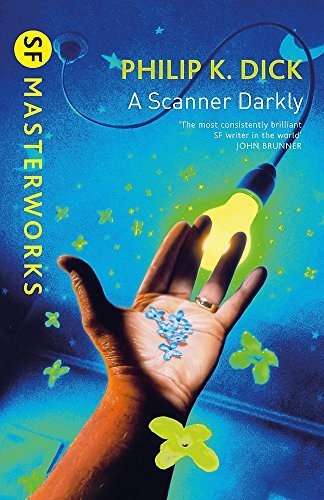
A Scanner Darkly (1977)

Semi-autobiographical novel about Dick’s experiences of living with a group of dope users. The main character is Bob Archtor, an undercover agent who gets addicted to a futuristic drug (the novel is set in 1994 in Orange County) called ‘Substance D’, a drug that soon leads to serious brain malfunction, and Archtor starts to lose his identity. Dick wrote it after a period in which he wasn’t able to produce any fiction due to drug consumption, so this novel functioned as a turbocharger of sorts. It contains flashes of brilliance, especially when it commentates on the lifestyle of heavy drug users, but as a whole it is quite a dull read, especially for a terrific writer as Dick. Turned into a 2006 movie by Richard Linklater, starring Keanu Reeves, Woody Harrelson, Winona Rider and Robert Downey Jr. The book ends with a list of all the dopers Dick hung out with who had died since then. It is quite a long list.

The Man in the High Castle (1962)

Who is the Man in the High Castle? It is the author Hawthorne Abendsen who wrote a subversive novel in which the allies won the Second World War. You see, this classic novel by science fiction legend Philip K. Dick is set in an alternative America which is governed by the Nazi’s and Japanese who have won WWII. In this world, American culture is quickly vanishing from existence, and an artificial America is rising. The novel follows various American, Japanese and European characters who try to make their way in this reality, thereby using the Taoist book ‘I Ching or Book of Changes’ as their guidance. The fascinating thing about ‘The Man in the High Castle’ is how believable Dick has crafted this alternate world. It makes the reader realize that we live in such a world ourselves, the result of countless choices and actions. We take it for granted, but everything could easily be very different. Turned into a television series by Amazon in 2015.

VALIS (1981)

‘VALIS’ follows the adventures of Horselover Fat (great name for a character!), an alter ego of the writer. This later, partly autobiographical book, is about Dick’s religious experiences. VALIS stands for Vast Active Living Intelligence System and represents the writer’s vision of God, which is that God is actually one huge macro-mind that connects everything. Unfortunately, the book – that was published one year before his death – contains not much more than endless philosophizing about the divine, madness and alien intelligence. Yes, Dick certainly had some fascinating thoughts and ideas, but they lack clarity here. And a plot is also sorely missing in ‘VALIS’. I’m afraid I am more a fan of Dick’s earlier works, like the phenomenal ‘Ubik’. ‘VALIS’ is part of a trilogy that also included ‘The Divine Invasion’ and ‘The Transmigration of Timothy Archer’, his final novel.

The Tao of Kwai Chang Caine

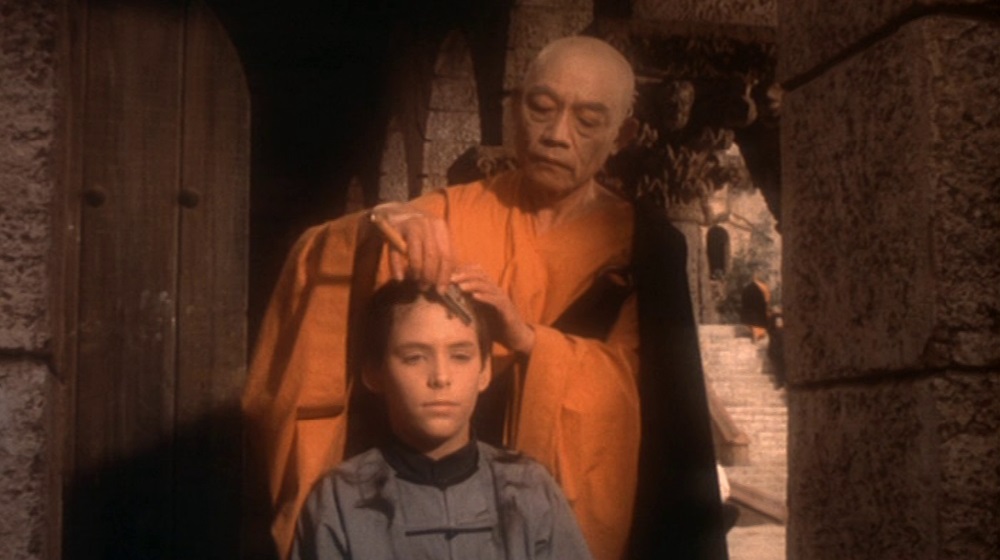
The Shaolin priest Kwai Chang Caine is the protagonist of the legendary tv-show Kung Fu from 1972. In every episode, the half Chinese and half American martial arts expert (played by David Carradine) experiences an adventure in the old West. To succeed in helping others and resolving situations, he uses the ancient wisdom he has learned in the Shaolin Monastery in China where he has spent his childhood and early adult years. Below are fifteen aphorisms from the first season that I really like. Many are adapted from or derived directly from the Tao Te Ching, a book of ancient Taoist philosophy attributed to the sage Lao Tzu.

“If one words are no better than silence… one should keep silent.”
— Caine

“All creatures, the low and the high, are one with nature. If we have the wisdom to learn they may teach us their virtues. Between the fragile beauty of the praying mantis and the fire and passion of the winged dragon, there is no discord. Between the supple silence of the snake and the eagles claw there is only harmony as no two elements of nature are in conflict. So when we perceive the ways of nature, we remove conflicts within ourselves and discover a harmony of body and mind in accord with the flow of the universe.”
— Master Kan

“Life sustains life. And all living creatures need nourishment. Yet, with wisdom, the body learns to sustain in ways that all may live.”
— Master Kan

“I do not eat meat. I do not believe in killing to eat.”
— Caine

“Weakness prevails over strength. Gentleness conquers. Become the calm and restful breeze that tames the violent sea.”
— Master Kan

“In one lifetime, a man knows many pleasures: a mother’s smile in waking hours, a young woman’s searing touch and the laughter of grandchildren in the twilight years. To deny these in ourselves is to deny that which makes us one with nature. Acknowledge them and satisfaction will follow. To suppress a truth is to give it force beyond endurance.”
— Master Kan

“Before we wake, we cannot know that what we dream does not exist. Before we die, we cannot know that death is not the greatest joy.”
— Caine

“If a man dwells on the past, then he robs the present. But if a man ignores the past, he may rob the future. The seeds of our destiny are nurtured by the roots of our past.”
— Master Po

“It does not end. The journey goes on, from one time to another. Nothing dies that was ever something.”
— Caine

“Young Caine, when I was a boy I fell into a hole in the ground and I was broken and could not climb out. I might have died there, but a stranger came along and saved me. He said it was his obligation that for help he had once received he must in return help ten others. So that good deeds would spread out like the ripples from the pebble in a pond. I was one of his ten. And you become one of mine. And now I pass this obligation on to you.”
— Master Po

“Peace lies not in the world, but in the man who walks the path.”
— Master Po

“I have three treasures which I hold and keep. The first is mercy, for from mercy comes courage. The second is frugality, from which comes generosity to others. The third is humility, for from it comes leadership. Hold and keep them not in memory, but in your deeds.”
— Master Po

“We are one. Yet we are not the same. Ten million living things have as many different worlds.”
— Master Kan

“See the way of life as a stream. A man floats, and his way is smooth. The same man turning to fight upstream exhausts himself. To be one with the universe, each must find his true path, and follow it.”
— Master Po

“Between father and son there is a bridge which neither time nor death can shatter. Each stands at one end needing to cross and meet. The bridge of which I speak is love.”
— Master Po