The Departed (2006)


Cops or Criminals. When you’re facing a loaded gun what’s the difference?

Directed by:
Martin Scorsese

Written by:
William Monahan (screenplay)
Alan Mak (screenplay Mou gaan dou)
Felix Chong (screenplay Mou gaan dou)

Cast:
Leonardo DiCaprio (Billy Costigan), Matt Damon (Colin Sullivan), Jack Nicholson (Frank Costello), Mark Wahlberg (Dignam), Martin Sheen (Queenan), Ray Winstone (Mr. French), Vera Farmiga (Madolyn), Anthony Anderson (Brown), Alec Baldwin (Ellerby), Kevin Corrigan (Cousin Sean)
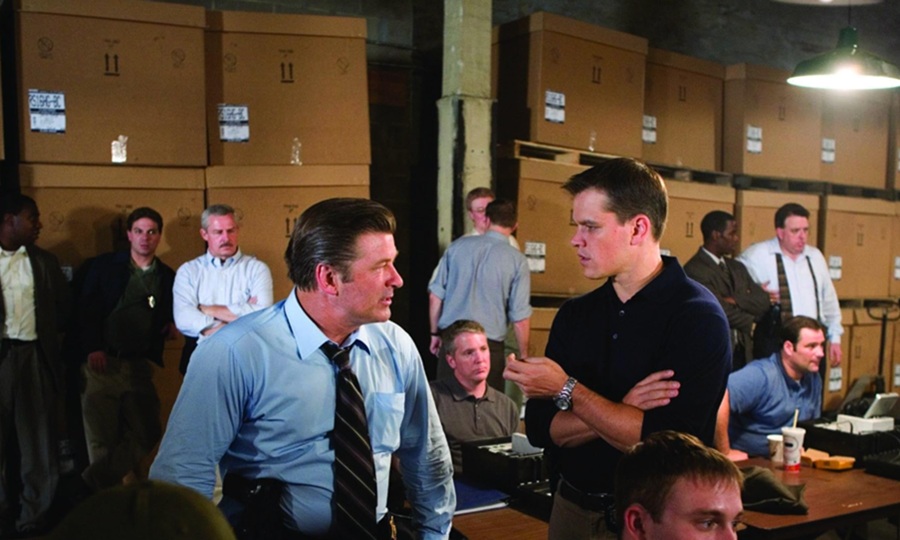
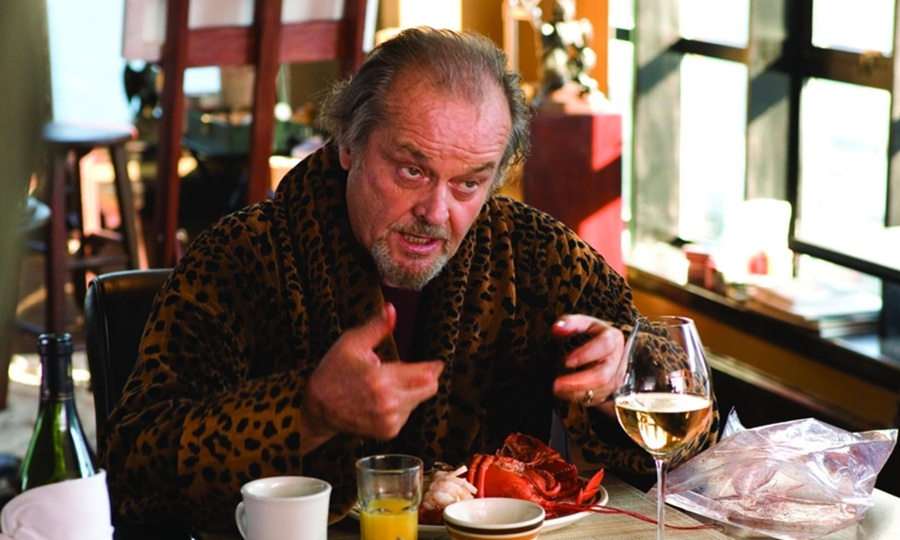
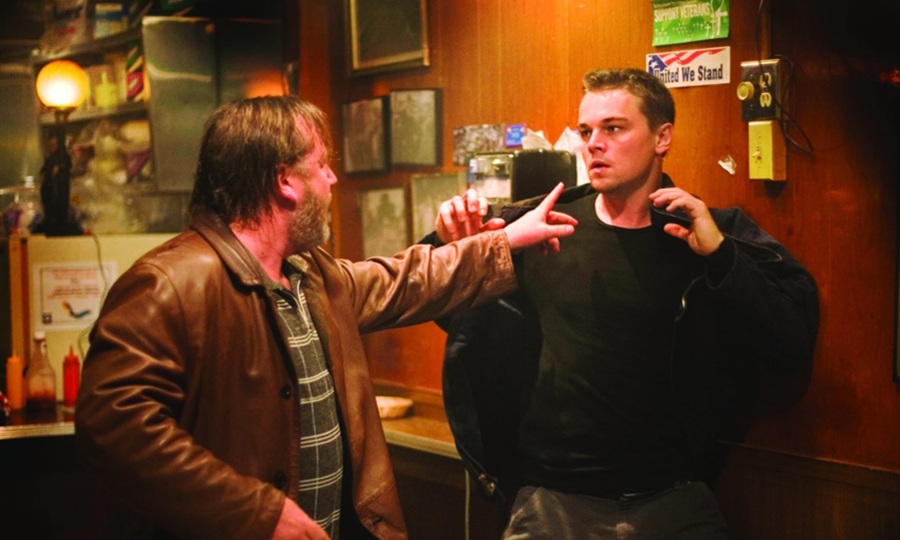
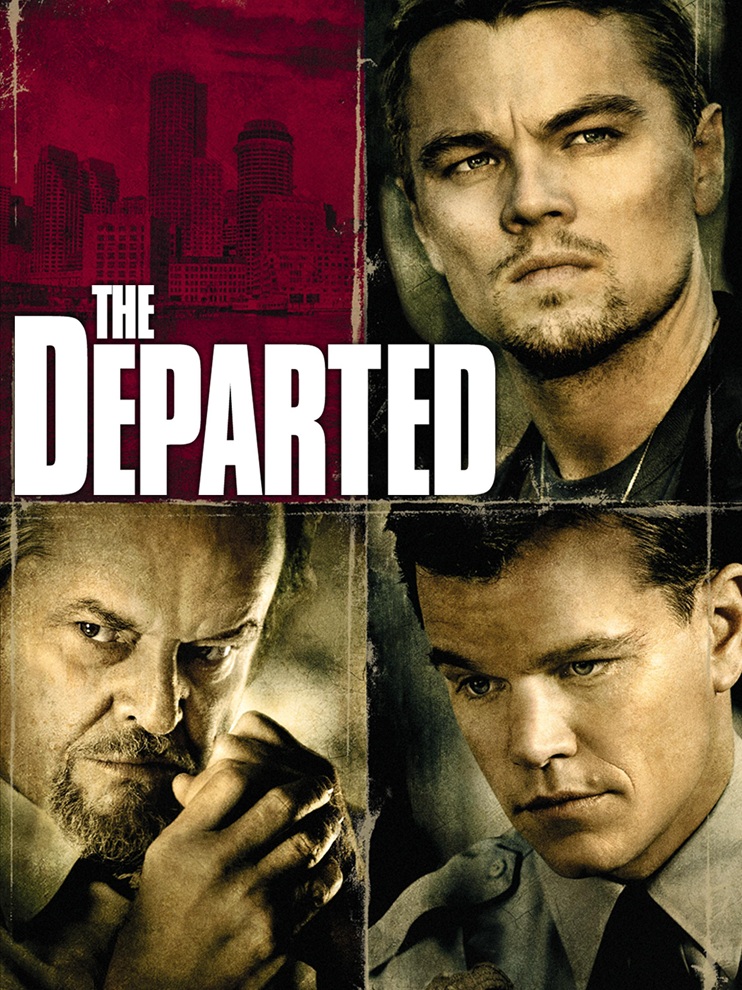
A remake of the 2002 Hong Kong thriller Infernal Affairs by one of the greatest American directors of all time. That can’t go wrong, right? The Academy certainly didn’t seem to think so, awarding the film Oscars for Best Picture, Best Director (Scorsese’s first!), Best Adapted Screenplay, and Best Film Editing. While some might see this as recognition long overdue, the film earns its accolades.

The Departed is a fantastic crime thriller, even if it may not be Scorsese’s very best. The main point of discussion for some is that it’s not a completely original film. The movie opens with The Rolling Stones’ ‘Gimme Shelter’, a great track that sets the tone perfectly, though it was also used to memorable effect in Goodfellas.

Scorsese has dealt with the underworld before in Mean Streets, Casino, and GoodFellas. While those masterpieces were based on real-life stories and experiences, The Departed shows he can deliver a tightly plotted, suspenseful narrative with equal skill.

The plot does lend itself to many exciting twists and turns. Irish crime boss Frank Costello (a maniacal turn by Jack Nicholson) has a young spy, Colin Sullivan (Matt Damon), work his way up in the Boston police force. In return, the police assign young recruit Billy Costigan (Leonardo DiCaprio) to secretly infiltrate Costello’s hardened gang. A dangerous cat-and-mouse game begins that keeps you on the edge of your seat.

The Departed is a high-energy thriller with an amazing cast. Damon and DiCaprio are excellent in the lead roles, but the real fireworks come from Nicholson and his fellow villain Ray Winstone. Scorsese wisely cast the then-unknown Vera Farmiga as the female lead, and she’s excellent in her subtlety. The plot keeps you engaged for the full 151 minutes of its runtime, and while the characters might not have the same depth as in some of Scorsese’s other works, they serve the story well. The surprising climax, rather than feeling cold, delivers a satisfying and impactful ending.

If the film hadn’t been directed by Scorsese, the bar might not have been raised so high, but as it stands, The Departed is a highly entertaining and expertly crafted movie that not only meets but often exceeds its very high expectations.

Rating:

Quote:
FRANK COSTELLO: “I don’t want to be a product of my environment. I want my environment to be a product of me.”

Trivia:
Originally Brad Pitt was cast as Colin Sullivan, but later dropped out to work with Alejandro González Iñárritu in Babel. He continued to produce the film under his production company Plan B.

Intermezzo #7

To lead a better life I need my love to be here…
Here, making each day of the year.
Changing my life with a wave of her hand.
Nobody can deny that there’s something there.
There, running my hands through her hair.
Both of us thinking how good it can be.
Someone is speaking but she doesn’t know he’s there.

I want her everywhere and if she’s beside me.
I know I need never care.
But to love her is to need her everywhere.
Knowing that love is to share.
Each one believing that love never dies.
Watching her eyes and hoping I’m always there.

Here, There and Everywhere
The Beatles (1966), Revolver

Convoy

Director: Sam Peckinpah
Written by: B.W.L. Norton
Cast: Kris Kristofferson, Ali MacGraw, Burt Young, Ernest Borgnine

Year / Country: 1978, USA
Running Time: 104 mins.

Convoy is not really a fast carsploitation film, but more like a road adventure. It is a bit of an odd movie in director Sam Peckinpah’s oeuvre, although it does contain a slow motion shot or two and it stars Ali MacGraw and Ernest Borgnine.

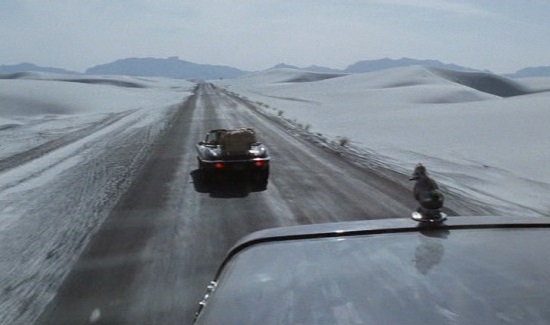
The story revolves around a trucker nicknamed Rubber Duck. His Mack truck has a wild duck statue on the hood; later parodied by Tarantino in Death Proof in which Kurt Russell’s character Stuntman Mike has the same. Rubber Duck has that something that makes people leaders. You can not really put your fingers on what it is, a sort of X-factor, but Rubber Duck, charismatically portrayed by Kris Kristofferson, definitely has it.

After a bar fight with a bunch of dishonest cops, led by the crooked sheriff Cottonmouth (Borgnine), Duck and his buddies head to New Mexico where they will be safe from prosecution. Through a radio channel, other truckers pick up on what is going on and join the convoy. It grows and grows until it reaches a powerful mass. Although triggered by corruptness, the convoy is not really a political event. It just happens.

The greatest strength of Convoy lies in its screenplay. There may not be much of a story; it does sketch strong characterizations and delivers very sharp dialogues. Also impressive is the beautiful landscape cinematography. Certainly not near Peckinpah’s best, but good compared to many other standards.

Rating:

Biography: Sam Peckinpah (1925, Fresno – 1984, Inglewood) got famous for reinventing the western with movies such as The Wild Bunch and Pat Garrett & Billy the Kid. His nickname would become ‘Bloody Sam’ because these movies often contained extreme violence and bloody action sequences. His career started when he got to do jobs for director Don Siegel. Then he got to direct (western) TV series. In 1961 he directed his first feature film, a western titled The Deadly Companions. However, it was with his second feature, Ride the High Country (1962), that Peckinpah really began to establish his reputation. He died of a stroke in 1984, 59 years of age.

Filmography (a selection): Broken Arrow (1958, TV episode), The Rifleman (1958-59, TV episodes), Klondike (1960, TV series), The Deadly Companions (1961), Ride the High Country (1962), Major Dundee (1965), Moon Wine (1966, TV), The Wild Bunch (1969), The Ballad of Cable Hogue (1970), Straw Dogs (1971), Junior Bonner (1972), The Getaway (1972), Pat Garrett & Billy the Kid (1973), Bring Me the Head of Alfredo Garcia (1974), The Killer Elite (1975), Cross of Iron (1977), Convoy (1978), The Osterman Weekend (1983)

Een korte samenvatting van een korte geschiedenis van bijna alles

Er zijn boeken die de kracht hebben om je kijk op het leven compleet te veranderen. ‘Een korte geschiedenis van bijna alles’ (Bill Bryson, 2003) is zo’n boek. Ik zal na het uitlezen ervan nooit meer hetzelfde aankijken tegen het onbeduidende rotsblokje de aarde en het leven erop.

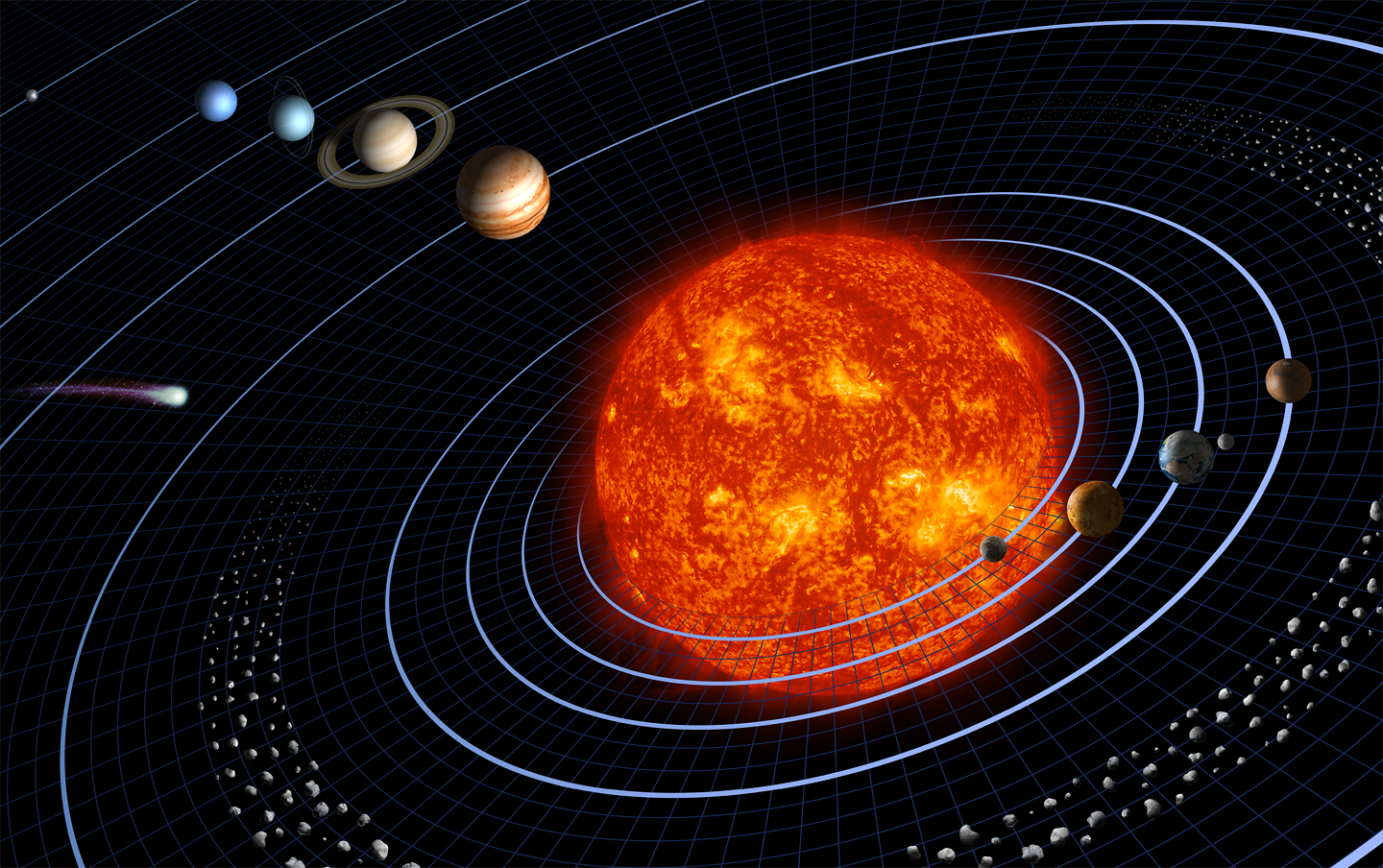
Met de intrigerende titel belooft Bryson niks teveel. Hij begint letterlijk met het begin van alles 13,7 miljard jaar geleden; de oerknal, wat natuurlijk geen knal was, maar het plotseling snel uitdijende universum en het vormen van sterrenstelsels en ons eigen zonnestelsel. Bryson eindigt met het ontstaan het de huidige heersende soort, de mens, waarover verassend genoeg heel weinig bekend is. Tussen begin en eind bespreekt hij tal van interessante topics, van geografie en oceanologie tot aan atoomwetenschap en biologie.

De kracht van het boek is de toegankelijke manier waarop Bryson schrijft over razend complexe, maar tegelijkertijd enorm interessante onderwerpen. Alleen al de research die hij heeft gedaan om tot dit non-fictie meesterwerk te komen is lovenswaardig. Eveneens geweldig zijn de enorme aantallen interessante en werkelijk bizarre feiten die hij in het boek presenteert. Zo is bijvoorbeeld onze eigen maan ontstaan uit de aardkorst van onze eigen planeet. Dat is gebeurd toen ten tijde van het ontstaan van de aarde een object zo groot als Mars (!) in de aarde insloeg. Dit is er slechts één van vele.

Bryson vertelt over de topics aan de hand van de wetenschappers die ze ontdekten. Bekende namen komen aan bod, zoals Einstein (boeiend om eindelijk zijn theorieën enigszins te begrijpen) en Darwin. Ook vermakelijk, maar ook oprecht eng, zijn de vele rampen die Bryson beschrijft die de aarde hebben getroffen in het verleden en dat opnieuw zullen doen; virussen, supervulkanen, aardbevingen en aanvaringen met meteorieten. We leven op een gevaarlijke planeet; om de miljoen jaar slaat er bijvoorbeeld een meteoriet op aarde in, zoals diegene die 65 miljoen jaar geleden de dinosaurussen de doodsklap heeft gegeven.

Kortom, een oneindig fascinerend boek, dat je kennis van onze planeet en universum een flink stuk zal vergroten. Waarschijnlijk zul je het leven ook nog meer appreciëren. De onwaarschijnlijkheid van ons bestaan, maakt Bryson op komische manier duidelijk.