McMarketing

McDonald’s behoort op het gebied van marketing tot de groten der aarde. Van de week drong hun sluwe marketingstrategie nog maar weer eens tot me door. Op tv werd met veel kabaal de McDeluxe aangekondigd en in mijn hersens gingen verschillende stofjes aan het werk die de boodschap ‘Big Mac’ rondstuurde. In plaats van dat ik trek kreeg in de geadverteerde burger, kreeg ik trek in een ander product van de Mac…

Ik weet uit ervaring dat je NOOIT een speciale burger bij McDonald’s moet bestellen; die dingen zijn gewoon niet te eten. Als ze zo lekker zijn, waarom staan ze dan niet op het vaste menu? Zelfs de McBacon hebben ze maar zelden, terwijl dat de enige ‘Special’ is die wel te eten is.

De McDonald’s eters van generatie Y – zoals ik, die zijn opgegroeid met de snackketen, hebben allemaal wel hun favoriete Mac-product. Voor mij is dat de Big Mac, gevolgd door Franse frietjes met hun speciale frietsaus. Ik eet nauwelijks vlees, maar af en toe sta ik mezelf toe een Big Mac menu weg te werken, waarna ik me elke keer minstens een dag lang impotent voel.
Door wekelijks met een ‘Special’ aan te komen zetten – de 1955, de McGriekenland (nu even niet), de McDeluxe, et cetera – worden in de hersenen van de hamburgerjunk stoffen aangemaakt die zorgen dat hij trek krijgt in McDonald’s eten. Gevolg: de volgende keer dat de junk zich in de buurt van een Mac-restaurant bevindt, loopt hij naar binnen voor een McFix. In de buurt komen van de Mac gebeurt tegenwoordig vaak genoeg. Sterker nog, ontsnappen aan de Mac kan in feite niet meer. Zo wordt in China momenteel elke 24 uur een McDonald’s restaurant* geopend…

Die specials dienen dus puur als marketing tool. Het bewijs? Wie bestelt er nu een appel-peer milkshake, terwijl je ook vanille of chocola kan kiezen? Elke keer als een nieuwe speciale burger of andere snack met veel bombarie wordt aangekondigd, krijg je trek in hun junk food. McDonald’s heeft in alle 31 jaar van mijn bestaan haar menu nog nooit aangepast. Na ja, behalve bij de invoering van de McKroket; een andere strategie van de hamburgerketen om in te spelen op de lokale keukens van de landen waar ze zitten. Zo heb je in Egypte de McFalafel, in India de Vegetable McCurry Pan en in Japan de Teriyaki McBurger.

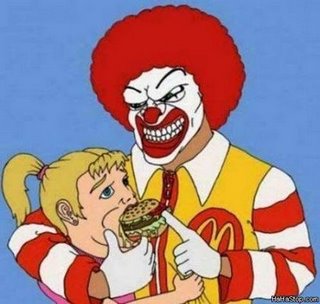
Volgens de documentaire ‘Super Size Me’ uit 2004 van Morgan Spurlock is McDonald’s een heroïneverkoper die hamburgers verkoopt met een clowngezicht. Ik denk dat hij gelijk heeft. Lichamelijk zijn de 58 procent van de wereldbevolking die gevoelig zijn voor de vetten en suikers uit McDonald’s producten, verslaafd. En als ze op tv die gezellige McDonald’s kleuren zien wordt hun verslaving opgeroepen en loopt het water ze in al de mond. Ook al weten ze dat ze zich niet écht beter zullen voelen van Mac eten. Eerder slechter. En de ‘Specials’ geven de McDonalds een reden om voortdurend op tv te zijn. Vanuit marketing oogpunt kan ik alleen maar zeggen; absoluut geniaal!

* Hier nog een bewijs voor hun marketingkracht; iedereen noemt het restaurants terwijl het gewoon grote snackbars zijn.
Intermezzo #6

Here she comes
You better watch your step
She’s going to break your heart in two
It’s true

It’s not hard to realize
Just look into her false colored eyes
She builds you up to just put you down
What a clown

‘Cause everybody knows
The things she does to please
She’s just a little tease
See the way she walks
Hear the way she talks

Femme Fatale
The Velvet Underground (1966), The Velvet Underground & Nico

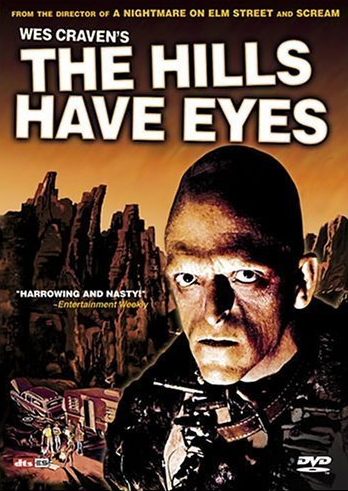
The Hills Have Eyes

Director: Wes Craven
Written by: Wes Craven
Cast: Dee Wallace Stone, Michael Berryman, Robert Houston

Year / Country: 1977, USA
Running Time: 86 mins.

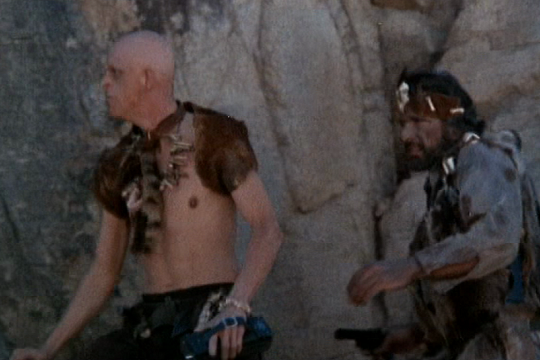
A lesser known movie by horror master Wes Craven is The Hills Have Eyes, the shocking account of a family (the Carters) trapped in the desert and attacked by a family of cannibals. It reminds very much of The Texas Chainsaw Massacre, both in story as in creepy execution.

Craven builds the tension up steadily. The cannibals are not seen for a long time (only heard) and then, during the nighttime, they appear and deliver a tremendous blow to the Carter family. Afterwards, the surviving Carters strike back and eventually become as brutal as their attackers when they seek revenge.

The movie is based on the legend of Sawney Beane and his family, a feral clan who inhabited and roamed the highlands of Scotland’s East Lothian County, near Edinburgh, in the early 1400s. They captured, tormented and ate several transients. They were eventually captured on the order of Scotland’s King James and brutally executed without a trial, inspiring the aspect of the film that the Carters become bloodthirsty themselves.

This is only Craven’s third movie after the horror movie The Last House On the Left (1972) and The Fireworks Woman (1975), an adult movie he directed under the alias Abe Snake. The Hills Have Eyes is very raw and contains violence that is still shocking by today’s standard. Some of Craven’s fans even say it is his best movie. It might just be true.

Rating:

Biography: Wes Craven (1940, Cleveland – 2015, Los Angeles) is the maker of a number of classic, genre bending horror films. The debut was the gruesome The Last House On the Left in 1972. In 1984 he reinvented the youth horror genre with A Nightmare on Elm Street, which became a genre classic and a popular horror franchise. Twelve years later, he again created a commercial and critical success with Scream. This film also spawned many sequels, three of them directed by Craven and all successful. Craven also occasionally worked within other genres, such as drama/music with Music of the Heart in 1999.

Filmography (a selection): The Last House on the Left (1972) / The Hills Have Eyes (1977) / Deadly Blessing (1981) / Swamp Thing (1982) / A Nightmare on Elm Street (1984) / The Hills Have Eyes Part II (1985) / The Twilight Zone (1985-86, TV-episodes) / The Serpent and the Rainbow (1988) / Shocker (1989) / The People Under the Stairs (1991) / New Nightmare (1994) / Vampire in Brooklyn (1995) / Scream (1996) / Scream 2 (1997) / Music of the Heart (1999) / Scream 3 (2000) / Cursed (2005) / Red Eye (2005) / Paris, je t’aime (2006, segment: ‘Pere-Lachaise’) / My Soul to Take (2010) / Scream 4 (2011)

Face to Face

Director: Sergio Sollima
Written by: Sergio Donati, Sergio Sollima
Cast: Tomas Milian, Gian Maria Volonté, William Berger

Year / Country: 1967, Italy / Spain
Running Time: 107 mins.

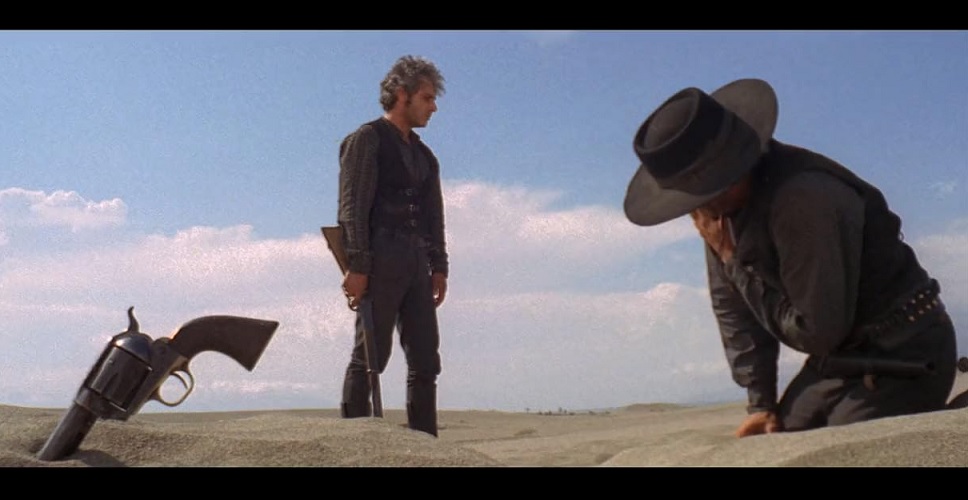
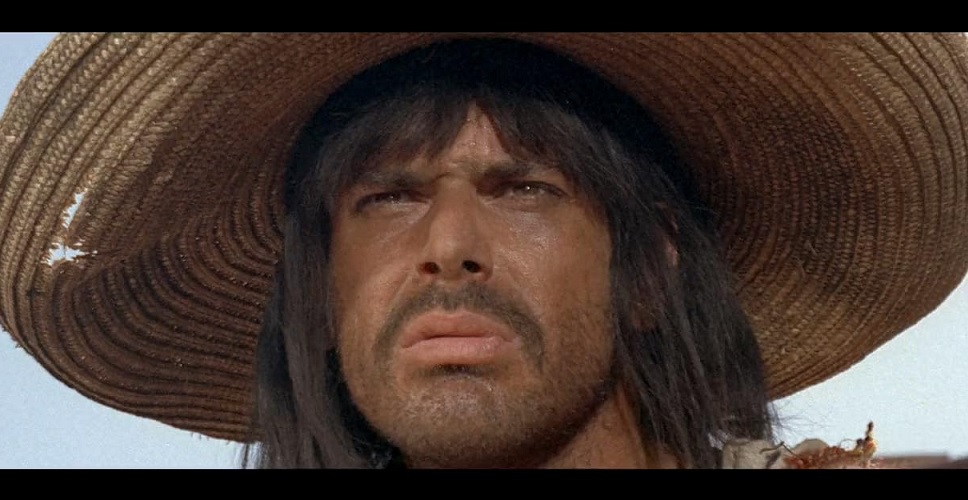
In Face to Face, director Sergio Sollima delivers a more intellectual take on the spaghetti western while still packing in thrilling action. The film stars Gian Maria Volonté – best known for his villainous roles in A Fistful of Dollars and For a Few Dollars More – as Boston professor Brad Fletcher. Suffering from a severe lung ailment, Fletcher moves to Texas for the warmer climate, only to be taken hostage by the ruthless bandit Solomon Bennet (Tomas Milian) during a daring escape from custody.

Bennet aims to reunite his old gang, including his former ally Siringo (William Berger). However, he’s being hunted by the Pinkertons – a private detective agency – of which Siringo is secretly a member. As Fletcher spends more time with Bennet, his passive nature erodes, and he gradually embraces a life of crime. Once the beast within him is unleashed, he proves to be even more ruthless than his captor.

Sollima weaves a deeper thematic layer into the film, using the western setting to explore the rise of fascism. When Bennet seizes control of a village, he governs it as though it were a single organism, using manipulation and torture to force everyone into submission. His authoritarian rule mirrors historical regimes, adding an unsettling resonance to the story.

However, Fletcher’s transformation isn’t entirely convincing, likely due to the film’s extensive edits – the original cut ran 2.5 hours. His shift from an educated, seemingly moral man to a cruel bandit happens too abruptly, making it feel somewhat unearned. That said, Sollima’s direction shines, especially in his handling of the actors. Volonté delivers a controlled and nuanced performance, while Milian exudes charisma in every scene.

Ennio Morricone’s score, while solid, doesn’t quite reach the brilliance of his work with Sergio Leone. However, the film’s opening credit sequence does capture the grandeur of Leone’s westerns, setting the stage for an absorbing experience. Despite some flaws, Face to Face remains an excellent film – thought-provoking, visually compelling, and anchored by strong performances.

Rating:

Biography: Sergio Sollima (1921, Rome) is an Italian filmmaker. Due to his trio of westerns starring Tomas Milian in the mid 60’s (The Big Gundown, Face to Face and Big Gundown 2: Run, Man, Run) he became known as ‘the other Sergio’ – the third most important director of spaghetti westerns, after Sergio Leone and Sergio Corbucci. Sollima began in cinema as a scriptwriter on Italian sword and sandal epics such as Ursus (1961) and The Ten Gladiators (1963). He directed two spy movies to capitalize on the popularity of the James Bond films. Then he started making spaghetti westerns and action / crime films such as The Family starring Charles Bronson and Telly Savalas. Later in his career he moved more towards television work.

Filmography (a selection): L’amore difficile (1962, segment ‘L’avventura di un soldato’), Agente 3S3, passaporto per l’inferno (1965), Agente 3S3, massacre al sole (1966), Requiem per un agente segreto (1966), The Big Gundown (1966), Face to Face (1967), Big Gundown 2: Run, Man, Run, The Family (1970), Devil in the Brain (1972), Revolver (1973), Sandokan (1976, TV-episodes), The Black Corsair (1976), Steps of Love (1989), Berlin ’39 (1993)