The Doorway (2): DMT

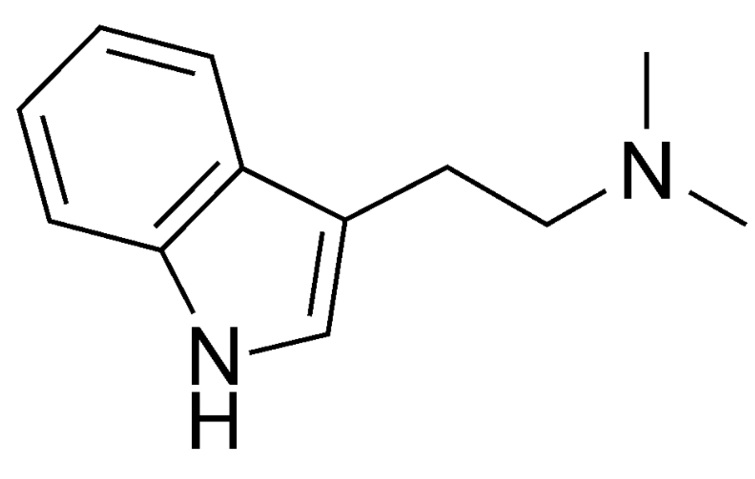
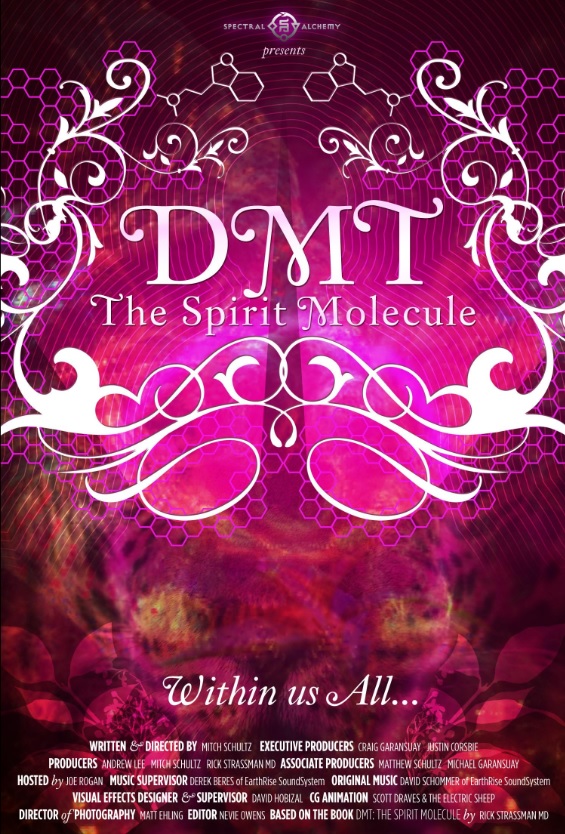
DMT (Dimethyltryptamine) is an extremely powerful hallucinogenic found throughout nature that has a profound impact on human consciousness.

The structure of DMT is very simple: there are only four positions where chemical groups can attach. It’s everywhere in nature. All organisms have the two key enzymes that lead to the synthesis of DMT. It is also the visionary ingredient in ayahuasca, a very popular psychedelic in the West nowadays.

Ayahuasca is created by combining two Amazon plants, one containing DMT and one containing an enzyme inhibitor, needed for the DMT to have effect. How did these Amazonian Indians know how to combine these plants? A trip created by orally consuming DMT can last three to four hours. That is much more time than the bullet train trip you get when smoking or injecting DMT.

So DMT is everywhere in nature, but what is it for? Many leading experts say they are messenger molecules. It is a powerful tool to explore the whole mysterious question: what is consciousness?

DMT is often referred to as the spirit molecule, which is a conundrum. The spirit is the inner world and the molecule is the external world. So the psychedelic is an entheogen; they take us from the science to the spirit.

DMT can also be produced by the human brain in extremely small amounts. The enzymes necessary for its production are expressed in the cerebral cortex, the choroid plexus, and the pineal gland.

Rick Strassman – a professor in psychiatry – has done extensive research in DMT and non-ordinary states of consciousness. It is his belief that the pineal gland, a tiny, pinecone-shaped endocrine gland in the center of the brain, at times releases DMT to facilitate the entering and exciting of the soul in the body.

Through various practices, like fasting, chanting and praying, a release might be triggered that is correlated with mystical experiences. A DMT trip is described as a ‘psychedelic bungee jump’. Just like that, you find yourself in a completely different reality, and – bang! – just like that, you’re out of it again.

Why are these plants made illegal in our ‘enlightened’ Western societies? “It is very revealing about these societies”, says writer and journalist Graham Hancock. “Our society devalues non-ordinary states of consciousness. Any other consciousness that is not related to the production or consumption of material goods is stigmatized in our society today.”

There is fear in the powers that be that ended the psychedelic revolution in the sixties. Fear that if enough people take these substances, the very fabric of our societies would be picked apart.

After a near ban of psychedelic research, Rick Strassman got approval in 1989 to do a DMT study. It was the first psychedelic research in a generation. He did not approach the work as psychotherapy, but as pure scientific research, focusing on what happened in the body and brain. He recorded the experiences of participants and later published them in his book ‘DMT: The Spirit Molecule’, a fascinating byproduct of the study.

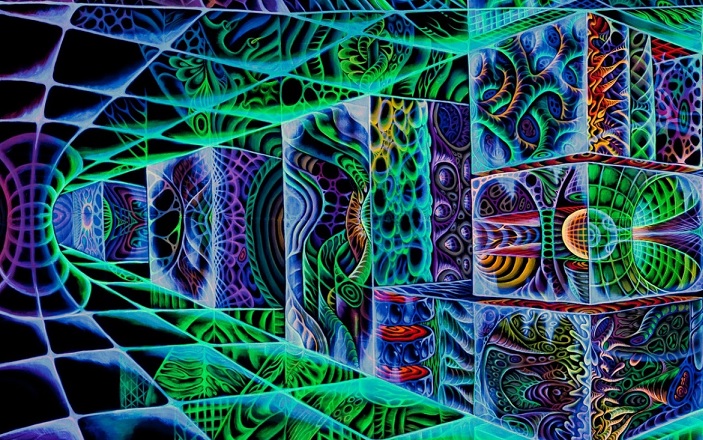
So what is the experience like? Time crumbles. The linearity of time is totally meaningless in a DMT experience. You are at the God Head, the point where all time folds in on itself. You are no longer a human being. In fact, you are no longer anything you can identify with. It is a terrifying experience. You are blasted out of your body at warp speed, backwards through your own DNA out the other end into the universe.

DMT users often report encountering pure consciousness, sometimes perceived as a vastly advanced civilization; far beyond anything known on Earth. “My sense was that at some point there was an implicit realization: this is the divine realm”, one user said.

“It’s a place I’ve been many times before. A place where souls await rebirth. An incredible, transcendent peace came over me. I have never felt such peace in my life. Every fear, hope, and attachment to the material world was stripped away. I was free to simply be the essence of a soul.”

Strassman’s explanation: The brain, the organ of consciousness, was transformed in such a way that it could receive information that it couldn’t normally receive. “It rips that filtering mechanism away for just a few minutes and for this time you are immersed in raw data: sensory input, memories, associations. It seems your brain builds reality out of these things. You associate and synthesize these things together and tell yourself a story basically.”

During DMT experiences, encounters with aliens, angels, and other entities are common, as are visions of other civilizations. An intelligence is often perceived, one that does not seem to exist within three-dimensional space.

DMT is a messenger that offers a glimpse into possible future stages of human evolution. It may be the ultimate psychedelic compound: a doorway to another reality.

The documentary ‘DMT: The Spirit Molecule’ is available on YouTube.

The Doorway (1): LSD

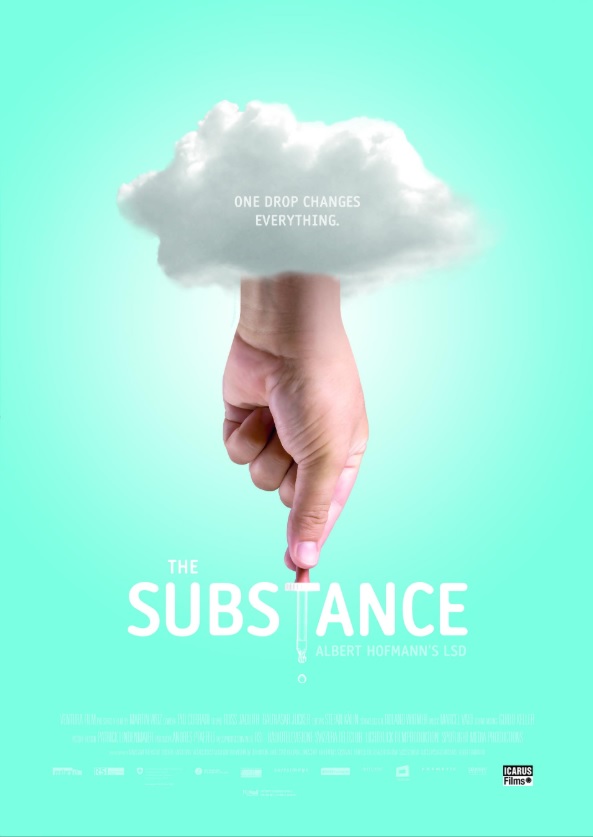
“A fraction of a milligram and everything changes. A molecule that alters your consciousness. An unforgettable experience.”

On April 16, 1943, Swiss chemist Albert Hofmann, working at the Sandoz laboratory in Basel, accidentally ingested a small dose of LSD. Suddenly, he felt as if he were in another world. Fear gripped him: he worried he might never return to his wife and child, and panic set in. But later, the fear gave way to a positive wave. Afterwards, Hofmann felt he had crossed to the other side and returned.

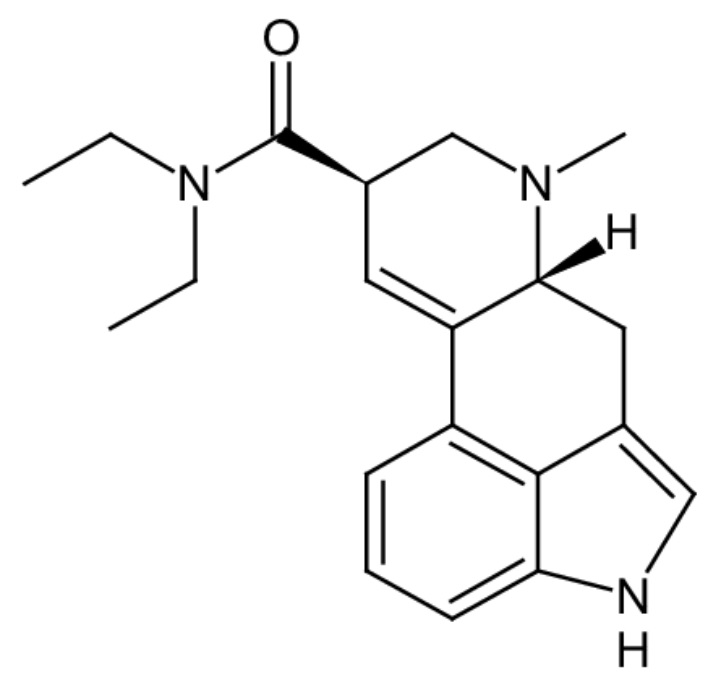
Hofmann had been searching for a medicine to improve circulation. His work led him to ergot, a fungus that grows on rye and related plants. From this he synthesized LSD (lysergic acid diethylamide), a substance chemically related to psilocybin, the psychedelic compound found in magic mushrooms. At first, Hofmann did not know what had caused his extraordinary experience, but he soon realized it must have been the compound he had created.

At Sandoz, researchers recognized LSD’s potential value for psychiatric research. Samples were sent to Stanislav Grof, a Czech-born American psychiatrist and consciousness researcher. This marked the beginning of Grof’s decades-long exploration of non-ordinary states of consciousness.

Grof saw LSD as a catalyst. It does not create these experiences, he argued, but makes them accessible. “In that sense”, he said, “LSD is comparable to what a microscope is for biology or a telescope for astronomy. We don’t think the microscope creates worlds that are not there, but we cannot study these worlds without the tool.”

During the Cold War, the CIA became interested in LSD as a possible truth serum. The problem was that they were seeking predictable outcomes and LSD does not work that way. It was also considered as a potential weapon to incapacitate the enemy.

So how does LSD work? Our consciousness is the sum total of everything our senses perceive. LSD amplifies these senses dramatically. Psychedelic sessions can take people further than years of psychoanalysis.

In a positive experience, users may feel the ego dissolve, boundaries melt away, and control loosen. This can be deeply pleasant. Space and time lose their meaning; experience flows freely until one becomes pure experience itself.

In the 1960s, the psychedelic revolution erupted. The Merry Pranksters, led by Ken Kesey – author of ‘One Flew Over the Cuckoo’s Nest’ – embraced LSD and drove a brightly painted bus across America, inviting people to experience it for themselves.

In Millbrook, an abandoned estate in New York, psychiatrist Timothy Leary and Ralph Metzner established a psychedelic research center where anyone could participate. LSD was seen as a great equalizer. No matter one’s social background, the experience could dissolve hierarchy and expand cosmic understanding.

“We teach people to turn on, go out of their minds, and tune in”, Leary said. “The country is an insane asylum, focused on material possession, war, and racism.” His ambition was nothing less than a spiritual revolution, achieved by millions of people using LSD regularly.

Hofmann strongly objected to this approach. LSD, he warned, was a powerful instrument that required a mature mind. Promoting it indiscriminately to young people was irresponsible.

LSD often triggered strong anti-war sentiments, rooted in transpersonal experiences of unity with nature and all living beings. This directly challenged conservative values. In the United States, amid the escalating Vietnam War, tensions between the counterculture and the establishment grew. LSD became a convenient scapegoat for social unrest, and the government launched an aggressive – and often absurd – propaganda campaign.

In 1966, LSD was outlawed in California. In 1967, President Nixon declared Timothy Leary “the most dangerous man in America.” Grof later remarked, “In the irresponsible hands of Leary, it came to be seen as dangerous and that killed nearly all possibilities for research.”

Some clinical work continued for a while. Grof conducted LSD sessions with terminal cancer patients, profoundly altering their relationship with death. Many became reconciled with the fact that they were dying. “In our culture”, Grof said, “we are programmed to think we are only our bodies. LSD can show you that you are part of something much larger.”

Soon, however, LSD was internationally demonized. Research disappeared underground and remained there for decades.

Albert Hofmann died on April 29, 2008, at the age of 102. He never denied LSD’s risks, but he also believed its greatest danger lay in misunderstanding it. For Hofmann, LSD was not an escape from reality but a doorway… A doorway that, if approached with care, could reveal how vast and mysterious consciousness truly is.

The documentary ‘The Substance: Albert Hofmann’s LSD’ is available for rent on the Apple TV app.

My Voyage to Italy

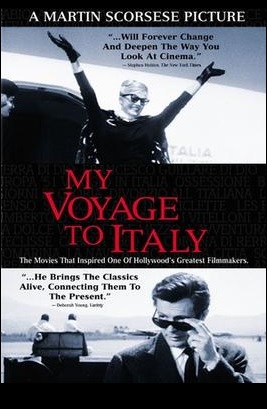
During the recent vacation to Italy with my family, I finally watched Scorsese’s four hour documentary on Italian cinema called Il mio viaggio in Italia, or My Voyage to Italy (1999).

In it, he describes how he fell in love with Italian cinema: “Because so many Italians lived in New York, one channel showed Italian movies on Friday night with subtitles.” Together with his family, he watched as many of them as he could.

When he was a child, Italy was just emerging from World War II, and the aftermath became the central theme of many films from that period. Movies that contained powerful images like nazi soldiers occupying Rome in Rome, Open City (1945, Roberto Rossellini). Despite the often bad quality of the prints, all the essential messages came through, Scorsese recalls.

“Some images were so powerful that they made my grandparents cry”, says Scorsese. “They saw the country they left behind and what became of it. They were feeling protected in the US, but guilty at the same time. These movies could have been about them.”

The first Italian film Scorsese saw was Paisan (1946, Roberto Rossellini). Rossellini’s follow-up to Rome Open City consists of six episodes set during the liberation of Italy. It follows the allied forces as they move through Italy, from Sicily to the northern Po Valley, to drive out the Nazi’s. What impressed him the most were the episodes about people who make the ultimate sacrifices to achieve freedom.

The third part of Rossellini’s post-war trilogy is Germany, Year Zero (1948, Roberto Rossellini). Sacrifice is again a major theme in this movie. “It seems that Rossellini begs the allied forces to look with compassion at their former enemies, so that they could go on together.”

My Voyage to Italy shows long movie fragments, accompanied by Scorsese’s comments. He really takes the time to dissect them, and after each discussion you almost have the feeling as if you have seen them. He covers two main ‘extremes’ of Italian cinema: the epic and the neorealist drama.

The first epic he encountered was Fabiola (1947, Alessandro Blasetti). Its monumental imagery inspired him so much that he drew storyboards for Roman epics of his own. Later, he discovered silent masterpieces such as Cabiria (1914, Giovanni Pastrone), which he describes as “like watching a journal from ancient Rome.”

After World War II, the Italian film industry lay in ruins. With minimal resources to express themselves, filmmakers created the neorealist movement. They depicted the struggles of their nation with stark honesty, relying on non-professional actors and real locations. “Illusion took a backseat to reality”, Scorsese explains.

Neorealism had tremendous influence over cinema that is still felt today in cinematic movements all over the world. It gives audiences raw, human experience – and shows us the heroes and heroines of everyday life.

The most famous example is probably Bicycle Thieves (1948, Vittorio De Sica) about an unemployed man who desperately needs work to support his wife Maria, his son Bruno and his small baby. When everything he tries fails, he steals a bicycle, which leads to dire consequences. It’s an extremely touching film, a specialism of its director Vittorio De Sica.

An earlier film De Sica made is also discussed. It is called Shoeshine (1946) and it triggers much of the same emotions as Bicycle Thieves. Two boys who shine shoes (does the famous GoodFellas line come from here?) end up in prison, which is depicted as hell on earth. Here they are eventually forced to betray each other. Like Bicycle Thieves it has very moving moments involving children. Orson Welles once said that he could never do what De Sica did with Shoeshine, which is making the camera disappear.

In 1952, De Sica made Umberto D., which Scorsese finds an even better film than Bicycle Thieves. This time the story follows an elderly man who, penniless, cares only for his beloved dog. It contains many heartbreaking moments. After seeing Umberto D., the Italian Minister of Culture wrote in an open letter that he hated neorealism, and he asked the filmmakers to be more optimistic.

Perhaps in response, De Sica’s next film, The Gold of Naples (1954), embraced a lighter tone. Though comedic in spirit, it still carried an undercurrent of tragedy. This seamless interplay between drama and comedy, Scorsese notes, is a defining quality of Italian cinema: “Actors can walk the razor-thin line between comedy and drama.”

In the third part of the documentary, Scorsese discussed a different kind of filmmaker: Luchino Visconti. Visconti came from a prominent, wealthy Italian family. But he was also a lifelong member of the communist party. He didn’t have to work, so he felt a little aimless. In the 1930’s he worked for French director Jean Renoir and this influenced him greatly. A hallmark of his films would be exploring the European aristocracy.

But his first film is not about that. Obsession (1943, Luchino Visconti) is seen as a forerunner of the neorealism movement. But, Scorsese says, it is a very stylized movie. “It’s a melodrama with a very earthy sensual feel to it. All Visconti’s gifts were already there: His eye for detail, his mastery of the camera and most of all his operatic sense for action and emotion.”

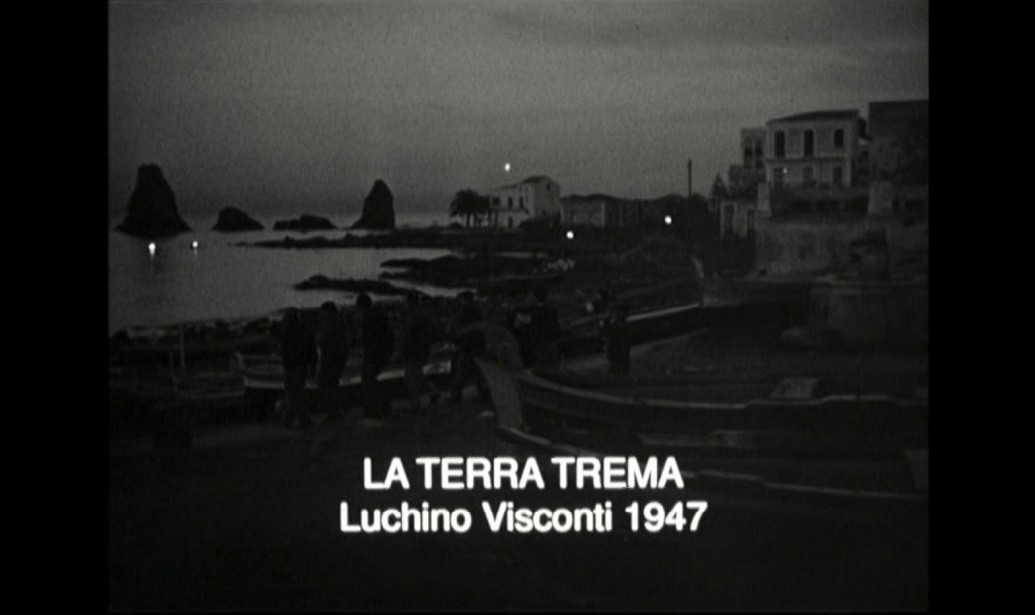
His follow up was The Earth Trembles (1948, Luchino Visconti) about a group of Sicilian fishermen who rebel against northern middlemen. Besides film, Visconti also started a theatre group that included a young Marcello Mastroianni. This experience is clearly put to good use for Visconti’s next film: Senso (1954). Set during the Italian-Austrian war of 1866, it vividly recreates the 19th century. “He really brought the era to life”, says Scorsese, “not just in how it looked, but in how it felt.”

Finally, Scorsese turns to Federico Fellini, often regarded as the Italian filmmaker. Fellini’s early film I Vitelloni (1953) is an autobiographical tale of five young men in Rimini, torn between staying home and pursuing their dreams. Scorsese deeply identified with them, drawing inspiration for his breakthrough film Mean Streets (1973).

Fellini’s international breakthrough came with La Dolce Vita (1960), a modern reflection on freedom and decadence in the shadow of the Cold War. To escape dread, people plunge into endless pleasures and distractions. This was Fellini’s first collaboration with Marcello Mastroianni, with whom he would make five films – an artistic partnership akin to Scorsese’s with Robert De Niro and later Leonardo DiCaprio.

His follow-up, (1963), became a personal touchstone for Scorsese. “La Dolce Vita was only the calm before the storm”, he says. “With he reinvented himself, and in doing so, reinvented cinema.”

The film boldly dramatizes Fellini’s own artistic crisis. Mastroianni plays Guido, a director unable to complete his next project, searching in vain for inspiration. The film becomes a tapestry of dreams, memories, and anxieties, unfolding as a stream of consciousness rather than a conventional plot. For Scorsese, “ is the purest expression of love for the cinema that I know.”

The documentary ends with this tribute, leaving us with great words of inspiration from one of the greatest living filmmakers.

Easy Riders, Raging Bulls

BBC documentary (2003) by Kenneth Bowser, based on the book by Peter Biskind. Easy Riders, Raging Bulls: How the Sex-Drugs-and-Rock ‘N Roll Generation Saved Hollywood tells the story of Hollywood in the 1960s, a time when the studio system was in crisis. Their films had become increasingly irrelevant.

The problem was that movies were run by studios rather than directors, and the studios had lost touch with what audiences wanted to see. Then a new generation of filmmakers emerged who reconnected with viewers. Directors such as George Lucas, Steven Spielberg, Martin Scorsese, Dennis Hopper, Sam Peckinpah, Francis Ford Coppola, Arthur Penn, Warren Beatty, Robert Altman, Jack Nicholson, and Peter Bogdanovich.

“In 1963 the studio system collapsed”, says Bogdanovich. “It was over.” After the disaster of Cleopatra (1963, Joseph L. Mankiewicz, Rouben Mamoulian), the Fox lot was shut down. It became a ghost town. Television took over. The old moviegoers died off, and American films grew more and more meaningless.

Meanwhile, art theaters screening foreign films were doing very well. Many of the new generation of filmmakers learned the language of cinema from auteurs like Fellini, Godard, and Truffaut.

Outside the studio system, Roger Corman played a pivotal role in training young filmmakers to make low-budget B-movies that performed well at the box office. Jonathan Demme, Martin Scorsese, Ron Howard, and Francis Ford Coppola all started under Corman. They succeeded by targeting the youth who flocked to the thousands of drive-in theaters across the country, audiences that loved horror and action. Corman also had a knack for choosing hot topics: Hells Angels were in the news, so he made The Wild Angels (1966, Roger Corman). LSD was trendy, so he made The Trip (1967, Roger Corman) based on a screenplay by Jack Nicholson.

In Hollywood, directors proved just how out of touch the studios were. Executives hated Bonnie and Clyde, but young people loved it. Studios had to adapt. Paramount, in deep trouble, was taken over by Gulf & Western, led by the eccentric Austrian Charlie Bluhdorn. He brought in the now-legendary Bob Evans as a producer, who helped turn the studio around. How? By giving directors more creative control. Like he did with Polanski, who made Rosemary’s Baby in 1968.

At Columbia, Bert Schneider also trusted and empowered directors, resulting in massive hits, most notably Easy Rider, released in 1969. The drug-fueled chaos of director Dennis Hopper and his team is visible on screen. It was a great film, and audiences loved it. It was the kind of movie that never would have been made under the old studio system. The same goes for Midnight Cowboy by John Schlesinger, also released in 1969 – an outstanding film. That same year saw The Wild Bunch by Sam Peckinpah, which pushed violent realism to a whole new level.

The 1970s began, and the director’s era was in full swing. Peter Bogdanovich released The Last Picture Show in 1971, a film rich in emotional depth and sexual content, more than audiences were used to at the time. Dennis Hopper tried to follow up on Easy Rider with The Last Movie, but botched the edit due to his drug use and constant partying. “I had final cut, but I cut my own throat,” he says in the documentary.

In 1972, Paramount released The Godfather in 4,000 theaters simultaneously, a massively successful strategy. The history of that production was recently chronicled in the excellent miniseries The Offer. Coppola had now become one of the greats. He used his influence to bring George Lucas back to Hollywood, where he made the wildly successful American Graffiti in 1973 – a film studios didn’t understand, but youth audiences loved. That same year marked the rise of another major talent: Martin Scorsese, whose Mean Streets won over critics and audiences alike with its originality and authenticity.

But 1973 belonged to Warner Bros., which released The Exorcist by William Friedkin. Using the same wide-release strategy as The Godfather, it became a huge box office hit. It was Friedkin’s second success after The French Connection, cementing his status as one of the untouchable directors of the time.

By now, the auteurs had taken over Hollywood. This led to artistic triumphs like Chinatown (1974). But the young directors hadn’t forgotten Corman’s trick of attracting young audiences. In 1975, Spielberg released Jaws, a film that redefined what success looked like in Hollywood. Corman said: “When I saw Jaws I thought: these guys know what I’m doing, and they have the money and talent and skills to do it better.” George Lucas took it even further with Star Wars in 1977. The age of the blockbuster had arrived.

It had taken a decade, but Hollywood was back on its feet. Expensive B-movies like Alien, Superman, and their sequels became the new studio model. For about ten years, directors ruled. That era came to an end in the late ’70s, but it was a glorious decade that produced countless classics – films still regarded today as some of the greatest ever made.