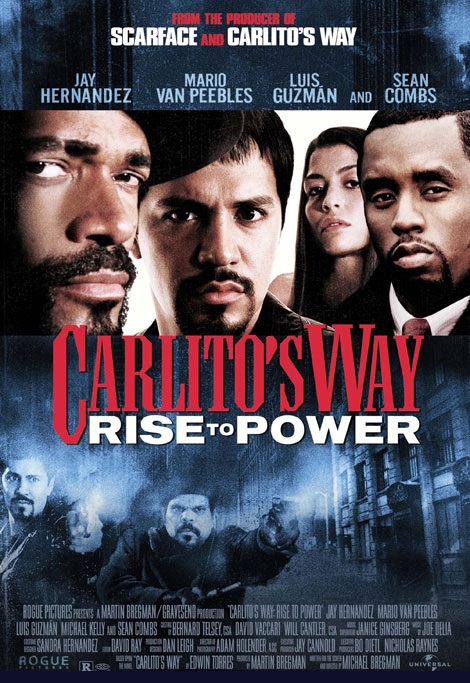
Carlito’s Way: Rise to Power (2005)

Directed by:
Michael Bregman

Written by:
Michael Bregman (screenplay)
Edwin Torres (novel)

Cast:
Jay Hernandez (Carlito Brigante), Mario Van Peebles (Earl), Luis Guzmán (Nacho Reyes), Sean ‘Puff Daddy’ Combs (Hollywood Nicky), Michael Kelly (Rocco), Giancarlo Esposito (Little Jeff), Jaclyn DeSantis (Leticia), Burt Young (Artie Bottolota Sr.), Mtume Gant (Reggie), Domenick Lombardozzi (Artie Bottolota, Jr.)

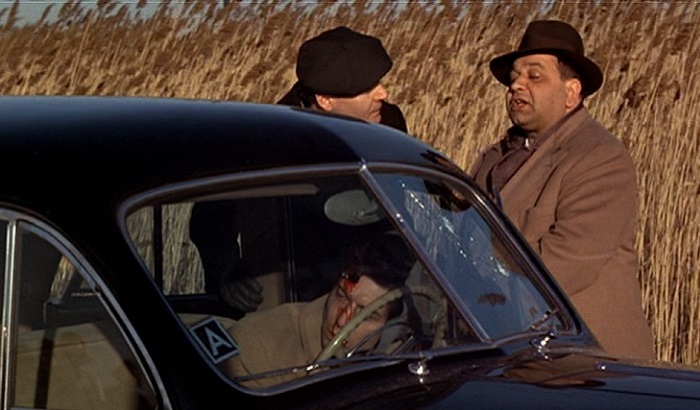
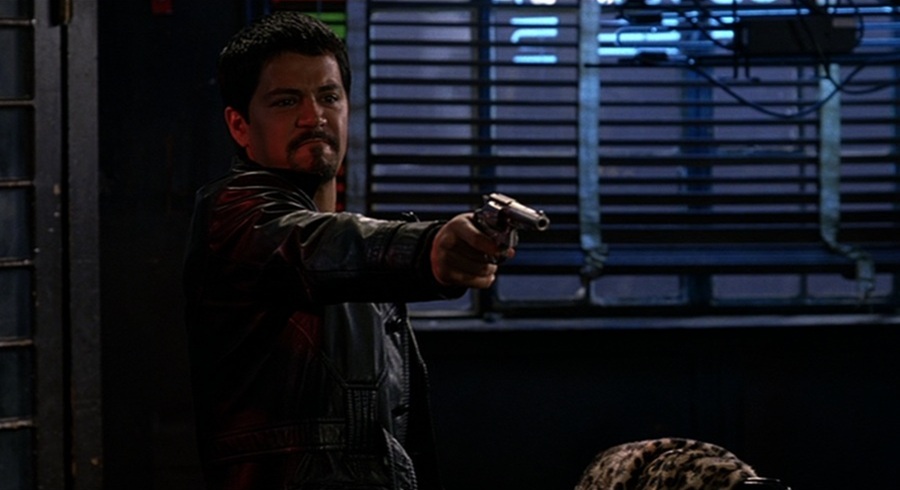
For some unexplained reason, Michael Bregman – the producer behind Carlito’s Way (1993) – thought it somehow necessary to bring a prequel to this great gangster film to television. Then again, maybe it’s not so strange: I haven’t read Edwin Torres’ novels, but I can imagine the source material is compelling.

The movie draws from Torres’ book series on the criminal life of Carlito Brigante, specifically the first book, also titled ‘Carlito’s Way’. Brian De Palma’s 1993 film took that title because, at the time, they chose not to use the second book’s title, ‘After Hours’, to avoid confusion with Martin Scorsese’s 1985 movie of the same name.

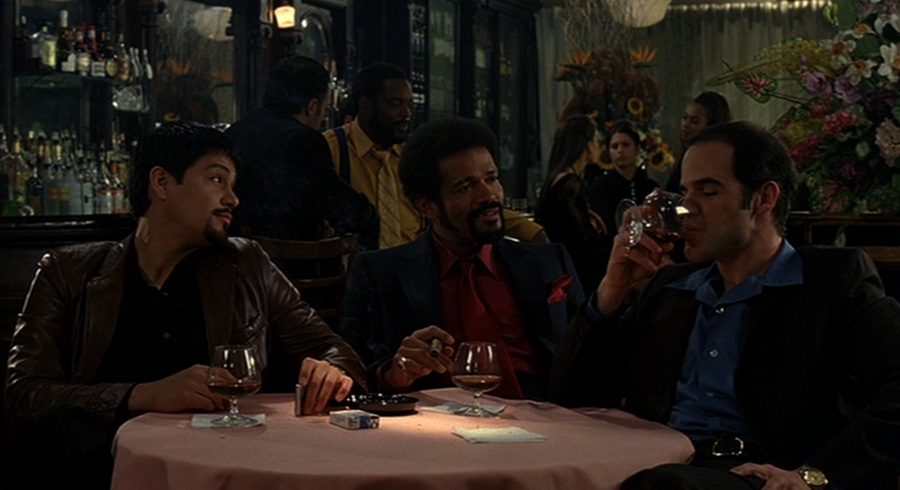
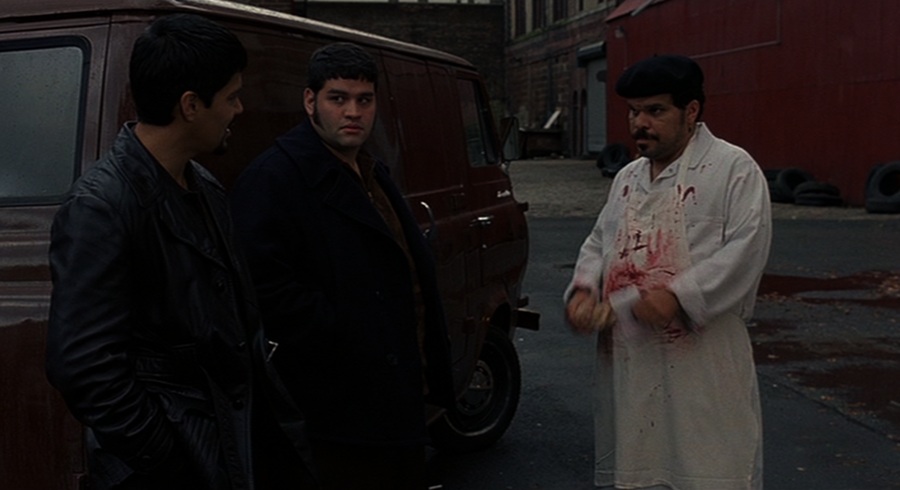
The story revolves around a young Puerto Rican, Carlito Brigante, who starts a heroin-dealing ring with his Black partner Earl and Italian partner Rocco. In this sense, the title Rise to Power isn’t really suitable – they’re already fairly established from the start.

True, they’re small compared to New York’s real power players: the Bottolota family also known as the the Pleasant Avenue Gang, and Hollywood Nicky, who run the city’s drug trade. Still, the trio is accepted, albeit under certain conditions.

Things go well at first, but then Earl’s brother shows up and he’s a loose cannon. The peace the boys have built isn’t going to last.

Jay Hernandez, who also appeared in Hostel around this time, doesn’t have the charisma or acting chops to come anywhere close to portraying a young Al Pacino. This is distracting. Add to that a terrible love plot, and the beginning is pretty bad. The second half is more engaging, as the problems that erupt are entertaining, but then it ends in a way that almost completely undoes the ending of the original.

In the end, this is only worth a look for gangster film completists like me. Otherwise, there’s little to enjoy here.

Rating:

Quote:
CARLITO BRIGANTE: “Buy the ticket. Catch that plane, and never come back. Otherwise your parents gonna be using that money for your funeral.”

Trivia:
Luis Guzmán played a big part in Carlito’s Way. He also appears in this movie, but in a different role.

Carlito’s Way (1993)


‘He wanted out. There was only one way to get there.’

Directed by:
Brian De Palma

Written by:
David Koepp (screenplay)
Edwin Torres (novels)

Cast:
Al Pacino (Carlito Brigante), Sean Penn (David Kleinfeld), Penelope Ann Miller (Gail), Luis Guzman (Pachanga), Viggo Mortensen (Lalin), James Rebhorn (District Attorney Norwalk), John Leguizamo (Benny Blanco), Joseph Siravo (Vincent Taglialucci), Richard Foronjy (Pete Amadesso), Ingrid Rogers (Steffie)

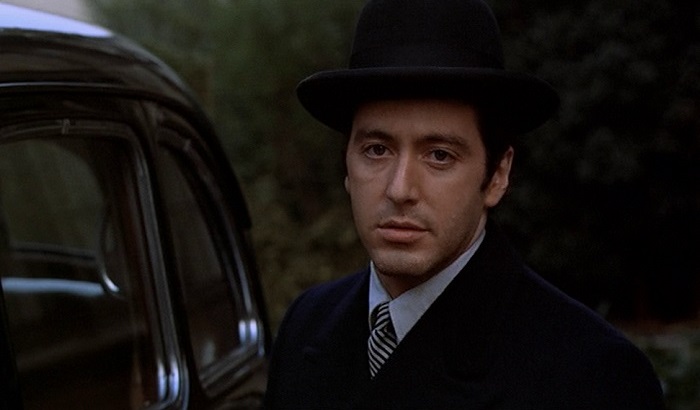
Brian De Palma’s career is often seen as a mix of brilliant, boundary-pushing filmmaking and controversial, uneven output. About his contributions to the gangster genre (Scarface, The Untouchables, Carlito’s Way), there can be no doubt however: they belong to the absolute best. It’s right up there with Coppola’s and Scorsese’s output.

Carlito’s Way is largely set in the barrio of Manhattan’s Spanish Harlem, one of New York’s tougher areas that is filled with poverty, drugs and Latino gangs. This is the area in which Judge Edwin Torres grew up, who wrote two novels about the main character Carlito Brigante. It seems that in this neighbourhood, there are only two options in life; escape the slumps or join a gang. And those to go for option B have a way bigger chance on an early funeral (Carlito’s cousin) than to rise to the relative top (Carlito).

The Puerto Rican Carlito Brigante (Pacino) was a major heroin dealer before the law caught up with him and locked him up. His slick attorney David Kleinfeld (Penn) gets him an early release due to the DA’s usage of illegal wiretap evidence. The now free and seemingly new man Carlito desperately wants to change his ways. But many players, both old and new, intent to drag Carlito back into the deadly game of crime.

Despite the many temptations, Carlito manages to stay legit. He gets back together with his former girlfriend Gail (Penelope Ann Miller) and cooks up an exit plan. As soon as he has saved sufficient money by running a nightclub, he wants to take Gail to the Bahama’s and start a new life together. But then faith strikes and Carlito is placed in an impossible dilemma from which there is no escape. Kleinfeld – who Carlito feels he owes for giving him a fresh start – is in big trouble and he needs Carlito’s help with a very dangerous task.

The job turns sour, but leaves Carlito with enough cash to escape. It also puts him in a bad position with both the feds and the mob. Both his dream and downfall are now closer than ever.

Although the story of a criminal who wants out is nothing new, Carlito’s Way tells a beautiful tragedy. The deeper layers provide for a much more satisfying viewing experience than a clichéd gangster tale.

The acting is excellent. Pacino is solid as a rock as always, but the real joy here is Sean Penn. He portrays the manic, coke addicted lawyer Kleinfeld to perfection. His haircut deserves a special place in the gallery of wrong.

The finale of Carlito’s Way is an extremely suspenseful showdown with an ending that will leave no viewer unmoved. The fantastic escalator shoot-out – that looks as if Hitchcock could have directed it –is the highlight. It also pays a fitting tribute to the baby carriage scene in The Untouchables, which in turn paid tribute to Sergei Eisenstein’s Battleship Potemkin.

De Palma has delivered a movie that is very rewatchable. Not only is it extremely entertaining, it is also character driven and manages to touch the viewer in the heart. Carlito’s ‘way’ turns out to be a fascinating one.

Rating:

Quote:
CARLITO: “Now I ain’t saying that my way would have been different had my mother been alive when I was a kid, cause that’s just bullshit.”

Trivia:
The exterior of the hospital where Carlito visits his bedridden attorney is the same one where Vito Corleone is taken in The Godfather (1972), also starring Al Pacino.

Donnie Brasco (1997)


‘In 1978, the US government waged a war against organized crime. One man was left behind the lines.’

Directed by:
Mike Newell

Written by:
Joseph D. Pistone (book ‘Donnie Brasco: My Undercover Life in the Mafia’)
Richard Woodley (book ‘Donnie Brasco: My Undercover Life in the Mafia’)
Paul Attanasio (screenplay)

Cast:
Johnny Depp (Donnie Brasco / Joseph D. Pistone), Al Pacino (Benjamin ‘Lefty Two-guns’ Ruggiero), Michael Madsen (Sonny Black), Bruno Kirby (Nicky), Anne Heche (Maggie Pistone), James Russo (Paulie), Zeljko Ivanek (Tim Curley), Gerry Becker (Dean Blandford), Robert Miano (Sonny Red), Brian Tarantina (Bruno)

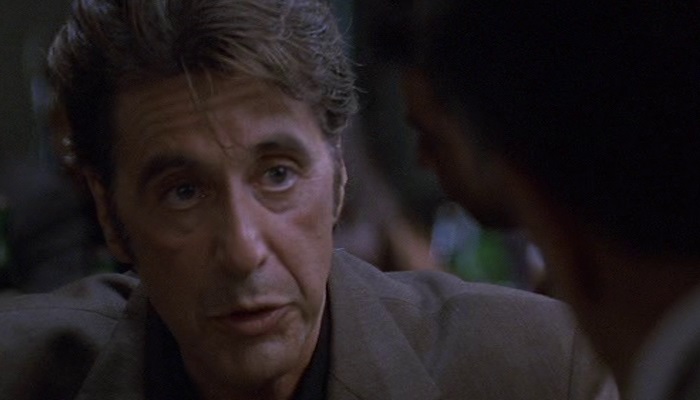
The imposing but low-ranking mobster Lefty (Pacino) meets Don the Jeweller (Depp). Donnie’s connections check out, so Lefty takes him in as a friend and associate. It turns out to be a mistake of historical proportions. Donnie is really an undercover FBI-agent named Joe Pistone, whose mission is to infiltrate the Mafia.

This movie is based on a true story. Joe Pistone managed to infiltrate a fraction of the New York Bonanno family in the late seventies and wrote a book about his experiences. The happenings in the book have been somewhat altered to create a more tense mob thriller. A choice that has turned out well. There are certainly moments of great tension, such as the scene where Donnie has to take his boots off in a Japanese restaurant in which he has hidden a microphone. Or the jail scene in which Donnie’s pals are discussing the way ‘the rat’ should be murdered when discovered.

The acting in this film is especially well performed. It is truly amazing how much sympathy Pacino arouses as the hapless mobster Lefty. We know he’s a cold-blooded killer (26 hits under his belt), but we almost cry for him when we see his desperate schemes tragically fail. Depp certainly holds his ground as Pacino’s partner in crime. It’s intriguing to see how he becomes more and more like a wiseguy, which is especially apparent when he acts alpha male around his wife and threatens a fellow undercover agent.

The film moves with great speed. In reality it took Donnie years to come close to the crew of Sonny Black (Madsen), but in the film this is done within two scenes. Some things have been dramatised such as Donnie’s relation with his wife Maggie (Heche), who understandably can’t deal with her husband’s absence. Also the ending in which Lefty is sent for (to get whacked), is done to dramatise the movie. In reality it was Sonny Black who got killed when Donnie’s identity was discovered. Mind you, these are only observations. All film making choices are well justified and every scene altered from reality gets the impact that it is aiming for.

The art-direction is another achievement that deserves mention. The New York scenery looks great, as well as all the terrible outfits that the wiseguys dress in. Altogether, Donnie Brasco is a remarkable movie that lost none of its impact over the years. It’s certainly not easy to just fuhgetaboutit.

Rating:

Quote:
LEFTY: “Sit down there. You were gonna walk out on me? You don’t walk out on me. I walk out on you.”

Trivia:
The newspaper picture of the murdered boss is the famous picture of murdered mob boss Carmine Galente, who was killed in a Brooklyn restaurant in 1979.