Double Bill #11: The Truman Show & The Matrix

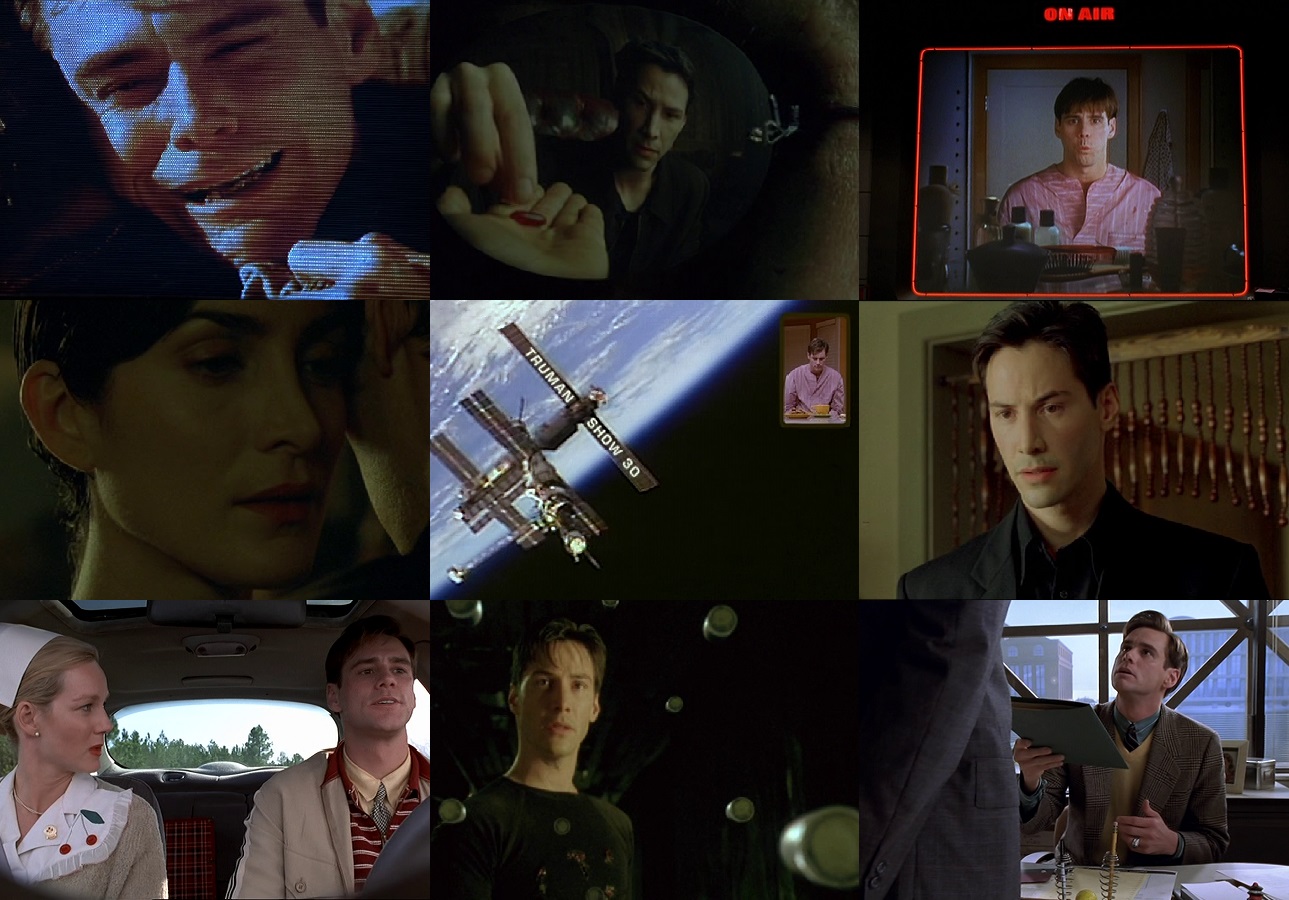
Two masterpieces from the late ’90s, The Truman Show (1998) and The Matrix (1999), both revolve around protagonists who discover they’ve been living in an artificial reality. In The Truman Show, Truman Burbank (Jim Carrey) realizes that his entire life has been a carefully orchestrated television show, where everyone around him – his wife, parents, and best friend – is merely an actor. Similarly, in The Matrix, Neo (Keanu Reeves) learns that humanity is trapped in a simulated reality controlled by artificial intelligence, with people’s minds imprisoned while their bodies serve as mere power sources. In Truman’s case, the man behind his imprisonment is Christof (brilliantly portrayed by Ed Harris), a visionary television producer who will stop at nothing to maintain control over Truman’s life, ensuring the continued success of his wildly successful show. Neo, on the other hand, faces a more intangible and insidious enemy, namely rogue artificial intelligence. In the first film, this AI is represented through sinister agents, with Hugo Weaving delivering an unforgettable performance as Agent Smith. Both films captivate as they depict the journey of discovery – watching Truman and Neo slowly unravel the truth about their worlds is nothing short of enthralling. The moment of revelation in each film remains awe-inspiring, evoking goosebumps even after repeated viewings. Truman’s world, we learn, is enclosed in an enormous dome, a massive set visible from space, while Neo’s reality reveals him as a human battery in a sprawling field of organic towers, where infants are cultivated as power sources for the AI’s machinery. Interestingly, both films imbue the protagonists’ names with deeper significance. Truman is the only ‘true man’ in his artificial world, while Neo is an anagram of ‘ONE’, symbolizing his status as the singular anomaly within the Matrix, with the potential to bend its rules. Neo’s discovery of his unique abilities leads to some of the most iconic moments in cinematic history. In the end, both The Truman Show and The Matrix conclude with their heroes breaking free from their respective confinements, delivering an exhilarating sense of liberation. It’s a triumphant and cathartic experience for the audience, as well – leaving us with the best feeling in the world.
Read also: The Matrix And The Awakening To True Reality

The Verdict: The Creator

In 2016, director Gareth Edwards delivered Rogue One: A Star Wars Story, the first Star Wars movie that was not part of the main series. In terms of cinematography, locations, and visual effects, it was certainly successful, but the film failed to move me. I had exactly the same experience with Edwards’ latest film The Creator, which is about a future war between humanity and artificial intelligence. The movie, which was shot on beautiful locations in Thailand and contains Oscar-nominated special effects, certainly looks amazing. However, the story about an army sergeant (John David Washington, who increasingly looks and especially sounds like his father Denzel) who is on the run with a powerful AI child made no emotional impact on me whatsoever. I didn’t care whether humanity or AI would ultimately win the war. SPOILER: The contrast between what I felt when the Death Star was blown up in the original Star Wars and the destruction of space station Nomad at the end of The Creator could not be greater. A shame really, because the potential was certainly there.

The Creator is now available on Disney Plus

The verdict: to stream or not to stream? Not to stream

Double Bill #03: The Terminator & Terminator 2: Judgment Day

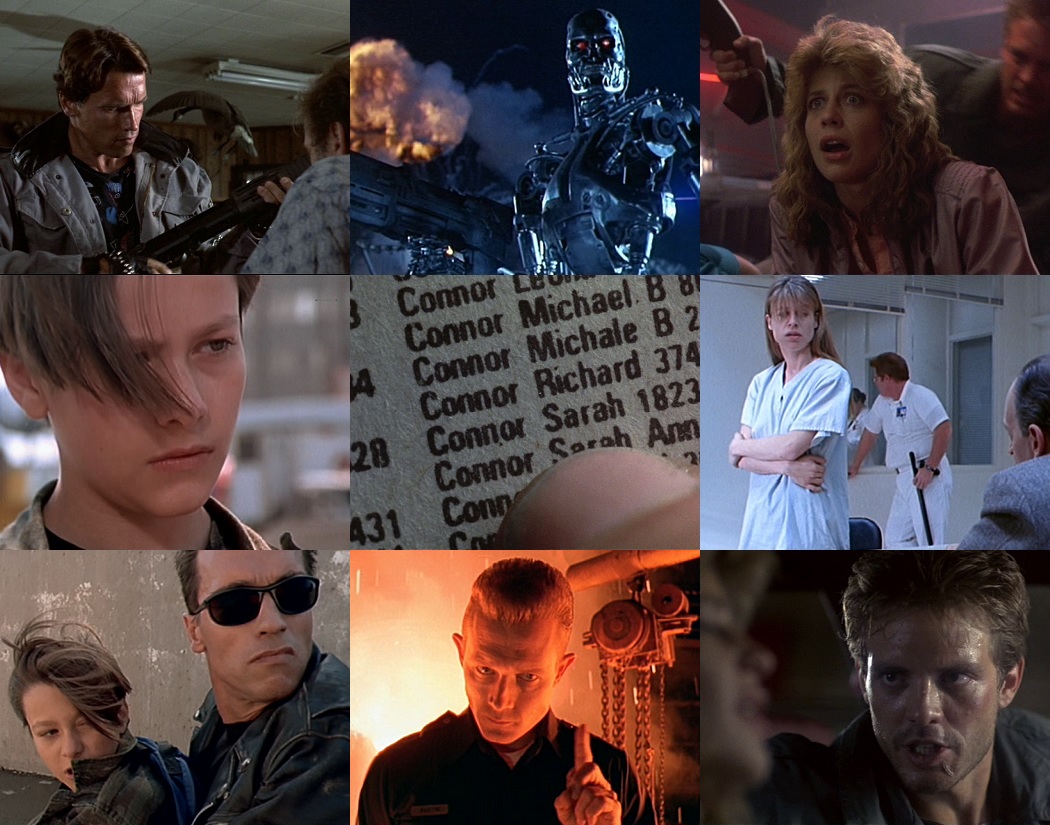
Forget all the sequels for a minute, and consider the first two The Terminator movies as a diptych. As a diptych, they work perfectly. The first one is a hyper tense thriller, the second one a sensational action movie. The major downside of The Terminator movies, I always thought, is that you have to accept an extremely unlikely plot point. We’re supposed to buy that in the future, the resistance somehow found out about the machines’ new time travel capabilities, and destroyed their one and only time machine after they used it for the very first time. Not only that, the resistance also managed to send through one of their own soldiers before they blew it up. Since the humans are shown to be pretty much cannon fodder in their own environment, how would they be able to penetrate the machines’ base of operations? Anyway, this plot device was necessary to get a futuristic killer robot into the present to stalk the Conners (Sarah in the first, John in the second). Once you accept this unlikely scenario, the execution of both movies is pretty much perfect. In the first Terminator, Schwarz is truly scary as the ultimate hunter-killer. A great move by writer-director James Cameron is that Arnie’s T-800 joins the good team in part 2, but it is now technologically outdated. The new and improved terminator – the T-1000 – is perhaps the coolest non-human character ever created for a film. These movies have inspired countless others with their stories and special effects. The Matrix would never have happened if it wasn’t for these terminators. With more than a whiff of philosophy (“it is in your nature to destroy yourselves”), the two The Terminator movies also deliver deeper, underlying messages apart from just giving us the spectacle. Although there is more than enough from that. In T2, it even goes on pretty much non-stop. You could consider that another downside or just as a realistic screenplay measure following the unlikely time travel plot. After all, once you have a killer like the T-1000 on your tail, a non-stop rollercoaster is what you would get.

Double Bill #01: 2001: A Space Odyssey & A Clockwork Orange

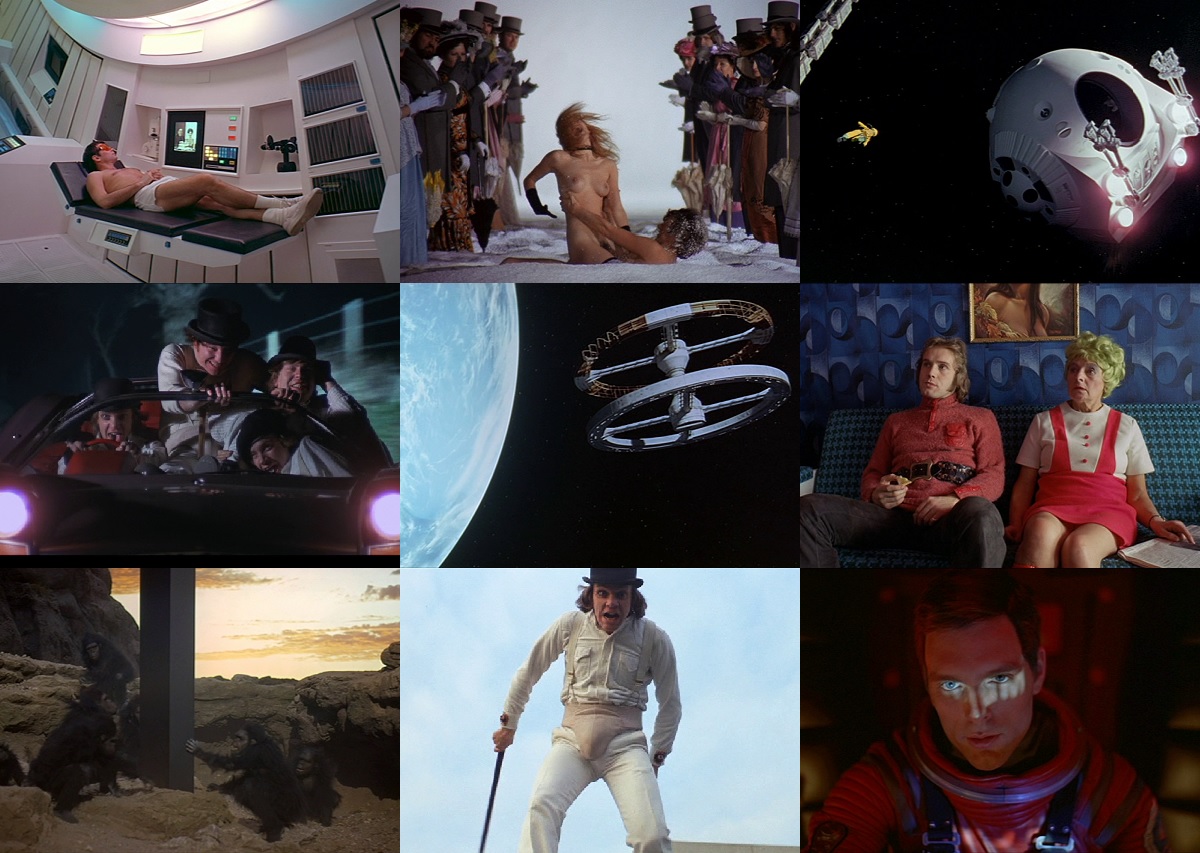
In 1968 and 1971 master director Stanley Kubrick released his two best movies as far as I’m concerned. 2001: A Space Odyssey and A Clockwork Orange are both as perfect as films can be. They are also linked in an interesting way and therefore I thought it would be appropriate to couple them for this first edition of my new feature ‘Double Bill’. The connection is as follows; In 2001 we witness the next phase of evolution for mankind. This civilization appears to be peaceful and focussed on deploying technology to improve society for the better. In A Clockwork Orange on the other hand, we witness a society much like our own in which many people are still little more than violent savages. There is a shot of main hooligan Alex that is visually very similar to one of 2001’s angry apes. We are really not yet that evolved and the space age is still a distant dream. This point is made abundantly clear in the very beginning when Alex and his three droogs batter an old homeless drunk nearly to death just for kicks. “What kind of world is it at all? Men on the moon. Men spinning around the world. And there’s not no attention paid to earthly law and order no more”, the man tells them before the beating and he is right. Another link or rather similarity is the magnificent use of classical music. One of 2001’s highlights is the space waltz on Strauss’s The Blue Danube.

The cinematography alone of these immense, beautiful objects floating in space is breathtaking and then this beautiful music added to it makes this a unique accomplishment in cinema. Kubrick wanted to create a non-verbal experience that did not rely on the traditional techniques of narrative cinema, and in which music would play a vital role in evoking particular moods. Alex would certainly approve. Only he imagines quite different imagery when he listens to his favorite symphonies by Beethoven. In A Clockwork Orange too, many of the best scenes feature fantastic classical tracks that effectively enchant the viewer. Every time I watch these movies, the images and music stay in my mind for weeks afterwards. Another reason to appreciate these films is the intelligence of the screenplays. For instance, HAL9000 is still today – more than 50 years later – the finest depiction of machine intelligence in a film. And A Clockwork Orange treats various themes like free will, politics and good versus evil in a fascinating way. But what these films do absolutely better than any before or since is depicting what mankind is really capable of, both in the very good and the very bad sense. Humanity at its most beautiful and most terrible (and with A Clockwork Orange sometimes a twisted combination of both). An amazing feat by a director who is still unsurpassed in his skill and dedication.