Mad Max 2

Director: George Miller
Written by: Terry Hayes, George Miller, Brian Hannant
Cast: Mel Gibson, Bruce Spence, Michael Preston, Vernon Wells

Year / Country: 1981, Australia
Running Time: 96 mins.

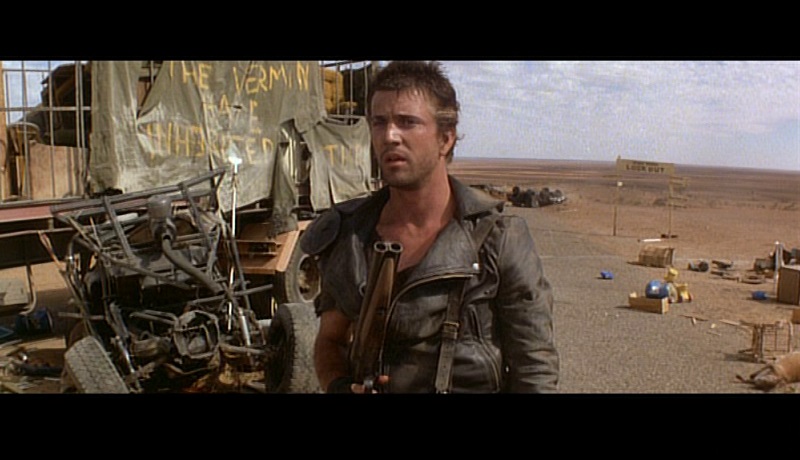
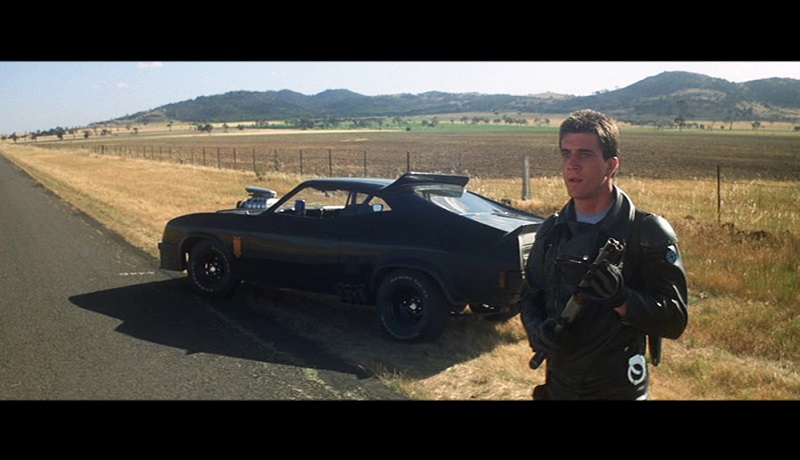
Mad Max 2 also known as The Road Warrior is the high-powered sequel to the 1979 Australian cult classic Mad Max. The apocalypse that was still taking shape in the first movie is now complete. The country has turned into a desolate wasteland in which the few survivors scavenge for food and fuel.

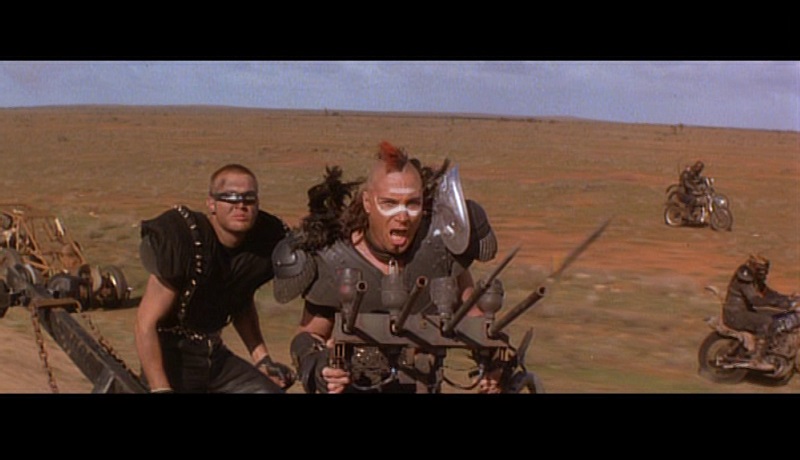
Lone warrior Max and his Australian cattle dog (one of the great cinema pets!) are two of these wanderers, but unlike others he’s not part of a punk gang or local community. A gyrocopter pilot (Bruce Spence) leads him to a group that has a huge amount of fuel, but they are under constant attack by a gang of outlaws led by the savage Humungus. Max, who has lost his wife and child in the first movie, is out of touch with humanity. By aiding the desert people, he eventually finds some of his human feelings again.

The second movie in the series is the most critically acclaimed of the original trilogy and justly so. The budget was clearly higher after the box office success of the first one and the filmmakers have spent this money well on kick-ass costumes and apocalyptic vehicles. It takes some time before the action gets going, but when it does – oh man – it is really great stuff. Better even than the first one in terms of insane car wreckage, stunts and brutal deaths.

The final chase in which Max attempts to drive a rig to a safe haven – what would essentially be the entire plot of Mad Max: Fury Road is a delicious, irresistible piece of action cinema.

Rating:

Biography: George Miller (1945) is an Australian filmmaker, best known for his Mad Max franchise. In 1971, George attended a film workshop at Melbourne University where he met Byron Kennedy, with whom he formed a friendship and production partnership, until Kennedy’s death in 1983 (Mad Max Beyond Thunderdome is dedicated to him). Together they made the first Mad Max movie in 1979 for a budget of 400.000 Australian dollars. It earned 100 million dollars at the box office worldwide and became the most profitable film of all time (the record was not broken until The Blair Witch Project 20 years later). Miller’s Mad Max: Fury Road (2015) earned Oscar nominations for best film and director. The latest entry in the series – Furiosa: A Mad Max Saga – will be released in May 2024.

Filmography (a selection): Furiosa: A Mad Max Saga (2024), Three Thousand Years of Longing (2022), Mad Max: Fury Road (12015), Happy Feet 2 (2011), Happy Feet (2006), Babe: Pig in the City (1998), Lorenzo’s Oil (1992), The Witches of Eastwick (1987), Mad Max Beyond Thunderdome (1985), Twilight Zone: The Movie (1983, segment), The Dismissal (1993, TV episode), Mad Max 2 (1983), Mad Max (1979), The Devil in Evening Dress (1975, short)
Mad Max

Director: George Miller
Written by: James McCausland, George Miller, Byron Kennedy
Cast: Mel Gibson, Joanne Samuel, Hugh Keays-Byrne

Year / Country: 1979, Australia
Running Time: 88 mins.

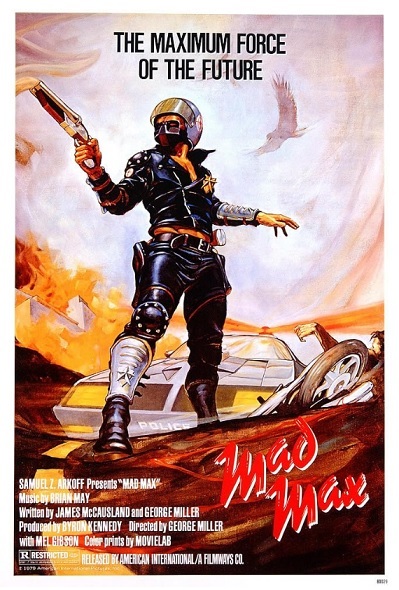
With the newest entry Furiosa: A Mad Max Saga approaching fast in 2024, it was time to revisit the old trilogy.

In the first Mad Max from 1979, we find ourselves in the early stage of an apocalypse. Australia (never mentioned as such) is suffering from ecocide, lawlessness and scarcity of fuel. The poorly funded Main Force Patrol is still active and tries to bring down the bikers that terrorize the highways.

The movie starts with a bunch of patrolmen who are chasing down a couple of psychotics and we immediately get a good sense of what we’re in for: very fast cars, dangerous stunts and major car crashes. We get introduced to the cool, leather outfit and shades wearing cop Max Rockatansky (Mel Gibson). Where others fail, he gets the job done. But after he dispatches the psychotic cop killer Nightrider, a gang of biker outlaws come after him and kill his wife and child. Now Max goes out for revenge and turns into a lone warrior who scavenges the barren waste land.

Prior to his film career, director George Miller served as a medical doctor in Sydney, stationed in a hospital emergency room where he encountered numerous horror-like injuries and fatalities similar to those portrayed in the film. Additionally, his upbringing in rural Queensland exposed him to numerous car accidents, and he tragically lost at least three friends to such incidents during his teenage years. So that’s clearly where his inspiration came from.

Miller is still developing his trademark style in this movie. The high speed chases, crashes and stunts are looking great considering the low budget. He employs innovative camera techniques to achieve the distinctive Mad Max look that he would refine in the sequels. It’s a highly original movie and within the carsploitation genre an absolute classic.

Rating:

Biography: George Miller (1945) is an Australian filmmaker, best known for his Mad Max franchise. In 1971, George attended a film workshop at Melbourne University where he met Byron Kennedy, with whom he formed a friendship and production partnership, until Kennedy’s death in 1983 (Mad Max Beyond Thunderdome is dedicated to him). Together they made the first Mad Max movie in 1979 for a budget of 400.000 Australian dollars. It earned 100 million dollars at the box office worldwide and became the most profitable film of all time (the record was not broken until The Blair Witch Project 20 years later). Miller’s Mad Max: Fury Road (2015) earned Oscar nominations for best film and director. The latest entry in the series – Furiosa: A Mad Max Saga – will be released in May 2024.

Filmography (a selection): Furiosa: A Mad Max Saga (2024), Three Thousand Years of Longing (2022), Mad Max: Fury Road (12015), Happy Feet 2 (2011), Happy Feet (2006), Babe: Pig in the City (1998), Lorenzo’s Oil (1992), The Witches of Eastwick (1987), Mad Max Beyond Thunderdome (1985), Twilight Zone: The Movie (1983, segment), The Dismissal (1993, TV episode), Mad Max 2 (1983), Mad Max (1979), The Devil in Evening Dress (1975, short)
Not Quite Hollywood

Director: Mark Hartley
Written by: Mark Hartley
Features: Dan Burstall, Bob Ellis, Dennis Hopper, Russell Mulcahy

Year / Country: 2008, Australia / USA
Running Time: 99 mins.

The title Not Quite Hollywood is not a misnomer. The exploitation pictures that have been coming out of Australia since the early seventies are characterized by sleazy sex and cheap violence. This delicious story of OZploitation explores the realms of Australian B-cinema through interviews with key players from the industry as well as fans and critics like Quentin Tarantino.

Not Quite Hollywood is basically told in three segments; sex, horror and car movies. The first genre took off in the seventies when new freedoms were won and the strong censorship was cut down. Besides sex, sex, sex, this segment also treats some of the more commercial Australian export successes such as Stork and the Barry McKenzie movies, prime examples of bad taste. The films that came out in this time are placed in a cultural context. As one of the interviewees describes it: The movies were not about who Australians really were, but how they wanted the outside world to think they were.

The second part focuses mostly on horror films. Apart from absolute rubbish, some very competent horror films were made in Ozzy. The slasher Patrick was such a huge success that the Italians even made an unauthorized sequel called Patrick Vive Ancora. The final chapter is all about car movies such as the famous Mad Max, a genre the Australians do very well.

This film is the perfect pick for a beer night with your mates. The upbeat and often hilarious documentary not only entertains, but also provides many ideas for fun exploitation flicks to (re-)watch later on. If the whole Ozzy slang is unknown to you, subtitles are recommended.

Rating:

Biography: Mark Hartley has made Australian B-cinema his specialty. After directing several documentaries / making-offs on classic Australian cult movies, he made the ultimate documentary about OZploitation called Not Quite Hollywood. He is also Australia’s busiest music video maker, directing over 150 promos for local and international artists including Powderfinger, The Living End, Sophie Monk, The Cruel Sea and Joe Cocker.

Filmography (a selection): A Date with Destiny (1990, short) / Which Way Did They Go, Skip (2003, short doc) / Turkey Shoot: Blood and Thunder Memories (2003, short doc) / Meet the Team: The Making of ‘The Club’ (2003, short doc) / ‘Fantasm’ Penetrated (2004, short doc) / Puttin’ on the Show: The Making of ‘Starstruck’ (2004, short doc) / A Dream Within a Dream: The Making of ‘Picnic at Hanging Rock’ (2004, doc) / Crashing the Party: The Making of ‘Don’s Party’ (2005, doc) / Thrills and Nuclear Spills: The Making of ‘The Chain Reaction’ (2005, short doc) / Jaws on Trotters: The Making of ‘Razorback’ (2005, doc) / The Adventures of Bazza in Chunderland: The Making of ‘The Adventures of Barry McKenzie’ (2007, doc) / Not Quite Hollywood (2008, doc).

De 30 jaar te late opkomst van een rasartiest

Searching for Sugar Man

Sugarman.
Won’t you hurry.
Cause I’m tired of these scenes.
For a blue coin.
Won’t you bring back.
All those colours to my dreams.
Silver magic ships, you carry.
Jumpers, coke, sweet Mary Jane.

Sugar Man
Rodriquez (1970), Cold Fact

Kleine tip: Ik raad je aan deze blog niet te lezen, maar de documentaire ‘Searching for Sugar Man’ te kijken. Het is een ongelofelijk verhaal, dat je een werelds goed gevoel zal geven. Maar als je tijd wilt besparen, hieronder de samenvatting.

In de jaren 70’ deden enkele succesvolle muziekproducenten in de VS een ontdekking: Sixto Rodriquez (artiestennaam Rodriquez), een briljante zanger en tekstschrijver uit Detroit. Rodriquez zingt poëtisch en profetisch over het leven in de grote stad, en doet sterk denken aan Bob Dylan, zowel qua stemgeluid als qua teksten.

De documentaire opent met het liedje ‘Sugar Man’, en ik dacht meteen, WOH! dit is één van de vetste nummers ooit. Die tekst, die stem, die melodie… Waarom ken ik dit niet?

En dat hebben meer mensen zich afgevraagd sinds de jaren 70’. Rodriquez nam twee platen op met de producers – Cold Fact en Coming From Reality – die het beide in thuismarkt USA slecht deden. Daarna verdween Rodriquez van het toneel. Onbegrijpelijk als je dit talent hoort. Wat ging er mis? Er is niemand die het kan uitleggen, maar de realiteit is dat het nooit voor hem gebeurd is…

In Amerika althans, want in Zuid Afrika, waar een stapel illegale kopietjes terecht kwam in de jaren 70’, werd Rodriquez een fenomeen. Iedereen had een kopie van ‘Cold Fact’ in zijn platencollectie. Rodriquez was groter dan Elvis in het Zuid Afrika van de apartheid. Alleen niemand wist wie de artiest was. Rodriquez had zich naar verluidt van kant gemaakt op het podium, en tot eind jaren 90’ werd dit door iedereen gelooft.

Toen ging een journalist en muzikale fan op zoektocht, en na lang speuren (onder meer via de songteksten van Rodriquez) belandde hij in Detroit en kwam hij erachter dat Rodriquez nog leefde! Hij had al die tijd sloopwerk gedaan in Detroit waar hij woonde met zijn drie dochters, en hij had geen idee dat hij een half miljoen platen had verkocht en een mega rockster was in Zuid Afrika. Wat in de documentaire niet verteld wordt is dat Rodriquez ook in Australië een culthit was en daar in de jaren 80’ rondgetoerd heeft. Maar in Amerika had niemand ooit van hem gehoord.

Tot nu… Door de documentaire heeft Rodriquez bekendheid in eigen land verworven, en is hij in diverse talkshows verschenen. De Zuid Afrikaanse journalist heeft hem ook naar Zuid-Afrika gehaald om grote concerten te geven. En zo heeft Rodriquez – decennia na de opnames van zijn platen – eindelijk de carrière gekregen die hij heeft verdiend. Respect.