The Sopranos Features: Introduction

By Jeppe Kleijngeld

For a period of eight blissful years, The Sopranos answered the TV-prayers of me and millions of other TV-maniacs. As a huge fan of GoodFellas, a quality series about a New Jersey mob family sounded like music to my ears. It delivered on its high expectations. No, it exceeded them by far.

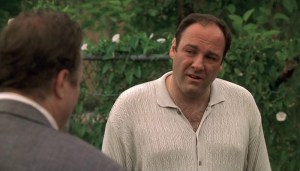
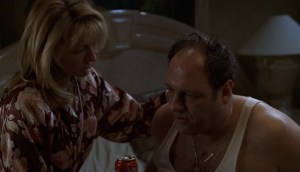
Tony Soprano, family matriarch, mob boss and psychiatric patient. The perfect characteristics for a leading man of a drama show. This complex character is wonderfully portrayed by the now legendary James Gandolfini. He is a fat, bald ladykiller, A charismatic sociopath. And also a family man and murderer. You just couldn’t ask for a more captivating main character.

But it isn’t just Tony who delivers. The supporting cast is delicious as well. We all have our favourites (mine is consigliere Silvio Dante), but I give praise to all; the hilarious psycho Paulie Walnuts, self-absorbed Christopher, ethically conscious Dr. Melfi, money-grabbing Carmela, crazy uncle June. Too many to mention, but all marvellous indeed!

So, what gives this show its ridiculous appeal? The guns, the girls, the gabagool? I guess this is just one of those very rare productions in which everything fits in perfectly; the teleplays, the actors, the soundtrack, the look and feel…it is perfect. Brilliant even.

When talking about classic mob movies, The Godfather and GoodFellas always come up first. The Sopranos can now be added to the mix. Mind you, this isn’t some ordinary rip-off. Since the pilot episode it has stood on its own feet. It is a highly original and modern take on the ‘been there, done that’ gangster genre. It placed mobsters with old values in the 21th century with all of its problems: depression, terrorism, failing capitalism and addiction.

For 86 episodes you are watching killers, who lack any form of empathy for their victims. Still, you love to spend time with them because they are so entertaining and their behaviour is so funny (when it’s not off-putting and disgusting). Often, the writers remind the audience of who these people really are. So how does one cope with all these horrible crimes on his conscience? Being a sociopath helps, but otherwise there is therapy (Tony), the catholic church (Carmela) or drug abuse (Christopher). High concept TV at its best.

Creator David Chase, who in the past worked on shows such as Northern Exposure and The Rockford Files, has created a cultural phenomenon. The Sopranos must be viewed, loved and treasured. Seriously, you’d be a douchebag to miss it.

The Sopranos Features

By Jeppe Kleijngeld

The Sopranos, the greatest TV-show ever made, had a revival in recent, pandemic times. Not only did super fans like me rewatch the show en masse, it managed to attract a whole new generation of viewers. The number of times it was streamed went way up. Millions of youngsters dived into the world of Tony Soprano and his two families and loved every minute of it. Not only that, but two of the show’s main cast members – Michael Imperioli and Steve Schiripa – made the defining podcast about the series called Talking Sopranos. And several of the show’s original makers, including showrunner and creator David Chase, made a prequel movie called The Many Saints of Newark, which will be released in The Netherlands on November 11.

It is, in other words, safe to say that The Sopranos is very much back. To honour the revival of this absolute classic, I will publish some juicy content about the show in the coming weeks. Get ready to be immersed in The Sopranos once again.

Content


The Sopranos Features: Introduction


My Sopranos Obsession: Final Analysis


The Sopranos: 10 Favorite Episodes


The Sopranos – 100 Greatest Moments: 100-91


The Sopranos – 100 Greatest Moments: 90-81


The Sopranos – 100 Greatest Moments: 80-71


The Sopranos – 100 Greatest Moments: 70-61


The Sopranos – 100 Greatest Moments: 60-51


The Sopranos – 100 Greatest Moments: 50-41


The Sopranos – 100 Greatest Moments: 40-31


The Sopranos – 100 Greatest Moments: 30-21


The Sopranos – 100 Greatest Moments: 20-11


The Sopranos – 100 Greatest Moments: 10-1


The Many Saints of Newark (2021, Review)


The Sopranos Ending Explained: Tony is not Definitively Dead, but his Future Looks Bleak


Video: The Sopranos – A Quantum Mechanical Ending


Wise Guy: David Chase and The Sopranos

Robin Green, rock-‘n-roll schrijver…

De naam Robin Green kende ik wel van The Sopranos. Samen met haar echtgenoot Mitchell Burgess schreef ze 17 afleveringen van de beste serie ooit. Nu hoorde ik op de podcast Talking Sopranos dat ze in de jaren ‘70 schreef voor Rolling Stone Magazine samen met o.a. Gonzo-journalist Hunter S. Thompson. Haar ervaringen uit die tijd staan beschreven in haar memoir ‘The Only Girl’. The Sopranos en Hunter S. Thompson? Dat is een boek voor mij.

En het viel niet tegen. Op 26 jarige leeftijd kwam Green op de Masthead van Rolling Stone te staan, als eerste vrouw. Het was in 1971, het jaar waarin Hunter S. Thompson’s Fear and Loathing in Las Vegas in twee delen in het magazine werd gepubliceerd, mijn favoriete boek aller tijden. Green hierover: ‘Hunter had been sent to Las Vegas to cover a motorcycle race, and when the magazine – ‘aggressively’ according to Hunter, rejected the pages – that story resulted in ‘Fear and Loathing in Las Vegas: A Savage Journey to the Heart of the American Dream’, published in two parts. The first as Hunter had written it, the second derived largely from taped hours of Hunter and Oscar Acosta’s muttering and raving, tapes that landed on the desk of newly hired Sarah Larin to be transcribed’.

En nog meer over Hunter: ‘His writing seemed like a new form as close to rock itself as writing gets. Unrestrained and Unrepressed, wild and reckless and high as a fucking kite. Hunter had found the perfect venue in Rolling Stone. Neither a glossy magazine with a two month lead time nor a newspaper with its limited space and linguistic leeway.’

Green, die altijd schrijver wilde worden, maakte haar debuut bij Rolling Stone met een verhaal over Marvel waar ze als secretaresse van Stan Lee had gewerkt. Ze kreeg 5 cent per woord wat haar 500 dollar opleverde, veel geld in die tijd. Nog belangrijker: ze werd vaste bijdrager aan Rolling Stone en het artikel werd haar eerste cover story. Later schreef ze een onthullend verhaal over Dennis Hopper, waarna haar naam als eerste vrouw aan de masthead van Rolling Stone werd toegevoegd. Haar Hopper-stuk werd in 1992 opgenomen in Movieline’s overzicht van de ‘Ten Interviews That Shook Hollywood’.

Het was een goede tijd voor de journalistiek. Zoals bekend van Hunter S. Thompson’s escapades betaalde het magazine alle onkosten, en dus waren Green en collega’s niemand iets verschuldigd. Ze konden niet makkelijk omgekocht worden door de PR-industrie en schreven wat ze wilden.

En het was een tijd waarin vrouwen voor hun rechten opkwamen. Green: ‘In this world, the world of rock and roll, men ran the show. They were the rock stars. The journalists and editors were men too. Even before that, in college, it was guys who’d been the ones to grab the microphones at sit-ins and demonstrations. A chick’s mandate: to be by their sides at the revolution, looking hip. Women were seeking equality. Hair under the armpits and getting sweaty. Have sex with everybody. Not out of promiscuity, but for freedom. There were no consequences yet. AIDS would not arrive until the 1980’s.’

De tegencultuur waar ze onderdeel van werd wordt tegenwoordig misschien gezien als nogal puberaal, tegendraads gedrag, maar Green brengt hier tegenin dat er ook een hoop was om boos over te zijn in die jaren: Vietnam, Kennedy’s dood (twee keer), Nixon, Malcolm X, Martin Luther King… En niet te vergeten: de tragische dood van Jim, Janis en Jimi.

Na een periode van zo’n vijf jaar kwam er een einde aan haar carrière bij Rolling Stone. Ze had een verhaal geschreven over de kinderen van Bobby Kennedy, maar vond dat ze een journalistieke grens had overschreden door met Robert Kennedy Jr. naar bed te gaan. Hoofdredacteur Jann Wenner eiste het verhaal wat zij weigerde. Toen liet hij haar naam van de masthead verwijderen.

Jaren later na vele omzwervingen werd Green televisie-schrijver. Grappig dat ze bij The Sopranos terecht kwam, de eerste echte rock-‘n-roll sterren van de televisie. Ook bij dit andere culturele fenomeen was Green de enige vrouwelijke schrijver. Het laatste deel van het boek gaat over deze periode van haar leven en vond ik verreweg het interessantste. Over hoe ze David Chase ontmoette, het genie achter The Sopranos, en samen met haar man Mitchell in het schrijversteam terecht kwam. Over hoe ze haar eigen jeugdervaringen in de scripts verwerkte en over hoe de serie een fenomeen werd. En uiteindelijk, hoe Chase haar ontsloeg in het laatste seizoen omdat ze ‘de show niet zou begrijpen’. Het had iets met zijn moeder te maken, vermoed Green. Toch is er een happy ending voor de schrijver die nu in de zeventig is. Samen met haar man ontwikkelde ze de serie Blue Bloods, die nu al aan het twaalfde seizoen toe is.

Tegenover elk succesverhaal dat je leest staan vele verhalen over mislukking. In ‘The Only Girl’ is dat het verhaal van Robin’s jeugdvriendin Ronnie die keer op keer in een psychiatrisch ziekenhuis McLeans belandt, dat bekend is geworden door de film Girl, Interrupted. Later zou ze zelfmoord plegen. Green schrijft: ‘Life is strange in that way. Why is one in mental pain, and the other juicy, healthy and productive? Riding high.’ En ‘riding high’ heeft ze zeker gedaan. Dat weet ze met deze smakelijke memoires goed over te brengen.
How to Write a Television Series

Originally published on FilmDungeon.com on 24-12-2007

As a lifelong devotee of the moving image, I developed the idea of writing screenplays. What better way is there to get your break into movies when you’re a non-professional that wants to be a filmmaker? I had already written a movie screenplay. A low-budget horror-comedy comparable with Peter Jackson’s Bad Taste. The problem with actually filming it was that a considerable budget was required. I am from the Netherlands where even renowned filmmakers struggle to get another project done. So who was going to invest in a cult film with a microscopic target group and an inexperienced director?

It was time for a strategy change. TV-series are the next best thing. And being the creator of a TV-series is what many would call a dream job. So would I. You get to write and produce a mini-movie every week, and when successful, you can continue it for as long as a decade. So I decided to start the creation of my very own TV-series. I already knew my subject. Or concept if you will. Now I needed some ideas on how to craft my screenplay.

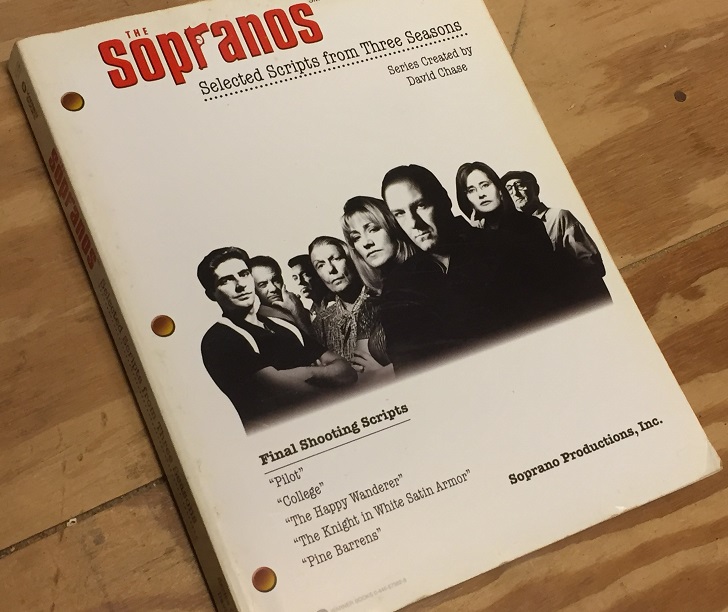
To get this done I bought a book: The Sopranos – Selected Scripts From Three Seasons. This is an extremely useful book for aspiring TV-writers. But knowing the show is probably a prerequisite. It describes the process of writing a series. The creator of the show, David Chase, explains how he came up with the overall theme of every season. Then, together with his writing team, he started working on the individual episodes. Every episode has three or four storylines. One major storyline called A. Then there are smaller ones called B, C and sometimes D.

Once the storylines were decided, the actual scenes were described. The five example screenplays in the book are in between 35 and 80 scenes long, and approximately 60 pages (1 hour of TV). When the scenes for every story were decided they are sequenced in a logical order. Then the episodes were divided among the writers. They had approximately two weeks to come up with the first draft. Then the show’s creator read it and gave the writer feedback on what he liked and didn’t like about it. Then the second draft was written and this process continued till the final draft was ready for production.

A great benefit of this book is that it contains five example TV-plays. If you need direction on the format of a TV-screenplay, all you have to do is check out one of these. After finishing the book I was ready to start the creation process of my very own TV-series. First a lot of research had to be done. I collected newspaper articles and started reading books on my subject. I started shaping my fictional world by describing the characters, their life stories and their personality traits.

The research and preparation took me a whole year. Of course I did it all in my spare time. I also had a day job to keep going. After this year I was ready to write an actual episode; the pilot. I wanted to do this in one go, because I thought it would make the writing process easier. So during a holiday in Crete I wrote the pilot script. It was certainly fun to do. But finishing the script was a weird sensation. I was proud that I had not given up, and had now completed it. But I was also wondering if what I wrote was actually any good…

Update 2021
No, that pilot tv-script I wrote is not very good. However, I haven’t lost my passion for this writing business. I recently decided to give it another go. That Bad Taste like script I mentioned earlier, I have decided to rewrite it. And it will be in English, so it is fit for international audiences.

Will it ever be a movie? Small chance. No one will want to produce it, that’s for sure. It’s too weird and has no commercial appeal I think. But if I ever get my hands on some money that has no immediate purpose, I might produce it myself. It has the potential to become a fantastic amateur cult movie.

And I would put it straight on YouTube when it would be done. It would be a lot of fun to make for the voluntary or underpaid cast and crew, that’s for sure. So I take another advice from David Chase, don’t stop believing!