King of the Zombies is Dead (Permanently)

George A. Romero, one of my favorite filmmakers, has died after a short battle with lung cancer, Indiewire reports. Almost singlehandedly responsible for the zombie genre in its current form, Romero directed ‘Night of the Living Dead’ and its many sequels, most notably the consumerism allegory ‘Dawn of the Dead’ – my favorite horror film of all time.

Romero (born 1940, New York), who resided in Pittsburgh, made his feature debut with ‘Night of the Living Dead’. It was a low budget zombie movie that was both groundbreaking and shocking in its time. Quickly, it became a major horror classic. He then directed some smaller, personal films in which he often combined horror and social commentary. In 1978 he topped the success of ‘Night’ with his brilliant follow-up ‘Dawn of the Dead’.

In the eighties his career stagnated a bit when he created the third part in his zombie series ‘Day of the Dead’. It was a failure both commercially and critically. In 2005 Romero made a small comeback with ‘Land of the Dead’. Other noticeable films he made are ‘Martin’ (a vampire flick) and ‘the Crazies’ (an outbreak film).

To honor the master, I hereby re-publish my review of ‘Day of the Dead’ which he considered his favorite film.

Dear George, may you – as opposed to your favorite characters – rest in peace.
#####################

Day of the Dead (1985, USA)

08-05-2008 – by Jeppe Kleyngeld

Director: George A. Romero
Written by: George A. Romero
Cast: Lori Cardille, Terry Alexander, Joe Pilato, Jarlath Conroy

Running Time: 102 mins.

In George Andrew Romero’s NIGHT OF THE LIVING DEAD (1968) the dead had been resurrected and started a crisis. In DAWN OF THE DEAD (1978), the zombies were taking the upper hand. In 1985’s DAY OF THE DEAD, there are barely any humans left. A small group of survivors consisting of soldiers, scientists and civilians, are holed up in a military complex with hundreds of flesh-eaters roaming around on the outside.

There has been a time leap since DAWN, so the zombies are slowly decomposing and are looking greyer and greener than in the previous ‘Dead’ movies. The different groups living in the claustrophobic complex are each dealing with the situation in their own way. The scientists are searching for a way to ‘control’ the zombies, while the soldiers want to wipe them all out. The few civilians on the other hand, just want to enjoy the time they have left. Lack of any prospects starts to create tension in the group. Especially with the psychopathic Captain Rhodes (Joe Polito) who commands the small military force. Not before long, their infighting leads to a final clash with the zombies. Romero shows us once again that humans are a greater danger to themselves than any outside threat.

Romero called DAY his favourite entry in the series, even though it was derided by critics upon release. Today the film has got more of a cult status. And justly so. As a film basically showing total apocalypse, it succeeds brilliantly. Only problem is that it’s pretty depressing. From Dr. ‘Frankenstein’ Logan conducting gruesome experiments on zombies in his underground lab to the unpleasant characters: it all contributes in making this film pretty hard to sit through. In DAWN, the shopping mall location lend itself well for some inventive humor. The funniest thing about DAY is the ‘intelligent’ zombie Bub who even utters some dialogue in the film (A..llli….ciaaaa…).

In short, Romero’s golden touch, the fantastic special make-up effects by Tom Savini and the dark atmosphere make this a must-see for horror fans. The successful military satire is another good reason to see this. However, dejected types might be better off not watching this. Like the other ‘Dead’ films its concept may well be brilliant, but it is still a nasty and depressive movie. Twenty years later Romero would continue his series with LAND OF THE DEAD.

Faillissement van het oneindige groei model

Groei

335 soorten kattenproducten zijn verkrijgbaar op AH.nl met de meest vindingrijke namen: verwenbrokjes, luxe menu zeecoctail, finesse mousse, a la carte, crunchy brokjes, saus lovers, catisfactions, enzovoorts. Hiermee vertellen de marketeers ons dat katten behoeften hebben die verder gaan dan een volle buik halen. Ze willen smullen, genieten en verwend worden. Likkebaardende puntoren staren ons aan vanaf de verpakkingen.

We vinden dit soort uitingen normaal, maar als je de gemiddelde mens even wijst op hoe bizar het eigenlijk is volgt hij je wel. Na de Tweede Wereldoorlog zijn we begonnen met consumisme als vervanging van oorlog. De jaren 60′ brachten ons de massale branding en marketing (zie ‘Mad Men’) die we nu gewend zijn. Vanaf de jaren zeventig verscheen er ook de nodige satire over ons consumeergedrag. Het beste voorbeeld vind ik de zombiefilm ‘Dawn of the Dead‘. Hierin zoeken een aantal overlevenden van een zombie Apocalyps hun toevlucht in een groot winkelcentrum, waar de zombies als hersenloze monsters over de roltrap lopen en (onbedoeld) alles kapot maken. Ze volgen alleen hun instinct. Dat is wat wij consumenten ook doen.

Toen kwamen de jaren 80, 90 en 00. De babyboomers werden rijk, en vervolgden het pad van het kapitalisme. Groei zonder einde. En je kunt alleen groeien door meer te consumeren. Eten, drinken, spullen, elektronica, vakanties, films, telefoons, auto’s, caravans, koelkasten, boten, horloges, enzovoorts, enzovoorts.

Groei is noodzakelijk voor bedrijven, want als ze niet groeien, dan….

Ja, wat gebeurt er dan eigenlijk?

Nou, als bedrijven niet groeien gaan ze failliet. Stel dat je niet die auto koopt, zoals Mark Rutte je een tijdje terug aanbeval wel te doen, dan is die autofabrikant straks bankroet of moet hij in elk geval de helft van zijn personeel ontslaan. En dat is precies waar ons huidige model scheef op gaat; het moeten wel consumeren om de status quo te behouden.

Zijn er ook andere oplossingen? Natuurlijk, in het Verenigd Koninkrijk wordt nu geëxperimenteerd met gratis geld (het ‘basisloon’). Tegenstanders zijn bang dat mensen niet meer willen werken als ze ‘zomaar’ geld krijgen, maar ik denk dat niet. Werken doe je niet voor het geld (als het goed is). Je doet het om voldoening te krijgen, om sociale contacten aan te gaan en om het gevoel te hebben dat je ergens aan bijdraagt. Geld is een middel, geen doel. Bovendien is het basisloon ook weer niet zo hoog dat de meeste mensen er niks bij meer willen verdienen. Alleen maakt het dan minder uit of het 20 of 40 uur per week is, en kun je ook wat meer vrijwilligerswerk doen.

Niet dat ik geloof dat het basisloon het antwoord is voor alle systeemproblemen van het kapitalisme in huidige vorm dat we nu ondervinden, maar het kan wel helpen.

Een ander belangrijk punt is hoe we groei ervaren. Groei hoeft helemaal niet te gaan om meer geld of meer verkochte eenheden. Het kan ook gaan om verbeteringen in levensstandaarden, efficiencies en betere ervaringen. En ook reducties kunnen we zien als groei: CO2 reductie, minder afval, minder psychische problemen, enzovoorts. Het ultieme doel is waarschijnlijk het vergroten van het Bruto Nationaal Geluk. Natuurlijk heeft dat deels met geld te maken, maar met zoveel meer…

Die paradigma shift zit er aan te komen. En dat is een goede zaak voor onze planeet. Die heeft het wel een beetje gehad met consumptiegroei namelijk.

Wat vinden we toch zo fascinerend aan zombies?

Wanneer de zombierage precies begonnen is weet ik niet meer. Was het met de film 28 Days Later in 2002? Daarvoor hoorde je nooit wat over zombies. Inmiddels wordt je doodgeslagen met de levende lijken. Talloze films, televisieseries, iPhone spelletjes. Games zoals Dead Rising en Left 4 Dead. Zombies duiken zelfs op in spellen waar ze eigenlijk niks in te zoeken hebben zoals Call of Duty: Black Ops 2 en Red Dead Redemption. Waarom is en blijft het zo’n interessant fenomeen?

Ik heb geen idee, maar ik kan wel vertellen wat ik boeiend vind aan de levende doden. Mijn fascinatie is begonnen met de horrorfilm Dawn of the Dead (let wel, het origineel uit 1978). Wat ik daar zo geweldig aan vind is het apocalyptische gevoel dat die film weet te creëren. Je bent echt op reis met die groep overlevenden en de plek waar ze schuil houden – een groot winkelcentrum overspoeld met stinkende lopende lijken – is een geniale vondst.

Daarnaast wordt het zombiethema in Dawn of the Dead gebruikt als metafoor voor consumerisme, een thema dat mij persoonlijk erg ligt. Mensen maken alles kapot met hun gedrag. De uitwerking hiervan is soms komisch, maar net zo goed angstaanjagend. Tot slot is de rampenfilm an sich een heerlijk genre omdat het in hersens van de mens zulk bekend materiaal is. Onze voorouders hebben al miljoenen jaren met allerlei rampen moeten dealen, dus het zien van een ramp op televisie maakt meteen de nodige adrenaline los in de hersenen en daar voel je je uiteraard lekker door.

The Walking Dead

Maar goed, Dawn of the Dead is alweer 35 jaar geleden, dus wat heeft de hedendaagse markt ons te bieden? Dan kom ik toch uit op de serie The Walking Dead. Ik moet zeggen dat ik het eerste seizoen waardeloos vond ondanks de erg sterke make-up en gore effecten. Het script was gewoon bij vlagen totaal ongeloofwaardig (even uitgaande van het gegeven dat je zombies zelf wel kunt accepteren als enigszins geloofwaardig scenario). In één aflevering was een groep L.A. bendeleden vrijwillig in een bejaardentehuis aan het werk. Meen je dat nou? Ja, echt.

Maar seizoen 2 heeft me toch wel gegrepen. Het mooie vind ik hoe menselijk gedrag wordt beïnvloed door een ramp zoals een zombie-uitbraak. Beschaving is maar een dun laagje vernis en mensen keren snel terug naar hun werkelijke aard. De feminisering van de samenleving komt abrupt ten einde en wreedheid tegenover zombies en andere mensen neemt al snel gruwelijke vormen aan. Betekent dat, dat iedereen opeens een moordenaar is en een verkrachter? Nee, dat niet, maar sommigen zeker wel. En zo is het goed mogelijk dat je beste vriend je opeens wilt vermoorden om er met je vrouw en kind vandoor te gaan. En dat vind ik wel een geloofwaardig scenario.

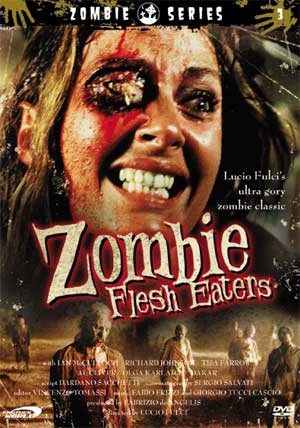
Zombie Flesh Eaters

OT: Zombi 2

Director: Lucio Fulci
Written by: Elisa Briganti
Cast: Tisa Farrow, Ian McCulloch, Richard Johnson, Al Cliver

Year / Country: 1979, Italy
Running Time: 91 mins.

Sun, sea and zombies in Lucio Fulci’s unofficial sequel to George A. Romero’s Dawn of the Dead, which is weird considering that was a sequel itself (to Night of the Living Dead). Also, this film has nothing to do with Dawn. Well, it’s about zombies obviously and it pretty much kicks ass as well.

A seemingly abandoned sailboat is found in the New York harbor with a zombie on board (zombies are called ‘zombies’ in this flick. Cool huh?). A reporter and the daughter of the missing boat owner head for the Atlantic to find out what happened. Along with two friendly sailors they meet in St. Thomas, they head out for the supposedly cursed island Matool. Already underway they stumble upon a zombie who is fighting a shark underwater. This is a spectacular scene: classic stuff!

On the island, the struggle for survival really begins. The horror starts with the infamous eye splinter scene, another classic moment, but perhaps not so brutal if you see it coming. From then on it is kill or be killed for the main characters. Fulci is not known for delivering a subtle underlying message. Neither is he specialized in directing actors to towering heights. No, he is a man of the gore. And he does what he does best with this movie.

Compared to Romero’s classic to which this is supposedly a sequel, it is done in a more low budget style. There are fewer zombies and it certainly misses the intellectual layer. But, the tropical location is almost as cool as Dawn’s shopping mall, the make-up and special effects are far out, and the music adds to a creepy atmosphere. This might just be Fulci’s best film. Definitely a must see for zombie aficionados.

Rating:

Biography: Lucio Fulci (1927, Rome – 1996, Rome) originally studied medicine but quickly turned to filmmaking instead. He started his film career with directing comedies, musicals and spaghetti westerns. Later he turned to Italian shock horror films and made a name for himself as the goriest director ever. His international career came off the ground in 1979 when he directed Zombi 2, an unofficial sequel to George A. Romero’s Dawn of the Dead, which had been released in Italy under the title Zombies. Fulci died from diabetes in 1996.

Filmography (a selection): The Thieves (1959) / The Jukebox Kids (1959) / Getting Away with It the Italian Way (1962) / The Strange Type (1963) / The Maniacs (1964) / 002 Operation Moon (1965) / How We Stole the Atomic Bomb (1967) / The Conspiracy of Torture (1969) / A Lizard in a Woman’s Skin (1971) / Don’t Torture Donald Duck (1972) / White Fang (1973) / Challenge to White Fang (1974) / Four of the Apocalypse (1975) / Silver Saddle (1978) / Zombi 2 (1979) / City of the Living Dead (1980) / The Beyond (1981) / The New York Ripper (1982) / Evil Eye (1982) / The New Gladiators (1984) / Dangerous Obsession (1986) / Zombi 3 (1988) / Demonia (1990) / Door to Silence (1991)