My Voyage to Italy

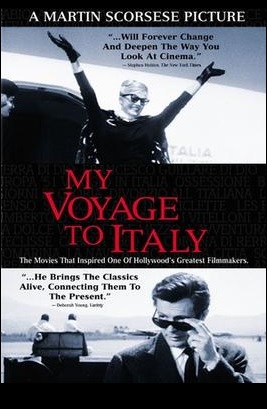
During the recent vacation to Italy with my family, I finally watched Scorsese’s four hour documentary on Italian cinema called Il mio viaggio in Italia, or My Voyage to Italy (1999).

In it, he describes how he fell in love with Italian cinema: “Because so many Italians lived in New York, one channel showed Italian movies on Friday night with subtitles.” Together with his family, he watched as many of them as he could.

When he was a child, Italy was just emerging from World War II, and the aftermath became the central theme of many films from that period. Movies that contained powerful images like nazi soldiers occupying Rome in Rome, Open City (1945, Roberto Rossellini). Despite the often bad quality of the prints, all the essential messages came through, Scorsese recalls.

“Some images were so powerful that they made my grandparents cry”, says Scorsese. “They saw the country they left behind and what became of it. They were feeling protected in the US, but guilty at the same time. These movies could have been about them.”

The first Italian film Scorsese saw was Paisan (1946, Roberto Rossellini). Rossellini’s follow-up to Rome Open City consists of six episodes set during the liberation of Italy. It follows the allied forces as they move through Italy, from Sicily to the northern Po Valley, to drive out the Nazi’s. What impressed him the most were the episodes about people who make the ultimate sacrifices to achieve freedom.

The third part of Rossellini’s post-war trilogy is Germany, Year Zero (1948, Roberto Rossellini). Sacrifice is again a major theme in this movie. “It seems that Rossellini begs the allied forces to look with compassion at their former enemies, so that they could go on together.”

My Voyage to Italy shows long movie fragments, accompanied by Scorsese’s comments. He really takes the time to dissect them, and after each discussion you almost have the feeling as if you have seen them. He covers two main ‘extremes’ of Italian cinema: the epic and the neorealist drama.

The first epic he encountered was Fabiola (1947, Alessandro Blasetti). Its monumental imagery inspired him so much that he drew storyboards for Roman epics of his own. Later, he discovered silent masterpieces such as Cabiria (1914, Giovanni Pastrone), which he describes as “like watching a journal from ancient Rome.”

After World War II, the Italian film industry lay in ruins. With minimal resources to express themselves, filmmakers created the neorealist movement. They depicted the struggles of their nation with stark honesty, relying on non-professional actors and real locations. “Illusion took a backseat to reality”, Scorsese explains.

Neorealism had tremendous influence over cinema that is still felt today in cinematic movements all over the world. It gives audiences raw, human experience – and shows us the heroes and heroines of everyday life.

The most famous example is probably Bicycle Thieves (1948, Vittorio De Sica) about an unemployed man who desperately needs work to support his wife Maria, his son Bruno and his small baby. When everything he tries fails, he steals a bicycle, which leads to dire consequences. It’s an extremely touching film, a specialism of its director Vittorio De Sica.

An earlier film De Sica made is also discussed. It is called Shoeshine (1946) and it triggers much of the same emotions as Bicycle Thieves. Two boys who shine shoes (does the famous GoodFellas line come from here?) end up in prison, which is depicted as hell on earth. Here they are eventually forced to betray each other. Like Bicycle Thieves it has very moving moments involving children. Orson Welles once said that he could never do what De Sica did with Shoeshine, which is making the camera disappear.

In 1952, De Sica made Umberto D., which Scorsese finds an even better film than Bicycle Thieves. This time the story follows an elderly man who, penniless, cares only for his beloved dog. It contains many heartbreaking moments. After seeing Umberto D., the Italian Minister of Culture wrote in an open letter that he hated neorealism, and he asked the filmmakers to be more optimistic.

Perhaps in response, De Sica’s next film, The Gold of Naples (1954), embraced a lighter tone. Though comedic in spirit, it still carried an undercurrent of tragedy. This seamless interplay between drama and comedy, Scorsese notes, is a defining quality of Italian cinema: “Actors can walk the razor-thin line between comedy and drama.”

In the third part of the documentary, Scorsese discussed a different kind of filmmaker: Luchino Visconti. Visconti came from a prominent, wealthy Italian family. But he was also a lifelong member of the communist party. He didn’t have to work, so he felt a little aimless. In the 1930’s he worked for French director Jean Renoir and this influenced him greatly. A hallmark of his films would be exploring the European aristocracy.

But his first film is not about that. Obsession (1943, Luchino Visconti) is seen as a forerunner of the neorealism movement. But, Scorsese says, it is a very stylized movie. “It’s a melodrama with a very earthy sensual feel to it. All Visconti’s gifts were already there: His eye for detail, his mastery of the camera and most of all his operatic sense for action and emotion.”

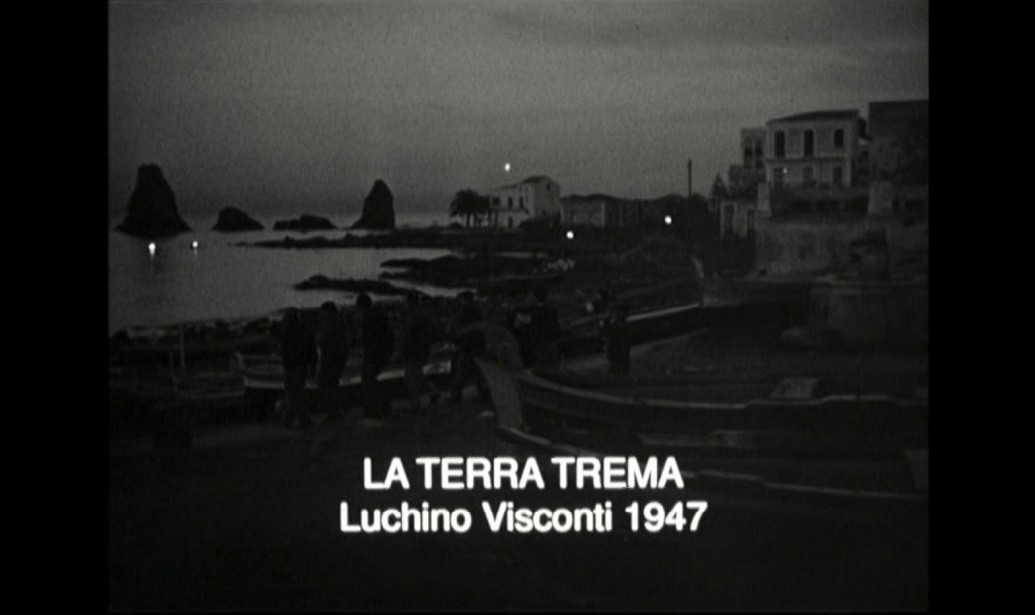
His follow up was The Earth Trembles (1948, Luchino Visconti) about a group of Sicilian fishermen who rebel against northern middlemen. Besides film, Visconti also started a theatre group that included a young Marcello Mastroianni. This experience is clearly put to good use for Visconti’s next film: Senso (1954). Set during the Italian-Austrian war of 1866, it vividly recreates the 19th century. “He really brought the era to life”, says Scorsese, “not just in how it looked, but in how it felt.”

Finally, Scorsese turns to Federico Fellini, often regarded as the Italian filmmaker. Fellini’s early film I Vitelloni (1953) is an autobiographical tale of five young men in Rimini, torn between staying home and pursuing their dreams. Scorsese deeply identified with them, drawing inspiration for his breakthrough film Mean Streets (1973).

Fellini’s international breakthrough came with La Dolce Vita (1960), a modern reflection on freedom and decadence in the shadow of the Cold War. To escape dread, people plunge into endless pleasures and distractions. This was Fellini’s first collaboration with Marcello Mastroianni, with whom he would make five films – an artistic partnership akin to Scorsese’s with Robert De Niro and later Leonardo DiCaprio.

His follow-up, (1963), became a personal touchstone for Scorsese. “La Dolce Vita was only the calm before the storm”, he says. “With he reinvented himself, and in doing so, reinvented cinema.”

The film boldly dramatizes Fellini’s own artistic crisis. Mastroianni plays Guido, a director unable to complete his next project, searching in vain for inspiration. The film becomes a tapestry of dreams, memories, and anxieties, unfolding as a stream of consciousness rather than a conventional plot. For Scorsese, “ is the purest expression of love for the cinema that I know.”

The documentary ends with this tribute, leaving us with great words of inspiration from one of the greatest living filmmakers.

Easy Riders, Raging Bulls

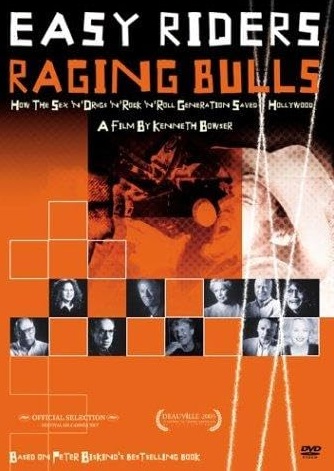
BBC documentary (2003) by Kenneth Bowser, based on the book by Peter Biskind. Easy Riders, Raging Bulls: How the Sex-Drugs-and-Rock ‘N Roll Generation Saved Hollywood tells the story of Hollywood in the 1960s, a time when the studio system was in crisis. Their films had become increasingly irrelevant.

The problem was that movies were run by studios rather than directors, and the studios had lost touch with what audiences wanted to see. Then a new generation of filmmakers emerged who reconnected with viewers. Directors such as George Lucas, Steven Spielberg, Martin Scorsese, Dennis Hopper, Sam Peckinpah, Francis Ford Coppola, Arthur Penn, Warren Beatty, Robert Altman, Jack Nicholson, and Peter Bogdanovich.

“In 1963 the studio system collapsed”, says Bogdanovich. “It was over.” After the disaster of Cleopatra (1963, Joseph L. Mankiewicz, Rouben Mamoulian), the Fox lot was shut down. It became a ghost town. Television took over. The old moviegoers died off, and American films grew more and more meaningless.

Meanwhile, art theaters screening foreign films were doing very well. Many of the new generation of filmmakers learned the language of cinema from auteurs like Fellini, Godard, and Truffaut.

Outside the studio system, Roger Corman played a pivotal role in training young filmmakers to make low-budget B-movies that performed well at the box office. Jonathan Demme, Martin Scorsese, Ron Howard, and Francis Ford Coppola all started under Corman. They succeeded by targeting the youth who flocked to the thousands of drive-in theaters across the country, audiences that loved horror and action. Corman also had a knack for choosing hot topics: Hells Angels were in the news, so he made The Wild Angels (1966, Roger Corman). LSD was trendy, so he made The Trip (1967, Roger Corman) based on a screenplay by Jack Nicholson.

In Hollywood, directors proved just how out of touch the studios were. Executives hated Bonnie and Clyde, but young people loved it. Studios had to adapt. Paramount, in deep trouble, was taken over by Gulf & Western, led by the eccentric Austrian Charlie Bluhdorn. He brought in the now-legendary Bob Evans as a producer, who helped turn the studio around. How? By giving directors more creative control. Like he did with Polanski, who made Rosemary’s Baby in 1968.

At Columbia, Bert Schneider also trusted and empowered directors, resulting in massive hits, most notably Easy Rider, released in 1969. The drug-fueled chaos of director Dennis Hopper and his team is visible on screen. It was a great film, and audiences loved it. It was the kind of movie that never would have been made under the old studio system. The same goes for Midnight Cowboy by John Schlesinger, also released in 1969 – an outstanding film. That same year saw The Wild Bunch by Sam Peckinpah, which pushed violent realism to a whole new level.

The 1970s began, and the director’s era was in full swing. Peter Bogdanovich released The Last Picture Show in 1971, a film rich in emotional depth and sexual content, more than audiences were used to at the time. Dennis Hopper tried to follow up on Easy Rider with The Last Movie, but botched the edit due to his drug use and constant partying. “I had final cut, but I cut my own throat,” he says in the documentary.

In 1972, Paramount released The Godfather in 4,000 theaters simultaneously, a massively successful strategy. The history of that production was recently chronicled in the excellent miniseries The Offer. Coppola had now become one of the greats. He used his influence to bring George Lucas back to Hollywood, where he made the wildly successful American Graffiti in 1973 – a film studios didn’t understand, but youth audiences loved. That same year marked the rise of another major talent: Martin Scorsese, whose Mean Streets won over critics and audiences alike with its originality and authenticity.

But 1973 belonged to Warner Bros., which released The Exorcist by William Friedkin. Using the same wide-release strategy as The Godfather, it became a huge box office hit. It was Friedkin’s second success after The French Connection, cementing his status as one of the untouchable directors of the time.

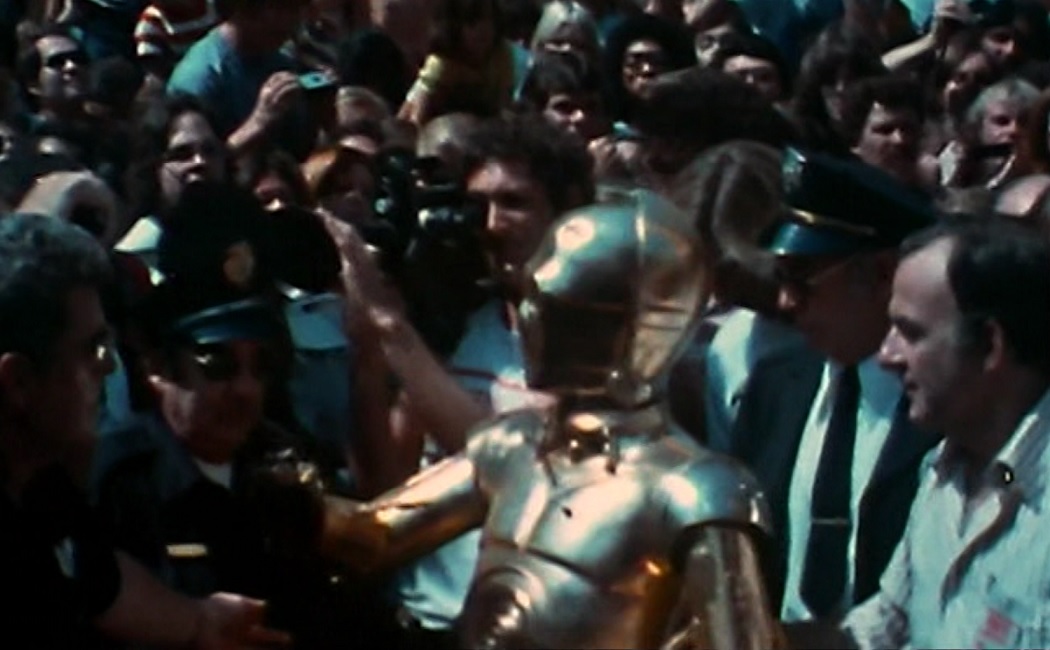
By now, the auteurs had taken over Hollywood. This led to artistic triumphs like Chinatown (1974). But the young directors hadn’t forgotten Corman’s trick of attracting young audiences. In 1975, Spielberg released Jaws, a film that redefined what success looked like in Hollywood. Corman said: “When I saw Jaws I thought: these guys know what I’m doing, and they have the money and talent and skills to do it better.” George Lucas took it even further with Star Wars in 1977. The age of the blockbuster had arrived.

It had taken a decade, but Hollywood was back on its feet. Expensive B-movies like Alien, Superman, and their sequels became the new studio model. For about ten years, directors ruled. That era came to an end in the late ’70s, but it was a glorious decade that produced countless classics – films still regarded today as some of the greatest ever made.

The 15 Greatest George Harrison Songs

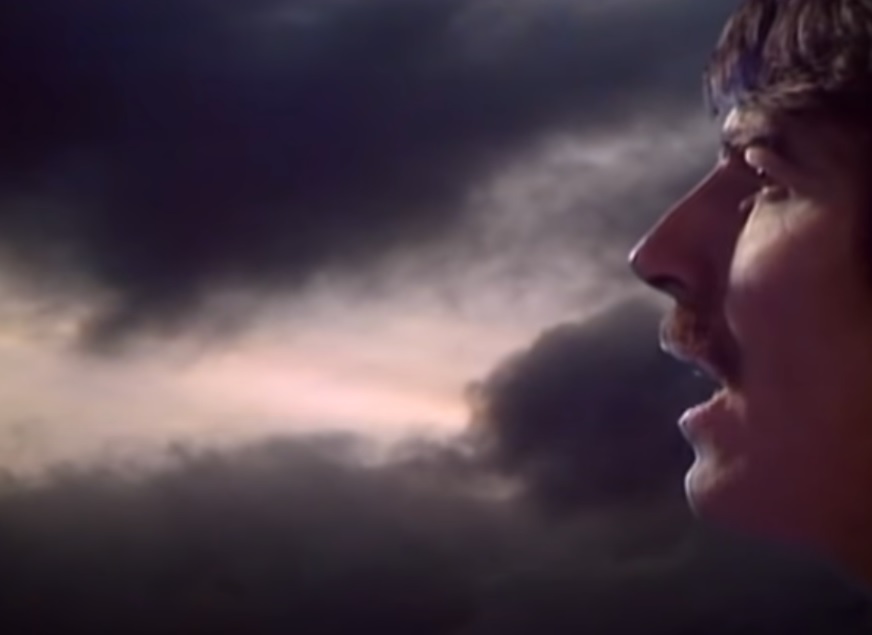
During his formative years as lead guitarist of The Beatles, George Harrison, often called the quiet and spiritual Beatle, developed himself as a successful songwriter in his own right, who worked in the shadow of songwriting canon Lennon-McCartney. He ended up writing some of the group’s most iconic songs, and then – post-Beatles – continued to add a number of classics to his repertoire as a productive solo artist. These are my 15 favorites.

15. Blow Away

Day turned black, sky ripped apart. Rained for a year ‘til it dampened my heart. Cracks and the leaks, the floorboards caught rot. About to go down, I had almost forgotten… Great opening lyrics, this title song and single from of his 1979 album ‘George Harrison’. This easy listening song became one of Harrison’s most popular recordings from his solo career, and it’s easy to understand why.

14. I Want To Tell You

This was the third track George added to ‘Revolver’, and thereby the first time he contributed more than two tracks to a Beatles album. The song is about the difficulty of conveying the emotions you experience during an acid trip. It’s the opening song of ‘Live in Japan’, the fantastic album made of the concert tour George did in Japan with Eric Clapton as his guitarist and band leader.

13. Piggies

‘Piggies’ is a social satire inspired by George Orwell’s ‘Animal Farm’. Great combo of classical music, baroque pop and absurd lyrics (pigs eating bacon). Unfortunately it was, along with ‘Helter Skelter, used by Charles Manson and his cult as a foundation for his race-related counter cultural revolution. Still, it remains a terrific song, and Harrison’s second best song on the magnificent ‘White Album’ in my humble opinion.

12. Living in the Material World

This song’s title was chosen by Martin Scorsese for his documentary about Harrison. It’s another one of his spiritual songs and the title of his follow-up album to ‘All Things Must Pass’. It’s a very memorable tune in which George describes the limits of knowledge we have in this state as living beings and the clearer picture that will emerge after death. John and Paul are also mentioned in the lyrics.

11. If I Needed Someone

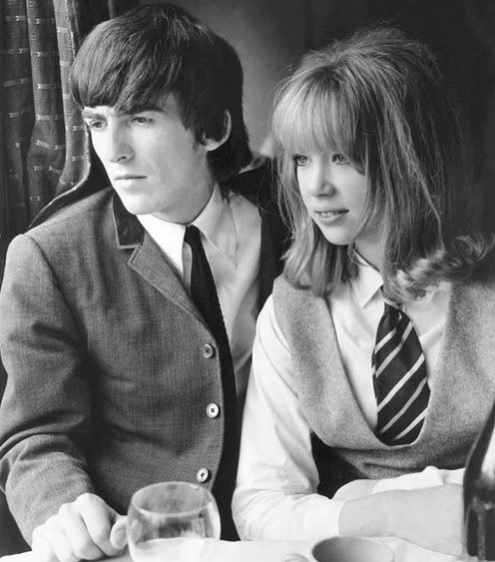
Along with ‘Think For Yourself’, this was George’s contribution to ‘Rubber Soul’. He apparently wrote it for Pattie Boyd, with whom he wasn’t yet married in 1965. It was inspired by the sound of the American band the Byrds who George and John liked and who were clearly inspired by the Beatles. The ambivalent lyrics are quite beautiful, and ‘If I Needed Someone’ was at the time considered to be George’s best song at that point.

10. Within You, Without You

One of the three Indian songs George composed for the Beatles (the others are ‘Love You To’ and ‘The Inner Light’) and his only song on ‘Sgt. Pepper’s Lonely Hearts Club Band’. “I think that is one of George’s best songs”, John Lennon later said. “I like the arrangement, the sound and the words. He is clear on that song. You can hear his mind is clear and his music is clear.” It was recorded in Abbey Road Studios in London without the other Beatles, and features Indian instruments such as the sitar, a tambura and a tabla.

09. I Me Mine

In Peter Jackson’s ‘Get Back’ about the ‘Get Back’ sessions in Twickenham Studio’s, George arrives one morning, and he starts playing a new song he’s been working on for Ringo and some crew members. It is called ‘I Me Mine’. They like it and so do I. The lyrics point to self-centredness as part of the human condition. It was the last song The Beatles, somewhat ironically, recorded before they split up and went to do their own thing.

08. Cheer Down

‘Cheer Down’ was the closing song of the tremendous action film Lethal Weapon 2 in 1989. It was picked by George’s friend Eric Clapton, who was in charge of the music. The title of the song is attributed to Harrison’s wife Olivia, who told her husband to ‘cheer down’ when he would get too enthusiastic. He wrote it together with Tom Petty, and released it as a single with ‘Poor Little Girl’ as the B-side. It was the last such release by Harrison as a solo artist during his lifetime.

07. Tax Man

On The Beatles’ legendary album ‘Revolver’, George got the opening track with ‘Tax Man’. It was the first political song by the group, written as a protest against the progressive super tax of 95 percent the band had to pay at that time. It was introduced by Harold Wilson, prime minister and Labour Party leader, who is mentioned in the lyrics along with conservative leader Ted Heath. The fantastic guitar solo is played by none other than Paul McCartney.

06. What Is Life

‘What Is Life’ is one of the hit singles of ‘All Things Must Pass’, Harrison’s triple album which was released in november 1970 after the breakup of the group. Background musicians on the song include Eric Clapton and the Delaney & Bonnie and Friends Band. It became one of Harrison’s most popular compositions and showed the depth of his talents that had been hiding in plain sight behind Lennon and McCartney. The songs was used in the final segment of GoodFellas, the part in which Henry Hill’s life as a gangster goes off the rails.

05. Here Comes The Sun

And what is currently the most streamed Beatles-song? It’s not a Lennon-McCartney composition, but by far Harrison’s ‘Here Comes The Sun’. It is currently on 1.1 billions streams on Spotify. George wrote this pearl at Eric Claptons’ country house on an acoustic guitar while skipping a business meeting at Apple Corps headquarter about The Beatles’ business affairs. It became one of his signature songs and together with ‘Something’ formed his genius contribution to ‘Abbey Road’, the final album they recorded. The beautiful composition shows his maturity as a songwriter.

04. Something

This classic love song from ‘Abbey Road’ became Harrison’s first A-side single (it was released as a double A-side single together with Lennon’s ‘Come Together’). It is considered as a definite highlight of Harrison’s career. Lennon called it “the best track on ‘Abbey Road’” and it was later covered by a.o. Frank Sinatra, Elvis Prestley, Ray Charles and Shirley Bassey. After ‘Yesterday’ it is the most covered song by The Beatles.

03. While My Guitar Gently Weeps

Rolling Stone Magazine ranked this song seventh in their list ‘The 100 Greatest Guitar Songs of All Time’. And justly so! The guitar work (played partly by Eric Clapton uncredited) is sweeping. The words that started this composition – gently and weeps – were randomly chosen from a book George found lying around. This reflects the meaning of the lyrics that appear to be about randomness and – typical for George – universal love. Inspired by the Taoist concept that everything is relative to everything else as opposed to the Western view that things are merely coincidental.

02. Give Me Love (Give Me Peace On Earth)

I am a sucker for George’s spiritual songs and this is reflected in my choice for his greatest two songs. ‘Give Me Love’ (1973) became George’s second number one single in the US knocking McCartney’s ‘My Love’ to the second spot. It contains beautiful slide-guitar solos, and I love his passionate pleading to the Lord, asking to be freed from birth (released from the karmic cycle of birth, death, and rebirth). Don’t miss the beautiful live version from the ‘Live in Japan’ album.

01. My Sweet Lord

Why ‘My Sweet Lord’ is my favorite George Harrison song? Because the songs heralded the arrival of Harrison’s slide guitar technique, and I absolutely love the sound of the guitars on this song. The solo especially is marvelous. Also, George’s passionate singing is terrific, and those background vocals: LOVE THEM! Lennon didn’t like it much, commenting: “Every time I put the radio on it’s ‘oh, my Lord.’ I’m beginning to think there must be a God.” But maybe he was a little jealous that George became the first ex-Beatle to score a number-one single. Later in the 1970s, Harrison was found guilty to have subconsciously plagiarized the song ‘He’s So Fine’ by The Chiffons.

Bad Lieutenant

Director: Abel Ferrara
Written by: Zoë Lund, Abel Ferrara
Cast: Harvey Keitel, Victor Argo, Paul Calderón

Year / Country: 1992, USA
Running Time: 96 mins.

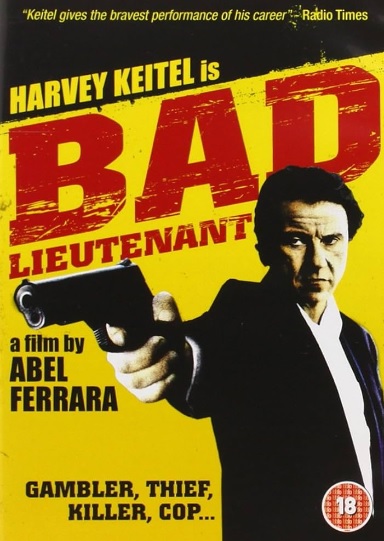
Harvey Keitel is the Bad Lieutenant in Abel Ferrara’s disturbing cop drama. He’s the kind of guy who starts snorting cocaine in his car right after he has dropped his two boys off at school. LT, as he’s credited, is a hopeless addict. He’s addicted to alcohol, crack, smack and gambling. He is also a walking time bomb.

Harvey Keitel was on a roll this year. First he appeared in Reservoir Dogs and then in this, probably the most well known and appreciated movies by New York artist and filmmaker Abel Ferrara. His performance in Bad Lieutenant is very raw, angry and animallike. LT is like a whacked out version of Keitel’s Mean Streets character.

Speaking of that movie, there are some definite links there, and with Scorsese in general. New York plays a big role, and so does religion. In his most desperate moment, LT even hallucinates of Jesus.

So how bad is LT? Pretty bad. He steals illegal drugs from evidence and puts them in the market and he steals money from two guys who just robbed a store owner while he sends the poor guy over to the station to file a report. He uses his badge only to blackmail two underaged girls to perform sexual acts, and his gun is strictly for blowing out his car radio after he lost another basebal bet.

Like Ferrara’s other drug movie The Addiction, Bad Lieutenant is a very effective film about addiction as it shows the constant hunger and the madness of it. LT is just going around frantically feeding the beast, but it’s never going to be enough. We know he is never going to fill that void and his inevitable downfall draws ever nearer. The despair that Keitel expresses is very well acted. The level of self destruction and self hatred is at times hard to watch though.

Rating:

Biography: Abel Ferrara (1951, New York) is a New York artist and filmmaker. He started making amateur films on Super 8 in his teens before making his mark as independent film director with bloody underground films such as The Driller Killer. Ferrara has an independent way of working, uses low budgets, but is still able to attract Hollywood talent for his movies, such as Christopher Walken and Harvey Keitel. His raw, realistic style and controversial content has earned him a position as an important voice in American cult cinema.

Filmography (a selection): Nicky’s Film (1971, short) / 9 Lives of a Wet Pussy (1976) / Not Guilty: For Keith Richards (1977, short doc) / The Driller Killer (1979) / Ms. 45 (1981) / Fear City (1984) / Cat Chaser (1989) / King of New York (1990) / Bad Lieutenant (1992) / Body Snatchers (1993) / The Addiction (1995) / The Funeral (1996) / The Blackout (1997) / New Rose Hotel (1998) / ‘R Xmas (2001) / Mary (2005) / Go Go Tales (2007) / Chelsea on the Rocks (2008, doc) / Napoli, Napoli, Napoli (2009) / Welcome to New York (2014) / Pasolini (2014) / Alive in France (2017, doc) / Piazza Vittorio (2017, doc) / The Projectionist (2019, doc) / Tommaso (2019) / Siberia (2019) / Padre Pio (2022)