Cult Radar: Part 11

FilmDungeon.com is glad to explore the video trenches to find that oddball treasure between the piles of crap out there. Of course, a treasure in this context can also be a film that’s so shockingly bad it’s worth a look, or something so bizarre that cult fans just have to see it. Join us on our quest and learn what we learn. Hopefully we’ll uncover some well-hidden cult gems.

Researched by: Jeppe Kleijngeld
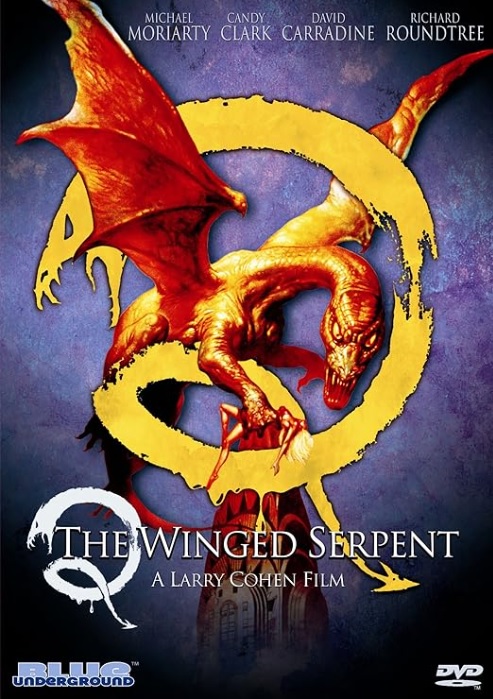
Q: The Winged Serpent (USA, 1982)

Directed by: Larry Cohen
Written by: Larry Cohen
Cast: David Carradine, Michael Moriarty, Candy Clark, Richard Roundtree

A series of unexplainable crimes occur in New York City: a girl sunbathing on a rooftop vanishes, and a window cleaner at the Empire State Building is decapitated. Two NYPD detectives (David Carradine and Richard Roundtree) investigate a ritualistic Aztec murder and soon discover that these crimes are connected. This entertaining supernatural fantasy-horror film by Larry Cohen (Black Caesar) was produced by legendary B-movie mogul Samuel Z. Arkoff and grew from a single idea by Cohen: what if the Chrysler Building housed the nest of a giant prehistoric bird? The special effects are mostly reserved for the film’s climax and they’re not even that bad. The characters are also surprisingly engaging. All in all, Q: The Winged Serpent is an enjoyable B-movie that will certainly appeal to fans of Arkoff’s cult film library.

A Lizard in a Woman’s Skin (Italy, France, Spain, 1971)
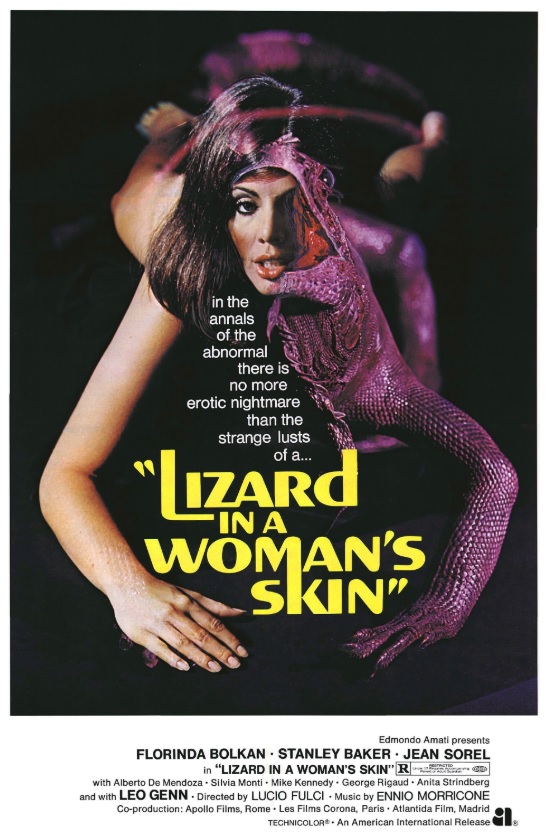
Directed by: Lucio Fulci
Written by: Lucio Fulci, Roberto Gianviti, José Luis Martínez Mollá
Cast: Florinda Bolkan, Stanley Baker, Jean Sorel

A Lizard in a Woman’s Skin is a strong example of the giallo genre – an Italian cinematic style that blends elements of slasher, thriller, psychological horror, and sexploitation, and that predates the later wave of American slasher films. The story follows the daughter of an influential politician (Florinda Bolkan), who dreams of an orgy at her ‘liberated’ neighbour’s house and of killing her after having sex with her. She recounts this dream to her psychiatrist, only to discover that the murder actually occurred exactly as she described. I initially took the film’s title literally and expected a Cronenberg-style body horror, but it turned out to be more of a lesson in Freudian dream analysis combined with a murder mystery set in London in the Swinging Sixties. One of the film’s most notorious moments is a dream sequence in which a dog is cut open so convincingly that director Lucio Fulci and his special effects artist were taken to court to prove it was fake. It’s a well-crafted film – stylish, atmospheric, and intriguing – though at times a bit slow and uneventful.

Street Trash (USA, 1987)

Directed by: J. Michael Muro
Written by: Roy Frumkes, J. Michael Muro
Cast: Mike Lackey, Vic Noto, Bill Chepil, Mark Sferrazza

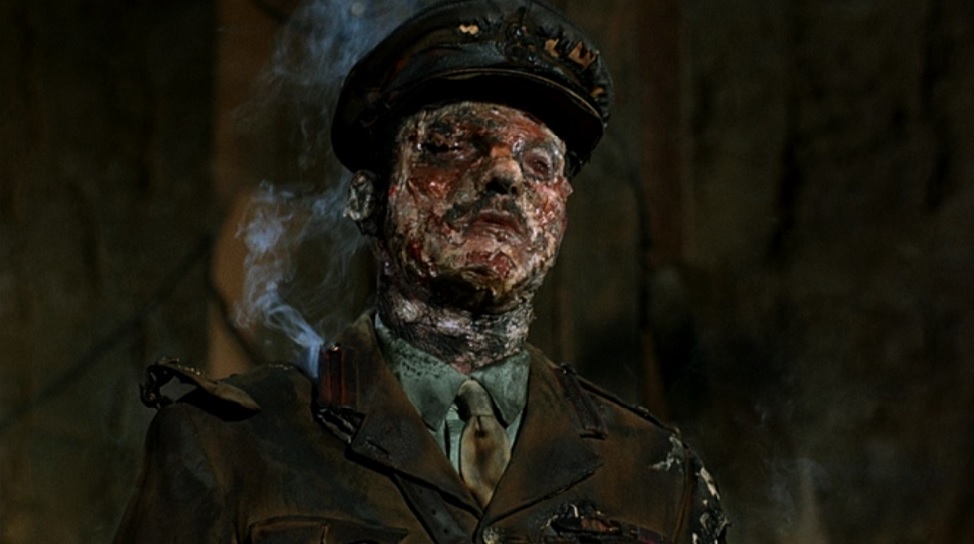
Just how trashy is a movie called Street Trash? Renowned Steadicam operator J. Michael Muro directs this body-horror comedy about hobos – an often underrepresented group in movies. The story centers on a cheap liquor called Viper that causes anyone who drinks it to melt. This independent production is a prime example of the curious horror subgenre known as ‘melt movies’ (The Blob is another prime example). The film has little in the way of a traditional plot; instead, it’s a series of loosely connected vignettes linked by the effects of the Viper drink. Among the recurring characters are a psychopathic Vietnam veteran terrorizing hobos and a mobster played by Tony Darrow (GoodFellas, The Sopranos). Street Trash has understandably gained quite a cult following over the years, though I didn’t enjoy it much myself. The scene in which a bunch of hobos toss a severed penis around with the owner running after it was a bit too much for me.

Requiem for a Vampire (France, 1972)
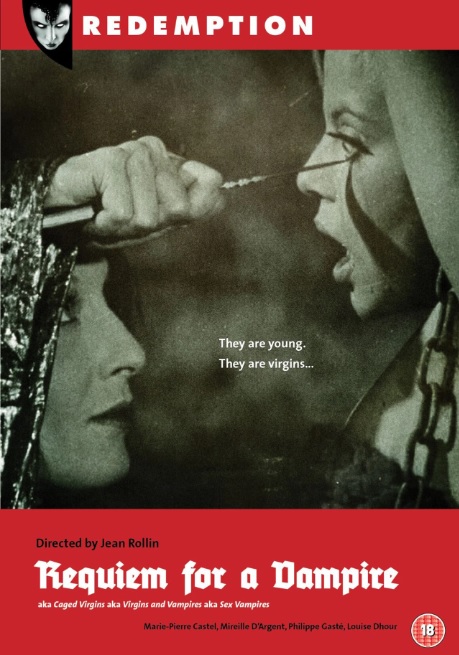
Directed by: Jean Rollin
Written by: Jean Rollin
Cast: Marie-Pierre Castel, Mireille Dargent, Philippe Gasté

This French cult treasure begins intriguingly: two girls and a man dressed as clowns are chased by a car and shot at. They fire back. The man doesn’t survive the pursuit, but the two girls manage to escape, eventually hiding near an abandoned water tower. They’re clearly on the run, but from whom? No explanation is given. It feels like a deliberate play with mise-en-scène that nonetheless holds your attention. Only after a while does a plot emerge, when the girls stumble upon strange rituals taking place in a remote château. The film is captivating – almost like a silent movie. The two leads don’t speak until they’re hypnotized by a vampire, who commands them to lure in victims for the resurrection of an ancient race. To do so, however, they must first lose their virginity. The lead actresses are well cast, and the combination of eerie locations, sensual imagery, haunting music, and dreamlike camerawork creates a mood that never lets go.

Quatermass and the Pit (United Kingdom, 1967)

Directed by: Roy Ward Baker
Written by: Nigel Kneale
Cast: James Donald, Andrew Keir, Barbara Shelley, Julian Glover

This Hammer production is more of a sci-fi mystery than the studio’s typical brand of horror. During the excavation of a new subway tunnel, workers uncover skulls and skeletons of ancient apemen. Professor Bernard Quatermass, a space scientist, is called in to investigate. When a strange metallic object is found nearby, he begins to suspect an alien origin and searches for the missing link in human evolution. This Quatermass film, the third based on a BBC television serial, feels very much like an old Star Trek episode, complete with familiar sci-fi elements such as telekinesis, telepathy, and alien insects. Though the pacing is a bit slow, several production aspects – especially the sound design – are excellently executed. The film also presents some intriguing science-fiction ideas, including the notion of recording the memories of a susceptible brain, revealing visions of insect wars that once took place on Mars.

Carl Gustav Jung #1: Individuatie

Individuatie is volgens de Zwitserse psychiater en psycholoog Carl Gustav Jung (1875 – 1961) het proces van worden wie je altijd al was. Individuatie is een groeiproces, volwassen worden, waarbij de mens zich bewust wordt van zijn uniekheid tegenover andere mensen. Uit dat individuatieproces ontstaat in de psyche een nieuw element, het ‘ik’ of ‘ego’ genoemd. Het doel van individuatie is volgens deze opvatting zichzelf te leren kennen, wat leidt tot zelfverwerkelijking.

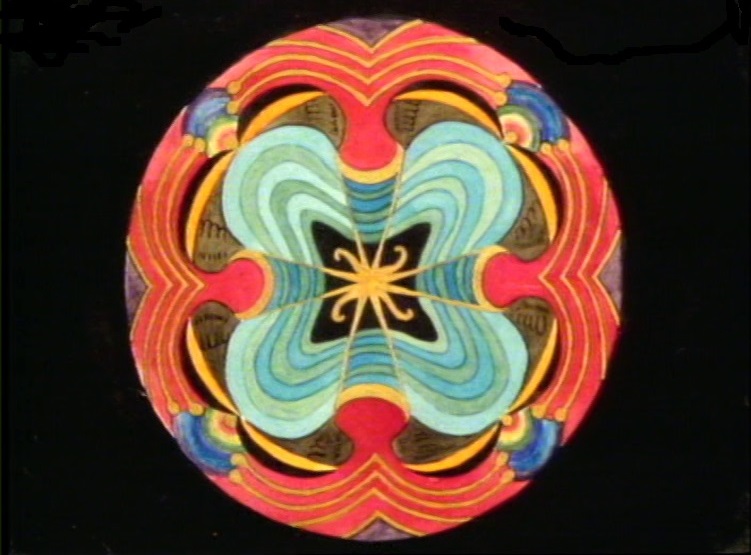
Het leven van Jung draaide om het vinden van het midden: het zelf van waaruit de persoonlijkheid als een geheel kan openbloeien. Het symbool van die totaliteit van de mens is de mandala: het symbool van zelf in een eenheid van tegengestelden. Jung tekende vele mandala’s in zijn leven. Het hielp hem in tijden van crisis om zichzelf te hervinden. De eenheid is een troost, vond Jung. Je psyche wordt niet verscheurd door allerlei Goden, maar er is een innerlijke leidraad – het Zelf – die op de achtergrond aanwezig is en probeert een heelheid te creëren.

Individuatie is een vereniging van het bewuste en het onbewuste. Het onbewuste wordt volgens Jung gesymboliseerd door het water. De invloedrijke psycholoog was zijn hele leven gefascineerd door water, en hij wilde ook altijd aan het water wonen. Zijn opvatting over het onbewuste leidde tot een breuk met zijn vroegere mentor Sigmund Freud. Volgens Freud bestond het onbewuste uit de zaken die we zelf verdrongen en weggedrukt hebben. Jung zag het als een gedeelde bron van psychische ervaringen (‘het collectieve onbewuste’): een krioelende massa die het onbewuste van de volledige mensheid bevat, niet alleen van het individu.

Meester van de onderwereld
Jung’s visie op het onbewuste kwam voort uit een droom die hij als vierjarig kind had. In zijn droom stond hij in de wijde achter de pastorie waar hij vaak speelde. Plotseling werd zijn aandacht getrokken door een plek in de aarde waarvan hij voelde dat er zich iets daaronder moest bevinden. Hij vond een ingang achter een groen gordijn en liep een stenen trap af richting een duistere diepte…

In een donkere, stenen ruimte beneden zag hij een podium staan waarop een kostbare, gouden troon stond die met wortels verbonden leek met het binnenste van de aarde. Op de troon stond een reusachtig gewrocht dat was omgeven door een zacht, stralend licht dat nergens vandaan leek te komen. De kleine Jung zag dat het gewrocht bestond uit huid en levend vlees, en helemaal bovenin zat één enkel oog dat onafgebroken naar boven staarde. Op dat moment hoorde hij zijn moeder die zei: “Ja, kijk maar eens goed, dat is de menseneter.” Doodsbang schrok hij wakker.

Hoe kon zo’n jong kind dromen over zaken die geen herinnering kunnen zijn? Door deze kinderdroom werd Jung ingewijd in de geheimen van de aarde en nam zijn geestelijke leven zijn onbewuste aanvang.

Onze verbeeldingskracht, het onbewuste, is niet zonder structuur. Je hebt de neiging je de dingen op een bepaalde manier in te denken. Jung noemde dat de archetypische structuur. Deze structuur brengt telkens weer bepaalde beelden en symbolen voort. Daarom hoef je er als individu zelf geen ervaring mee te hebben gehad. In vele culturen komen beelden naar voren die je ook weer in andere culturen ziet. Zo kom je bijna overal de fallus tegen. “We weten niks over de psyche”, zei Jung. “Door ons gebrek aan bewustzijn zijn we overgeleverd aan onze psychische onderwereld.”

In Jungs carrière was hij voortdurend op zoek naar de relatie tussen dit onbewuste en het ego/ik. Ook ging hij verborgen verbanden zien tussen de psyche en materie. Dit komt aan bod in het volgende fragment over Jung: psyche en materie.

Lees ook: Lessen in scenarioschrijven: Gebruik van symboliek

Jung, psychologist and idealist philosopher

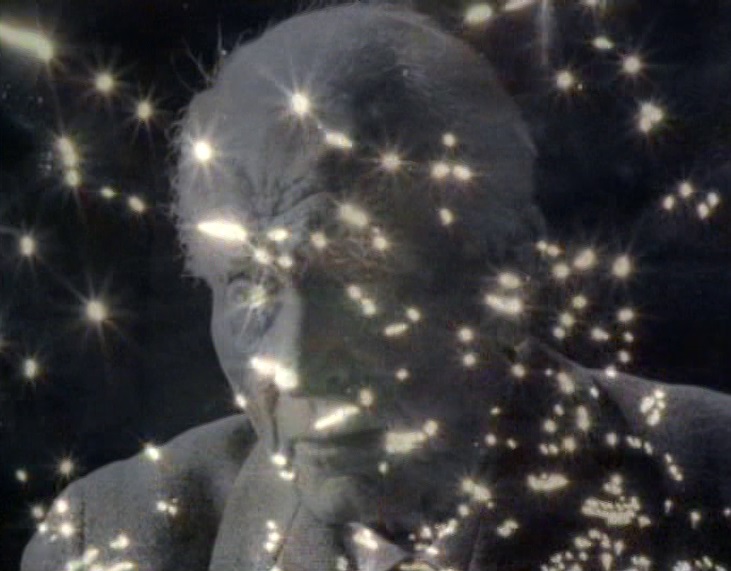
Born in Switzerland, Carl Gustav Jung (1875 – 1961), along with Sigmund Freud, became the most well known psychiatrist of the twentieth century and possibly of all time.

In his little book ‘Decoding Jung’s metaphysics’, philosopher Bernardo Kastrup analyses Jung’s metaphysics. In other words: What is beyond what we think of as the physical world? Or in Kastrup’s words: A metaphysics of nature entails a certain view about what nature is in and of itself, as opposed to how it behaves (which is the study of science).

According to Kastrup, Jung hid his thoughts about this in his writing, because he was first and foremost a scientist. But Kastrup makes it obvious that Jung was also very much an idealist philosopher, which means that he thought that mind is primary in nature. In Jung’s view, the psyche holds the body rather than the other way around.

Famous principles in Jung’s work are archetypes, the collective unconscious and synchronicity, all principles that fit the idealist view very nicely. Jung considers the unconscious integral to the psyche. Sometimes, experiences in the unconscious can potentially cross the boundary and enter ego-consciousness. That is clearly an idealist position: There is only one mind (mind-at-large) and egos are localisations of this mind-at large or collective unconscious (or for the Dutch reader: Fragmenten uit het Schemerland). Content of this collective unconscious could potentially enter the ego-mind. Jung refers to these experiences as ‘psychoid’.

Jung describes archetypes as unconscious, but nonetheless active-living dispositions, ideas in the Platonic sense, that perform and continually influence our thoughts and feelings and actions. These ideas have effects which have an organizing influence on the contents of consciousness.

For instance, the inner life and behavior of a mother towards her child is largely determined by the so-called ‘mother archetype’, a mode of being and acting that is inherited by every woman and constellated by the presence of the child. These behaviours are thus not learned, but inborn. They correspond to the primordial templates of the collective unconscious (the larger mind) as they assert themselves by impinging on ego-consciousness.

The archetypes cannot be apprehended in and of themselves. All we can assess is the organising effects on our ego-consciousness. This is once again an idealist perspective. All we know, and can ever know for certain, is what we directly perceive. We cannot observe archetypes directly. All we have is the images, dreams and visions they help create. An archetype is a tendency that ‘tends’ to express itself in a certain way, Kastrup writes.

Each archetype can manifest itself to a variety of images, feelings and spontaneous behavioural patterns, all of which symbolize – or point to – a message. Our deeper dreams, visions, passions and impulsive actions thus have a meaning and can be interpreted, if only we pay attention to them. Taken together, the archetypal manifestations in our lives – in both dream and waking states – form a symbolic narrative meant to show to ego-consciousness what is going on in the unconscious. It is up to the Jung-analyst to unravel the meaning of these narratives.

Synchronicity is described by Jung as the simultaneous occurrence of a certain physic state with one or more external events which appear as meaningful parallels to the momentary subjective state. As an example, Jung famously reported an incident he witnessed during a therapy session. The female patient he was seeing related a dream in which she was given a golden scarab, an important archetypal symbol of rebirth. As she was recounting the dream, an insect began knocking on the window. Jung let it in and found it was a rose chafer beetle, an insect that looks very much like a scarab.

How can these strong links occur between the mind and physical world when there is only causality? According to Kastrup, who decoded Jung’s work, Jung believed in a non-local, organising foundation of nature. If the ego-mind and the physical world both arise from this deeper (mental) foundation, then these meaningful coincidences start to make a whole lot more sense. This is once again an idealistic proposition.

And so, the inescapable conclusion is that Jung was an idealist who thought that nature is in and of itself consciousness.

More on Kastrup’s writing can be found on his website.

Zijn dromen echt de sleutel naar het onderbewustzijn?

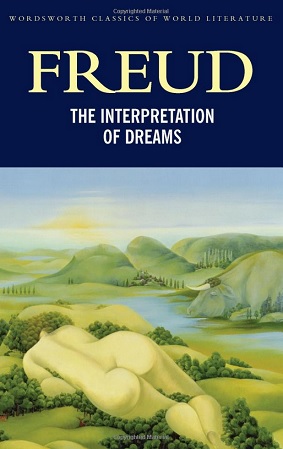
Alle dromen zijn wensvervullingen. Dat beweert Sigmund Freud althans in zijn boek ‘The Interpretation of Dreams’. Jaren later schijnt hij echter ook heel andere typen dromen beschreven te hebben.

Het boek heb ik geprobeerd te lezen, maar het is vrij ingewikkeld. Daarnaast is het taalgebruik uit 1899 wat lastig te interpreteren. Ik heb het dus niet uitgelezen, maar wat ik ervan geleerd heb is heel interessant. Volgens Freud vindt wensvervulling in dromen plaats wanneer driften door het ego onderdrukt worden. Deze onderdrukking kan te maken hebben met schaamte of schuldgevoel.

The Interpretation of Dreams

In dromen kunnen de behoeften alsnog bevredigd worden. Maar het onderbewustzijn moet ze eerst ‘coderen’ om ze als het ware het bewustzijn in te smokkelen. Daarom zijn dromen vaak vreemd en lijken ze soms totaal onzinnig. De codering bestaat volgens Freud meestal uit gebeurtenissen of gedachten van de afgelopen dag. Kortom, dromen zijn de stiekeme representaties van het beest in de mens. Met deze theorie kunnen dromen gebruikt worden om het onderbewustzijn te doorgronden. Een behoorlijk fascinerend idee moet ik zeggen. Ik heb het eens los gelaten op mijn droom van afgelopen nacht.

De droom
Ik droomde dat een indringer het op me had voorzien. Hij was al bij me thuis geweest en ik wist dat hij zou terugkomen. Wat hij precies van plan was weet ik niet, maar het was sowieso iets kwaads en ik was erg bang voor hem. Hij had veel weg van Simon, een zeer nare jongen die altijd kinderen pestte in mijn oude buurt, waaronder mij en mijn vriendjes. De droom speelde zich dan ook af in mijn ouderlijke huis en tuin.

In het eerste deel van mijn droom liet ik me mentaal terroriseren door deze Simon. Hij was nog niet eens teruggekomen, maar ik was volop met zijn terugkeer bezig. Ik had me verschanst met enkele wapens. Angstig wachtte ik tot hij zou komen. Maar toen veranderde ik van gedachten. Ik besloot een hamer te pakken en een val op te zetten. Zodra hij zijn kop door de schutting zou steken zou ik hem in één klap doodslaan.

De interpretatie
Het Simon-achtige terreurfiguur heeft mijn droom overleefd. Dat wil zeggen, ik ben wakker geworden voordat ik hem dood heb kunnen slaan. Wat speelt er in mijn leven dat deze droom kan hebben opgewekt? Ik had vanmorgen niet lang nodig om te bedenken wat het was (en zo moet het ook gaan, want dromen vergeet je binnen de kortste keren. Bescherming van het ego?)

Mijn ouders zitten momenteel voor zes weken in Australië. Ze runnen een webshop en m’n pa had me gevraagd een aantal dingen op te sturen naar klanten. In twee gevallen heb ik het verkeerde gestuurd, en in reactie hierop schreef mijn vader ‘je hebt er wel een zooitje van gemaakt’. Dit kwam in eerste instantie vervelend bij me binnen.

Ik heb gereageerd door hem te wijzen op zijn eigen onduidelijke instructies, maar ik heb mijn ouweheer niet een verbale tik om zijn oren gegeven. Dit is een oud probleem van me waar ik ook voor in behandeling ben geweest; geen grenzen voelen, alles maar een beetje laten gaan, soms over me heen laten lopen. Ik vind het moeilijk hier bij stil te staan. Laat staan het op te schrijven en te publiceren. Wanneer je het lastig vindt om op zo’n open manier over iets te praten of schrijven, kan dat betekenen dat er schaamte zit en dat het probleem zijn toevlucht heeft gezocht in het onderbewustzijn. Dat mijn droom zich rond mijn ouderlijk huis afspeelde is een duidelijke link met de mail van mijn vader die dag.

Mijn droom kan ik daarom interpreteren als wensvervulling. In mijn droom heb ik namelijk wel besloten een tik uit te delen in plaats van het erbij te laten zitten. Ik voel nu heel sterk de neiging om uit te leggen en nuanceren dat mij pa geen verbale tik verdiend had, maar dat hoort bij mijn passiviteitsproblematiek.

En waarom kwam het in mijn droom in de vorm van een vijandige indringer? Ik had die avond met Loesje ‘The Walking Dead’ gekeken waarin een mogelijk gevaarlijke vrouw probeerde binnen te dringen in het kamp van de overlevenden van een zombie apocalyps.

Conclusie, ik zie wel wat in deze theorie van Freud. Dromen kunnen ons wel degelijk dingen laten zien als we er voor open staan. Daarnaast is het gewoon cool om eindelijk een instrument te hebben om iets dat voorheen ongrijpbaar was nu soms te kunnen vangen. Dit was m’n eerste grote vangst sinds ik het boek heb gelezen en ik hoop er nog veel aan toe te voegen.