The Valachi Papers (1972)


‘The Valachi Papers. Fact not Fiction’

Directed by:
Terence Young

Written by:
Peter Maas (book ‘Le Dossier Valachi’)
Dino Maiuri (screenplay)
Massimo De Rita (screenplay)

Cast:
Charles Bronson (Joe Valachi), Lino Ventura (Vito Genovese), Jill Ireland (Maria Reina Valachi), Walter Chiari (Gap), Joseph Wiseman (Salvatore Maranzano),
Gerald O’Loughlin (Ryan), Amedeo Nazzari (Gaetano Reina), Fausto Tozzi (Albert Anastasia), Pupella Maggio (Letizia Reina), Angelo Infanti (Lucky Luciano)

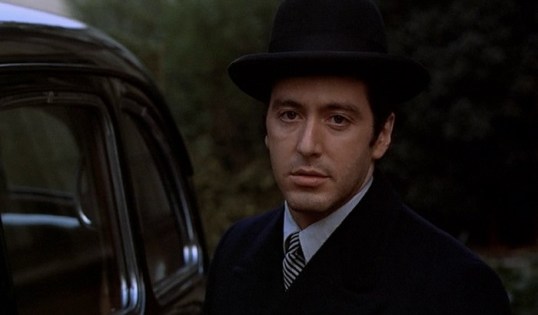
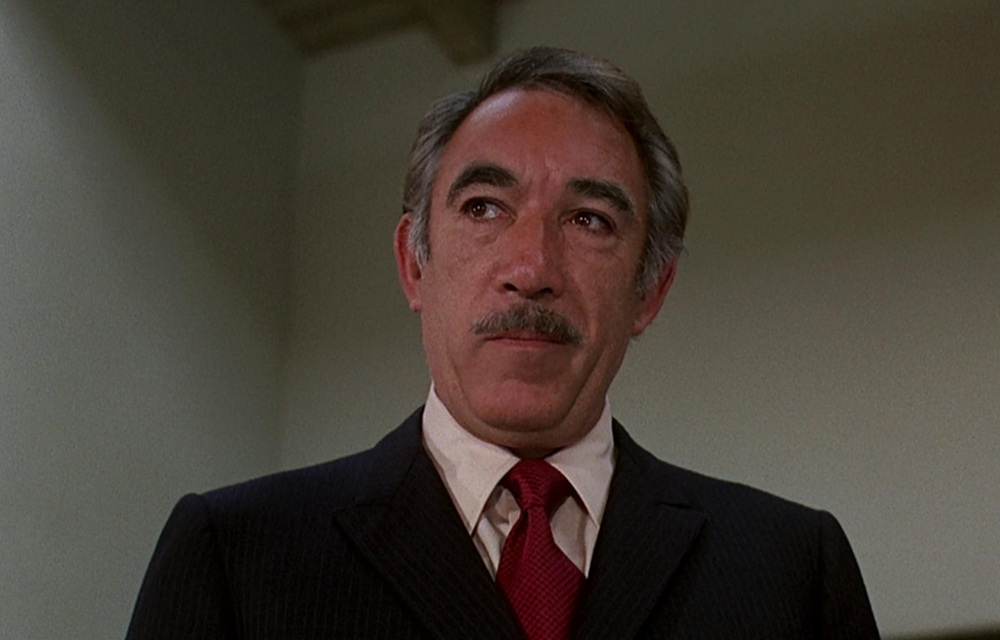
Joe Valachi is not a name that is spoken of with much respect in mob circles. He was the first Mafia rat and gave up the entire hierarchical structure of the Mafia to a crime committee. He revealed the five families of New York – Gambino, Lucchese, Colombo, Bonanno and Genovese – that were named after the ruling bosses at that time. This film tells Valachi’s life story. At the height of the Castellammarese war (1929 – 1931), the bold, small time crook Joseph ‘Joe Cargo’ Valachi joins the side of Don Salvatore Maranzano, an old Mustache Pete who is fighting a bloody war with his rival Joseph ‘Joe the Boss’ Masseria.

After the deaths of the two old Don’s, Valachi’s crime family evolves. First Lucky Luciano becomes boss, and after his imprisonment Vito Genovese takes over. In a Mafia-career spanning over 30 years, Valachi is involved with New York’s most legendary Mafia figures. He steals, frauds and murders for them, until finally the FBI manages to turn Genovese against Valachi in order for him to testify. He does so, and gives up his former associates along with all other major Cosa Nostra figures he knows of.

He becomes the first mob informer who makes sure that the existence of ‘La Cosa Nostra’ is no longer a secret for the public. Based on the novel by Peter Maas, The Valachi Papers was produced by Dino De Laurentiis in Italy with many scenes dubbed in English. It was directed by Terence Young, most well-known for directing the first official Bond movies. It came out in the same year as The Godfather, and helped to popularize the Mafia as a source of entertainment.

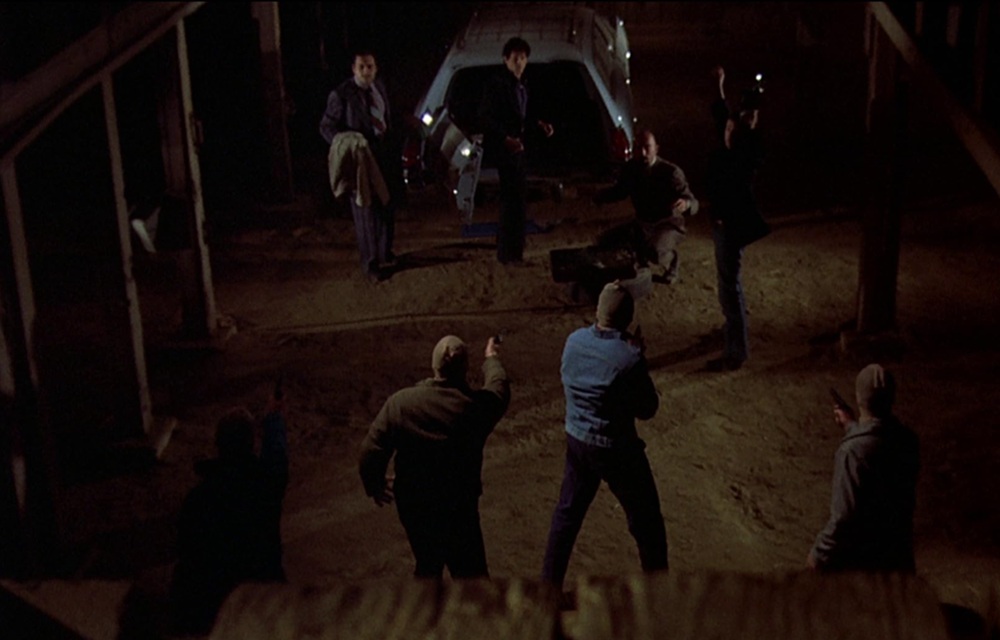
The Valachi Papers sticks to the steady pattern of the mob film; tough guys, half Italian dialogue, shoot-outs and violence (especially a castration scene is very brutal). Also the ‘rise and fall’ type of build-up has been done countless times. This is not the head of its class though. The beginning promises a rapid-pace movie, but after about 40 minutes, all the suspense has been drained from the script. Since the characters are not that fascinating to begin with, this becomes quite a doll viewing in the second half.

Rating:

Quote:
JOE VALACHI: “Senator, I am not talking about Italians. I am talking about the Mafia.”

Trivia:
In the final credits, it is stated that Joe Valachi outlived Vito Genovese by six months. It was actually two years.

The Last Don II (1998, TV mini-series)


‘Power. Passion. Betrayal. It’s all in the family’

Directed by:
Graeme Clifford

Written by:
Mario Puzo (characters from the novel The Last Don)
Joyce Eliason (Teleplay)

Cast:
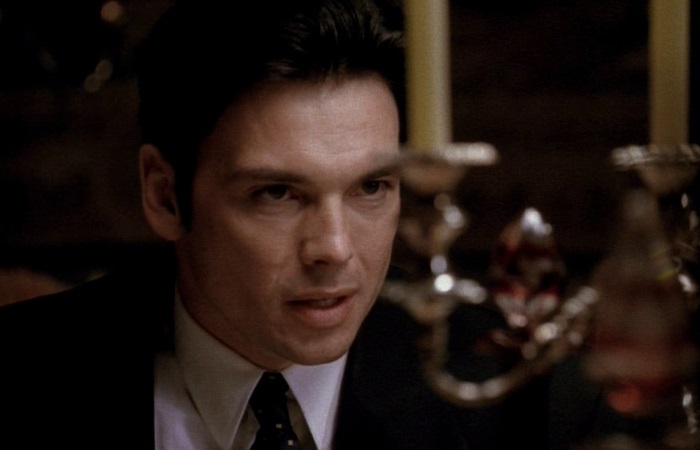
Jason Gedrick (Crucifixio ‘Cross’ De Lena), Patsy Kensit (Josie Cirolia), Kirstie Alley (Rose Marie Clericuzio), David Marciano (Giorgio Clericuzio), James Wilder (Billy D’Angelo), Conrad Dunn (Lia Vazzi), Jason Isaacs (Father Luca Tonarini), Michelle Burke (Claudia De Lena), Danny Aiello (Don Domenico Clericuzio), Joe Mantegna (Pippi De Lena)

When Don Domenico Clericuzio dies, his family has to face its many enemies. Son Petie gets killed soon after and an underworld war begins. Giorgio brings back Cross from Paris to lead the family. Cross only agrees to come back after his wife Athena Aquitane is blown up by a bomb meant for him.

You have to wonder how necessary a sequel to The Last Don really was. It is not like that film set the world on fire although it was a decent effort. There was no source material left from the Puzo novel, so the writers had to come up with an original story. They fail in this, as the story hardly contains anything new in the genre. They even copy The Godfather plotlines in a too obvious and non-convincing way.

Less prominent characters from the first film now have to carry this sequel. Aiello, who’s only in the first five minutes is sorely missed as the Don. Jason Gedrick simply does not have the acting skills to carry this film as leading man. The best character is probably Lia Vazzi, Cross’ murderous, Sicilian henchman who is out for revenge after his family gets killed.

Kirstie Alley has her moments as the tragic Rose Marie. Especially in the second half she is quite touching at times. Patsy Kensit does her best, but is not the spectacular addition to the cast that this film needed. Daryl Hannah obviously didn’t feel the urge to return, so her character Athena in her short screen time is played by unknown actress Mo Kelso. Joe Mantegna does come back and appears in some mediocre dream sequences as Cross’ father.

What really gives this film it’s deathblow is the ridiculous Hollywood side plot in which Cross’ sister Claudia runs a studio that produces the supposed hit movie The Fumigator, starring the terrible Schwarzenegger clone Dirk Von Schelburg who is named in the film as ‘the most famous actor in the world’. Really embarrassing. Action fans might find some value in this film, except that the acts of murder, betrayal and violence are stretched out over the too long three hour running time. Better use that time to watch The Godfather for the thirtieth time.

Rating:

Quote:
LIA VAZZI: “We can’t afford to be soft. This is not the time to be soft.”

Trivia:
Mario Puzo died on 2 July 1999 from heart failure. About a year after this film premiered.

Miller’s Crossing (1990)


‘Up is down, black is white, and nothing is what it seems’

Directed by:
Joel Coen

Written by:
Joel Coen
Ethan Coen

Cast:
Gabriel Byrne (Tom Reagan), Marcia Gay Harden (Verna), John Turturro (Bernie Bernbaum), Jon Polito (Johnny Caspar), J.E. Freeman (Eddie Dane), Albert Finney (Leo), Mike Starr (Frankie), Al Mancini (Tic-Tac), Steve Buscemi (Mink), Richard Woods (Mayor Dale Levander)

‘I’m talkin’ about friendship. I’m talkin’ about character. I’m talkin’ about—hell, Leo, I ain’t embarrassed to use the word—I’m talkin’ about ethics.’ That’s how Italian crime boss Johnny Caspar (Jon Polito) begins his speech to Irish kingpin Leo O’Bannion (Albert Finney) in the opening of Miller’s Crossing. It immediately recalls the first scene of The Godfather, where undertaker Bonasera appeals in much the same way to Don Vito Corleone.

The favor Caspar asks of O’Bannion is permission to whack two-timing bookie Bernie Bernbaum (John Turturro). Leo refuses, since Bernie is the brother of Verna (Marcia Gay Harden), the woman he’s fallen in love with. Of course, Caspar wasn’t really asking permission—he was informing Leo as a courtesy, as he angrily makes clear after being turned down. Gangsters with ethics toward one another: that’s the foundation of Miller’s Crossing. When Leo breaks this unspoken code among the city’s corrupt rulers, the result is all-out war.

The theme of crooks with ethics is embodied in Leo’s right-hand man Tom Reagan (Gabriel Byrne), the film’s central character. He follows a personal code that only he fully understands. Though secretly having an affair with Verna, Tom – unlike Leo – believes Bernie should be handed over to the Italians. He knows that breaking the underworld code is bad for business. But Leo is stubborn, and their disagreement grows until Tom finally confesses the affair. Leo cuts ties, and Tom immediately shifts allegiance to Caspar. His motive, however, is not self-interest. Though finished with Leo, Tom’s loyalty to his old friend remains.

The web of deceit that quickly unfolds in Miller’s Crossing is complex enough to merit a second viewing. Adding to the intricacy are numerous characters referenced but rarely seen. Still, the story – drawn from Dashiell Hammett novels like ‘The Glass Key’ and ‘Red Harvest’, and infused with classic gangster and neo-noir elements – is masterfully told. The Coens integrate these influences into a killer script, ironically born from a period of writer’s block. Their trademark humor and eccentric characters are on full display, while the dialogue carries a poetic cadence that might even make Shakespeare jealous.

The plotlines themselves may not be original, but the Coens conjure a dreamlike world where, as the tagline promises, nothing is what it seems. The mood is unmistakably Irish – you can almost smell the whiskey. Carter Burwell’s haunting score, the gorgeous cinematography, and evocative settings all heighten the effect. The tone shifts effortlessly from cartoonish to brutally violent, without warning or transition.

The cast is uniformly excellent. Gabriel Byrne makes Tom a sympathetic bastard it’s hard not to root for; if I had to trade places with a Prohibition-era gangster, I’d pick him without hesitation. The supporting roles are just as strong, with John Turturro delivering a powerhouse turn as Bernie, a spineless schemer whose lack of ethics drives the story. Miller’s Crossing also reinvents the use of hats and overcoats. Not that there’s any hidden meaning – there’s nothing’s more foolish than looking for meaning in a hat.

Features a terrific cameo from the Coen’s friend Sam Raimi as a trigger happy cop.

Rating:

Quote:
Tom Reagan: Nobody knows anybody. Not that well.

Trivia:
The Coen Brothers suffered writer’s block while working on the script for Miller’s Crossing. They took a three-week break and wrote the script for their next movie Barton Fink during that time, about a writer with writer’s block. There are two references to Barton Fink in this film. The first one is the name of Tom Reagan’s residence called ‘The Barton Arms’. The second is a newspaper article that reads ‘Seven Dead in Hotel Fire’.

TV Dungeon: The Sopranos


‘Meet Tony Soprano. If one family doesn’t kill him… the other family will.’

(1999 – 2007, USA)

6 Seasons (86 Episodes)

Creator: David Chase

Cast: James Gandolfini, Edie Falco, Lorraine Bracco, Michael Imperioli, Jamie-Lynn Sigler, Robert Iler, Dominic Chianese, Tony Sirico, Steve Van Zandt, Aida Turturro

For a period of eight blissful years, The Sopranos answered the TV-prayers of me and millions of other TV-maniacs. As a huge fan of GoodFellas, a quality series about a New Jersey mob family sounded like music to my ears. It delivered on its high expectations. No, it exceeded them by far.

Tony Soprano, family matriarch, mob boss and psychiatric patients. The perfect characteristics for a leading man of a drama show. This complex character is wonderfully portrayed by the now legendary James Gandolfini. He is a fat, bald ladykiller, He’s a murderer. You just couldn’t ask for a more captivating main character.

But it isn’t just Tony who delivers. The supporting cast is delicious as well. We all have our favorites (mine is Silvio Dante), but I give praise to all; the hilarious psycho Paulie Walnuts, shrink Melfi, money-grabbing Carmela, crazy uncle June. Too many to mention, but all marvelous indeed!

So, what gives this show its ridiculous appeal? The guns, the girls, the gabagool? I guess this I just one of those very rare productions in which everything fits in perfectly; the screenplays, the actors, the soundtrack, the look and feel…it is perfect. Brilliant even.

When talking about classic mob movies, The Godfather and GoodFellas always come up first. The Sopranos can now be added to the mix. Mind you, this isn’t some ordinary rip-off. Since the pilot episode it has stood on its own feet. It is a highly original and modern take on mobsters and the gangster genre. It placed mobsters with old values in the 21th century with all of its problems: depression, terrorism, capitalism, you name it.

For 86 episodes you are watching killers, who lack any form of empathy for their victims. Most of the time they are still a lovable bunch though. But very often the audience is reminded of who these people really are. So how does one cope with all these horrible crimes on his conscience? Being a sociopath helps, but otherwise there is therapy (Tony), the catholic church (Carmela) or drug abuse (Christopher). High concept TV at its best.

Creator David Chase, who in the past worked on shows such as Northern Exposure and The Rockford Files, has created a cultural phenomenon. The Sopranos must be viewed, loved and treasured. Seriously, you’d be a douchebag to miss it.