10 Management Lessons From Highly Successful Gangsters

By Jeppe Kleijngeld

Running a large company or criminal empire, what’s the difference? The demands for its managers and leaders are very similar for sure. As a leader, your vision needs to inspire others and your actions need to have significant impact. You also need to be able to effectively solve problems and prevent painful blunders. Taking a close look at 10 highly successful gangsters from popular movies and television series can be inspirational. Eventually most of them went down, but they all had impressive careers as criminal CEO’s. What can business leaders learn from their successful approaches and significant failures?

1. Plan all your actions carefully
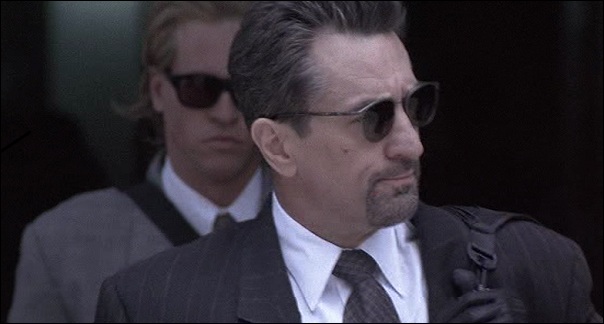
Neil McCauley
The Gangster: Neil McCauley, Heat

The Lesson: In the spectacular opening scene of Michael Mann’s Heat, criminal chief Neil McCauley and his team of robbers manage to take down a huge score. The key to their success? Planning, planning, planning. McCauley is a perfectionist; every detail needs to be scrupulously prepared, nothing can be left to coincidence. It there is even a slight chance that something is wrong; he will walk away from a job no matter how much money is at stake. Off course, there is a slight bump in the road for McCauley and his team later on, but that is only because pulling armed robberies is a highly volatile business. But even with a terrific investigation team on their tail lead by a fanatical Al Pacino, they manage to take down another – even larger – score later on in the movie.

2. Build a team you can rely on
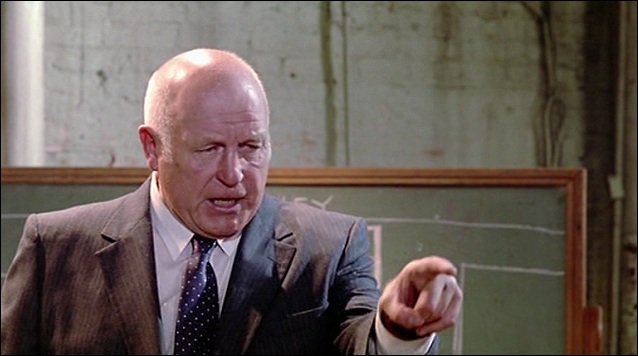
Joe Cabot
The Gangster: Joe Cabot, Reservoir Dogs

The Lesson: ‘I should have my head examined for going with someone I wasn’t a 100 percent on…’ Yeah, you should have Joe. As a manager, your most important task is to choose the right people around you and make them perform optimally. When you have a crucial project to realise – a diamond heist in Joe Cabot’s case – you don’t want to take any chances on whom you hire for the job. Joe’s negligence at this point, allowed a special LAPD-agent to infiltrate his crew, leading to a disastrous outcome for the project and all those involved.

3. Always look out for opportunities and know when to strike
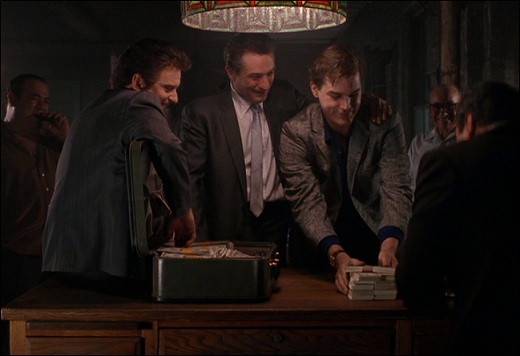
Henry Hill
The Gangster: Henry Hill, GoodFellas

The Lesson: In Wiseguy, the novel on which the classic mob movie GoodFellas is based, protagonist Henry Hill describes his bewonderment at how lazy many people are. Great entrepreneurs like him are always looking for new ways to make money. Once in a while, a golden opportunity arises and a highly successful business manager will recognize this once in a lifetime chance and grab it. In Henry Hill’s case, this was the Air France heist in 1967. He walked away with 420.000 US dollars from the Air France cargo terminal at JFK International Airport without using a gun; the largest cash robbery that had taken place at the time. This was Hill’s ticket to long term success within the Mafia.

4. Analyse, decide and execute with conviction
Michael Corleone
The Gangster: Michael Corleone, The Godfather

The Lesson: Your success as executive depends for a great deal on the way you make decisions and follow them through. When his father, family patriarch Don Vito Corleone, is shot by Virgil ‘The Turk’ Sollozzo, Michael Corleone knows the threat of his father’s killing will not be over until Sollozo is dead. That is his analysis. Then, without any hesitation, he decides to kill Sollozo despite the hard consequences that he knows will follow. The third part – the execution – he performs flawlessly, killing Sollozo and his bodyguard Police Captain McCluskey in a restaurant. Michael later in the film again proves to be an extremely decisive leader when he has the heads of the five families killed when they conspire against the Corleone family.

5. Support the local community
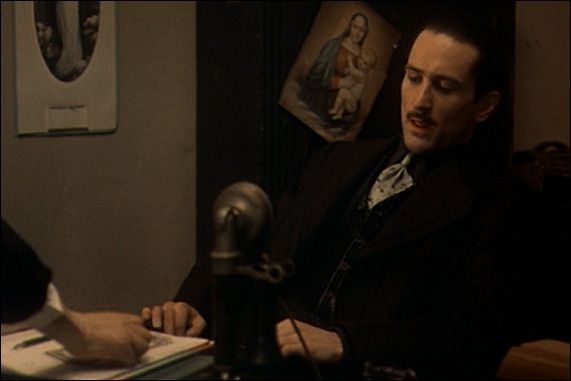
Young Vito Corleone
The Gangster: Young Vito Corleone, The Godfather Part II

The Lesson: For long term success, you need more than just great products (in the mob’s case: protection, gambling and theft). You will need commitment from all your stakeholders and especially goodwill from the communities you operate in. Young Vito Corleone sees that gangster boss Fanucci is squeezing out everybody in the neighbourhood he lives in. Nobody is happy with him. So he murders Fanucci and takes over as neighbourhood chieftain. Rather than squeezing out people, he starts helping them. Every favour he does for somebody, earns him a favour in return. Those are a lot of favours and a lot of people who think he deserves his success and wealth. They are willing to give everything for their Don.

6. Don’t be afraid to use your subconscious
Tony Soprano
The Gangster: Tony Soprano, The Sopranos

The Lesson: As a leader, you want to base your decisions on hard facts as much as possible, but sometimes your intuition is much more powerful than the greatest performance dashboard in the world. In the first season of HBO’s monumental Mafia series The Sopranos, family patriarch Tony Soprano’s own mother tries to have him whacked. He had revealing dreams about this before it happened, but refused to look at the painful true meaning of these dreams. Through therapy, he learned to use his subconscious like a true expert, so when his friend Big Pussy Bonpensiero starts ratting for the FBI in season 2, he knows something is wrong. In a fever dream, Big Pussy (as a fish), reveals the hard truth to Tony. When he wakes up, he knows exactly what to do. Big Pussy must sleep with the fishes. Tony’s new ability to listen to his subconscious makes him a much more effective leader.

7. Think and act faster
Nucky Thompson
The Gangster: Nucky Thompson, Boardwalk Empire

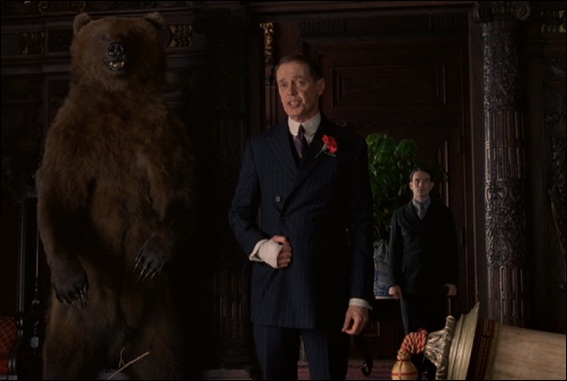
The Lesson: After a botched assassination attempt on bootlegger and crooked politician Nucky Thompson, his enemies are left numb and indecisive of what to do next. Nucky – on the other hand – immediately makes a counter move. He goes to see his enemies and tells them the attempt on his life changed his perspective on things. He will abandon the bootlegging business and politics, so his enemies can take over. In secret however, Nucky books a trip to Ireland the next day, where he purchases a huge amount of cheap and highly qualitative Irish whiskey. His enemies underestimated him. By thinking and acting faster than his opponents, Nucky manages to surprise them and outperform them in business.

8. Take compliance seriously
Al Capone
The Gangster: Al Capone, The Untouchables

The Lesson: He was the king of his trade; the bootlegging business in Chicago. He made millions importing booze and selling it to bars and clubs. The thing that brought him down was income tax evasion. Managers can learn a simple truth from this mistake; compliance is your license to operate. Off course in Capone’s case this was a little different because he did not have any legal income to begin with, but many CEO’s of businesses have fallen into the same compliance trap. Sure, sometimes it is cheaper to pay a fine than to spend a fortune on meeting some obsolete policy, but you should never fail to answer to the most important rules and regulations. So even when it is sometimes tempting to bend the rules, in the end: being non-compliant is always more costly than being compliant.

9. Ride the Industry Waves
Tony Montana
The Gangster: Tony Montana, Scarface

The Lesson: Every industry has its waves, and a great CEO knows how to ride these waves. Take the drug business in the 1980’s. Cocaine was coming up big time in Florida. After Montana gets rid of his weak boss Frank, he sets up a massive cocaine trade in Miami and surroundings. His supply chain is very efficient. He imports the stuff straight from the source in Bolivia. Nobody can compete with that. It isn’t before long that Montana is Florida’s one and only cocaine king.

10. Keep your friends close and your enemies closer
Don Vito Corleone
The Gangster: Don Vito Corleone, The Godfather

The Lesson: You want to know what your competitors are up to? Invite them over for dinner and a meeting. Don Vito Corleone does it all the time. When he invites the heads of the five families for a sit down, in this powerful scene in The Godfather, he learns a great deal. It is not Tattaglia he should worry about, but that treacherous Barzini. Now that he understands the conspiracy against the Corleone family, he can help his son Michael take the necessary precautions.

Mijn Top 20 favoriete filmmakers

1. Martin Scorsese
Verantwoordelijk voor mijn favoriete film aller tijden: GoodFellas. Maar maakte talloze andere meesterwerken; Raging Bull, Taxi Driver, Casino, en vele anderen. Scorsese is een echte maestro die nooit teleur stelt.
Beste film: GoodFellas

2. Sergio Leone
Leefde te kort om een enorm portfolio na te laten, maar alles wat hij gedaan heeft is te gek. The Dollars Trilogy met Eastwood zijn de coolste films ooit en Once Upon a Time in America is een geniaal gangster epos.
Beste film: Once Upon a Time in the West

3. Quentin Tarantino
Maakt originele & uber coole films die hij baseert op onbekende pareltjes. Zijn meesterwerk is nog altijd Pulp Fiction, maar Reservoir Dogs en Kill Bill zijn bijna net zo briljant. Maakt nooit iets ondermaats.
Beste film: Pulp Fiction

4. Peter Jackson
Wist de onmogelijke missie om The Lord of the Rings te verfilmen tot een onvoorstelbaar succes te maken. Was daarvoor al een geweldig regisseur die Nieuw-Zeelandse splatter horror films maakte zoals Bad Taste en Braindead.
Beste film: The Lord of the Rings: The Two Towers

5.
The Coen Brothers
Hun oog voor bizarre personages is hyper ontwikkeld, hun humor onovertroffen en hun pen vlijmscherp. Ze maken om de twee jaar een te gekke film al zo’n 25 jaar lang, met hun hoogtepunt in de jaren 90 toen ze achtereenvolgens Fargo, The Big Lebowski en O Brother, Where Art Thou? maakte.
Beste film: Miller’s Crossing

6. Stanley Kubrick
De perfectionist. Leverde meesterwerken af die voor altijd verankerd zijn in de filmgeschiedenis. Wist uit te blinken in verschillende genres waaronder sci-fi (2001: A Space Odyssey), oorlog (Full Metal Jacket) en misdaad (The Killing)
Beste film: A Clockwork Orange

7. Steven Spielberg
Objectief de beste regisseur ter wereld. Weet de magie van film te pakken als geen ander. Heeft talloze klassiekers op zijn staan waaronder E.T.: The Extra-Terrestrial, Close Encounters of the Third Kind, Schindler’s List en Jurassic Park.
Beste film: Raiders of the Lost Ark

8.
Alfred Hitchcock
Hitchcock weet van een kartonnen doos nog tot een super spannend voorwerp te maken. Ze noemen hem niet voor niets de Master of Suspense. Is waarschijnlijk de meest invloedrijke regisseur ooit. Talloze scènes uit zijn oeuvre staan voor altijd op mijn netvlies gebrand.
Beste film: Rear Window

9. Sam Raimi
Maakte de hoogst vermakelijke Spider Man films, maar waar hij zichzelf wat mij betreft mee onsterfelijk heeft gemaakt is de Evil Dead trilogie. Heerlijke films. Maakte met The Quick and the Dead ook een fantastische western.
Beste film: Evil Dead II

10. Francis Ford Coppola
Hey, hij regisseerde The Godfather trilogie, hoe ga ik hem niet in mijn Top 10 zetten? Was ook verantwoordelijk voor de beste oorlogsfilm aller tijden met Apocalyse Now. Fenomenaal.
Beste film: The Godfather

Daarna volgen:
11. George Lucas (Beste Film: Star Wars: Episode IV – A New Hope)
12. James Cameron (Beste Film: Terminator 2: Judgment Day)
13. Danny Boyle (Beste Film: Trainspotting)
14. Brian De Palma (Beste Film: The Untouchables)
15. Akira Kurosawa (Beste Film: Throne of Blood)
16. Paul Verhoeven (Beste Film: RoboCop)
17. Robert Zemeckis (Beste Film: Back to the Future Part II)
18. Richard Linklater (Beste Film: Dazed and Confused)
19. Robert Rodriguez (Beste Film: Sin City)
20. Jim Jarmusch (Beste Film: Ghost Dog: The Way of the Samurai)

Once Upon a Time in America


As boys, they said they would die for each other. As men, they did.

Directed by:
Sergio Leone

Written by:
Harry Grey (book ‘The Hoods’)
Leonardo Benvenuti (screenplay)
Piero De Bernardi (screenplay)
Enrico Medioli (screenplay)
Franco Arcalli (screenplay)
Franco Ferrini (screenplay)
Sergio Leone (screenplay)

Cast:
Robert De Niro (David ‘Noodles’ Aaronson), James Woods (Maximilian ‘Max’ Bercovicz), Elizabeth McGovern (Deborah Gelly), James Hayden (Patrick ‘Patsy’ Goldberg), William Forsythe (Philip ‘Cockeye’ Stein), Tuesday Weld (Carol), Treat Williams (James Conway O’Donnell), Scott Tiler (Young Noodles), Rusty Jacobs (Young Max / David Bailey), Jennifer Connelly (Young Deborah)

In the late 1970s, master director Sergio Leone turned down the offer to direct The Godfather in order to make another gangster film, this one based on the novel ‘The Hoods’ by former mobster Harry Grey. When filming was completed, the total footage ran between eight and ten hours. Leone and editor Nino Baragli trimmed it down to around six hours, intending to release the film as two three-hour features. The producers, however, rejected this idea and cut the film down to just over two hours for the American market. In doing so, they also abandoned the film’s non-linear structure, rendering the story almost incomprehensible. Unsurprisingly, the film flopped in the U.S., and Leone was left devastated.

Fortunately, a 3-hour and 49-minute version was prepared for international release, with the original non-chronological storytelling restored. Audiences overseas responded more positively, and many critics recognized it as a cinematic masterpiece. With his spaghetti westerns, Leone revealed the gritty, opportunistic side of the Old West. Here, he does the same for the American city ruled by mobsters. He strikes exactly the right tone. His sprawling gangland epic shows a world that may sparkle with a thin coat of glamour, but beneath that lies grime and plenty of it.

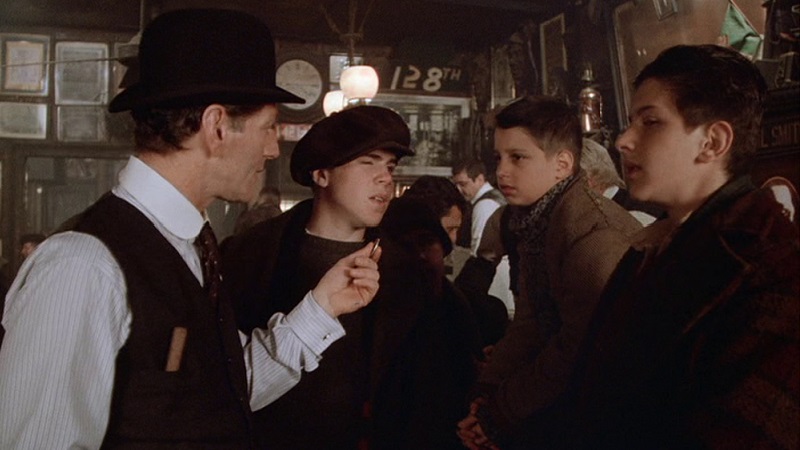
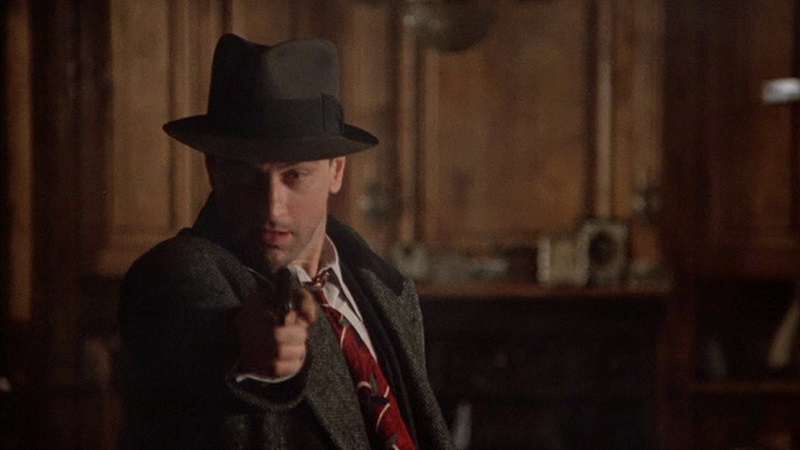
The narrative jumps across time, following Jewish gangster Noodles (Robert De Niro) through three phases of his life. First, his youth in the Lower East Side, where he meets his lifelong friend, the cunning but volatile Max (James Woods). In their prime during the Prohibition era, the two – along with childhood friends – rise to control a lucrative bootlegging operation. But tensions rise, and their friendship deteriorates with devastating consequences. In the third act, Noodles returns to New York as an old man after 35 years, confronting the ghosts of his past.

The fragmented screenplay may not feel intuitive, but it doesn’t need to be. The film works on a dreamlike, emotional logic. Many interpret the second half as nothing more than an opium-induced fantasy – a fugue state in which Noodles imagines a resolution, a reckoning, and perhaps a redemption that never truly came. It’s an ambiguous, melancholic meditation on memory, regret, and American myth. This is not a typical rise-and-fall gangster story; it’s about life itself. The psychological depth is extraordinary. Few films give you such an encompassing sense of a person’s entire existence: memories, pain, joy, death and, of course, love.

As with Leone’s finest work, the film is packed with haunting, unforgettable moments: Max and Noodles beaten in the alley, Noodles’ opium haze in the Chinese theater, Little Dominic dying in Noodles’ arms (“Noodles, I slipped”), and Noodles peeking through the wall at Deborah’s dance rehearsal. The art direction and cinematography render every frame like a painting, each one worthy of being hung on a wall. In that sense, this is Leone’s The Godfather.

Together with composer Ennio Morricone, Leone achieves true cinematic synergy. The film’s pacing often mirrors the rhythm of Morricone’s hauntingly beautiful score, enhancing the emotional impact to mesmerizing effect. The casting is another strength: De Niro brings nuance and reluctant sympathy to a deeply flawed anti-hero, while Woods is chillingly effective as Max. Strong supporting roles are delivered by Jennifer Connelly, Joe Pesci, Tuesday Weld, and Burt Young.

Though it may have its imperfections, Once Upon a Time in America remains a towering, influential achievement. Leone spent over a decade bringing this vision to life and it shows. It’s a shame it turned out to be his final film, but few directors could hope to end their career with something so ambitious, haunting, and unforgettable.

Rating:

Quote:
NOODLES: “You can always tell the winners at the starting gate. You can always tell the winners and you can tell the losers.”

Trivia:
Robert De Niro suggested that James Woods wear a set of perfect, bright white teeth to demonstrate Secretary Bailey’s wealth and vanity. The producers balked at the cost, so De Niro paid for them himself.

The Godfather (1972)


‘An offer you can’t refuse’

Directed by:
Francis Ford Coppola

Written by:
Mario Puzo (novel / screenplay)
Francis Ford Coppola (screenplay)

Cast:
Marlon Brando (Don Vito Corleone), Al Pacino (Michael Corleone), James Caan (Santino ‘Sonny’ Corleone), Richard Castellano (Peter Clemenza), Robert Duvall (Tom Hagen), Sterling Hayden (Capt. McCluskey), John Marley (Jack Woltz), Richard Conte (Don Emilio Barzini), Al Lettieri (Virgil ‘The Turk’ Sollozzo), Diane Keaton (Kay Adams)

When discussing gangster films, The Godfather is the one movie that is always part of the conversation. Often hailed as the greatest gangster film of all time, it frequently tops high-profile lists as the best movie ever made, transcending genres entirely.

A myriad of elements contribute to its enduring appeal: the impeccable casting, masterful performances, meticulous production design, breathtaking cinematography, inspired direction, and Nino Rota’s iconic score. However, one element elevates The Godfather above its peers: the family theme. Director Francis Ford Coppola, drawing from his own Italian-American heritage, imbues the narrative with a deeply relatable exploration of family dynamics. This personal touch makes the story resonate universally, beyond the crime genre.

At its heart, The Godfather tells the story of the Corleone crime family at its zenith and the challenges it faces. Aging patriarch Don Vito Corleone (Marlon Brando) grapples with two critical dilemmas: selecting a successor to lead the family after his death and navigating the changing criminal landscape of post-war America. The rise of the narcotics trade brings new threats, and his resistance to adapt creates powerful enemies.

Ironically, neither Paramount Pictures nor Coppola himself anticipated the monumental success of the film. While Coppola had achieved some recognition for his work on Patton (winning an Academy Award for the screenplay), he was not yet an established auteur. Meanwhile, Mario Puzo’s source novel, though popular, was dismissed by some as pulp fiction. The production was fraught with difficulties, most notably in casting. Paramount was resistant to casting Marlon Brando, then considered a liability, and the studio balked at Coppola’s insistence on the relatively unknown Al Pacino for the pivotal role of Michael Corleone. These decisions nearly cost Coppola his job. Looking back, it’s impossible to imagine anyone else embodying these roles.

Despite the hurdles, Coppola and Paramount struck cinematic gold. The Godfather became not just a groundbreaking box-office sensation but an instant classic, revered by critics and audiences alike. Every aspect of the film is masterfully executed: the authentic recreation of the late 1940s and early 1950s, the technical precision, Rota’s hauntingly beautiful score, and, above all, the performances.

The acting remains a standout triumph. Brando’s monumental portrayal of Don Vito earned him a well-deserved Oscar, but the supporting cast is equally remarkable. James Caan is explosive as the hot-headed Sonny Corleone, and Al Pacino delivers a career-defining performance as Michael. Pacino’s subtle and chilling transformation from an idealistic college graduate to a ruthless mob boss anchors the film. When Don Vito’s demise shifts the narrative focus to Michael, the transition is seamless, a testament to Pacino’s magnetic presence.

Michael’s arc forms the emotional core of The Godfather. His descent into violence and moral compromise is both tragic and compelling. By the time he exacts his revenge in the film’s climactic sequence, the audience feels both the catharsis of his triumph and the weight of his irrevocable loss. The final moments, where the office doors close on Michael and shut out his wife Kay, encapsulate the story’s tragic brilliance. It’s a devastatingly poignant image of power, isolation, and corruption.

Every frame, every line, and every note of The Godfather exudes cinematic perfection. It’s a film that redefined not only the gangster genre but cinema itself. To speak of The Godfather is to speak of the very essence of filmmaking excellence. It remains, unequivocally, a masterpiece for the ages.

Rating:

Quote:
MICHAEL CORLEONE: “My father is no different than any powerful man, any man with power, like a president or senator.”

Trivia:
Ernest Borgnine, Edward G. Robinson, Orson Welles, Danny Thomas, Richard Conte, Anthony Quinn, and George C. Scott were considered by Paramount Pictures for the role of Don Vito Corleone.