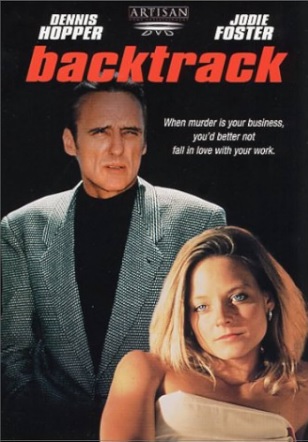
Backtrack (1990)


‘When murder is your business, you’d better not fall in love with your work.’

Directed by:
Dennis Hopper

Written by:
Rachel Kronstadt Mann, Ann Louise Bardach

Cast:
Dennis Hopper (Milo), Jodie Foster (Anne Benton), Joe Pesci (Leo Carelli), Dean Stockwell (John Luponi), Vincent Price (Lino Avoca), John Turturro (Pinella), Fred Ward (Pauling), Julie Adams (Martha), Tony Sirico (Greek), Sy Richardson (Capt. Walker)

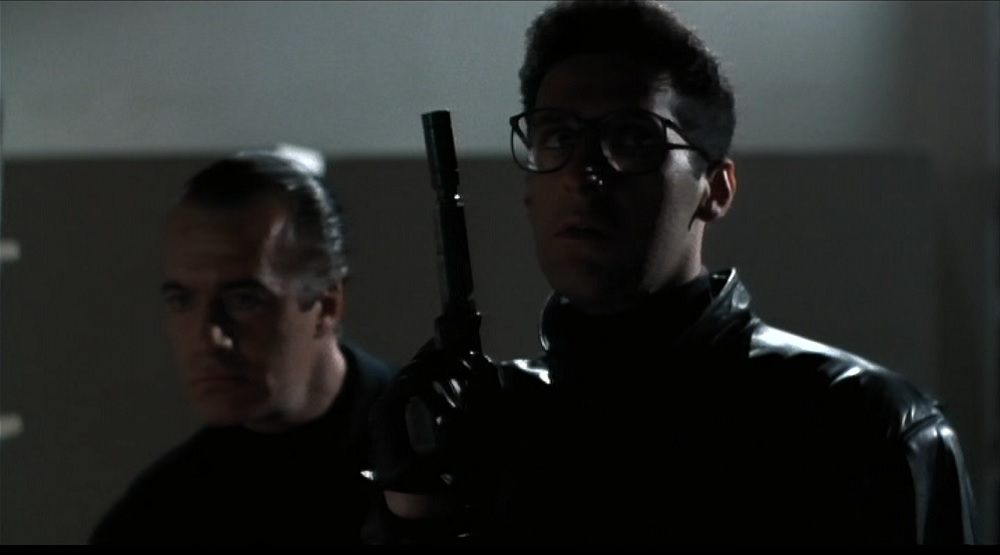
Alright, so this is quite a strange film by Dennis Hopper. It was originally released as Catchfire, but that version was apparently so bad that Hopper had his name replaced in the credits with the pseudonym Alan Smithee. Backtrack is the 18-minutes-longer cut made for cable TV, with Hopper’s directorial credit restored.

Jodie Foster plays an artist who witnesses a mafia murder. The mob – led by the explosive Leo Carelli (Joe Pesci, in the same year he gave his ultimate mobster performance in GoodFellas) – hires hitman Milo (Dennis Hopper) to silence her.

What makes it puzzling is the sheer amount of talent involved: Jodie Foster, Joe Pesci (uncredited, despite a substantial role), Dean Stockwell, John Turturro, and others. The film also features familiar faces like Charlie Sheen, Bob Dylan (!), and Tony Sirico (Paulie Walnuts from The Sopranos). Yet, despite this very impressive cast, no one is given particularly strong dialogue – not even the two leads.

The bigger problem is that the film never decides what it wants to be. Is it a tense thriller? An arthouse experiment? A romantic gangster film in the vein of Bonnie and Clyde? Or an action movie given that out of nowhere, there’s a helicopter chase? The tone shifts constantly, leaving the viewer wondering: what exactly am I watching? That question is never answered.

It’s also unclear what motivates Hopper’s character, Milo, a saxophone-playing hitman. He suddenly falls in love with his target, but why? And why does she start to reciprocate? Their relationship feels entirely unconvincing.

Originally, Hopper’s cut ran 180 minutes. It’s difficult to imagine what his true vision for the film might have been. The studio, Vestron Pictures, disliked his version and re-edited it without his consent. Hopper was furious and sued, but by then the company had already gone bankrupt.

In short, Backtrack is a curious film for many reasons, but unfortunately the final product simply doesn’t work. It’s a shame, given the remarkable cast, but the movie is proof that without a strong screenplay, even great talent can’t save the day.

Rating:

Quote:
MILO: “There’s something going on here that I really don’t understand. But I like it.”

Trivia:
The movie includes three Oscar winners: Jodie Foster, Joe Pesci and Bob Dylan; and three Oscar nominees: Dennis Hopper, Catherine Keener and Dean Stockwell.

The Verdict: Wise Guy: David Chase and The Sopranos

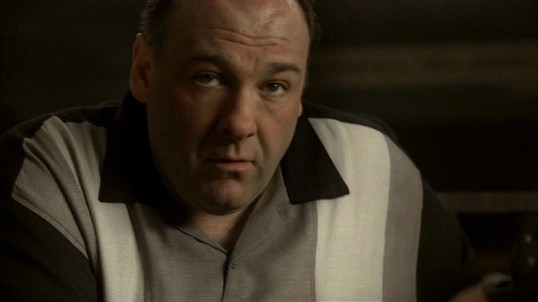
As a devoted fan of The Sopranosmy all-time favorite show – I thought there wasn’t much left for me to discover. But HBO’s new two part documentary Wise Guy: David Chase and The Sopranos offers fresh insight, focusing primarily on the mastermind behind the series, David Chase (1945), especially in its first half. Chase is a compelling figure: intelligent, introspective, and a natural storyteller. Director Alex Gibney (Gonzo: The Life and Work of Dr. Hunter S. Thompson, Enron: The Smartest Guys in the Room) places Chase in a metaphorical psychiatrist’s chair, allowing him to speak candidly about his upbringing, his eccentric mother, dreams, death, and how these themes shaped The Sopranos. Chase recalls his time in college down south, which he disliked, though he was exposed to European cinema by directors like Godard, Bergman, and Fellini. “I saw , and I don’t think I understood it, but it blew my mind”, he reflects. This experience ignited his desire to become a filmmaker, leading him to study at Stanford’s film school. The documentary even shows part of his student film – a gangster story with an attempted Godard flair, which is amusing in its ambition. While Chase’s destiny wasn’t in film directing, he found his calling in television. He worked on successful shows like The Rockford Files and Northern Exposure, but his true breakthrough came when HBO greenlit The Sopranos in 1998. The series became a cultural phenomenon, and Chase infused it with deeply personal elements, including therapy sessions and his tumultuous relationship with his mother. Other talented writers like Robin Green and Terence Winter also contributed significantly to the show’s depth. In The Offer, a recent series about the making of The Godfather, we learn that Coppola saw the film as a commentary on capitalism. Similarly, The Sopranos carries an underlying critique of America’s decline. As Chase puts it, “Americans have gotten so materialistic and selfish that it made a mob boss sick.” That vision, combined with Chase’s storytelling genius, is part of what makes The Sopranos so enduringly powerful.

Wise Guy: David Chase and The Sopranos is now available on HBO Max

The verdict: to stream or not to stream? To stream (especially Part 1)

The Sopranos – A Quantum Mechanical Ending (Video)

‘There are only two endings for a high profile guy like me, dead or in the can, big percent of the time.’
– Tony Soprano in ‘For All Debts Public and Private’ (SE4, EP1)

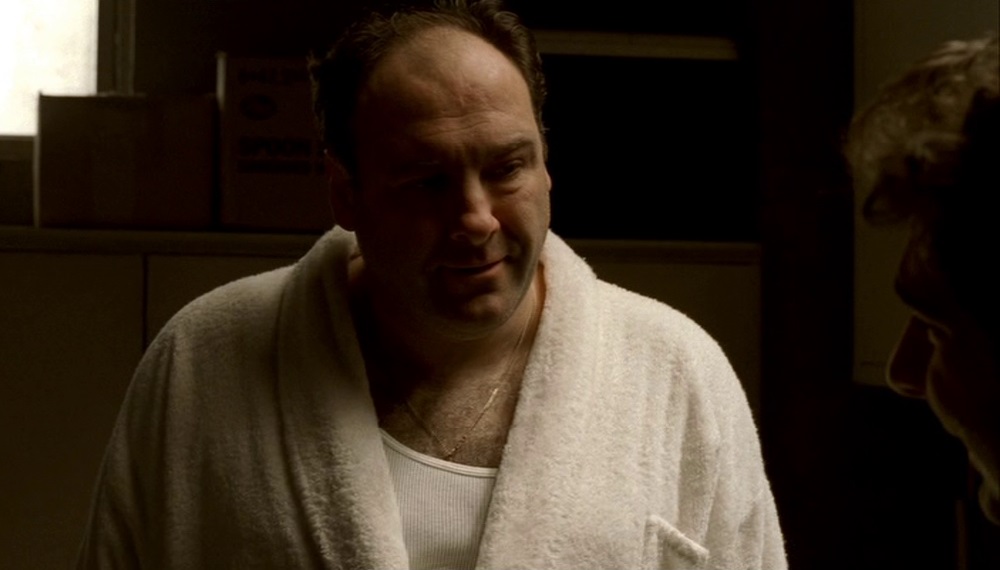
In retrospect, this quote already told us how the show would end. Except it wasn’t one or the other. Rather, Tony Soprano got both. The New Jersey mob boss ended up like physicist Schrödinger’s cat, both dead and alive at the same time.

In this new video on Jeppy’s Video Circus, we see the ending for what it truly is: a kaleidoscope of all possibilities existing simultaneously.

25 Years Ago On This Day, Pop Culture History Was Written

“It’s good to be in something from the ground floor. I came too late for that, I know. But lately, I’m getting the feeling that I came in at the end. The best is over.”
– Tony Soprano

On January 10, 1999, pay channel HBO launched the pilot episode of The Sopranos, the show that would change television forever. Before this ground breaking phenomenon, movies were far superior to television in terms of intelligent writing, production design and the actors involved. The Sopranos changed all of that.

The Sopranos wasn’t the first show to break all the rules’, write Matt Zoller Seitz and Alan Sepinwall in their book ‘The Sopranos Sessions’ (see also Oz and Twin Peaks for example), ‘but it was the first show to do that and still become a massive, enduring hit.’

But what is so good about The Sopranos? Maurice Yacowar in ‘The Sopranos On The Couch’, writes: ‘For openers: it’s brilliantly written, performed, and filmed. Each episode has the polish of an excellent feature film – with a tighter yet more complex, resonant script than most. The show is also relentlessly entertaining. The characters are engrossing, the plot twists astonishing but coherent, and the dialogue mined with ironies and poetic resonance quite beyond what we are used to hearing on the boob tube or even on the commercial cinema these days. Unique for a television series, details connect not just across the hour but across a season and beyond. The viewer has to dig for links and meanings beyond what’s spelled out on the surface and is often left with mysteries. That makes the show more like European cinema – and a complete departure for American television. At the same time, The Sopranos provocatively raises major questions about how and why we live.’

In 2021, I published the ultimate The Sopranos tribute. You can read the highlights from this tribute below:

And if you still haven’t seen the show, it is not too late! It is still available on HBO. Seriously, you’d be a douchebag to miss it.