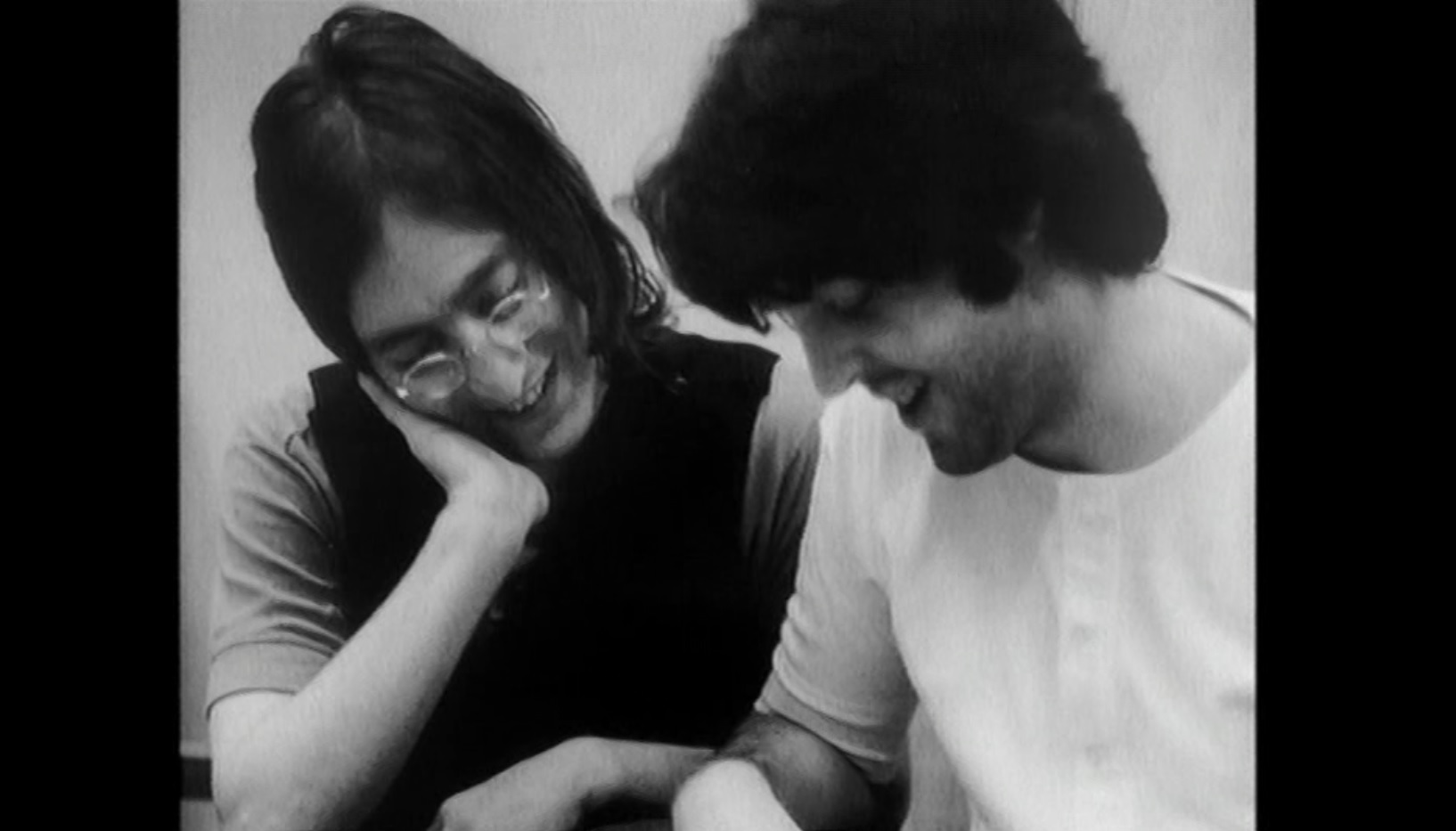
John & Paul: A Love Story in Songs

‘Ticket to Ride’ glints with meanings; you can walk around it forever and see different shafts of light bounding off its surfaces. It’s about a break-up, viewed through a haze of pot smoke. It’s about a generational shift in the balance of power between men and women. It’s about a shift in the balance of power between John and Paul, as John comes to suspect that Paul doesn’t rely on him quite as much as he relies on Paul.’

This new book by British author Ian Leslie tells the story of John Lennon’s and Paul McCartney’s intimate relationship. Starting with their first meeting at the Woolton Village Fête and ending with Paul’s response to John’s death in 1980. It tells the story by way of the richest primary source of all: the songs they wrote together. Each chapter is anchored in a song that tells us something about the state of their relationship at that time. The main point is that even after the Beatles broke up, John and Paul were inseparable. They merged their souls and multiplied their talents to create the greatest bodies of music in history.

This is also a love story. John and Paul were more than just friends or collaborators in the sense that we normally understand these terms. Their friendship was in a sense a romance, full of longing and passion, riven by jealousy.

The biographical stories told aren’t new – although I certainly learnt new things – but Leslie’s approach still feels fresh. The psychology behind the stories is what sets it apart. Every anecdotal story is approached by how things must have felt and been experienced by John and Paul. It delves into their state of mind at the time certain songs were written.

The first song Leslie discusses is ‘Come Go With Me’, which John performed with the Quarrymen at the Woolton Village Fête. His improvised lyrics impressed Paul, who realized they might connect through a shared passion for music and songwriting. It moves on with their first songs: ‘I Lost My Little Girl’ by Paul and ‘Hello Little Girl’ by John. This was right away the first instance in which the two were borrowing and building on each other’s ideas.

They began writing songs together, something nobody was doing at that time except the Great Ones from America. The two trusted each other enough to let the other hear their unfinished work, and the more they shared the closer they became.
They bonded even more deeply over the loss of their mothers—Paul at 14, John at 17. Paul: “Each of us knew that had happened to the other. At that age you’re not allowed to be devastated and particularly as young boys, teenage boys, you just shrug it off.” It shattered them he later said, but they had to hide how broken they felt. “I’m sure I formed shells and barriers in that period that I’ve got to this day. John certainly did.”

Shells and barriers are defensive fortifications, but for John and Paul this shared trauma also blasted open an underground tunnel through which they were able to communicate in secret from the rest of the world, and even from themselves. In music they could say what they felt without having to say it at all. In 2016, McCartney told Rolling Stone Magazine: “Music is like a psychiatrist. You can tell a guitar things that you can’t tell people. And it will answer you with things people can’t tell you.”

The story goes on with their rise in Hamburg and then in Liverpool. Those who knew the pair marveled at how close they were. Bernie Boyle, a Cavern regular who did some work for the Beatles as a roadie, observed their eerie mental connection: “They were so tight, it was like there was a telepathy between them: on stage, they’d look at each other and know instinctively what the other was thinking.”

People were drawn to them, but were also wary of them, for both were capable of shriveling outsiders with wit. Together they had an aura of unbreachable assurance. This was partly the arrogance of the damaged. The well known trauma psychiatrist Bessel van der Kolk observes: “After trauma the world becomes sharply divided between those who know and those who don’t.”

In their early years, McCartney brought in ballads to their performances like ‘Till There Was You’. John felt discomfort during those moments, but he realized that these songs contributed to the band’s more varied approach than just rock ‘n roll. Besides, John – despite his tough image – secretly also loved the genres that they both got familiar with in their childhood, like folk, music hall, jazz and show-tunes.

It was the song ‘Please Please Me’ that really got the Lennon-McCartney songwriting partnership going. At that point, it became a second revenue stream within the band just for the two of them. ‘Please Please Me’ was their first number one hit and was the final move towards the Lennon-McCartney songwriting explosion that would soon be unleashed.

The book goes on to describe many of the songs that followed, focusing on how John and Paul conceived them, delivered them, and why their combination of voices and sensibilities made the music so enduring. Leslie also teases out the hidden meanings some songs carried for each of them; messages they sometimes couldn’t say directly.
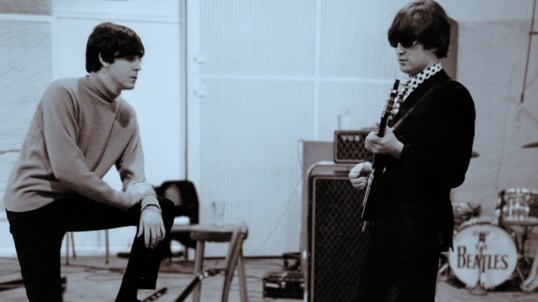
There were also differences in their approach to songwriting. John’s song ideas were often used as a creative platform to which the others could bring their brilliant contributions. Paul – the most accomplished musician and instrumental allrounder – tended to bring more fully fledged songs to the band with clear ideas of what he wanted.

In the first five albums, John was mostly the song originator of the band. Paul’s ‘Yesterday’ was an important moment in their relationship, argues Leslie. John always felt uncertain about it, perhaps because it showed that Paul was such a brilliant songwriter in his own right and that he could do without John. After the break-up, John wrote ‘Imagine’ and according to a collaborator at that time, John felt he had finally written a melody as good as ‘Yesterday’.

After the creative highlight that was ‘Sgt. Pepper’s’, the disintegration of the band started in John’s mind. During their time in India, John was depressed as evident by songs such as ‘I’m So Tired’ and ‘Yer Blues’. The Beatles had been his closest connection and had pulled him through the most difficult of times. Now, it was time to start anew.

Leslie covers the break-up and post-break-up years in great detail, showing how the songs of that period reflect what was going on in their minds. For example, John’s ‘Look At Me’ – which was written in India – is about John’s sense of identity hanging on by being seen by Paul, his creative partner. And if he is not being seen by Paul, who is he supposed to be?

After the break-up, their connection always remained strong and they always kept communicating through music. There were the famous songs at which they were having digs at each other (‘Too Many People’ and ‘How Do You Sleep?’). There was also the instance of John’s final live performance at a concert by Elton John. He chose three songs to perform and one of them was ‘I Saw Her Standing There’. Why did he choose this Paul-song? Because he was scared and needed to summon Paul to get him though, Leslie argues.

The book ends with John’s murder and Paul’s heartbreaking response. The bond was severed forever, yet Paul found a way to keep speaking to John – as always through music. His song ‘Here Today’ is a conversation with the friend, rival, and partner he could never replace.

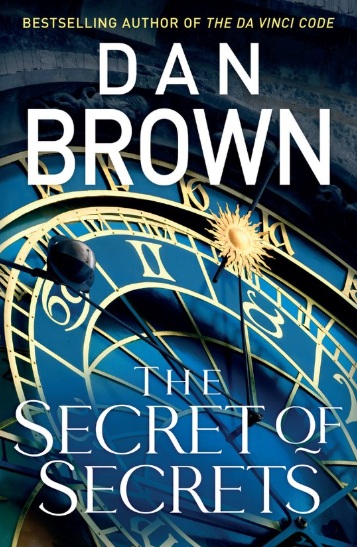
Van Capo tot CEO: Bedrijfslessen van de maffia

Voor de jaarlijkse CFO Day vonden we bij Sijthoff Media dit jaar een bijzondere spreker. Jan-Joost Kroon is organisatiedeskundige én maffia-expert. Sinds hij Scarface zag in zijn jeugd is hij gefascineerd door de Italiaanse en Siciliaanse misdaadorganisaties.

Hij vond mijn blogs over gangsterfilms erg tof – en we hadden dus meer dan genoeg reden om bij elkaar te komen voor een sit-down. Erg leuk om iemand te ontmoeten die weet wie Anthony ‘The Ant’ Spilotro en Benjamin ‘Lefty’ Ruggiero zijn.

In 2022 bracht hij een boek uit dat de basis was voor zijn CFO Day verhaal: ‘Van CAPO naar CEO: Leerzame inzichten van de Italiaanse maffia’.

In zijn boek bestudeert hij de Drie, de drie grote organisaties/families die de georganiseerde misdaad besturen in Italie en Sicilie:
● ‘Ndrangheta – Oorsprong: Calabrië
● Camorra – Oorsprong: Napels
● Cosa Nostra – Oorsprong: Sicilië

Deze Zuid-Italiaanse organisaties zijn al decennialang succesvol – hun gezamenlijke jaaromzet wordt geschat op zo’n 150 miljard euro. Jan-Joost beschrijft hoe dat succes tot stand komt.

Sterke tradities
Iedere business professional kent de uitspraak ‘culture eats strategy for breakfast’. Een hele serie tradities houdt de organisatie bij elkaar. Denk aan de doop van Michael Corleone’s neefje in The Godfather, de ceremonie in The Sopranos waarin van Christopher Moltisanti een ‘made guy’ wordt gemaakt, en het communiefeest van Michael Corleone’s zoontje waarmee The Godfather: Part 2 geopend wordt. Rituelen borgen de groepsidentiteit.

Loyaliteit
Het zakelijkste succesvol van de Drie is nu de ‘Ndrangheta met een geschatte omzet van 80 miljard euro per jaar. Terwijl de Cosa Nostra een tijdlang met de Italiaanse staat in gevecht was, is de ‘Ndrangheta in stilte doorgegroeid. Het is een echt familiebedrijf, schrijft Jan-Joost. Alleen familie komt erbij via een gearrangeerd huwelijk. Krachtig, want familie verraad je niet zomaar. Plus voor familie ben je bereid een stap extra te zetten.

Flexibiliteit
De Camorra kan meer vergeleken worden met een MKB-bedrijf vanwege de flexibiliteit, de compacte manier van werken en de snelheid waarmee ze handelen en inspringen op kansen. Zoals na de grote aardbeving van 1980 was de Camorra er als de kippen bij om bouwcontracten af te sluiten voor de bouw van nieuwe huizen. De maffia kent geen comfort keuzes: ze zijn altijd bezig met de volgende stap. Met actie. Met de beste willen zijn.

Onderdeel van de lokale samenleving
Het bekendste van de drie is nog altijd de Cosa Nostra – vrij vertaald: ‘onze zaak’. Deze organisatie heeft een klassieke piramidestructuur en functioneert als een soort multinational die in elk economisch aspect van een regio meespeelt. Ze bepaalt wat er wél en niet gebeurt in de wijk. Door slim in te spelen op het wantrouwen richting de Noord-Italiaanse overheid, positioneert de Cosa Nostra zich als beschermheer: “Laat die mensen in Rome maar, wij weten wat hier speelt en zorgen voor jullie.”

Heldere rolverdeling en structuur
De kracht van de Cosa Nostra zit hem in de sterke structuur en de duidelijkheid van ieders werkzaamheden. De organisatie zélf is de kracht, een leider kan vervangen worden. Iedere medewerker van een maffia-organisatie weet wat er van hem verwacht wordt en hoe hij kan bijdragen aan het succes. Ontwikkelkansen voor persoonlijke carrière zijn daarmee ook duidelijk. De maffia heeft ook heldere kernwaarden die nooit veranderen: Eer, loyaliteit, macht en respect.

Goed in talentmanagement
De maffia blijkt verrassend goed in talentontwikkeling. Een belangrijke les: bemoei je niet te veel met het werk van je mensen. Vind de juiste mensen, leid ze goed op, geef heldere kaders, en laat ze dan hun werk doen. De leiding is wel beschikbaar, maar niet betuttelend. Ook op het gebied van belonen en straffen valt er iets te leren. Bij de maffia zijn de consequenties van falen of succes kraakhelder. In veel bedrijven ontbreekt die duidelijkheid.

De maffia is een blijver
Jan-Joost beschrijft ook hoe diep de maffia-politiek verweven is met de samenleving, en waarom hij denkt dat deze organisaties – mede door culturele factoren – nooit zullen verdwijnen. Een schokkende constatering, maar overtuigend onderbouwd. Het versterkt het centrale punt van zijn boek: de maffia is, hoe immoreel ook, een extreem goed geleide, veerkrachtige en succesvolle organisatie. Daar kun je als bedrijfsleider van leren – zónder mee te gaan in het gebrek aan ethiek.

LEES OOK: 10 Management Lessons From Highly Successful Gangsters

#####

Hieronder nog een LinkedIn-post van Jan Joost:

Graphic Novel Classics: The Thirteenth Floor

Graphic novel which ran from 1984 till 1987 in the weekly comic magazines Scream! and Eagle. The story is about a tower building and the A.I. Max that governs it. Max his primary directive is ensuring the welfare of his tenants, a job he takes extremely seriously. Whenever their wellbeing is being threatened by outsiders, he takes these perps to the thirteenth floor, a nightmarish virtual world Max invented, where he can treat them to a frightening punishment for their wrongdoings. We, as readers, quickly become accomplices of the friendly Max, who has the most creative mind for coming up with the most fiendish lessons for horrible people who deserve a lesson. But after more and more people start dying or disappearing, a nosy detective figures something strange might be happening at Maxwell Tower… The beautiful black and white art work is drawn by José Ortiz and the stories are written by John Wagner and Alan Grant. Rebellion Developments, who also re-published classic ‘The Rise and Fall of the Trigan Empire’ by Don Lawrence, recently published ‘The Thirteenth Floor’ in a number of beautiful books. Highly recommended. Not to be confused with the science fiction movie The Thirteenth Floor (1999) which is also about virtual worlds.

Mind Book #2 – The Spread Mind

Read also: Mind Book #1 – Being You

In The Spread Mind: Why Consciousness and the World Are One (2018), philosopher, psychologist, and AI expert Riccardo Manzotti offers a bold new perspective on the problem of consciousness. Rejecting the notion that experience arises from neural activity – the default view in contemporary science – Manzotti argues that experience and reality are fundamentally identical. While this might evoke comparisons to biocentrism, the Spread Mind is a distinct theory.

Biocentrism posits that consciousness actively creates the world. In contrast, the Spread Mind asserts that consciousness is physical yet external to the body. It is neither a property of the brain nor the body; rather, it is identical to the objects in the surrounding environment. So when you are looking at an object, let’s say an apple, that apple is not in space and time but where you experience it. Also, the apple is identical to your experience of it.

At first glance, this might again seem like a biocentric perspective, as both theories reject the idea of an apple existing independently in the outside world, waiting to be experienced. However, the distinction lies in where the apple resides: in biocentrism, the apple exists within the mind, whereas in the Spread Mind theory, the apple is the mind. The object is causal, active, relative, temporally-defined, and of course spread.

What we label ‘an object’, Manzotti asserts, is a physical occurrence that repeats itself whenever we put our bodies in the proper circumstances. As a result, even though we believe the same object perdures, what perdures is not the object but a set of circumstances that are favorable to the occurrence of a series of identical objects.

Relocating experience in the world – and therefore ‘spreading’ consciousness in spacetime – can pay back in terms of simplicity, states Manzotti. And he’s right. Up to now, the reduction of experience to neurons and their whereabouts, the usual candidates for the physical underpinnings of consciousness, has not been satisfactory for explaining the conscious mind, since experience and the brain do not resemble each other in the least. In his theory, consciousness will no longer be an unexpected addition to the physical world because appearance and reality are the same thing.

To explain why his theory is better, he uses the simple case of Emily experiencing a red apple. The common perception is that she reproduces the apple inside her brain. But is that really the best solution? Manzotti’s view: ‘The brain is pinkish-gray, gooey, and bloody. The red apple is red, round, and applish. Which entity is more similar to Emily’s experience of the red apple?’ (P. 9)

The theory of the Spread Mind asserts that phenomenal and physical properties are the same. We perceive the world as it is because we are the world we perceive. The properties of our experience are the properties of the physical world we live in. According to the Spread Mind theory, the mind is a set of objects. Manzotti describes the body as a causal object that ‘causes’ all the other objects to be part of the set. This is again close to biocentrism, where it is consciousness itself that is the causal entity that ‘collapses’ the objects it observes, including the body and brain of that conscious observer.

However biocentrism is a modern version of idealism and the Spread Mind posits itself as a form of physicalism. The difference with the standard form of physicalism is that it doesn’t state that conscious experience arises from matter, but that experiences of matter are the matter, and are therefore physical.

My thoughts about this book
I admire Riccardo Manzotti greatly for making a leap in thinking and going beyond the default view. Rather than following the – in my opinion – dead end street of materialism, he takes a highly original standpoint and locates consciousness outside the body. You are one with the objects you perceive. You are the collection of objects you are currently perceiving. Your body – also an object – is the cause of the other objects you experience to be ‘there’.

However, the spread mind fails to capture the essence of what a mind is in my opinion. My mind is not the trash can I just saw. Rather, it is the integrated collection of thoughts, feelings, memories and perceptions that make up that ‘me’ feeling. The trash can appears in my mind, but it is not the same as my mind. Once identity is the same as the objects we observe, this means that if I am drinking a glass of beer in a bar, I am that glass of beer, the bar and even the waitress that is currently serving me.

Manzotti also writes some things that seem contradictory. For example, he writes that in his physical theory, ‘realism is safe’. But according to his theory, objects are only present in relation to the body, and that would violate realism which assumes that an external reality is always present also in the absence of an observer or body.

In conclusion, it was a great and original move by Manzotti to take the mind out of the brain, but biocentrism is better equipped to explain the totality of mental experiences and their relation to the workings of the universe.

You can read more about biocentrism and consciousness on my platform:
http://free-consciousness.com