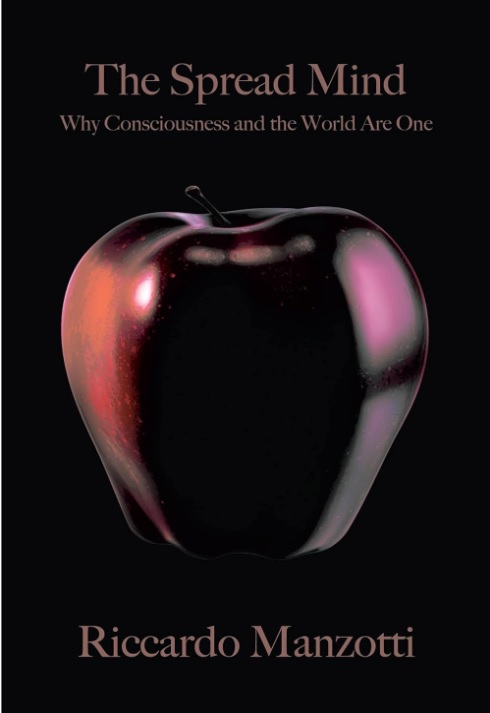
Mind Book #1 – Being You

Anil Seth is one of the world’s leading neuroscientists who is working on the ‘problem’ of consciousness. His ideas are discussed in the book Being You (2022). His working theory is that our conscious experiences of the world and the self are forms of brain-based prediction – ‘controlled hallucinations’ – that arise with, through, and because of our living bodies. We are conscious, beast machines, Seth believes.

The widely held assumption in science is that the brain is responsible for creating our conscious experiences. Philosopher David Chalmers, who introduced the term ‘the hard problem of consciousness’, wrote: ‘It is widely agreed that experience arises from a physical basis, but we have no good explanation of why and how it so arises.’

Why is there so much agreement about the physical nature of consciousness if it is totally unclear and unexplainable how something physical can cause a mental state? The opposite approach – consciousness producing physical states – is almost never considered in science.

Seth is honest in stating that his view is philosophical and not a proven scientific fact. He writes: ‘My preferred philosophical position, and the default position of many neuroscientists, is physicalism or materialism. This is the idea that the universe is made of physical stuff, and that conscious states are either identical to, or somehow emerge from particular arrangements of this physical stuff.’ He does not elaborate on why he favors this philosophy. Although he briefly acknowledges alternatives such as dualism and idealism, he does not engage in a detailed discussion of why materialism should be considered a preferable default, particularly over idealism – the view that the mind creates reality.

Seth’s theory is summarized in this following statement: ‘The experience of being you emerges from the way the brain predicts and controls the internal state of the body. The essence of selfhood is neither a rational mind nor an immaterial soul. It is a deeply embodied biological process. a process that underpins the simple feeling of being alive that is the basis for all our experiences of self, indeed for any conscious experience at all. Being you is literally about your body’ (P. 6/7).

Seth bypasses the hard problem of consciousness – solving the problem of why consciousness should arise from material interaction in brains – by introducing ‘the real problem of consciousness’. The real problem, he writes, accepts that conscious experiences exist and focuses primarily on their phenomenological properties. What is it like to be something? His task is then to explain, predict and control what happens in the brain leading to a certain experience. What happens in the brain that makes you see red rather than blue? What happens when you experience a jealous feeling?

What sets Seth’s theory apart is his view of the brain as a prediction machine. According to him, everything we see, hear, and feel is simply the brain’s best guess about the causes of its sensory inputs. Essentially, all our perceptions are hallucinations, and when these hallucinations align across individuals, we call it reality. Through examples of various visual illusions, Seth demonstrates that perception is a generative, creative act.

However, I struggle to see why materialism is necessary in this framework. Imagine you’re at the zoo and see a black and furry shape – your brain’s best guess about the most probable cause for this sensory input is that it’s a gorilla, so the perception of a gorilla is created. Why must this perceived gorilla correspond to a physical, material gorilla in the external world? In my view, the creation in the mind of the gorilla is the gorilla.

My thoughts about this book
Neuroscientists like Anil Seth have come a long way in explaining how the brain modulates conscious experiences, but they have one major conceptual leap to make, namely that the brain does not create conscious experiences, but merely puts restraints on it. Reality is not created by the brain, but by the mind itself: the brain and body are part of this controlled hallucination as well. Brains and neurons are not really ‘there’, but they are what consciousness looks like to observers from the outside. Why ‘they’ (the materialists) find this one so hard I can only speculate about. Perhaps it is that once you acknowledge that you are part of a larger consciousness, that means that you are truly immortal and forever part of nature. And this can be a frightening idea, I guess.

You can read more about my (very distinct) ideas about consciousness on my platform:
http://free-consciousness.com

Vacation Reading: Three Philip K. Dicks

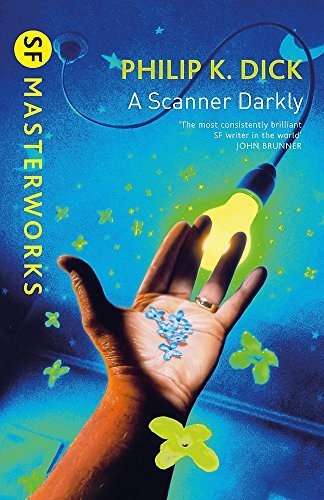
A Scanner Darkly (1977)

Semi-autobiographical novel about Dick’s experiences of living with a group of dope users. The main character is Bob Archtor, an undercover agent who gets addicted to a futuristic drug (the novel is set in 1994 in Orange County) called ‘Substance D’, a drug that soon leads to serious brain malfunction, and Archtor starts to lose his identity. Dick wrote it after a period in which he wasn’t able to produce any fiction due to drug consumption, so this novel functioned as a turbocharger of sorts. It contains flashes of brilliance, especially when it commentates on the lifestyle of heavy drug users, but as a whole it is quite a dull read, especially for a terrific writer as Dick. Turned into a 2006 movie by Richard Linklater, starring Keanu Reeves, Woody Harrelson, Winona Rider and Robert Downey Jr. The book ends with a list of all the dopers Dick hung out with who had died since then. It is quite a long list.

The Man in the High Castle (1962)

Who is the Man in the High Castle? It is the author Hawthorne Abendsen who wrote a subversive novel in which the allies won the Second World War. You see, this classic novel by science fiction legend Philip K. Dick is set in an alternative America which is governed by the Nazi’s and Japanese who have won WWII. In this world, American culture is quickly vanishing from existence, and an artificial America is rising. The novel follows various American, Japanese and European characters who try to make their way in this reality, thereby using the Taoist book ‘I Ching or Book of Changes’ as their guidance. The fascinating thing about ‘The Man in the High Castle’ is how believable Dick has crafted this alternate world. It makes the reader realize that we live in such a world ourselves, the result of countless choices and actions. We take it for granted, but everything could easily be very different. Turned into a television series by Amazon in 2015.

VALIS (1981)

‘VALIS’ follows the adventures of Horselover Fat (great name for a character!), an alter ego of the writer. This later, partly autobiographical book, is about Dick’s religious experiences. VALIS stands for Vast Active Living Intelligence System and represents the writer’s vision of God, which is that God is actually one huge macro-mind that connects everything. Unfortunately, the book – that was published one year before his death – contains not much more than endless philosophizing about the divine, madness and alien intelligence. Yes, Dick certainly had some fascinating thoughts and ideas, but they lack clarity here. And a plot is also sorely missing in ‘VALIS’. I’m afraid I am more a fan of Dick’s earlier works, like the phenomenal ‘Ubik’. ‘VALIS’ is part of a trilogy that also included ‘The Divine Invasion’ and ‘The Transmigration of Timothy Archer’, his final novel.

Bruce Campbell: A B-Moviestar’s Biography

For every George Clooney and Steven Spielberg, there are thousands of working class slobs in Tinsel Town. Bruce Campbell’s biography ‘If Chins Could Kill: Confessions of a B-Movie Actor’ is a homage to this B-crowd. Bruce who? That’s the point exactly. For those of us who grew up on a diet of classy horror movies in the eighties and nineties, he is a household name, for he was the star of one of the greatest horror series of that era: the holy Evil Dead trilogy (consisting of The Evil Dead, Evil Dead II and Army of Darkness).

‘If Chins Could Kill’ tells Bruce’s story. It was first published in 2001, so it doesn’t include the television adaptation of Evil Dead called Ash Vs. Evil Dead, but that’s no problem; there are plenty of great stories preceding that terrific cult show. In chapter 1, Campbell describes his childhood in Detroit, Michigan, with his parents and two older brothers. They did their fair share of monkeying around, and then good old Bruce became interested in girls. It became a lifelong obsession.

As he grew older, he had to find a way to keep on having fun. He discovered that his father Charles was an actor in a local theater. At age 14, Bruce joined the group and he soon played his first roles on stage. In the years that followed, he met various would-be actors and filmmakers, including one who would make it really big: Sam Raimi. After shooting a bunch of pretty cool 8 MM amateur films, Campbell, Raimi and another guy called Robert Tapert wondered: can we make a profession out of this?

The junior film crew decided to focus on the horror genre, because of the low budget required. For inspiration, they watched many horror shows at the drive-in theater and got a good sense of what audiences liked (when do they laugh? When do they scream?). Then they shot Within the Woods, the short predecessor of The Evil Dead. Their next challenge was a considerable one; they had to raise 150.000 dollars to be able to shoot their first feature length horror movie on 16 MM film (which they would afterwards blow up to 35 MM for cinema screenings) and to cover all other expenses. This seemed impossible, but they bought suits, went to work, and eventually raised the money.

After a grueling 12-week shoot in a run-down cabin in the woods of Tennessee, they canned the film, and luckily for the private investors, they delivered a genre classic. It turned out that its director was a genuine talent in visual storytelling, and Campbell undeniably a true horror star. True to the aim of his book, Campbell describes all the collaborators and the challenges they had to overcome to get this movie made. None of the other actors continued acting after The Evil Dead and all pursued other occupations.

If you’re serious about shooting a low budget movie, you should definitely read this book. It contains many tips on raising money, and then actually shooting it with hardly any resources. After that come the reshoots, the editing and sound editing, and then comes an even tougher part: marketing and selling the damn thing. Luckily for the crew, Stephen King saw their film at a movie event and wrote positively about it. His recommendation did miracles for the marketing of what was originally known as Book of the Dead, an unmarketable title; people might think they’d have to do reading at the screening. The investors of the retitled The Evil Dead made their money back, but the boys didn’t make anything. Yet, they now had a film under their belt.

What followed was the major flop Crimewave, co-written by The Coen Brothers. Campbell didn’t get a whole lot of work after that. He was in a soap series where he met his wife to be (a fragment from this show can be seen in Fargo, in the scene in which sociopath Gaear is watching television in the cabin). Crimewave could have been a career ender in Hollywood, but they had a fallback project: doing a sequel to the successful Evil Dead. Evil Dead II: Dead By Dawn (1987) became a legendary sequel and it is still considered to be among the greatest horror films ever made (it’s second on my top 10 horror list).

Still, Campbell – despite having played a lead role in a popular film – was no mainstream star and had to work as a security guard to make ends meet (“hey, you’re that guy from Evil Death, say that groovy line”). He also got divorced and met his new wife (a make-up artist) at a movie set. Campbell’s career would be closely tied to Raimi’s and in 1993, they would complete the trilogy with Army of Darkness. If you’ve ever wondered how much Bruce made with starring in the lead role in this movie ( I did!), the answer is in this book. It’s 500 K. This seems like an okay sum, but you have to subtract 25 percent for agents and managers leaving 375.000. Then deduct taxes (federal and state at the highest level) and you’re left with 187.500. Because he was recently divorced, his wife got half leaving Bruce with 93.750. This is still a lot of money, but considering it was two years work, he made just 46.875 a year, which is not what you’d expect a movie star (even a B-movie star) to make.

Still, Campbell continued to find work and most importantly: have fun. Especially when he went to New Zealand to work as actor and director on the tv-show Hercules: The Legendary Journeys and spin-of Xena: The Warrior Princess. In Campbell’s words: “shooting this show in New Zealand, away from studio interference, brought me back to the fun of filmmaking, like when we were shooting 8 MM movies back in Michigan.”

Read also: Ash vs Evil Dead: 5 Greatest Moments

Fear and Loathing Drug List

In the ultimate dope novel Fear and Loathing in Las Vegas, Gonzo journalist Raoul Duke travels to Las Vegas with his crazed Samoan attorney Dr. Gonzo to search for the American dream. With them, they carry every type of drug known to civilized man since 1544 A.D.

The List
– 2 bags of grass
– 75 pellets of mescaline
– 5 sheets of high-powered blotter acid
– 1 salt shaker full of cocaine
– 1 galaxy of multi-colored uppers, downers, screamers, laughers
– 1 quart of tequila
– 1 quart of rum
– 1 case of beer
– 1 pint of raw ether
– 24 amyls

“Not that we needed all that for the trip, but once you get locked into a serious drug collection, the tendency is to push it as far as you can.”

Illustrations by Troy Little in Fear and Loathing in Las Vegas – The Comic

Read also: Hunter Goes to Hollywood: Hunter S. Thompson Triple Bill