
“Chinese Trip”
A Hipstamatic shot by Jeppy K.
For Business Insider, I recently wrote an article about the dangers for AI for democracy.
Read the article (in Dutch) here:
A summary:
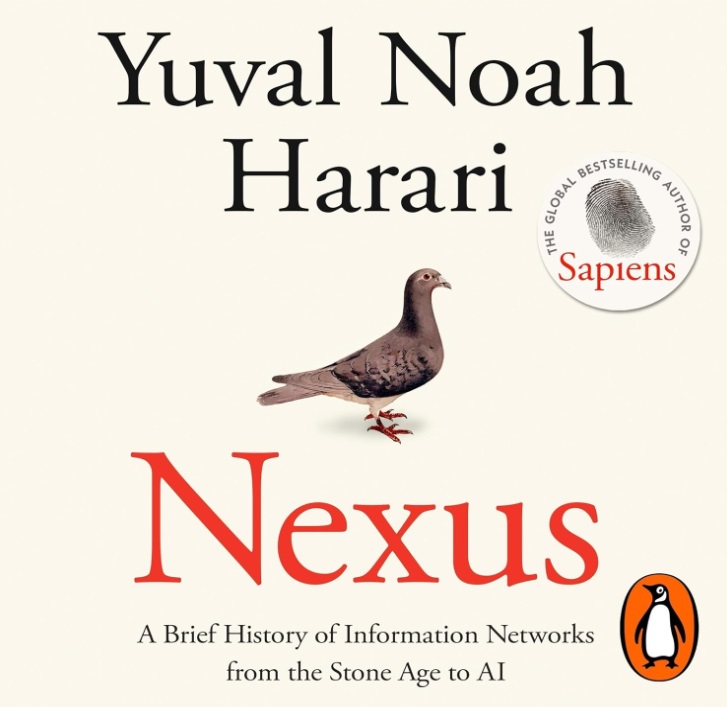
In Sapiens: A Brief History of Humankind, the Israeli historian Yuval Noah Harari traces the history of humanity from the earliest days of Homo sapiens to modern times. Harari’s central thesis is that human progress stems from our unique ability to collaborate and form complex societies, with stories and mythology playing a crucial role.
His latest book, Nexus, focuses on the information systems that people use to spread these stories and myths. For example, he describes the Bible as a particularly powerful technology that has profoundly influenced billions of people. This raises the question of what the rise of artificial intelligence – the most powerful technology we’ve ever encountered – will bring.
The new threat of AI
According to Harari, the current computer age is based on the openness of information. In other words, the freer information flows, the better society functions. However, the author believes this is a naïve view. Despite having vast amounts of information at our disposal, we’ve produced more weapons of mass destruction than ever, destroyed more habitats, and pumped billions of tons of CO2 into the atmosphere, even though that information showed us we were inching closer to our own destruction. Will more information improve the situation? Tech optimists think so, like venture capitalist Marc Andreessen, who wrote a widely read essay in 2023 explaining why AI will save the world and why the panic surrounding AI is, in his view, misplaced.
Other AI experts are less optimistic. In 2023, a group of top AI specialists – including the heads of OpenAI and Google DeepMind – warned that artificial intelligence could lead to human extinction. Dozens signed a statement published on the Center for AI Safety’s website. ‘Mitigating the risk of AI-induced extinction should be a global priority, alongside other societal-scale risks such as pandemics and nuclear war’, it reads.
Harari believes we need to be aware of the dangers and the more sinister side of artificial intelligence. By understanding the history of information networks, we can avoid mistakes. However, he also notes crucial differences between AI and past technologies. AI is not just a tool; it is an agent. It is the first technology capable of generating its own ideas and making decisions. This brings two major risks: it can amplify existing conflicts and further polarize the world, or worse, AI could become a totalitarian force that completely controls our lives and politics.
Manipulation and mass destruction through toxic information
Historically, information networks have always been vulnerable to manipulation. Harari gives examples of how toxic information has had disastrous consequences, such as the witch hunts in the Middle Ages and the persecution of the Rohingya in Myanmar, caused by Facebook algorithms that prioritized maximum ‘engagement’. Social media and AI can take this manipulation to new heights by creating mass illusions that weaken democracies.
Democracy is already under pressure from populist leaders who claim to be the only ones who understand the people’s needs and who sow doubt about democratic institutions such as the media, the courts, and politics. Research shows that social media further contributes to this political polarization. AI could accelerate this even more through advanced algorithms that spread disinformation and amplify extreme opinions. AI’s ability to control human language, simulate empathy, and manipulate people makes it even more dangerous in the political arena.
As billions of intelligent agents enter our information networks, the likelihood of new mass illusions arising, similar to Nazism, Stalinism, or the current ideologies of Putin’s Russia, increases significantly. After all, information and truth are not the same. Without measures to tip the balance in favor of truth, society risks being overwhelmed by a swamp of ‘alternative truths’, which could seriously endanger society and democracy.
Controlling AI and the struggle for truth
Harari emphasizes that taking responsibility for AI is essential. Tech companies like Facebook must be held accountable for the consequences of their algorithms, which often fuel hatred and polarization. Networks must develop self-correcting mechanisms that reward truth and counter disinformation.
Another important issue is the ‘alignment problem’: AI can come up with solutions that humans hadn’t anticipated, leading to unpredictable and undesirable outcomes. Harari advocates for developing AI systems that seek feedback before making decisions to prevent dangerous outcomes.
To protect democracy from AI, Harari calls for the decentralization of information networks and strict regulation of AI applications. AI mimicking humans, such as in chatbots, should be banned to prevent manipulation of the political process. Furthermore, companies like Amazon must become more transparent about their internal processes so that information doesn’t flow in just one direction.
Hope and future outlook
Harari is not entirely negative about technology and AI. As a gay man, he found no one to connect with in his small Israeli village, but through a Facebook group, he met his current husband. Nevertheless, his view of humanity is less optimistic than someone like Andreessen’s, and history seems to be on his side. The stakes have never been higher than they are now, in the AI era. With the unprecedented power of this technology, humanity cannot afford to repeat the mistakes of the past.
The impact of AI on the global economy and the labor market will be enormous. The hope is that, amid the various superpowers, we can find common ground and stories that inspire us to make the right decisions so that AI contributes positively to the story of humanity and the evolution of life on Earth.
During his formative years as lead guitarist of The Beatles, George Harrison, often called the quiet and spiritual Beatle, developed himself as a successful songwriter in his own right, who worked in the shadow of songwriting canon Lennon-McCartney. He ended up writing some of the group’s most iconic songs, and then – post-Beatles – continued to add a number of classics to his repertoire as a productive solo artist. These are my 15 favorites.
15. Blow Away
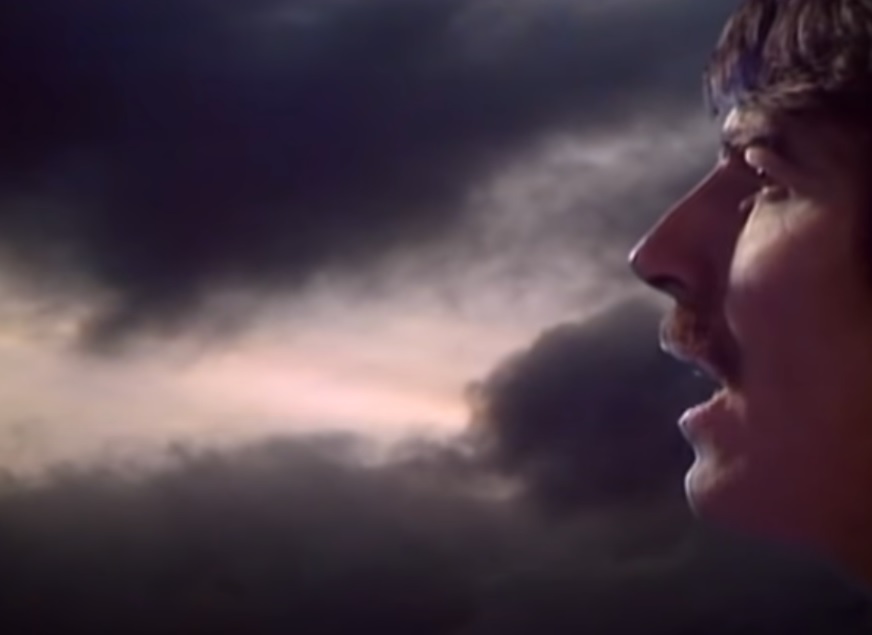
Day turned black, sky ripped apart. Rained for a year ‘til it dampened my heart. Cracks and the leaks, the floorboards caught rot. About to go down, I had almost forgotten… Great opening lyrics, this title song and single from of his 1979 album ‘George Harrison’. This easy listening song became one of Harrison’s most popular recordings from his solo career, and it’s easy to understand why.
14. I Want To Tell You

This was the third track George added to ‘Revolver’, and thereby the first time he contributed more than two tracks to a Beatles album. The song is about the difficulty of conveying the emotions you experience during an acid trip. It’s the opening song of ‘Live in Japan’, the fantastic album made of the concert tour George did in Japan with Eric Clapton as his guitarist and band leader.
13. Piggies

‘Piggies’ is a social satire inspired by George Orwell’s ‘Animal Farm’. Great combo of classical music, baroque pop and absurd lyrics (pigs eating bacon). Unfortunately it was, along with ‘Helter Skelter, used by Charles Manson and his cult as a foundation for his race-related counter cultural revolution. Still, it remains a terrific song, and Harrison’s second best song on the magnificent ‘White Album’ in my humble opinion.
12. Living in the Material World

This song’s title was chosen by Martin Scorsese for his documentary about Harrison. It’s another one of his spiritual songs and the title of his follow-up album to ‘All Things Must Pass’. It’s a very memorable tune in which George describes the limits of knowledge we have in this state as living beings and the clearer picture that will emerge after death. John and Paul are also mentioned in the lyrics.
11. If I Needed Someone
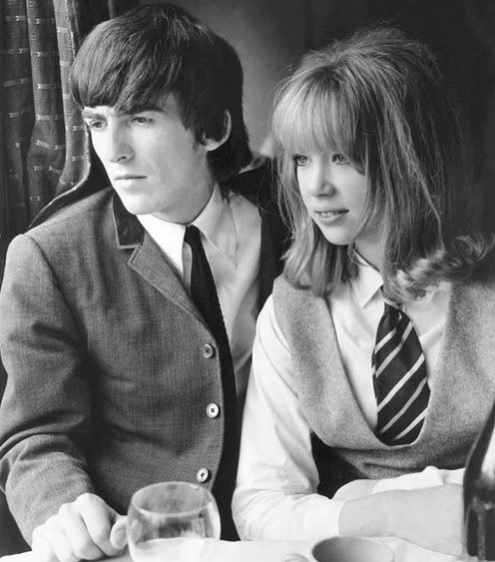
Along with ‘Think For Yourself’, this was George’s contribution to ‘Rubber Soul’. He apparently wrote it for Pattie Boyd, with whom he wasn’t yet married in 1965. It was inspired by the sound of the American band the Byrds who George and John liked and who were clearly inspired by the Beatles. The ambivalent lyrics are quite beautiful, and ‘If I Needed Someone’ was at the time considered to be George’s best song at that point.
10. Within You, Without You

One of the three Indian songs George composed for the Beatles (the others are ‘Love You To’ and ‘The Inner Light’) and his only song on ‘Sgt. Pepper’s Lonely Hearts Club Band’. “I think that is one of George’s best songs”, John Lennon later said. “I like the arrangement, the sound and the words. He is clear on that song. You can hear his mind is clear and his music is clear.” It was recorded in Abbey Road Studios in London without the other Beatles, and features Indian instruments such as the sitar, a tambura and a tabla.
09. I Me Mine

In Peter Jackson’s ‘Get Back’ about the ‘Get Back’ sessions in Twickenham Studio’s, George arrives one morning, and he starts playing a new song he’s been working on for Ringo and some crew members. It is called ‘I Me Mine’. They like it and so do I. The lyrics point to self-centredness as part of the human condition. It was the last song The Beatles, somewhat ironically, recorded before they split up and went to do their own thing.
08. Cheer Down

‘Cheer Down’ was the closing song of the tremendous action film Lethal Weapon 2 in 1989. It was picked by George’s friend Eric Clapton, who was in charge of the music. The title of the song is attributed to Harrison’s wife Olivia, who told her husband to ‘cheer down’ when he would get too enthusiastic. He wrote it together with Tom Petty, and released it as a single with ‘Poor Little Girl’ as the B-side. It was the last such release by Harrison as a solo artist during his lifetime.
07. Tax Man

On The Beatles’ legendary album ‘Revolver’, George got the opening track with ‘Tax Man’. It was the first political song by the group, written as a protest against the progressive super tax of 95 percent the band had to pay at that time. It was introduced by Harold Wilson, prime minister and Labour Party leader, who is mentioned in the lyrics along with conservative leader Ted Heath. The fantastic guitar solo is played by none other than Paul McCartney.
06. What Is Life

‘What Is Life’ is one of the hit singles of ‘All Things Must Pass’, Harrison’s triple album which was released in november 1970 after the breakup of the group. Background musicians on the song include Eric Clapton and the Delaney & Bonnie and Friends Band. It became one of Harrison’s most popular compositions and showed the depth of his talents that had been hiding in plain sight behind Lennon and McCartney. The songs was used in the final segment of GoodFellas, the part in which Henry Hill’s life as a gangster goes off the rails.
05. Here Comes The Sun

And what is currently the most streamed Beatles-song? It’s not a Lennon-McCartney composition, but by far Harrison’s ‘Here Comes The Sun’. It is currently on 1.1 billions streams on Spotify. George wrote this pearl at Eric Claptons’ country house on an acoustic guitar while skipping a business meeting at Apple Corps headquarter about The Beatles’ business affairs. It became one of his signature songs and together with ‘Something’ formed his genius contribution to ‘Abbey Road’, the final album they recorded. The beautiful composition shows his maturity as a songwriter.
04. Something

This classic love song from ‘Abbey Road’ became Harrison’s first A-side single (it was released as a double A-side single together with Lennon’s ‘Come Together’). It is considered as a definite highlight of Harrison’s career. Lennon called it “the best track on ‘Abbey Road’” and it was later covered by a.o. Frank Sinatra, Elvis Prestley, Ray Charles and Shirley Bassey. After ‘Yesterday’ it is the most covered song by The Beatles.
03. While My Guitar Gently Weeps

Rolling Stone Magazine ranked this song seventh in their list ‘The 100 Greatest Guitar Songs of All Time’. And justly so! The guitar work (played partly by Eric Clapton uncredited) is sweeping. The words that started this composition – gently and weeps – were randomly chosen from a book George found lying around. This reflects the meaning of the lyrics that appear to be about randomness and – typical for George – universal love. Inspired by the Taoist concept that everything is relative to everything else as opposed to the Western view that things are merely coincidental.
02. Give Me Love (Give Me Peace On Earth)

I am a sucker for George’s spiritual songs and this is reflected in my choice for his greatest two songs. ‘Give Me Love’ (1973) became George’s second number one single in the US knocking McCartney’s ‘My Love’ to the second spot. It contains beautiful slide-guitar solos, and I love his passionate pleading to the Lord, asking to be freed from birth (released from the karmic cycle of birth, death, and rebirth). Don’t miss the beautiful live version from the ‘Live in Japan’ album.
01. My Sweet Lord
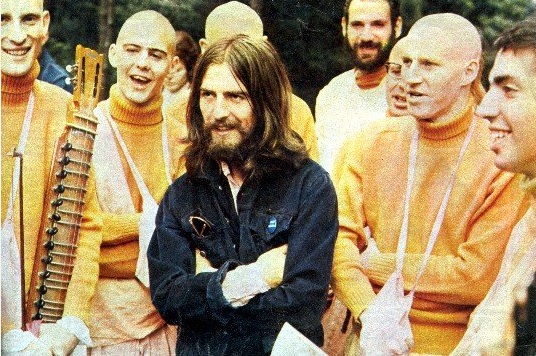
Why ‘My Sweet Lord’ is my favorite George Harrison song? Because the songs heralded the arrival of Harrison’s slide guitar technique, and I absolutely love the sound of the guitars on this song. The solo especially is marvelous. Also, George’s passionate singing is terrific, and those background vocals: LOVE THEM! Lennon didn’t like it much, commenting: “Every time I put the radio on it’s ‘oh, my Lord.’ I’m beginning to think there must be a God.” But maybe he was a little jealous that George became the first ex-Beatle to score a number-one single. Later in the 1970s, Harrison was found guilty to have subconsciously plagiarized the song ‘He’s So Fine’ by The Chiffons.
Episodes viewed: 8 of 8
The second season of The Lord of the Rings: The Rings of Power has arrived. The first season of this incredibly expensive series received a lukewarm response, so how does Season 2 measure up? Here are some thoughts:
1). Sauron’s return to physical form after being betrayed and defeated by Adar and his Orcs is a fantastic way to kick off the season. The opening sequence is stunning.
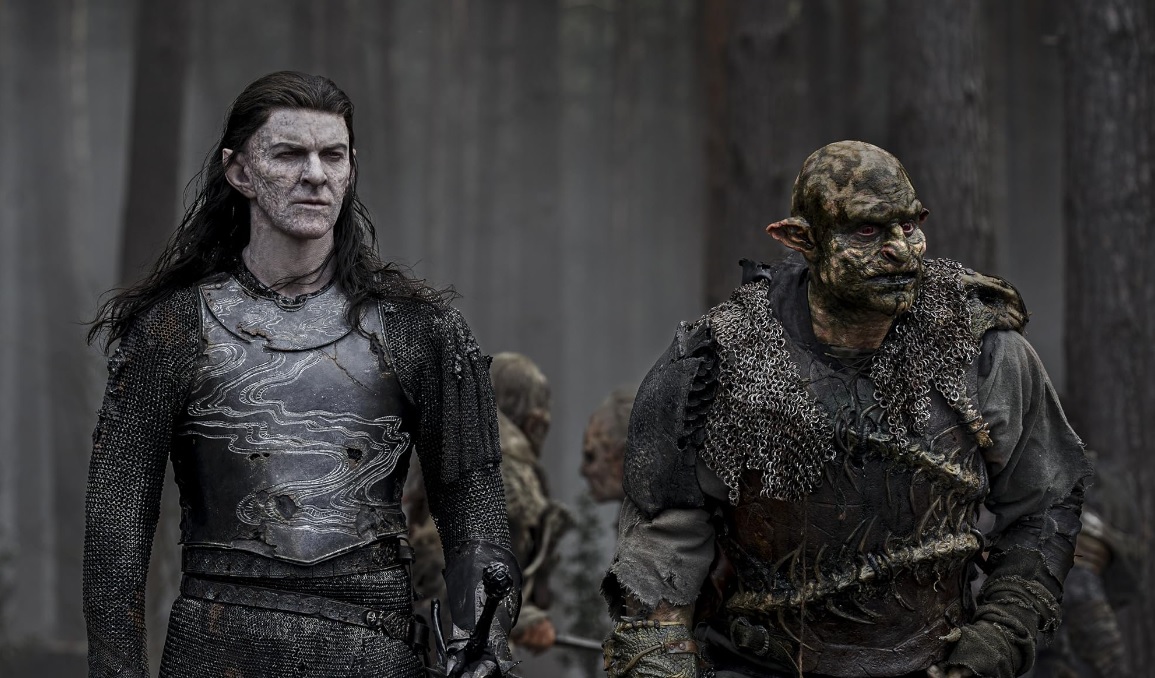
2). Speaking of Adar, he remains my favorite character in the series. Who is he, exactly? According to lotr.fandom, Adar is a mysterious figure from the Second Age, known as ‘Lord-father’ by the Orcs. He was likely one of the first Elves captured and tortured by Morgoth. Once Sauron’s lieutenant, Adar became disillusioned with Sauron’s cruelty toward the Orcs and ultimately betrayed him.
3). The settings are once again breathtaking. It’s great to see familiar The Lord of the Rings landmarks, and the world-building continues to impress.
4). Woke Alert: I’m all for diverse casting, but it should feel natural. Andor is a great example—where all races and genders are represented without it feeling forced. However, adding a few Black characters among the Elves feels like tokenism. On the other hand, Arondir’s existence has already established that Southern Elves are Black, so perhaps I’m overthinking this.
5). The Elves repeat too many lines from the original trilogy, like “the light of the Eldar is fading.” Isn’t it a bit tiring that the Elves are still in the same situation 3,000 years later? They’ve been talking about leaving Middle-earth for ages—when will they finally depart?
6). In Season 1, it seemed like The Stranger might be Gandalf, but he could also be Saruman. This would make more sense, as Saruman likely came to Middle-earth before Mithrandir. This twist could give Peter Jackson’s Saruman a deeper, more tragic backstory, showing him as a force for good before his fall. By the end of the season, we finally find out…
7). The Dark Wizard could also be Saruman. His appearance – sitting on a throne – resembles him. However, this character is already evil. He’s played by Ciarán Hinds, and as always, Hinds delivers a great performance.
8). What’s lurking in the cave where Isildur is being held? This horror sequence rivals Frodo’s torment in Shelob’s lair: intense and chilling.
9). The Ring of Power makes Durin’s father even more stubborn and greedy, reminiscent of Thorin Oakenshield’s downfall in The Hobbit. Exploring the origins of the Balrog is a nice touch as well.
10). The siege of Eregion is filmmaking on a scale rarely seen in television, rivaled only by Game of Thrones. The decision to use Peter Jackson’s cinematography style was wise. This is how you film a massive battle with Orcs and a hill troll.
11). Howard Shore composed the beautiful opening theme, while Bear McCreary handled the rest of the score. McCreary introduces some fresh ideas, like the heavy metal end credit music in episode 7, sung by hilltroll Damrod, or so it appears.
12). Tom Bombadil finally appears, and he’s just as he is in the book; merry and always singing. He helps The Stranger discover his true identity, and naturally, they sing together. Rory Kinnear (Tanner in James Bond) is perfectly cast as Bombadil.
13). Elves and Uruks are like two sides of the same coin. Both races were created by magic, and it’s tragic that they are doomed to wage war on each other, reflecting the broader tragedy of war.
14). Speaking of tragedy, two major characters die at the end of the season, and both deaths are genuinely sad.
15). Nori’s monologue at the end, in the style of Samwise, avoids being cringeworthy and is actually well-delivered. Overall, Season 2 is a significant improvement over the first. The Rings of Power has finally found its footing, and I’m excited to see where it goes next.

 FRAGMENTEN UIT HET SCHEMERLAND