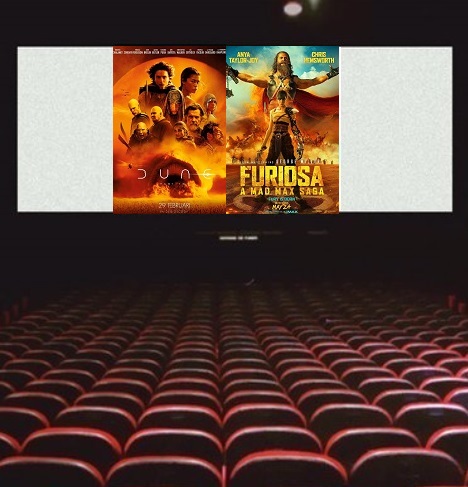
The two major blockbusters of 2024 have a lot in common: They are both sequels/prequels, are epic in scope, have huge ideas, and take place (almost) completely in deserts. Storywise, they are about the hero’s journey. In Dune: Part Two, we witness how the chosen one Paul Atreides (Timothée Chalamet) develops his powers and fulfills his destiny as savior of the Fremen on Arrakis, while in Furiosa: A Mad Max Saga we see how Furiosa (Anya Taylor-Joy) became the legendary, one-armed warrior she is in Mad Max: Fury Road (2015). Furthermore, both sci-fi epics are directed by visionary directors that don’t appear to have had any studio interference. They made the films they wanted to make and both are – well there’s that word again – epic. Both movies also have fantastic villains for the heroes to stand up against. Dune: Part Two has the Harkonnens, with the psychopathic Feyd-Rautha (Austin Butler) as their latest addition. Furiosa sees the return of the cult leader Immortan Joe with his memorable skull mask and breathing tubes, but also introduces a new bad boy: Dementus (played by a hard to recognize Chris Hemsworth), who’s a depraved sort of father figure for the fiery Furiosa. The henchmen are similar as well: the Harkonnen’s soldiers and the War Boys are both white, bald and loyal without questioning. The production design is in both cases absolutely stunning and must be seen on cinema screens. Highlights: I thought the first showdown between Dementus and Immortan Joe at the Citadel and the attack on the war rig are Furiosa’s most mind-blowing sequences. In Dune: Part Two, Paul’s sandworm ride, Feyd-Rautha’s memorable introduction on the Harkonnen planet of Giedi Prime, and his ritualistic knife fight with Paul are my favorite moments. And there’s good news for the fans: Both movies clearly leave a door open for another sequel. In Furiosa’s case, this would be The Wasteland, another origin story about what happened to Max before we meet him at the beginning of Mad Max: Fury Road. Director George Miller is now 79, but he might still be up for it. It is already confirmed that Denis Villeneuve will return to wrap up his Dune trilogy by adapting Frank Herbert’s book sequel ‘Dune Messiah’. In both cases I say: Bring them on!
Super Size Me 2 (R.I.P. Morgan Spurlock)
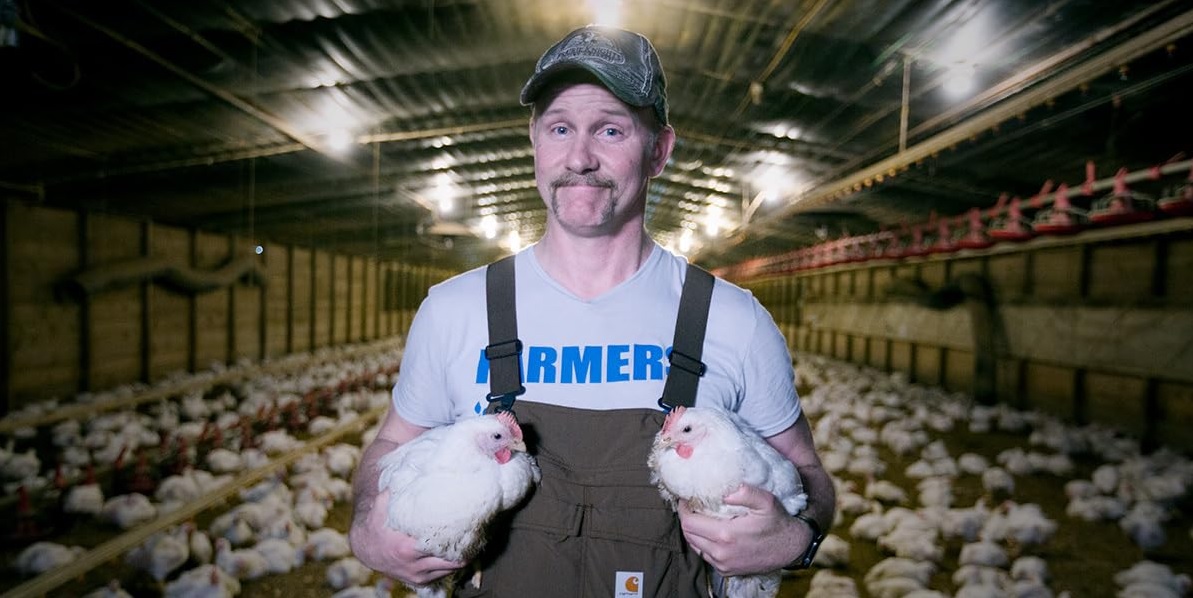
Morgan Spurlock, maker of the classic documentary Super Size Me (2004) passed away on Friday May 24. Not from eating too many fries and burgers, but from cancer. In Super Size Me, for those who forgot, Spurlock does a fast food experiment. For a month, he eats at McDonalds three times a day. And whenever they offer him a supersize meal, he has to take it. The filmmaker gained serious weight and suffered significant health issues at the end of the documentary. The not so surprising message: fast food is not good for you, and the fast food industry has a great hold over America which suffers from a health and obesitas crisis.
I wanted to rewatch it, but could only find its sequel Super Size Me 2: Holy Chicken! (2017) on the streaming services. So I watched the sequel instead. His mission this time around is to open his own fast food restaurant and see how the industry has changed in 13 years. This mission may seem less exciting, but it is a huge undertaking.
Spurlock talks to all kinds of experts and innovators to be as successful as possible. It turns out that chicken is the way to go forward, because it is cheaper, potentially healthier and trendier than beef. I write ‘potentially’ because grilled chicken is not so bad. The thing is: more than 90 percent of Americans prefer fried chicken. The industry just adds artificial grill marks to make it appear healthier.
Surprise: the industry is all about marketing. The food hasn’t changed at all, but how everything looks has. McDonald’s now has green and brown paper boxes instead of the foam boxes they used to have. It looks more farm-like. The fast food chains use slogans like ‘food as it should be’ or ‘home style’ to make it all appear natural and artisan. Many fast food restaurants have pictures of traditional farms hanging on the wall. Subways shows you all their vegetables, so you almost think your sandwich, which is drooling with fat, is not so unhealthy after all.
Spurlock goes with the home grown theme, so he buys chicklets and his own growhouse. It turns out that fast food chickens are now engineered to grow from chicklet to full grown chicken in just six weeks. By then they weigh 2,75 kilos. By comparison, that’s the same as when a baby would grow to 300 kilos in two months time. The result of this unnatural growth cycle? Heart attacks, crushed bones and all kinds of diseases. Who can see the next pandemic approaching?
When a lobby group is pressuring farmers not to talk to Spurlock, he dives into the world of Big Chicken and what they are hiding. Turns out that these corporate villains have enslaved the chicken growers with a tournament system. Everybody used to get paid the same, now they decide based on a measurement system they control, who gets paid what. The farmers also need to take on massive debts to be able to stay in business. This corrupt, rigged system has these farmers living in intense stress. One of them even starts crying in front of the camera.
The brilliant ending sees Spurlock open the first Holy Chicken restaurant, the most transparent fast food restaurant in the world. Here, the customers can experience in funny and inventive ways how the industry is bullshitting them. The design of the restaurant is fantastic and reason alone to see this film. This is great documentary making. Spurlock was a master of the craft and will surely be missed.
Super Size Me 2: Holy Chicken! is available on Amazon Prime.
New Beatles Compilations: The Yellow Album & The Green Album
‘I passed a record store that had a window display showing two ‘new’ Beatles albums – one with a red cover, the other a blue cover. On the red album were the four Beatles in their young mop-top days, and on the blue album, in exactly the same pose, were the bearded hippy Beatles that my mother had warned me about. Needless to say, I blew my double aircraft money on those two double albums and got back on the train with what, I came to learn later, were the most wonderful songs I’ve ever heard, tucked under my arm.’
– Peter Jackson in introduction ‘Get Back: The Book’
Now this article is a bit overtaken by time. Its purpose was to create alternative versions of the Beatles’ famous Red and Blue Albums: the ultimate compilations of their work. My feeling was that although they were great albums, many of my favorite songs were missing. My thesis was that I could create two albums that were just as good using the apparent B-songs only. And of course I was correct; the output of the Beatles is so brilliant that you can never capture this with just two albums.
The idea was good, but then last year, simultaneously with the release of Now and Then, Apple Corps also released new versions of these two albums featuring many songs I have included on these alternative compilations. I decided to publish the track listings anyway. These ‘albums’ can be found on Spotify as playlists.
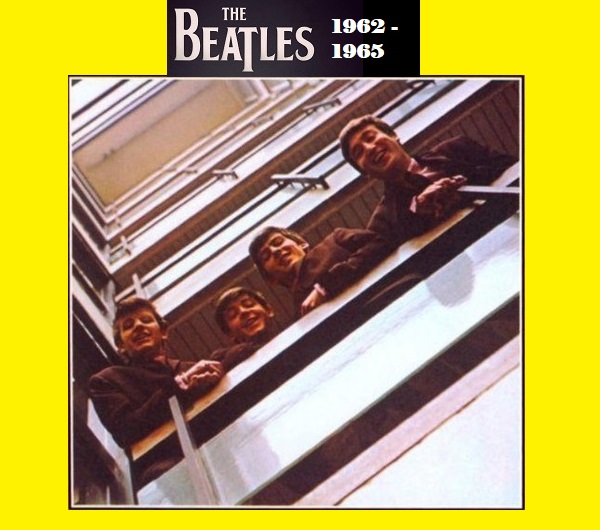
The Yellow Album (1962 – 1965)
What Beatles fans might notice is that unlike the Red Album, this compilation only goes to 1965 and excludes ‘Revolver’. I figured this would be a better split for two reasons:
– 1962 till 1965 covers the Beatlemania years with ‘Rubber Soul’ (1965) being the transition albums between Beatlemania and the studio years.
– It gave me the chance to open both compilations with a 1, 2, 3, 4 countdown. The one from ‘Please Please Me’ sounds pretty ‘live’ and the ‘Revolver’ one sounds more studio-like.
I am happy with the track listing of the Yellow Album. Yes, the well known A-sides are missing, but look at the sheer quality of the tracks it does have: I Saw Her Standing There, I Should Have Known Better, If I Fell, You Can’t Do That, I’m A Loser, I’ve Just Seen A Face, If I Needed Someone, I’m Down… In any other band, these would be their absolute best songs.
Track Listing
1. I Saw Her Standing There
2. Do You Want To Know a Secret
3. I’ll Get You
4. This Boy
5. Hold Me Tight
6. Little Child
7. It Won’t Be Long
8. I Should Have Known Better
9. If I Fell
10. I’m Happy Just To Dance With You
11. When I Get Home
12. You Can’t Do That
13. I’ll Follow The Sun
14. No Reply
15. I’m A Loser
16. What You’re Doing
17. The Night Before
18. Tell Me What You See
19. I’ve Just Seen A Face
20. You Won’t See Me
21. Run For Your Life
22. What Goes On
23. Wait
24. If I Needed Someone
25. I Call Your Name
26. I’m Down
The Green Album (1966 – 1970)
The green album, I think, is an even more amazing compilation. It might even beat the Blue Album in my humble opinion. Compare for example the output from ‘Sgt. Peppers’ on the two compilations. Yes, A Day In The Life on the Blue Album is most likely John’s masterpiece, but the album doesn’t include Fixing a Hole, She’s Leaving Home and Being For The Benefit Of Mr. Kite!, three of my all time favorite Beatles songs.
Other absolute classics that are included: Here, There And Everywhere, And Your Bird Can Sing, Tomorrow Never Knows, Dear Prudence, Happiness Is A Warm Gun, Blackbird, Because, Golden Slumbers… I mean, it’s kind of ridiculous really…
Track Listing
1. Taxman
2. Here, There And Everywhere
3. And Your Bird Can Sing
4. For No One
5. Tomorrow Never Knows
6. Getting Better
7. Fixing A Hole
8. She’s Leaving Home
9. Being For The Benefit Of Mr. Kite!
10. Your Mother Should Know
11. Baby, You’re A Rich Man
12. Dear Prudence
13. Happiness Is A Warm Gun
14. Martha My Dear
15. Blackbird
16. Birthday
17. Sexy Sadie
18. Julia
19. Two Of Us
20. One After 909
21. Dig A Pony
22. I Me Mine
23. Maxwell’s Silver Hammer
24. Oh! Darling
25. Because
26. Golden Slumbers
27. Carry That Weight
28. The End
Read also: The White Album Compressed
The original ‘Let It Be’ documentary now on Disney Plus
‘I think the Beatles are crackin’, I said. You can’t beat ‘em, I said, they’re all out on their own. They’ve got a style of their own. And they… Well, it’s my opinion, I think they look — they’re a lovely crowd. They’ve got good, good quality, they sing well, and, well what else shall I say but they’re real good people.’
– Man on the street during the rooftop concert.
In 2022, Peter Jackson told the full story of the ‘Get Back’ sessions by the Beatles in 1969 and the eight hour film was met with positive critical appraisal. The original documentary ‘Let It Be’ by Michael Lindsay-Hogg was released at an unfortunate time in May 1970 when the Beatles had just broken up. Therefore the reception was pretty negative at the time.
It is time for a re-appraisal. For the first time in 50 years, the documentary can be seen again at Disney Plus. It is preceded by a conversation between Peter Jackson and Michael Lindsay-Hogg about this amazing project. Jackson notes that although the ‘Get Back’ sessions came to be known as the end of the Beatles, it was probably their most productive period. Not only did they write and compose all these terrific ‘Let It Be’ tracks, but also many of the songs that would end up on ‘Abbey Road’ later that year.
This was originally supposed to be a concert film with some of the studio stuff being more like a sort of introduction. But when the idea of a concert was dropped, Lindsay-Hogg didn’t quite know what to do with the footage. What he eventually did with it, is actually great. ‘Let It Be’ consists for the most part of the Beatles just jamming and trying to find the right approach for all these new songs they’re cooking up.
In the first part in the Twickenham Studio’s, there is some palpable tension within the group with Paul taking charge and correcting the others at times. There is also that famous exchange between Paul in George in which George tells him he’ll play whatever he wants him to play. The bit where George leaves the band is left out. When they move to the studio of Apple Corps and old friend Billy Preston joins the sessions, the atmosphere noticeably improves.
So while the ingredients of the eventual split are there, there is quite a bit of laughing and fooling around. That was how their creative process worked. Jackson’s ‘Get Back’ gives us more context and dialogue while ‘Let It Be’ is all about the music. And watching these guys playing passionately together is a real joy. It is great to see the songs we know so well emerging here.
When this was filmed, the boys hadn’t performed live in years, and they were noticeably unsure about how to pick it up again. They’re adrift as a band. But then the famous rooftop concert happens and they clearly find some footing again. They start out with the fantastic song Get Back, and then you realize that their original plan actually worked. At that point, the Beatles really were back!
THE OTHER FOUR BEATLES MOVIES
A Hard Day’s Night (1964)
The first Beatles movie is a documentary of sorts, shot in razor sharp black and white images, that follows the band in slightly fictionalized form as they travel by train to a studio to do a television performance. Sixty years after its release, it is still a delight to see. There is hardly any story, but it doesn’t matter because we get to spend time with the boys who are funny, charming and extremely musically gifted. The Lennon dominated soundtrack is absolutely fantastic. The film’s extensive use of handheld cameras and sped-up footage gives it a very energetic feel. It’s as if the camera crew had trouble keeping up with the boys, which is in fact the way it was. Director Richard Lester later admitted to using amphetamine during the shoot to get him through it. The mostly improvised shoot really captures the madness of the Beatlemania days and cemented the band members status as rock and roll legends.
Help! (1965)
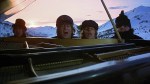
The higher budgeted follow-up to A Hard Day’s Night revolves around an Eastern cult group who are looking for a sacrificial ring that is worn by none other than Ringo! (he got his stage name originally because of his love for rings). After several attempts to steal it back in London fail, Ringo becomes a target to be sacrificed to their god Kaili, so the boys flee to the Austrian Alps and later The Bahama’s. The comedy act by the Beatles was inspired by Duck Soup by The Marx brothers and the BBC Radio Comedy Programme ‘The Goon Show’ that they listened to in their teen years. The boys appear to be more distanced than in the preceding feature though. According to John that is because they were constantly stoned at the time of filming. Help! didn’t receive the same favorable reviews as their first film, but it is now credited with pioneering the music video.
Magical Mystery Tour (1967)
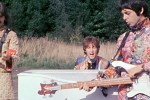
It has the reputation of being their worst film. Magical Mystery Tour is not really a film though, but a 55 minute television special. And it’s not that different from their preceding two screen efforts: It features the Beatles doing comedy (some jokes corny and some pretty funny) and performing songs from a terrific original soundtrack. Storywise, there isn’t much there. It’s about a busload of weird characters taking a journey through the English countryside. What’s most enjoyable about it are the psychedelic clips for great songs, including Magical Mystery Tour (obviously), The Fool on the Hill (a beauty), Flying (their only instrumental track), I Am the Walrus ( a highlight), Blue Jay Way (George’s misty thing) and Your Mother Should Know (Paul’s lovely granny music). It’s a bit of an unscripted mess with lots of silliness, but the same can be said of the Richard Lester films. And it does feature John serving a woman spaghetti with a shovel, so that is worth the price of admission.
Yellow Submarine (1968)

80.000 leagues beneath the sea is a happy place called Pepperland. Then the music-hating Blue Meanies arrive and freeze everybody and hide all instruments. Only Fred escapes in a yellow submarine which he takes straight to Liverpool to retrieve the four heroes known as the Beatles. This is the start of a series of psychedelic adventures as the crew pass through the Sea of Time, the Sea of Monsters, the Sea of Holes, Nowhere Land and eventually Pepperland. The Beatles did this film to complete the three picture deal they signed with United Artists. The voices are provided by actors and the Beatles only appear in a cameo appearance at the end. Like everything they touched, it became a pioneering work of pop art. Before Yellow Submarine, animation was considered a children’s medium, and this feature led to the art form being taken more seriously. Visually, it’s a stunning piece of work, and as opposed to their preceding films, it is well written with a truckload of references to Beatles lyrics. John Lennon said he thought this was the best Beatles film. I think he was right.