Written by:
Armitage Trail, Ben Hecht, Seton I. Miller
Cast:
Paul Muni (Tony), Ann Dvorak (Cesca), Karen Morley (Poppy), Osgood Perkins (Lovo), C. Henry Gordon (Guarino), George Raft (Rinaldo), Vince Barnett (Angelo), Boris Karloff (Gaffney), Purnell Pratt (Publisher), Tully Marshall (Managing Editor)
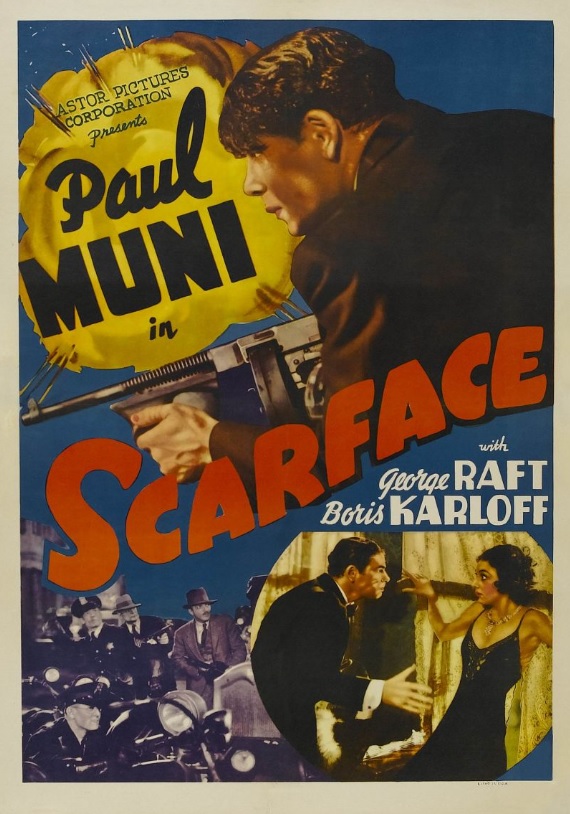
The original Scarface opens with a challenge — literally. The very first words on screen declare: “This picture is an indictment of gang rule in America. What are YOU going to do about it?” I can’t think of another film that confronts its audience so directly. It sets the tone for what’s to come: bold, brash, and unafraid to stir things up.
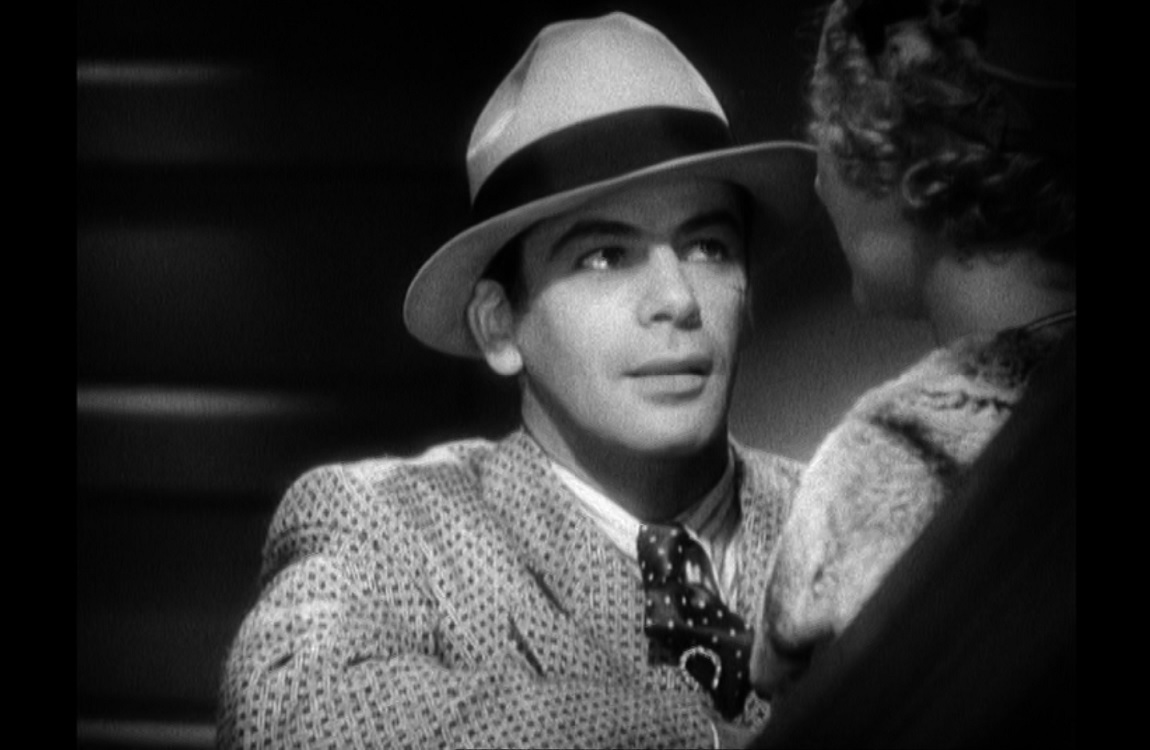
The story kicks off when Louis Costillo, the last of the old-school gang leaders, is gunned down. With him out of the way, Chicago is up for grabs. Enter Tony Camonte — a ruthless, trigger-happy Italian thug with big ambitions. He works for Johnny Lovo, a mob boss running the city’s bootlegging operations, but Tony clearly has bigger plans.
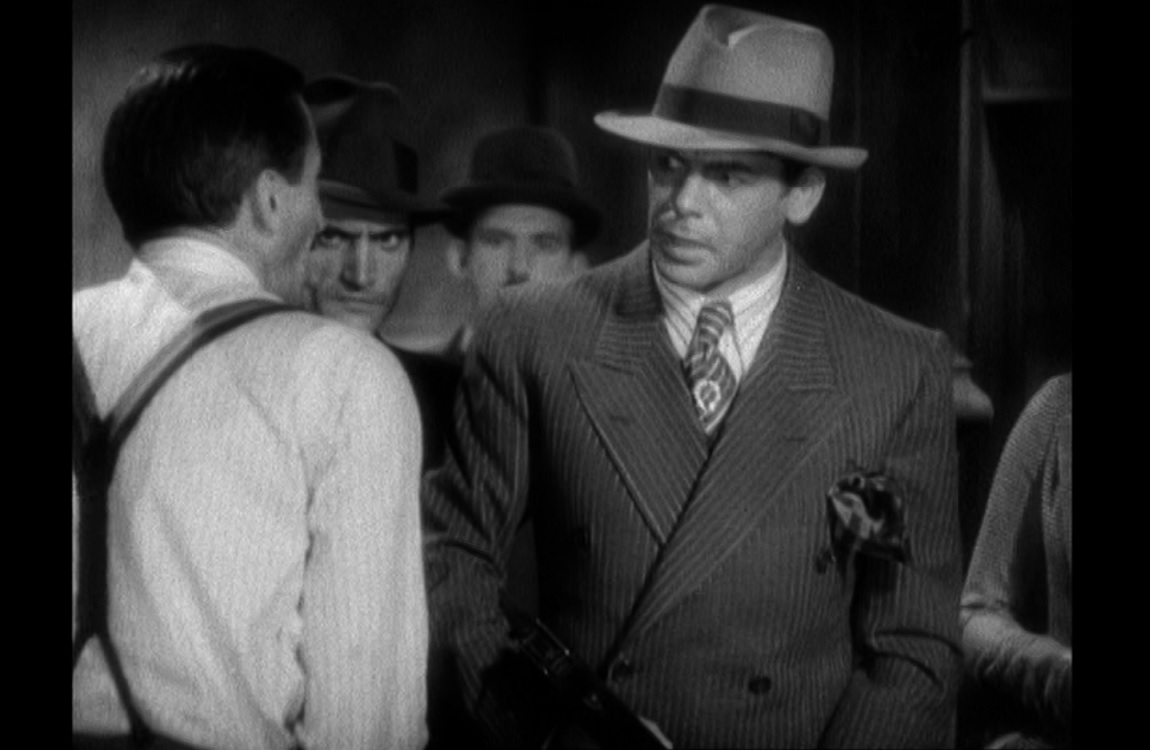
Tony’s greatest strength is his fearlessness. His greatest weakness? He’s reckless to the point of stupidity. At one point, he openly tells an underling — someone he barely knows — that he plans to kill Lovo and take over. Still, Tony lives by his own brutal code: “Do it first. Do it yourself. And keep doing it.” And for a while, that philosophy takes him far.
It’s no secret that Tony Camonte is a thinly veiled version of Al Capone — the real-life ‘Scarface’. The film even recreates the infamous St. Valentine’s Day Massacre, among other bloody moments from Capone’s reign. Paul Muni, who plays Tony, throws himself into the role with raw intensity. At times, maybe too much intensity. His exaggerated Italian accent borders on parody today — but to be fair, that larger-than-life acting style was very much in fashion back then.
Watching Scarface for the first time, I was struck by how much it echoes Brian De Palma’s 1983 version — the one I grew up with. Tony’s obsessive, almost incestuous protectiveness over his sister, the iconic ‘The World is Yours’ sign, and of course, his violent downfall in a hail of bullets — it’s all here. The DNA of De Palma’s Scarface runs straight back to Howard Hawks’ original.
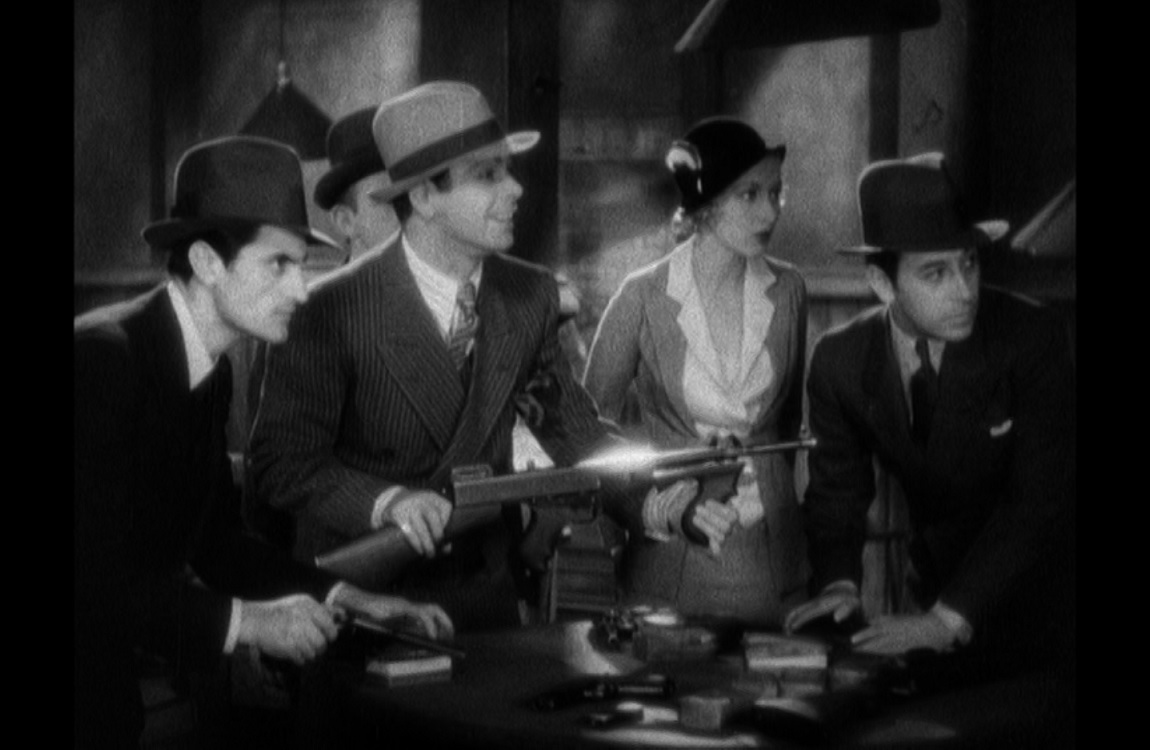
But what really stood out to me on my recent rewatch was just how groundbreaking the action scenes are. The machine gun shootouts — stark, brutal, and filmed in gritty black and white — feel years ahead of their time. There’s a raw energy to them that still hits hard, even nearly a century later. This Scarface might not have the swagger of Al Pacino’s Tony Montana, but it’s every bit as bold, violent, and unforgettable.
Rating:
Quote:
TONY CAMONTE: “Hey, Cesca, you and me, huh? We’ll show them. We’ll lick them all, the North Side, the South Side! We’ll lick the whole world!”
Trivia:
Like many of the early gangster movies, real machine gun fire is used to create the bullet damage in walls, including scenes with main characters ducking gunfire.
Today it was 50 years ago that The Godfather, one of the greatest films ever made, was released in the Netherlands. It was based on the excellent novel by Mario Puzo. As often happens with a screen adaptation, a lot of stuff was either left out or changed. Below are the fifteen most important differences between Puzo’s bestselling novel and the classic movie by Francis Ford Coppola.
1. Sonny’s Cockyness
The following passage from the novel explains more about why Sonny was always the cock of the walk: Sonny Corleone was tall for a first-generation American of Italian parentage, almost six feet, and his crop of bushy, curly hair made him look even taller. He was built as powerfully as a bull, and it was common knowledge that he was so generously endowed by nature that his martyred wife feared the marriage bed as unbelievers once feared the rack. It was whispered that when as a youth he had visited houses of ill fame, even the most hardened and fearless putain, after an awed inspection of his massive organ, demended double price.
2. Another Request For the Don
All the wedding guests that ask requests of Don Corleone at his daughter’s wedding are in both the novel and the movie except one. Understandably, it was cut out because it is the least interesting. A guy needs 500 dollars to open a pizzeria. What is interesting though is his name: Anthony Coppola. The novel was released in 1969 and author Mario Puzo did not yet know that it would be adapted into a movie by a guy named Coppola. Funny he chose that name.
3. Woltz is a Real Pervert
Placing the severed racehorse head in movie producer Jack Woltz’s bed was brutal. In the film the guy is portrayed as an asshole, but not as a big enough fucker to deserve this kind of punishment. In the novel however, Hagen finds out he ‘did a number’ on a twelve year old girl during his visit to Woltz’s ranch. Later, it is explained that the 60-year old movie mogul can indeed only get it up with very young girls. So apart from the notion that hurting animals is always wrong, Woltz definitely had something bad like this coming.
4. Bonasera Gets His Vengeance
After a long conversation with the undertaker Bonasera, we see the Don give out the order to punish the two men who have hurt his daughter, but we don’t witness the actual event in the film. In the novel we learn that Paulie Gatto was in charge of this operation (the guy who gets killed after which the famous line “leave the gun, take the cannoli” – which btw is not in the novel – is uttered). He uses two professional fighters who kick the two abusers to a pulp when they leave a bar. Like ordered by Don Corleone, they survive. But their faces are unrecognizable. Bonasera is very happy indeed, until his phone rings some time later.
5. Fontane Makes a Career Switch
The singer Johnny Fontane plays a larger role in the book than in the film. We learn that the Don’s service to Fontane has paid off. He played in Woltz’s picture which earned him an Academy Award. And that is not all. Tom Hagen visits him after the picture is wrapped up and tells him that Don Corleone will bankroll him in becoming a movie producer. Soon after the Don is shot, but Fontane still gets the money to produce one movie at the time. He ends up as successful as Woltz.
6. More On Luca Brasi
In the movie, it is obvious that Luca Brasi is a dangerous killer who works exclusively for the Corleone Family. But there is nothing about his background really. In the novel, he plays a larger role. Partly because there is more story about the Don’s rise to power, which wasn’t used in The Godfather: Part II (see also 7). About Luca we learn that he is absolutely terrifying and has done some horrible deeds. Some he did in service of the Don, like butchering two hitmen Al Capone had sent to New York as a favor to Don Maranzano who was at war with the Corleone Family. But some he did for himself, like incinerating his own baby in an oven and murder his girlfriend with whom he had the child. No wonder everybody in the movie seems to be afraid of this brute.
7. The First Mob War and Sonny’s Involvement
When the Corleone Family goes to the mattresses in The Godfather, we get the faint impression that this was not the first war they were in. It is not. In the novel, Don Vito fights a bloody war in the early 1930’s with another New York boss: Don Maranzano. It was in this war that Sonny Corleone made his reputation as a brutal general. As a boy, Sonny had witnessed his father kill Don Fanucci and he confronted his father with this (that’s right, this is not in The Godfather: Part II). After that, he became involved in the family business and it turned out that he had a talent for violence and cruelty. He may have missed the strategic subtleness the Don searched for in his successor, but he surely was effective. The war against Maranzano was resolved by killing the Don while he was eating in a restaurant (similar to the real-life assassination of Don Masseria of New York).
8. Kay and Mama Corleone
After Michael had left her after killing Sollozzo and McCluskey, Kay Adams visits the Corleone estate but gets very little information from Tom Hagen. The jerk almost didn’t invite her in! Mama Corleone is not happy with this treatment and she asks inside Kay for lunch. Despite Tom’s objections, she tells Kay gently that “Mikey not gonna write you. He hide two-three years. Maybe more. You go home to your family and find a nice young fellow and get married.” After Kay leaves, she is trying to get used to the fact that the young man she had loved was a cold-blooded murderer. And that she had been told by the most unimpeachable source: his mother.
9. Michael’s Scapegoat
In the movie, it is never explained how exactly Don Corleone managed to get Michael home from Sicily. The police are after him after all, which we know in the novel because they come to Kay’s house to question her. The don did it by finding a scapegoat for the Sollozzo-McCluskey murders. This guy was part of a small Sicilian mob family, who acted as intermediaries when the bosses needed to plan safe negotiations. The man had committed a brutal murder and had been sentenced to death. Don Vito made him falsely confess to killing McCluskey and Sollozzo and he had the waiter from the restaurant provide false witness testimony. Problem solved.
10. Lucy Gets an Operation
On Connie’s wedding in The Godfather I, Sonny cheats on his wife with Lucy Mancini. In part III, she apparently had a son from Sonny called Vincent. There is nothing about her getting pregnant in the book, but there is quite a lot of stuff about their love affair, and there is a chapter on her after Sonny’s death. It is in this chapter that we learn that she has quite a big box. Apparently which is why she matched so well with Sonny (see point 1). Not sure if this is Puzo’s finest writing, but I’m just giving you the facts here. After Sonny’s death, the Corleone Family gives Lucy a job in Vegas and a nice monthly income. She meets a doctor, who she has an affair with. He fixes her ‘down there’ and later also fixes Johnny Fontane’s voice box. Great guy.
11. More On Al Neri
Michael Corleone’s enforcer Al Neri was apparently a cop before he came into Michael’s service. A brutal cop who would put the fear of God into many delinquents. One day, he kills a vile pimp who had cut up a young girl and her mother. He gets a heavy sentence, and this is when the Corleones step in. They use their political influence to set him free, and immediately offer him a job. Now Michael got his own Luca Brasi, a powerful weapon in the battles he is about to get engaged in.
12. Fabrizio Gets What’s Coming To Him
Michael’s big revenge differs quite a bit in the movie. In the novel, it doesn’t take place during the baptism. Coppola combined the happenings to make it more dramatic and Michael more diabolical. Great move. Also, Moe Greene gets killed earlier in the story. More importantly, in the novel Michael only whacks two of the four dons of the opposing families: Barzini and Tattaglia. Also, Fabrizio, the bodyguard who killed Michael’s wife in Sicily, is shot to death in a bar. “Michael Corleone sends his regards”. A scene was filmed for The Godfather: Part II, in which Fabrizio is killed by a car bomb, but it was cut from the movie.
13. Tessio Off the Hook?
After Tessio is to be killed for his betrayal, he asks Tom Hagen if he can get him off the hook. “Can’t do it, Sally”, Hagen answers. In the book, Tom had actually checked with Michael if Tessio could be saved. “Any way to get Tessio off the hook?” Michael’s answer: “No way”. At least he tried, which makes Tom a bit less cold than in the movie, although in the world of the mob, it’s not really possible to give traitors passes. The don’s position would be threatened very soon.
14. Hagen Reconciling With Kay The Godfather famously ends with Michael’s door being closed on Kay; the moment she realizes of course that it was all true: Michael had killed Carlo and the heads of the five families. The perfect ending. In the novel, there is a scene after that realization in which Tom Hagen visits Kay and actually explains to her why Michael killed Carlo. And he makes it sound very reasonable. After that, Kay decides to give it another shot with Michael. How does she deal with Michael’s sins?
15. Kay Burning a Candle
The novel ends with Kay going to church to burn a candle for Michael Corleone’s soul. Like she had seen Mama Corleone do for her husband. So history repeats itself and Kay, despite being a real Americana, becomes a Sicilian wife for Michael. So, he made the right choice hooking up with her again after his exile on Sicily.
Director: Elaina Archer Written by: John McCarty (book), Elaina Archer, Tom Marksbury Features: Paul Sorvino (narrator), Leonard Maltin, Michael Madsen, Edward McDonald, ao.
Running Time: 70 mins.
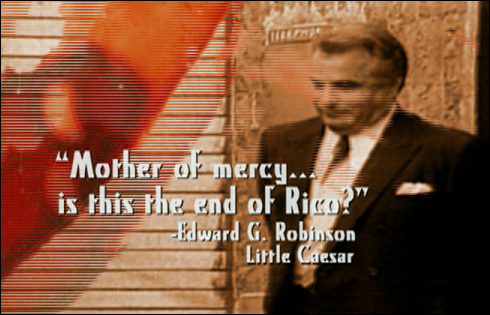
This Hugh Hefner produced documentary shows the fascination of moviegoers with the mob. ‘Once in the racket, always in the racket’, Al Capone said who became the archetype of the gangster and role-model for some legendary movie characters like Caesar ‘Rico’ Bandello (Little Caesar) and Tony Camonte/Montana (Scarface) This also applies to Hollywood when it comes to making gangster films. Every time you think the realms of the genre have been fully explored, some new masterpiece comes along. After the time that Cagney, Robinson and Bogart dominated the screen, a new generation of filmmakers emerged in the seventies with Coppola, Scorsese and De Palma. Then at the brink of the new millennium, the Hollywood gangster legend continued on the small screen with The Sopranos.
Bullets Over Hollywood opens with the very first gangster film: The Musketeers Of Pig Alley, made in 1912. It then goes on to chronologically move through gangster film history right up until The Sopranos. The documentary combines film fragments, interviews and real gangster footage while Paul Sorvino (GoodFellas) provides the narrative. It is an interesting viewing for enthusiasts of the genre, but misses real insight in the works that it covers. Some interesting facts are revealed such as the story that Howard Hawks was forced by Hollywood to add ‘the shame of the nation’ to his gangsterfilm Scarface, because they didn’t want to glorify gangsters. Also interesting is some behind-the-scene footage of gangster classics, but these fragments are unfortunately a little brief. Altogether this is worth a look. If only to hear Leonard Maltin rave about The Godfather and to re-experience some of the finest sequences in the history of this fascinating American phenomenon.
Cast:
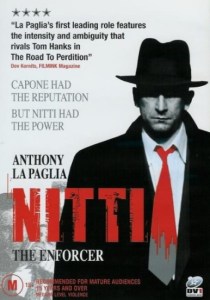
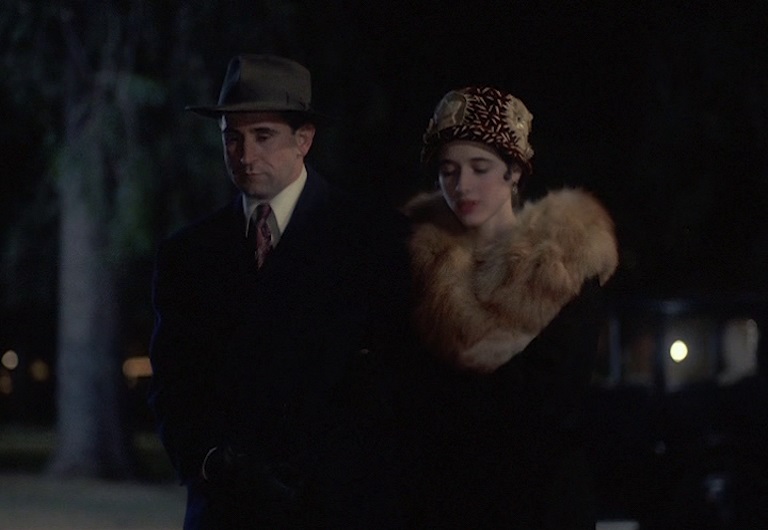
Anthony LaPaglia (Frank Nitti), Vincent Guastaferro (Al Capone), Trini Alvarado (Anna), Michael Moriarty (Hugh Kelly), Michael Russo (Paul Ricca), Clayton Landey (Ted Newberry), Bruce Kirby (Anton Cermak), Mike Starr (Sergeant Harry Lang)
The real life prohibition era gangster Frank Nitti is mostly known as the psychopathic killer played by Billy Drago in Brian de Palma’s The Untouchables (1987). One year later, Nitti would get his own (TV) movie. This is a more biographical approach to telling the gangster’s life story, who was – as it turns out – much more than merely an enforcer.
When his friend and boss Al Capone went to prison, he took over as boss of the Chicago outfit. Nitti was very clever. Even during the time when street fighter Capone was running things, he would often come up with the best strategies for maintaining power in Chicago. But things turned sour when the police attempted to kill him and other (business) problems arose when the Mafia’s big cash cow – the prohibition – came to an end.
Anthony LaPaglia plays a solid lead role, but unfortunately Vincent Guastaferro is less convincing in the crucial role of Al Capone. Another weak point of the movie is the screenplay. Often, it is hard to see what goes on in the character’s mind and what drives his actions. Especially at the end when he makes the dramatic decision of ending his own life, which was indeed how Nitti died (rather than being thrown off a building by Elliot Ness). On the flip side, the movie looks pretty good. And Trini Alvarado plays a small, but disarming role as Nitti’s wife Anna who tragically dies towards the end.
Rating:
Quote:
FRANK NITTI: “If somebody big wants to fall, then the world would have to fear and respect the man who brought him down. But not if it’s done in the dark.”
Trivia:
Anthony LaPaglia would later play Al Capone in Road To Perdition although his scenes would be deleted.







 FRAGMENTEN UIT HET SCHEMERLAND