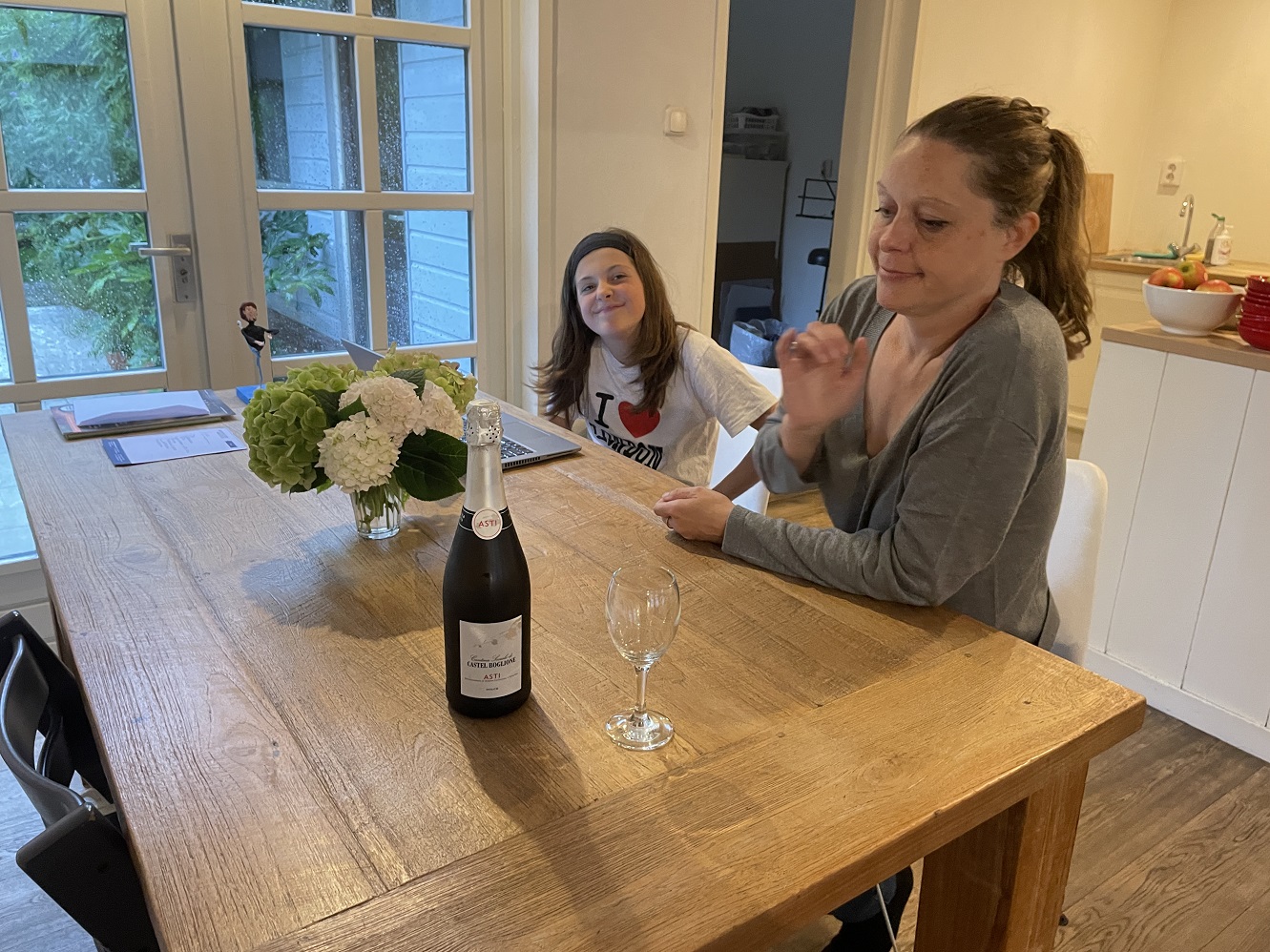
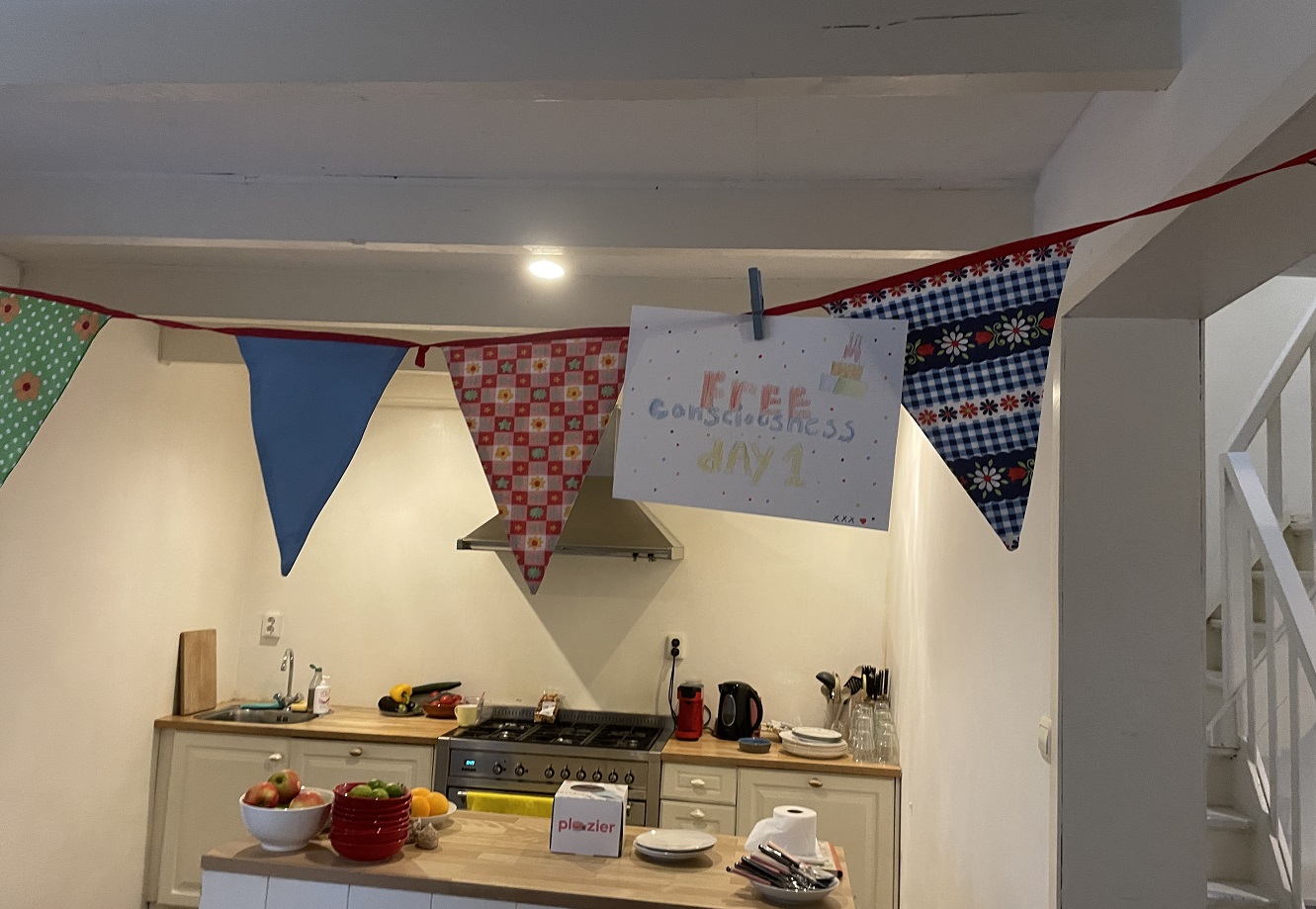
Free-Consciousness is A-Live!!!

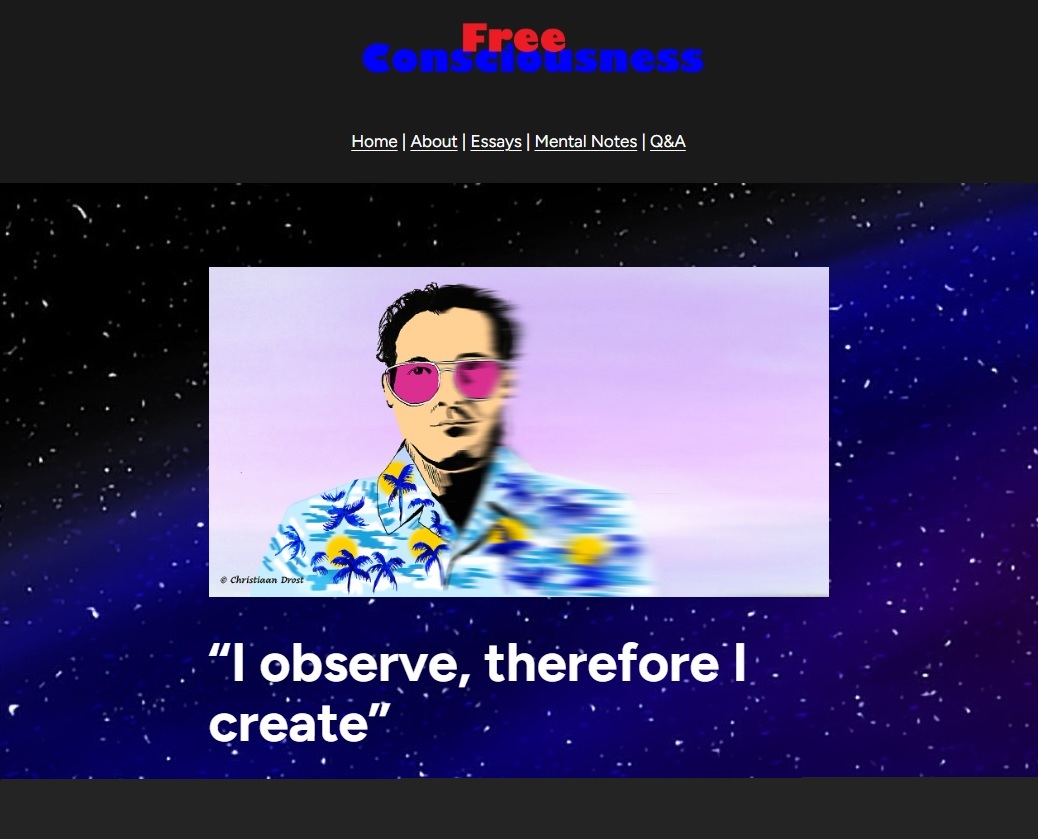
Today is the official launch of my new website: Free-Consciousness. It is the result of seven years of reading, researching and writing and I am super proud of the result. Check it out here: free-consciousness.com.

The first seed of the platform was sown in 2017 when I read the book ‘Biocentrism’. This paradigm shattering work forever altered my perspective on reality, and initiated my continuous search for figuring out how this process we call ‘the universe’ operates. The answers that I found were, and still are, absolutely mind boggling.

The purpose of Free-Consciousness is to give insights in an understandable way of why we must be living in a consciousness-based reality, and what this means for the notions we have about life, death, space and time, the material world and evolution.

The core of the platform at this starting point is the ‘Essays’ page for which I wrote 10 long essays (and 2 short introductory ones) that cover the entire model of my current thinking. It explains why our minds and the outside reality are the same thing, how space and time are mental algorithms that are part of the process we use to construct reality, and how in a timeless universe, death cannot be in any way ‘the end’.

In the next phase of this massive personal project, I will be working on promoting the platform, covering new discoveries on the ‘Mental Notes’ page, and preparing a new series of essays on topics such as DNA, psychedelics, Eastern philosophy and the Many Worlds Interpretation of Quantum Theory.

I want to thank my amigo Arnold for his fantastic technical help in building the platform. I also want to thank Christiaan Drost, who designed the terrific central image for the homepage. I also want to thank my two loves Rosa & Loesje, for their ongoing mental support, love, inspiration, and so much more.

An Atheist Goes To Heaven

Dan Dennett opened his eyes, and he found that he was in a dazzling green landscape. He looked at himself, his body was completely intact. Even his long white beard was still there. Only his glasses were missing. Still, there was something different about him. His body was more radiant, like he was in some sort of lucid dream. He looked at his hands, as he had done often in lucid dreams, and bright light shone through them. He really was dreaming! Except then why wasn’t he waking up right about now? Lucid dreams were usually very brief experiences.

The last thing he remembered was being in the medical center with his wife. His lovely Susie whom he loved so so much. His interstitial lung disease had drained him of his last powers and he felt like he was slipping away into a deep sleep. Eternal sleep. He looked at his wife one last time. “I love you…” And that was it….

And now he was here, or so it seemed. But what was here? It was not in Maine, that’s for sure. He looked around him and saw the most beautiful trees. They were cedar trees, he thought. But way bigger than he had ever seen them before. There were also huge bushes of flowers in yellow, blue, pink, orange and purple. Dan tried if he could float through the air and found that he actually could. He followed a narrow path alongside a small creek with round white shining stones illuminating the way. There were small clouds also, really close to the ground, and when he passed through them they felt like silk to his skin. The creek made the most peaceful sound he had ever heard and he could also hear birds chirping.

But how can my consciousness still be intact?, Dan thought. During all of his career as one of the most widely read and debated American philosophers, he had proposed that consciousness was constructed by tiny little machines inside the human brain. But he was pretty sure his physical brain would by now be no longer functioning. Had the dualists been right after all? That consciousness existed in a different realm as the brain? But no, he still had his body. He was looking right at it and it felt more real than it had ever felt. What about these idealists, these woo woo cosmic consciousness peddlers? Was mind indeed the primal substance of the universe? There was still some doubt in Daniel’s mind.

He reached a valley surrounded by beautiful mountains covered in flowers. Dan was completely in awe of the astonishing scenery. It was more awesome than anything he had ever seen in his life. Then he gasped as he was approached by a magnificent blue butterfly the size of a man. It came up to him and said in a clear voice: “I am so happy to see you, Dan. So very happy.” The bearded philosopher was shocked; he was now 100% certain he was not in Kansas anymore, or any other place on earth for that matter. “And who might you be?’”, Dan asked. “I am Christopher”, the butterfly replied. “Christopher Hitchens”. Dan’s jaw dropped a mile deep. Then he quickly recovered and he smiled the widest smile he had ever smiled. “Now jump on my back, my old friend”, the butterfly said. “We’ve got a lot to talk about.”

More about life after death: From Here To Eternity And Back Again. About Death In Mental Space

Jung, psychologist and idealist philosopher

Born in Switzerland, Carl Gustav Jung (1875 – 1961), along with Sigmund Freud, became the most well known psychiatrist of the twentieth century and possibly of all time.

In his little book ‘Decoding Jung’s metaphysics’, philosopher Bernardo Kastrup analyses Jung’s metaphysics. In other words: What is beyond what we think of as the physical world? Or in Kastrup’s words: A metaphysics of nature entails a certain view about what nature is in and of itself, as opposed to how it behaves (which is the study of science).

According to Kastrup, Jung hid his thoughts about this in his writing, because he was first and foremost a scientist. But Kastrup makes it obvious that Jung was also very much an idealist philosopher, which means that he thought that mind is primary in nature. In Jung’s view, the psyche holds the body rather than the other way around.

Famous principles in Jung’s work are archetypes, the collective unconscious and synchronicity, all principles that fit the idealist view very nicely. Jung considers the unconscious integral to the psyche. Sometimes, experiences in the unconscious can potentially cross the boundary and enter ego-consciousness. That is clearly an idealist position: There is only one mind (mind-at-large) and egos are localisations of this mind-at large or collective unconscious (or for the Dutch reader: Fragmenten uit het Schemerland). Content of this collective unconscious could potentially enter the ego-mind. Jung refers to these experiences as ‘psychoid’.

Jung describes archetypes as unconscious, but nonetheless active-living dispositions, ideas in the Platonic sense, that perform and continually influence our thoughts and feelings and actions. These ideas have effects which have an organizing influence on the contents of consciousness.

For instance, the inner life and behavior of a mother towards her child is largely determined by the so-called ‘mother archetype’, a mode of being and acting that is inherited by every woman and constellated by the presence of the child. These behaviours are thus not learned, but inborn. They correspond to the primordial templates of the collective unconscious (the larger mind) as they assert themselves by impinging on ego-consciousness.

The archetypes cannot be apprehended in and of themselves. All we can assess is the organising effects on our ego-consciousness. This is once again an idealist perspective. All we know, and can ever know for certain, is what we directly perceive. We cannot observe archetypes directly. All we have is the images, dreams and visions they help create. An archetype is a tendency that ‘tends’ to express itself in a certain way, Kastrup writes.

Each archetype can manifest itself to a variety of images, feelings and spontaneous behavioural patterns, all of which symbolize – or point to – a message. Our deeper dreams, visions, passions and impulsive actions thus have a meaning and can be interpreted, if only we pay attention to them. Taken together, the archetypal manifestations in our lives – in both dream and waking states – form a symbolic narrative meant to show to ego-consciousness what is going on in the unconscious. It is up to the Jung-analyst to unravel the meaning of these narratives.

Synchronicity is described by Jung as the simultaneous occurrence of a certain physic state with one or more external events which appear as meaningful parallels to the momentary subjective state. As an example, Jung famously reported an incident he witnessed during a therapy session. The female patient he was seeing related a dream in which she was given a golden scarab, an important archetypal symbol of rebirth. As she was recounting the dream, an insect began knocking on the window. Jung let it in and found it was a rose chafer beetle, an insect that looks very much like a scarab.

How can these strong links occur between the mind and physical world when there is only causality? According to Kastrup, who decoded Jung’s work, Jung believed in a non-local, organising foundation of nature. If the ego-mind and the physical world both arise from this deeper (mental) foundation, then these meaningful coincidences start to make a whole lot more sense. This is once again an idealistic proposition.

And so, the inescapable conclusion is that Jung was an idealist who thought that nature is in and of itself consciousness.

More on Kastrup’s writing can be found on his website.
Review ‘The Grand Biocentric Design’

In 2017 I read the most important book of my lifetime: Biocentrism (2009) by renowned scientists Robert Lanza and Bob Berman. It deserves to have an impact at least as great as Immanuel Kant’s Critique of Pure Reason in the 17th century. And the main message is very similar: space and time are tools of the animal mind. Only how the authors reach their conclusions is different. Kant by brilliant philosophical reasoning. Lanza by backing up these insights by evidence from modern physics and astronomy.

In this third entry in the Biocentrism series (after Biocentrism and Beyond Biocentrism), Lanza wisely added a physicist to his writing team: Matej Pavšič. Also, there is no longer a reference from Deepak Chopra on the cover like there was on the previous books. This ‘name-dropping’ was understandable from the publisher’s position: Chopra can definitely add to the commercial success of any book that challenges the materialistic paradigm. But the science minded crowd is already extremely skeptical of any reference made to consciousness in relation to physics. So, the authors will have to be as credible as they can be to persuade the ones that may be persuaded.

I was already convinced by the first book. Not because of the credentials of the authors – that are extremely impressive – but because of the arguments presented. In the years after reading the mind blowing revelations of the first Biocentrism book, I tried to find counter arguments, but never found them. At least not arguments that cannot be easily refuted (which in this book, the authors do in one of the appendixes). Lanza and his co-authors successfully make their scientific perspective totally compatible with the findings of quantum mechanics and other unsolved mysteries of science.

The core of biocentrism is that consciousness is equivalent to reality itself. It is absolutely fundamental and cannot be reduced. If we accept this fact, everything falls into place. Quantum mechanics reveals that the physical world arises not from interactions, but the awareness of interactions. The mind computes the where and the when objects appear in relation to the observer. An observer with a functioning brain and memory is therefore crucial for the universe to be there. These authors make the case completely obvious.

The first two books were an exploration of how science in the past hundred years has been steadily moving towards this paradigm shattering realization. That conscious life and the cosmos are one and the same and cannot be separated. In the third book Lanza and his co-authors go further to explain how the mind manages the impressive feat of creating reality. The subject matter is complex, but through lucid writing the authors manage to make these ideas understandable for a wide audience.

Also some previously unexplored scientific topics are looked at through biocentric glasses, like Libet’s famous free will experiments that get a completely different interpretation than the usual ‘we are our brains’. They also offer fascinating insights on topics like animal consciousness and dreams. It is really great stuff.

Towards the end, Lanza and co give the readers a good sense of how this new perspective may impact science and what spectacular possibilities it offers for future science. Time travel is just one of them. Lanza and his co-authors did it again. They further improved my understanding of this ’mental thing’ that we’re all a part of. But no matter how much one reads about it or meditates on it, it remains mind-bending stuff. If you want to learn why the exploration of the universe must start within ourselves, this is your definitive guide.

⟿ Jeppe Kleijngeld, January 2021

Meer over biocentrisme: A Shift In Scientific Worldview – Part 1: Robert Lanza’s Biocentrism