Double Bill #14: Yesterday & Nowhere Boy

For the ultimate Beatles movie experience, we’ll have to Wait until 2028, when Sam Mendes is set to release a series of four biopics – one for each Beatle. This promises to be a magnificent, once-in-a-lifetime cinematic event. Until then, there are already some great films out there that celebrate the legacy of the Greatest Band Ever. A perfect place to start is with this Double Bill, featuring two films inspired by Beatles’ songs – one named after a John Lennon track and the other after a Paul McCartney classic. Once you’ve enjoyed these two movies, Across the Universe (2007) is another highly recommended Beatles-inspired film. For a deeper dive into their early days, Backbeat (1994) dramatizes the band’s formative years in Hamburg. But back to this Double Bill: Nowhere Boy (2009) explores John Lennon’s troubled childhood. Raised by his strict aunt Mimi after his parents couldn’t – or wouldn’t – take care of him, the film delves into his complex relationship with his biological mother Julia, beautifully played by Anne-Marie Duff, alongside Kristin Scott Thomas as Mimi. It also highlights the origins of The Quarrymen, the band that would eventually evolve into the Beatles, and Lennon’s legendary first meeting with Paul McCartney. Aaron Johnson shines as the young Lennon, perfectly capturing his wit, imagination, and artistic genius. Having read Lennon’s biography, I feel this film authentically portrays his early life and character. Mendes’ upcoming film will likely draw inspiration from Nowhere Boy, especially in its portrayal of touching moments from the band’s early days, such as their first gigs and the tragic loss of John’s mother, Julia. Yesterday (2019) takes a more fantastical approach, blending comedy and romance with a unique premise: what if the world forgot the Beatles, except for one profoundly unsuccessful singer-songwriter called Jack Malik? Malik suddenly finds himself performing these forgotten classics and skyrocketing to fame. The film delivers plenty of laughs, with witty lines like “The White Album has some diversity issues” and “A Hard Day’s Night – what does that even mean?” But it also offers deeper, more poignant moments, including a memorable scene where Jack competes in a songwriting duel with Ed Sheeran. Perhaps the film’s most touching sequence is Jack’s encounter with John Lennon, who, in this alternate reality, never became a Beatle but instead lives quietly as a fisherman, much like his father once did. It’s a beautifully imagined moment, one that makes the film much more than just a fun, nostalgic ride. Ultimately, both Nowhere Boy and Yesterday share a common message: All you need is love… and The Beatles.

Double Bill #13: Double Impact & Hard Target

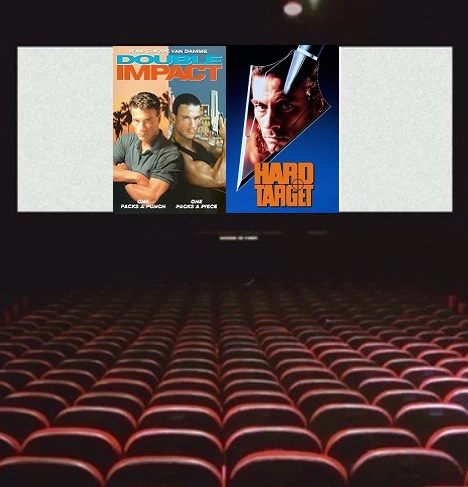
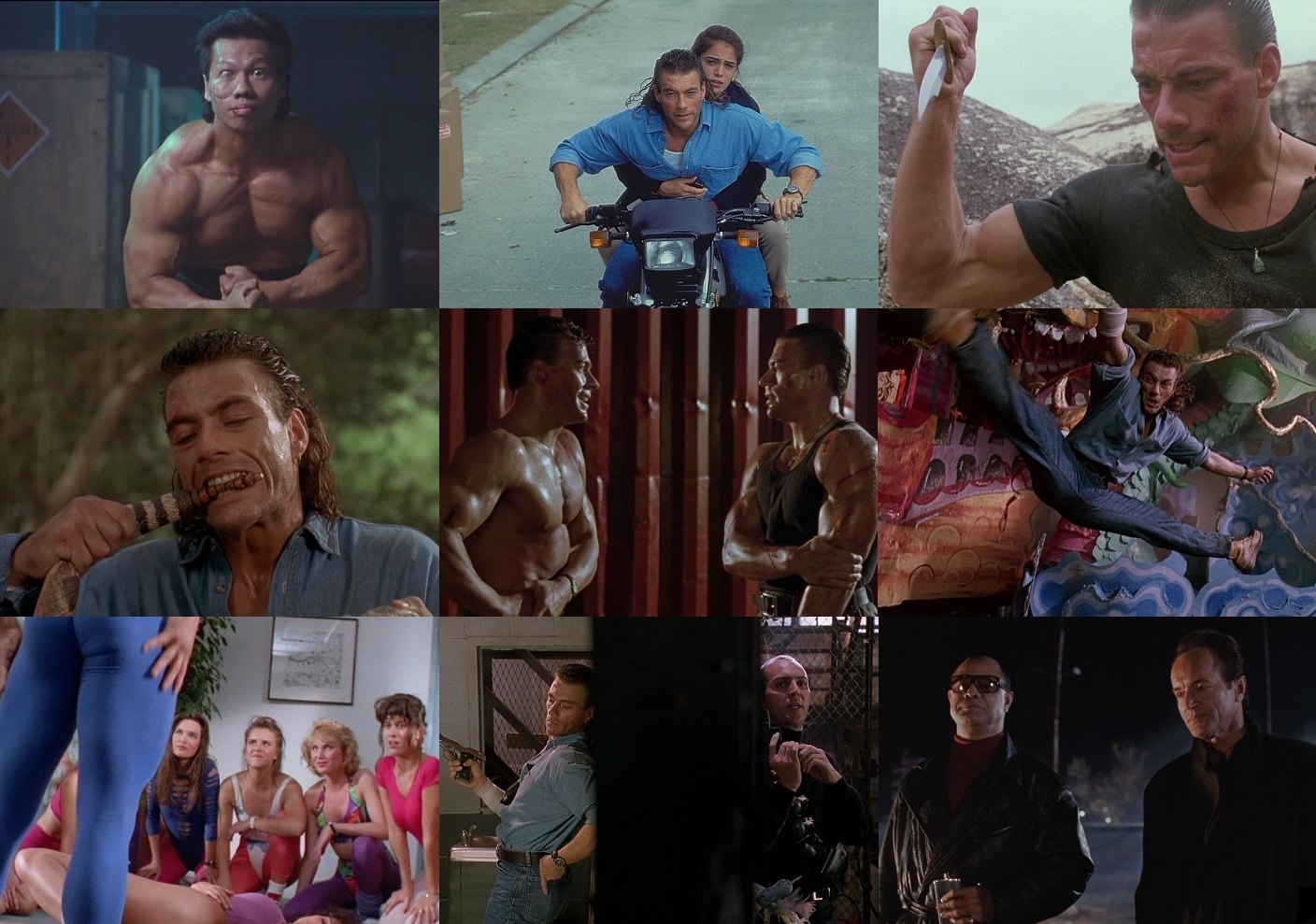
The eighties and nineties, the decades in which I grew up in, was the era of the action movie. And one of its main heroes was Jean-Claude Van Damme (real name: Jean-Claude Van Varenberg). For this Double Bill, I rewatched two of his most enjoyable and nostalgic movies of this period: Double Impact (1991) and Hard Target (1993). In the first one he plays a set of twin brothers, so it has double the Van Damage. The brothers go after a bunch of gangsters in Hong Kong who murdered their parents when they were babies. It has great bad guys, who are stylishly dispatched by the two Van Damme characters using both martial arts and a variety of firearms. The greatest threat is the triad member played by Bolo Yeung, a legendary Chinese martial arts expert who is also in Enter the Dragon and Van Damme’s Bloodsport. The final duel with him is one of the highlights of the movie. The film’s director Sheldon Lettich also directed Wrong Bet in 1990, another Van Damme classic. He is no John Woo, but skillful enough to give the audience what it wants: violent, bloody action and some humor on the side. Hard Target has plenty of this as well, but the choreography of the action scenes is of a whole different level. Van Damme takes on a gang of despicable white men, led by Lance Henriksen, who organize manhunts for the rich and bored. Van Damme’s character Chance grew up in the New Orleans Bayou and knows a thing or two about survival and asskicking. When he becomes the quarry of their next hunt, the roles are quickly reversed and we get to witness some of the most satisfying kills of Van Damme’s career. Hong Kong director John Woo’s American debut was produced by Robert Tappert and Sam Raimi (of Evil Dead fame). It is easy to see why they liked this project: Woo’s visual style is so immensely cool it matches Raimi’s. His action is an art form, a ballet of blood, bullets, explosions, falling bodies and flying kicks in slow motion. These are two classics of the era and highly enjoyable as a Double Bill.

Double Bill #12: The Big Lebowski & The Jesus Rolls

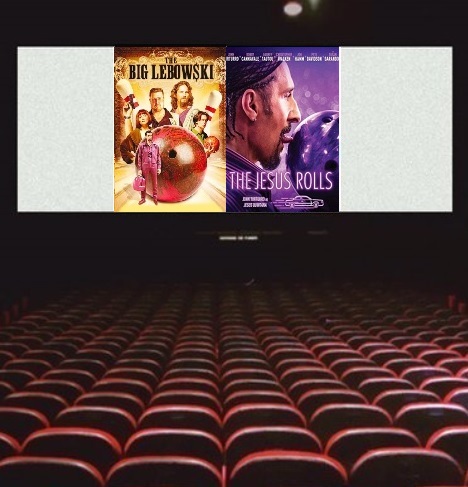
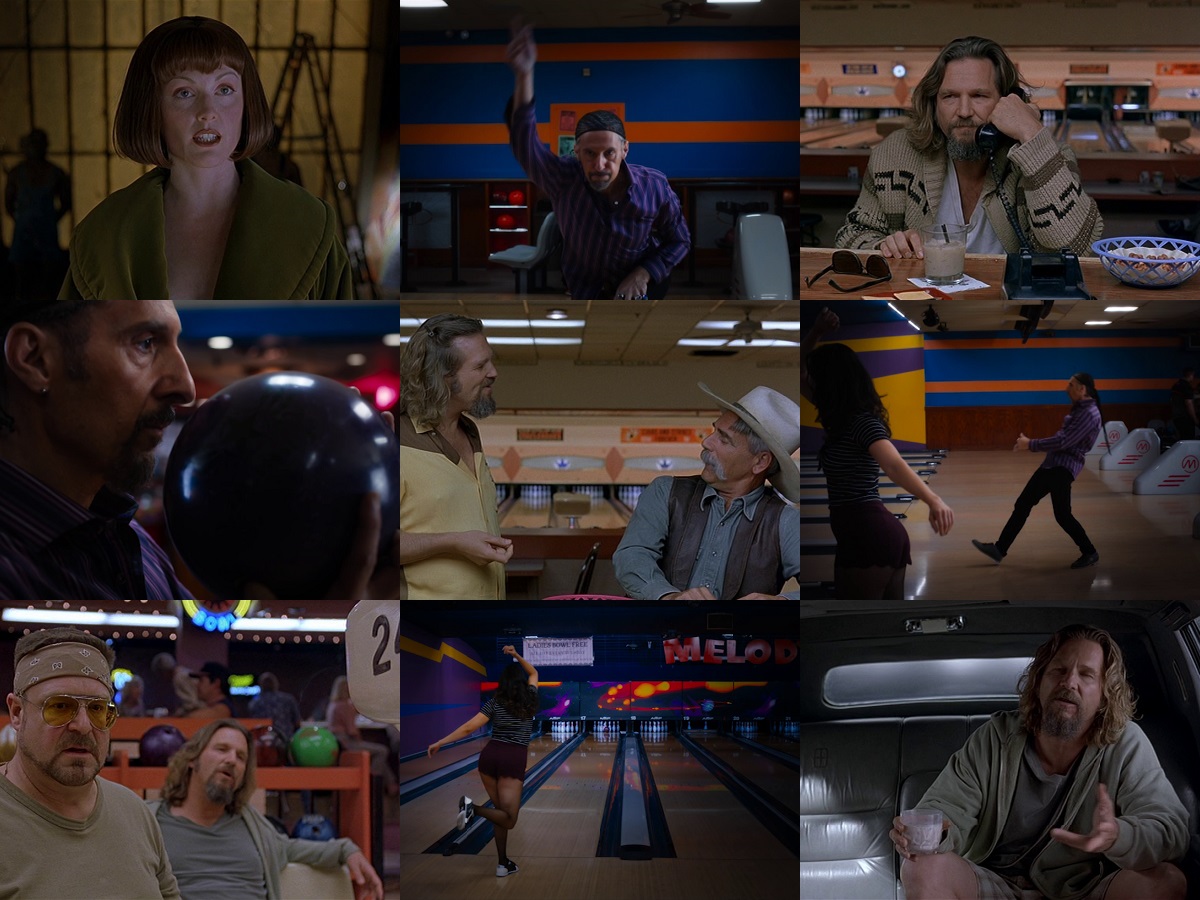
In the nineties the Coen Brothers rolled two strikes in a row with Fargo (1996) and The Big Lebowski (1998), two instant classics that both feature a kidnapping. Fargo is a bloody North Dakota-set crime story with humor that is darker than a black steer’s tookus on a moonless prairie night. The Big Lebowski is a Raymond Chandler-style mystery featuring a valued rug, bowling balls, white Russians and the question of what it means to be a man. I considered coupling them for this feature; in terms of bizarre characters, endlessly quotable dialogues and outrageous situations these movies certainly match, but for some reason I chose The Jesus Rolls (2019, dir: John Turturro) instead. Jesus Quintana (played by John Turturro) was one of the many memorable characters from The Big Lebowski and even though he was only in two scenes totaling less than six minutes in screen-time, he got his own movie. It’s as if Ned Ryerson would get his own flick two decades after Groundhog Day (Ned Ryerson Insures!). The Coens had nothing to do with it: but they gave John Turturrro permission to run with the character. It is both a spinoff and a remake of the French movie Going Places (1974), which was very controversial at the time for its vulgarity, depiction of sexual acts and amorality. The story revolves around a road trip taken by Quintana, Petey (Bobby Cannavale) and Marie (Audrey Tautou) during which they engage in sex and petty crime. Petey is an ex-convict like Jesus and Marie is what Maud Lebowski would call a nymphomaniac: a woman who engages in sex compulsively and without joy. The movie has one bowling scene and Jesus repeats some of his Lebowski lines, but the movie has nothing to do whatsoever with the events of The Big Lebowski (it even turns out that Jesus is not a pederast, he was only falsely accused of exposing himself to an eight year old). For a comedy it is not funny enough, and for a road movie it is too strange. But as a dessert after watching the masterpiece The Big Lebowski for the hundredth time, it is alright.

Double Bill #11: The Truman Show & The Matrix

Two masterpieces from the late ’90s, The Truman Show (1998) and The Matrix (1999), both revolve around protagonists who discover they’ve been living in an artificial reality. In The Truman Show, Truman Burbank (Jim Carrey) realizes that his entire life has been a carefully orchestrated television show, where everyone around him – his wife, parents, and best friend – is merely an actor. Similarly, in The Matrix, Neo (Keanu Reeves) learns that humanity is trapped in a simulated reality controlled by artificial intelligence, with people’s minds imprisoned while their bodies serve as mere power sources. In Truman’s case, the man behind his imprisonment is Christof (brilliantly portrayed by Ed Harris), a visionary television producer who will stop at nothing to maintain control over Truman’s life, ensuring the continued success of his wildly successful show. Neo, on the other hand, faces a more intangible and insidious enemy, namely rogue artificial intelligence. In the first film, this AI is represented through sinister agents, with Hugo Weaving delivering an unforgettable performance as Agent Smith. Both films captivate as they depict the journey of discovery – watching Truman and Neo slowly unravel the truth about their worlds is nothing short of enthralling. The moment of revelation in each film remains awe-inspiring, evoking goosebumps even after repeated viewings. Truman’s world, we learn, is enclosed in an enormous dome, a massive set visible from space, while Neo’s reality reveals him as a human battery in a sprawling field of organic towers, where infants are cultivated as power sources for the AI’s machinery. Interestingly, both films imbue the protagonists’ names with deeper significance. Truman is the only ‘true man’ in his artificial world, while Neo is an anagram of ‘ONE’, symbolizing his status as the singular anomaly within the Matrix, with the potential to bend its rules. Neo’s discovery of his unique abilities leads to some of the most iconic moments in cinematic history. In the end, both The Truman Show and The Matrix conclude with their heroes breaking free from their respective confinements, delivering an exhilarating sense of liberation. It’s a triumphant and cathartic experience for the audience, as well – leaving us with the best feeling in the world.

Read also: The Matrix And The Awakening To True Reality