The Hills Have Eyes

Director: Wes Craven
Written by: Wes Craven
Cast: Dee Wallace Stone, Michael Berryman, Robert Houston

Year / Country: 1977, USA
Running Time: 86 mins.

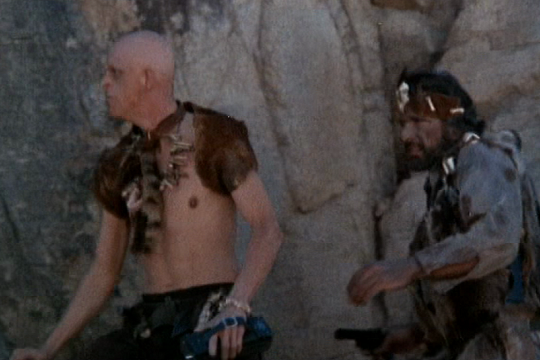
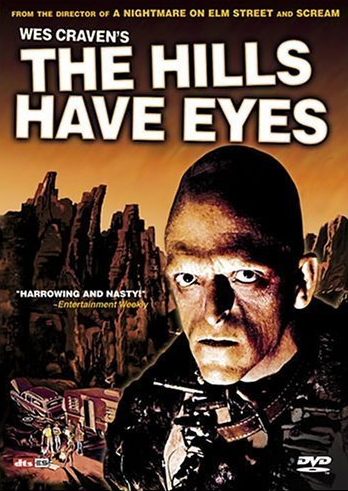
A lesser known movie by horror master Wes Craven is The Hills Have Eyes, the shocking account of a family (the Carters) trapped in the desert and attacked by a family of cannibals. It reminds very much of The Texas Chainsaw Massacre, both in story as in creepy execution.

Craven builds the tension up steadily. The cannibals are not seen for a long time (only heard) and then, during the nighttime, they appear and deliver a tremendous blow to the Carter family. Afterwards, the surviving Carters strike back and eventually become as brutal as their attackers when they seek revenge.

The movie is based on the legend of Sawney Beane and his family, a feral clan who inhabited and roamed the highlands of Scotland’s East Lothian County, near Edinburgh, in the early 1400s. They captured, tormented and ate several transients. They were eventually captured on the order of Scotland’s King James and brutally executed without a trial, inspiring the aspect of the film that the Carters become bloodthirsty themselves.

This is only Craven’s third movie after the horror movie The Last House On the Left (1972) and The Fireworks Woman (1975), an adult movie he directed under the alias Abe Snake. The Hills Have Eyes is very raw and contains violence that is still shocking by today’s standard. Some of Craven’s fans even say it is his best movie. It might just be true.

Rating:

Biography: Wes Craven (1940, Cleveland – 2015, Los Angeles) is the maker of a number of classic, genre bending horror films. The debut was the gruesome The Last House On the Left in 1972. In 1984 he reinvented the youth horror genre with A Nightmare on Elm Street, which became a genre classic and a popular horror franchise. Twelve years later, he again created a commercial and critical success with Scream. This film also spawned many sequels, three of them directed by Craven and all successful. Craven also occasionally worked within other genres, such as drama/music with Music of the Heart in 1999.

Filmography (a selection): The Last House on the Left (1972) / The Hills Have Eyes (1977) / Deadly Blessing (1981) / Swamp Thing (1982) / A Nightmare on Elm Street (1984) / The Hills Have Eyes Part II (1985) / The Twilight Zone (1985-86, TV-episodes) / The Serpent and the Rainbow (1988) / Shocker (1989) / The People Under the Stairs (1991) / New Nightmare (1994) / Vampire in Brooklyn (1995) / Scream (1996) / Scream 2 (1997) / Music of the Heart (1999) / Scream 3 (2000) / Cursed (2005) / Red Eye (2005) / Paris, je t’aime (2006, segment: ‘Pere-Lachaise’) / My Soul to Take (2010) / Scream 4 (2011)

Face to Face

Director: Sergio Sollima
Written by: Sergio Donati, Sergio Sollima
Cast: Tomas Milian, Gian Maria Volonté, William Berger

Year / Country: 1967, Italy / Spain
Running Time: 107 mins.

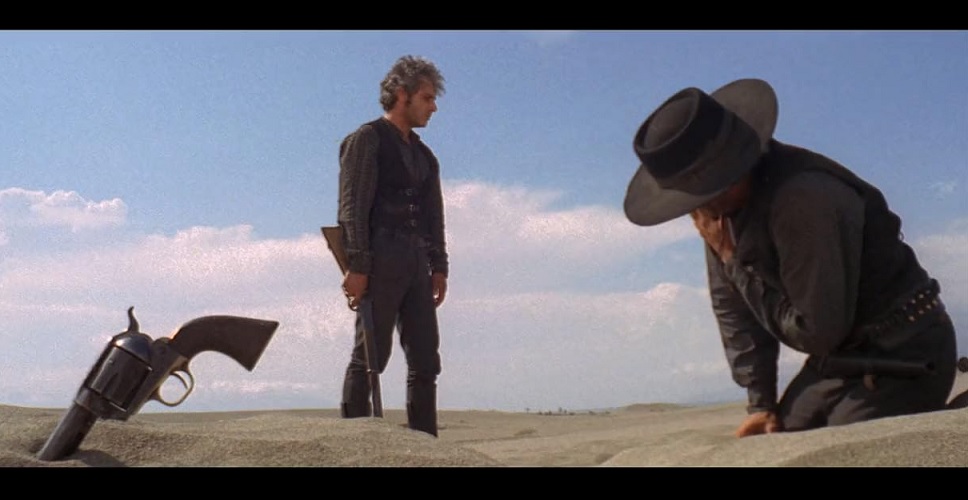
In Face to Face, director Sergio Sollima delivers a more intellectual take on the spaghetti western while still packing in thrilling action. The film stars Gian Maria Volonté – best known for his villainous roles in A Fistful of Dollars and For a Few Dollars More – as Boston professor Brad Fletcher. Suffering from a severe lung ailment, Fletcher moves to Texas for the warmer climate, only to be taken hostage by the ruthless bandit Solomon Bennet (Tomas Milian) during a daring escape from custody.

Bennet aims to reunite his old gang, including his former ally Siringo (William Berger). However, he’s being hunted by the Pinkertons – a private detective agency – of which Siringo is secretly a member. As Fletcher spends more time with Bennet, his passive nature erodes, and he gradually embraces a life of crime. Once the beast within him is unleashed, he proves to be even more ruthless than his captor.

Sollima weaves a deeper thematic layer into the film, using the western setting to explore the rise of fascism. When Bennet seizes control of a village, he governs it as though it were a single organism, using manipulation and torture to force everyone into submission. His authoritarian rule mirrors historical regimes, adding an unsettling resonance to the story.

However, Fletcher’s transformation isn’t entirely convincing, likely due to the film’s extensive edits – the original cut ran 2.5 hours. His shift from an educated, seemingly moral man to a cruel bandit happens too abruptly, making it feel somewhat unearned. That said, Sollima’s direction shines, especially in his handling of the actors. Volonté delivers a controlled and nuanced performance, while Milian exudes charisma in every scene.

Ennio Morricone’s score, while solid, doesn’t quite reach the brilliance of his work with Sergio Leone. However, the film’s opening credit sequence does capture the grandeur of Leone’s westerns, setting the stage for an absorbing experience. Despite some flaws, Face to Face remains an excellent film – thought-provoking, visually compelling, and anchored by strong performances.

Rating:

Biography: Sergio Sollima (1921, Rome) is an Italian filmmaker. Due to his trio of westerns starring Tomas Milian in the mid 60’s (The Big Gundown, Face to Face and Big Gundown 2: Run, Man, Run) he became known as ‘the other Sergio’ – the third most important director of spaghetti westerns, after Sergio Leone and Sergio Corbucci. Sollima began in cinema as a scriptwriter on Italian sword and sandal epics such as Ursus (1961) and The Ten Gladiators (1963). He directed two spy movies to capitalize on the popularity of the James Bond films. Then he started making spaghetti westerns and action / crime films such as The Family starring Charles Bronson and Telly Savalas. Later in his career he moved more towards television work.

Filmography (a selection): L’amore difficile (1962, segment ‘L’avventura di un soldato’), Agente 3S3, passaporto per l’inferno (1965), Agente 3S3, massacre al sole (1966), Requiem per un agente segreto (1966), The Big Gundown (1966), Face to Face (1967), Big Gundown 2: Run, Man, Run, The Family (1970), Devil in the Brain (1972), Revolver (1973), Sandokan (1976, TV-episodes), The Black Corsair (1976), Steps of Love (1989), Berlin ’39 (1993)

Compañeros

Director: Sergio Corbucci
Written by: Sergio Corbucci, Massimo De Rita, Fritz Ebert, José Frade, Dino Maiuri
Cast: Franco Nero, Tomas Milian, Jack Palance, Fernando Rey

Year / Country: 1970, Italy / West Germany / Spain
Running Time: 120 mins.

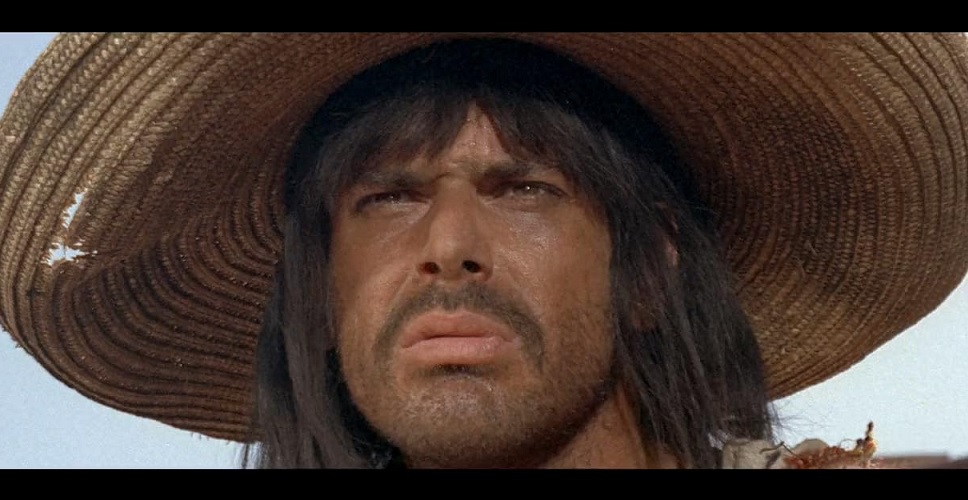
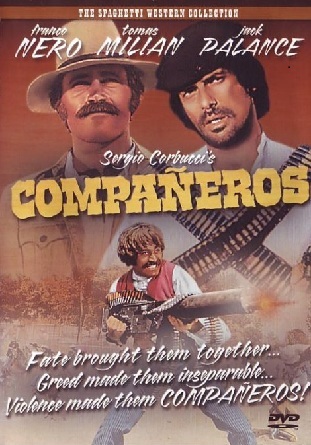
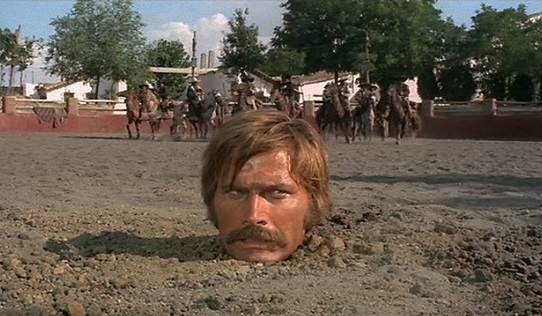
In a country torn apart by revolution, an unlikely duo teams up. The not too bright Mexican bandit Vasco (Tomas Milian) and the very polite arms dealer ‘The Swede’ (Franco Nero) go on a mission for the money hungry General Mongo. Their goal is to free Mongo’s pacifistic opponent Professor Xantos from a Texan jail because he knows the combination of a loaded safe. The two hate each other, so there is plenty of double-crossing along the way.

This spaghetti western, directed by the other Sergio, is an early buddy movie featuring two of the most established spaghetti western actors. The music is – of course – composed by Ennio Morricone and Jack Palance plays a very interesting supporting role as marijuana addicted gunslinger.

The movie misses the sharp humour and emotional depth that made genre films such as Django and the Dollar-trilogy so enjoyable, but it is certainly not the worst spaghetti western. The two strong leads fight, joke and shoot their way through a series of engaging adventures. The many last minute rescue scenes become kind of repetitive, so Corbucci could have been doing some heavier cutting. But, like the Mexican revolution, the movie ends in a massive shoot-out which is certainly worth the wait. Viva la Revolution!

Rating:

Biography: Sergio Corbucci (1926, Rome – 1990, Rome) is, alongside Sergio Leone, one of the most renowned directors of Spaghetti Westerns. He played a pivotal role in popularizing the genre, particularly through landmark films such as Django (1966) and Il grande silenzio (1968). Corbucci often collaborated with actor Franco Nero, creating some of the most iconic works of the genre. His films, often categorized as B-movies, are distinguished by their unflinching brutality, surreal and apocalyptic production design, dark humor, and politically left-leaning themes. A committed Marxist, Corbucci infused many of his works with a sense of revolutionary despair, reflecting the futility of social upheaval. Despite his significant contributions to cinema, Corbucci remained rooted in Italy throughout his career, with most of his films receiving limited international distribution. He passed away in Rome in 1990.

Filmography (a selection): Foreign Earth (1954), Water’s Love (1954), Supreme Confession (1957), Angel’s Sky (1957), Duel of the Titans (1961), Toto, Peppino and La Dolce Vita (1961), The Son of Spartacus (1963), Grand Canyon Massacre (1963), Django (1966), Navajo Joe (1966), The Mercenary (1968), The Great Silence (1968), Compañeros (1970), Bandera Bandits (1972), The White, the Yellow, and the Black (1975), The Payoff (1978), Super Fuzz (1980), My Darling, My Dearest (1982), Days of Inspector Ambrosio (1988)

Bad Taste

Director: Peter Jackson
Written by: Ken Hammon, Tony Hiles, Peter Jackson
Cast: Terry Potter, Pete O’Herne, Craig Smith, Mike Minett

Year / Country: 1987, New Zealand
Running Time: 88 mins.

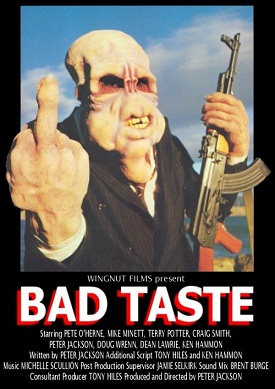
The Lord of the Rings isn’t the only movie-project Peter Jackson worked on for years. His debut Bad Taste, an amateur movie turned cult classic, took him four years to complete. Jackson and his friends shot it on weekends. The title says it all; a clan of extraterrestrials, under management of Lord Crump of Crump’s Country Delights, land in New Zealand because they think that with the delicacy of human flesh they will conquer the universe. But the government sends an anti-alien force and it’s splatter galore.

Bad Taste was filmed with amateur cameras and it shows. Still, because of Jackson’s dedication and perfectionism, the movie runs like clockwork; the steadicam shots and editing are done excellently. Also the improvised – no budget – special effects are very impressive. It’s even got an exploding sheep! True New Zealand style. You don’t have to look very closely to see that Jackson is a young master at work here. With his very own airbrush I might add. The gore is definitely not suitable for all stomachs.

Jackson felt he couldn’t let his friends do all the acting, so he took on one of the main parts himself. Derek (“Derek’s don’t run”) is a twisted maniac, who’s so devoted to saving planet Earth, that he is willing to kill and torture as many aliens as he can in the process. He is having as much twisted fun as his creator is. Jackson said in an interview one time that he would love to make Bad Taste 2. Let’s hope that he does, because it will be a blast to see Derek and the boys take on a new Lord Crump. “Those bloody bastards!”

Rating:

Biography: Peter Jackson (1961, Pukerua Bay, New Zealand) started making films at around the age of eight. His early short films already featured special effects that would become one of Jackson’s trademarks. Together with friends and family he worked on his first feature length movie Bad Taste which took him four years to complete. What had started as a joke became a cult classic and opened many doors for Jackson. He then made a number of professional horror films, including genre classic Braindead. Then he embarked on one of the most ambitious movie projects of all time; The Lord of the Rings trilogy. Jackson succeeded with glory and the three LOTR films were enormously successful. He continued with a remake of the film that inspired him the most as a filmmaker: King Kong.

Filmography (a selection): The Valley (1976, short) / Bad Taste (1987) / Meet The Feebles (1989) / Braindead (1992) / Heavenly Creatures (1994) / Forgotten Silver (1995) / The Frighteners (1996) / The Lord of the Rings: The Fellowship of the Ring (2001) / The Lord of the Rings: The Two Towers (2002) / The Lord of the Rings: The Return of the King (2003) / King Kong (2005) / The Lovely Bones (2009) / The Hobbit: An Unexpected Journey (2012) / The Hobbit: The Desolation of Smaug (2013) / The Hobbit: The Battle of the Five Armies (2014) / They Shall Not Grow Old (2018, doc) / The Beatles: Get Back (2021, TV Mini Series)