Once Upon a Time in America


As boys, they said they would die for each other. As men, they did.

Directed by:
Sergio Leone

Written by:
Harry Grey (book ‘The Hoods’)
Leonardo Benvenuti (screenplay)
Piero De Bernardi (screenplay)
Enrico Medioli (screenplay)
Franco Arcalli (screenplay)
Franco Ferrini (screenplay)
Sergio Leone (screenplay)

Cast:
Robert De Niro (David ‘Noodles’ Aaronson), James Woods (Maximilian ‘Max’ Bercovicz), Elizabeth McGovern (Deborah Gelly), James Hayden (Patrick ‘Patsy’ Goldberg), William Forsythe (Philip ‘Cockeye’ Stein), Tuesday Weld (Carol), Treat Williams (James Conway O’Donnell), Scott Tiler (Young Noodles), Rusty Jacobs (Young Max / David Bailey), Jennifer Connelly (Young Deborah)
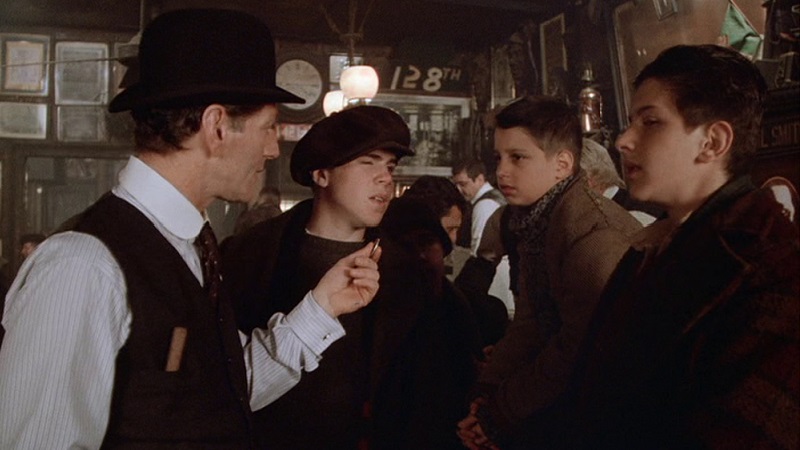
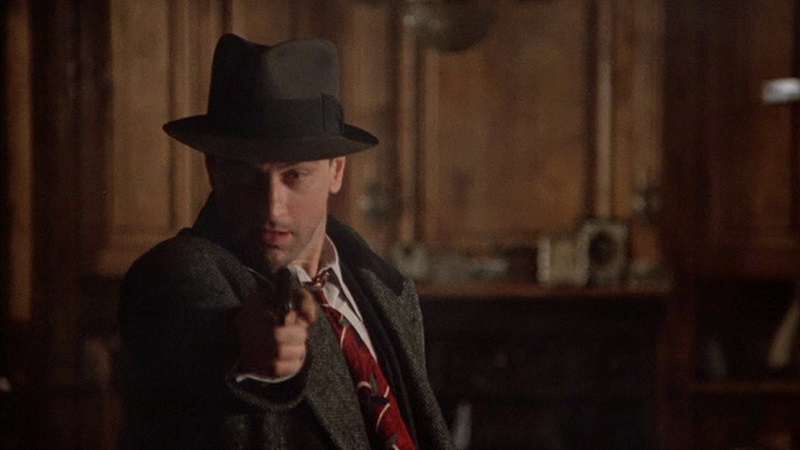
In the late 1970s, master director Sergio Leone turned down the offer to direct The Godfather in order to make another gangster film, this one based on the novel ‘The Hoods’ by former mobster Harry Grey. When filming was completed, the total footage ran between eight and ten hours. Leone and editor Nino Baragli trimmed it down to around six hours, intending to release the film as two three-hour features. The producers, however, rejected this idea and cut the film down to just over two hours for the American market. In doing so, they also abandoned the film’s non-linear structure, rendering the story almost incomprehensible. Unsurprisingly, the film flopped in the U.S., and Leone was left devastated.

Fortunately, a 3-hour and 49-minute version was prepared for international release, with the original non-chronological storytelling restored. Audiences overseas responded more positively, and many critics recognized it as a cinematic masterpiece. With his spaghetti westerns, Leone revealed the gritty, opportunistic side of the Old West. Here, he does the same for the American city ruled by mobsters. He strikes exactly the right tone. His sprawling gangland epic shows a world that may sparkle with a thin coat of glamour, but beneath that lies grime and plenty of it.

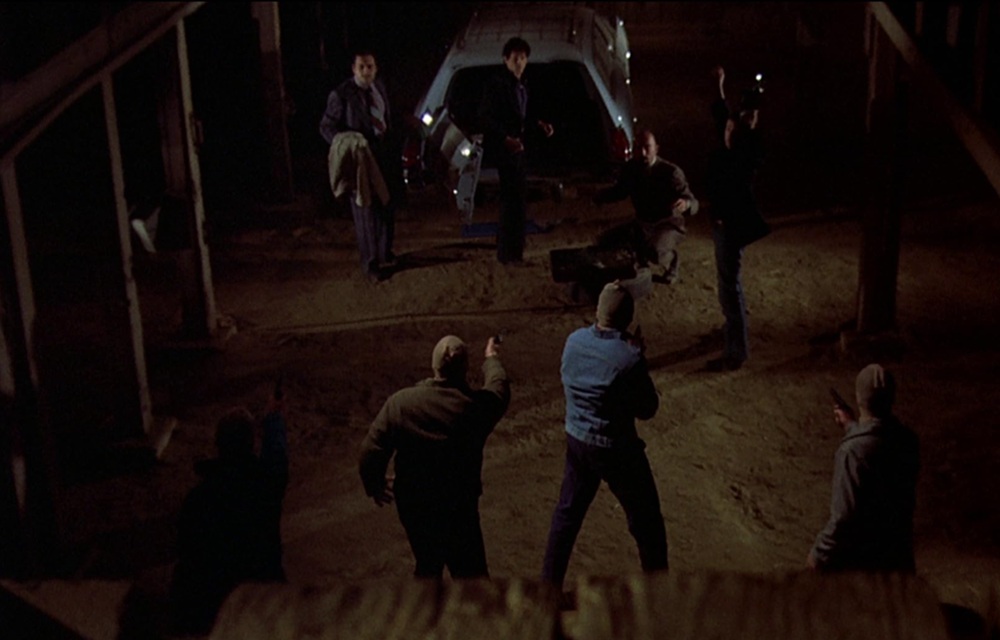
The narrative jumps across time, following Jewish gangster Noodles (Robert De Niro) through three phases of his life. First, his youth in the Lower East Side, where he meets his lifelong friend, the cunning but volatile Max (James Woods). In their prime during the Prohibition era, the two – along with childhood friends – rise to control a lucrative bootlegging operation. But tensions rise, and their friendship deteriorates with devastating consequences. In the third act, Noodles returns to New York as an old man after 35 years, confronting the ghosts of his past.

The fragmented screenplay may not feel intuitive, but it doesn’t need to be. The film works on a dreamlike, emotional logic. Many interpret the second half as nothing more than an opium-induced fantasy – a fugue state in which Noodles imagines a resolution, a reckoning, and perhaps a redemption that never truly came. It’s an ambiguous, melancholic meditation on memory, regret, and American myth. This is not a typical rise-and-fall gangster story; it’s about life itself. The psychological depth is extraordinary. Few films give you such an encompassing sense of a person’s entire existence: memories, pain, joy, death and, of course, love.

As with Leone’s finest work, the film is packed with haunting, unforgettable moments: Max and Noodles beaten in the alley, Noodles’ opium haze in the Chinese theater, Little Dominic dying in Noodles’ arms (“Noodles, I slipped”), and Noodles peeking through the wall at Deborah’s dance rehearsal. The art direction and cinematography render every frame like a painting, each one worthy of being hung on a wall. In that sense, this is Leone’s The Godfather.

Together with composer Ennio Morricone, Leone achieves true cinematic synergy. The film’s pacing often mirrors the rhythm of Morricone’s hauntingly beautiful score, enhancing the emotional impact to mesmerizing effect. The casting is another strength: De Niro brings nuance and reluctant sympathy to a deeply flawed anti-hero, while Woods is chillingly effective as Max. Strong supporting roles are delivered by Jennifer Connelly, Joe Pesci, Tuesday Weld, and Burt Young.

Though it may have its imperfections, Once Upon a Time in America remains a towering, influential achievement. Leone spent over a decade bringing this vision to life and it shows. It’s a shame it turned out to be his final film, but few directors could hope to end their career with something so ambitious, haunting, and unforgettable.

Rating:

Quote:
NOODLES: “You can always tell the winners at the starting gate. You can always tell the winners and you can tell the losers.”

Trivia:
Robert De Niro suggested that James Woods wear a set of perfect, bright white teeth to demonstrate Secretary Bailey’s wealth and vanity. The producers balked at the cost, so De Niro paid for them himself.
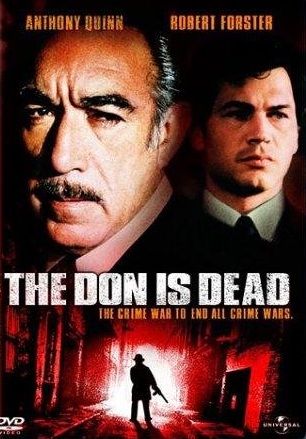
The Don is Dead (1973)


‘Power built an empire. Passion destroyed it.’

Directed by:
Richard Fleischer

Written by:
Marvin H. Albert (novel & screenplay)
Christopher Trumbo (adaptation)
Michael Butler (adaptation)

Cast:
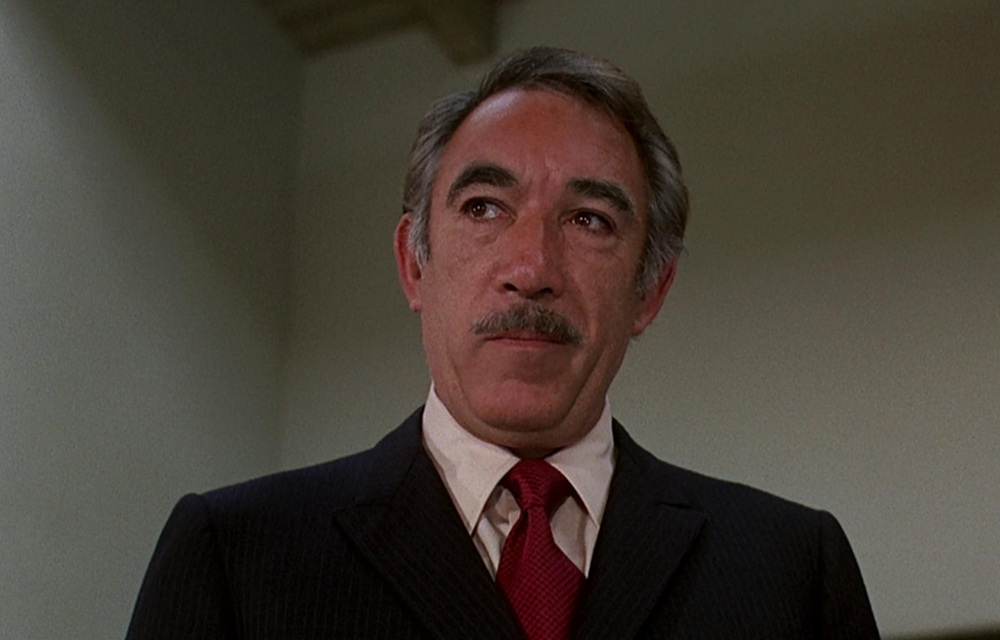
Anthony Quinn (Don Angelo), Robert Forster (Frank), Al Letteri (Vince Fargo), Frederic Forrest (Tony Fargo), Angel Tompkins (Ruby Dunne), Charles Cioffi (Orlando), Jo Anne Meredith (Marie), Barry Russo (Don Bernardo), Abe Vigoda (Don Talusso), Victor Argo (Augie the Horse)

A mob movie clearly made to capitalize on The Godfather’s success, The Don Is Dead is directed by Richard Fleischer (Conan the Destroyer) and features familiar faces from The Godfather, including Al Lettieri (Sollozzo) and Abe Vigoda (Tessio).

The screenplay is by Peter Maas, known for his mob stories like The Valachi Papers – adapted into a 1972 film starring Charles Bronson.

The plot follows Frank (a young Robert Forster), the reckless son of mob boss Don Paolo. When Paolo dies of a heart attack, his territory is divided between two rival leaders: the formidable Don Angelo (Anthony Quinn) and another Don who refuses to share. After Paolo’s funeral, a brutal mob war erupts, escalating when Frank savagely beats up Angelo’s new mistress.

While the film captures a dark, gritty atmosphere, it lacks characters the audience can root for. Without emotional investment, the endless cycle of murders and retaliations feels hollow – none of the deaths resonate. It’s not a bad movie, but beyond Anthony Quinn’s strong performance, there’s little to recommend.

Rating:

Quote:
AUGIE THE HORSE: “You must think of our groups of families as a corporation.”

Trivia:
This is the second gangster film in which Al Lettieri declares that a Don is “slippin”. The first time was about Marlon Brando’s Don Corleone in The Godfather, and now he’s talking about about Anthony Quinn’s Don Angelo.”

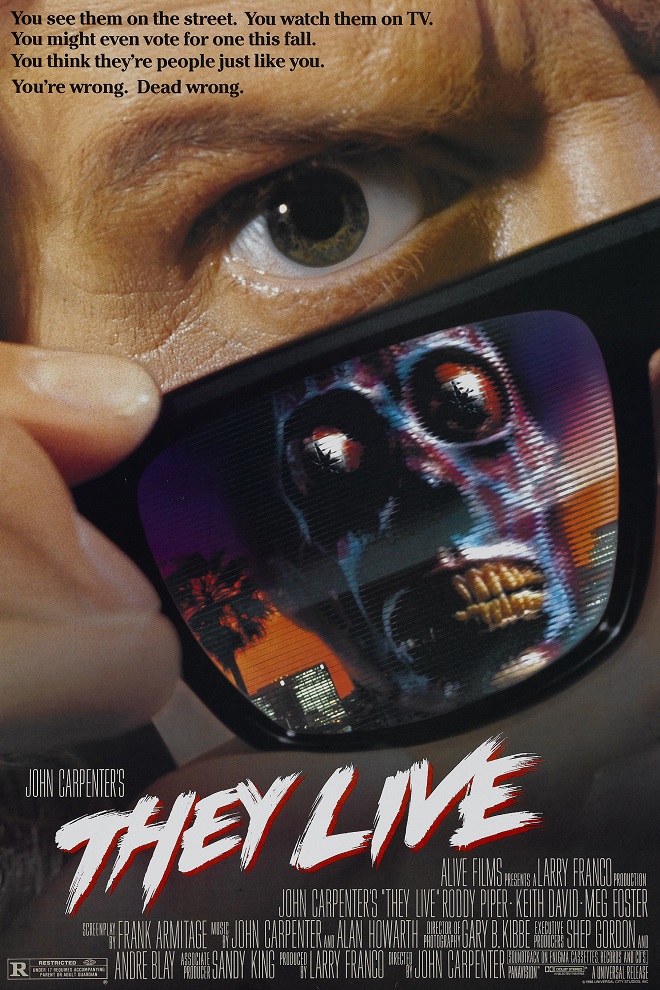
They Live


‘You see them on the street. You watch them on TV. You might even vote for one this fall. You think they’re people just like you. You’re wrong. Dead wrong.’

Director: John Carpenter
Written by: Ray Nelson (story), John Carpenter
Cast: Roddy Piper, Keith David, Meg Foster, George ‘Buck’ Flower

Year / Country: 1988, USA
Running Time: 90 mins.

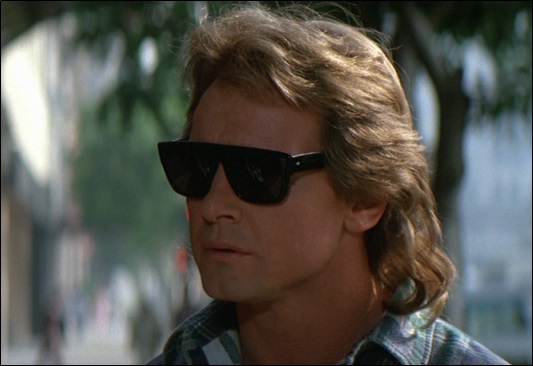
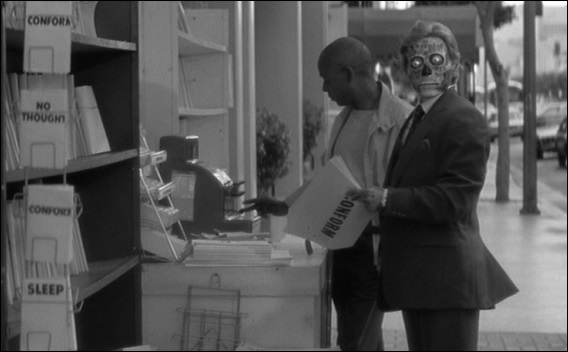
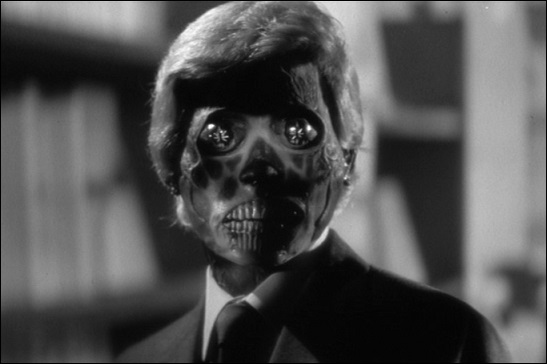
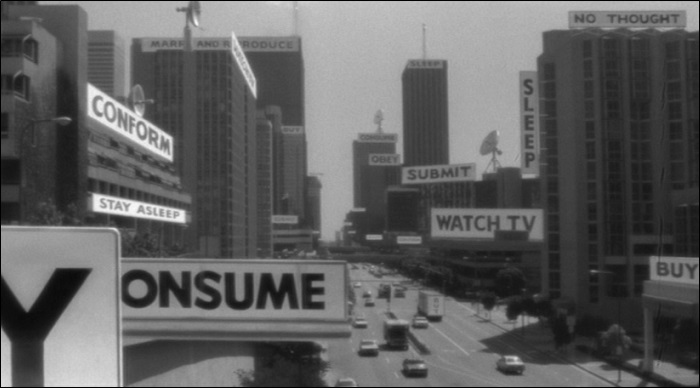
The concept for They Live is brilliant. A drifter (wrestler Roddy Piper) discovers an underground movement. When he puts on a pair of sunglasses – produced by this movement, he finds that the world is dominated by an evil alien race. Street signs and television programmes contain hidden messages, such as ‘obey’, ‘buy’ and ‘consume’ and normal people suddenly look like monsters. The whole world is enslaved by these aliens.

The drifter finds a few allies and cooks up a plan to disrupt the alien operations. If they can turn off the signal at the source, the world will have a serious wake-up call. But the aliens are everywhere and they have human accomplices to help them. These humans sold-out their own species in return for promotions and bigger bank accounts.

In this entertaining story, director Carpenter inserted a not-so-well hidden meaning himself. People are only focussed on wealth and making more money. Thus, they are vulnerable to becoming slaves to their own greed. The humans in They Live are sedated and therefore insensitive to their surroundings, only wanting to consume more. The poor have become the unwilling worker bees for the rich.

This message runs through the film, but luckily Carpenter does not take himself too seriously. They Live is above all a fun sci-fi/action thriller with lots of tongue-in-cheek humour. Highlights are Piper’s discovery of the alien conspiracy, a ridiculous wrestling match between Piper and Keith David in an alley and the final minutes in which both aliens and humans get a big surprise.

Rating:

Biography: John Carpenter (1948, New York) was born in Carthage, New York. He attended Western Kentucky University and then USC film school in Los Angeles. While there, he started work on his feature debut Dark Star (1974). Although Carpenter has directed films in numerous other genres (dark comedy, sci-fi, romance), he is known primarily for making horror films: Halloween (1978), The Fog (1980), The Thing (1982), et cetera. He is also known as the ‘Master of Horror’ or the ‘Prince of Darkness’ (after one of his films).

Filmography (a selection): Revenge of the Colossal Beast (1962, short), Gorgo Versus Godzilla (1969, short), Dark Star (1974), Assault on Precinct 13 (1976), Halloween (1978), The Fog (1980), Escape from New York (1981), The Thing (1982), Christine (1983), Starman (1984), Big Trouble in Little China (1986), Prince of Darkness (1987), They Live (1988), Memoirs of an Invisible Man (1992), In the Mouth of Madness (1994), Village of the Damned (1995), Escape from L.A. (1996), Vampires (1998), Ghosts of Mars (2001)

The Godfather: Part III (1990)


‘All the power on earth can’t change destiny.’

Directed by:
Francis Ford Coppola

Written by:
Mario Puzo (screenplay)
Francis Ford Coppola (screenplay)

Cast:
Al Pacino (Don Michael Corleone), Diane Keaton (Kay Adams Michelson), Talia Shire (Connie Corleone Rizzi), Andy Garcia (Vincent Mancini), Eli Wallach (Don Altobello), Joe Mantegna (Joey Zasa), George Hamilton (B.J. Harrison), Bridget Fonda (Grace Hamilton), Sofia Coppola (Mary Corleone), Raf Vallone (Cardinal Lamberto)

Just when you thought you were out, they pull you back in! 18 years after the original masterpiece, Francis Ford Coppola and many of his old collaborators return for the finale of the Godfather saga. The studio was screaming for a sequel for years, but Coppola waited until he had a story he really wanted to tell. Originally he wanted to call this story; ‘The Death of Michael Corleone’.

Part III is the story of an old Don looking for redemption. Michael Corleone is no longer a gangster; he is the chairman of a corporation. He has finally achieved legitimacy, but his heart is ever heavy. This is a man getting ready for death, but he wonders if he made the right decisions in life. In Part II he had his brother Fredo killed. Now, he wants to make things right with his ex-wife Kay, his children and with God.

Redemption does not come cheap. In the deal of his lifetime, Michael wants to purchase shares in a large real estate company, owned by the Vatican, for the sum of 600 million dollars. But he soon learns that the higher he gets, the dirtier it gets. In The Godfather: Part III, the hypocrisy of the mob, the Catholic Church and big business mix perfectly. Michael feels like he can’t deal with these snakes anymore; he needs a successor. His own son Anthony won’t have anything to do with his business, but perhaps his nephew Vincent (Andy Garcia) could be the one. Or is he too much of a hothead like his father Sonny?

Like the previous Godfather films, The Godfather: Part III opens with a lavish celebration – a fitting introduction that reintroduces familiar faces while showcasing new ones. It’s a promising start, but it also highlights the film’s most significant flaw. Francis Ford Coppola cast his daughter, Sofia Coppola, as Mary, Michael Corleone’s daughter. Unfortunately, she doesn’t quite fit the role. It’s not that her acting is utterly terrible, but she lacks the presence and nuance needed for such a pivotal character. Her on-screen romance with Vincent, in particular, feels forced and unconvincing, weakening an already delicate subplot.

Despite its flaws, Coppola demonstrates once again that he knows how to craft a compelling narrative. While Sofia Coppola’s performance may undercut the impact of some key scenes, they are still powerful scenes. The beloved characters we’ve followed throughout the saga each receive fitting and meaningful conclusions. The strong sense of family – a hallmark of the series – endures, lending the film its emotional core. The cast, for the most part, is outstanding. Al Pacino brings a Shakespearean weight to Michael, portraying him as a deeply tragic figure. Andy Garcia proves to be as fierce and magnetic a presence as James Caan was in the first film. Meanwhile, Talia Shire, Diane Keaton, and Eli Wallach all deliver touching and memorable performances in their supporting roles.

The final act that plays at an opera house is one of cinematic excellence. The combination of classic Sicilian opera, the traditional bloody settling of the Corleone affairs and the ultimate tragedy that unfolds is a sequence worthy of comparison to earlier Godfather-endings. The final frames are, as always in Godfather movies, beautiful. It is hard not to shed a few tears as Michael looks back on the women of his life and then dies.

Rating:

Quote:

KAY ADAMS: I came here to protect my son. I didn’t come here to see you disguised by your church. I thought that was a shameful ceremony.

Trivia:

Catherine Scorsese, Director Martin Scorsese’s mother, is one of the women that complains to Vincent in the street about the poor care of the neighbourhood. In the same year, she also appeared in her own son’s gangster film GoodFellas.